
How to Talk to Customers About Lab-Grown vs. Natural Diamond Price
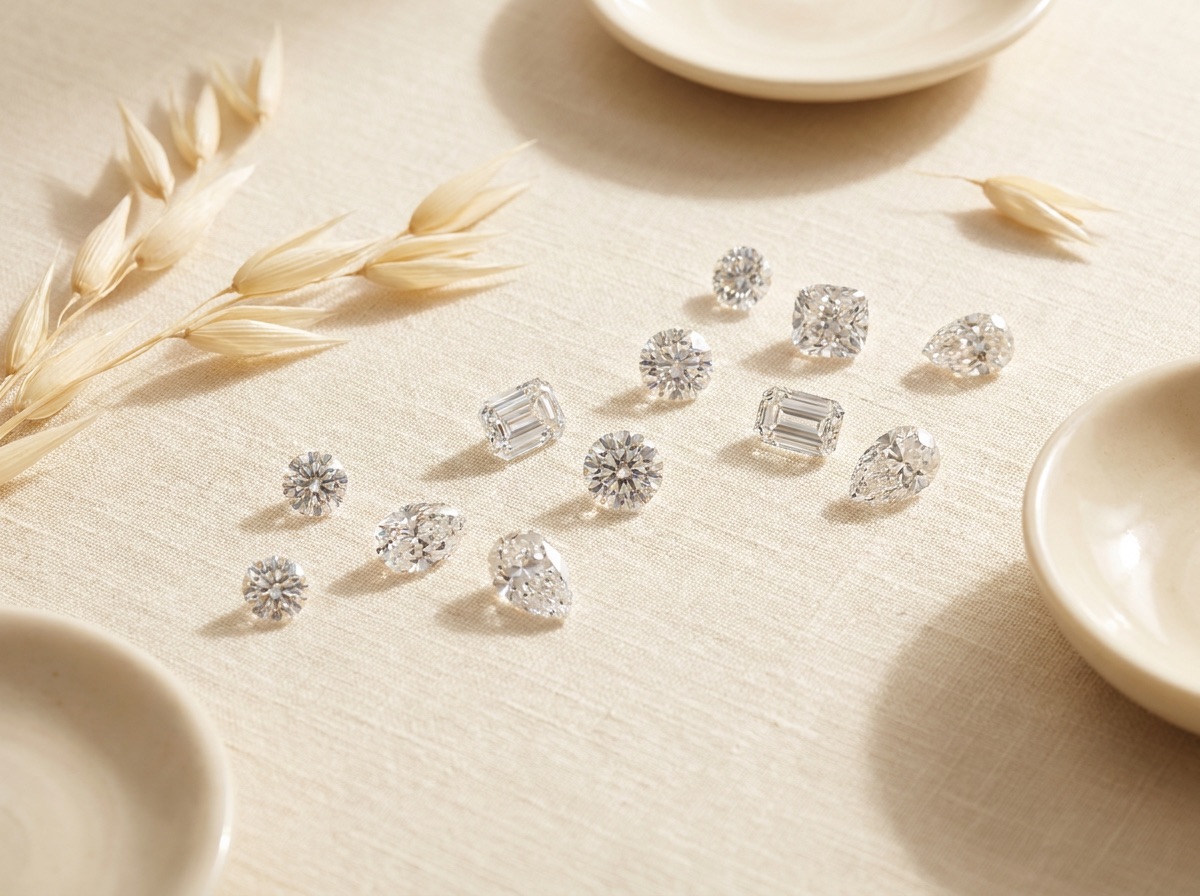
When a customer asks why a lab-grown diamond costs meaningfully less than a natural one of the same size and quality, the accurate answer is simple: the diamond itself is chemically and optically identical either way, so the price gap reflects how it was sourced, not a difference in what they're getting. A lab-grown diamond is still carbon crystallized into the same structure, cut and graded the same way, and it reads to the eye — and to a grading lab — the same way a natural stone does. The cost difference comes entirely from supply: mined stones are pulled from a finite, geologically constrained resource, while lab-grown diamonds are produced through a controlled growing process. That's a sourcing story, not a quality story, and the moment a customer understands that distinction, the price stops feeling like a red flag and starts feeling like a fact worth knowing.
This piece gives sales-floor staff a repeatable way to handle that conversation — what to say first, how to answer the "is it fake" question without getting defensive, and how to shift the conversation from "why is it cheap" to "what are we building for you," so the sale doesn't collapse into a discount pitch. It also covers the follow-on questions that come up once the price question is settled — resale value, diamond testers, and carat size — because those are the moments an unprepared answer can undo the credibility the first answer just built.
Why Lab-Grown Costs Less: The Part Worth Saying Out Loud
Customers aren't wrong to notice the gap — it's real and it's public knowledge in the trade and in consumer press alike. The useful thing is being able to explain it in one breath, correctly, without hedging:
- Same material. A lab-grown diamond is grown using CVD (chemical vapor deposition), a process that builds the same crystal structure, atom by atom, that forms a natural diamond over geologic time. Same hardness, same refractive index, same fire and brilliance.
- Same grading standard. Loose lab-grown stones 0.30ct and above go through the same independent grading labs — IGI or GIA — using the same 4Cs criteria applied to natural stones. A certificate doesn't grade on origin; it grades on what's in front of the grader.
- Different supply model. Natural diamond pricing carries the cost of a scarce, extraction-based supply chain. Lab-grown pricing reflects a made-to-order, production-based supply chain. That's the entire difference — not a shortcut, not a compromise, a different way of arriving at the same physical object.
Say that plainly and the "is this too good to be true" instinct usually resolves on its own. Customers aren't looking for a sales pitch here — they're looking for a straight answer, and a straight answer is the strongest thing you can hand them. It also helps to name why the comparison feels backwards to a first-time buyer: almost everything else people shop for gets cheaper because it's mass-produced from common materials, while a diamond is the rare case where the "cheaper" version is chemically identical to the expensive one. Saying that out loud defuses more skepticism than repeating the equivalence facts a second time.
How Wide the Price Gap Runs, and Why It Grows With Carat Size
A customer who's done any comparison shopping will have noticed something specific: the price gap between lab-grown and natural isn't a flat percentage. It widens as carat weight goes up. That's worth being able to explain, because it's the detail that makes the price story feel grounded in fact rather than a sales talking point.
The reason is rarity math, not manufacturing. A natural diamond rough large and clean enough to cut into a 3-carat finished stone isn't three times rarer than the rough for a 1-carat stone — it's dramatically rarer, because clean crystal growth at that size is a much less common geological event, and rarity compounds with size. Lab-grown production doesn't carry that same curve: a larger stone takes longer to grow and uses more chamber capacity, so cost rises with size, but closer to linearly rather than compounding the way rarity-driven natural pricing does. That mismatch is the entire explanation for why the percentage gap is wider on a 3-carat comparison than on a 0.50-carat one — not a sign lab-grown is "less real" at larger sizes, just a sign the two supply models scale differently.
The practical version for the sales floor: don't quote a single gap percentage as if it applies across the board. If a customer references a number they saw for a small stone and expects the same ratio on a larger center stone, the honest answer is that the gap typically grows with size — which is exactly why a lab-grown upgrade tends to unlock more dramatic size jumps on larger center stones than the same budget would on natural.
The Sales Floor Script
The Opening Line
Lead with equivalence before you lead with savings. Something like: "They're the same diamond, chemically and optically — same hardness, same brilliance, same certification standard. The price difference comes from how they got here, not what you're holding." This sequencing matters. If price comes first, the customer's brain files the stone as "the cheap option." If equivalence comes first, price becomes a secondary, rational detail. The same discipline applies mid-conversation, not just in the opening line — if a customer circles back to "but why is it so much less" three sentences later, answer with the same equivalence frame rather than reaching for a different explanation. Consistency reads as confidence; a staff member who explains the price gap three different ways in one conversation reads as someone improvising.
When They Ask "Is It Fake?"
It isn't, and the answer should say so without getting clinical. "No — a simulant like cubic zirconia or moissanite is a different material designed to look like a diamond. This is a diamond. The only difference between this stone and a mined one is where the crystal grew — a controlled process versus underground over millions of years. Everything a lab tests for is the same." Resist over-explaining the growing process itself; one clear sentence beats three technical ones. If a customer pushes further and asks how a jeweler would actually know the difference between this stone and a mined one, that's a fair question with a real answer — see the diamond tester section below rather than guessing at an answer in the moment.
When They Ask "What's the Catch?"
There isn't one, and naming that directly closes the door on suspicion faster than dodging it. "No catch — it's a supply-and-demand difference, not a quality trade-off. You're paying for the diamond and the setting, not for scarcity." Don't follow this with a discount-store framing ("that's why it's such a deal!") — that undercuts the same equivalence point you just made. Keep it factual.
Reading the Room Before You Lead
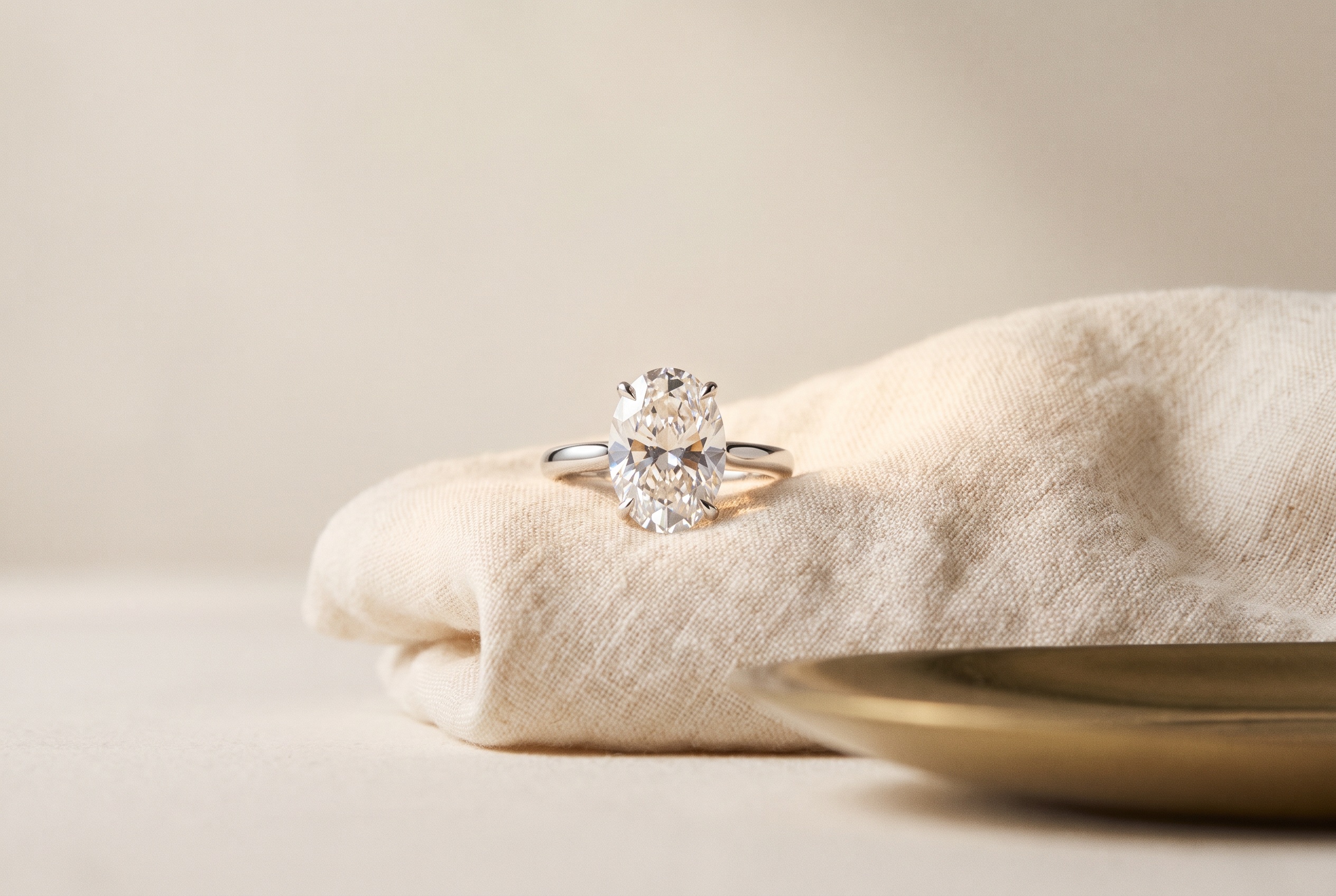
Not every customer needs the full equivalence explanation, and forcing it on someone who didn't ask can read as over-explaining. A quick way to sort the conversation: someone who opens with "why is this so much cheaper" is asking an education question — lead with equivalence, in full. Someone who opens with "what's your best price on a 2-carat lab-grown oval" has already made the category decision — skip the education pitch and move straight into specs and options. Match the depth of the answer to the depth of the question actually asked.
Redirecting to the Design
Once the equivalence question is settled, move off diamond economics entirely and onto the piece itself. The savings conversation should open the door to a better conversation, not become the whole conversation — see the value-conversation section below for how to make that shift concrete rather than abstract.
Certification: Say This Part With Confidence
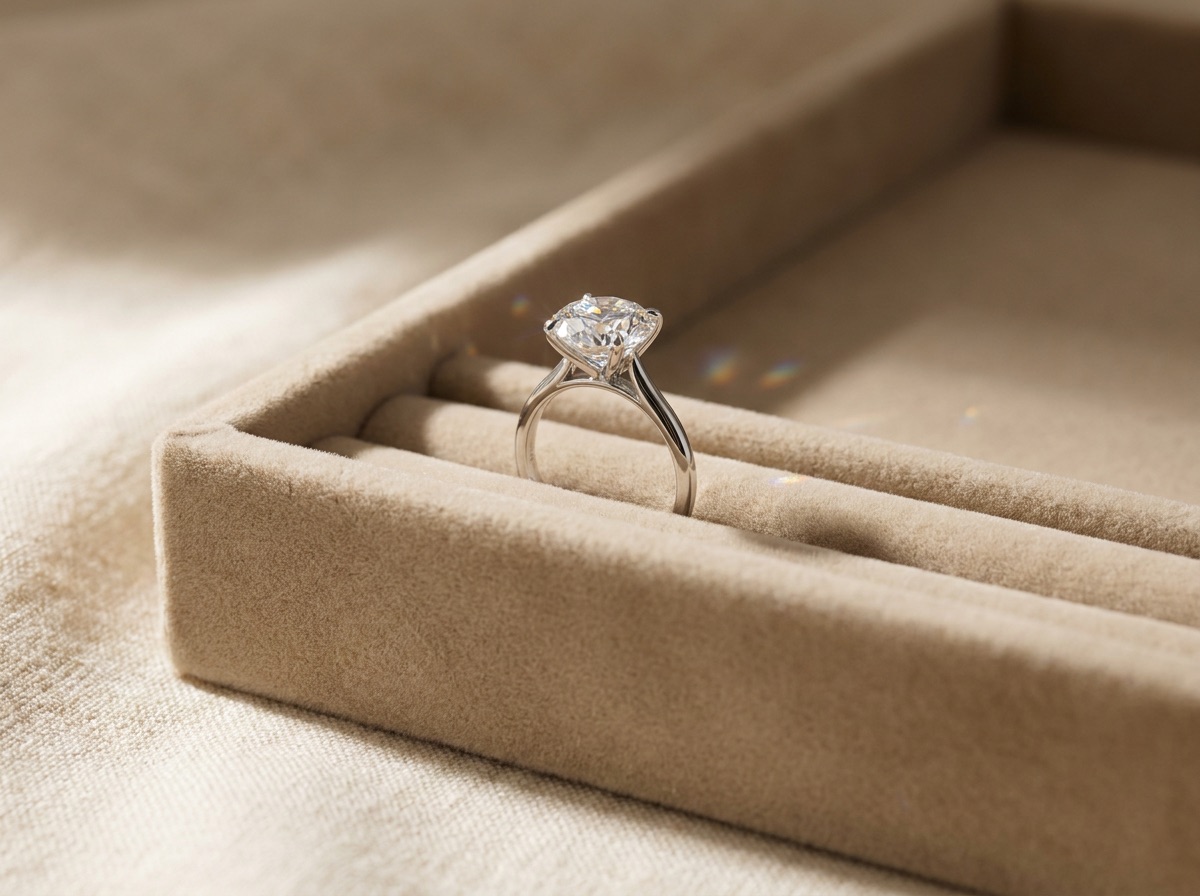
A customer who's done a little homework may ask whether lab-grown stones are "really" certified the same way. They are, with one nuance worth knowing so you don't overstate it:
| Product | Certification | What it means at the counter |
|---|---|---|
| Loose lab-grown diamonds, 0.30ct and above | IGI or GIA graded, same as natural | Full 4Cs report tied to that individual stone |
| Melee (small accent stones) | Uncertified, quality-controlled to a set color/clarity standard | Not individually graded — sold and represented as a parcel-grade product |
| Center stones in custom pieces | Certified per the loose-stone standard above | Certificate can be presented alongside the finished piece |
The distinction matters because overstating melee certification is the fastest way to lose credibility with a sharp customer later. If asked about the small stones surrounding a center stone, the accurate line is that they're matched to a consistent color and clarity baseline as a parcel, not individually certified — and that's the industry-standard approach for accent-size goods generally. If a customer wants full independent certification on a specific stone, that's what the loose, larger goods are for — the wholesale side of this conversation runs through the trade catalog under certified diamonds, where each stone above 0.30ct carries its own report.
Certification also isn't a single-lab question. IGI and GIA cover most counter conversations, but a third lab, GCAL, is available for buyers who want it — GCAL is known in the trade for particularly detailed cut-precision documentation, which matters most to a customer or retailer whose own resale or appraisal paperwork standardizes on that lab. If asked whether one lab is "better," the honest answer is that all three grade to a recognized, independent standard — the choice usually comes down to what documentation a customer's insurer or appraiser already expects, not a quality difference between the labs.
The Diamond Tester Question
This comes up more than staff expect, usually from a customer who's heard jewelers can "test" a stone at the counter. It's worth answering accurately, because the real answer supports the equivalence point rather than complicating it.
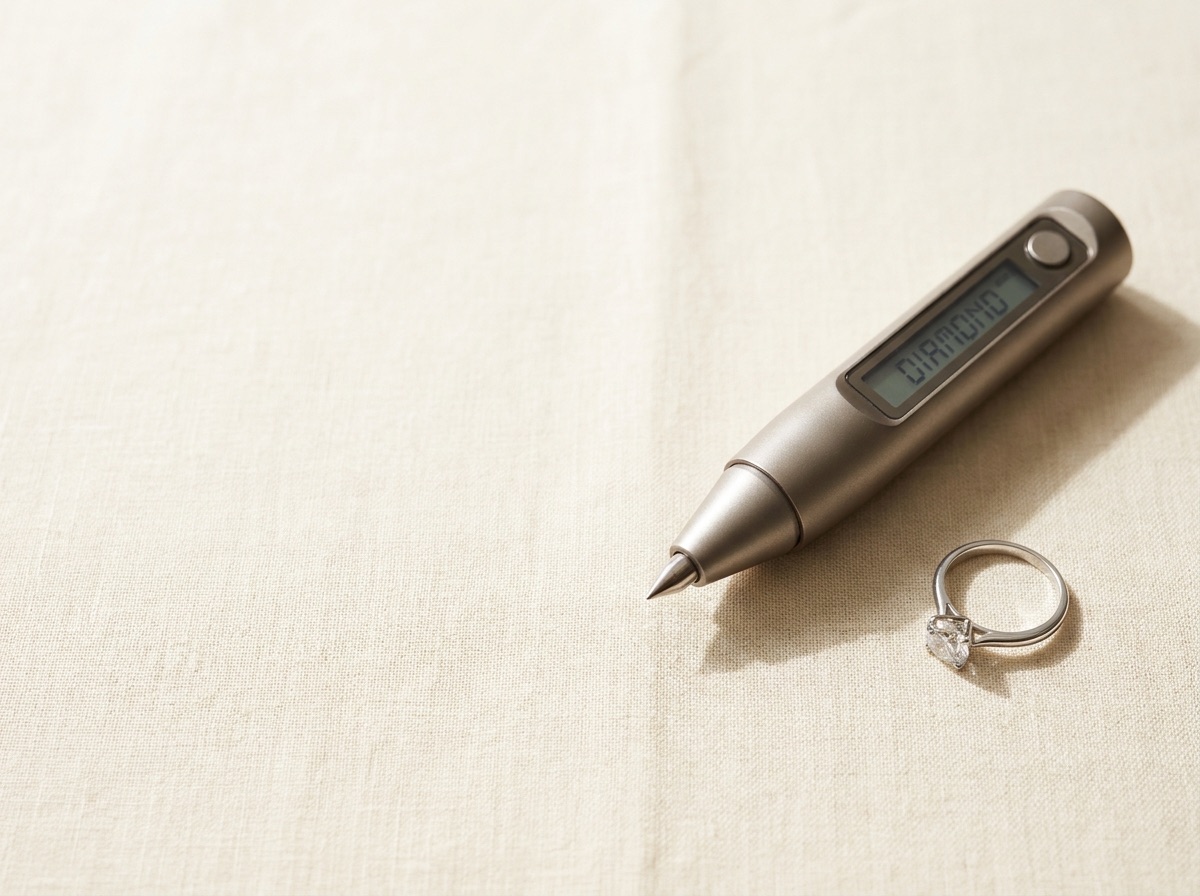
A standard handheld diamond tester — the kind most jewelers own — reads thermal or electrical conductivity, a property genuine diamond has that simulants like cubic zirconia or moissanite mostly don't share. A lab-grown diamond passes that test as a diamond, every time, because it is one — same carbon lattice, same conductivity. A basic counter tester was never built to distinguish origin; it was built to catch simulants, and it does that job identically regardless of whether the diamond in front of it is natural or lab-grown.
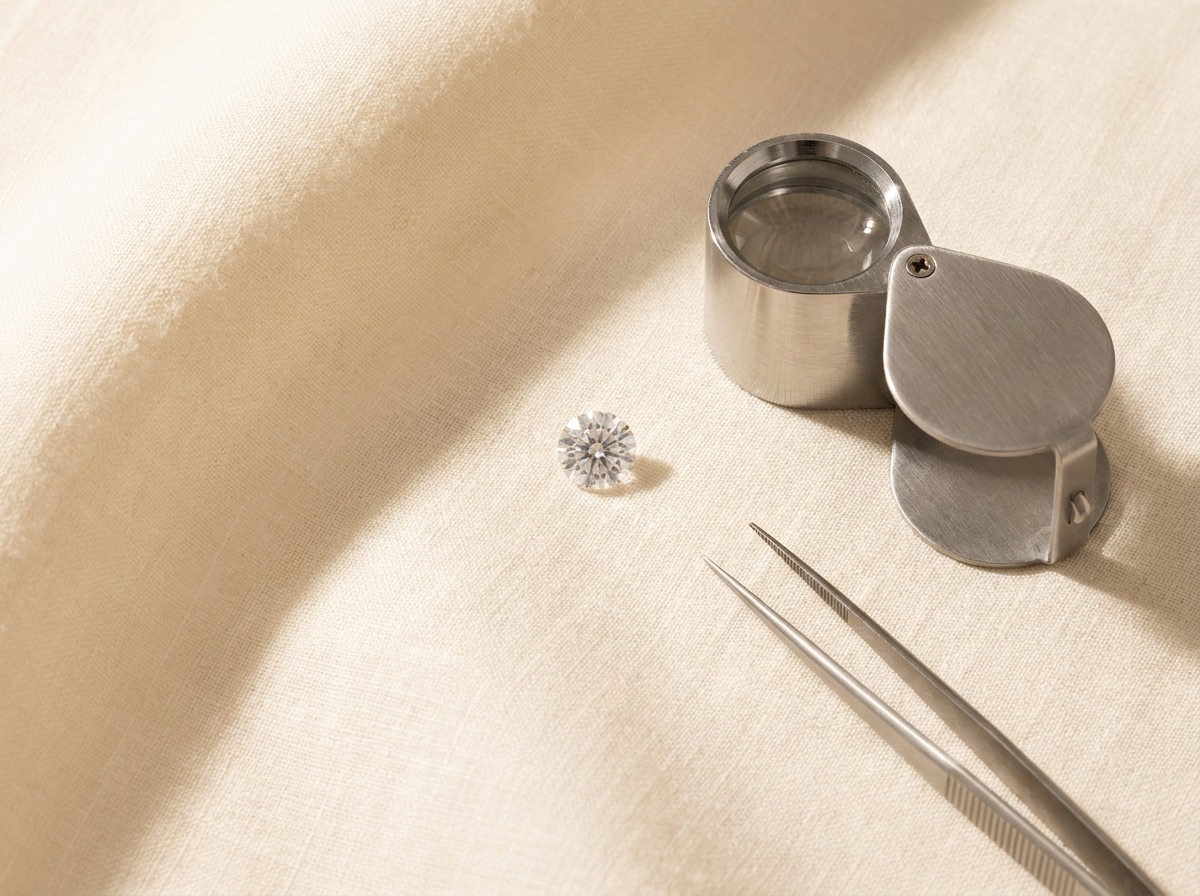
Telling lab-grown apart from natural requires different, specialized equipment — screening instruments used by gemological labs, followed by full spectroscopic verification for a definitive origin call. That's not equipment sitting at a retail counter, and it doesn't need to be, because origin is already documented a more reliable way: certified lab-grown stones carry a laser inscription on the girdle, generally including the report number and standard origin language, so a jeweler or future owner can confirm origin from the certificate itself rather than guessing with a counter device. If a customer asks "will a jeweler down the road be able to tell," the accurate answer points to the certificate and inscription — not a handheld tester, which was never built for that question.
Pairing the Price Conversation With the Value Conversation
This is the part that actually protects margin and the sale. If the entire pitch is "it's the same diamond for less," you've built a price-only case — and price-only cases invite price-only negotiating. The fix is to spend at least as much time on what the customer is actually buying beyond the stone:
- The design is the product, not the stone alone. A custom setting, a reworked heirloom detail, a specific profile or shoulder design — that's craftsmanship the customer is paying for regardless of what the center stone cost. Frame the diamond savings as budget freed up for a better setting, a heavier gold weight, or an upgraded stone size — not just a lower final number.
- Turnaround is a real value, not filler. Finished custom jewelry built in-house on a 4-6 day turnaround is a genuine service advantage worth naming to a customer weighing options — it means less time between "yes" and "wearing it." (This applies to finished custom pieces, not to sourcing loose stones, which run on their own timeline.)
- One conversation, one build. When the diamond and the setting come from the same in-house process, there's one point of accountability for the whole piece — not a stone from one place and a mounting from another with nobody owning the fit between them.
A useful reframe for staff: don't present lab-grown as "the discount version of natural." Present it as freeing up budget within the same spend the customer already had in mind — more design, more metal, more stone size, same total. That keeps the conversation anchored on the piece, not on a comparison to what they didn't buy. Made concrete, this usually plays out as one of three upgrades worth having ready to describe: a bigger center stone at the same total spend, a heavier metal weight or a step up from a plain band to a pavé or halo setting, or more design complexity — a reworked family stone, a bezel or hidden-halo detail, a custom profile instead of a stock mounting. Naming a specific one of these does more work than a general "more for your money" line.
Talking About Carat Size and What's Changed
One of the more practical shifts worth mentioning to a customer: larger center stones that used to sit well outside a typical budget are now realistic conversations, not aspirational ones. A lab-grown upgrade tends to free up the most room at exactly the sizes where natural rarity pricing compounds hardest — the 2-carat-and-up range — so a customer who assumed a 1-carat center stone was the ceiling for their budget is often surprised to learn a 2 or even 3-carat lab-grown stone is on the table for a similar spend. Raising this proactively matters because most first-time shoppers don't know to ask. It's also a natural bridge into the design conversation above — a bigger stone changes what setting makes sense (a thinner band and simpler prong setup, for instance), so carat size and setting style are worth discussing together.
One caveat worth keeping honest: in-stock loose diamonds ship immediately against current inventory, but a specific size or spec outside current stock may require made-to-order cutting on its own timeline, separate from the finished-jewelry build. Don't fold that sourcing timeline into the 4-6 day custom jewelry window when describing it to a customer — they're two different clocks, and conflating them is the kind of overpromise that surfaces at pickup, not at the counter.
Common Objections, Straight Answers
- "My friend said lab-grown doesn't hold value." Natural diamond resale value is famously weak too — most jewelry, mined or grown, is not purchased as an investment vehicle. Retail diamond jewelry of any origin typically resells well below what was paid, because retail pricing reflects design, certification, and service, not just raw material value a resale buyer will pay for. Redirect to what the piece is actually for: something worn and enjoyed, not resold. Avoid the opposite mistake too — don't oversell lab-grown as an "investment" either. Neither claim holds up.
- "Won't it look different in five years?" No — the crystal structure doesn't change based on how it was grown. Wear and care determine how a diamond looks over time, identically for both.
- "Is there a reason you're pushing this over natural?" Frame it as options, not a push: "We carry both — this is just the one that gets you more design and size for the same budget." Never frame it as a knock on natural stones; frame it as a legitimate parallel option.
- "Will a jeweler or appraiser be able to tell it's lab-grown?" Yes, easily and on purpose — the certificate and the girdle inscription document origin plainly, so there's nothing to hide and nothing a future appraisal would "catch." Framing origin disclosure as a positive (it's documented, not concealed) lands better than treating the question as an accusation.
- "Can I get this custom, not off a shelf?" Yes — that's the stronger pitch anyway. Point them toward what custom jewelry actually involves: a built-to-spec piece rather than a stock setting, with the diamond conversation folded into the design conversation from the start.
What Not to Say on the Floor
Most price-conversation mistakes aren't factual errors — they're framing errors that undercut a factually correct answer. A short list worth reviewing with staff:
- Don't call it "the discount version." It's not a cheaper version of a diamond — it's a diamond, sourced a different way.
- Don't promise investment or appreciation value. Neither lab-grown nor natural diamond jewelry should be pitched as gaining value over time. Keep the pitch anchored to design and wear, not resale upside.
- Don't guess at where a stone is cut. "Cut in-house" is the accurate, complete answer.
- Don't apply the 4-6 day promise to loose-stone sourcing. That window is specific to finished custom jewelry built in-house.
- Don't describe melee as individually certified. It's parcel-grade, quality-controlled to a color/clarity baseline.
- Don't promise fancy color outside the actual range. Certified fancy color stones and melee come in yellow, pink, blue, and green — not champagne or cognac.
For the Trade: Making This Part of How You Sell
If you're a retailer or designer sourcing from a wholesale partner, the same logic applies to how you evaluate that partner — not just how your floor staff talk to customers. A supplier who can hand you certified stones, uncertified melee, and finished custom pieces from one place removes a layer of coordination you'd otherwise carry yourself — fewer vendors, one accountability chain, made-to-order sourcing instead of holding inventory against guesses.
It's worth building this script into how new sales staff are onboarded, not just handing them a stone and a price list. A staff member who can answer the equivalence, certification, and diamond-tester questions confidently, in that order, closes more of these conversations cleanly than one improvising an answer for the first time in front of a customer.
Guru Diam runs certified stones, uncertified melee, and finished custom jewelry through one in-house process, with IGI, GIA, and GCAL certification available, from New York and Los Angeles desks supporting 2,000+ active trade accounts. See how it works, or start a conversation through contact us if you're weighing a wholesale relationship for the first time.
Frequently Asked Questions
Why are lab-grown diamonds cheaper than natural diamonds of the same size and quality?
The price difference comes from supply, not quality. Natural diamonds are pulled from a finite, extraction-based source; lab-grown diamonds are produced through a controlled growing process (CVD) that doesn't carry the same scarcity-driven cost. The resulting stones are chemically and optically identical and graded on the same 4Cs standard. The size of the gap isn't fixed either — it tends to widen at larger carat weights, because natural rough rarity compounds with size in a way lab-grown production cost doesn't.
Is a lab-grown diamond a fake diamond?
No. A fake or simulated diamond is a different material altogether, such as cubic zirconia or moissanite, made to resemble a diamond visually. A lab-grown diamond is carbon crystallized into the same structure as a natural diamond — the same hardness, brilliance, and optical properties — just grown under controlled conditions rather than mined.
Are lab-grown diamonds certified the same way as natural diamonds?
Loose lab-grown diamonds 0.30 carats and above are graded by the same independent labs used for natural stones — IGI, GIA, or GCAL — using the same 4Cs criteria. Melee-size accent stones are the exception — they're sold as uncertified parcel goods matched to a consistent color and clarity baseline rather than individually graded, which is standard practice across the industry for accent-size stones.
How should I answer a customer who asks "what's the catch" with lab-grown pricing?
Answer directly: there isn't one. The stone is the same diamond, graded to the same standard; the price reflects a different, production-based sourcing model rather than a compromise in the product. Avoid framing it as a "deal" — that undercuts the equivalence point and can make the stone sound lesser rather than simply differently sourced.
Will a standard diamond tester at a jewelry counter tell the difference between lab-grown and natural?
No. A typical handheld tester reads thermal or electrical conductivity, a property genuine diamond has regardless of origin, so a lab-grown stone reads as "diamond" every time — correctly, since it is one. Distinguishing origin requires specialized gemological screening equipment, not a counter tester. Certified lab-grown stones also carry a laser inscription on the girdle disclosing origin, the actual documented record a jeweler or appraiser would reference.
How do I keep a lab-grown price conversation from turning into a pure discount negotiation?
Shift the conversation from the stone to the piece as soon as the equivalence question is settled. Talk about the design, the setting, the metal weight, or the option to build custom rather than off a shelf — position the price difference as freeing up budget for a better piece, not as the entire reason to buy. Naming a specific upgrade — a larger center stone, a heavier band, a design detail — works better than a general "more for your money" line.