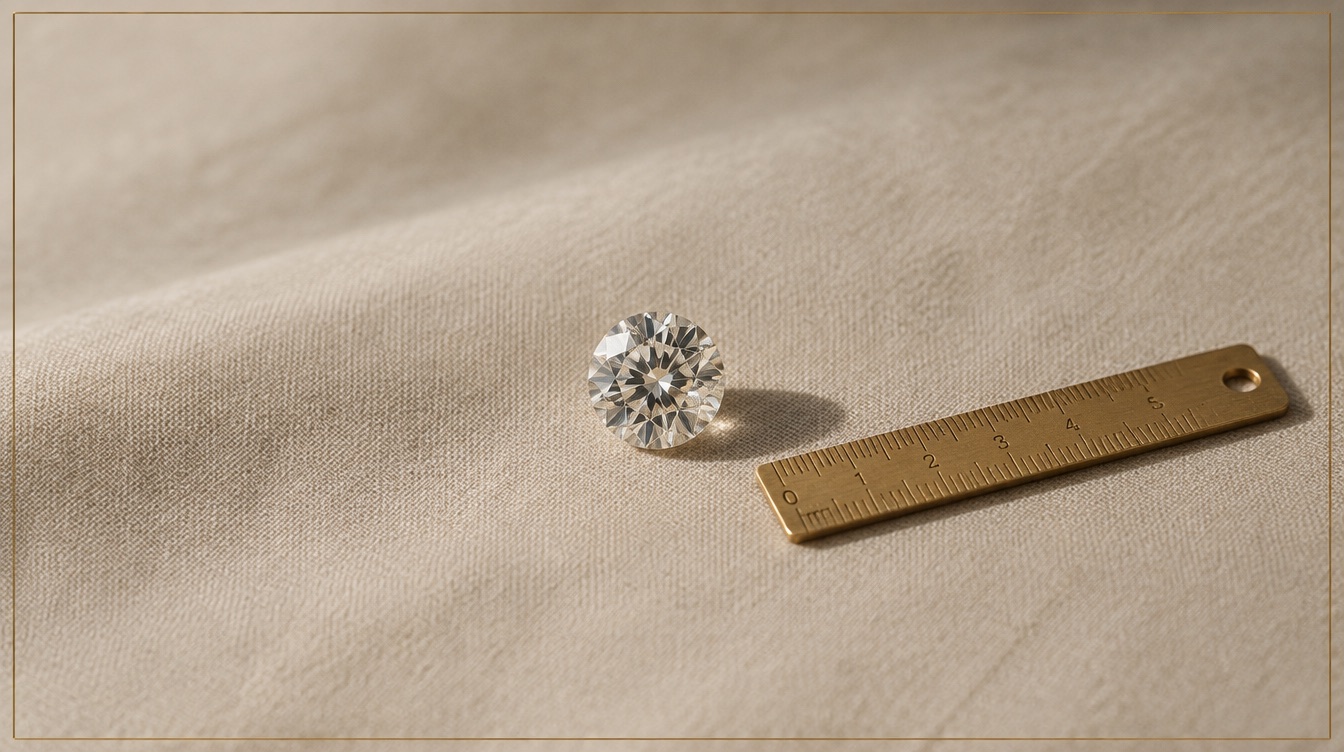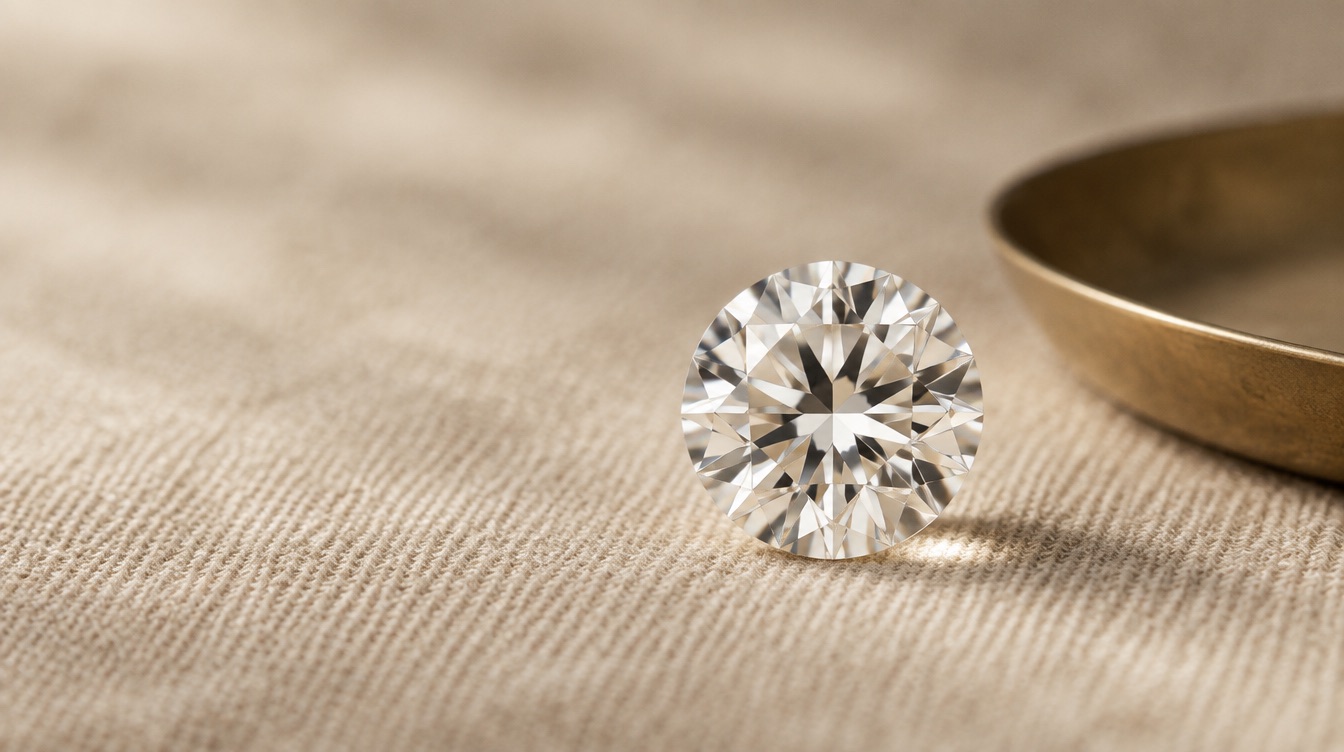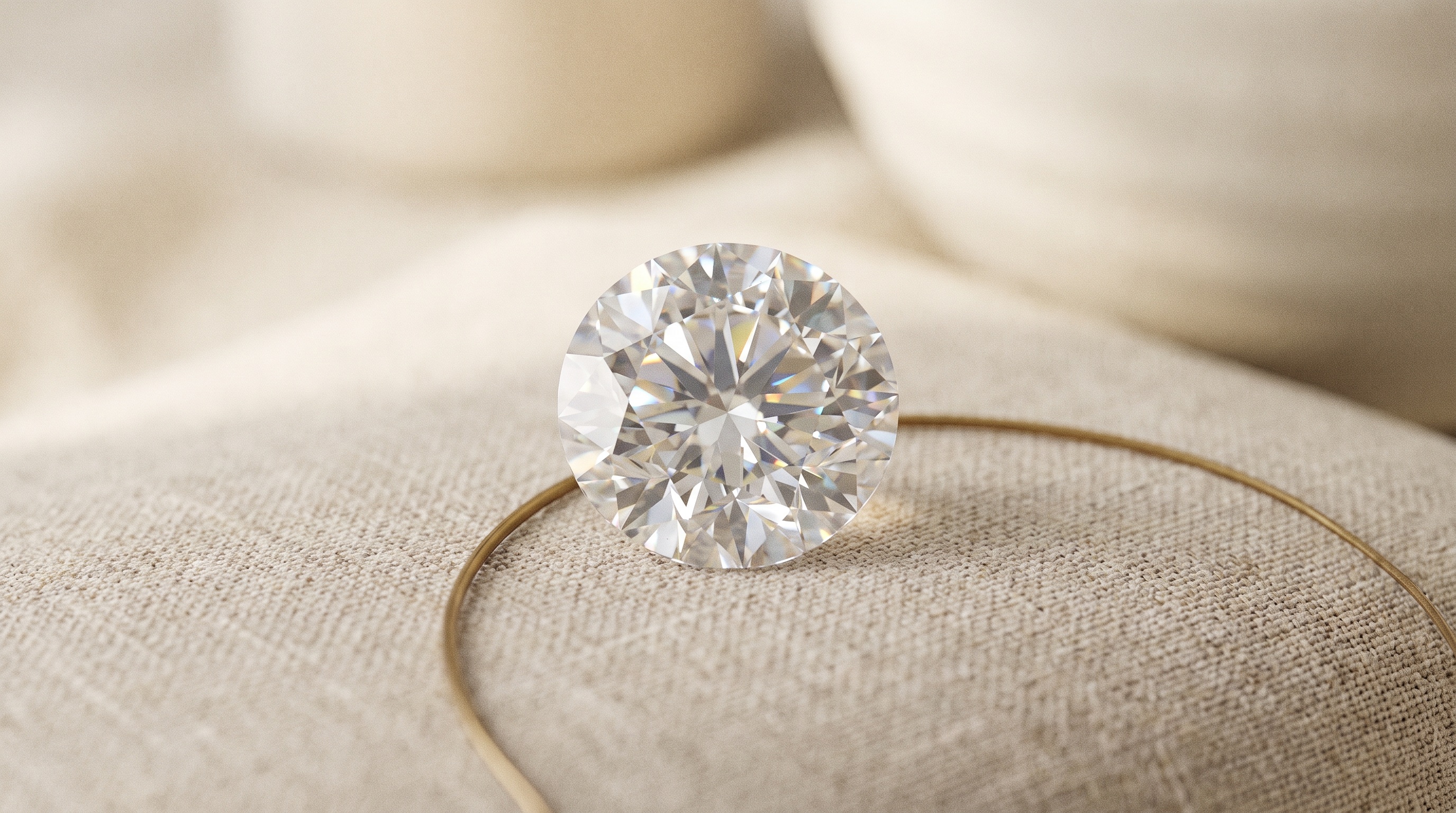
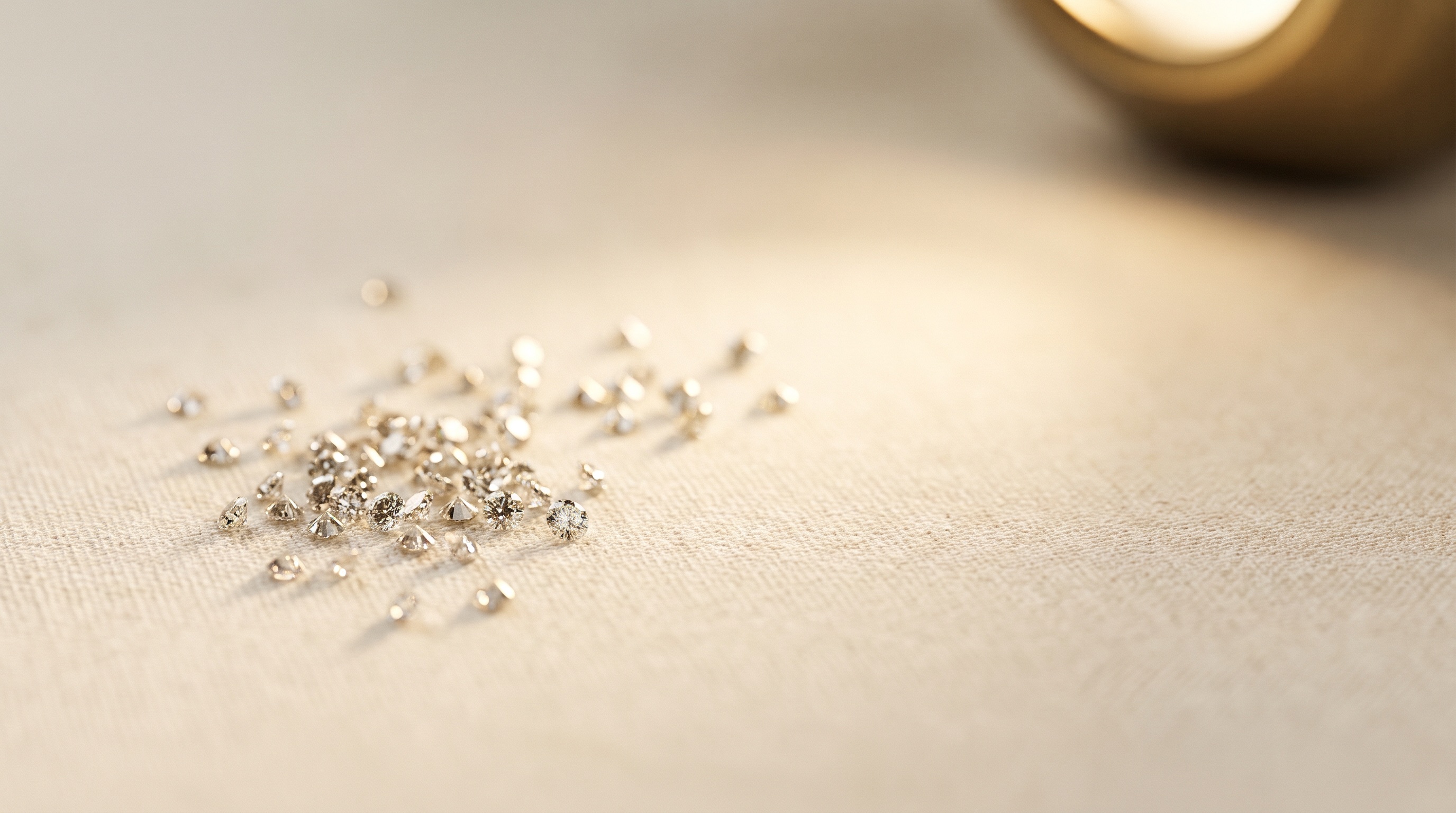
A Swiss cut diamond is a small melee diamond faceted with roughly 33 to 34 facets — an intermediate faceting style that sits between a basic single cut (17 to 18 facets) and a full, or "brilliant," cut (57 to 58 facets). It's a trade term describing facet count and cutting complexity at very small sizes, not a shape, color, or quality grade, and it exists specifically because full-cut faceting isn't always practical or cost-effective at the smallest melee sizes.
This guide covers what actually distinguishes a Swiss cut from single cut and full cut melee, why facet count scales down as stone size shrinks, where Swiss cut stones typically show up in jewelry production, how they compare visually and in pricing to full-cut melee, and what a jeweler sourcing melee at volume should know about this less commonly discussed cutting tier.
What "Swiss Cut" Actually Means
In melee terminology, "cut" describes facet count and arrangement rather than shape. A round melee diamond can be faceted in more than one way depending on its size and intended use, and Swiss cut is one of three commonly referenced tiers in that hierarchy, sitting between the simplest and most complex faceting styles available for very small round stones.
Single Cut
The simplest faceting style, typically 17 or 18 facets total — a table, a culet or point, and a small number of crown and pavilion facets. Single cut is used for the smallest melee sizes, where cutting a full complement of facets isn't practical given how little surface area is available to work with.
Swiss Cut
An intermediate style, typically 33 or 34 facets, adding additional crown and pavilion facets beyond the single cut arrangement without reaching full brilliant complexity. It represents a middle ground in both cutting labor and light-return performance.
Full Cut (Brilliant Cut)
The standard round brilliant facet arrangement, 57 or 58 facets, used for most melee above a certain size threshold and for the vast majority of center-stone round brilliants at any size.
Facet Count Comparison Table
| Cut Style | Approximate Facet Count | Typical Size Range | Relative Light Performance |
|---|---|---|---|
| Single Cut | 17–18 | Smallest melee, generally well under 1mm | Basic — noticeably less brilliance and fire than full cut |
| Swiss Cut | 33–34 | Small-to-mid melee, an intermediate size band | Moderate — a visible step up from single cut, still short of full cut |
| Full Cut (Brilliant) | 57–58 | Standard melee and virtually all center-stone round brilliants | Strongest — the facet arrangement standard cut grading is built around |
Why Facet Count Scales Down at Small Sizes
Cutting a full 57- or 58-facet brilliant arrangement requires enough physical surface area on the stone for each facet to be meaningfully distinct and precisely placed. As a diamond gets smaller, that available surface area shrinks faster than facet count can proportionally follow, and at a certain point adding more facets stops improving appearance and starts adding cutting cost and labor without a corresponding visual payoff — or becomes simply impractical to execute with precision at all. Single cut and Swiss cut faceting exist to match cutting complexity to what a given melee size can actually support, rather than forcing full-cut faceting onto stones too small to benefit from it.
This is a purely practical, cost-and-scale-driven distinction rather than a quality judgment — a well-executed Swiss cut stone at its intended size isn't a lesser diamond, it's a diamond faceted appropriately for its size and intended role in a piece, generally as calibrated parcel goods rather than individually graded stones.
Visual Differences: Swiss Cut vs. Full Cut Melee
At typical melee viewing distance — set densely in pavé, a halo, or a shank accent — a full-cut melee stone generally shows more distinct, separated flashes of light (scintillation) as it moves, since its higher facet count creates more individual light-return points. A Swiss cut stone at the same size shows a softer, less distinctly separated sparkle pattern, since fewer, larger facets are doing the same light-return job. In isolation and viewed closely, the difference is fairly apparent to a trained eye; set at scale in a finished piece and viewed at normal wearing distance, the difference is far more subtle, particularly once melee is small enough that individual facet performance matters less than the aggregate sparkle of many stones together.
Where Swiss Cut Stones Are Actually Used
Swiss cut melee shows up most often in production contexts where cost efficiency at volume matters more than maximizing individual stone brilliance — commercial-grade pavé and accent work at accessible price points, vintage and antique-style reproduction pieces where a softer, less aggressively brilliant sparkle is actually the intended look, and certain finding and component applications where very small stones are used more as texture and shimmer than as individually notable diamonds. Full-cut melee remains the standard choice for most modern pavé, halo, and side-stone work where maximum brilliance is the goal, which is part of why Swiss cut is a less commonly discussed melee tier today than it was in earlier eras of jewelry manufacturing.
Swiss Cut and Antique or Vintage-Style Design
Because Swiss cut faceting produces a softer, less overtly brilliant sparkle than full-cut melee, it shows up more often in antique reproduction and vintage-style jewelry, where a period-appropriate, less clinical sparkle is a deliberate design choice rather than a limitation. This pairs conceptually with antique center-stone cuts like old mine and old European, which similarly trade some modern brilliance for a warmer, more historically accurate light character — a designer building a genuinely antique-feeling piece may specifically choose Swiss cut or single cut melee accents for this reason, rather than defaulting to full-cut melee purely on habit.
Pricing Considerations for Swiss Cut Melee
Swiss cut melee is generally priced closer to single cut than to full-cut melee at a comparable size, reflecting its intermediate cutting complexity and lower per-stone labor relative to a full brilliant arrangement. For a jeweler sourcing melee at volume, the practical pricing consideration isn't usually "Swiss cut versus full cut at the same size" as a direct substitution decision — the two serve somewhat different design purposes — but rather understanding which cutting tier a given supplier's "melee" listing actually refers to, since facet count isn't always specified clearly in casual product descriptions the way carat weight, color, and clarity typically are.
Swiss Cut Melee: Certification and Quality Sourcing
Like other melee, Swiss cut stones are sourced and quality-checked as calibrated parcel goods against a consistent color and clarity baseline rather than certified individually — melee generally isn't certified stone-by-stone regardless of facet count, reserving individual certification for loose stones at 0.30ct and above. A buyer sourcing Swiss cut or single cut melee for a specific design should confirm facet count explicitly with the supplier, since it's not a standardized field on most melee spec sheets the way size, color, and clarity are, and request a physical sample where possible before committing to volume, since facet arrangement is easier to evaluate by eye than to fully specify in writing.
A Brief History of Melee Cutting Standards
Facet-count tiers like single cut, Swiss cut, and full cut developed as cutting technology and tooling evolved over the twentieth century. In earlier eras, cutting a full 57- or 58-facet brilliant arrangement onto very small stones was more labor-intensive and technically demanding than it is with modern precision cutting equipment, which made single cut and Swiss cut genuinely practical necessities for melee-scale work rather than stylistic choices. As automated and semi-automated cutting technology improved, full-cut faceting became achievable at smaller and smaller sizes without a proportional increase in labor cost, which gradually pushed full-cut melee down into size ranges that would once have been cut as Swiss cut or single cut by default. That's the main reason Swiss cut has become a less commonly discussed term today than it was decades ago — modern equipment has narrowed the size range where the intermediate tier is the practical default choice, even though it hasn't eliminated Swiss cut's legitimate design uses entirely.
How Swiss Cut Fits Into Modern CVD Melee Production
CVD lab-grown rough is grown with a level of consistency and predictability that natural rough doesn't offer, and modern cutting facilities producing lab-grown melee at commercial scale are generally equipped to cut full brilliant facets even at quite small sizes without the labor penalty that made Swiss cut and single cut a near-default choice in earlier decades. In practice, this means full-cut melee has become the standard default for most lab-grown melee production today, with Swiss cut and single cut sourced more deliberately for specific design requirements — antique-style reproduction work, cost-sensitive commercial accent pieces, or a jeweler's specific stylistic request — rather than as an automatic size-driven default the way it more often was with natural melee cutting in the past.
Swiss Cut vs. Rose Cut and Other Antique Melee Styles
Swiss cut is sometimes mentioned alongside other antique and specialty melee cutting styles, but it's worth keeping the categories distinct. Rose cut is a genuinely different facet arrangement — a flat bottom with a domed, faceted crown and no pavilion at all — producing a soft, candlelit sparkle quite different from either Swiss cut or full brilliant cut, and rose cut melee is chosen specifically for that flat-backed, low-profile silhouette rather than for any facet-count efficiency reason. Swiss cut, by contrast, retains the standard crown-and-pavilion brilliant structure, just with fewer facets than a full cut. A jeweler planning an antique-reproduction piece should be specific about which of these styles they actually want, since "antique-style melee" on its own could reasonably refer to rose cut, Swiss cut, single cut, or even old mine-style faceting depending on the exact period and look being reproduced.
Evaluating Swiss Cut Quality: What to Check
Because Swiss cut melee is sourced as calibrated parcel goods rather than individually graded, quality evaluation focuses on consistency across the parcel rather than certificate-level detail on any single stone. A buyer evaluating a Swiss cut melee parcel should check for consistent size calibration across all stones (since even small size variation is more visually obvious in a dense pavé or halo setting than it would be with a single center stone), even color and clarity within the parcel's stated grade range, and — specific to Swiss cut and other reduced-facet styles — consistent facet execution, since a poorly cut Swiss cut stone can look noticeably duller or more uneven than a well-executed one at the same nominal facet count. Requesting a physical sample before committing to a full parcel order is good practice with any melee purchase, and it's particularly useful with a less commonly stocked style like Swiss cut, where quality can vary more between cutting sources than it does for standard full-cut melee.
Swiss Cut in Fancy Color Melee
Reduced-facet cutting styles like Swiss cut aren't limited to white diamond melee — the same facet-count logic can apply to small fancy color melee stones as well, particularly in antique-style or vintage-reproduction pieces incorporating colored accent stones. In practice, fancy color melee at commercial wholesale scale is overwhelmingly cut full brilliant today for the same reasons white CVD melee is, but a buyer with a specific antique-style fancy color design should raise the facet-count question directly with a supplier rather than assume every "fancy color melee" listing refers to full-cut stones by default.
Common Misconceptions About Swiss Cut Diamonds
- "Swiss cut refers to a country of origin." The name doesn't indicate where the stone was cut, mined, or sold — it's a facet-count terminology, like single cut and full cut, unrelated to geographic origin.
- "Swiss cut is a shape." Swiss cut describes facet arrangement on a round stone, not a distinct outline shape — it's a cutting-style term, not a shape category like round, princess, or emerald.
- "Swiss cut melee is lower quality than full cut." It's a different facet arrangement matched to smaller sizes and specific design goals, not an inferior grade — a well-executed Swiss cut stone at its intended size and use case performs exactly as expected for that cutting tier.
Swiss Cut and Total Carat Weight Calculations
For a jeweler pricing out a piece with dense melee accents, total carat weight (often abbreviated TCW or TDW) is calculated the same way regardless of facet-count tier — by summing the actual weight of every stone in the setting. Facet count doesn't directly affect a stone's carat weight, since weight is a function of the rough crystal's mass rather than how many facets were cut into it, but it can indirectly affect how much material is removed during faceting: a full-cut stone, with more facets to grind and polish, can lose marginally more material at the margins during cutting than a Swiss cut or single cut stone of the same starting size, though this difference is generally too small to matter for practical sourcing and pricing purposes at melee scale. What matters more for a buyer comparing quotes across cutting styles is confirming that per-carat pricing and total weight figures are being calculated consistently across every option under consideration, since facet-count terminology isn't always used with the same precision from one supplier's price sheet to the next.
Communicating Facet-Count Requirements to a Supplier
Because Swiss cut isn't a standard filter on most melee catalogs or price sheets the way size, color, and clarity typically are, a buyer with a specific need for Swiss cut, single cut, or another reduced-facet style should raise the requirement explicitly and early in a sourcing conversation rather than assuming a general melee order will default to the intended cutting style. Useful details to specify up front include the intended design context (a specific antique-reproduction piece, a cost-sensitive commercial accent design, or a particular vintage-inspired collection), the approximate size range needed, and whether a physical sample or reference photo is available to confirm the exact look being targeted. A supplier unfamiliar with a buyer's specific vintage-reproduction goals can otherwise default to standard full-cut melee, which may not deliver the softer, more period-appropriate sparkle the design actually calls for.
Why This Terminology Still Matters for Trade Buyers
Even as full-cut melee has become the default at most modern sizes, understanding facet-count terminology like Swiss cut remains genuinely useful for a working jeweler for a few concrete reasons: it helps in accurately describing and appraising older or estate pieces that may contain single cut or Swiss cut melee from an earlier era of manufacturing, it gives a designer a precise vocabulary for specifying an intentionally antique or vintage-appropriate look in new production, and it helps a buyer ask better, more specific questions when a melee listing's facet count isn't otherwise clear from a basic product description. A jeweler who can distinguish single cut, Swiss cut, and full cut by sight and by name is simply better equipped to evaluate melee quality accurately, whether working with new production or an older piece brought in for repair, resale, or appraisal.
Sourcing Melee Wholesale, Including Specialty Cutting Styles
Guru Diam sources CVD lab-grown melee across the standard 0.8mm to 9.0mm range, in round brilliant and fancy calibrated shapes, at a DEF+/VS+ quality baseline, for jewelers producing pavé, halo, and side-stone designs at commercial scale. Buyers with a specific facet-count or antique-cutting-style requirement — including Swiss cut or single cut melee for vintage-style reproduction work — should raise that requirement directly with a trade account representative, since facet arrangement for very small melee is typically confirmed and sourced against a specific project need rather than listed as a standard catalog filter. Trade buyers can review general melee and matching-pair inventory through matching pairs, browse certified loose stones for center-stone work at certified diamonds, and apply for a wholesale account through trade partner. Current terms are posted at the wholesale hub, and buyers designing a full custom piece can start at custom jewelry.
Frequently Asked Questions
What is a Swiss cut diamond?
A Swiss cut diamond is a small melee stone faceted with roughly 33 to 34 facets, an intermediate cutting complexity between single cut (17–18 facets) and full brilliant cut (57–58 facets). It describes facet count, not shape, color, or quality grade.
How many facets does a Swiss cut diamond have?
Typically 33 or 34 facets, more than a single cut stone's 17 to 18 facets but fewer than a full brilliant cut's 57 to 58 facets.
Is Swiss cut a lower-quality diamond?
No. It's a facet arrangement suited to smaller melee sizes and specific design goals — such as a softer, more antique-appropriate sparkle — rather than an inferior grade. Quality within any cutting tier is still evaluated by execution, color, and clarity.
What's the difference between Swiss cut and full cut melee?
Full cut (brilliant) melee has 57 to 58 facets and produces the strongest, most separated scintillation. Swiss cut has roughly half that facet count and produces a softer, less distinctly separated sparkle, generally at a lower per-stone cutting cost.
Where is Swiss cut melee typically used?
It's most common in cost-efficient commercial pavé and accent work, and in antique or vintage-style reproduction jewelry where a softer, less overtly brilliant sparkle is a deliberate design choice rather than a limitation.
Is Swiss cut melee individually certified?
No. Like other melee regardless of facet count, Swiss cut stones are sourced and quality-checked as calibrated parcel goods against a color and clarity baseline rather than certified individually. Individual certification applies to loose stones at 0.30ct and above.
Can Swiss cut melee be used alongside full-cut melee in the same piece?
It's technically possible, but generally not recommended for a cohesive look, since the two cutting styles produce visibly different sparkle patterns side by side. Most designs use one cutting style consistently throughout a piece's melee accents, reserving mixed styles for intentional design contrast rather than incidental sourcing convenience.
Guru Diam is a trade-only wholesale diamond supplier with locations in New York and Los Angeles, sourcing CVD lab-grown melee and loose diamonds across standard, antique, and fancy shapes, alongside natural diamonds and finished jewelry, with IGI, GIA, and GCAL certification available on certified loose stock. Browse current inventory in matching pairs or apply for a trade account through trade partner.