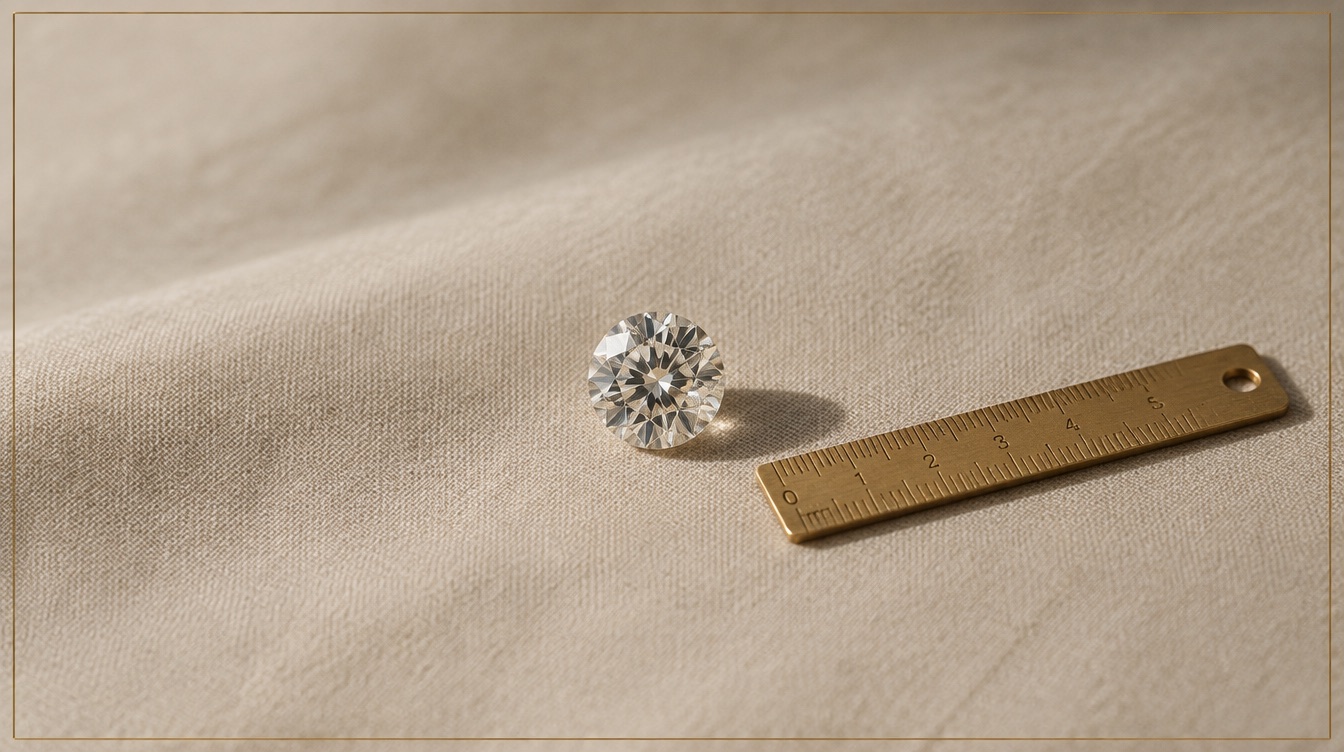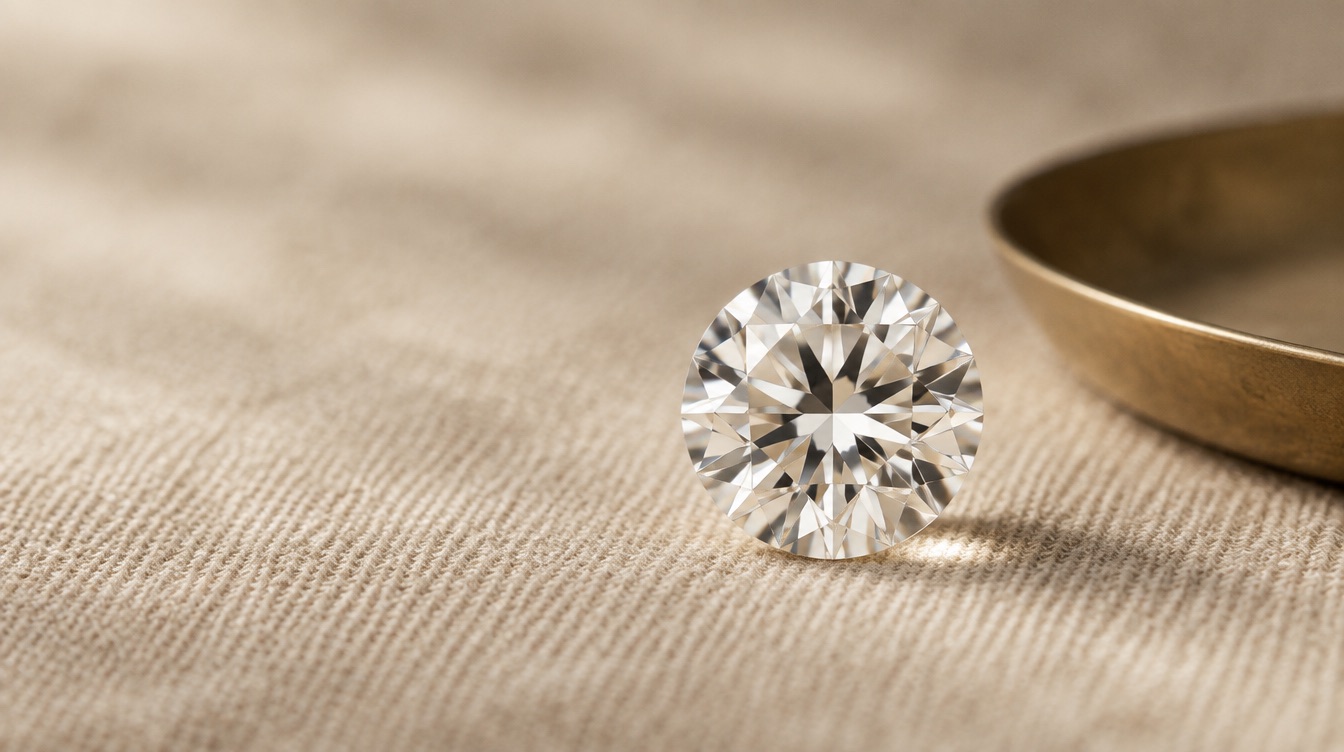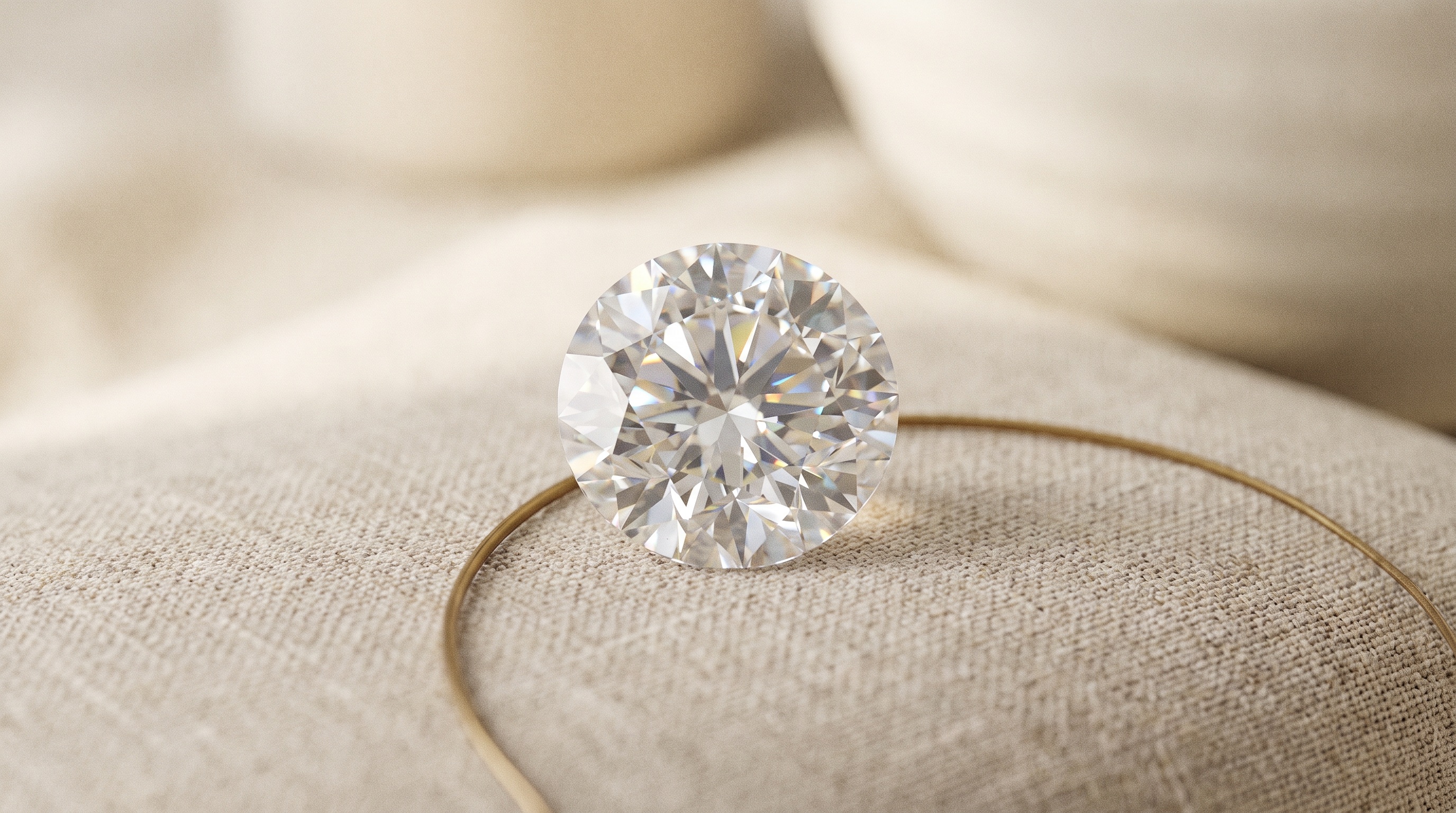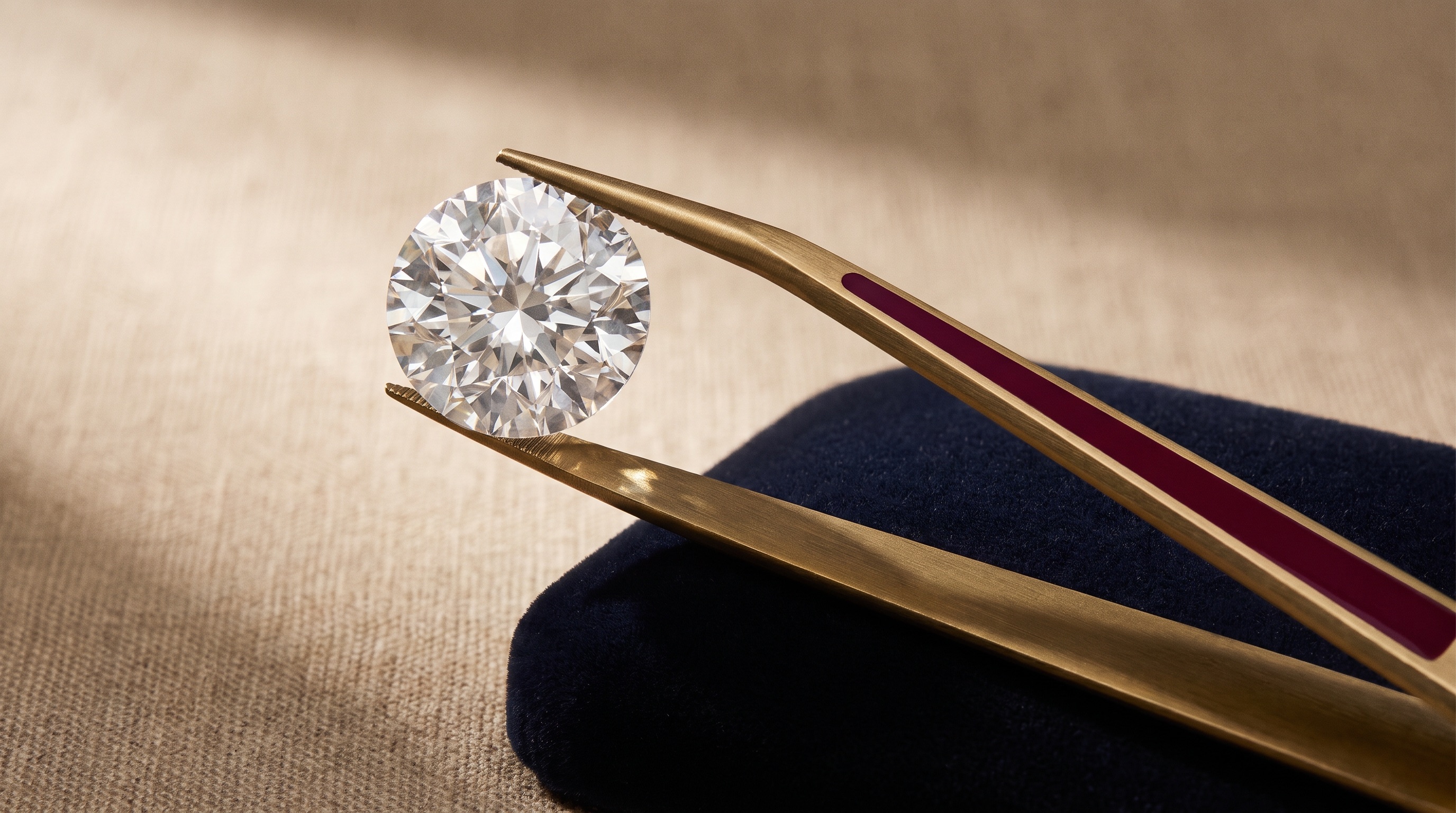
A super ideal cut diamond is a round brilliant cut to proportions, symmetry, and polish standards that exceed the top grading category ("Ideal" or "Excellent") issued by major labs like GIA and IGI — a stricter, more selective tier applied by specific graders such as AGS (American Gem Society), which uses a 0-10 scale with 0 as its top "Ideal" grade, or by proprietary in-house standards some retailers use to label a subset of their own inventory. The term isn't an official grade printed on a standard GIA or IGI report; it's a marketing and quality-control label describing a diamond that clears the additional light-performance and optical-symmetry testing needed to earn a "hearts and arrows" pattern or an AGS 000 grade. Understanding exactly what backs the claim on a given stone matters more here than with most cut-grade terminology, since the label alone carries no guaranteed, industry-wide meaning.
Why "Super Ideal" Isn't a Standard Lab Grade
GIA and IGI, the two most widely used grading labs, both cap their cut grade scale at "Excellent" (GIA) or "Ideal" (IGI) — there is no higher official tier above that on either lab's standard report. "Super ideal" is a term retailers and some independent labs use to describe diamonds that not only earn that top grade, but also pass additional, stricter testing beyond what a standard report captures — most commonly optical symmetry testing for a hearts and arrows pattern, or a proprietary internal cutoff tighter than the lab's own published Excellent/Ideal range. Because the term isn't standardized industry-wide, two diamonds both marketed as "super ideal" by different sellers aren't necessarily held to identical criteria — buyers should ask specifically what additional testing or grading standard backs the claim, rather than treating "super ideal" alone as a guaranteed, uniformly defined tier.
How Standard Cut Grading Works
GIA's cut grade (Excellent, Very Good, Good, Fair, Poor) and IGI's equivalent scale (Ideal, Excellent, Very Good, Good, Fair, Poor) are both calculated from a set of measured proportions — table percentage, depth percentage, crown angle, pavilion angle, girdle thickness, and culet size — combined with an assessment of symmetry and polish. A stone earning the top grade on either scale already reflects proportions calculated to return strong brilliance and fire under standard lighting conditions. See GD's round brilliant diamond cut guide and diamond anatomy guide for a full breakdown of how each of these proportions is measured and why they matter.
AGS Cut Grading and the 000 Ideal Grade
The American Gem Society uses a numeric 0-10 scale for cut grade, with 0 (labeled "Ideal") as the top tier — a narrower, more mathematically precise band than GIA's Excellent category, which covers a somewhat wider proportion range within its own top tier. AGS's system also incorporates computer-modeled light performance analysis (ray-tracing simulation of how light actually behaves inside a specific stone's exact proportions) alongside proportion-based grading, which is part of why an AGS 000 stone is often used interchangeably with "super ideal" in trade conversation — it represents a grading standard genuinely built for a top tier above GIA Excellent, rather than a proportion range GIA already reports at its own top grade.
Hearts and Arrows: The Optical Symmetry Test
The most common way "super ideal" is demonstrated visually is through a hearts and arrows pattern — when a round brilliant with sufficiently precise optical symmetry is viewed through a specialized viewer, its facets create a symmetrical pattern of eight arrows visible from the top (face-up) and eight hearts visible from the bottom (face-down). This pattern only appears clearly when a stone's facets are cut and aligned with very high precision; any meaningful asymmetry in facet angles or placement breaks up the pattern into an incomplete or distorted image. A true hearts and arrows stone has passed this specific optical test, which is stricter and more visually verifiable than proportion numbers alone, since it directly demonstrates optical precision rather than inferring it from measured angles.
Does Super Ideal Cut Actually Look Better?
A well-cut GIA Excellent or IGI Ideal round brilliant already delivers strong brilliance and fire to the naked eye, and the visible difference between a standard top-grade stone and a true super ideal / hearts and arrows stone is genuinely subtle under normal viewing conditions — most buyers cannot reliably distinguish the two without a trained eye, magnification, or specialized viewing equipment. The difference shows up more meaningfully in controlled light-performance testing (scintillation pattern, light return under varied lighting angles) than in everyday retail lighting. This doesn't mean super ideal cut is a marketing gimmick — the optical precision is real and measurable — but buyers should calibrate expectations: it's a meaningful premium for a genuine but incremental optical improvement over an already well-cut stone, not a dramatic visible upgrade. Side-by-side comparison under a jeweler's controlled lighting setup is generally the only reliable way for an untrained buyer to actually perceive the difference at all.
Cost Premium for Super Ideal Cut
Super ideal and hearts and arrows stones typically carry a real price premium over an equivalent GIA Excellent or IGI Ideal stone with the same carat, color, and clarity — reflecting both the rarer proportion tolerances required and the additional yield loss a cutter accepts when cutting to a stricter standard from the same piece of rough. The size of this premium varies by supplier and by how strict the specific "super ideal" standard actually is; a stone verified to a true AGS 000 or independently confirmed hearts and arrows pattern generally commands a larger, more justified premium than a stone simply marketed as "super ideal" without a specific third-party standard behind the claim.
Super Ideal Cut and Carat Weight Tradeoffs
Cutting to the narrower proportion tolerances required for a super ideal or AGS 000 grade sometimes means a cutter sacrifices a small amount of carat weight from the original rough that a less strict cut would have retained — prioritizing optical precision over maximum retained weight. This is a deliberate tradeoff cutters make when targeting the super ideal tier specifically, and it's part of why super ideal stones can be somewhat less common at every carat weight than standard Excellent or Ideal stones of the same size; not every rough yields an efficient path to both a specific target weight and the stricter proportion window at once.
Super Ideal Cut vs. Standard Excellent/Ideal at a Glance
| Factor | Standard Excellent/Ideal (GIA/IGI) | Super Ideal / AGS 000 / Hearts and Arrows |
|---|---|---|
| Grading standard | Standard lab proportion range | Narrower proportion window + optical symmetry testing |
| Visible difference to naked eye | Strong brilliance and fire | Subtle additional refinement, hard to see without training/equipment |
| Price premium | Baseline for top-grade stones | Real premium, size varies by supplier and standard |
| Availability | Widely available at every carat weight | Less common, especially at larger carat weights |
| Verification method | GIA/IGI report cut grade field | AGS report, hearts and arrows viewer, or supplier-specific documentation |
How to Verify a Super Ideal Cut Claim
Because "super ideal" isn't a term GIA or IGI print on a standard report, buyers should ask what specifically backs the claim on any stone marketed that way: an AGS report showing a 000 grade, documented hearts and arrows imagery from a viewer test, or a named third-party proportion standard the seller applies consistently. A seller unable to produce any of these — offering only the label itself without supporting documentation — should be treated with more skepticism than one who can point to a specific, checkable standard. This is also worth confirming before paying a meaningful premium, since the gap between a genuinely tested super ideal stone and one simply marketed with the phrase can be significant in both price justification and actual optical quality.
Super Ideal Cut Across Diamond Shapes
Hearts and arrows and AGS 000-style super ideal grading is most developed and most commonly applied to round brilliant cut diamonds, since the round brilliant's symmetrical facet arrangement is what produces the specific hearts and arrows optical pattern in the first place. Fancy shapes — oval, cushion, emerald, pear, marquise, and antique cuts — don't have an equivalent standardized "super ideal" optical test in the same widely recognized way, since their facet patterns aren't built around the same eightfold symmetry. Cut quality still varies meaningfully among fancy shapes and remains worth evaluating carefully (see GD's shape-specific guides, including the marquise diamond buying guide), but buyers shouldn't expect to find a "super ideal marquise" backed by the same hearts and arrows testing used for rounds.
Light Performance Tools Used to Evaluate Super Ideal Claims
Beyond proportion measurements and hearts and arrows viewers, several specialized optical tools are used in the trade to evaluate a round brilliant's actual light performance more directly. An ASET (Angular Spectrum Evaluation Tool) scope shows a color-coded map of how light enters and exits a stone from different angles, letting a grader see the distribution of brilliance, contrast, and light leakage across the whole stone rather than inferring it from proportion numbers alone. An Ideal-Scope, a simpler and more widely available viewer, shows light leakage as a red-and-white pattern, making it easy to spot a stone with visible dark zones or excessive light leakage even without formal training. Diamonds marketed as super ideal are sometimes sold with ASET or Ideal-Scope imagery included specifically to demonstrate the claim visually, which is a more concrete form of evidence than the label alone.
Reading an AGS Report for Cut Grade Detail
An AGS report breaks cut grade into three component scores — light performance, proportions, and craftsmanship (which itself combines polish and symmetry) — each scored on the same 0-10 scale, with the overall cut grade reflecting the combination of all three. This component-level detail lets a buyer see specifically where a stone excels or falls short, rather than relying on a single combined number the way a standard GIA or IGI report's overall cut grade field does. A stone earning 0 (Ideal) across all three AGS component scores represents the strictest, most complete version of what "super ideal" is generally understood to mean in the trade, and is a more rigorously documented claim than a stone simply labeled "super ideal" by a seller without an AGS report backing it.
Common Misconceptions About Super Ideal Cut
A few misunderstandings come up often enough to address directly. First, "super ideal" does not mean a stone is automatically higher in color or clarity grade — cut, color, and clarity are independent grading categories, and a super ideal cut stone can carry any color or clarity grade, including lower ones. Second, a stone doesn't need to show a picture-perfect hearts and arrows pattern to be an excellent, well-performing diamond — the vast majority of well-cut GIA Excellent and IGI Ideal stones never undergo hearts and arrows testing at all, simply because most buyers and sellers don't request it, not because the stones would necessarily fail it. Third, "ideal cut" alone (without "super") is sometimes used loosely by retailers as a marketing term distinct from IGI's specific "Ideal" grade label — buyers should check whether "ideal" on a given listing refers to an actual lab-issued grade or just general marketing language describing a well-cut stone.
Is Super Ideal Cut Worth It for Every Buyer?
Super ideal cut makes the most sense for buyers specifically prioritizing maximum optical performance and willing to pay a real premium for an incremental, hard-to-see-unaided improvement over an already well-cut stone — often buyers who are knowledgeable about cut quality themselves or are working with a jeweler who can demonstrate the difference under proper viewing conditions. For most buyers, a verified GIA Excellent or IGI Ideal stone with strong reported proportions already delivers excellent, naked-eye-indistinguishable brilliance at a materially lower cost, making the super ideal premium harder to justify unless the specific documentation and price make sense for that individual purchase.
Super Ideal Cut and Lab-Grown vs. Natural Diamonds
Cut grading standards — including AGS's 000 tier and hearts and arrows optical testing — apply identically to lab-grown CVD diamonds and natural diamonds, since both are chemically and optically identical carbon crystals and cut grade measures the finished stone's proportions and light performance rather than its origin. This means a lab-grown round brilliant can earn a genuine super ideal or AGS 000 grade exactly as a natural stone can, and buyers evaluating cut quality should apply the same verification standards — proportion data, symmetry, and any supporting optical documentation — regardless of whether the stone is lab-grown or natural. The main practical difference for buyers is cost: because lab-grown diamonds are generally priced lower per carat than natural diamonds at equivalent color and clarity, a lab-grown super ideal stone often makes the cut-quality premium easier to justify within a given budget than pursuing the same tier in a natural stone.
Where Super Ideal Cut Fits Into Overall Diamond Selection
Cut quality is one of several factors buyers weigh alongside carat weight, color, and clarity, and an outsized focus on chasing a super ideal or AGS 000 label can sometimes come at the expense of budget available for other quality factors that are equally or more visible in a finished piece — color grade on a stone set in yellow gold, for instance, or clarity in a larger stone where inclusions are more likely to be visible without magnification. A balanced approach generally treats a strong standard Excellent or Ideal cut grade as the real baseline worth insisting on, and treats a true documented super ideal upgrade as a discretionary refinement on top of that baseline, prioritized based on the specific buyer's budget and priorities rather than as an automatic requirement.
Super Ideal Cut in Wholesale Inventory Planning
For retailers stocking inventory rather than sourcing one stone at a time, super ideal and AGS 000 stones are worth carrying as a distinct, clearly labeled premium tier rather than blending them into general top-grade inventory without distinction, since customers specifically seeking the tier will typically ask for it by name or by AGS grade and expect documentation to match. Because true super ideal stones are less commonly available at every size point than standard Excellent or Ideal inventory, retailers serving this niche often need to work with a supplier who can source to order against specific proportion and symmetry targets rather than relying solely on whatever happens to be in general stock at a given moment.
Sourcing Super Ideal and Top-Grade Cut Diamonds Through Guru Diam
Guru Diam supplies certified CVD lab-grown and natural round brilliant diamonds across the full cut grade range, with full proportion data — table, depth, crown and pavilion angles, symmetry, and polish — available on every graded stone so buyers can evaluate cut quality directly rather than relying on a marketing label alone. IGI, GIA, and GCAL certification are all available depending on the stone, giving jewelers flexibility in matching a specific certification lab to a specific buyer's preference or budget.
Browse certified round brilliant inventory through certified diamonds, or set up a trade account through trade partner to review full proportion data on available stock directly, including component-level detail for any stone graded to an AGS-equivalent standard. For a full breakdown of how cut proportions affect a diamond's visible performance more broadly, see GD's round brilliant diamond cut guide and diamond anatomy guide. General wholesale sourcing starts at the wholesale hub.
Frequently Asked Questions
What is a super ideal cut diamond?
A super ideal cut diamond is a round brilliant cut to proportions, symmetry, and optical precision exceeding the top standard grade ("Excellent" from GIA or "Ideal" from IGI) — typically verified through AGS's 000 grade or a documented hearts and arrows optical symmetry pattern. It isn't a term GIA or IGI print on a standard report, so its exact meaning depends on which specific standard or documentation the seller can actually produce.
Is super ideal cut a real, official grade?
It's real in the sense that AGS's 000 grade and hearts and arrows optical testing are genuine, checkable standards, but "super ideal" itself isn't standardized across the industry — different sellers may apply the term to different underlying criteria, so it's worth asking what specific documentation backs any individual claim.
Can you see the difference between super ideal and standard Excellent cut with the naked eye?
The difference is generally subtle and hard to see reliably without a trained eye, magnification, or specialized viewing equipment. Both a well-cut GIA Excellent stone and a true super ideal stone deliver strong brilliance under normal retail lighting.
How much more does a super ideal cut diamond cost?
Super ideal and hearts and arrows stones typically carry a real premium over an equivalent standard Excellent or Ideal stone, reflecting stricter proportion tolerances and additional yield loss during cutting. The exact premium varies by supplier and by how strict the specific standard behind the claim actually is.
Does super ideal cut apply to fancy shapes like oval or cushion?
Hearts and arrows and AGS 000-style testing is most developed for round brilliant diamonds, since their symmetrical facet pattern is what produces the specific optical effect. Fancy shapes don't have an equivalent widely standardized "super ideal" test, though cut quality still varies meaningfully among them.
How do I verify a diamond is genuinely super ideal cut?
Ask for specific supporting documentation — an AGS report showing a 000 grade, hearts and arrows viewer imagery, or a named proportion standard the seller applies consistently — rather than accepting the label alone. A seller who can't produce any of these should be treated with more skepticism before paying a premium for the claim.
Does super ideal cut apply to lab-grown diamonds?
Yes — cut grading, including AGS's 000 tier and hearts and arrows optical testing, applies identically to lab-grown CVD and natural diamonds, since both are chemically and optically identical and cut grade measures the finished stone's proportions rather than its origin. A lab-grown round brilliant can earn a genuine super ideal grade exactly as a natural stone can.