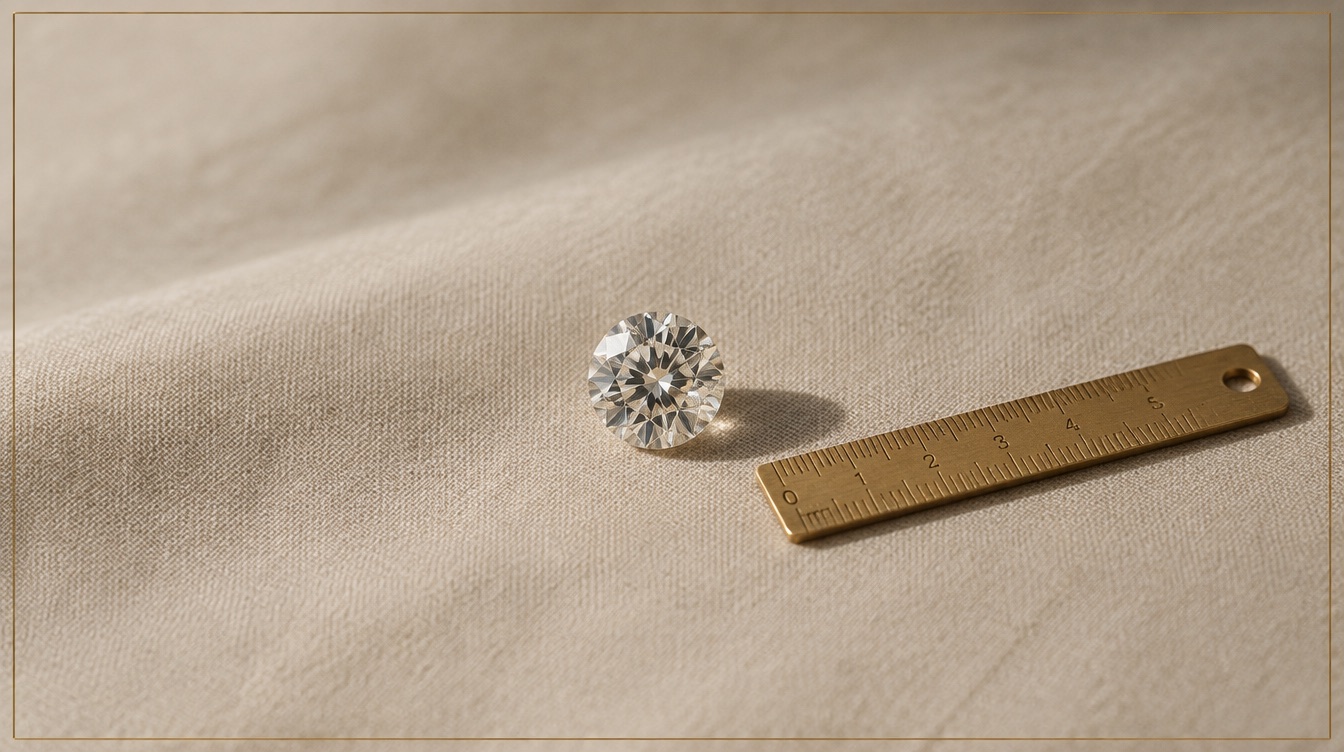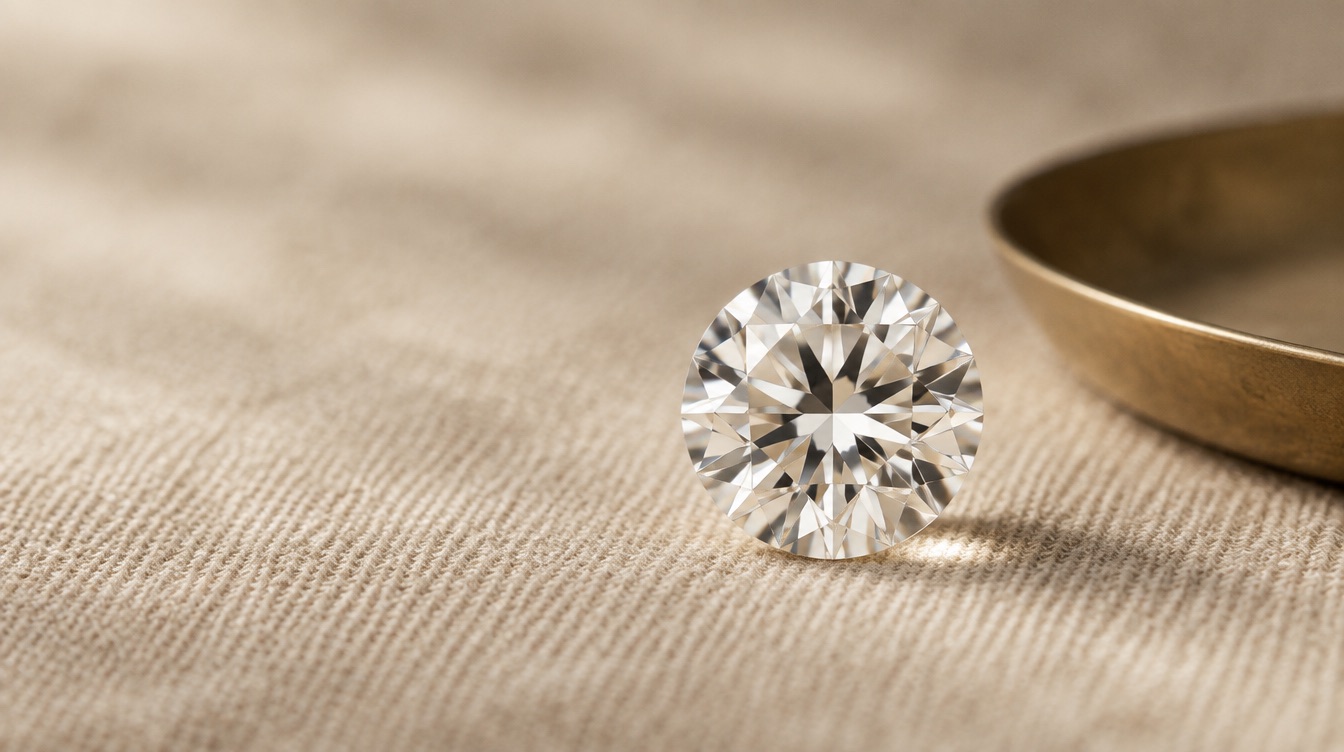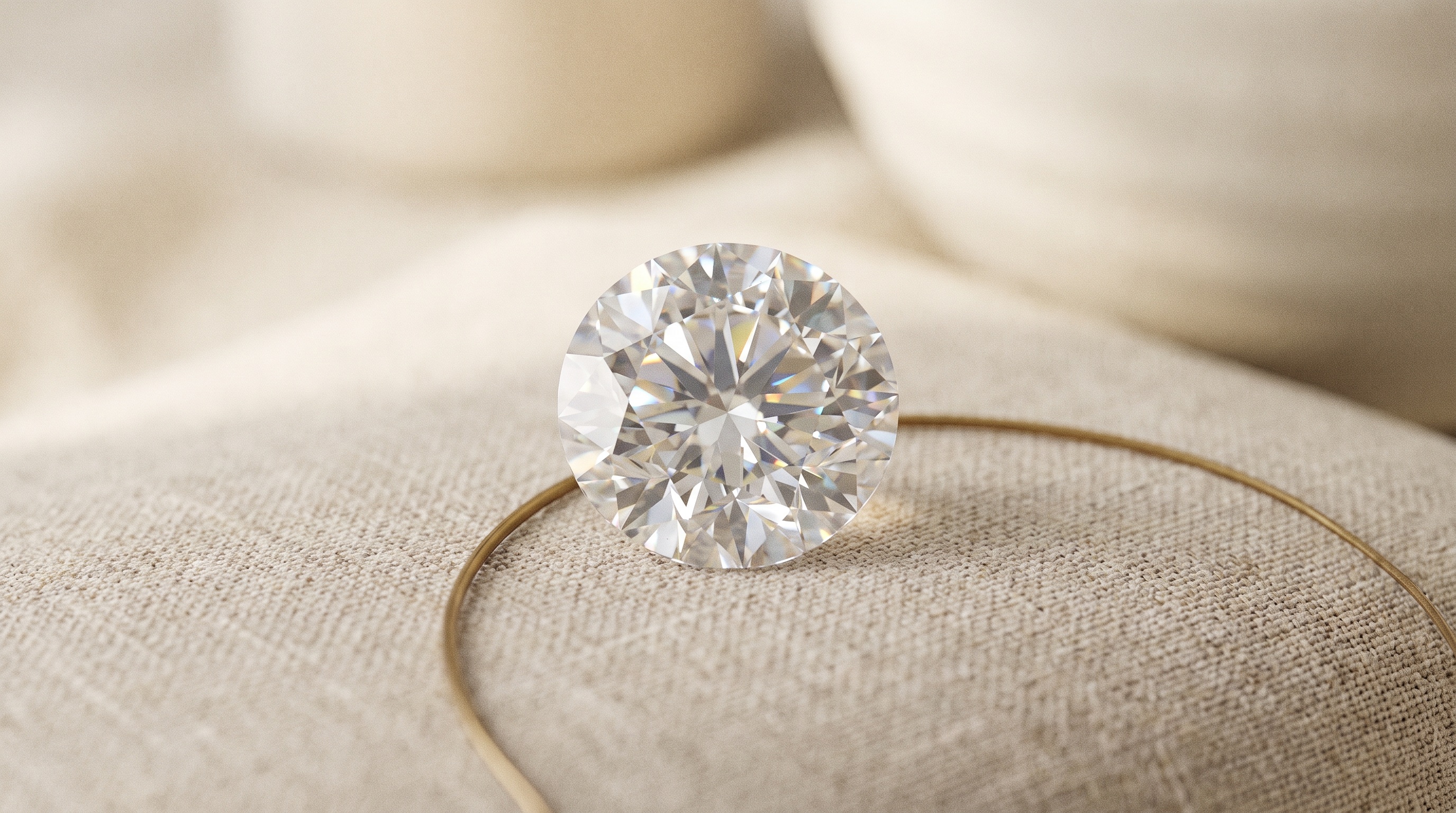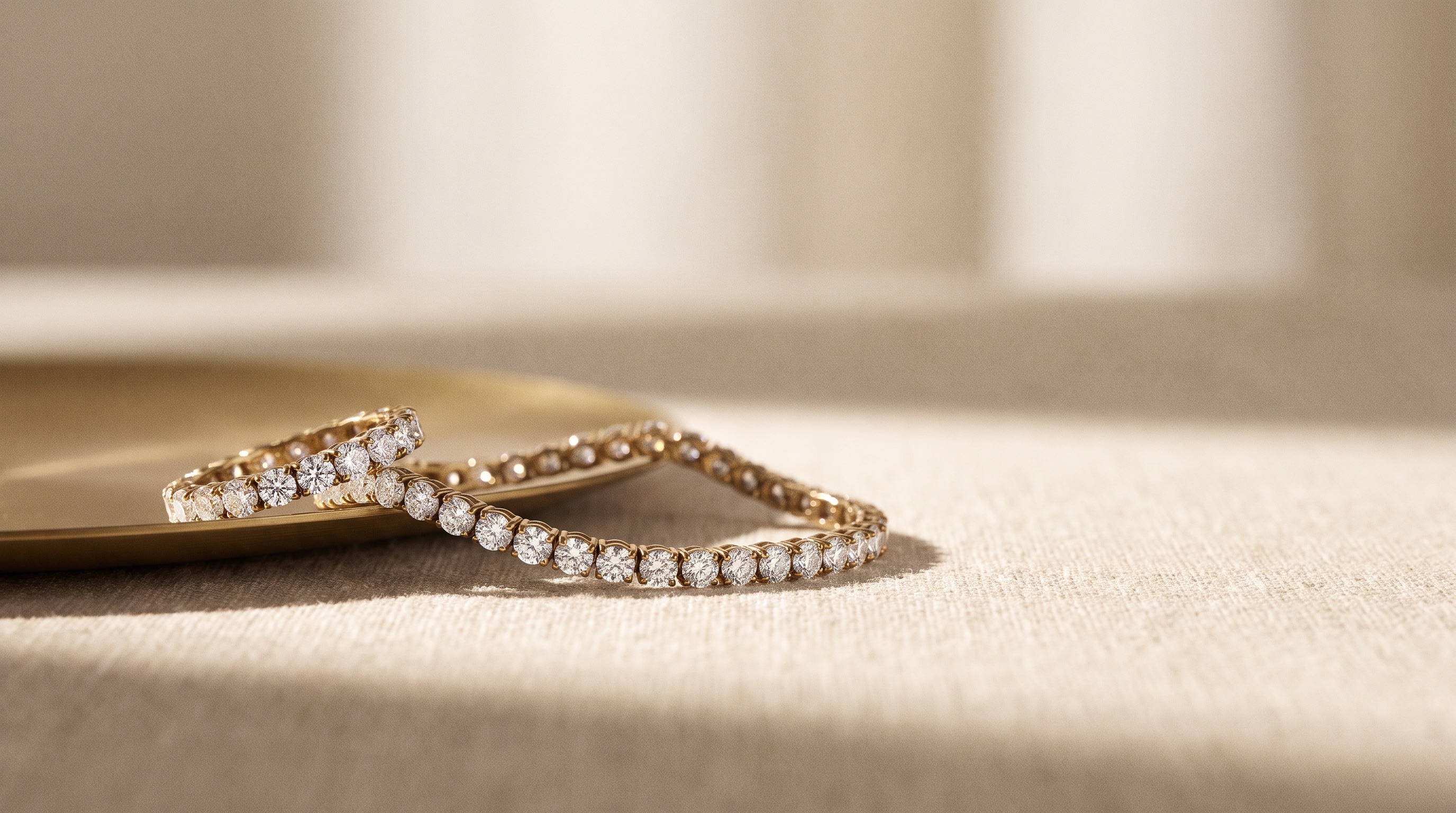
A shared prong setting is a technique for mounting a row of stones where each prong holds the adjacent edges of two neighboring stones instead of one prong per stone. It's the structural backbone of most eternity bands and tennis bracelets: a continuous line of same-size stones running the full circumference of a ring or the full length of a bracelet, secured with far fewer prongs than an individual-prong build would need.
Shared prong setting is often mentioned in the same breath as pavé, and the two techniques do overlap — pavé work sometimes uses a shared-prong (or shared-claw) variant instead of beads. But shared-prong setting as its own construction method is a distinct, older, and more structural technique, built for continuous rows of uniform stones rather than the dense, decorative surface coverage pavé is known for. This guide covers how shared-prong setting actually works, why it became the standard for eternity bands and tennis bracelets specifically, how it stacks up against full-prong, channel, bar, and pavé setting, the real durability and cost tradeoffs, what matters when sourcing melee for a shared-prong build, and where the technique shows up on antique versus modern pieces.
How Shared Prong Setting Works
In a shared prong setting, small prongs are raised at regular intervals along a row of stones, and each prong straddles the gap between two neighbors, gripping one edge of the stone on its left and one edge of the stone on its right. Instead of a four-prong basket per stone — a full, independent set of metal claws holding each stone on its own — a shared-prong row typically needs only one prong between each pair of adjacent stones, plus end prongs to close off the first and last stone in the row. A row of twenty stones set with individual four-prong baskets would need roughly eighty prong tips; the same twenty stones set shared-prong style need closer to twenty-one, since almost every prong is doing double duty.
The stones themselves sit close together, edge to edge or nearly so, so the shared prongs read as small, evenly spaced points along an otherwise continuous line of stones rather than as a dominant visual feature. The setter typically drills or mills a seat for each stone, seats the stone, and then raises or pushes the metal at each junction over both stones' girdles simultaneously, which is a more exacting operation than setting a single stone in its own basket — the prong has to land correctly on two stones at once, not one.
Why Shared-Prong Is the Standard for Eternity Bands and Tennis Bracelets
Shared-prong construction became the default technique for two specific product categories — eternity bands and tennis bracelets (and, by the same logic, tennis-style necklaces) — for a reason that comes down to what those pieces actually need structurally: a long, continuous, unbroken row of same-size stones, worn in a way that keeps that row moving and flexing.
Eternity Bands
An eternity band (full, ¾, or half eternity — a sub-option of the same wedding band product, not a separate build) sets stones all the way around a ring's circumference, or partway, using stones that are meant to read as a single continuous line rather than a center stone with accents. Shared prongs let that line stay tight and uninterrupted: because neighboring stones share a single point of metal between them rather than each getting its own separate basket, the gaps between stones stay small and the row reads as continuous sparkle rather than a series of individually bezeled or pronged stones with visible breaks. Full-prong construction on the same row would add a second, redundant prong at every junction and visually thicken the line with metal that isn't doing anything a shared prong doesn't already do.
Tennis Bracelets and Tennis Necklaces
A tennis bracelet or tennis necklace is, structurally, the same idea as an eternity band bent into an open chain of links rather than closed into a ring: a row of same-size, same-shape stones (almost always round brilliants, though calibrated fancy shapes appear too) running the full length of the piece. Because a bracelet or necklace is worn as a flexible chain rather than a rigid band, shared-prong construction does double duty here — it saves metal across dozens of stones, and the small size of each shared prong keeps the piece flexible enough to drape naturally at the wrist or throat rather than sitting stiff. This is also the setting style most associated with the term "tennis bracelet" itself, since the style's defining look — an unbroken, glittering line of same-size stones with minimal visible metal — depends on shared prongs (or, less commonly, channel or box-link construction) rather than individually pronged stones spaced apart.
Shared-Prong vs. Full-Prong (Individual Prong) Setting
Full-prong setting gives each stone its own independent set of prongs — typically four, sometimes six on a larger stone — with no metal shared between neighbors. This is the standard approach for a solitaire center stone or for stones spaced apart with visible gaps between them, and it has one clear advantage over shared-prong construction: independence. If one prong on a full-prong stone wears out or bends, only that stone is at risk; the stones on either side of it are unaffected because they were never structurally connected to it in the first place.
Shared-prong setting trades away some of that independence for metal efficiency and visual continuity. Because two adjacent stones rely on the same prong at their shared junction, a badly worn or bent shared prong puts both neighboring stones at risk rather than just one. In exchange, a shared-prong row uses roughly half the prong material of an equivalent full-prong row, sits lower and more continuous against the skin, and doesn't interrupt the line of stones with the visual bulk of a full basket at every position — which is exactly the look eternity bands and tennis pieces are going for. Full-prong construction, by contrast, is generally reserved for rows where stones are spaced with visible gaps, or where a buyer specifically wants each stone's security to be fully independent of its neighbors.
Shared-Prong vs. Channel, Bar, and Pavé Setting
Shared-prong setting is one of several ways to set a row of stones, and it's worth being precise about how it differs from the others, since the visual results can look similar in a small product photo even though the underlying construction — and the tradeoffs that come with it — are quite different.
Shared-Prong vs. Channel Setting
A channel setting (see GD's channel setting guide for the full breakdown) holds a row of stones between two continuous metal walls, with no visible prongs at all — the stones sit recessed inside the channel, gripped along their girdles by the walls themselves. Channel setting fully protects each stone's girdle edge along both sides, which makes it one of the most durable ways to set a row of stones for constant daily wear, but it also blocks some side light and gives the row a smoother, flatter, slightly less sparkly look than shared-prong construction. Shared-prong stones sit a little more exposed — light reaches them from the top and, between prongs, from the sides — which produces more sparkle at the cost of more exposed edges that a channel setting simply doesn't have.
Shared-Prong vs. Bar Setting
A bar setting (see GD's bar setting guide) uses individual solid metal bars between each stone rather than small prong tips, and those bars are visually and structurally heavier than a shared prong — a bar setting shows a flat vertical divider at each stone gap, where a shared-prong row shows a small rounded prong point. Bar setting sits between channel and shared-prong on both metal use and light exposure: more metal and less light than shared-prong, less metal and more light than a fully enclosed channel.
Shared-Prong vs. Pavé Setting
This is the comparison most worth getting right, since GuruDiam's own pavé setting guide already covers a "shared-prong pavé" variant, and it's easy to conflate the two. Pavé setting is a surface technique — it covers a broad, often two-dimensional area (a halo, a wide shank, an earring's outer edge) with very small melee, typically under 1.3mm, packed as densely as possible, sometimes in multiple rows, using either raised beads or small shared prongs to hold each stone. Shared-prong pavé is simply pavé work that happens to use prongs instead of beads at each junction.
Shared-prong setting as covered in this guide is a different application of a related idea: a single, structural row of larger, uniform-size stones — not a dense field of tiny melee — running the full length or circumference of a specific piece, most commonly an eternity band or a tennis bracelet or necklace. The stones are typically bigger than pavé melee (anywhere from small accent sizes up through fairly substantial stones on a statement tennis bracelet), there's usually only one row rather than a packed multi-row field, and the design intent is a continuous line of individually noticeable stones rather than a textured field where the metal disappears entirely. In short: pavé's shared-prong variant is one execution choice within a dense decorative surface; shared-prong setting on an eternity band or tennis piece is the primary structural technique holding a single row together.
Setting Styles Compared
| Style | Metal Use | Sparkle | Durability | Best For |
|---|---|---|---|---|
| Shared-Prong | Low-moderate (prongs shared between neighbors) | High — top and side light between prongs | Moderate — a worn or bent prong affects two stones at once | Eternity bands, tennis bracelets/necklaces |
| Full-Prong | Highest per stone (independent basket per stone) | High, but visually broken up by more metal | High — each stone's security is independent of its neighbors | Spaced stones, solitaire-style accents |
| Channel | Moderate-high (two continuous walls) | Lower — light enters mainly from the top | Highest — no exposed prongs to catch or bend | Wedding bands, everyday-wear rows |
| Bar | Moderate (solid dividers, not full walls) | Moderate-high | High — sturdier dividers than a shared prong tip | Wedding bands, stacking rings |
| Pavé (bead-set) | Lowest per stone (tiny shared beads) | Highest — maximum surface density | Lower per point — small beads wear with time | Halos, wide shanks, dense surface coverage |
Durability and Wear Considerations
Because a shared prong is small by design — it has to fit into the narrow gap between two adjacent stones without disrupting the row's continuous look — it carries less structural material than a full four-prong basket, and that has real consequences over years of wear. A shared prong can wear thin, flatten, or bend out of position gradually through repeated contact, and because it's holding two stones rather than one, a failure at a single prong point puts both neighboring stones at risk of loosening rather than just one.
This matters more on some pieces than others. An eternity band worn on a finger takes plenty of daily contact, but it's a rigid, closed ring — it doesn't flex or articulate the way a bracelet does. A tennis bracelet, by contrast, is a chain of shared-prong links that bends at every joint with every wrist movement, and it takes the kind of daily knocks — against desks, doorframes, car doors, countertops — that a stationary ring settings simply doesn't encounter as often. That combination of constant flexing and frequent impact is exactly why tennis bracelets are the shared-prong pieces most likely to need periodic prong inspection, and why a jeweler checking a tennis bracelet that's seen years of regular wear should look closely at prong wear at every link, not just the clasp.
None of this makes shared-prong construction fragile for normal use — it's the standard, proven technique for exactly these product categories for good reason. But buyers and retailers should understand that a shared-prong row has a genuinely different long-term maintenance profile than a channel-set row of the same stones: more sparkle and a lower profile in exchange for prongs that benefit from being checked periodically, especially on a bracelet or necklace that sees daily wear and repeated flexing.
Cost and Metal-Efficiency Considerations
Shared-prong construction is one of the more metal-efficient ways to set a long row of stones, precisely because almost every prong does double duty. A row that would need roughly four prongs per stone under full-prong construction needs only about one prong per stone-to-stone junction under shared-prong construction — a substantial reduction in metal weight and material cost across a full eternity band or a multi-stone tennis bracelet, where the row can run to dozens of stones.
Compared to channel setting, the metal-efficiency picture is more mixed. A channel setting's two continuous walls can actually use a comparable or greater total weight of metal than a shared-prong row's small individual prong tips, but channel construction requires less individual hand-finishing per stone junction — there's one groove to mill rather than dozens of individual prongs to raise and finish by hand. Shared-prong construction sits in a practical middle ground: less metal than full-prong, less finishing labor than an equivalent full-prong row, but more labor-intensive per stone than a channel's single continuous groove. This is part of why shared-prong rows are common across a wide range of price points — the technique scales reasonably well from modest eternity bands to fairly substantial tennis bracelets without the metal cost scaling as steeply as full-prong construction would.
Melee Sourcing for a Shared-Prong Row
Consistent stone sizing matters for almost any multi-stone setting, but it matters more for shared-prong construction than for most other styles, for a mechanical reason as much as an aesthetic one. Because each shared prong is physically bridging two neighboring stones, both stones at that junction need closely matched diameters for the prong to seat evenly and grip both girdles properly. A stone that's a fraction of a millimeter larger or smaller than its neighbor doesn't just look slightly uneven in the row — it can leave a shared prong sitting unevenly across the two girdles, gripping one stone more securely than the other, which is a durability issue as well as a visual one.
This makes calibrated parcel sourcing — stones sold to a tight, consistent diameter tolerance rather than a looser carat-weight range — especially important for shared-prong work, whether that's a full eternity band's worth of stones or the dozens of same-size round brilliants needed for a tennis bracelet. A parcel with strong color and clarity consistency but loose size calibration can still produce a visibly uneven, and mechanically weaker, shared-prong row; tight diameter calibration across the full parcel is arguably the single most important sourcing criterion for this specific technique, even more so than for a broad pavé field where minor size variation is more easily absorbed across a larger, denser surface.
Shared-Prong Setting on Antique and Vintage Pieces vs. Modern Work
Shared-prong construction isn't a recent invention — eternity bands and early tennis-style bracelets using shared prongs go back well before the modern "tennis bracelet" name existed (a name that only became common after a mid-1980s incident at a televised tennis match, even though the underlying line-of-diamonds bracelet style predates that moment by decades). Vintage and antique-era shared-prong pieces were typically hand-cut and hand-set, without the precision calibration modern equipment allows, so it's common to find slightly uneven stone spacing, small variations in stone size along the row, and prongs finished less uniformly than a modern piece would show. None of that makes a genuine vintage shared-prong piece lower quality — it reflects the tools and calibration standards available at the time, the same way an antique-cut diamond's proportions reflect period cutting technique rather than a flaw.
What does matter more on older shared-prong pieces is wear: a shared-prong eternity band or tennis bracelet that's seen decades of regular wear has had far more time for individual prongs to thin, flatten, or loosen than a newly set piece, and because each prong holds two stones, a single worn prong on an estate or vintage piece is more likely to already be affecting both of its neighboring stones. Anyone evaluating a vintage shared-prong piece for resale or purchase should check prong condition at every junction under magnification rather than assuming a piece that "looks fine" at a glance has structurally sound prongs throughout. Modern shared-prong work, by contrast, benefits from calibrated melee and CAD-planned prong spacing, which generally produces a straighter, more evenly spaced row from the outset — though modern pieces still wear the same way over time and need the same periodic attention once they've been in circulation for years.
Repair and Maintenance of Shared-Prong Jewelry
Because a shared prong holds two stones rather than one, repair work on a shared-prong piece is usually a little more involved than re-tipping a single full-prong basket. A jeweler rebuilding a worn shared prong has to make sure the rebuilt prong seats correctly against both neighboring stones' girdles, not just one, and if a stone has actually been lost from a shared-prong row, sourcing a closely matched replacement (in size, color, and clarity) matters just as much as it does for a lost pavé stone, since a mismatched replacement stands out immediately in a continuous row of otherwise uniform stones. Routine inspection — checking prong condition at every junction, not just the ones that look obviously worn — is the most effective way to catch a thinning prong before it fails and puts two stones at risk instead of one, and this is worth recommending specifically for tennis bracelets and necklaces, given how much more flexing and daily impact they take compared to a ring.
Sourcing Shared-Prong-Ready Melee and Custom Builds Through Guru Diam
Guru Diam supplies calibrated CVD lab-grown melee from 0.8mm to 9.0mm in round brilliant and fancy calibrated shapes, held to a DEF+/VS+ quality baseline, alongside certified loose diamonds (0.30ct and up, IGI, GIA, and GCAL certification all available) and natural diamonds for buyers who need a specific origin on a given build. Because tight diameter calibration is the sourcing factor that matters most for a shared-prong eternity band or tennis bracelet, buyers can pull a full matched parcel to consistent size specifications rather than assembling one from mismatched lots, and have it set into a finished custom piece in 4-6 days, unbranded by default for resale under a jeweler's own name.
Browse calibrated melee parcels through the wholesale hub, start a custom shared-prong eternity band or tennis bracelet build through custom jewelry, and set up a trade account through trade partner. Certified loose stones for a larger tennis bracelet build are available under certified diamonds, fancy color melee for a colored shared-prong row is available under fancy color loose diamonds, and matched pairs for shared-prong-accented earrings can be sourced under matching pairs. For how full eternity and wedding band construction options compare more broadly, see GD's wedding band setting types guide; for the fully enclosed alternative to a shared-prong row, see GD's channel setting guide.
Frequently Asked Questions
What is a shared prong setting?
A shared prong setting is a technique for mounting a row of stones where each prong holds the edges of two adjacent stones instead of just one. It's the standard construction method for eternity bands and tennis bracelets, since it lets a continuous row of same-size stones sit close together using far fewer prongs than an individual-prong build would need.
Is shared-prong setting the same as pavé?
Not quite. Pavé is a surface technique covering a broad area — like a halo or a wide shank — with dense, very small melee, sometimes using shared prongs at each junction instead of beads. Shared-prong setting as used on eternity bands and tennis bracelets is a single structural row of larger, uniform-size stones, built for a continuous line rather than a dense decorative field.
Is shared-prong setting durable enough for a tennis bracelet?
Yes, it's the standard technique for tennis bracelets, but it does have a maintenance profile worth knowing: because each prong holds two stones, a worn or bent prong affects both neighbors at once, and a bracelet's constant flexing and daily knocks make prong wear more likely over time than on a stationary ring. Periodic professional inspection is the main way to catch a worn prong before a stone is actually lost.
How does shared-prong setting compare to channel setting for an eternity band?
Channel setting fully encloses each stone's girdle between two metal walls with no visible prongs, which makes it more durable for constant daily wear but reduces side light and sparkle. Shared-prong setting exposes more of each stone to light, producing a sparklier look, but relies on individual prong points rather than continuous metal walls for security.
Why is stone size calibration so important for shared-prong rows?
Because each shared prong physically bridges two neighboring stones, both stones at that junction need closely matched diameters for the prong to seat evenly and grip both girdles securely. Loose size calibration across a parcel can produce a visibly uneven row and a mechanically weaker setting, not just an aesthetic mismatch.
Does shared-prong setting use less metal than individual prong setting?
Yes — a shared-prong row needs roughly one prong per stone-to-stone junction instead of a full four-prong basket per stone, which meaningfully reduces metal weight and material cost across a long row like an eternity band or a multi-stone tennis bracelet. The tradeoff is that a shared prong's failure can affect two stones at once, rather than just the one stone a full-prong basket would put at risk.