
Don't open the conversation with lab-grown versus natural — open with the build. Most clients who walk in asking about a lab-grown center stone have already made that decision before they reached the counter; re-litigating it just invites price comparison and doubt. The sale gets made in the design conversation that follows: shape, setting, metal, and how the finished piece will actually look and wear. Certification (IGI, GIA, or GCAL) is what you lean on when a client wants objective backing for the stone, not the headline of the pitch. And the custom-build process itself — the choices a client gets to make, the CAD they get to approve, and the pricing conversation that follows — is a real part of the value, not paperwork standing between the sale and delivery.
What follows is a sales-floor playbook: reading the client, where certification and stone shape belong in the pitch, how pricing and margin work on a custom build, common objections, and what a wholesale partner needs behind the counter to make all of it possible.
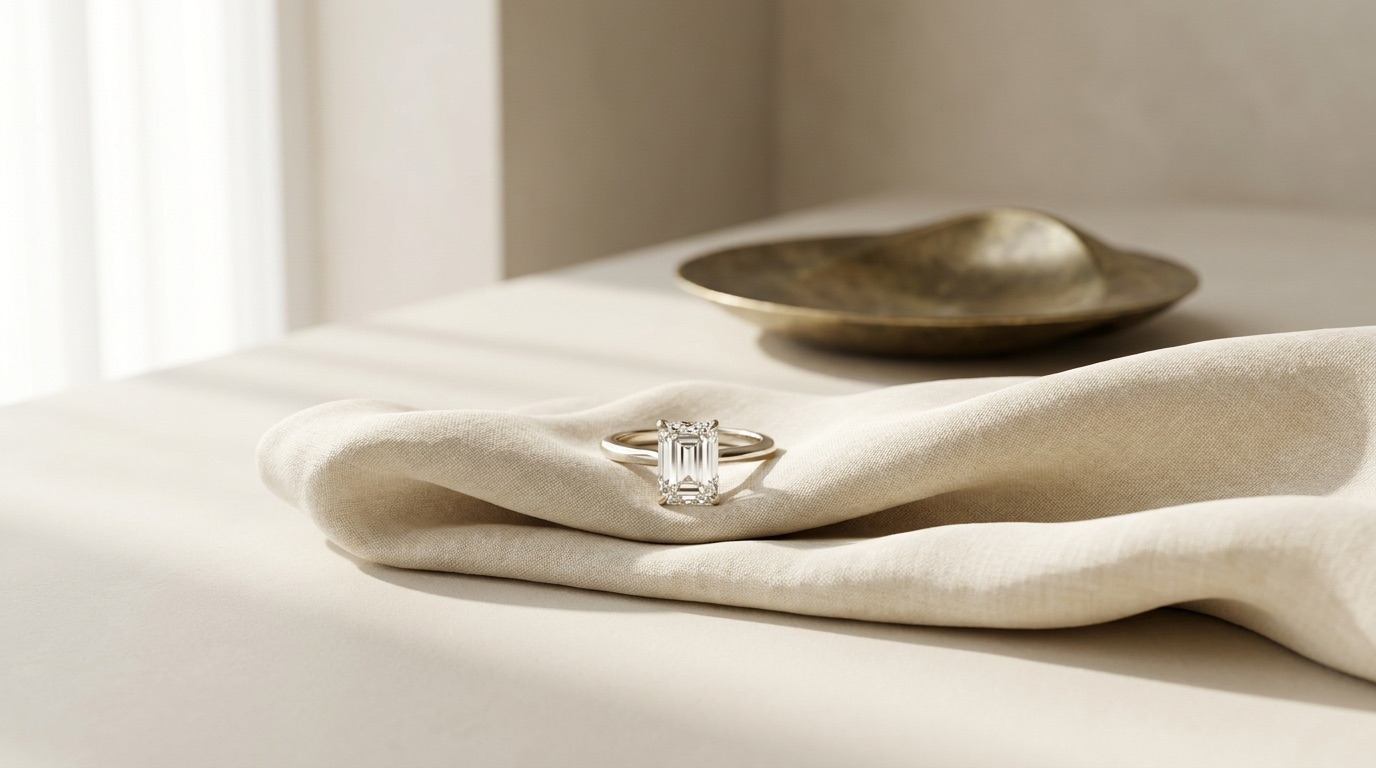
Why Leading With "Lab-Grown vs. Natural" Backfires
By the time a client asks specifically about a lab-grown center stone, they've typically already researched the category online, compared price points, and made a directional decision. Reopening the natural-versus-lab-grown debate at the counter does three things, none of them helpful:
- It reintroduces a decision the client already made, which stalls momentum toward closing.
- It frames the stone as the entire product, when the stone is one input into a build.
- It invites a value comparison against natural stones on price alone, which is a conversation you can't win on margin and don't need to have.
The stronger opening is the same one that works for any custom piece: ask about the occasion, the person it's for, and what style they're drawn to. A lab-grown center stone is simply the input that lets you build bigger, cleaner, or more elaborate for the same budget — which is a design conversation, not a defensive one.
This isn't unique to lab-grown. The same instinct shows up any time a sales conversation starts on the input instead of the outcome — metal purity, diamond origin, or cut grade, asked before the client has said anything about how the piece will look on their hand. The floor staff who close consistently redirect early: acknowledge the question, then pivot straight to "let's talk about what you're building" instead of defending or explaining the stone.
What the Client Is Actually Buying
A center stone by itself is a commodity purchase. A custom build is a designed outcome, and every piece of it is something you can present as a decision the client gets to make rather than a spec they're told about after the fact.
What's actually in the build, beyond the stone:
- Setting style — prong height and count, bezel, halo, hidden halo, cathedral, or tension
- Metal choice — karat, color (yellow, white, rose), and finish
- Stone shape — which changes both the look on the hand and the setting options available
- Accent stones or melee — pavé, a halo, or side stones, and how they frame the center
- Band profile and width — comfort-fit, knife-edge, split shank, and how it wears daily
- Engraving or other personalization
When a retailer presents only the center stone and treats everything else as a default, the client experiences the purchase as buying a diamond. When a retailer walks the client through these choices deliberately, the client experiences the purchase as commissioning a piece — and that shift is what supports the price, not the stone's origin.
This reframing also changes how discount requests land. A client asking to knock money off "the diamond" is negotiating against a commodity; a client who chose a halo width, a metal tone, and an engraving detail is negotiating against a piece they helped create — and pieces people helped create get negotiated on less aggressively.
Let the Client Make Real Decisions
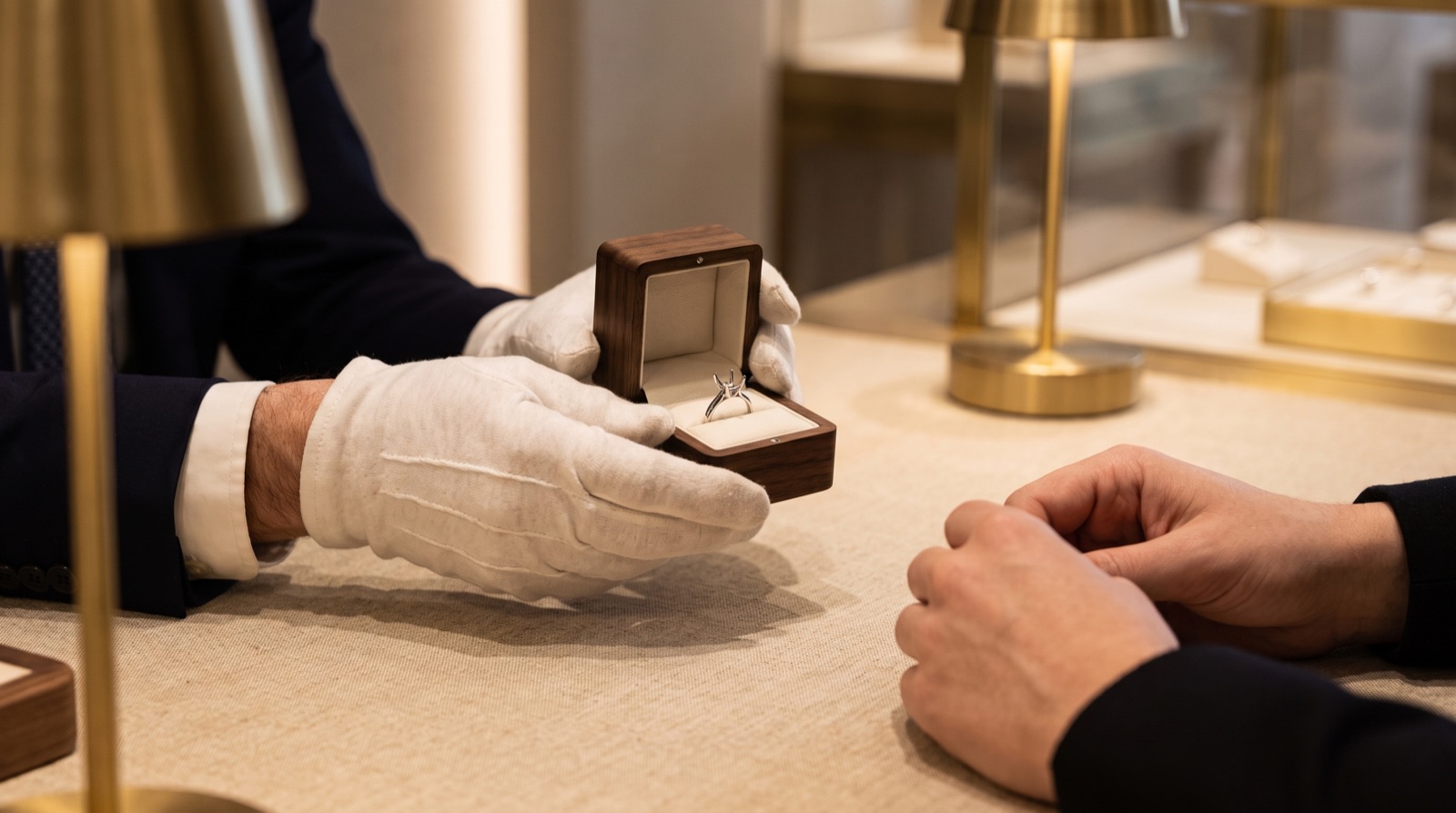
This works best when the choices are real, not decorative. Show a CAD render once shape and setting are picked. Let the client see the difference between a thin pavé band and a wider profile, or between a halo and a solitaire, on the actual design rather than a verbal description. A client who approved a CAD file feels ownership over the design before it's even cast, and it gives you a natural checkpoint to confirm budget and timeline expectations before production starts.
Reading the Client Before You Talk Product
The design conversation only works if you're building toward what the client wants, not what's easiest to have in stock. A few minutes of listening before you show anything narrows the options fast.
Useful openers, roughly in order:
- The occasion. An engagement ring, an anniversary upgrade, and a self-purchase piece call for different conversations — the first is collaborative with a partner's existing style cues, the third moves faster since there's no surprise-reveal constraint.
- What they're already wearing. A stack of thin bands, a bold cocktail ring, a minimal watch — existing jewelry tells you more about scale and style than any question will. Point at it: "Is this closer to what you're picturing, or a departure from it?"
- Lifestyle, specifically hands. A client who works with their hands daily or plays an instrument needs to hear about setting height and prong security early — a low-profile bezel isn't a downgrade for that client, it's the right recommendation.
- Budget as a range, not a number. "Should we be building toward something substantial or keeping this understated" gets the same information as asking for a number directly, without putting the client on the spot.
- Timeline. A proposal date or anniversary changes which build path makes sense and lets you set expectations on the 4-6 day custom turnaround early, instead of surprising the client at checkout.
None of this needs to feel like an interview. Two or three of these questions, asked naturally while walking the case, usually surface enough to start narrowing shape and setting.
Where Certification Fits In the Pitch
Certification is a trust anchor, not an opening line. For loose stones 0.30 carat and up, IGI, GIA, or GCAL certification gives the client an independent, third-party record of the stone's specs — cut, color, clarity, carat — verifiable on its own and useful on appraisal or resale later. It's just not the reason someone falls in love with a design, so it belongs later in the conversation than most sales staff put it.
| Stage of the conversation | Role of certification |
|---|---|
| Opening / design discussion | None — this is where shape, setting, and metal get decided |
| Client asks about quality or "how do I know what I'm getting" | Primary tool — walk through the IGI, GIA, or GCAL report line by line |
| Objection about lab-grown value or resale | Supporting evidence — the report is identical in format and rigor to what a natural stone of the same grade would carry |
| Closing / paperwork | Confirm which lab the client wants on file before the order is placed — IGI, GIA, and GCAL are all available, and it's worth asking rather than assuming |
One distinction worth getting right on the floor: certification applies to individually graded loose stones at 0.30 carat and up. If the build includes melee for pavé or a halo, those small calibrated stones are uncertified parcel goods, vetted against a color and clarity quality baseline rather than individually graded. That's normal and expected for accent stones — but don't tell a client the pavé is "IGI certified," because it isn't, and that's an easy detail to get wrong under pressure at the counter.
When a client does ask to see the report, walk it top to bottom rather than pulling out a single number — cut, color, clarity, carat, and the certificate number, which is searchable on the lab's own site. That verifiability, more than anything you say, is what actually reassures a skeptical buyer.
Using Stone Shape as a Design Conversation, Not a Spec Sheet
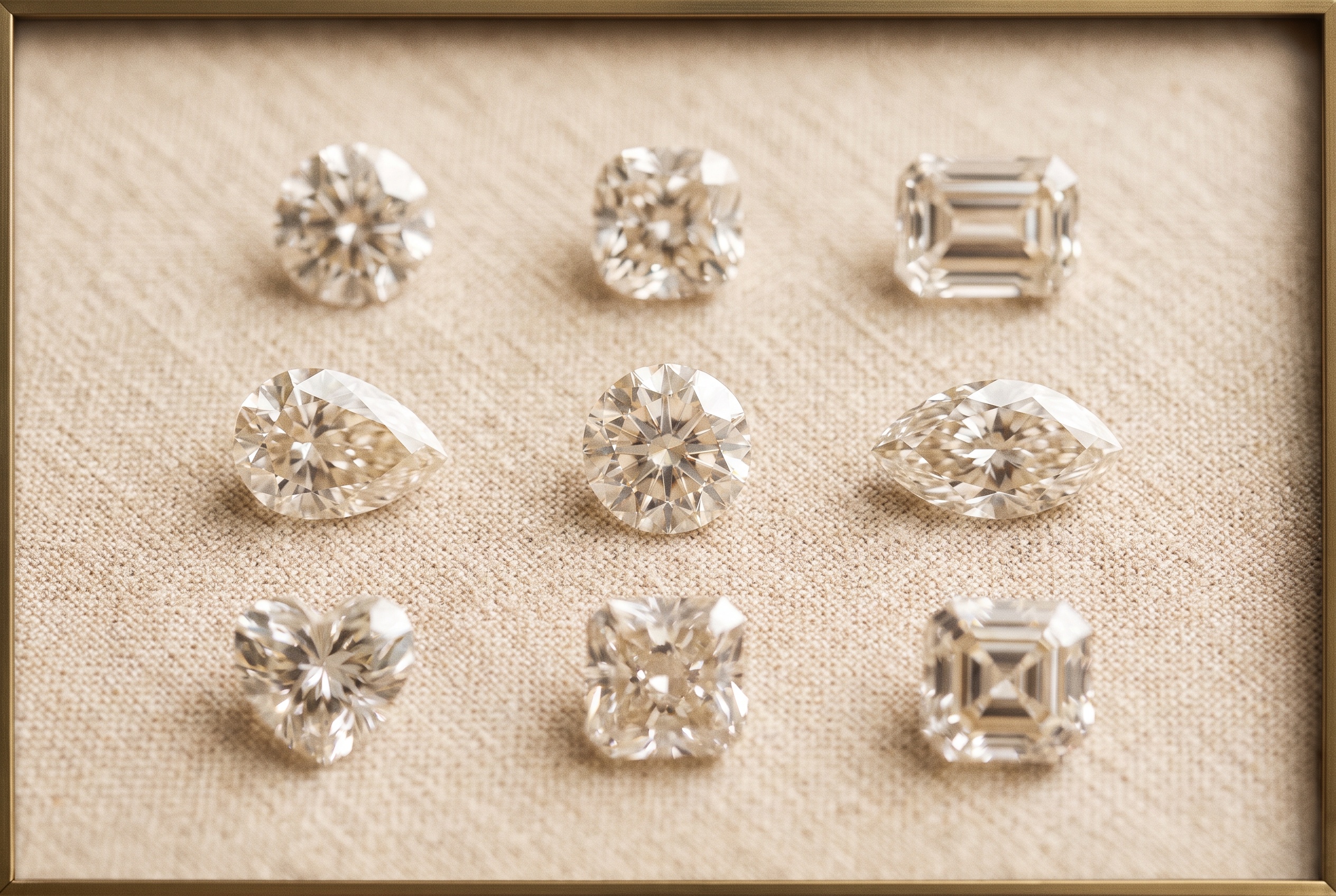
Shape is the highest-leverage part of the design conversation, because it changes both how the piece looks and how rare it reads — and most retail staff treat it as a single dropdown instead of a selling point.
| Tier | Shapes | How to position it |
|---|---|---|
| Commodity | Round brilliant | The familiar, safe choice — maximum brilliance, easiest to compare against anything else the client has seen |
| Regular fancy | Emerald, Asscher, cushion, oval, pear, marquise, radiant, princess, heart | Modern design statements — these read as an intentional style choice, not a compromise from round |
| Antique / premium | Old Mine, Old European, hexagonal, moval, lozenge, kite, trillion, criss-cut, Padparadscha-style | Distinct and harder to source — worth explaining that these cuts aren't a downgrade from modern fancy shapes, they're a different aesthetic entirely, often paired with vintage-inspired settings |
A client who's drawn to an antique cut is usually responding to something specific — the softer light return, the way it pairs with a hand-engraved or vintage-style setting — and that's worth naming out loud. Framing an antique or fancy shape as "the cut that photographs like an heirloom" or "the shape almost nobody else in town is showing" does more selling work than any stat about the stone's origin.
Shape also pairs with the client's hand: an elongated shape — oval, marquise, or a hexagonal antique cut — reads larger and more slimming on a shorter finger than a round of the same carat weight. A sentence on this while they're looking at the case is often what turns "I like the round one" into "actually, show me the oval."

Pricing and Margin Structure on a Custom Build
A custom piece has more line items than a stock ring, and each one is a place margin gets built or lost — because the client is paying for a specific set of decisions, not a fixed SKU.
What typically goes into the sell price:
- Center stone cost. The base input, moving most with shape, size, and cut tier (round commodity vs. regular fancy vs. antique premium).
- Setting labor and casting. CAD time, casting, prong-setting or bezel work, and finishing — a fixed cost regardless of what the center stone cost, and where craftsmanship gets paid for.
- Accent stones or melee. Pavé, halo, or side-stone cost, priced separately from the center stone.
- Finishing touches. Engraving, rush handling, or a specific metal finish — small line items that are easy to forget pricing until a client asks for them mid-build.
- Margin on the full build, not just the stone — a custom piece typically carries a healthier margin than a comparable stock item, because the client is paying for design work and CAD approval alongside materials.
The most common pricing mistake is quoting the center stone with a stock-item markup, then discounting the labor to make the total look competitive. That inverts the value: the labor and design work are what a client can't get anywhere else, and what's worth protecting on price. If a client pushes back on the total, move the conversation toward what's fixed (setting complexity, CAD revisions, finish quality) and what's flexible (carat weight, accent stone count, metal karat) — not a flat percentage off the whole build.
A lab-grown center stone changes this math one specific way: it frees up dollars inside the same total budget, toward a larger stone, a heavier metal karat, or additional melee, without the total price moving — a stronger pitch than framing lab-grown as simply "the cheaper option," which invites the client to ask for the same design at an even lower price. A simple three-tier presentation — a clean solitaire, a mid-weight halo, a fully built-out design with additional melee — gives the client a visible reason for each price point instead of one number to negotiate against.
Handling Price and Value Objections on the Floor
Every sales floor gets some version of the same three objections on a lab-grown custom build. A direct, honest answer keeps the conversation moving instead of stalling into a standoff.
"Why does this cost so much if the stone is lab-grown?" Point at what the price is paying for: the design work, the CAD approval process, the setting labor, and the finished piece — not just the stone. Lab-grown is what made a larger stone or a more elaborate setting possible inside their budget, not a reason the whole build should cost less.
"Can I get this cheaper somewhere else?" Almost certainly, for the stone alone. Harder to get elsewhere is a CAD-approved build on a defined timeline with a setting the client chose piece by piece. Reframe from stone-to-stone to build-to-build — ask what the other option includes for revisions, turnaround, and who stands behind the finished piece.
"Will this hold its value the same as natural?" Be straightforward: resale markets treat lab-grown and natural differently, and that's worth acknowledging rather than dodging. Redirect to what holds steady — certification (IGI, GIA, or GCAL) documents the stone's specs permanently regardless of market pricing shifts. Clients buying a custom piece are usually buying it to wear, not to resell, and it's fine to say so plainly.
The through-line on all three: never argue the objection down. Acknowledge it, then move the conversation back to what the client is actually getting — a specific, approved design, not a generic stone.
Building the Value Pitch Around the Process, Not Just the Product
Once shape, setting, and metal are chosen, the last piece of the pitch is the process itself — and it's worth stating plainly rather than treating it as back-office detail:
- CAD approval before production. The client sees and signs off on the exact piece before anything is cast, which removes the biggest source of custom-order anxiety: not knowing what they're going to get.
- A defined turnaround. A CAD-approved custom build finished in 4 to 6 days is a real timeline you can quote with confidence, distinct from the multi-week waits clients associate with outsourced custom work elsewhere.
- Unbranded delivery. When the piece is built and delivered unbranded, it comes to the client as your design, under your name — which is worth mentioning if a client asks who actually makes the piece.
None of this needs to be a hard-sell script. It's context that answers the questions a client is quietly asking anyway: will I know what I'm getting, how long will it take, and whose name is on this ring.
Stating the process plainly also does quiet work on post-sale friction: a client who approved a CAD render and confirmed metal and accent stones going in has far fewer reasons to come back with a complaint later — most custom-order disputes trace back to a step the client didn't realize was happening, not a step that went wrong.
How Guru Diam Supports the Custom-Order Process
Everything above is a sales-floor skill, but it only works if the wholesale side behind the counter can deliver on what gets promised. A few things worth knowing about how Guru Diam supports a custom build, since they show up directly in the pitch above:
- Certification flexibility. IGI, GIA, and GCAL certification are all available on loose center stones 0.30 carat and up — confirm the client's preferred lab before the order is placed.
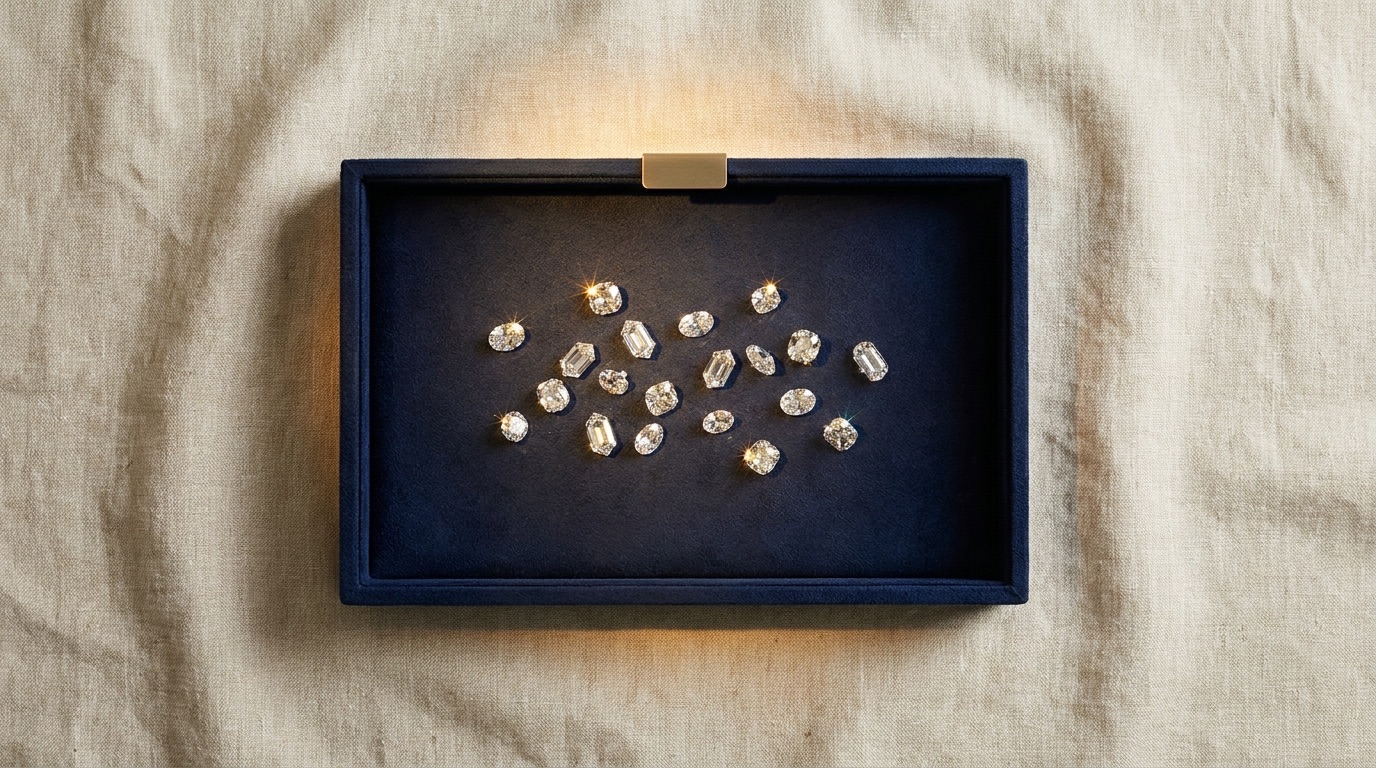
- Cut-tier breadth. Round brilliant for the commodity buyer, regular fancy shapes for a modern design statement, and antique-style cuts — Old Mine, Old European, hexagonal, moval, lozenge, kite, trillion, criss-cut — for something harder to source. One supplier covering all three tiers keeps the design conversation from being limited by what's in stock.
- Wholesale melee for the accent work. Pavé, halo, and side-stone builds draw from a dedicated melee inventory, calibrated and quality-checked as parcel goods rather than individually graded — priced and sourced separately from the center stone.
- In-house production. Cutting, setting, and polishing are handled in-house, with CAD approval built into the process before anything is cast — what makes the 4 to 6 day finished-piece turnaround quotable with confidence.
- Unbranded delivery. Pieces ship unbranded by default, so the finished piece arrives as the jeweler's own design and the jeweler owns the client relationship, start to finish.
- Consolidated sourcing. Center stone, accent melee, and finished setting come from one vendor on one shipment — fewer freight charges and certification handoffs, which protects margin the same way tighter production costs do.
None of this needs to be recited to a client. It's the infrastructure that makes the sales-floor script above something a jeweler can actually deliver on.
A Simple Structure for the Sales Floor
Every section above collapses into a repeatable, six-step flow that works for almost any custom build:
- Open on design, not stone type. Ask about the occasion and their style before the diamond origin comes up at all.
- Walk through shape and setting as real choices, using CAD to show the difference rather than describing it.
- Bring in certification when the client asks about quality or value — not before.
- Confirm the build details: metal, accent stones, cert lab preference, and timeline.
- Present pricing in tiers — a solitaire, a halo, a fully built-out option — so the client is choosing a design, not negotiating a single number.
- Close on the finished design, referencing the CAD they approved, not a debate about the center stone's origin.
Common Mistakes on the Sales Floor
- Leading with a lab-grown-versus-natural pitch. It reopens a decision the client already made and shifts the conversation to price instead of design.
- Presenting certification as the headline. It's a trust tool for when a client asks a specific question, not the reason they choose a design.
- Offering one preset option instead of real choices. Clients who don't get to make design decisions treat the purchase as a commodity buy and negotiate accordingly.
- Calling melee "certified." Melee is uncertified parcel goods against a QC baseline — only stones 0.30 carat and up carry an individual IGI, GIA, or GCAL report.
- Quoting the finished-jewelry turnaround for stone sourcing. The 4-6 day window covers CAD approval to finished piece — it isn't a promise about how fast a loose stone ships.
- Discounting the total instead of adjusting scope. A flat percentage off the whole build erodes margin on labor and design work, not just the stone. If a client needs a lower number, adjust carat weight or accent stone count instead of cutting everything evenly.

Frequently Asked Questions
Should I bring up that the center stone is lab-grown before the client asks?
If the client already specified lab-grown when they walked in, there's no need to relitigate it — move straight to the design conversation. If they haven't specified and you're presenting it as an option, introduce it as a way to build bigger or cleaner within their budget rather than as a separate ethical or price debate. Either way, the shape, setting, and metal conversation should come first.
How do I use certification without turning the pitch into a lecture?
Hold it until the client asks a quality or value question, then walk through the actual report — cut, color, clarity, carat — rather than reciting grading terminology up front. Certification answers "how do I know what I'm getting," and it lands better as a direct answer to that question than as an opening statement nobody asked for.
Does it matter whether I explain antique cuts versus regular fancy cuts to the client?
Yes, if the client is drawn to a shape outside round brilliant. Regular fancy shapes like emerald, cushion, oval, and pear are modern design choices, while antique-style cuts like Old Mine, Old European, and kite are a distinct aesthetic tied to vintage-inspired settings, not a fancier version of the same thing. Naming that difference out loud helps a client feel like they're choosing a look on purpose rather than picking from an unlabeled list.
Is the pavé or halo accent stone certified the same way as the center stone?
No. Melee used for pavé, halos, or side accents is uncertified, calibrated parcel goods checked against a color and clarity baseline, not individually graded. Only loose stones at 0.30 carat and up carry an IGI, GIA, or GCAL certificate. It's worth setting that expectation with the client during the build conversation so it doesn't come up as a surprise question later.
How does the 4-6 day custom turnaround fit into the sales pitch?
It's a concrete, quotable timeline for the stage from CAD approval to finished piece, and it's worth stating plainly because it directly answers a client's unspoken "how long will this take." It isn't a claim about how fast a loose stone can be sourced or delivered — keep those two timelines separate when a client asks about start-to-finish delivery.
Should clients see more than one CAD version before approving?
If their first reaction to the initial render is hesitation on any detail — band width, stone height, halo size — it's worth showing a revised version rather than pushing them to approve as-is. A client who actively approved the design they're getting is a more confident closer, and far less likely to raise concerns after the piece is finished, than a client who felt rushed past the CAD stage.