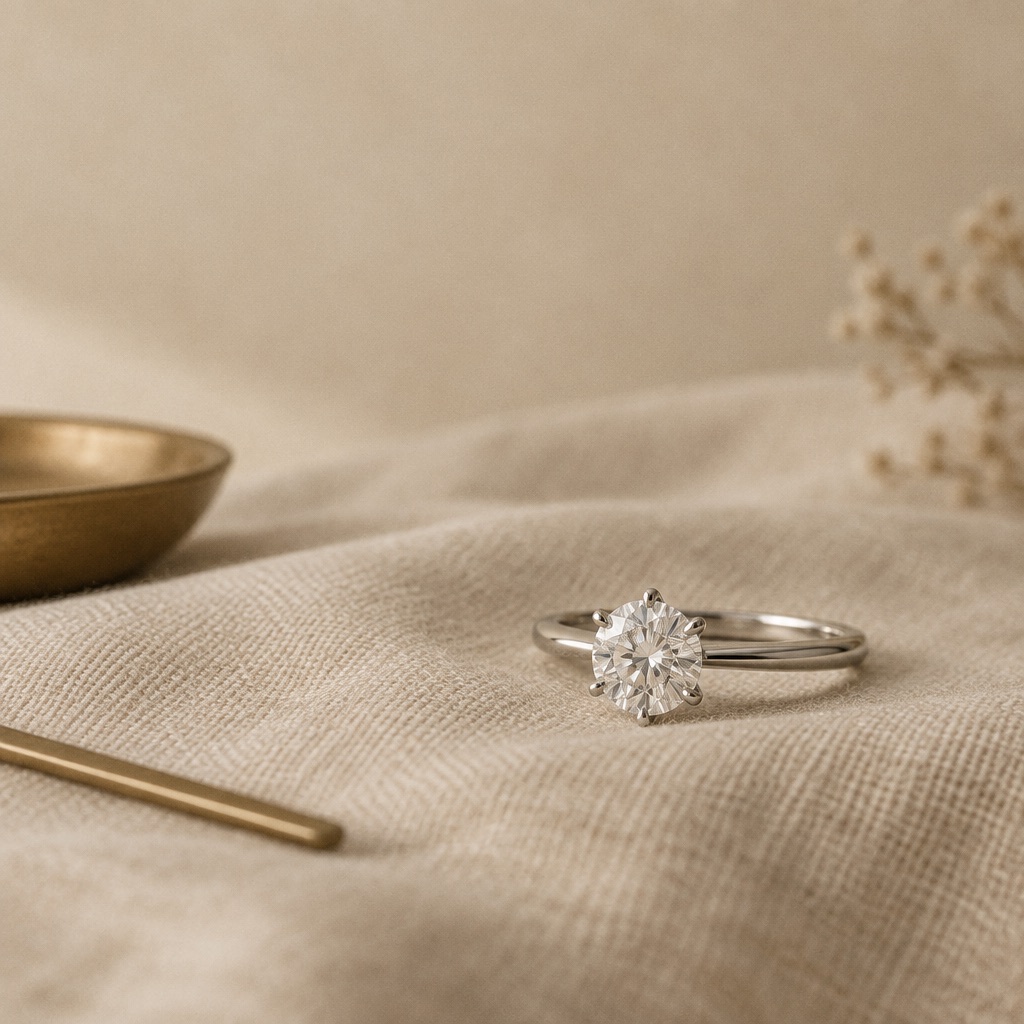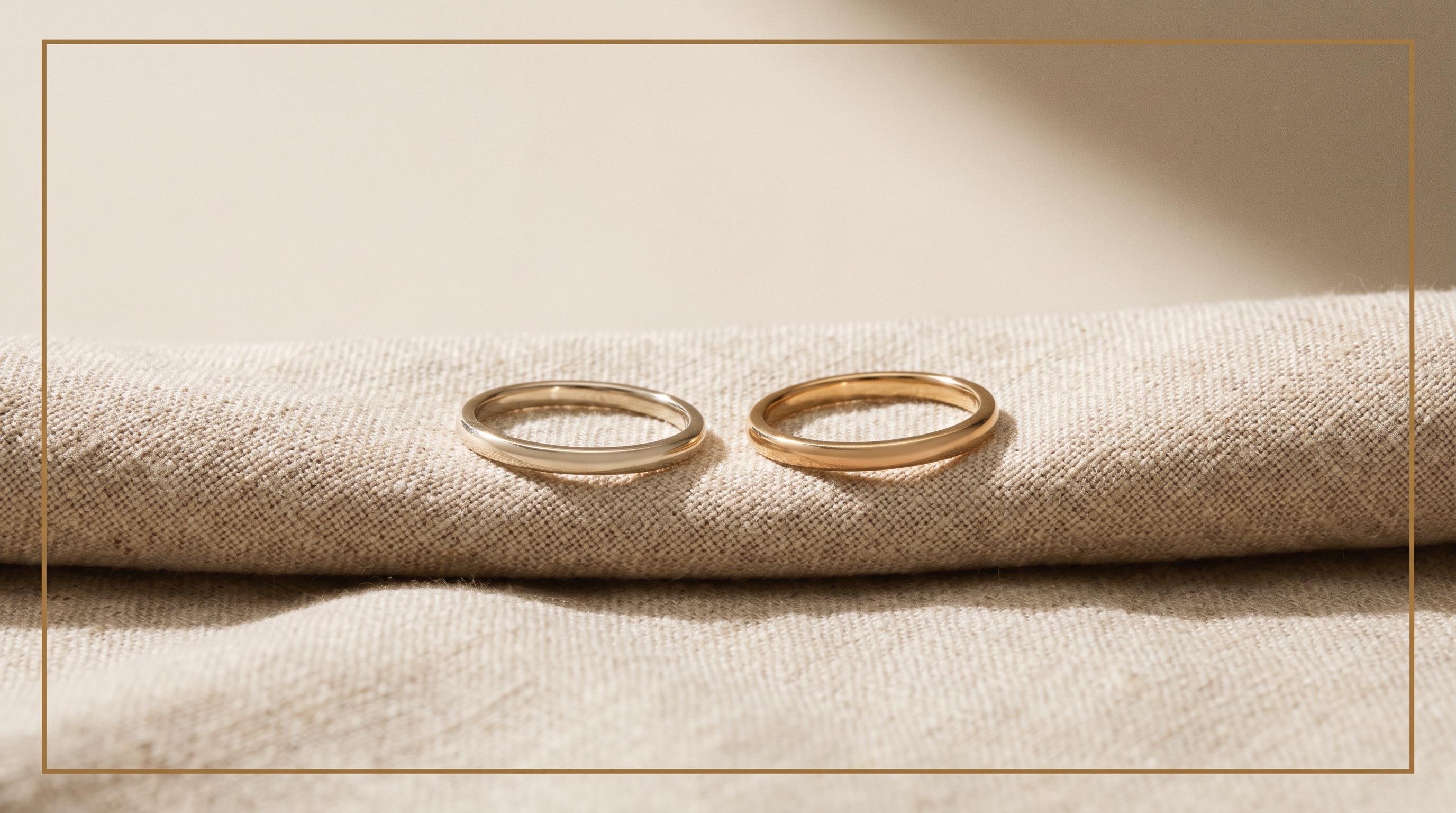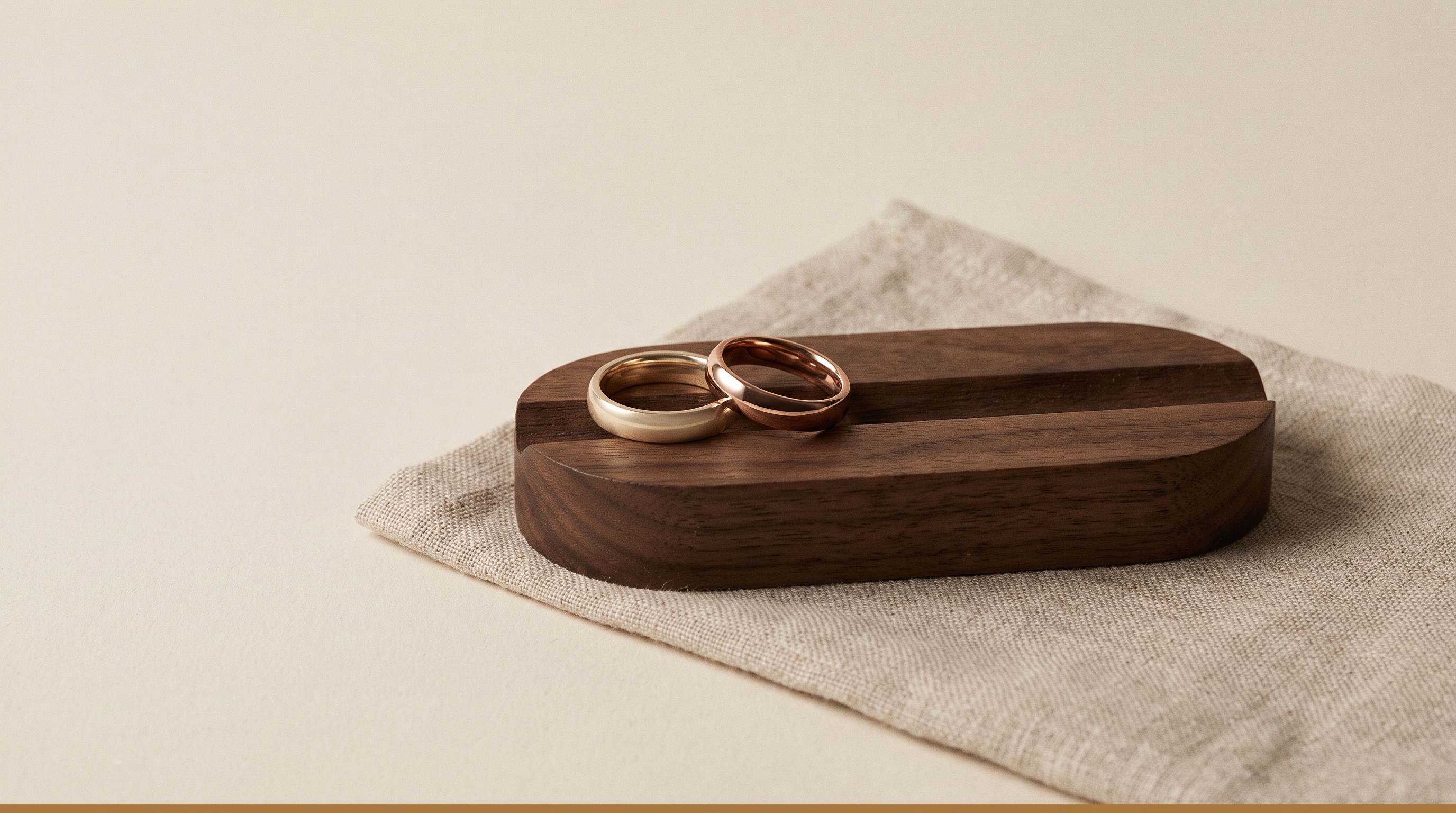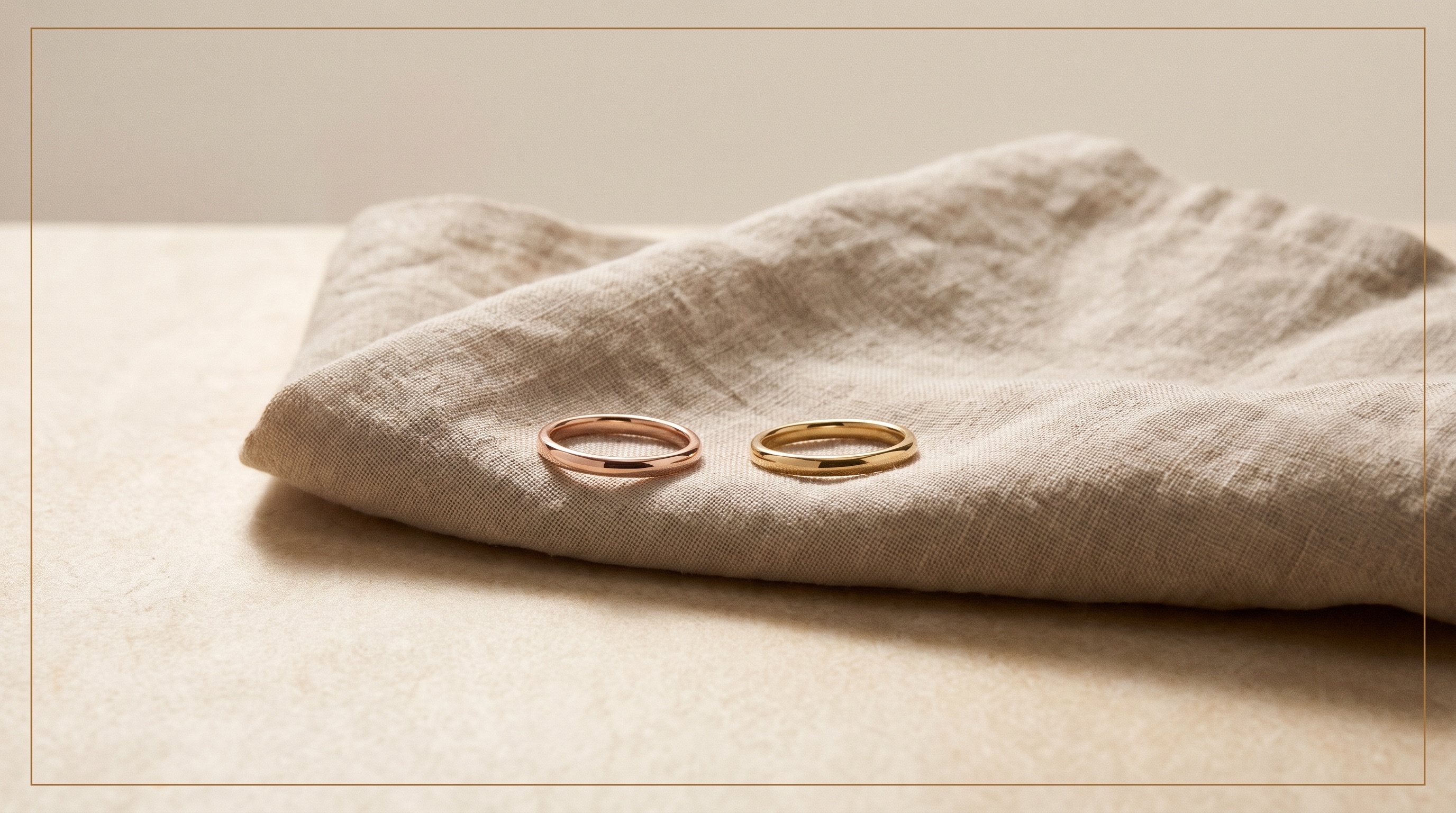
Rose gold is a gold alloy with a higher proportion of copper than yellow gold, which gives it a distinctive pink-to-reddish tone instead of yellow gold's warm golden hue. The more copper in the blend, the deeper and pinker the color — and that same copper content also makes rose gold measurably harder and more scratch-resistant than yellow gold at the same karat.
Both metals start from the same base — pure gold alloyed down to a workable purity — and the entire visual and practical difference between them comes down to which secondary metal dominates the alloy: silver for yellow gold's warm gold tone, copper for rose gold's pink tone. This guide covers composition, durability, color variation, allergy considerations, and current style trends so jewelers and buyers can choose between the two with the real differences in view.
What Each Metal Actually Is
Yellow gold is pure gold alloyed with a mix of copper and silver, in proportions balanced to preserve the metal's natural warm yellow color while adding enough hardness for durable jewelry. At typical jewelry karats — 14k (58.3% pure) or 18k (75% pure) — the alloy portion is small enough, and balanced enough between copper and silver, that the result reads as a traditional, warm gold tone.
Rose gold uses the same starting point but shifts the alloy mix toward copper specifically, with little or no silver, since copper is the metal responsible for the pink coloration. The higher the copper concentration relative to the total alloy, the more pronounced and reddish the pink becomes — a distinction sometimes marketed as "rose gold" (a moderate pink) versus "red gold" (a deeper, more saturated pink-red) depending on exact copper content, though there's no single industry-wide standard separating the two labels precisely.
Why Rose Gold Is Pink: The Role of Copper
Copper is a naturally reddish-orange metal, and blending it into gold at a high enough proportion shifts the alloy's overall color toward pink rather than yellow. This is a purely compositional effect, not a coating or treatment — rose gold's color goes all the way through the metal, exactly like yellow gold's, and needs no plating or surface finish to maintain its color over time, unlike white gold's rhodium plating.
Because karat limits how much total alloy metal is available (41.7% for 14k, 25% for 18k), the achievable depth of rose gold's pink color varies with karat: 14k rose gold has more total alloy room to work with, making it easier to hit a rich, saturated pink, while 18k rose gold has to concentrate a higher percentage of copper into a smaller overall alloy allowance to reach a comparably deep color. This is part of why 14k is actually the more common karat specifically for rose gold, even though 14k is not universally the most common karat across all gold colors.
Durability and Everyday Wear
Copper is a harder metal than silver, which means rose gold — with its copper-heavy alloy — is measurably more scratch-resistant and durable than yellow gold at the identical karat. This gives rose gold a genuine practical edge for daily-worn rings, particularly engagement rings and wedding bands that absorb constant contact and abrasion over years of continuous wear.
Yellow gold still performs well under normal daily wear — it remains one of the most common bridal metal choices worldwide — but a customer specifically prioritizing maximum durability at a given karat, without moving up to a harder karat tier or a different metal like platinum, is better served by rose gold's copper-driven hardness advantage. This is a genuinely underappreciated practical selling point for rose gold beyond its color, worth mentioning to any durability-focused customer who assumes color is a purely aesthetic choice.
Color Variation and Shade Range
Rose gold isn't a single fixed color the way yellow gold's warm tone is relatively consistent across most manufacturers — the exact shade varies noticeably with copper concentration, ranging from a subtle, pale pink at lower copper ratios to a deep, almost coppery red at higher ratios. Buyers comparing rose gold pieces from different jewelers or manufacturers should expect some real shade variation and, where color consistency matters (matching an existing piece, for example), should confirm the specific alloy or compare physical samples rather than assuming "rose gold" means one universal shade.
Yellow gold has comparatively less shade variation across manufacturers at a given karat, since its silver-and-copper balance is more standardized industry-wide, though karat itself still affects depth of color as covered in other GD guides comparing 14k and 18k gold directly.
Allergy and Skin-Sensitivity Considerations
Copper allergies exist but are considerably less common than nickel allergies, and copper is generally considered a lower-risk alloy metal for triggering skin reactions than nickel-based white gold formulations. That said, a small share of the population does have a genuine copper sensitivity, which can show up as skin discoloration (a greenish tint on the skin, from copper oxidation reacting with skin oils and moisture) or mild irritation with prolonged contact, more commonly reported with rose gold specifically because of its higher copper content relative to yellow gold.
Yellow gold's more balanced copper-and-silver alloy generally carries a somewhat lower risk of this specific reaction than rose gold's copper-heavy blend, though both remain lower-risk overall compared to nickel-containing white gold. Any customer who has previously noticed skin discoloration from copper-containing jewelry (including inexpensive copper bracelets or copper-alloy fashion jewelry) should be flagged as a candidate to test rose gold cautiously or consider yellow gold instead.
Patina and Oxidation Over Time
Because copper is more chemically reactive than silver, rose gold can develop a very subtle patina or slight warming of tone over years of wear and exposure to skin oils, moisture, and air — a natural aging characteristic some customers find appealing as a sign of a well-loved piece, similar to how platinum develops a soft matte patina, though the underlying mechanism is different. This effect is generally minor at typical jewelry karats and easily restored with a professional polish; it isn't the same as tarnishing in the way lower-purity or non-gold copper alloys can visibly tarnish, since the gold content in rose gold jewelry still dominates the alloy's overall chemical stability.
Yellow gold's more balanced alloy composition is somewhat less prone to this specific patina effect, staying closer to its original tone over a comparable wear period, though both metals benefit from the same basic care routine of periodic professional cleaning and polishing.
Cost Comparison
At the same karat and design, rose gold and yellow gold cost essentially the same, since both draw from an identical proportion of pure gold — the only difference is which secondary alloy metal (copper versus a copper-silver blend) makes up the remainder, and copper is not meaningfully more expensive than silver at the quantities used in fine jewelry alloys. Neither metal carries a durable price premium over the other purely based on color; any price difference a buyer encounters between specific rose gold and yellow gold pieces more likely reflects design complexity, stone selection, or brand positioning than the metal color itself.
Skin Tone and Personal Coloring
Rose gold's pink undertone flatters a notably wide range of skin tones, often cited as one of the more universally flattering metal colors precisely because its warm-but-not-fully-yellow tone sits between the warm end (favoring yellow gold) and cool end (favoring white gold or platinum) of the usual skin-undertone spectrum. This versatility is part of why rose gold has broadened its appeal well beyond any single skin-tone category since its resurgence in bridal jewelry.
Yellow gold remains the strongest match specifically for warmer skin undertones, harmonizing directly with gold or peachy tones already present in the skin, while customers with a cooler undertone who still want a warm metal (rather than moving to white gold or platinum) often find rose gold's pink cast bridges that gap more comfortably than yellow gold's fuller warmth.
Current Style Trends
Rose gold experienced a significant surge in bridal and fine jewelry demand over the past decade, driven partly by its association with vintage and Art Deco-inspired design and partly by its distinctiveness compared to the white-metal dominance that preceded it. That demand has matured into a stable, well-established category rather than a passing trend, particularly for solitaire engagement rings, vintage-inspired halo settings, and mixed-metal designs pairing rose gold with white gold or platinum accents.
Yellow gold has seen its own strong resurgence more recently, particularly for antique-cut diamonds, colored gemstones, and designs deliberately referencing period jewelry (Georgian, Victorian, and Edwardian-inspired pieces especially), where a warm traditional metal complements the stone and design language better than a pink or white alternative. Both metals currently enjoy genuine, simultaneous demand rather than one having displaced the other, which makes stocking both a reasonable default for a retailer without a strong existing customer-preference signal either way.
Rose Gold vs. Yellow Gold at a Glance
| Factor | Rose Gold | Yellow Gold |
|---|---|---|
| Dominant alloy metal | Copper | Copper and silver, balanced |
| Color | Pink to reddish, varies with copper ratio | Warm, traditional gold tone |
| Hardness / durability | Higher (copper is harder than silver) | Slightly lower than rose gold at same karat |
| Shade consistency across brands | More variable | More standardized |
| Allergy consideration | Copper sensitivity possible (uncommon) | Generally lower risk |
| Common karat | 14k most common (easier to achieve deep pink) | 14k and 18k both common |
| Best skin tone match | Wide range, especially cool-to-neutral undertones | Warm undertones specifically |
| Style association | Vintage, Art Deco, romantic | Antique-cut, period-inspired, colored gemstones |
A Decision Checklist for Jewelers and Buyers
- Customer wants maximum durability at a given karat without upgrading karat or metal type: rose gold's copper content gives it a real edge.
- Customer building a vintage or Art Deco-inspired design: rose gold is the stronger stylistic match.
- Customer building an antique-cut or colored-gemstone piece with period-inspired styling: yellow gold typically complements better.
- Uncertain skin undertone or wants a broadly flattering warm metal: rose gold's pink tone flatters an unusually wide range of undertones.
- Known copper sensitivity or previous discoloration from copper jewelry: yellow gold or a non-copper-forward alloy is the safer default.
- Matching an existing rose gold piece: confirm the specific alloy or compare physical samples, since shade varies meaningfully across manufacturers.
Common Misconceptions Worth Correcting
A frequent misconception is that rose gold is a modern invention or a lesser, more "fashion" version of traditional gold — in fact, rose gold (often called "red gold" historically) has been used in fine jewelry for well over a century, with a particularly strong association with Russian and Victorian-era jewelry design long before its recent bridal resurgence. Another misconception is that rose gold's color comes from a plating or dye — it doesn't; the pink runs all the way through the alloy exactly the way yellow gold's color does, and it needs no equivalent to white gold's rhodium replating to maintain its color. Finally, some buyers assume all rose gold looks the same — as covered above, copper concentration varies meaningfully by manufacturer and karat, and comparing physical samples before committing to a match is worth the extra step.
Mixed-Metal and Two-Tone Designs
Rose gold and yellow gold pair well together in mixed-metal designs, since both are warm-toned metals that read as complementary rather than clashing — a rose gold band with yellow gold accents, or vice versa, is a increasingly common way to get variation without introducing the higher contrast of a white metal into the same piece. Rose gold also pairs distinctively with white gold or platinum for a higher-contrast two-tone look, a popular combination for vintage-inspired halo settings where a rose gold band frames a white metal head holding the center stone. Either combination requires a bench jeweler comfortable soldering or fusing the specific metals involved, worth confirming before quoting a mixed-metal custom build.
How Metal Color Interacts with Diamond and Gemstone Choice
Rose gold's pink tone has a distinctive interaction with center stone choice that's worth knowing beyond the general skin-tone guidance above. Against rose gold, a colorless-to-near-colorless diamond (D-H range) reads crisp and bright by contrast with the warm pink setting, while champagne, cognac, and warmer fancy-color stones blend harmoniously with rose gold's own warm cast, creating a cohesive, monochromatic-warm look many customers find appealing for vintage-inspired designs. Rose gold also pairs distinctively with morganite, pink sapphire, and other pink-toned gemstones for a tonal, coordinated look that's become a recognizable design signature in its own right.
Yellow gold pairs most naturally with warmer fancy-color diamonds (yellow, champagne, cognac) for a similarly tonal effect, and with colored gemstones like emerald, ruby, and sapphire in more traditional, jewel-toned designs. Both metals can absolutely pair with any diamond or gemstone color a customer prefers — these are aesthetic tendencies and popular pairings, not hard rules — but they're useful starting points for a retailer helping an undecided customer narrow down a combination quickly.
Caring for Rose Gold vs. Yellow Gold Long-Term
Both metals share the same baseline care routine: periodic professional cleaning, an annual prong check for rings holding a center stone, and avoiding prolonged exposure to chlorine and harsh cleaning chemicals that can affect copper and silver alloy content over time. Rose gold's higher copper content makes it marginally more resistant to everyday scratching than yellow gold at the same karat, which can mean slightly less frequent professional polishing to keep its surface looking fresh, though the difference is modest rather than dramatic.
Neither metal requires anything like white gold's rhodium replating cycle — this is a shared advantage both warm-toned metals have over white gold specifically, and it's worth mentioning explicitly to a customer comparing all three metal options, since the maintenance conversation often centers entirely on white gold's plating without clarifying that neither rose nor yellow gold shares that particular downside.
Sourcing Rose and Yellow Gold Jewelry Through Guru Diam
Guru Diam builds custom engagement rings and fine jewelry in rose and yellow gold (along with white gold and platinum), finished in 4-6 days and unbranded by default so retail partners can resell as their own. Because metal color, karat, setting style, and diamond sourcing all happen through the same account, jewelers can spec a rose gold vintage-inspired build or a yellow gold antique-cut setting — or a mixed-metal combination of both — without coordinating a separate metal supplier and stone vendor.
Loose diamonds for a custom build, including CVD lab-grown stones with the buyer's choice of IGI, GIA, or GCAL certification, are sourced through the same order, and in-stock certified inventory ships same-day when ordered before 6pm EST from New York or 4pm PST from Los Angeles. Start a custom build through custom jewelry, or browse certified loose stones under certified diamonds. The full catalog, including antique-cut inventory well suited to both metal colors, is accessible through the wholesale hub, and accounts wanting a standing relationship with regularly refreshed pricing can apply through trade partner.
Talking Customers Through the Choice
Customers deciding between rose and yellow gold are usually choosing on pure color preference already, so the most useful thing a retailer can add is the practical layer most buyers haven't considered: durability, skin-tone match, and how the metal will interact with their chosen stone. A customer torn between the two, or unsure which flatters them, is often well served by trying both against their skin under the same lighting before deciding, since photographs and online reference images notoriously understate how differently the two warm tones can read in person. For a customer specifically choosing based on an existing jewelry wardrobe, matching what they already wear daily tends to produce a decision they stay happy with longer than choosing based on a single piece in isolation.
Frequently Asked Questions
Is rose gold more durable than yellow gold?
Yes, at the same karat. Rose gold's higher copper content makes it measurably harder and more scratch-resistant than yellow gold's more balanced copper-and-silver alloy, giving it a real practical edge for daily-worn rings.
What makes rose gold pink?
Copper. Rose gold is a gold alloy with a higher proportion of copper than yellow gold, and the more copper in the blend, the deeper and pinker the resulting color. It's a compositional effect, not a coating or dye — the color runs all the way through the metal.
Does rose gold fade or need replating like white gold?
No. Rose gold's pink color comes from its alloy composition, not a surface plating, so it never needs replating. It can develop a very subtle patina over many years of wear, easily restored with a professional polish, but the underlying color doesn't fade or need renewal.
Is rose gold or yellow gold more expensive?
Neither carries a consistent price premium over the other at the same karat and design — both contain the same proportion of pure gold, and the secondary alloy metals (copper versus copper-and-silver) don't differ meaningfully in cost at jewelry-scale quantities.
Can rose gold cause a skin reaction?
It's possible but uncommon. A small share of people have a copper sensitivity, which can show up as mild irritation or a temporary greenish skin discoloration from copper oxidation. This is less common than nickel-related reactions to some white gold, but customers who've reacted to copper jewelry before — including inexpensive copper bracelets or fashion jewelry, a common early signal — should test cautiously or consider yellow gold instead.
Which skin tones does rose gold suit best?
Rose gold is often considered one of the more universally flattering metal colors, working well across a wide range of skin tones, since its pink-warm tone sits between yellow gold's full warmth and white gold's cool neutrality. Yellow gold remains the stronger match specifically for warm skin undertones. When in doubt, trying both metals against bare skin in natural light is a more reliable test than judging from a photo or a countertop under artificial lighting, since both metal tones can look meaningfully different depending on the light source.