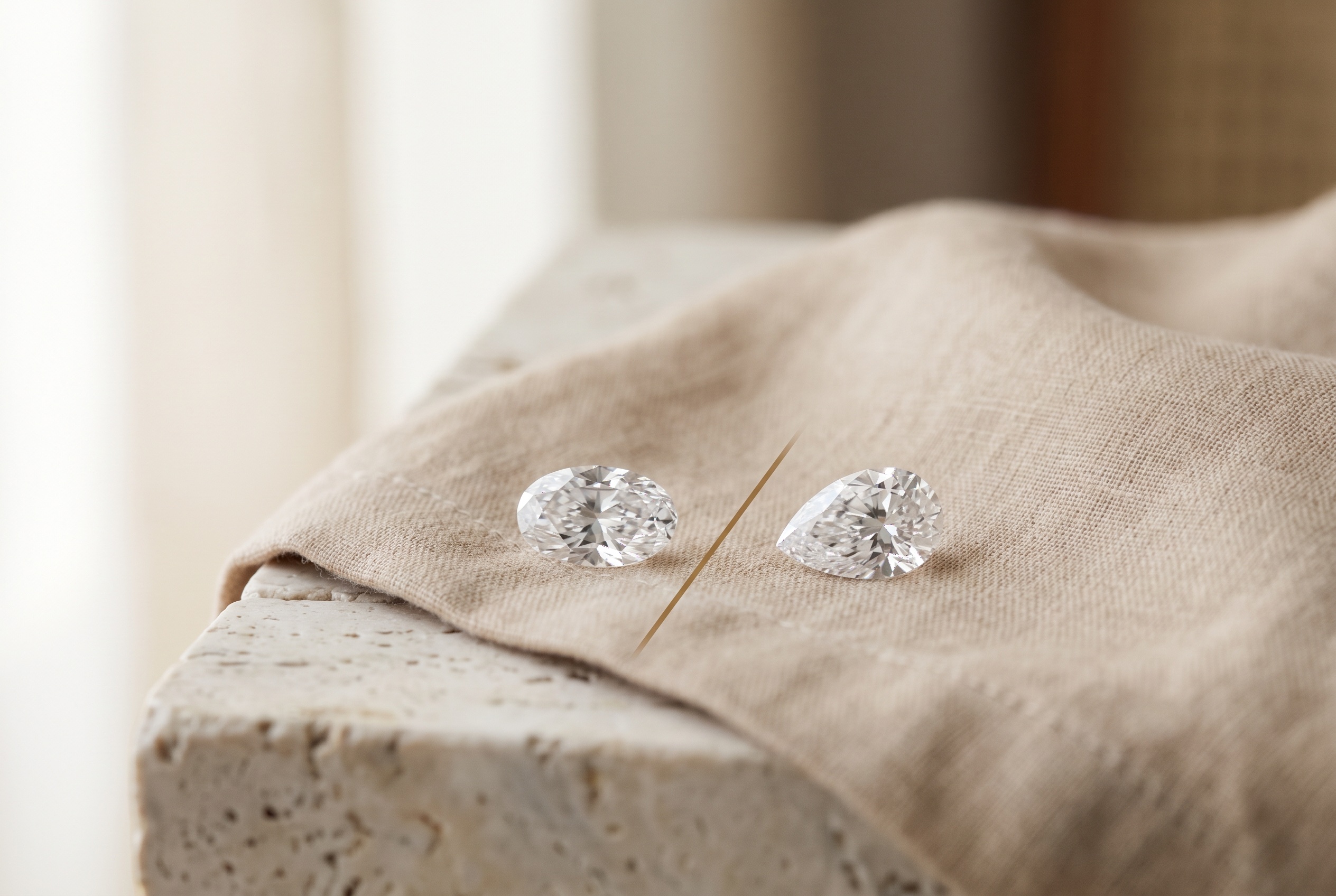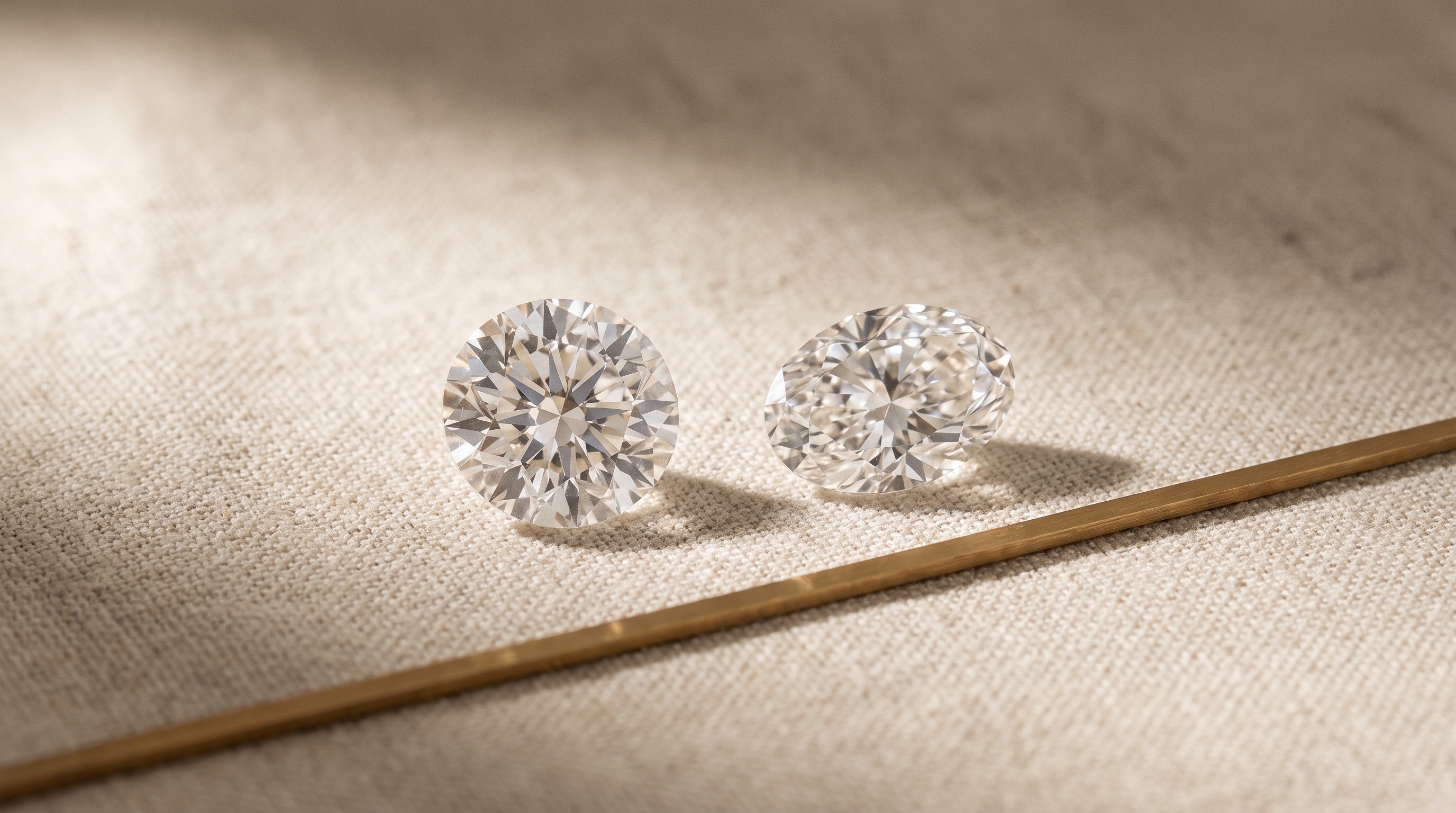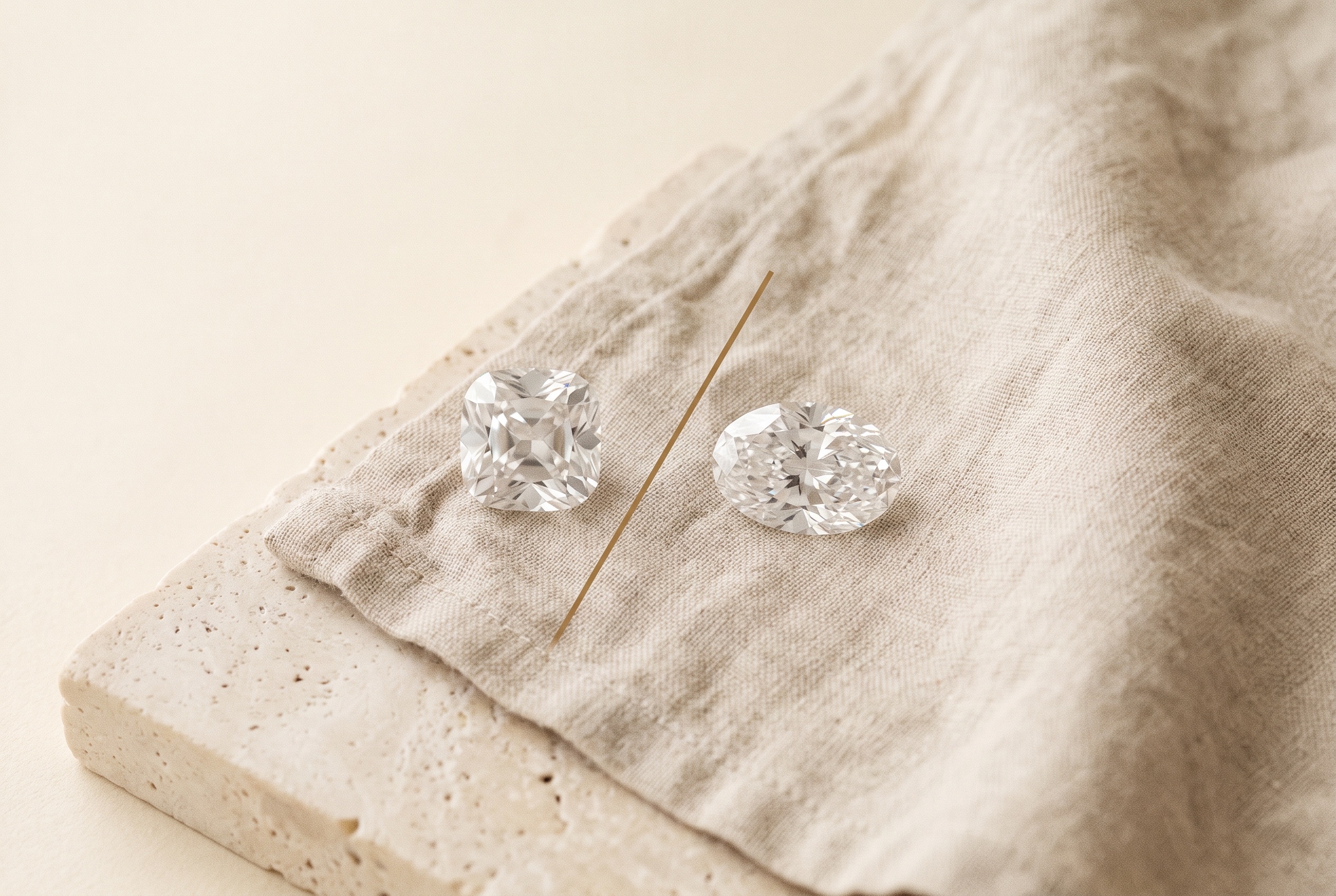

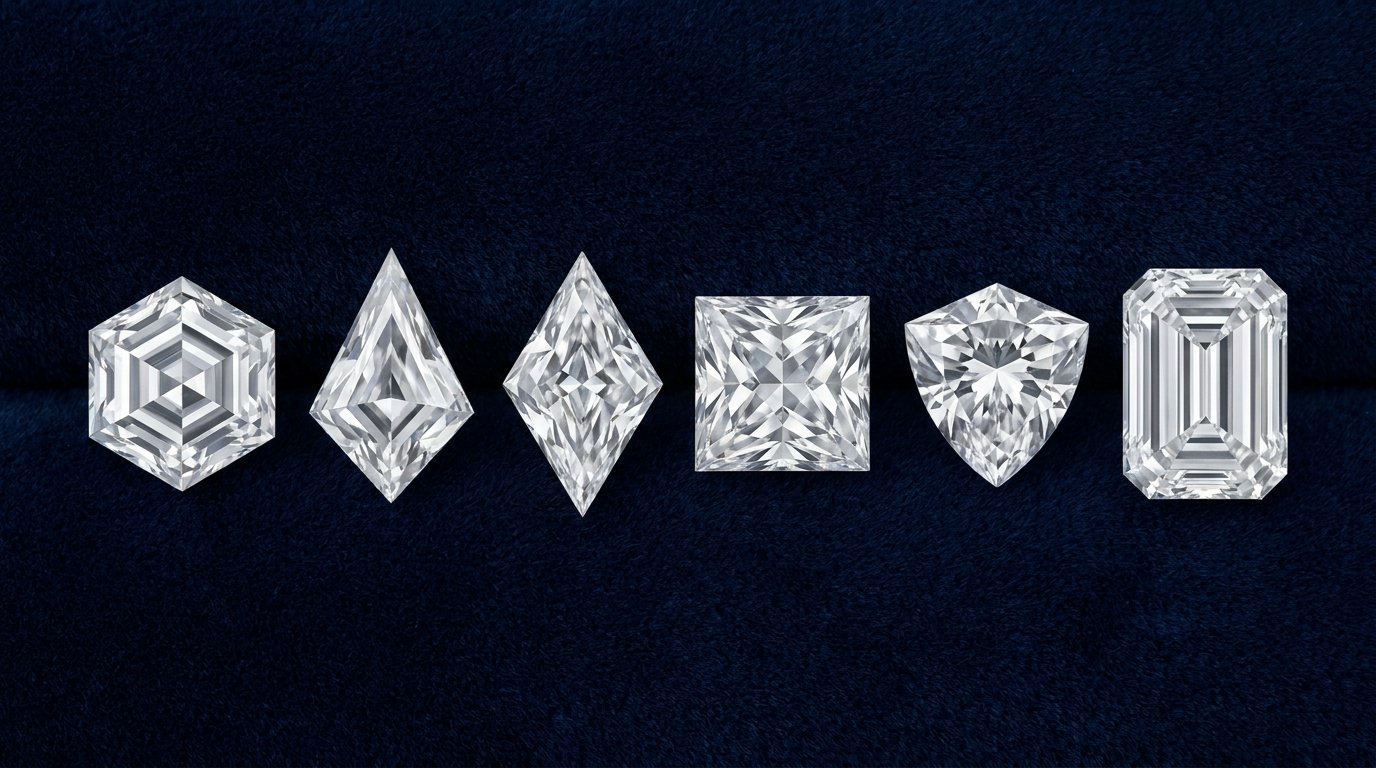
Fancy shape lab grown diamonds for designers are the geometric, non-standard silhouettes — hexagon, kite, lozenge, criss cut, shield, trapezoid, half-moon, bullet and epaulette — that let a custom bench build pieces no mall case can match. Lab-grown supply makes these once-scarce cuts affordable to stock and easy to match, turning a niche into a repeatable, high-margin custom category for independent jewelers and designers.
Fancy Shape Lab Grown Diamonds for Designers: A Jeweler's Guide to Exotic Cuts — Hexagon, Kite, Lozenge & Criss Cut

If you run a bench or a design studio, you already know the problem with rounds and ovals: every competitor within fifty miles has them, and the customer can price-shop the spec to the dollar. Exotic fancy shapes break that race. They are the silhouettes that make a buyer stop, ask "what is that," and accept that there is no apples-to-apples comparison down the street. For a designer, that is the whole game — differentiation you can actually charge for.
This is a sourcing guide written operator-to-operator. We will walk the core geometric shapes, what they are good for on the bench, how to think about pricing and supply, where lab-grown changed the math, and how to position them with retail clients without overpromising. These are the same conversations we have every day across our exotic fancy shape inventory.
Why are exotic fancy shapes a smarter category for designers in 2026?
Three forces have stacked up in favor of geometric cuts, and all of them help the independent more than the chain.
First, supply. Exotic shapes were historically scarce in natural goods because cutting a hexagon or a kite from rough sacrifices yield, and matched runs were nearly impossible to assemble on demand. Lab-grown changed that. With CVD (chemical vapor deposition) and HPHT (high pressure / high temperature) growth, a cutter can produce geometric shapes in usable quantities and calibrated runs, which means you can actually stock the silhouettes and reorder them. Lab-grown diamonds share the same physical, chemical and optical properties as mined diamond — they are diamond — so you are not trading performance for availability.
Second, demand. The industry is in what most analysts describe as a "K-shaped" recovery: commodity round lab-grown is under heavy price pressure, while distinctive luxury fancy shapes hold value and attention. A vintage and antique-cut revival — driven heavily by celebrity engagement rings — has pulled buyers toward the unusual. Personalization and custom work carry a higher average order value than case-stock sales, by industry estimates, and exotic shapes are the raw material of personalization.
Third, margin defensibility. When you set a hexagon as a center or a row of kites as a custom band, the customer cannot SKU-match your price. You are selling design, not a commodity grade.
If you are weighing the broader stocking case for these cuts against the bridal trend, our antique-cut engagement ring stocking playbook covers the demand side in more depth.
What are the core exotic shapes, and what is each one good for?
Here is the working vocabulary. Use these names with your supplier and your CAD partner so everyone is talking about the same geometry.
| Shape | Geometry | Best bench use | Pairs as |
|---|---|---|---|
| Hexagon | Six-sided, elongated or balanced | Center stone, bezel solitaire, modern signet inlay | Single center; rarely paired |
| Kite | Four-sided diamond/rhombus, pointed | Geometric center, east-west sets, cluster points | Mirror-image side stones |
| Lozenge | Elongated rhombus, softer than kite | Accent rows, marquise-alternative center, band inlay | Linear runs |
| Criss cut | Step-cut rectangle/elongated with crossed facets | Architectural center, emerald-cut alternative | Single center |
| Shield | Three-sided with a flat top | Side stones flanking a center, crown motifs | Symmetric pair |
| Trapezoid | Four-sided, two parallel edges | Side stones beside emerald/radiant centers | Symmetric pair |
| Half-moon | Half-circle, flat edge | Side stones, soft modern flanks | Symmetric pair |
| Bullet | Rectangular with one pointed end | Channel ends, geometric side stones | Symmetric pair |
| Epaulette | Stepped four/five-sided trapezoid | Art-deco shoulders, stepped side stones | Symmetric pair |
A few bench notes worth internalizing:
- Centers vs. sides. Hexagon, kite, lozenge and criss cut are the shapes designers reach for as centers or hero accents. Shield, trapezoid, half-moon, bullet and epaulette are predominantly side-stone geometry — the flanking work that frames a center. Knowing which job a shape is doing tells you whether you are buying one stone or a matched pair.
- Step cuts show everything. Criss cut and lozenge are typically step-cut or hybrid, which means clarity and color read more honestly than in a brilliant. Buy a touch tighter on clarity for these than you would for a sparkly round.
- Pointed shapes are fragile at the tips. Kite, bullet and shield points need protective setting (bezel, V-prong, or a recessed channel). Flag this in CAD before you cast.
Hexagon cut diamond wholesale: the modern solitaire that isn't a round
The hexagon is the breakout center shape for the customer who wants "different but still timeless." It sits beautifully in a bezel, reads clean east-west or north-south, and photographs well — which matters when your client posts the ring. For hexagon cut diamond wholesale buying, watch outline ratio (some run long and narrow, some balanced) because two hexagons of the same carat can look like different rings. Specify the ratio you want when you order; do not assume.
Kite shaped diamond wholesale supplier: the geometric workhorse
The kite is the most versatile geometric shape for a bench. As a center it is striking; as mirrored side stones it frames a round or oval with an architectural edge; in a cluster, kites tile into starbursts and shields. Because so much kite work is paired or sided, your real question when choosing a kite shaped diamond wholesale supplier is whether they can deliver mirror-matched pairs, not just single stones. Outline, depth and the meeting point of the long edges all have to mirror for the set to look intentional.
Lozenge cut diamond supplier: the marquise alternative
The lozenge — an elongated rhombus with softer points than a kite — is the quiet sophisticate of the group. It is a marquise alternative without the dated connotation, and it tiles into linear bands and accent rows with almost no negative space. When evaluating a lozenge cut diamond supplier, prioritize consistency across a run: lozenges almost always go into multiples (band inlays, stacked accents), so length-to-width uniformity matters more than any single stone's brilliance.
Criss cut diamond wholesale: the architectural step cut
Criss cut is the connoisseur's emerald-cut alternative — an elongated step cut with crossed facets that throw a distinctive flash instead of the long open table of a classic emerald cut. It suits the buyer who wants a sleek, architectural center but finds emerald cut too common. In criss cut diamond wholesale terms, treat it like any step cut: inclusions and tint hide nowhere, so insist on eyes-clean clarity and a color grade you would be comfortable showing under bright light.
How do I price exotic shapes for custom work?
Pricing geometric cuts is less about a published per-carat grid and more about the job the stone is doing and the rarity of the match. A practical framework:
- Start from the stone cost, not a fantasy markup. Lab-grown exotic singles are dramatically more accessible than natural equivalents, which is exactly what makes the category viable to stock. Build your quote on the landed stone cost plus your design and bench time.
- Charge for the design, not the carat. The value in a hexagon solitaire or a kite trilogy is the silhouette and the build, neither of which the customer can price-match. This is where personalization earns its higher average order value.
- Price the match, not just the stones. A mirror-matched pair of shields or a uniform run of six lozenges is worth more than the sum of six loose stones, because the labor of matching has been done for you. If your supplier delivers a clean matched set, that is a line item you can stand behind.
- Build in a setting premium for pointed shapes. Kites, bullets and shields need protective settings and more careful bench work. Quote that time honestly.
Because exotic shapes are not commodity-graded the way rounds are, you are insulated from the round lab-grown price erosion that is squeezing margins elsewhere. That is a feature, not a bug.
How does lab-grown change the exotic-shape supply problem?
The historical bottleneck for geometric shapes was never demand — it was getting the stones at all, in the right sizes, in matching runs, when you needed them. Natural exotic goods come up sporadically, in random sizes, and assembling a matched pair could take months of calling around.
Lab-grown collapses that timeline. A grower can produce hexagons, kites and lozenges in calibrated runs, which means a supplier can hold live inventory and reorder predictably. For a designer, that is the difference between "I found one kite, hope the client likes it" and "show me your kites in this size range and I'll choose." It also makes matched pairs and sets realistic to source on a custom timeline rather than a treasure hunt.
On certification: IGI grades the large majority — roughly 95%-plus — of lab-grown diamonds with full 4Cs and is the practical trade default for lab-grown, including fancy shapes. As of late 2025, GIA moved its lab-grown reports toward a two-tier descriptive system ("Premium" / "Standard") rather than the full letter color and clarity 4Cs, so for letter-grade precision on lab-grown you will most often be reading IGI reports. Because a stone can grade up to about one color grade differently between labs, always compare reports from the same lab when you are matching stones. The lab-grown supply story for the antique and exotic category is covered further in our piece on why lab-grown reopened the antique-cut category. For independent verification of grading practices, the GIA and IGI sites both publish their current lab-grown reporting standards.

How do I match exotic shapes for side stones and sets?
Most exotic-shape work is not a lone center — it is a center with flanking geometry, or a run of accents. That makes matching the make-or-break skill.
The industry "matched" tolerance is roughly plus or minus 0.1 to 0.2 mm in diameter or length, within about one color grade, with comparable clarity and matching cut and symmetry. Of all of those, cut and symmetry matter most to the eye — a viewer will forgive a faint color difference long before they forgive two side stones that sit at different heights or catch light differently. Insist that pairs and sets ship with paired or individual certificates so the match is documented, not just promised.
Fancy-shape pairs you will source most often for side-stone work are trapezoid, half-moon, shield, bullet, epaulette and kite. Each frames a different center geometry:
- Trapezoids and epaulettes flank emerald and radiant centers for an art-deco line.
- Half-moons soften the flanks of a round or oval.
- Shields and bullets add a sharp, geometric edge.
- Kites mirror into the most architectural sets.
For the full tolerance spec and a buying checklist, see our matched pairs sourcing guide, and for the side-stone geometry specifically, matched pairs in fancy shapes goes deeper on trapezoids, half-moons, shields and kites.
How do I position exotic shapes with my retail clients?
You are selling these to a trade or design audience, but they in turn have to sell to a consumer — so arm them with the right language.
- Lead with rarity, not spec. "This is a hexagon center — you will not see this in a mall case" beats reciting a color grade.
- Frame the custom timeline as an advantage. Industry-typical custom runs about 9-19 days (roughly CAD 1-5 days, casting 1-2, setting and finishing 2-4). Our in-house custom delivers CAD-to-finished in 4-6 days, which lets your retail client say yes to a geometric center without a six-week wait killing the sale.
- Be precise about lab-grown. It is diamond — same properties as mined — grown by CVD or HPHT. Do not let a client confuse it with a simulant, and follow disclosure norms; the FTC Jewelry Guides set the baseline for how lab-grown must be represented.
- Use the certificate as a trust anchor. A documented IGI report on an exotic stone, and paired certificates on a matched set, turn an unusual shape into a confident purchase.
If your bench can't take on the setting work itself, that is not a blocker — our guide on offering custom without an in-house bench shows how independents run geometric custom through a wholesale partner.
How does US-held inventory help with exotic-shape sourcing?
Two ways: speed and cost certainty.
Speed, because geometric custom lives or dies on the timeline. When the stones are already landed in the US, you skip the import wait that can stretch a custom project past the point where the client stays excited.
Cost certainty, because of the 2026 tariff picture. A proposed and still-evolving US-India trade framework reportedly differentiates loose natural goods (lower, possibly 0%) from finished goods and lab-grown (higher — an 18% figure has circulated). This is proposed and uncertain, not settled law, and you should treat it that way in your own planning. But the practical hedge is the same regardless of how it lands: inventory already held in the US is a landed-cost and lead-time buffer against whatever the framework becomes. Our 2026 tariffs and US-inventory hedge piece breaks this down for diamond buyers specifically. For ongoing trade-policy and pricing context, National Jeweler and Rapaport both track these developments.
Guru Diam holds inventory in both New York's Diamond District and Los Angeles — 11,000+ IGI and GIA certified stones live, with real-time online inventory and API/CSV feed tools so you can pull exotic-shape availability straight into your own workflow.
Start sourcing exotic shapes
If exotic fancy shapes are where you want to differentiate your bench, open a verified wholesale account at /signup to see live geometric-shape inventory, or book time with our team at /book-appointment. Work the stones in person at our New York and Los Angeles desks — antique cuts, matched pairs, fancy color, calibrated melee, exotic shapes and in-house custom, All Under One Roof.
Frequently Asked Questions
What counts as an "exotic" or geometric fancy shape? The geometric, non-round silhouettes outside the standard fancy-shape lineup: hexagon, kite, lozenge, criss cut, shield, trapezoid, half-moon, bullet and epaulette. Hexagon, kite, lozenge and criss cut are typically used as centers or hero accents; shield, trapezoid, half-moon, bullet and epaulette are predominantly side-stone shapes.
Are lab-grown exotic shapes real diamonds? Yes. Lab-grown diamonds are grown by CVD (chemical vapor deposition) or HPHT (high pressure / high temperature) and share the same physical, chemical and optical properties as mined diamond — they are diamond. Lab-grown is what makes geometric shapes affordable to stock and practical to match, since growers can produce them in calibrated runs.
Which lab should I trust for grading exotic lab-grown shapes? IGI grades the large majority — about 95%-plus — of lab-grown diamonds with full 4Cs and is the practical trade default for lab-grown. As of late 2025, GIA shifted its lab-grown reports toward a two-tier "Premium"/"Standard" descriptive system rather than full letter grades, so for letter-grade color and clarity you will most often read IGI reports. Always compare stones using reports from the same lab, since grades can vary by up to about one color grade between labs.
How do I match exotic shapes for side stones? Target roughly plus or minus 0.1 to 0.2 mm in diameter or length, within about one color grade, with comparable clarity and matching cut and symmetry. Cut and symmetry matter most to the eye. Ask for paired or individual certificates so the match is documented, and source mirror-matched pairs rather than assembling singles yourself.
How should I price exotic shapes for custom work? Build from the landed stone cost, then charge for the design and the match rather than the carat — the silhouette can't be SKU-matched by competitors, which protects your margin. Add a setting premium for pointed shapes (kite, bullet, shield) that need protective settings, and price a clean matched set above the sum of its loose stones.
How fast can I get a finished custom piece in an exotic shape? Industry-typical custom runs about 9-19 days (CAD 1-5 days, casting 1-2, setting and finishing 2-4). Guru Diam's in-house custom delivers CAD-to-finished in 4-6 days, which lets you commit to a geometric center without a long wait risking the sale.