

Before you commit a client’s order to a new custom jewelry manufacturing partner, get direct, specific answers to 10 questions: CAD process and revision limits, certification options, minimum order policy, turnaround time, metal and karat options, defect and remake policy, who you actually talk to, branded versus unbranded delivery, how customer-supplied stones are handled, and what happens when a piece fails quality control before it ships. A trade-ready shop answers all 10 without hesitation, in specifics. A shop that’s going to cause you problems answers in generalities, or answers a different question than the one you asked.
This matters because the failure points in custom jewelry manufacturing almost never show up in a portfolio review. Every shop’s Instagram looks the same — polished product shots, a few CAD renders, a testimonial or two. The differences that determine whether your client’s ring ships on time, matches the CAD, and doesn’t come back with a loose prong are operational, not aesthetic. You can’t see them in a photo. You have to ask.
Underneath those 10 questions are five things you’re actually testing: capacity, quality control, CAD process, certification flexibility, and pricing transparency. Every one of the 10 questions below maps back to one of those five — keep them in mind as you read the answers.
Why This Conversation Matters More Than the Portfolio
Jewelers who get burned by a manufacturing partner almost never say the workmanship was bad on the first piece. Something works fine for two or three orders, and then an order hits an edge case — a rush job, a defect, a client-supplied stone, a revision beyond what was quoted — and the partner has no clear process for it. The relationship survives on the easy orders and breaks on the hard ones.
The 10 questions below surface exactly those edge cases before you’re relying on the answer under deadline pressure with a client waiting. Ask them in a single conversation, ideally with someone who can quote policy rather than recite talking points, and write down the actual answers — not your impression of them.
The pattern repeats across the trade in a predictable order. A jeweler finds a manufacturing partner through a referral or a show booth, places two or three straightforward orders — a solitaire engagement ring, a plain wedding band — and everything goes fine. Then a client brings in a grandmother’s diamond for an heirloom reset, or needs a rush turnaround before an anniversary, or the CAD comes back needing a fifth revision because the halo shape changed midway through approval. That’s the order that tests whether the partner has an actual process or was just getting lucky on the routine ones. The jewelers who get burned rarely skipped vetting entirely — they vetted the portfolio and skipped the operations questions.

The 10 Questions, and What Separates a Good Answer From a Concerning One
| # | Question | A Good Answer Sounds Like | A Concerning Answer Sounds Like |
|---|---|---|---|
| 1 | How many CAD revisions are included, and what happens after that? | A clear number, and a clear per-round price after it | “We’ll work with you” (no number at all) |
| 2 | What certification options do you offer, and for what? | Specific labs, specific size thresholds | “All our diamonds are certified” (no distinction by size or type) |
| 3 | What’s your minimum order policy? | Single-piece orders priced and scheduled like any other job | “Depends on your volume” |
| 4 | What’s your turnaround, and does it change by order size? | A stated range for CAD-approved-to-finished, same for one piece or ten | A vague “it depends,” or no distinction between diamond sourcing time and build time |
| 5 | What metals and karats do you actually cast in-house? | A specific list, with anything outsourced flagged as such | “We can get you anything” with no detail on what’s in-house |
| 6 | What happens if a piece comes back with a defect? | A named remake policy, timeline, and who covers the cost | “That almost never happens to us” |
| 7 | Who do I talk to once the order is placed? | A named contact or direct channel | A general inbox or “whoever’s available” |
| 8 | Does the piece ship branded or unbranded? | A clear default, stated upfront | Uncertainty, or branding decided by whoever’s “on the floor that day” |
| 9 | How do you handle a stone I supply myself? | A documented intake, verification, and custody process | “We’ll just set it” with no process described |
| 10 | What happens if a piece fails your own QC before shipping? | It gets caught and remade internally, on their timeline, not yours | “You’d catch it on your end” |
1. How Many CAD Revisions Are Included, and What Happens After That?
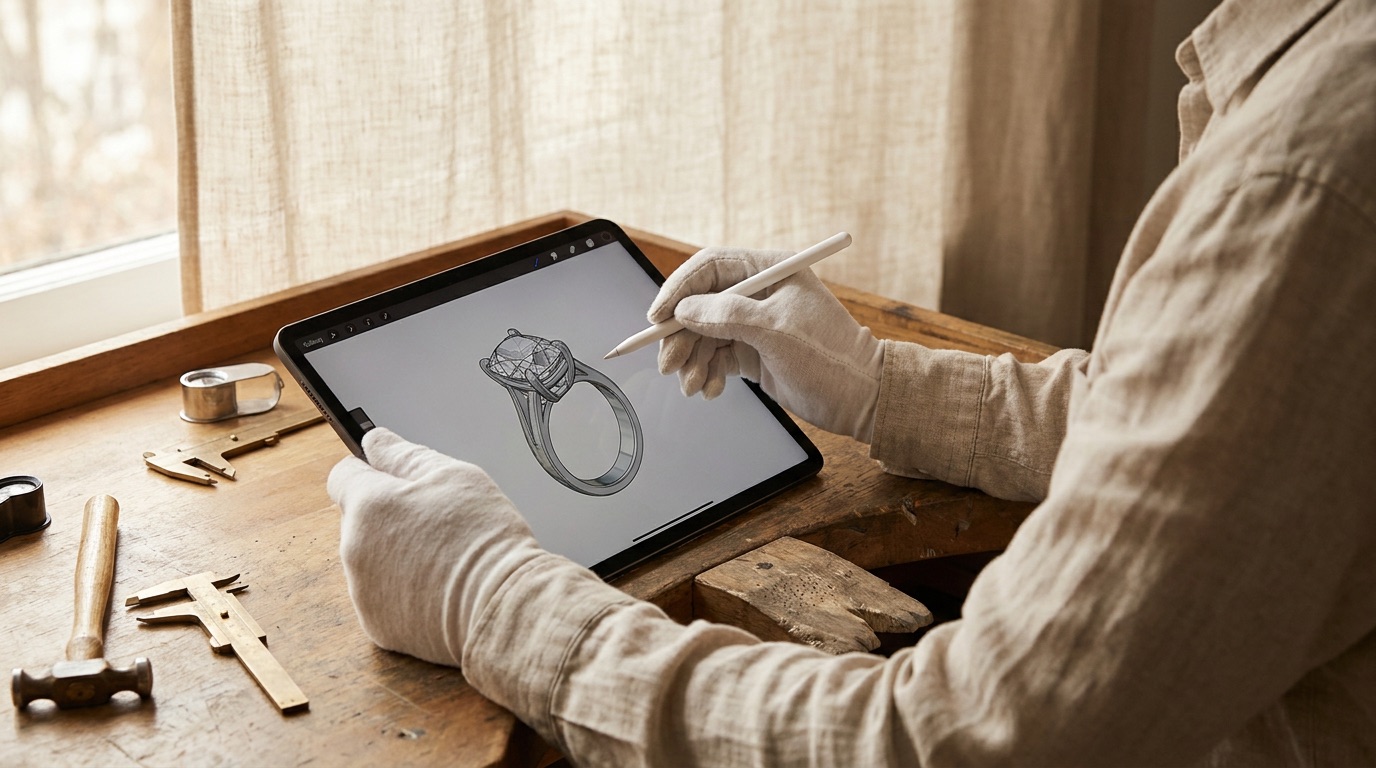
A vague answer here — “we’ll work with you until you’re happy” — sounds generous but tells you nothing about what happens when revision six is a genuinely different design than revision one. A good answer names a specific number of rounds included in the base quote and a clear, disclosed price for additional rounds beyond that. It should also distinguish between a revision (adjusting a detail on the same design) and a redesign (starting over), since shops that blur that line can quietly reset your revision count every time you ask for something meaningfully different.
In practice, most shops that handle this well include two to three rounds of CAD revision in the base quote before per-round pricing kicks in — enough to adjust proportions, prong style, or a shank detail without opening the door to unlimited scope creep. The distinction to listen for is revision versus redesign: swapping a prong height is a revision; swapping the center stone shape or moving from a halo to a solitaire is a redesign, and a shop that quietly treats the second as the first is resetting your count without saying so.
2. What Certification Options Do You Offer, and for What?
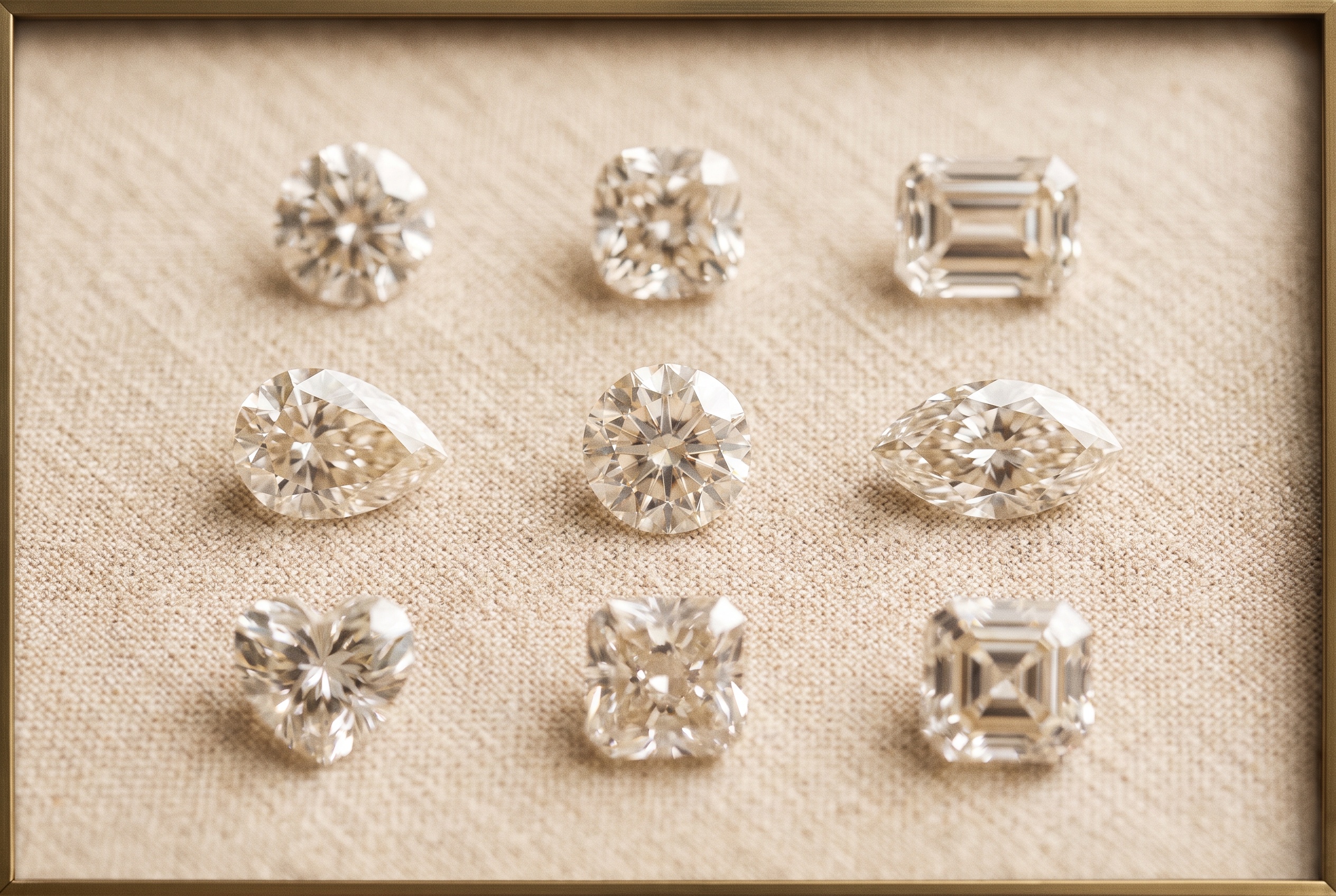
This question needs precision, not a blanket “yes, we’re certified.” Certification works differently by stone size and category: loose diamonds at 0.30ct and up are typically graded and certified by an independent lab such as IGI or GIA, while melee — the small, calibrated stones used in pavé and accent work — is uncertified parcel goods, checked against a color and clarity baseline rather than individually graded. A manufacturing partner who tells you melee comes with individual certification is either confused about their own inventory or not being straight with you. A good answer draws that line clearly and can tell you which lab options apply to certified diamonds.
Above that threshold, ask which labs are actually available rather than assuming one: IGI, GIA, and GCAL each grade to slightly different house standards and turnaround times, and a partner offering a choice between them gives you more flexibility to match what a specific client or price point calls for.
3. What’s Your Minimum Order Policy — in Writing?
Ask this even if the shop’s marketing already says “no minimum.” The real test is what a single custom piece costs per unit compared to a five-piece order of the same design, and whether that one-off enters the same production queue or a slower “as capacity allows” lane. A good answer treats a one-piece order as a normal transaction. A concerning one starts asking about your projected volume before it’ll quote you a number.
This is also where the term MOQ — minimum order quantity — comes up, and it’s worth asking about directly rather than waiting for it to surface as a delay. The honest economics: labor time on a single custom piece doesn’t scale down the way material cost does, so a shop that prices one-off orders fairly has already built that into a transparent price sheet. A shop that hasn’t usually hides the real minimum behind soft language — “let’s talk about volume” — rather than a published number.
4. What’s Your Turnaround, and Does It Change by Order Size?
Get a specific range, and get clear on what it’s measuring. A meaningful turnaround claim covers CAD-approved to finished piece — the build time once the design is locked — not the time it takes to source a diamond, and those are different clocks. A shop with an in-house bench that isn’t batch-locked can usually turn a CAD-approved custom piece around in roughly 4-6 days regardless of order size, because the process isn’t structured around batch size. Be skeptical of a partner who can’t separate diamond sourcing time from build time, since that’s usually where a quoted timeline quietly stretches.
Delays on a quoted timeline usually trace back to one of three bottlenecks: waiting on a diamond to be sourced or matched, a casting run batched around other orders instead of running continuously, or a hand-finishing queue that backs up during peak seasons. Ask directly what happens if you need a piece faster than the standard range — a shop with a real answer is more trustworthy than one that just says yes to everything.
5. What Metals and Karats Do You Actually Cast In-House?
Ask for specifics: which karats (14K, 18K), which metal colors, whether platinum is available, and whether anything on that list is actually outsourced to a third party rather than produced in-house. A shop that’s vague here — “we can get you whatever you need” — may be brokering that step out, which adds a layer you can’t see or control if something goes wrong with fit, color match, or finish.
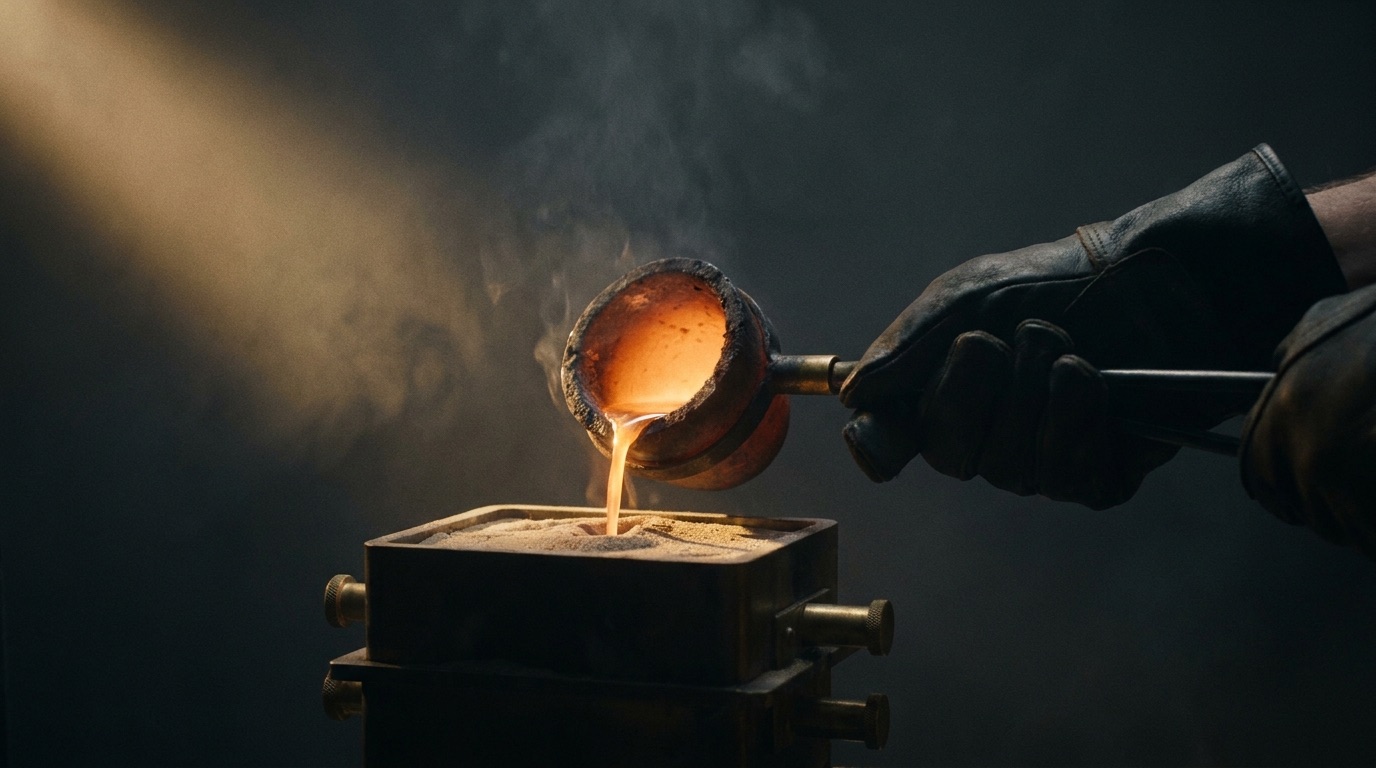
There’s real metallurgy behind this question. 18K alloys carry a higher precious-metal content and behave differently under the torch than 14K, white gold typically needs a rhodium-plating step to hit a bright white finish, and platinum has a much higher melting point that requires separate casting equipment entirely — not a simple swap in the same crucible. When any of that gets outsourced, you lose visibility into finish quality and add a shipping leg most quoted timelines don’t account for.

6. What Happens If a Piece Comes Back With a Defect?
Every manufacturing operation produces the occasional defect — a porosity issue in casting, a stone that chips during setting, a size that’s off. What separates a good partner isn’t a zero-defect claim (be suspicious of anyone who makes one), it’s a named process: is there a remake policy, what’s the turnaround on it, and who eats the cost when the defect is on their end versus a spec issue on yours. A defensive or minimizing answer (“that almost never happens”) means you won’t get a straight one when it does happen to your order.
None of those defect categories are avoidable at zero rate across enough production volume — what separates shops is whether the remake gets scheduled on a defined turnaround with the cost clearly assigned, rather than treated as a one-off negotiation every time it happens.
7. Who Do I Actually Talk to Once the Order Is Placed?
This is the question jewelers most often skip, and it determines whether a mid-production question gets answered in an hour or three days. A good manufacturing partner gives you a named contact or direct channel — not a shared inbox competing with everyone else’s messages. Test this before you commit: reach out through contact us with a specific question and see whether the response is fast and knowledgeable, or slow and generic.
This matters more the more steps an order has — CAD approval, stone matching, casting, setting, internal QC, and shipping are six separate handoffs on a single custom ring, and a question that lands in a shared inbox at step three can sit for days if nobody owns it.
8. Does the Piece Ship Branded or Unbranded?
For a wholesaler or independent jeweler, this determines whether you can resell the piece as your own work without an awkward conversation with your client. A good manufacturing partner has a clear default policy — stated upfront, not decided case by case — and unbranded delivery by default is the standard that lets you build your own brand equity on someone else’s production capability. If the answer is uncertain or “we usually put a small mark unless you ask,” get that in writing before your first order ships to a client.
The trade term for this arrangement is private label — the finished piece carries no branding from the manufacturing partner, and the jeweler is free to present it as their own house work. Confirm whether that includes the inside of the shank, since some shops laser-engrave a maker’s mark by default unless a client specifically requests it removed. Get the default in writing before your first client-facing order ships.
9. How Do You Handle a Stone I Supply Myself?
If you’re bringing your own diamond or gemstone for a client’s piece — common with heirloom redesigns — the manufacturing partner needs a real intake process: documenting the stone’s condition before work starts, verifying it matches what was represented, and a clear custody chain while it’s on their premises. A shop that just says “we’ll set it” with no described process has no system for the one scenario where a mistake isn’t theirs to simply remake.
In practice that means the stone gets weighed, measured, and photographed before any work begins, its condition is noted, and there’s a documented custody chain while it’s on the shop’s premises — not a general assurance that it’s “somewhere safe.” This matters most on heirloom resets, where the stone has sentimental value no remake policy can replace.
10. What Happens If a Piece Fails Your Own Quality Control Before It Ships?
The honest answer here isn’t “it doesn’t happen” — it’s a description of the internal QC step that catches issues before they ever reach you or your client, and what happens next: does it get remade on their timeline, and does your delivery date slip. A partner who can’t describe an internal QC checkpoint is telling you that checkpoint is you, after the piece has already reached your client.
A real internal QC checkpoint usually covers three things before a piece ships: stone security, with each prong and setting checked under magnification; a measurement check against the original CAD specs — ring size, band width, stone placement; and a final polish and finish inspection. Shops running this as a formal step catch the piece before it reaches you; shops that skip it are relying on your inspection, or your client’s, to be the QC department by default.
Where Guru Diam Lines Up on These Five Dimensions
Read against the list above, here’s the specific version of where Guru Diam lands on each of the five things these questions actually test — not because every answer is perfect, but because each one is documented rather than improvised on the spot.
Capacity: Custom production runs alongside a standing catalog of certified diamonds, fancy shapes, and calibrated melee under one account, so a custom ring order isn’t competing against a separate “volume” line for bench time. Guru Diam works with 2,000+ active trade accounts on a cumulative basis — a relationship-scale figure, not a monthly throughput claim. Capacity still gets tested order by order, the same way it should be tested for any partner.
Quality control: Cutting, setting, and polishing happen in-house, which means the internal QC checkpoint described in question 10 — stone security, spec check against the CAD, final finish inspection — happens under one roof instead of being split across an outsourced casting house and a separate setting shop where nobody owns the handoff.
CAD process: Revisions are quoted with a stated round count and disclosed per-round pricing beyond it, so a genuine design change is treated as what it is rather than folded quietly into the original scope.
Certification flexibility: IGI, GIA, and GCAL are all available for certified diamonds, so a jeweler isn’t locked into one lab’s report style or turnaround. Melee ships as uncertified, calibrated parcel goods against a DEF+/VS+ baseline, consistent with how the category works industry-wide.
Pricing transparency: Quotes are itemized rather than bundled into a single number, and finished pieces ship unbranded by default — a private-label arrangement decided upfront, not case by case. A CAD-approved custom piece typically finishes in 4-6 days regardless of order size, which is the direct, testable version of the turnaround question above.
Running the Vetting Conversation
Ask all 10 questions in a single conversation rather than spreading them across email threads, and push for specifics every time you get a general answer. A partner worth working with has these answers ready because they reflect a documented process, not because they’re good at sounding confident on a call. The how it works and trade partner pages are a reasonable benchmark for the level of specificity to expect — and a partner that consolidates certified diamonds, fancy shapes, melee, and custom production under one account should answer all 10 without routing you to three different departments.
The other practical step: place one modest, real order before committing a client relationship to the partner. A single custom piece surfaces more about a shop’s CAD process, communication, and defect handling than any number of reference calls, and it costs far less to find a gap on a test order than on a client’s.
One more practical filter: ask whether the person answering can point you to something in writing — a price sheet, a revision policy, a QC checklist — rather than reciting the answer from memory. A shop that has to think about how many CAD rounds are included is a shop where that number isn’t actually fixed.
Frequently Asked Questions
How many of these 10 questions should I ask before placing a first order?
All 10, ideally in one conversation. Skipping questions because a partner “seems solid” on the ones you did ask is exactly how the untested edge cases — a defect, a client-supplied stone, a revision dispute — end up surfacing for the first time on a real client order instead of during vetting. Treat it the same way you’d treat a term sheet: read every line before you sign, not just the ones that sound reassuring.
What if a manufacturing partner won’t answer some of these questions directly?
Treat that as the answer. A partner with real, documented policies for revisions, defects, and quality control can state them plainly because they already exist in writing somewhere. Vagueness on a specific operational question usually means the policy is made up on the spot when it’s needed, which is worse than an answer you don’t like. A written price sheet or a stated CAD revision policy is a good sign regardless of how the rest of the conversation goes.
Is a bigger portfolio a reliable substitute for asking these questions?
No. Portfolio quality tells you what a shop’s best output looks like under ideal conditions — it doesn’t tell you what happens on a rush order, a defect, or a customer-supplied stone, which is where manufacturing relationships actually break down. Ask the operational questions regardless of how strong the portfolio looks. A strong portfolio is still worth reviewing for style fit and finish quality — it’s just not evidence of how the shop handles the operational side of an order.
Should turnaround time be the same for every custom order regardless of size?
For a shop with an in-house bench that isn’t structured around batch minimums, yes — a CAD-approved custom piece typically finishes in roughly 4-6 days whether it’s a single piece or one of several in production. If turnaround stretches noticeably for smaller orders, that’s usually a soft minimum order policy showing up as a delay instead of a price. This is one of the clearest tells of a hidden MOQ: a shop that quotes 4-6 days for a five-piece order but “a few weeks, depending” for a single piece is telling you its real minimum without saying the number out loud.
Does the certification question apply to melee as well as larger stones?
Not in the same way. Melee is uncertified, calibrated parcel goods checked against a color and clarity baseline rather than individually graded, while loose stones at 0.30ct and up are typically available with independent lab certification such as IGI or GIA. A manufacturing partner should be able to explain that distinction clearly rather than implying melee carries the same certification as larger stones. For diamonds above that threshold, ask which labs are actually offered — IGI, GIA, and GCAL are the three most widely recognized in the trade, and a partner offering all three gives more flexibility than one locked to a single lab.
Does it matter where the manufacturing partner is physically located?
What matters more is whether cutting, setting, and polishing happen in-house under one roof rather than being routed through outsourced manufacturing partners you can’t see or vet directly. Location is a secondary detail — some suppliers operate across multiple U.S. locations, for instance New York and Los Angeles — but it doesn’t substitute for a documented, in-house production process. A shop that can name its in-house production steps specifically — cutting, setting, polishing — is giving you more useful information than one that only tells you its city.