Platinum and 18k gold are both premium jewelry metals, but they are not variations on the same theme: platinum is a dense, naturally white platinum-group metal used at 90-95% purity, while 18k gold is 75% pure gold alloyed with other metals to produce yellow, white, or rose tones. The practical differences — weight, hardness, cost structure, and how each ages — matter as much at the bench as they do at the counter.
Most consumer-facing comparisons stop at "platinum vs. white gold" because that's the pairing shoppers actually stand in front of in a showroom. But for an independent jeweler or designer sourcing metal for a full production run, the more useful comparison is platinum against 18k gold broadly — yellow, white, and rose — because the alloy composition, casting behavior, and cost math shift meaningfully across all three colors, not just the white one. This guide works through that comparison from a manufacturing and wholesale-buying angle: what changes at the casting bench, what changes in a prong-setting job, and what changes on a purchase order.
What "Platinum" Actually Means in Fine Jewelry
Platinum jewelry is almost never 100% pure platinum — pure platinum is too soft to hold a setting shape reliably under daily wear. Fine jewelry platinum is alloyed with a small percentage of another platinum-group metal, most commonly ruthenium or iridium, to improve workability while keeping purity high. The two purities that dominate the trade are Pt950 (95% platinum) and Pt900 (90% platinum), with Pt950 the more common standard in the US and UK markets and Pt900 more common in parts of Europe and Asia. Either way, the white color comes from the metal itself. There is no surface coating involved, and platinum does not tarnish, oxidize, or shift color with age the way some other metals do.
This matters for a manufacturer because platinum's composition is close to a single-metal system rather than a multi-metal alloy engineered for color. That simplicity is part of why platinum behaves consistently across suppliers and casting houses — a Pt950 casting alloy from one refiner behaves close enough to another Pt950 alloy that a bench jeweler doesn't need to relearn the metal's behavior every time the source changes. Gold alloys, by contrast, vary more by formula, which is the next section's subject.
What 18k Gold Actually Means, Across All Three Colors
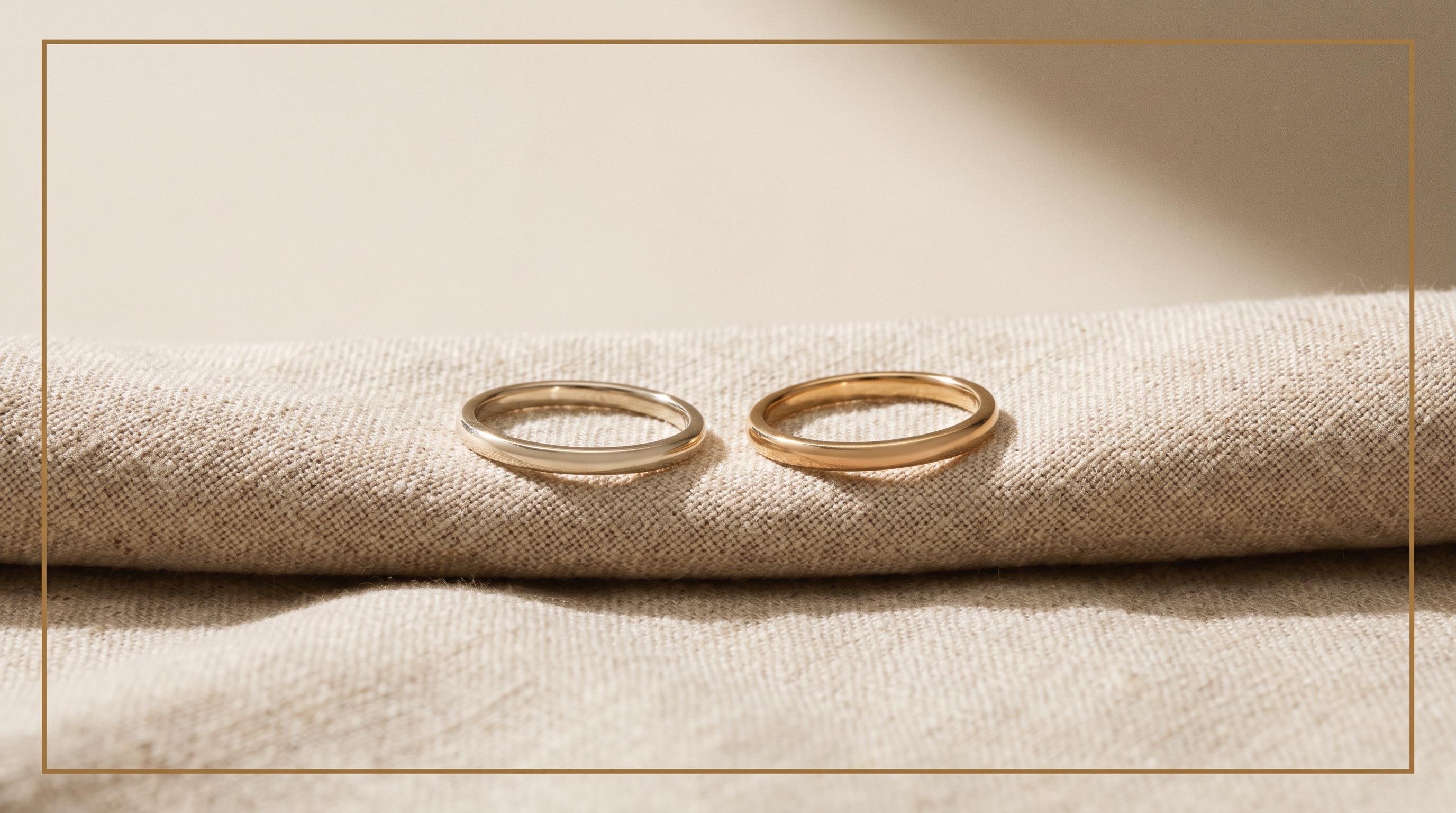
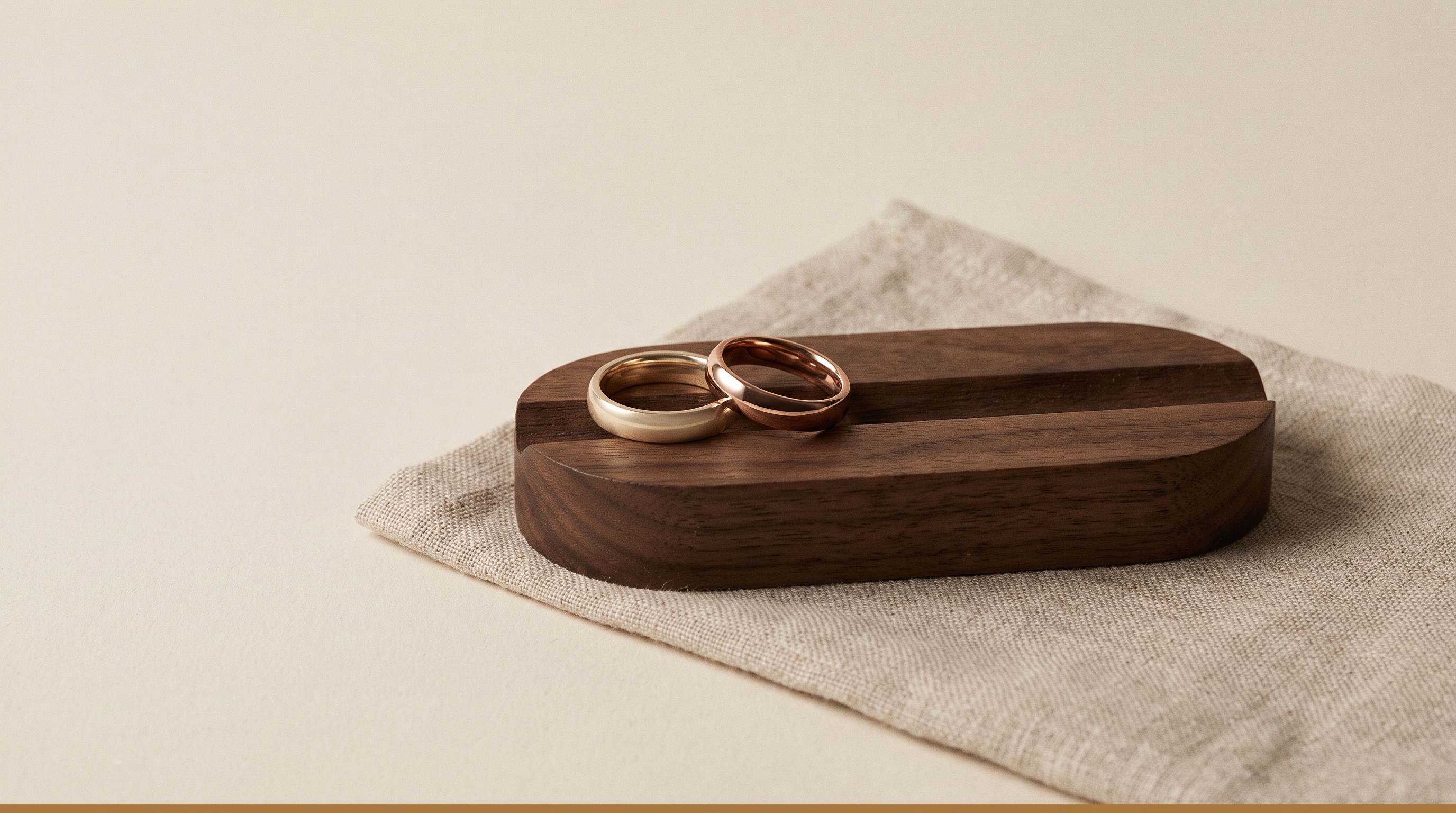
18k gold is 75% pure gold (750 parts per 1,000) alloyed with 25% other metals. The color — yellow, white, or rose — comes entirely from what's mixed into that remaining 25%, not from the gold itself, since pure gold is always yellow. That means "18k gold" isn't one material with three color options; it's three distinct alloy families that happen to share the same gold content.
- 18k yellow gold is typically alloyed with silver and copper in a ratio that keeps the natural gold tone intact rather than shifting it. It's the closest of the three to gold's native color and generally the most forgiving alloy to work at the bench.
- 18k rose gold uses a higher proportion of copper relative to silver, which pulls the color toward pink/red. More copper in the mix also tends to make rose gold alloys run harder and slightly more prone to work-hardening than yellow, which affects how often a bench jeweler needs to anneal it during fabrication.
- 18k white gold is alloyed with white metals — commonly palladium, nickel, or a combination — to lighten gold's yellow tone toward gray-white. Even at 18k, the result is a pale warm-gray rather than a true bright white, which is why white gold is almost always finished with a thin rhodium plating. That plating story — what it is, how often it needs redoing, and the color-matching tradeoffs against platinum — is covered in depth in Guru Diam's dedicated platinum-vs-white-gold engagement ring guide. It's worth knowing that piece exists if a client's question is specifically about rhodium maintenance; this guide focuses on platinum against all three 18k colors as a manufacturing and sourcing decision, not on the plating cycle specifically.
The practical takeaway for a manufacturer: quoting "18k gold" without specifying color isn't just a cosmetic detail. The alloy composition changes casting temperature tolerances, hardness, work-hardening behavior, and — for white gold specifically — whether a finishing step (plating) needs to be built into the production timeline at all.
Density and Weight: Why the Same Design Doesn't Weigh the Same
This is the difference that surprises designers moving between metals for the first time, and it has direct cost implications. Platinum is significantly denser than 18k gold — roughly 21.4 g/cm³ for platinum alloys versus roughly 15.2-15.6 g/cm³ for 18k gold alloys, with slight variation by color depending on the specific alloy mix. That's close to a 40% density difference.
The practical consequence: identical wax or CAD file, cast in both metals, will not produce two pieces of the same weight. A ring shank and head that comes out at 4.5 grams in 18k gold will typically cast closer to 6-6.5 grams in platinum at the same volume, because platinum packs more mass into the same physical space. This is not a minor rounding difference on a purchase order — for a manufacturer quoting by weight, or a client comparing a platinum quote against a gold quote for what looks like "the same ring," the weight difference alone explains a meaningful chunk of the price gap before labor or metal-price-per-gram even enters the calculation.
On the hand, that density difference is also what gives platinum its distinctive heavier, more substantial feel — often read by clients as a signal of quality, though it's really just physics. Designers working on pieces meant to feel deliberately lightweight (long dangling earrings, oversized cocktail rings meant to be worn without fatigue) sometimes steer clients toward 18k gold specifically for that reason, independent of cost.
Hardness and How Each Metal Actually Wears Over Years
Hardness and durability are not the same property, and conflating them is one of the more common misunderstandings clients bring to the counter. On a pure hardness scale, platinum alloys typically test softer than 18k gold alloys — annealed Pt950 generally falls in a lower Vickers hardness range than a worked 18k gold alloy, particularly 18k white or rose gold, which tend to run harder due to their alloy composition.
What matters more for a piece worn daily for decades is how each metal loses (or doesn't lose) material when it's scratched. Platinum is tougher rather than harder: when it takes an impact or a scratch, the metal displaces rather than flakes or chips away. That displaced metal stays on the piece — it's just been pushed around — which is why platinum develops a soft, matte patina over years of wear rather than visibly thinning. A polish restores the original finish without meaningfully removing material.
18k gold, being harder, resists a first scratch better in the short term, but each scratch actually removes a small amount of metal rather than displacing it. Over years of handling, that adds up to gradual, genuine material loss — thin prongs, worn edges on a signet, softened engraving. For a piece expected to be worn hard for decades (a wedding band, a signature signet ring, a tension or bezel setting under continuous stress), that slow material loss is the real durability consideration, more than the initial hardness number most clients assume is the whole story.
18k white gold has one more variable layered on top: because its bright white surface depends on rhodium plating rather than the base alloy's own color, periodic replating is part of its maintenance cycle regardless of how the base metal itself is wearing underneath. Yellow and rose 18k gold don't carry that plating cycle — their surface color is the alloy's actual color, so what a jeweler sees on inspection is the true state of the metal, worn or not, with no plating layer masking it.
Malleability, Casting, and Working the Metal at the Bench
This is where the manufacturing angle diverges most sharply from a retail comparison, and it's the section a bench jeweler or CAD-to-cast manufacturer will care about most.
Melting point and casting equipment. Platinum's melting point sits around 1,768°C (3,214°F), dramatically higher than 18k gold's roughly 880-950°C depending on alloy. That gap isn't academic — it determines what equipment a casting house needs. Platinum casting requires induction or specialized high-temperature casting equipment, typically under vacuum or inert atmosphere to prevent oxidation at those temperatures, along with platinum-specific investment material rated for the higher heat. A casting house set up only for gold work cannot simply run platinum through the same equipment; it's a genuinely separate production line, which is part of why platinum casting commands a higher labor and setup cost per piece independent of the raw metal's price.
Malleability during fabrication. Platinum is famously malleable and ductile — it can be drawn into extremely fine wire and worked into thin sheet without cracking, and it tends to work-harden more gradually than gold alloys, meaning a bench jeweler can push it further between annealing steps during hand-fabrication. This malleability is a genuine advantage during prong-setting and bezel work: platinum pushes over a stone's girdle cleanly and holds that pushed-over shape with excellent grip, which is part of why platinum has traditionally been the metal of choice for gypsy settings and other designs where the metal itself does the securing rather than a claw-style prong.
18k gold's working behavior varies by color. 18k yellow gold is generally the most forgiving of the three to hand-fabricate — softer, more predictable, fewer annealing interruptions during a complex build. 18k rose gold's higher copper content makes it work-harden faster, so a bench jeweler working rose gold typically needs to anneal more frequently during repeated stretching or bending, or risk the metal becoming brittle and cracking mid-fabrication. 18k white gold's behavior depends heavily on which whitening alloy was used — palladium-alloyed white gold tends to work more like a slightly stiffer yellow gold, while nickel-alloyed white gold can run harder and less forgiving at the bench.
Stone-setting behavior. Because platinum displaces rather than fractures, it's genuinely more forgiving during prong-setting on delicate stones — less risk of a prong snapping off mid-set compared to a harder, more brittle gold alloy pushed too aggressively. This is a real, checkable reason experienced setters often prefer platinum for prongs holding fancy-shaped stones with vulnerable points (pear tips, marquise points, the corners on a cushion or emerald cut), where a fracture during setting means a redo, not just a cosmetic fix.
Scrap and yield. Platinum casting typically produces more scrap relative to gold casting because of the higher-temperature process and the metal's density — sprues and casting waste weigh more per unit volume, and platinum's higher cost per gram makes reclaiming and re-refining that scrap a bigger part of a manufacturer's cost accounting than it is with gold. This is one more reason a platinum production run tends to carry a higher labor and processing premium over an equivalent gold run, separate from the raw metal cost itself.
Hypoallergenic Properties and Alloy-Driven Sensitivity
Platinum at typical jewelry purities (Pt950/Pt900) is close to pure, biocompatible, and contains no nickel — it's the metal used in surgical implants for exactly this reason. For clients with a diagnosed nickel allergy or general metal sensitivity, platinum is the lowest-risk choice among fine jewelry metals with essentially no caveats attached.
18k gold's hypoallergenic profile depends entirely on which color and which specific alloy formula is used, since the reaction-triggering culprit is almost always nickel specifically, not gold itself:
- 18k yellow gold alloyed with silver and copper generally carries low sensitivity risk — neither silver nor copper is a common allergen at the concentrations used in fine jewelry alloys, though a small number of people do react to copper.
- 18k rose gold, with its higher copper content, follows the same low-nickel-risk profile as yellow gold by default, since rose gold's color comes from copper rather than nickel.
- 18k white gold is the color where sensitivity risk genuinely varies by manufacturer. Some white gold alloys use nickel as the whitening agent specifically because it's effective and relatively inexpensive; nickel-sensitive clients can react to this. Palladium-alloyed white gold avoids nickel entirely and is the safer formula for a client with known sensitivity who still wants a white-gold look and price point rather than platinum.
For a manufacturer taking custom orders, this means a client mentioning any metal sensitivity is worth a direct follow-up question — not an assumption that "gold is gold." Confirming the specific alloy with a metal supplier before committing a nickel-sensitive client to a white gold build avoids a returned piece and an unhappy customer down the line.
Hallmarks and Purity Stamps
Purity marking is where platinum and gold diverge most visibly on a finished piece, and it's a detail worth getting right on every production run since it's one of the few things a client or appraiser can independently verify without lab equipment.
Platinum jewelry is stamped according to its purity: Pt950, Pt900, or occasionally PLAT alongside a numeric purity mark, with Pt950 the dominant standard for fine jewelry in the US market. Because platinum's alloy content is minimal and standardized, a Pt950 stamp is a fairly reliable, consistent signal across manufacturers.
18k gold is stamped 18K or 750 (referring to 750 parts pure gold per 1,000). Unlike platinum, that stamp says nothing about which color alloy was used or what the remaining 25% is made of — two pieces both stamped 18K can have meaningfully different working properties, hardness, and hypoallergenic profiles depending on their specific alloy formula, even though the gold-content stamp is identical. This is part of why a wholesale buyer working with a new gold supplier should ask for the actual alloy composition, not just rely on the karat stamp, particularly for white gold where the nickel-versus-palladium question matters to end clients.
For both metals, accurate hallmarking matters most at resale and appraisal — an under-karated or misrepresented piece is a liability for whoever sold it, and a clean, accurate stamp protects both the manufacturer and the retailer down the supply chain.
Cost-Per-Gram Economics and What It Means for Finished-Piece Pricing
Raw metal pricing for platinum and gold both track their own commodity markets, and the spread between them fluctuates — platinum has at various points traded at a premium to gold, near parity, and even below gold spot, so "platinum always costs more per gram" isn't a reliable rule of thumb on its own. What's more consistent, and more useful for a manufacturer building a quote, is the combination of two factors that compound regardless of where spot prices happen to sit in a given month.
First, density: as covered above, a platinum casting of a given design uses roughly 40% more metal by weight than the same design in 18k gold, purely because platinum is denser. Even at equal price-per-gram, that alone makes a platinum piece cost more in raw material.
Second, labor and processing: platinum's higher melting point, specialized casting equipment, more frequent annealing during hand-fabrication, and higher scrap-recovery overhead all add labor cost that doesn't show up in a simple metal-price comparison. A manufacturer quoting platinum against 18k gold for an identical design should expect the finished-piece price gap to run meaningfully wider than the raw spot-price difference alone would suggest — commonly landing platinum somewhere in the range of 25-45% above an equivalent 18k gold piece, though the exact spread depends on the design's metal volume, the specific alloy colors being compared, and current spot pricing for both metals.
Among the three 18k gold colors, cost-per-gram differences are minor by comparison, since all three share the same 75% gold content — the remaining alloy metals (silver, copper, palladium, nickel) are inexpensive relative to gold itself, so yellow, white, and rose 18k gold price out very close to one another before accounting for white gold's additional rhodium-plating step as a finishing cost.
Platinum vs. 18k Gold at a Glance
| Factor | Platinum (Pt950/Pt900) | 18k Yellow Gold | 18k White Gold | 18k Rose Gold |
|---|---|---|---|---|
| Density | ~21.4 g/cm³ (densest) | ~15.2-15.5 g/cm³ | ~15.2-15.6 g/cm³ | ~15.1-15.4 g/cm³ |
| Relative hardness | Softer, but tougher (resists fracture) | Moderate, most forgiving to work | Moderate-high, varies by alloy | Highest of the three, work-hardens fastest |
| Cost-per-finished-gram | Highest, driven by density + labor | Baseline | Baseline + plating step | Baseline, close to yellow |
| Hypoallergenic | Yes, virtually pure, no nickel | Generally low risk | Depends on alloy (nickel vs. palladium) | Generally low risk |
| Patina / long-term wear | Soft matte patina, metal displaces not lost | Scratches remove metal, polishes back to shine | Same as yellow, plus rhodium wears off separately | Same as yellow, slightly more scratch-resistant |
| Hallmark | Pt950 / Pt900 | 18K / 750 | 18K / 750 (plus rhodium, unmarked) | 18K / 750 |
| Typical bench use case | Prongs/bezels on high-value or fracture-prone stones, high-security settings | Standard builds, warmest tone, most forgiving casting | Bright-white look at a lower price than platinum | Vintage-inspired designs, warm pink tone, growing client demand |
When a Jeweler Should Recommend Platinum vs. 18k Gold
The right metal isn't a universal answer — it depends on the design, the stone, and the client's priorities. A few patterns come up often enough at the bench to be worth stating plainly:
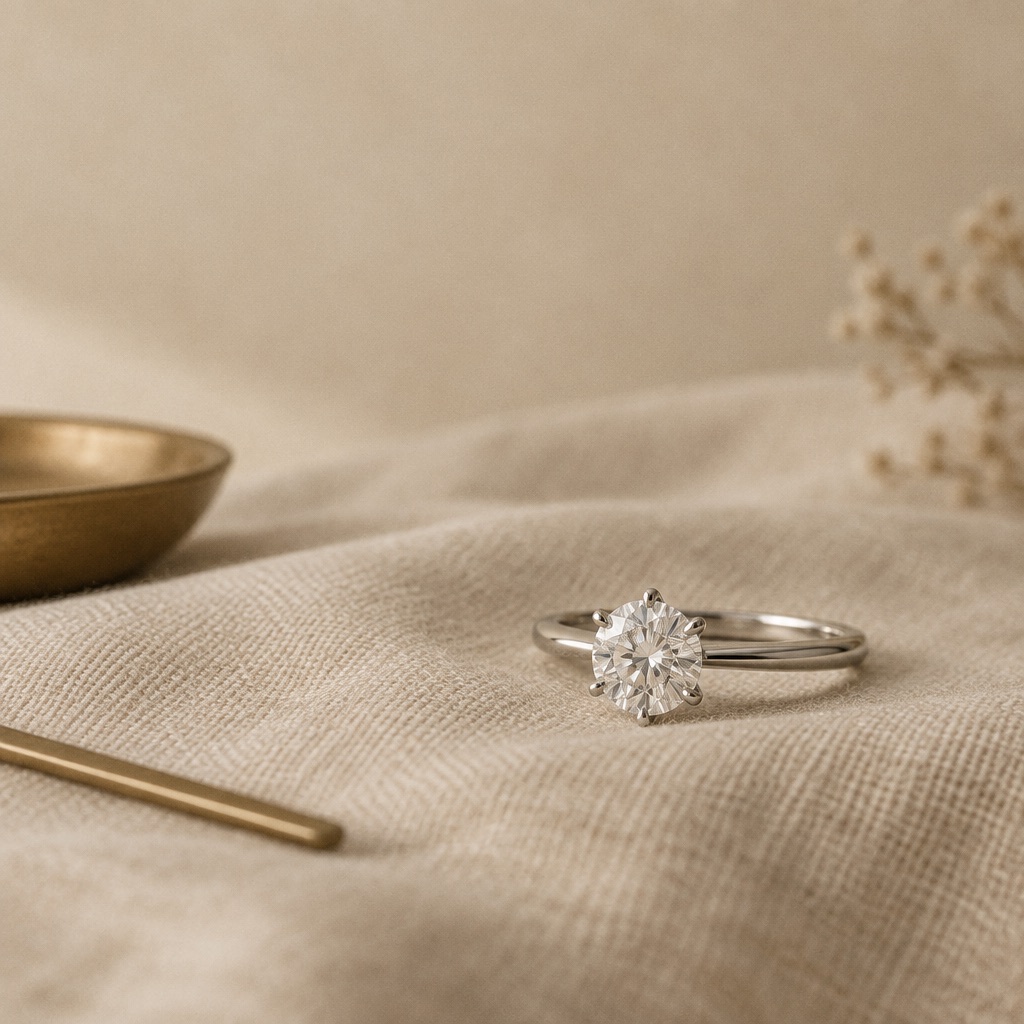
- Prongs on a stone that needs maximum security with minimal upkeep: platinum. Its toughness and displacement-not-loss wear behavior make it the safer long-term choice for a client's most valuable or most irreplaceable stone, particularly in a claw or six-prong setting expected to be worn daily for decades without regular inspection.
- Client wants a warmer, richer tone at a lower price point: 18k yellow gold. It's the most forgiving metal to fabricate, prices closer to the gold baseline, and its color is the metal's own natural tone rather than a treatment.
- Client wants a pink/rose tone, often for a vintage-inspired or romantic design: 18k rose gold. Demand for rose gold has grown steadily in bridal and fashion jewelry, and its slightly higher hardness gives it a modest scratch-resistance edge over yellow, though it needs more careful annealing during fabrication.
- Client wants a bright white look at a lower price than platinum: 18k white gold remains the middle-ground option here, trading platinum's no-maintenance durability for a lower upfront cost and accepting a periodic rhodium replating cycle in exchange. It's covered in full detail in Guru Diam's dedicated platinum-vs-white-gold comparison for anyone weighing that specific tradeoff.
- Design involves fine, intricate metalwork or delicate fracture-prone stone shapes: platinum's malleability and forgiving setting behavior reduce the risk of a cracked prong or a fractured stone point during fabrication, which matters more on antique-cut and fancy-shaped stones with vulnerable corners than on a round brilliant.
- Budget-driven production run at volume: 18k gold in any color keeps per-piece metal cost, casting labor, and scrap overhead lower, which matters when a manufacturer is quoting a multi-piece order rather than a single custom commission.
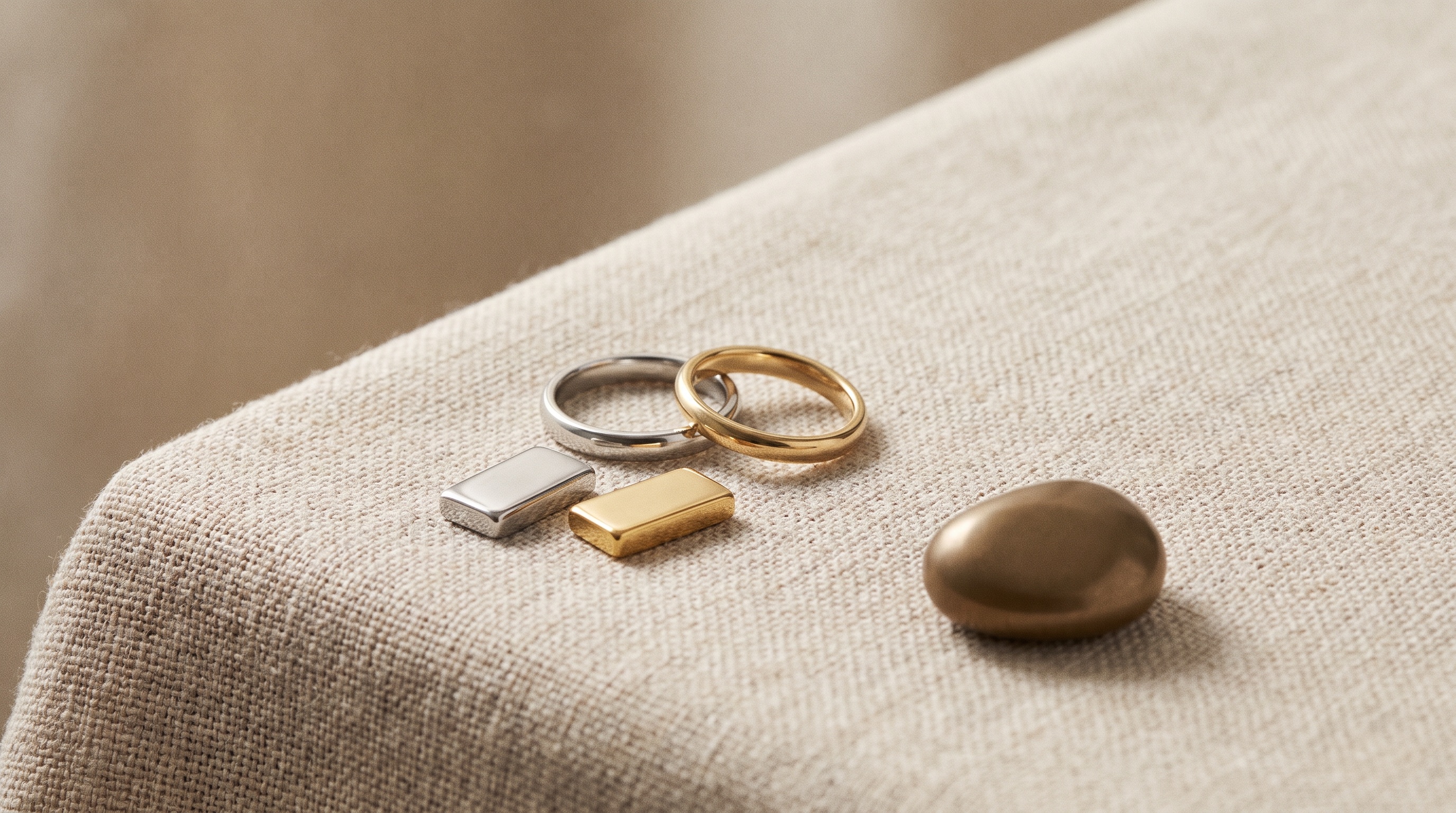
Mixed-metal builds — a platinum head set into a gold shank, for example — are also worth knowing about as a middle path: they concentrate platinum's durability at the point where it matters most (the prongs actually gripping the stone) while keeping the bulk of the piece's metal volume in lower-cost gold. This does require a bench jeweler comfortable soldering or fusing both metals correctly, which not every shop is equipped for, so it's worth confirming that capability before quoting a two-tone build.
Sourcing Platinum and 18k Gold Builds
Guru Diam builds custom engagement rings and fine jewelry across platinum and all three 18k gold colors — yellow, white, and rose — with cutting, setting, and polishing all handled in-house, finished in 4-6 days, and unbranded by default so jewelers can resell as their own. Because metal choice, setting style, and stone sourcing run through the same order, a designer can spec a platinum bezel on a fancy-cut center stone, an 18k rose gold band for a vintage-inspired piece, or a mixed-metal build combining both, without coordinating a separate metal supplier and stone vendor.
Loose diamonds for a custom build — including CVD lab-grown stones available with IGI, GIA, or GCAL certification, natural stones, and matched pairs for side-stone work — are sourced through the same account. Certified loose stones sized for a specific setting are available under certified diamonds, matched side stones and melee pairs under matching pairs, and fancy color loose diamonds for a colored-stone build under fancy color loose diamonds. Start a custom metal-and-stone build through custom jewelry, browse the broader catalog through the wholesale hub, or set up a trade account through trade partner to get pricing and lead times specific to a given production run.
Frequently Asked Questions
Is platinum always more expensive than 18k gold?
Almost always in finished-piece terms, though not always in raw spot price alone — platinum and gold spot prices fluctuate independently and have at times traded close together or even inverted. What keeps finished platinum pieces consistently more expensive is density (platinum uses roughly 40% more metal by weight for the same design) combined with higher casting and labor costs from platinum's specialized equipment needs. Expect a finished platinum piece to run somewhere in the range of 25-45% above an equivalent 18k gold piece, depending on the design and current metal prices.
Why does platinum weigh more than 18k gold in the same design?
Platinum is denser than gold at roughly 21.4 g/cm³ versus 18k gold's roughly 15.2-15.6 g/cm³, about a 40% difference. The same wax or CAD file cast in both metals will produce a noticeably heavier piece in platinum simply because more mass fits into the same physical volume — it has nothing to do with the design itself.
Does 18k rose or yellow gold need the same maintenance as white gold?
No. Rhodium plating and its replating cycle are specific to white gold, which needs the plating to reach a bright white color its base alloy can't achieve on its own. Yellow and rose 18k gold show their own natural alloy color with no plating layer, so what a jeweler sees on inspection is the metal's true condition, and normal care is limited to occasional polishing to remove surface scratches.
Which is more hypoallergenic, platinum or 18k gold?
Platinum, without much of a caveat — it's close to pure at jewelry purities, contains no nickel, and is the metal used in surgical implants. 18k gold's hypoallergenic profile depends on the specific alloy: yellow and rose gold generally carry low sensitivity risk, while white gold varies depending on whether it's alloyed with nickel or palladium. A client with a known nickel sensitivity should default to platinum or confirm a palladium-alloyed white gold rather than assume all 18k gold is equivalent.
Why does platinum casting cost more to produce than gold casting?
Platinum's melting point, around 1,768°C, is nearly double 18k gold's roughly 880-950°C, which means platinum casting requires specialized high-temperature equipment, often under vacuum or inert atmosphere to prevent oxidation, plus platinum-rated investment material. That's effectively a separate production setup from gold casting, and it drives up labor and processing cost per piece independent of the raw metal price.
Is 18k white gold the same thing as platinum?
No, though they can look similar side by side right after a white gold piece is freshly plated. Platinum is naturally white all the way through with no plating involved, while 18k white gold is a yellow-gold alloy lightened toward gray-white and then finished with a rhodium plating to reach a true bright white — a plating layer that wears and needs periodic reapplication, unlike platinum's color, which never changes.