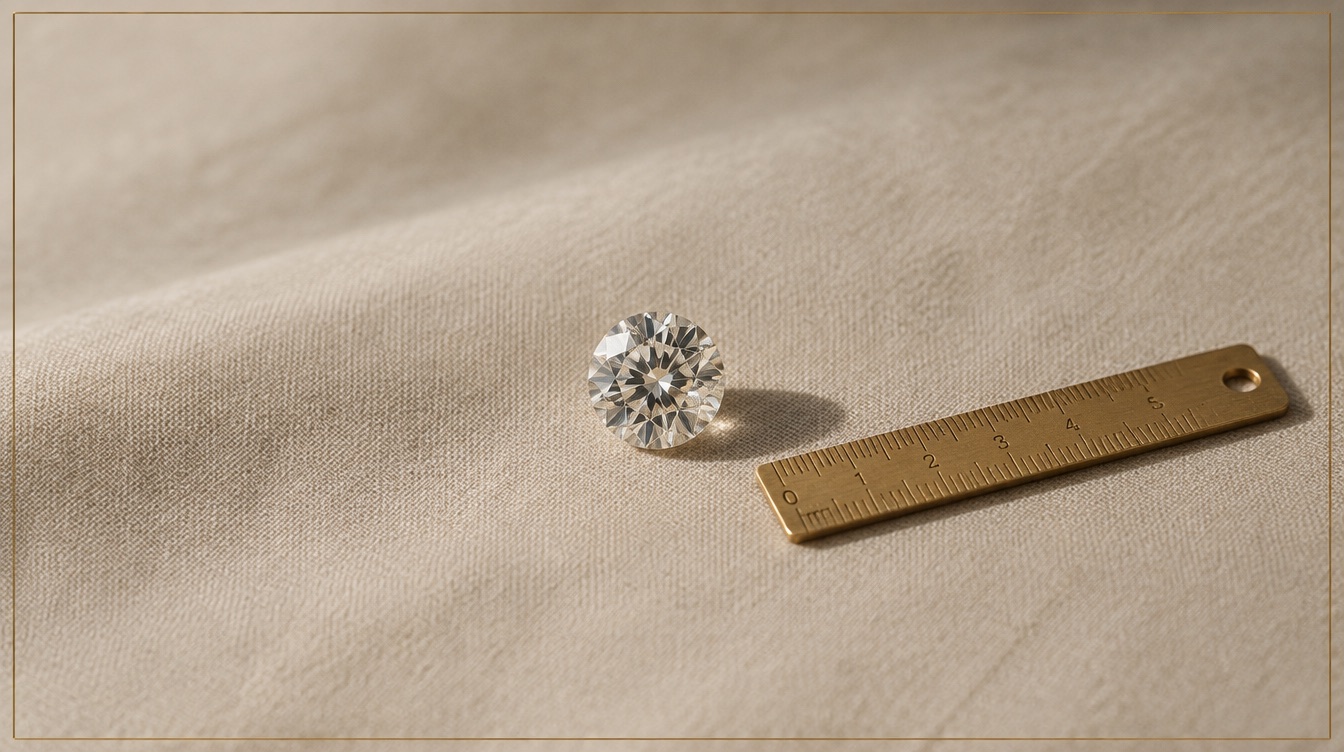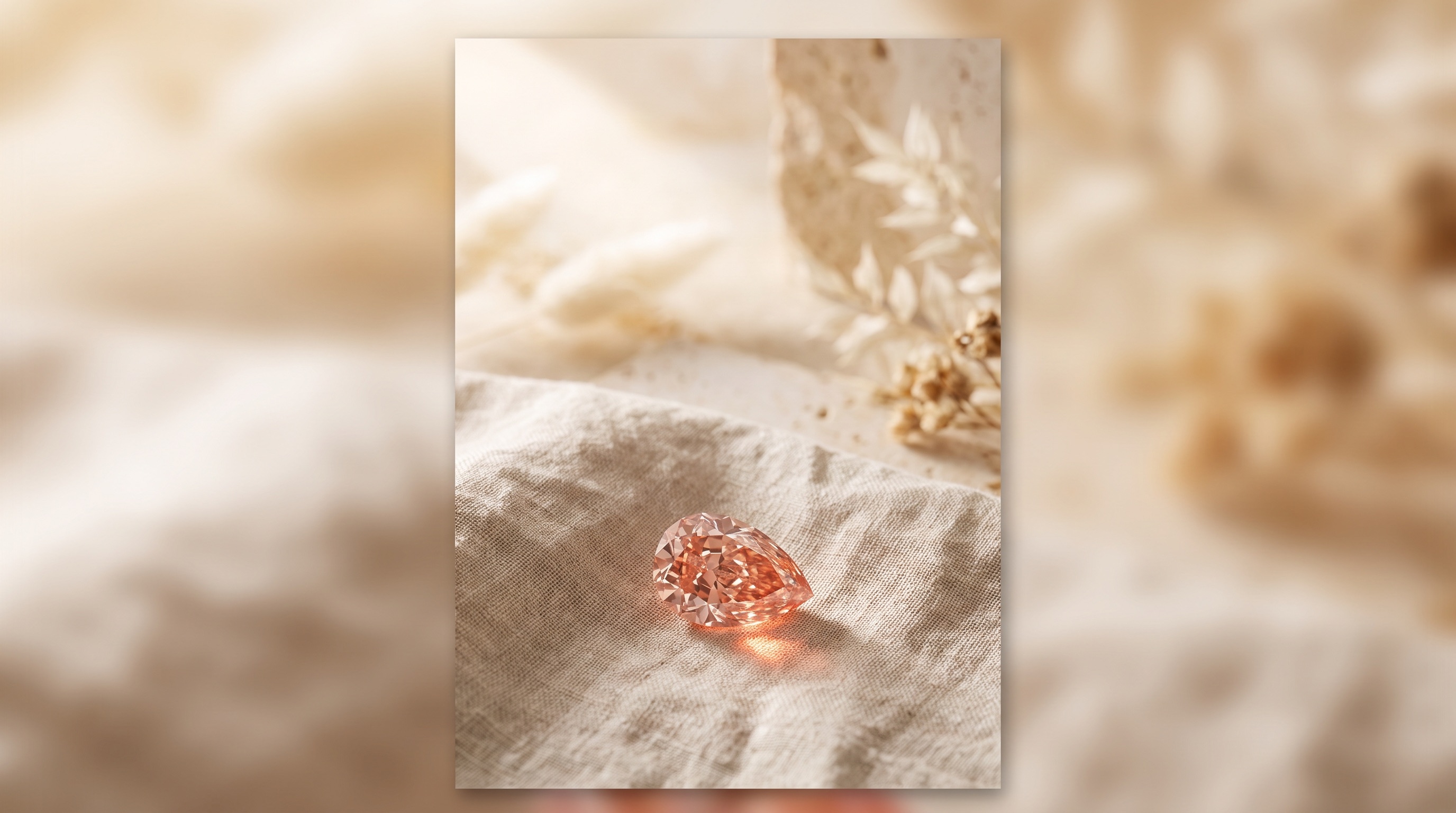
A padparadscha diamond is a trade nickname for a diamond with a pinkish-orange to orangy-pink body color — the name borrowed directly from padparadscha sapphire, the rare pink-orange sapphire variety the term originally describes. It is not an official grading category on a GIA, IGI, or GCAL report; a diamond marketed as "padparadscha" is formally graded and certified under a standard fancy color hue description like Fancy Orangy Pink or Fancy Pinkish Orange, with "padparadscha" appearing only as descriptive marketing language layered on top of that formal grade.
That distinction — evocative trade nickname versus formal certificate language — is the single most important thing a buyer needs to understand before sourcing or pricing a stone described this way. This guide covers where the padparadscha name comes from, why it isn't a recognized diamond grading term, how the color it describes is actually graded and priced, how it compares to formally graded fancy pink and fancy orange diamonds, what drives rarity and value within this color family, and what to check before sourcing padparadscha-marketed stock at the trade level.
Where the "Padparadscha" Name Comes From
Padparadscha is originally and formally a sapphire term, referring to a specific, prized pink-orange corundum color long recognized in the gemstone trade — the name itself derives from a Sinhalese word for lotus blossom, referencing the flower's pink-orange hue. Over time, the name migrated into diamond marketing as a descriptive shorthand for diamonds that show a comparable pinkish-orange to orangy-pink body color, borrowing the sapphire term's evocative, rarity-associated reputation rather than describing any diamond-specific grading standard.
That borrowing is purely a marketing convention. Diamond grading labs did not adopt "padparadscha" as a formal hue name the way they use standard terms like pink, orange, or the many combination hues in between — a diamond report will never simply say "Padparadscha" as its graded color. Any diamond marketed under this name is graded and certified using the same standardized fancy color vocabulary applied to every other colored diamond.
Is "Padparadscha" an Official Diamond Grading Term?
No. GIA, IGI, and GCAL fancy color reports describe a diamond's color using a standardized hue, tone, and saturation framework — terms like Fancy Intense Pink, Fancy Vivid Orange, or a combination description such as Fancy Orangy Pink or Fancy Pinkish Orange, depending on which hue dominates and which is secondary. "Padparadscha" is not among the formal hue names any major lab issues on a certificate. It functions the same way marketing terms like "cognac" or "champagne" function for brown-toned diamonds — a colloquial, trade-recognizable nickname layered over a formally graded hue, not a substitute for reading that formal grade.
This matters directly for pricing and comparison. A stone marketed as "padparadscha" could formally grade anywhere across a range of orangy-pink-to-pinkish-orange combinations, at any tone and saturation level, and two stones both marketed under the same nickname can carry meaningfully different formal grades — and meaningfully different prices — once the certificate is actually read.
What Causes This Pinkish-Orange Color in a Diamond
Diamond color arises from trace elements or structural irregularities in the crystal lattice. Natural pink diamonds are generally associated with structural distortion in the lattice that occurred during or after crystal formation, while natural orange color, as with yellow, is generally linked to nitrogen-related features arranged differently than in a typical yellow stone. A diamond landing in the pinkish-orange to orangy-pink range combines elements of both causation pathways, which is part of why this color family sits between two already-distinct fancy color categories rather than forming a clean, singular hue of its own.
Lab-grown diamonds, produced by CVD (chemical vapor deposition), can also develop pink, orange, and pink-orange combination colors, either as-grown or through post-growth treatment processes used elsewhere in the fancy color trade to develop or intensify a target hue. As with any fancy color stone, growth origin and any treatment must be disclosed clearly and separately from the color grade on the certificate — a buyer should never assume natural or as-grown origin from a marketing name or color description alone.
How Rare Are Padparadscha-Colored Diamonds?
Within fancy color diamonds broadly, pink sits meaningfully rarer than yellow or brown, particularly at higher saturation grades like Fancy Intense or Fancy Vivid. Orange is rarer still, generally grouped alongside purple and red among the scarcest fancy color categories. A diamond that combines both — a genuinely balanced, well-saturated pinkish-orange or orangy-pink with minimal drift toward a third hue like brown — sits at the rarer end of an already rare combination, which is exactly the reputation the padparadscha marketing name is designed to invoke by association with the sapphire it borrows from.
That said, rarity in this color family varies enormously depending on exactly where a given stone falls on the hue spectrum between pure pink and pure orange, and how strong a secondary brown or yellow influence pulls the color off that pink-orange line. A buyer should treat the padparadscha name as a signal to look closely at the formal hue description, tone, and saturation — not as a guarantee that any two "padparadscha" stones sit at comparable rarity or price.
Padparadscha-Marketed vs. Formally Graded Pink and Orange: Comparison Table
| Criteria | "Padparadscha"-Marketed Diamond | Fancy Pink | Fancy Orange |
|---|---|---|---|
| Formal certificate language | Fancy Orangy Pink or Fancy Pinkish Orange (varies by dominant hue) | Fancy Pink (with any secondary hue noted) | Fancy Orange (with any secondary hue noted) |
| Official grading category? | No — a marketing nickname over a formal combination hue | Yes — pink is a recognized standalone fancy color hue | Yes — orange is a recognized standalone fancy color hue |
| Relative market rarity | Rare — combines two already-scarce hue tendencies | Rare, especially at Fancy Intense and above | Very rare, grouped with purple and red |
| Consistency across the nickname | Low — two "padparadscha" stones can grade quite differently | High — a graded pink hue is a defined, consistent term | High — a graded orange hue is a defined, consistent term |
| How to compare stones fairly | Read the formal hue, tone, and saturation directly, not the nickname | Compare graded hue, tone, and saturation directly | Compare graded hue, tone, and saturation directly |
The table's core point is the same one worth repeating throughout this guide: the padparadscha name is a marketing overlay, not a grading category, and two stones marketed identically can sit at genuinely different points on the actual formal scale.
Reading a Padparadscha-Marketed Diamond's Actual Certificate
A buyer evaluating any stone marketed as padparadscha should go straight to the certificate's stated hue, tone, and saturation rather than relying on the marketing name to convey that information. A few things to look for specifically:
- Which hue is listed first. Fancy color reports list the secondary hue ahead of the dominant one — "Orangy Pink" means pink dominant with orange influence, while "Pinkish Orange" means the reverse. These are meaningfully different stones even when both are marketed under the same padparadscha nickname.
- Saturation grade. As with any fancy color, moving from Fancy through Fancy Intense to Fancy Vivid produces the largest jumps in per-carat value, and a padparadscha-marketed stone at a lower saturation grade should be priced accordingly lower, regardless of how the listing describes it.
- Whether a third hue is creeping in. A stone with a noticeable brown or yellow undertone alongside the pink-orange balance is a different, generally less valuable stone than one with a clean, two-hue pink-orange balance — this should be visible directly in the certificate's hue description.
- Natural vs. lab-grown origin and any treatment disclosure. Confirm growth origin explicitly, and ask whether any color treatment has been applied and disclosed, exactly as with any other fancy color diamond.
Why This Naming Pattern Isn't Unique to Padparadscha
Diamond marketing borrowing a name from another gemstone category, or inventing a warm evocative nickname for a brown-adjacent or combination hue, is a recurring pattern in the trade rather than something specific to this one term. "Cognac" and "champagne" are widely used marketing names for various brown-toned diamonds that likewise have no standing as official GIA, IGI, or GCAL grading terms — the labs grade those stones as brown, with whatever secondary hue and saturation the stone actually shows, and the cognac or champagne language is applied afterward as a retail or marketing layer. Padparadscha functions identically: a memorable, rarity-associated name applied over a formally graded orangy-pink or pinkish-orange hue, useful for marketing communication but not a substitute for reading the actual certificate.
How Lighting Affects Perceived Color in This Hue Range
Pink-orange combination hues are especially sensitive to viewing conditions, more so than many other fancy colors. Warm incandescent lighting tends to push the perceived color further toward orange, while cooler daylight-balanced lighting pulls the same stone back toward reading more pink — meaning a stone described identically on paper can look noticeably different depending entirely on where and under what light a buyer or client views it. This is exactly why formal grading takes place under standardized, controlled lighting rather than ambient conditions, and it's also a practical reason a buyer evaluating a stone described as padparadscha in person should ask to view it under a few different lighting conditions before finalizing a purchase decision, rather than relying on a single viewing under whatever light happens to be available in a showroom or trade show booth.
This lighting sensitivity also has implications for retail presentation. A jeweler photographing or displaying a stone in this color family for a client should be conscious that the lighting choice itself can shift how warm or how pink the stone appears, and should ideally show the piece under conditions similar to where the client will actually wear it day to day, rather than under a single studio lighting setup that may flatter one end of the hue spectrum more than the other.
What Drives Price in This Color Family
Several factors interact to set price for a diamond in the pink-orange combination range, and the padparadscha name itself is not one of them in any formal sense:
- Hue balance and purity. A clean, well-balanced pink-orange with minimal drift toward brown or yellow commands a stronger premium than a muddier combination hue, independent of what marketing name is applied.
- Saturation. As with every fancy color, higher saturation grades produce the largest jumps in per-carat value, and this is especially pronounced given how uncommon genuinely vivid material is in this hue range.
- Carat weight. Larger stones in rare combination hues become disproportionately more expensive per carat than smaller stones of the same grade, following the same non-linear scaling seen across rare fancy colors generally.
- Growth origin and certification. Natural and lab-grown stones in this color family are priced on entirely different bases and should never be compared as equivalent — always confirm origin and any treatment on the certificate.
- Clarity and cut. These still factor in, but a strong, well-balanced body color tends to dominate visual appeal in a way that can make minor clarity characteristics less noticeable than they would be on a comparable white diamond.
How Padparadscha Sapphire Grading Differs From Diamond Grading
Part of why the padparadscha name creates confusion when applied to diamonds is that padparadscha sapphire itself has a somewhat more established, though still not universally standardized, identity within the colored stone trade — major labs grading corundum will sometimes note "padparadscha" as a descriptive origin-of-color characterization on a sapphire report, tied to a specific pink-orange color range recognized across the gemstone trade for that species. Diamond grading labs never adopted an equivalent practice. Fancy color diamond reports are built entirely around the hue-tone-saturation system described above, with no provision for a species-specific color nickname the way certain colored stone categories occasionally include one. A buyer familiar with how the term is used in the sapphire trade should not assume the same certificate-level recognition carries over to a diamond described the same way.
Setting and Design Considerations for This Color Family
A pinkish-orange to orangy-pink diamond, wherever it falls on that spectrum, tends to read most true to its actual hue against warm metal tones — rose gold or yellow gold — rather than white metal, which can visually cool down a warm combination hue and mute some of what makes it distinctive in the first place. Halo and three-stone designs built around a stone in this color family often pair it with white diamond accents specifically to create contrast that makes the center stone's warm color read more vividly, rather than surrounding it with more colored stones that could compete with or distort the perceived hue. Because supply in this specific combination color range is thin and inconsistent, designers and jewelers working with a client's specific stone should expect to design the setting around that individual stone's exact hue and proportions rather than planning a setting in advance and sourcing a matching stone afterward — the usual approach for widely available diamond colors, but one that doesn't work well for a rare combination hue where availability dictates timeline more than design preference does.
Buying Considerations for Trade Buyers
A few practical checks matter before sourcing or quoting any stone marketed under this name:
- Never price or represent a stone based on the padparadscha name alone. Always base pricing and client representation on the formal certificate hue, tone, and saturation, since the marketing name carries no standardized meaning across suppliers.
- Confirm the formal hue description explicitly with any supplier. Ask for the exact certificate language — Fancy Orangy Pink, Fancy Pinkish Orange, or another combination — rather than accepting "padparadscha" as a sufficient product description on its own.
- Verify natural vs. lab-grown origin and treatment status. As with any fancy color stone, confirm this directly on the certificate rather than assuming it from the marketing description.
- Expect thin, inconsistent supply. This combination color family sits at the rare end of an already thin fancy color market, and inventory tends to move opportunistically rather than as a standing, reliably restockable category.
How the Padparadscha Name Affects Trade Negotiation and Pricing Conversations
Because the padparadscha name carries no fixed formal meaning, it can be used, deliberately or not, to imply a level of rarity or value that a specific stone's actual formal grade doesn't support. A buyer negotiating a price on a stone marketed this way should treat the name as an opening description rather than a settled valuation point, and should expect to do the same comparative work — checking hue, tone, saturation, carat weight, clarity, and origin against comparable formally graded stones — that would apply to any other fancy color purchase. Sellers using the padparadscha name in good faith should be prepared to back it up with the underlying certificate details on request, and a seller unwilling or unable to provide that formal breakdown is a reasonable signal to look more closely before proceeding with a purchase at the asking price.
Where This Color Fits in Guru Diam's Fancy Color Program
Guru Diam is a trade-only wholesale diamond supplier, and its current fancy color catalog — both certified loose stones at 0.30ct and above and calibrated fancy color melee in round and fancy shapes — covers yellow, pink, blue, and green. A diamond formally graded as a clean, pink-dominant fancy color with minimal secondary hue can fall within that pink category, but a genuinely balanced or orange-dominant pinkish-orange combination stone of the kind marketed as "padparadscha" is not a discrete category Guru Diam carries, and buyers specifically seeking that combination hue should confirm availability directly rather than assume it against the general pink lineup. The same grading literacy applies regardless: IGI, GIA, and GCAL certification are all available on the fancy color stones Guru Diam does carry, and reading hue, tone, and saturation directly off the certificate is the right approach whether sourcing pink, orange, or a combination hue elsewhere in the trade.
Guru Diam's broader positioning as one supplier for antique cuts, natural diamonds, fancy color stones, fancy color melee, and custom finished jewelry means a buyer building a fancy color program more generally — pink, blue, yellow, or green center stones with matched accent melee — can consolidate that sourcing in one place. Trade buyers can review current fancy color inventory at the fancy color loose diamonds category, browse certified stock generally at certified diamonds, and apply for a wholesale account through trade partner. Current terms are posted at the wholesale hub, and buyers designing a custom piece around a fancy color center stone can start at custom jewelry.
Frequently Asked Questions
What is a padparadscha diamond?
A padparadscha diamond is a trade nickname, borrowed from padparadscha sapphire, for a diamond with a pinkish-orange to orangy-pink body color. It's a marketing term, not an official grading category — the diamond's actual certificate states a formal hue description such as Fancy Orangy Pink or Fancy Pinkish Orange instead.
Is "padparadscha" an official diamond grading term used by GIA or IGI?
No. GIA, IGI, and GCAL grade diamonds using standardized hue, tone, and saturation language, and none of them issue "padparadscha" as a formal hue name on a certificate. It functions similarly to marketing terms like "cognac" or "champagne" for brown-toned diamonds — descriptive, but not a substitute for the formal grade.
Why do two diamonds marketed as "padparadscha" sometimes look and price so differently?
Because the name isn't tied to a fixed formal grade. A stone marketed this way could be graded anywhere from orange-dominant to pink-dominant, at varying tone and saturation levels, so two stones sharing the marketing name can sit at genuinely different points on the actual certificate.
What causes the pinkish-orange color associated with padparadscha diamonds?
It combines elements of the causation behind natural pink diamonds (structural lattice distortion) and natural orange diamonds (nitrogen-related features), which is part of why this combination hue sits between two already-distinct fancy color categories. Lab-grown versions develop comparable color during or after CVD growth, with any treatment disclosed separately on the certificate.
How rare are padparadscha-colored diamonds compared to fancy pink or fancy orange?
Very rare — pink alone is already rarer than yellow or brown, and orange is rarer still, generally grouped with purple and red among the scarcest fancy colors. A clean, well-balanced combination of the two sits at the rarer end of an already thin market.
Does Guru Diam carry padparadscha diamonds?
Guru Diam's fancy color catalog covers yellow, pink, blue, and green. A clean, pink-dominant stone can fall within the pink category, but a genuinely balanced or orange-dominant pinkish-orange combination of the kind marketed as padparadscha isn't a discrete category currently carried — buyers seeking that specific combination should confirm availability directly.