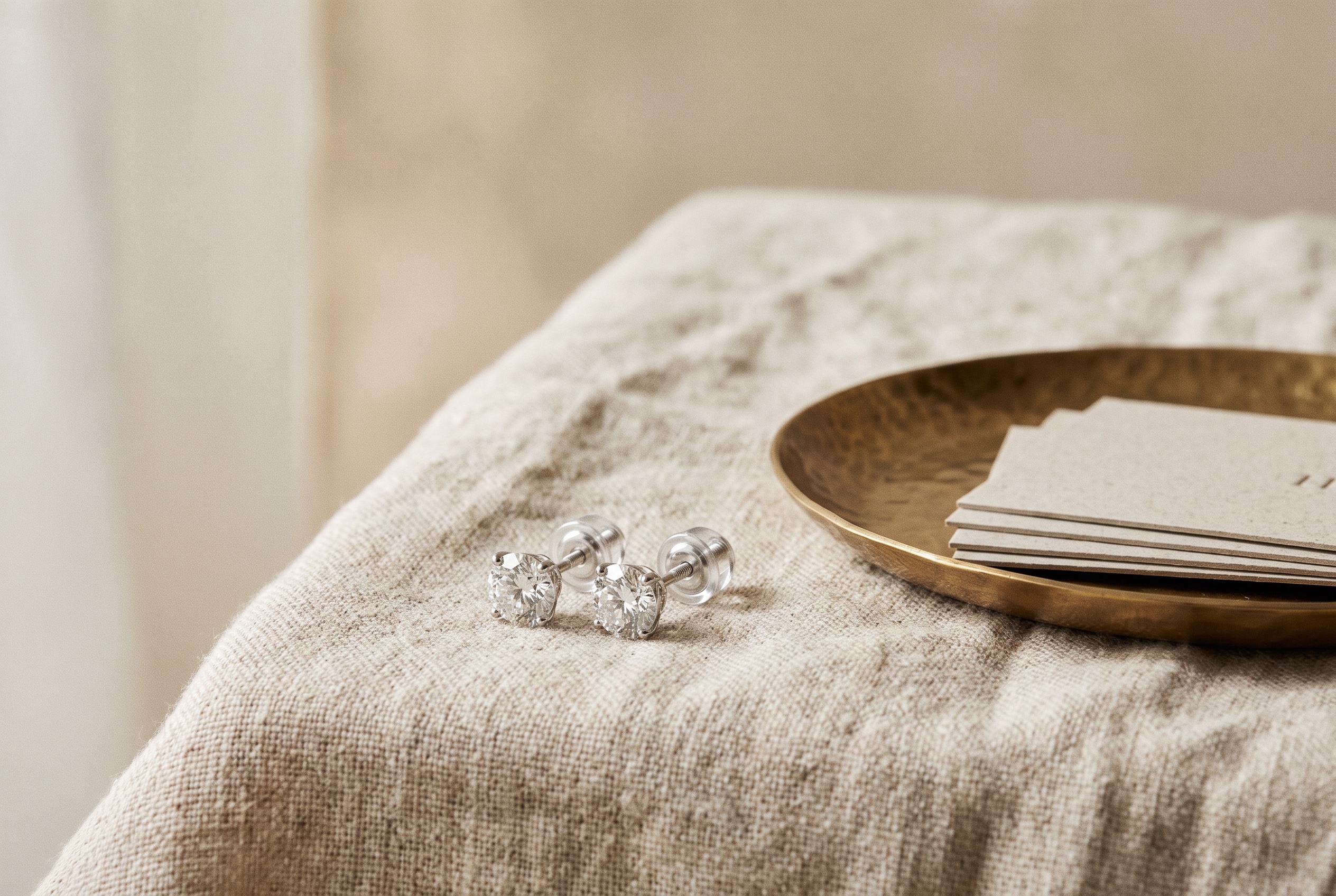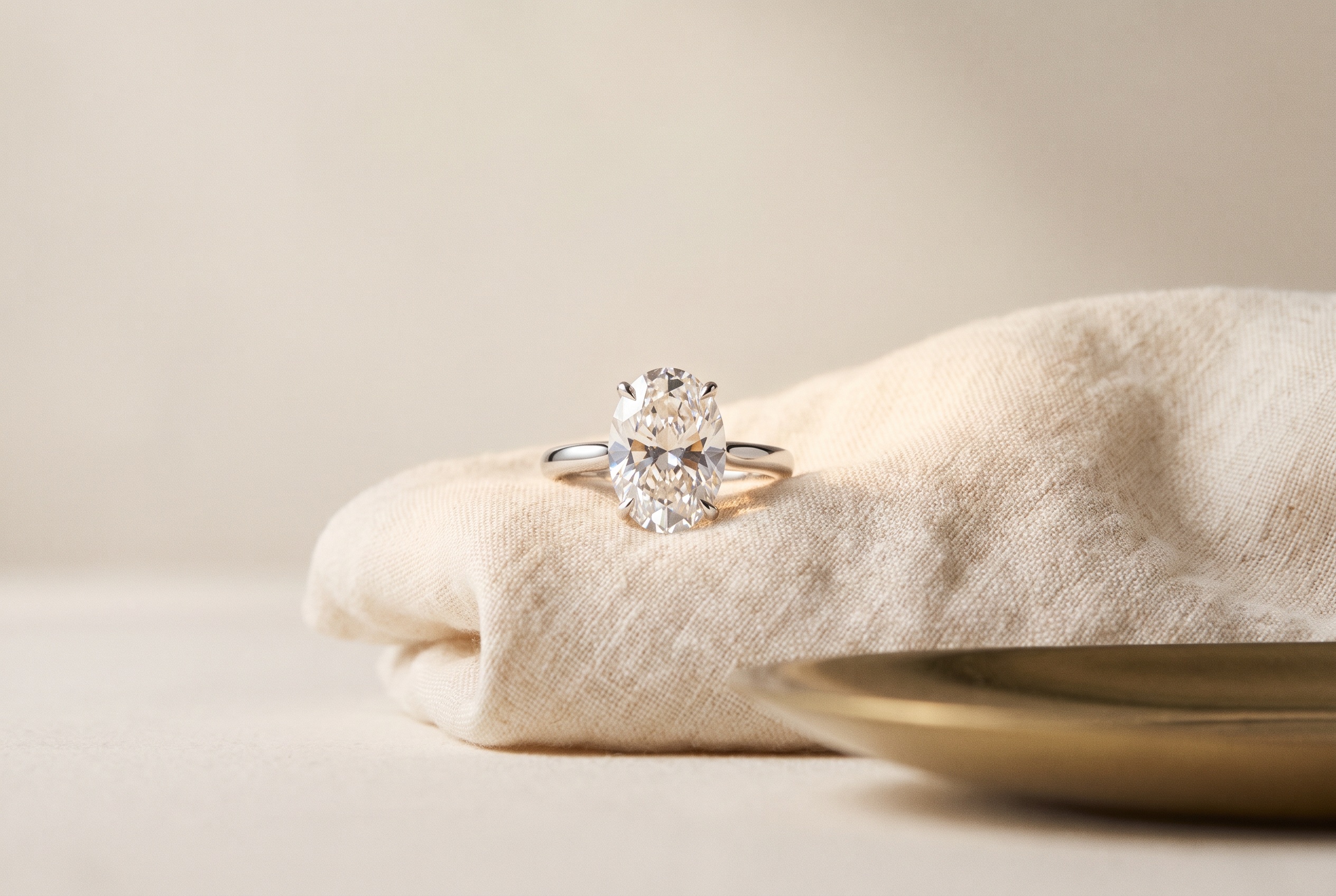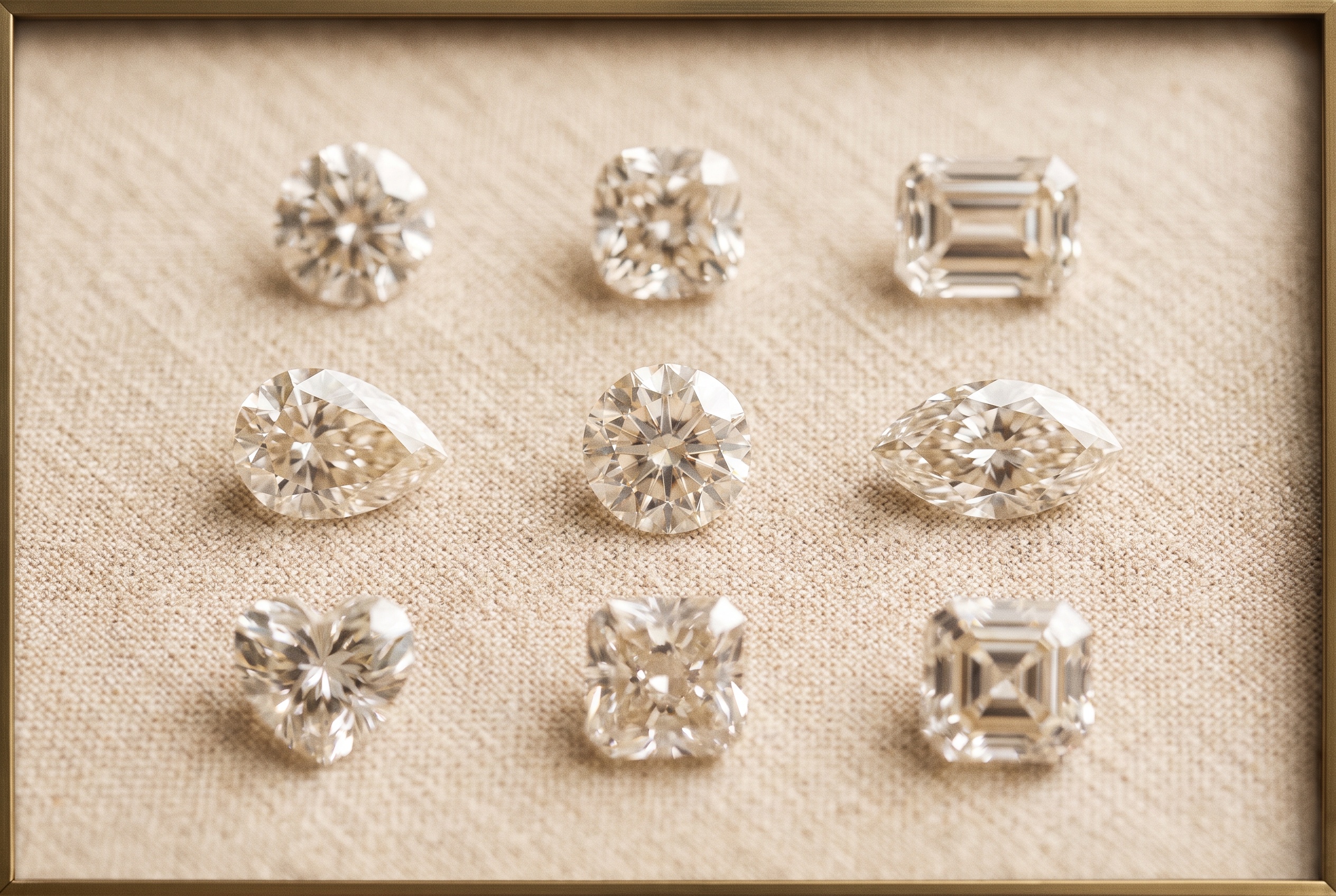

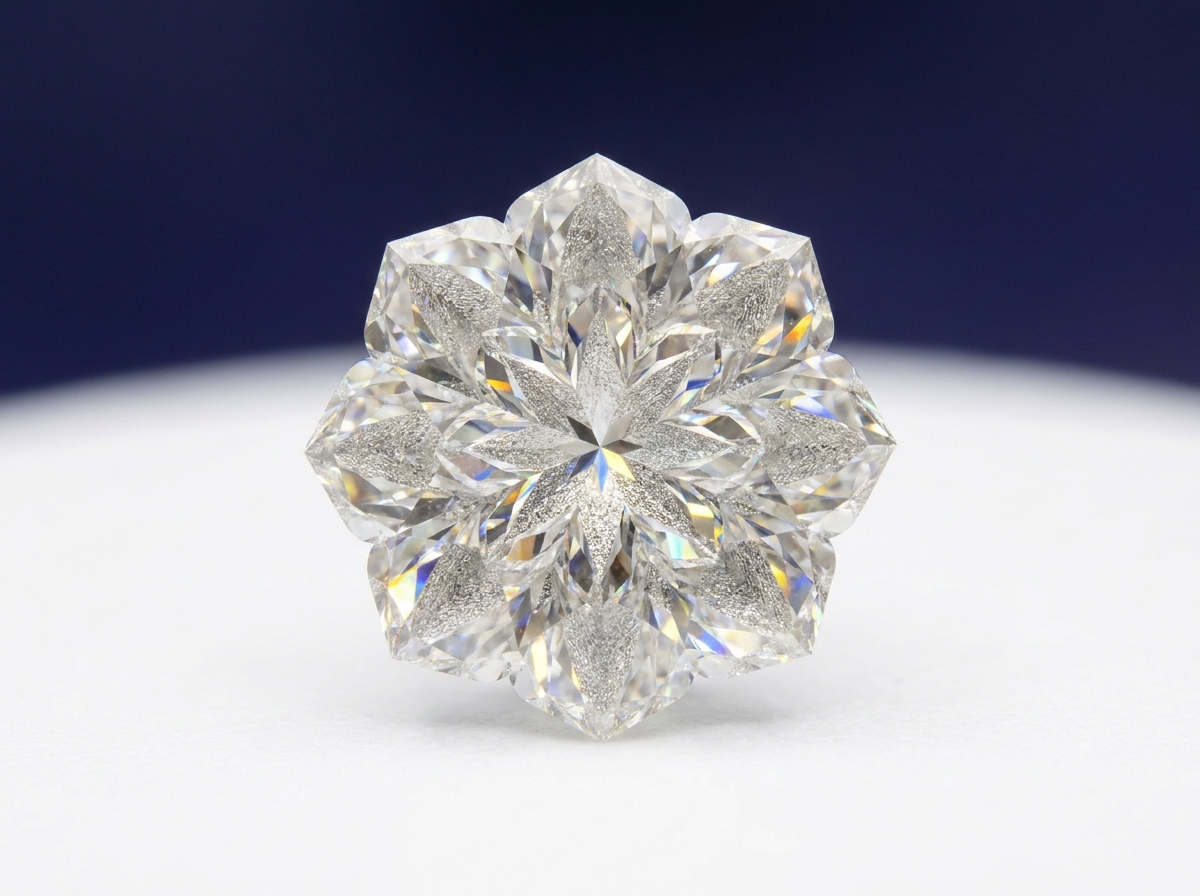
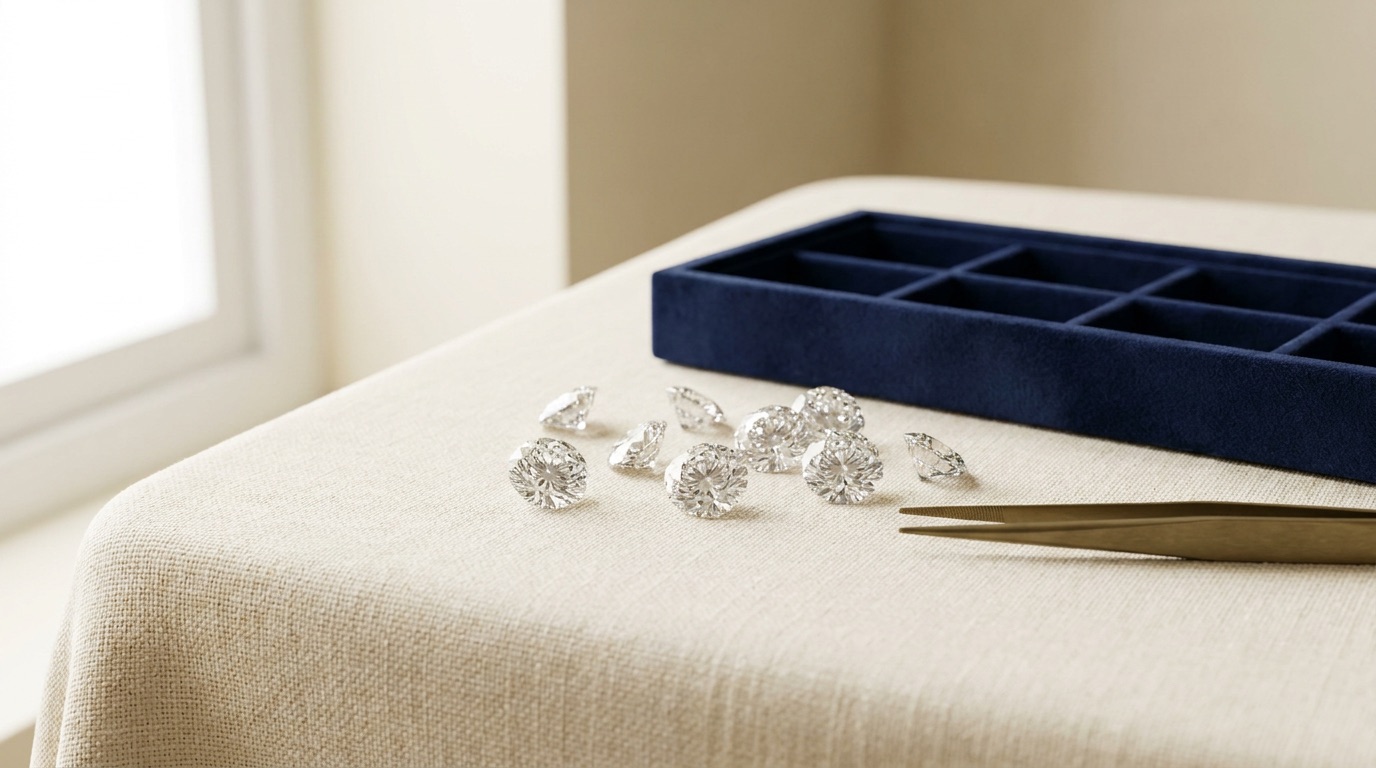
A Padma Cut is a specialty fancy diamond cut with a layered, flower-like faceting pattern — its name comes from the Sanskrit word for lotus, referencing the petal-like arrangement of facets rather than any standardized outline. Guru Diam stocks 14 Padma Cut diamonds on hand, CVD lab-grown, IGI-gradable on request, with additional stones cut to order for larger project specs.
What a Padma Cut Diamond Is
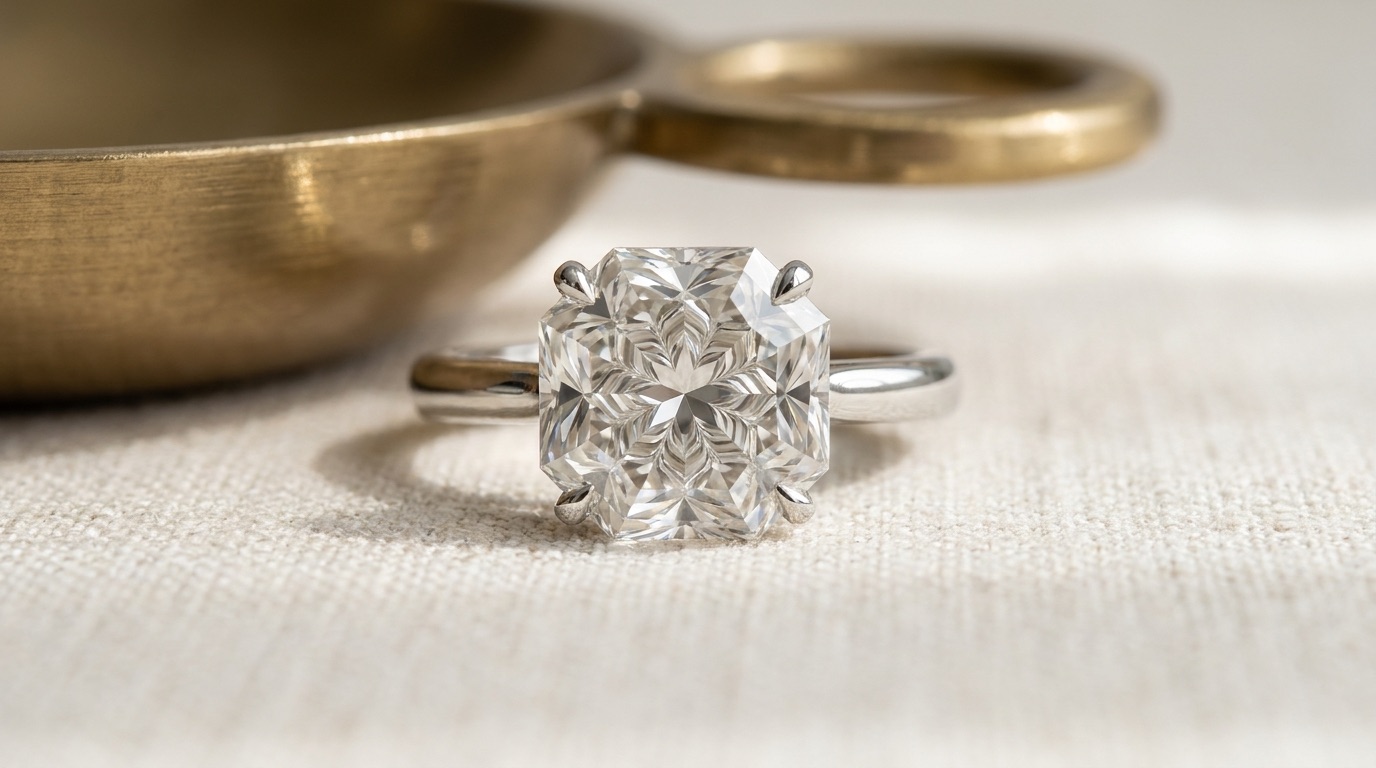
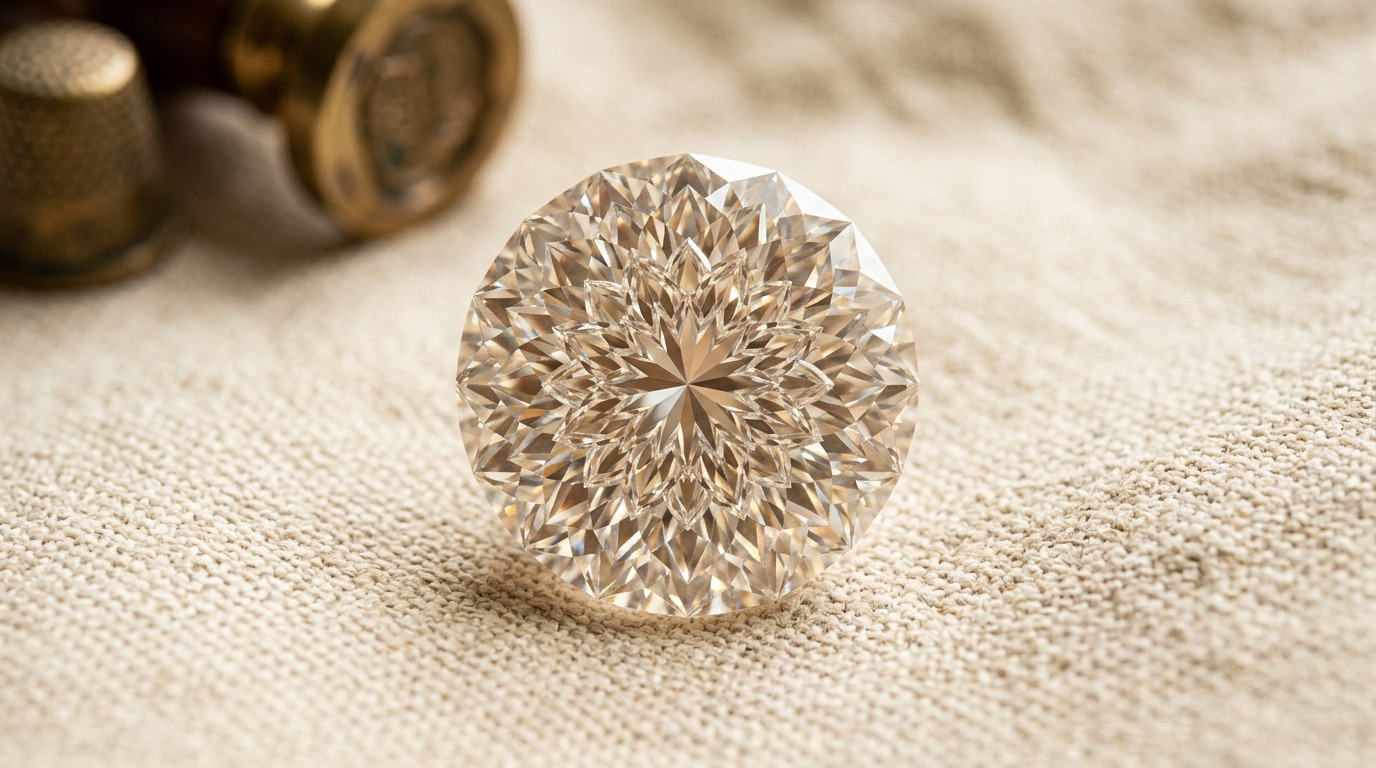
Padma is a faceting style, not a fixed outline. Where a round brilliant, oval, or cushion is defined first by its outline shape and second by a standardized facet arrangement, Padma works the other way around: the facet pattern is the defining feature, and the outline is whatever shape lets that pattern read cleanly. In practice most Padma diamonds land somewhere between a round and a softly rounded square or cushion outline, but the outline itself is not the point — the layered, radiating rows of facets are.
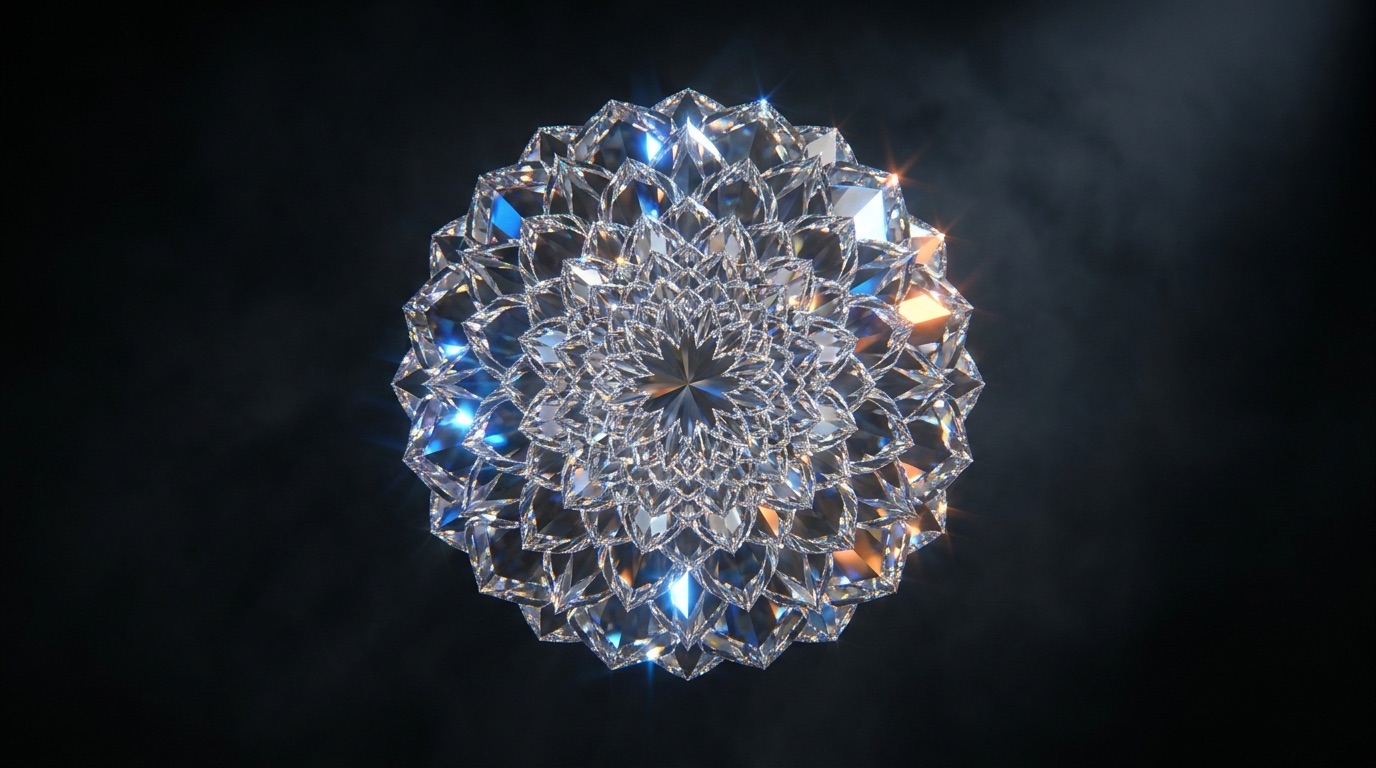
The name is Sanskrit for lotus, and it describes what the pattern is meant to evoke: petals unfolding in rings from a center point, each ring slightly offset from the one beneath it so the stone reads as textured and dimensional rather than flat-faceted. It's the same visual idea used in lotus-motif faceting on colored gemstones — citrine, amethyst, and other stones cut for ornamental pattern work — applied here to diamond, where the material's hardness and dispersion make the layered facets read very differently under light than they do in a softer, lower-dispersion stone.
Facet Structure and Optical Character
A standard round brilliant has 57 or 58 facets (56 plus table, with or without a culet facet) arranged in a single, well-documented pattern that every major cutting house replicates within tight tolerance. A Padma has no such fixed count. Because the design calls for multiple concentric rows of facets on the crown — and typically a matching multi-row structure on the pavilion — a Padma will commonly carry 80 to 100+ individual facets depending on the cutter and the stone's size, well above a round brilliant and closer to the facet-dense end of the fancy-cut spectrum.
More facets change how the stone throws light. A round brilliant is cut to maximize brightness and fire — large, evenly distributed flashes of white and spectral light. A heavily faceted layered cut like Padma trades some of that broad brightness for scintillation: smaller, more numerous points of light that flash and shift more actively as the stone or the viewer moves. Under a loupe or macro photography this is what gives Padma its "textured" look — the surface reads as busy and dimensional rather than as a single clean plane of light, which is exactly the effect the layered design is built to produce.
Padma Within Guru Diam's Cut Categories
Guru Diam's production catalog runs on three working tiers: antique cuts (Old Mine, Old European, Hexagonal, Moval, Lozenge, Kite, Trillion, Criss-Cut, and related true antique-style shapes), regular fancy cuts (Emerald, Asscher, Cushion, Oval, Pear, Marquise, Radiant, Princess, Heart), and round brilliant as the commodity baseline. Padma doesn't sit cleanly in any of the three. It isn't a documented antique-period cut with a historical proportion set the way Old Mine or Old European are, and it isn't a modern catalog-standard shape the way Cushion or Radiant are — it's a specialty faceting style that predates none of the standard tiers and doesn't map onto any of them.
We handle it as what it is: a specialty, limited-production line, sourced and cut on its own schedule rather than folded into a standard-tier production run. That's why the on-hand count is small and specific rather than a deep, continuously restocked SKU — buyers should treat Padma sourcing conversations more like a custom-cut request than a standard reorder, even for stones already sitting in inventory.
The Trade History and Naming of the Padma Cut
Layered, multi-row faceting isn't a diamond-specific invention. It has a long history in colored-gemstone cutting, where cutters use concentric facet rings — sometimes called fantasy cuts, sometimes lotus or padma cuts depending on the region and the cutter's training — to add visual texture to stones that don't have diamond's dispersion to rely on for sparkle. Padma-style faceting shows up across South and Southeast Asian gem-cutting traditions specifically because it photographs and displays well on stones cut for ornamental and devotional jewelry, where the lotus motif itself carries symbolic weight independent of the optical effect.
Applying that same layered-petal logic to diamond is much less common, for a practical reason: diamond rough is expensive relative to colored stone rough, and a layered cut with a high facet count sacrifices more weight to achieve its pattern than a round brilliant or a simple step cut does. That tradeoff — more labor and more weight loss for a highly distinctive optical result — is the same tradeoff that keeps most fancy specialty cuts rare in diamond even when they're well established in other gem materials. It's also why you won't find a GIA- or IGI-published proportion standard for "Padma cut" the way you would for round brilliant: it's a cutter-driven design, not an industry-standardized one, and that's true whether the cutter is working diamond, citrine, or quartz.
In the wholesale trade, the name gets used somewhat loosely — some sellers apply "Padma" to any dense, layered fancy-faceted stone regardless of exact structure, and "Lotus cut" shows up as an informal Western-market alternative name for the same family of cuts. When you're sourcing, ask the seller to describe the actual facet arrangement and row count rather than relying on the name alone, since it isn't policed the way "round brilliant" or "emerald cut" is.
How Guru Diam Sources and Cuts Padma Diamonds
Guru Diam's Padma stones are CVD lab-grown and cut and polished in-house, the same production control we apply across the antique and specialty side of the catalog. Rough selection for Padma starts with the same 4C screening any stone goes through, but the cutting plan is decided per rough crystal rather than pulled from a standard proportion template — the cutter has to map where the concentric facet rows will fall relative to the rough's natural shape and inclusion map before committing to a cutting angle, since a layered pattern is far less forgiving of a wrong first cut than a round brilliant is.
That per-stone planning is also why yield is lower and cutting time is longer on Padma than on catalog-standard shapes. A round brilliant or a step-cut Emerald has an established cutting sequence a skilled cutter can execute efficiently and repeatably. A layered fancy cut requires the cutter to re-derive facet placement on every stone to keep the petal rings proportional to that stone's specific outline and size — closer to bespoke work than production work, even though the finished stones are sold as inventory rather than one-off commissions.
Because of that, Guru Diam runs Padma production in small batches against demand rather than continuously. On-hand stock reflects the most recent cutting run; larger project specs — a bridal collection needing several matched or complementary Padma centers, for example — are quoted as a custom-cut order against a lead time rather than pulled from standing parcel stock.
Grading and Quality Considerations for Padma Cut Stones
Grading a Padma diamond mixes standard 4C evaluation with a few considerations specific to heavily faceted fancy cuts. Color and clarity grade the same way they would on any diamond — the same D-to-Z color scale and the same inclusion-based clarity scale apply regardless of cut style. Cut evaluation is where Padma diverges from a round brilliant meaningfully.
Certification: What IGI and GIA Actually Grade on a Padma
Guru Diam's Padma inventory is IGI-gradable on request as standard, with GIA available on request for stones that qualify. It's worth understanding what a certificate on a fancy specialty cut actually says versus what it says on a round brilliant. Round brilliants get a full cut-grade rating — Excellent, Very Good, Good, and so on — because labs have a documented proportion standard to grade against. Fancy shapes generally don't get that same overall cut grade; labs report measurements, symmetry, and polish, and describe the shape and cutting style in the report, but they aren't scoring the design itself against a published ideal the way they do for round brilliant. On a report for a Padma or Padma-style stone, expect the shape to be described as a modified brilliant or fancy cut with a facet diagram, rather than "Padma" appearing as a standardized shape field — the trade name is real, but the labs grade the physical stone in front of them, not the marketing term for its style.
That distinction matters for buyers: don't expect an "Excellent" cut grade on paper the way you would on a round, and don't read the absence of one as a quality flag. Judge cut quality on symmetry, polish, and how the stone actually performs under light — the same way you'd judge any fancy shape.
What to Check Before You Buy: Symmetry, Meet Points, Polish
More facets means more places for a cutter to get something slightly wrong, so the checks that matter most on a Padma are the ones that catch faceting execution issues: are the facet rows evenly spaced and consistently sized around the stone, do adjacent facets meet cleanly at sharp points rather than blunted or overlapping ones, and is polish consistent across all the facet rows rather than sharper on the outer crown and softer toward the culet (a common tell that a cutter rushed the harder-to-reach inner facets). Because Padma stones vary more by cutter than a round brilliant does, buyers sourcing more than one or two stones — for a matched-pair request or a small collection — should expect to review individual stones side by side rather than order by spec sheet alone. This is standard practice for any non-standardized fancy cut, not a Padma-specific caution, but it applies with more force here than it would on a catalog shape like Cushion or Oval.
What Drives Padma Cut Pricing
Padma pricing starts from the same baseline as any diamond — carat weight, color, and clarity set the floor — and then adds several cost layers specific to a low-volume, heavily faceted specialty cut.
Carat, Color, and Clarity — the Baseline
The standard 4C relationships hold: price scales with carat weight (and jumps at common carat-weight breakpoints the same way it does on any shape), higher color grades command a premium, and clarity moves price along the usual VVS-to-included spectrum. None of that is Padma-specific — it's the same pricing logic that applies to a round brilliant or an emerald cut of the same specs. Where Padma pricing separates from a standard shape is in the layers below.
Facet Complexity, Rough Yield, and Cutter Labor
Two things push Padma's per-carat cutting cost above a comparable round brilliant or simple step cut. First, rough yield: a layered facet pattern with concentric rows demands more precise proportions relative to the rough crystal than a round brilliant does, which typically means more weight is sacrificed to achieve a clean pattern — lower finished-carat yield from the same rough input raises the effective cost per finished carat. Second, labor: because each Padma is cut against a per-stone plan rather than a repeatable template, cutting time runs longer than a standard-shape cut of comparable size, and that time is priced into the stone. Buyers comparing a Padma's per-carat cost to a round brilliant or cushion of the same color and clarity should expect the gap to be wider than a simple "fancy cut premium" — it reflects real yield loss and real labor time, not just positioning.
Certification and Lot-Size Economics
Certification is a flat per-stone cost regardless of shape, so it has more relative impact on a specialty cut sold as individual stones than it does on a deep-stock commodity shape sold in volume. There's also no parcel-pricing discount available on Padma the way there sometimes is on high-volume calibrated melee or round goods — every stone is priced and sold individually, which is standard for any low-volume specialty cut and not unique to how Guru Diam handles it.
Styling and Use-Case Guidance for Jewelers Reselling Padma
Padma is a center-stone cut, not a supporting one. The layered facet pattern is only legible to the eye at a size and viewing distance where the individual rows can actually be seen — that rules it out as a calibrated side stone or melee shape, and it means the setting has to be built around showing the stone off rather than around minimizing its footprint.
Settings That Work With a Padma Cut
Because the crown facet pattern is the point of the stone, settings that cover more of the crown — heavy halos, dense pavé shoulders that visually compete with the stone's own faceting — tend to fight the design rather than complement it. Cleaner settings that keep the crown fully exposed work better: a low-profile prong setting, a simple bezel that frames without covering, or a light cathedral shank that lifts the stone without adding competing detail around it. Pendant settings have the same logic — a simple bail and minimal surrounding metalwork let the facet pattern read clearly from a normal viewing distance.
One practical note for bench work: because Padma outlines aren't perfectly standardized the way a round or a calibrated cushion is, prong and bezel fitting typically needs to be done to the specific stone rather than pulled from a stock setting sized to a nominal shape. That's routine for Guru Diam's in-house CAD and setting process, but it's worth planning into a project timeline if you're sourcing the stone and the mounting separately.
Positioning Padma to Retail Clients
Padma sells on the same story that makes it hard to stock deep: it's genuinely uncommon, the facet pattern is visually distinct from anything a client will see in a mall case, and the lotus naming gives it a clean, explainable story rather than requiring a jeweler to invent one. That combination makes it a strong fit for clients specifically asking for something their friends won't already have, for statement engagement rings positioned as one-of-a-kind rather than catalog-standard, and for jewelers building out a specialty case or a social-content angle around rare cuts. It's a weaker fit for production bridal lines or any client prioritizing maximum brightness and fire over pattern and texture — for that buyer, a round brilliant or a well-cut oval will outperform Padma on raw light return every time, and it's worth saying so rather than oversetting expectations.
Padma vs. Other Rare Specialty Cuts
Padma sits in a small family of uncommon cuts defined by non-standard facet arrangements rather than by outline alone. Two comparisons come up most often with buyers evaluating whether Padma is the right rare cut for a project.
Padma vs. Portuguese Cut
The Portuguese cut is the closest documented relative to Padma's design logic: it's also a modified brilliant built around extra rows of facets on both crown and pavilion, commonly cited around 78 facets versus a round brilliant's 58, and it's cut specifically to maximize scintillation over raw brightness — the same optical tradeoff Padma makes. The difference is standardization: Portuguese cut has a semi-established facet count and structure that's been documented in the trade for decades, where Padma's layered petal pattern is less fixed and varies more by cutter. If a project needs a heavily faceted, high-scintillation stone with a more predictable, repeatable structure, Portuguese cut is the more standardized choice; if the project wants the specific lotus-inspired visual and is comfortable with more stone-to-stone variation, Padma is the more distinctive one. We can source and cut Portuguese-style stones in-house on request for buyers who want to compare the two directly.
Padma vs. Rose Cut
Rose cut sits at the opposite end of the faceting spectrum from Padma. It's a genuinely antique cut — flat-backed, faceted crown only, no pavilion — that trades brightness and fire almost entirely for a soft, candlelit glow, and it's part of Guru Diam's antique-cut lineup alongside Old Mine and Old European. Where Padma adds facet density to increase scintillation, Rose cut strips facets down to a minimum and removes the pavilion structure that produces brilliance in the first place. The two read as opposite design philosophies that happen to both fall outside the standard antique/regular-fancy/round framework most catalog shapes sit inside — Rose cut because it's a true historical antique style with its own established look, Padma because it's a specialty faceting pattern without a fixed historical proportion set. Buyers choosing between them are usually choosing between two different moods: Rose cut for a soft, vintage, low-contrast look, Padma for a high-detail, high-scintillation statement piece.
How to Order Padma Cut Diamonds Wholesale from Guru Diam
Padma is sold two ways: from current on-hand inventory, or as a custom-cut order against a project spec. On-hand stones are CVD lab-grown, individually available, IGI-gradable on request with GIA available on request — buyers with an open wholesale account can review current on-hand stock and pricing directly. For projects needing more stones than the current on-hand count supports — a bridal collection, a matched-pair request, or a specific carat/color/clarity combination not currently in stock — we quote a custom cutting run against your spec, cut and polished in-house the same as our standard production.
Fancy-color Padma is available as a custom order in our standard certified fancy-color range — yellow, pink, blue, or green — for buyers who want the layered facet pattern in a color stone rather than white. Because color rough and layered faceting compound the yield and labor factors described above, fancy-color Padma runs on a longer lead time than a white on-hand stone and is quoted per request rather than held as standing inventory.
To source Padma wholesale: open a wholesale account for live pricing and current on-hand availability, or submit a spec for a custom cutting run if your project needs more stones, a specific color/clarity combination, or matched pairs. Both paths route through the same in-house cutting operation that handles the rest of Guru Diam's antique and specialty inventory.
Availability, Custom Orders, and Matched Pairs
Treat Padma as a low-volume specialty line by design, not as a deep-stock staple that happens to be running low. Guru Diam's on-hand Padma inventory reflects the most recent in-house cutting run rather than a continuously replenished parcel, so buyers building a project around Padma should plan sourcing conversations early rather than assuming a fixed count will always be available on demand. Matched pairs — for stud-style pieces or symmetrical design work — are sourced per request against your project spec rather than held as standing paired stock, since matching two heavily faceted, non-standardized stones from current inventory alone isn't always possible. Reach out with your carat, color, clarity, and quantity requirements and we'll confirm what's available on-hand versus what needs to run through a custom cutting cycle.
Frequently Asked Questions
What is a Padma Cut diamond? A specialty fancy cut defined by a layered, flower-like faceting pattern — multiple concentric rows of facets radiating outward from a center point, giving the stone a textured, dimensional surface rather than the single clean facet plane of a round brilliant. The name is Sanskrit for lotus, referencing the petal-like arrangement rather than a fixed outline or proportion set.
Is Padma a common diamond cut? No. It's a low-volume specialty cut cut and polished in-house against small production runs rather than mass-produced. Guru Diam stocks it as a small, on-hand specialty line, with additional stones available as a custom-cut order for larger project specs.
Does Padma come in a set outline, like round or oval? No — Padma is defined by its facet pattern more than a fixed outline, so individual stones vary more than they would on a standardized shape. Buyers sourcing more than one or two stones should review specific stones side by side rather than order strictly by spec sheet.
Are Padma Cut diamonds certified, and will the certificate say "Padma"? IGI-gradable on request as standard, GIA available on request. Because Padma isn't a lab-standardized shape name, expect the certificate to describe the stone as a modified brilliant or fancy cut with a facet diagram rather than listing "Padma" as a shape field — that's normal for any non-standardized fancy cut, not a red flag.
What drives the price difference between a Padma and a round brilliant of the same carat, color, and clarity? Mainly rough yield and cutting labor. The layered facet pattern sacrifices more weight from the rough to keep proportions clean than a round brilliant does, and each stone is cut against a per-stone plan rather than a repeatable template, which takes longer. Both factors raise the effective per-carat cost above a standard-shape stone of the same 4Cs.
Can Padma diamonds be matched as pairs, or sourced in fancy color? Given the low on-hand count, matched pairs are sourced on a per-request basis rather than held as standing stock. Fancy-color Padma (yellow, pink, blue, or green) is available as a custom-cut order in our standard certified fancy-color range, on a longer lead time than white on-hand stock. Reach out with your project spec for either.