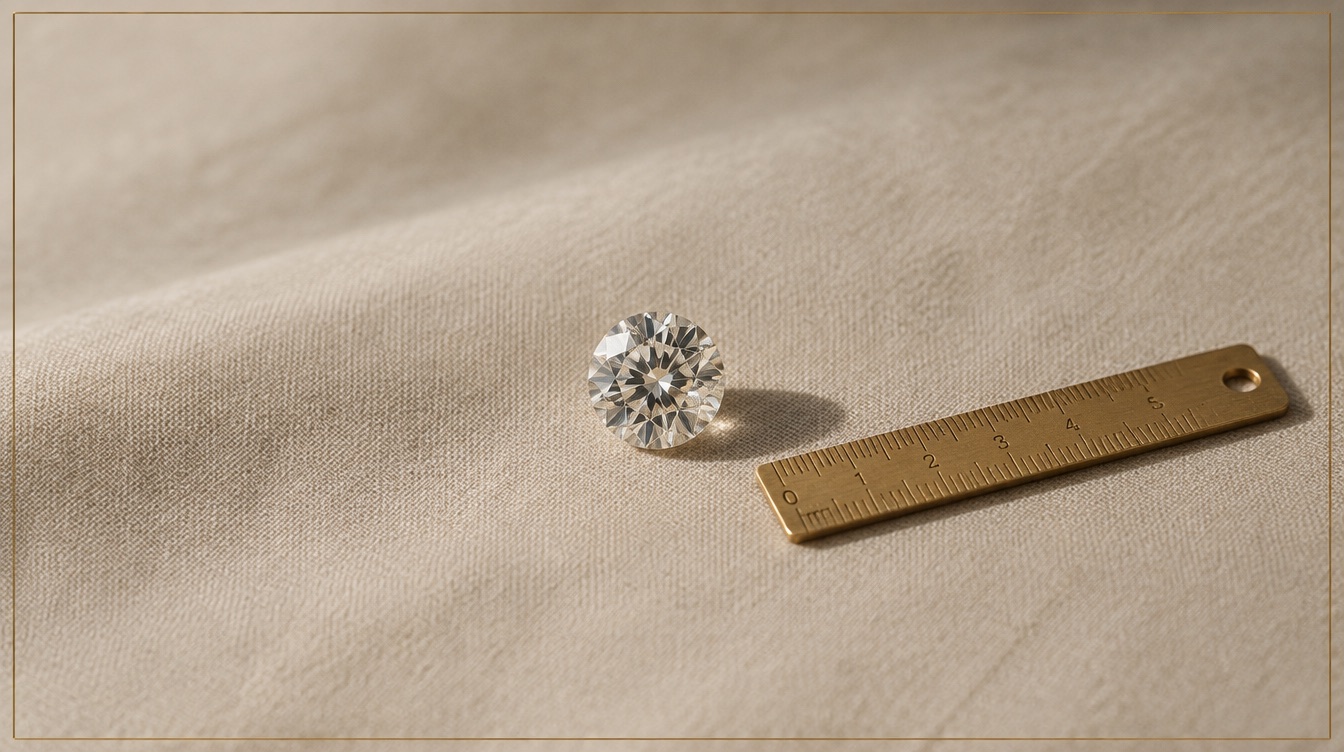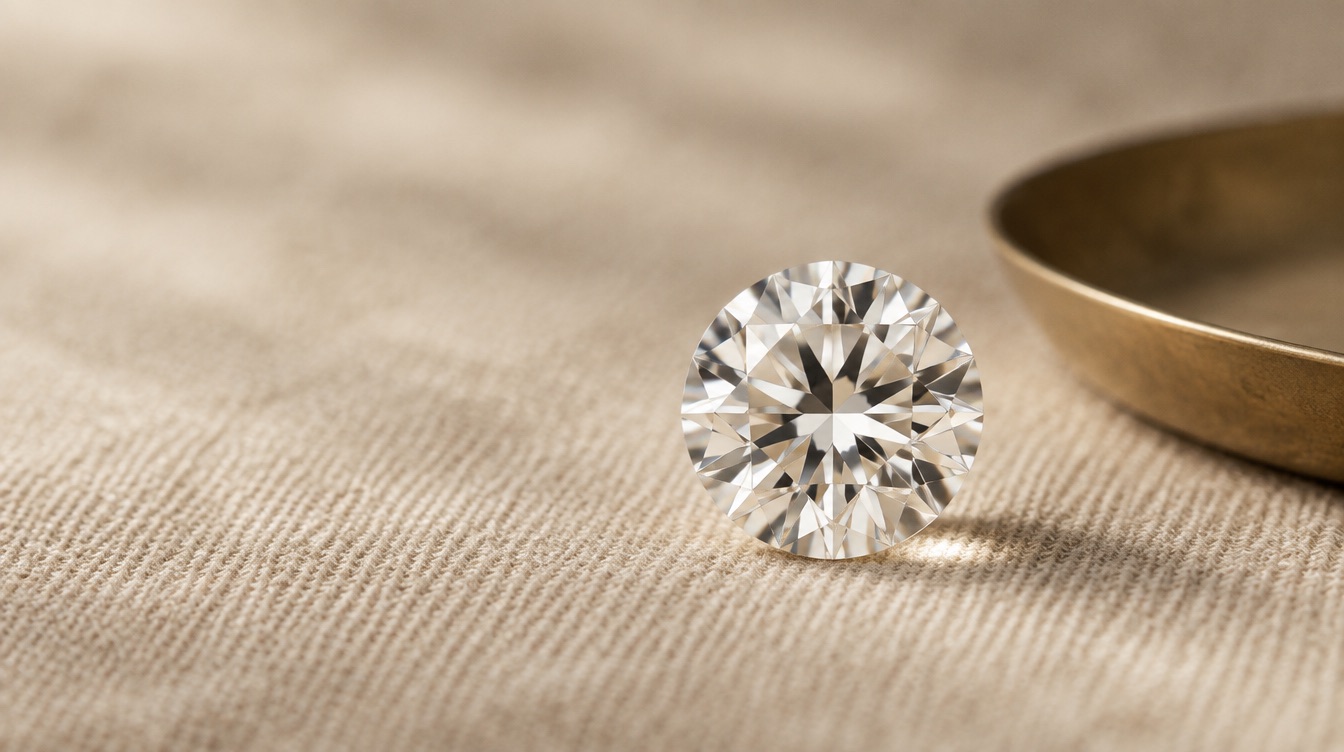
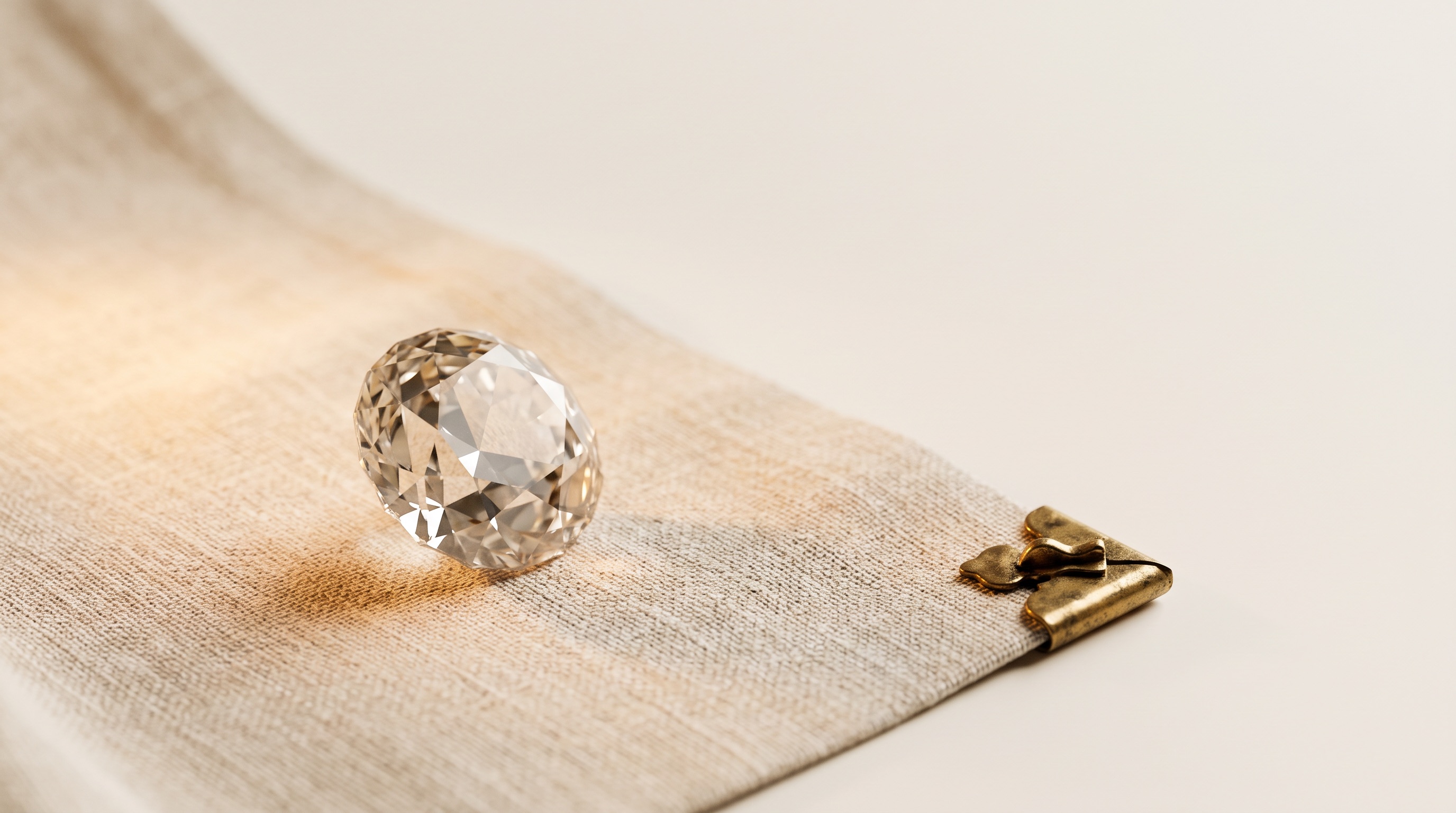
An old single cut diamond, sometimes called an 8-cut, is an antique round diamond style cut with roughly 16 to 18 facets total — a table, a culet, and eight facets each on the crown and pavilion — compared with the 57 or 58 facets on a modern full-cut round brilliant. It's the diamond world's original circular cutting style, and it predates the round brilliant by decades, most commonly found today as tiny accent stones in antique and early-20th-century jewelry.
Because "single cut" also survives as a real, current manufacturing term — used today for extremely small melee where cutting a full 57-facet pattern doesn't meaningfully improve brilliance — buyers researching this term are often trying to sort out two related but distinct questions: what a genuine antique old single cut diamond is, and how it differs from the modern single-cut melee still produced commercially. This guide covers both: the old single cut's facet structure and history, how it compares to old mine cut, old European cut, and modern round brilliant, why the style persists today for the smallest melee sizes, and what to check before buying or restoring a piece that uses it.
What Defines an Old Single Cut Diamond
An old single cut diamond has a simplified facet arrangement compared with every cut style that followed it: a flat table facet on top, a small flat culet facet at the bottom point, and eight facets arranged around the crown plus eight more around the pavilion — 18 facets total in the fullest version, sometimes counted as 17 when the culet is treated as a point rather than a facet. That's roughly a third of the facet count on a modern round brilliant, and the reduced facet count is the single defining structural feature of the cut.
Fewer facets means a fundamentally different relationship between facet size and stone size. On a full-cut round brilliant, 57 small facets divide up the stone's surface finely enough to create the sharp, high-contrast pattern of light and dark that reads as "brilliance." On a single cut, each of the 16 facets is proportionally much larger relative to the stone's total surface, producing broader, simpler flashes of light rather than the fine-grained sparkle of a modern cut.
A Brief History: Why the Single Cut Came First
The single cut is generally recognized as the first cutting style applied systematically to small round diamonds, developed well before diamond cutters had the tools or techniques to reliably execute a full 57-facet pattern on tiny stones. Its simplified facet count made it achievable with the hand-cutting methods and equipment available through the 1800s and into the early 1900s, and it became the standard cut for small accent and melee-range diamonds in jewelry from the Georgian, Victorian, and Edwardian periods.
The modern full-cut round brilliant — the 57-58 facet pattern most buyers picture when they hear "round diamond" today — wasn't formalized until the early 20th century, popularized after Marcel Tolkowsky's 1919 mathematical analysis of ideal proportions for light return. Once that full-cut pattern became commercially achievable at smaller sizes, it gradually displaced the single cut for new production, though single-cut stones remained common in mass-market jewelry — particularly wedding bands and small pavé work — well into the mid-20th century before full-cut melee became the industry default.
Old Single Cut vs. Old Mine Cut vs. Old European Cut: Where It Fits
All three of these antique styles predate the modern round brilliant, but they solve different problems. Old mine cut and old European cut are both full facet-count antique styles — squarish and rounded respectively — typically applied to larger center-stone-sized diamonds, where their high crowns and deep pavilions were built to maximize the warm, candlelight-style performance those cuts are prized for today. The old single cut, by contrast, was almost always applied to small stones, where a full facet pattern would have been both impractical to execute by hand and unnecessary — a tiny stone doesn't have enough surface area for 57 small facets to meaningfully outperform 16 larger ones in visible brilliance.
Put simply: old mine and old European cut are antique full-cut styles for stones large enough to showcase a complex facet pattern. The old single cut is an antique reduced-facet style built specifically for stones too small for that complexity to matter.
Cut Style Comparison Table
| Cut Style | Facet Count | Typical Era | Typical Stone Size | Light Performance |
|---|---|---|---|---|
| Old Single Cut (8-cut) | 16–18 | 1800s–mid-1900s | Melee and small accent stones | Broad, simple flashes; limited fire |
| Old Mine Cut | 58 | ~1830s–early 1900s | Center stones, squarish outline | Warm, soft "candlelight" glow |
| Old European Cut | 58 | ~1890s–1930s | Center stones, round outline | Warm, soft glow, slightly brighter than old mine |
| Modern Round Brilliant | 57–58 | 1919–present | Any size, standard for accent through large center stones | Sharp, high-contrast brilliance and fire |
| Modern Single Cut (melee) | 16–18 | Present, smallest melee only | Sub-1.0mm melee | Comparable simplicity to antique single cut, by design choice rather than historical necessity |
Does the Single Cut Still Exist in Modern Manufacturing?
Yes, and this is the detail that trips up a lot of buyers researching the term. "Single cut" isn't purely a historical curiosity — it survives today as a real, current specification for the very smallest melee diamonds, generally under about 1.0mm in diameter. Below that size, a stone is often too small for a full 57-facet pattern to be reliably cut, or to produce any visible brilliance improvement over a simpler facet arrangement even if it could be cut that precisely. Manufacturers producing tiny commercial-grade melee for pavé and accent work sometimes still specify single-cut facet patterns at these smallest sizes for exactly that reason — not as an antique-style choice, but as a practical manufacturing decision at a size where facet complexity stops paying off visually.
That means a buyer can legitimately encounter "single cut" language in two very different contexts: describing a genuine antique stone from a period piece, or describing a current, brand-new sub-1.0mm melee stone cut with a simplified facet pattern for practical reasons. The two are not the same claim, and a listing or a jeweler describing a stone as "single cut" should make clear which one is meant.
Visual Character and Light Performance
An old single cut diamond does not sparkle the way a modern round brilliant does, and that's a function of its geometry rather than a quality shortfall. With only eight facets on each of the crown and pavilion, light entering the stone reflects off larger, simpler facet surfaces, producing broader, softer flashes rather than the fine, high-contrast scintillation pattern a 57-facet cut produces. Viewed under a loupe or magnification, the difference is immediately obvious — a single cut's facet pattern looks almost geometric and minimal compared with a full-cut stone's dense arrangement of small triangular and kite-shaped facets.
At the tiny sizes where single cuts are almost always found, this difference matters less to the naked eye than it would on a larger stone. A cluster of single-cut melee in a period piece, viewed from a normal distance, still reads as sparkling and bright — the individual facet simplicity becomes far less noticeable at melee scale than it would if the same facet pattern were applied to a center-stone-sized diamond.
Where Old Single Cut Diamonds Show Up Today
Genuine antique single-cut stones appear almost exclusively in one of two contexts. The first is original period jewelry — Georgian, Victorian, Edwardian, and early-to-mid-20th-century pieces that have survived intact, where the original single-cut melee is still set in its original mounting. The second is jewelry restoration and repair work, where a jeweler restoring or resizing a period piece needs to match a replacement stone's facet pattern to the original single-cut melee still present elsewhere in the same piece, rather than introducing a visually mismatched modern full-cut stone into an otherwise antique setting.
Outside of those two contexts, old single cut diamonds are rarely sought out deliberately for new jewelry design — designers wanting an antique-inspired look for a new piece typically choose old mine or old European cut instead, since those styles were built for center-stone visibility and read more clearly as intentionally "antique" in a modern setting than a scattering of tiny single-cut melee would.
Single Cut vs. Swiss Cut: Two Reduced-Facet Melee Styles
The single cut isn't the only reduced-facet melee style in the trade, and it's worth distinguishing it from the swiss cut specifically, since the two are sometimes confused. A swiss cut sits between the single cut and the modern full-cut round brilliant, with roughly 33 to 34 facets — meaningfully more than a single cut's 16 to 18, but still well short of a full-cut brilliant's 57 to 58. Swiss cut emerged as something of a middle-ground option, offering more brilliance than a single cut while remaining more practical to execute at small melee sizes than a full 57-facet pattern. In practice, a buyer sorting through small melee-range stones may encounter all three facet tiers — single cut, swiss cut, and full cut — and matching a replacement or accent stone to the correct facet count matters just as much as matching its millimeter size, particularly in restoration work where a mismatched facet pattern is visually obvious next to the original stones.
Identifying an Old Single Cut Diamond in an Antique Piece
For a jeweler or appraiser examining an antique piece, a few visual cues distinguish genuine single-cut melee from full-cut stones without needing to remove anything from the setting. Under magnification, a single cut's crown shows a simple ring of eight facets around the table, rather than the layered arrangement of star facets, bezel facets, and upper girdle facets that a full-cut brilliant's crown displays. The pavilion, viewed from underneath where the setting allows, shows a matching set of eight larger pavilion facets rather than the denser lower-girdle and pavilion main facet pattern of a full cut. The overall visual effect at a glance is a noticeably simpler, more geometric facet pattern — once a viewer has compared a single cut and a full cut side by side under a loupe, the difference becomes easy to spot on sight in future pieces.
This identification step matters most in two practical situations: confirming that a piece represented as fully "original" and unrestored genuinely retains its period stones rather than having had modern full-cut replacements introduced at some point in its history, and planning a restoration or repair so that any new stone brought in matches the facet pattern already present rather than standing out visually against original single-cut melee.
Buying Considerations for Old Single Cut Diamonds
A few practical checks matter specifically for this cut:
- Confirm whether "single cut" means antique or modern manufacturing. As covered above, both uses of the term are legitimate — always ask whether a stone is a genuine period antique or a newly manufactured sub-1.0mm melee stone cut with a simplified facet pattern.
- Expect uncertified, parcel-level sourcing at melee sizes. Like other melee-range stones, single-cut diamonds at these small sizes are typically sold as uncertified parcel goods rather than individually graded, regardless of whether the stones are antique or newly cut.
- Match facet pattern, not just size, for restoration work. A jeweler replacing a missing melee stone in an antique piece should match the surrounding stones' facet pattern as closely as possible — a modern full-cut replacement stone will visibly stand out next to original single-cut melee even at an identical millimeter size.
- Don't expect single cut for a center stone. The style was never intended for larger, individually showcased diamonds, and a buyer wanting an antique-style center stone should look at old mine or old European cut instead.
Old Single Cut Diamonds and Collector Interest
Beyond restoration matching, old single cut stones do attract a small but genuine following among period jewelry collectors and enthusiasts specifically interested in early cutting techniques and jewelry manufacturing history. For this audience, a piece's original single-cut melee — rather than being viewed as a lesser or outdated cut compared to a full-cut brilliant — is part of what establishes the piece's authenticity and historical value. A period piece that has had its original single-cut melee replaced with modern full-cut stones at some point in its history is generally considered less desirable to a serious collector than an equivalent piece retaining its original stones, even though the replacement stones might individually be higher quality by modern grading standards. This collector dynamic is worth understanding for anyone appraising or restoring a piece, since it can directly affect whether a "quality upgrade" replacement is actually the right call for a given client's goals with the piece.
Repair and Restoration Considerations Specific to Single-Cut Melee
Beyond simply matching facet pattern, a jeweler restoring a piece with old single-cut melee should also account for a few practical realities specific to stones this old and this small. Original single-cut stones from the 1800s and early 1900s were hand-cut, so even stones intended to be uniform in size and shape often show small natural variations that a modern calibrated melee parcel wouldn't — matching a replacement stone means matching that specific stone's actual dimensions, not just a nominal size category. Original settings built around single-cut melee were also typically designed with that cut's specific proportions in mind, including its shallower overall profile compared to a full-cut stone of the same diameter, so a full-cut replacement stone may not sit at the same height or seat the same way in an original prong or bead setting without some adjustment to the setting itself.
Common Misconceptions About the Old Single Cut
Two mix-ups come up often enough to address directly. First, "single cut" is sometimes assumed to mean a diamond with a single facet, which is incorrect — the name refers to the cut having a single row of facets around the crown and pavilion (as opposed to the multiple rows of facets on a full-cut brilliant), not to the total facet count being one. Second, single cut is sometimes confused with rose cut, another antique style with a flat base and a faceted dome — the two are visually and structurally distinct: a single cut has a normal crown-and-pavilion profile like a modern round brilliant, just with far fewer facets, while a rose cut has no pavilion at all and is essentially flat on the back.
Old Single Cut and the Rose Cut Revival: Two Different Antique Trends
It's worth noting that the current renewed interest in antique-style diamonds has mostly centered on rose cut, old mine cut, and old European cut rather than single cut specifically, and understanding why helps explain the single cut's more niche position today. Rose cut and old mine cut both offer a distinctive, immediately recognizable silhouette and light performance that reads clearly as "antique" even to a buyer without gemological training, which is exactly what makes them attractive for new, intentionally vintage-inspired designs. A single cut's visual signature is much subtler — at melee scale, a casual viewer often can't distinguish single-cut from full-cut stones without close inspection, which means choosing single cut for a new design delivers little of the immediately visible "vintage" payoff that choosing rose cut or old mine cut does. That's the core reason single cut remains primarily a restoration and collector concern rather than a design choice actively sought out for new jewelry, even as broader antique-cut demand has grown.
Sourcing Antique-Style Melee and Restoration Matches
Guru Diam's antique and exotic cut program covers old mine, old European, hexagonal, moval, lozenge, kite, trillion, criss-cut, and other true antique-style cuts, available in both CVD lab-grown and natural material with IGI, GIA, and GCAL certification on loose center-stone-sized diamonds. Guru Diam's standard melee catalog — round brilliant and fancy calibrated shapes at 0.8mm to 9.0mm, DEF+/VS+, CVD only — is built around modern full-cut facet patterns rather than antique single-cut specifications, so buyers with a restoration project that specifically requires single-cut facet matching should discuss that requirement directly with the trade team rather than assume it against standard melee stock.
For antique-inspired new designs, old mine and old European cut center stones from the antique program are the more commonly requested route than single-cut melee, and pair well with period-appropriate settings built through custom jewelry, finished in 4 to 6 days once the design is confirmed. Jewelers and designers can review current antique cut inventory through the certified diamonds category, source matched sets through matching pairs, and apply for a wholesale trade account through trade partner. Guru Diam operates from two US locations — New York and Los Angeles — with same-day shipping on in-stock inventory ordered before 6pm EST from New York or 4pm PST from Los Angeles; current terms and full catalog access are available at the wholesale hub.
Frequently Asked Questions
What is an old single cut diamond?
An old single cut diamond, also called an 8-cut, is an antique round diamond style with roughly 16 to 18 facets total — a table, a culet, and eight facets each on the crown and pavilion — compared with 57 to 58 facets on a modern round brilliant. It was the standard cut for small accent and melee-range diamonds from the 1800s through the mid-1900s.
Why does a single cut diamond have fewer facets than a round brilliant?
The single cut predates the tools and techniques needed to reliably execute a full 57-facet pattern on small stones. At the tiny sizes where single cuts were almost always used, a full facet pattern also wouldn't meaningfully improve visible brilliance, since there isn't enough surface area for 57 small facets to outperform 16 larger ones to the naked eye.
Are single-cut diamonds still made today?
Yes, for a specific reason: extremely small melee diamonds under about 1.0mm are still sometimes cut with a simplified single-cut facet pattern, since a full 57-facet round brilliant pattern is difficult to execute precisely at that size and doesn't produce a visible brilliance improvement there. This is a current manufacturing choice at the smallest melee sizes, distinct from a genuine antique single-cut stone.
What is the difference between an old single cut and an old mine cut diamond?
Old mine cut is a full facet-count (58-facet) antique style typically applied to larger, center-stone-sized diamonds, prized for its warm light performance. Old single cut has only 16 to 18 facets and was applied almost exclusively to small accent and melee stones, where its simpler light performance and lower cutting complexity were appropriate to the stone's size.
Is a single cut diamond the same as a rose cut diamond?
No. A single cut has a normal crown-and-pavilion structure like a modern round brilliant, just with far fewer facets. A rose cut has no pavilion at all — it's flat on the back with a faceted dome on top — making it structurally distinct from a single cut despite both being antique, low-facet-count styles.
Can old single cut diamonds be individually certified?
Rarely in practice. Like other melee-range stones, old single cut diamonds are typically small enough to fall into uncertified, parcel-level sourcing rather than individual grading, whether the stone is a genuine period antique or newly manufactured sub-1.0mm melee.