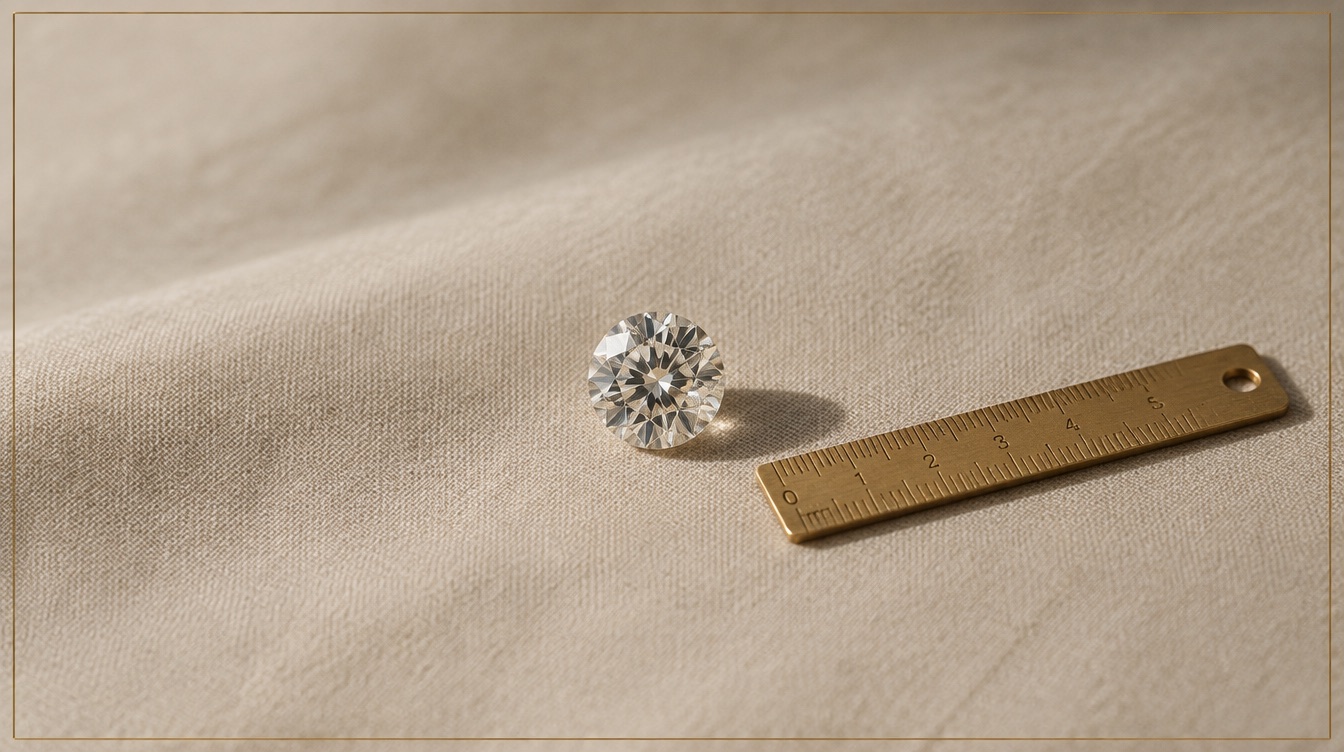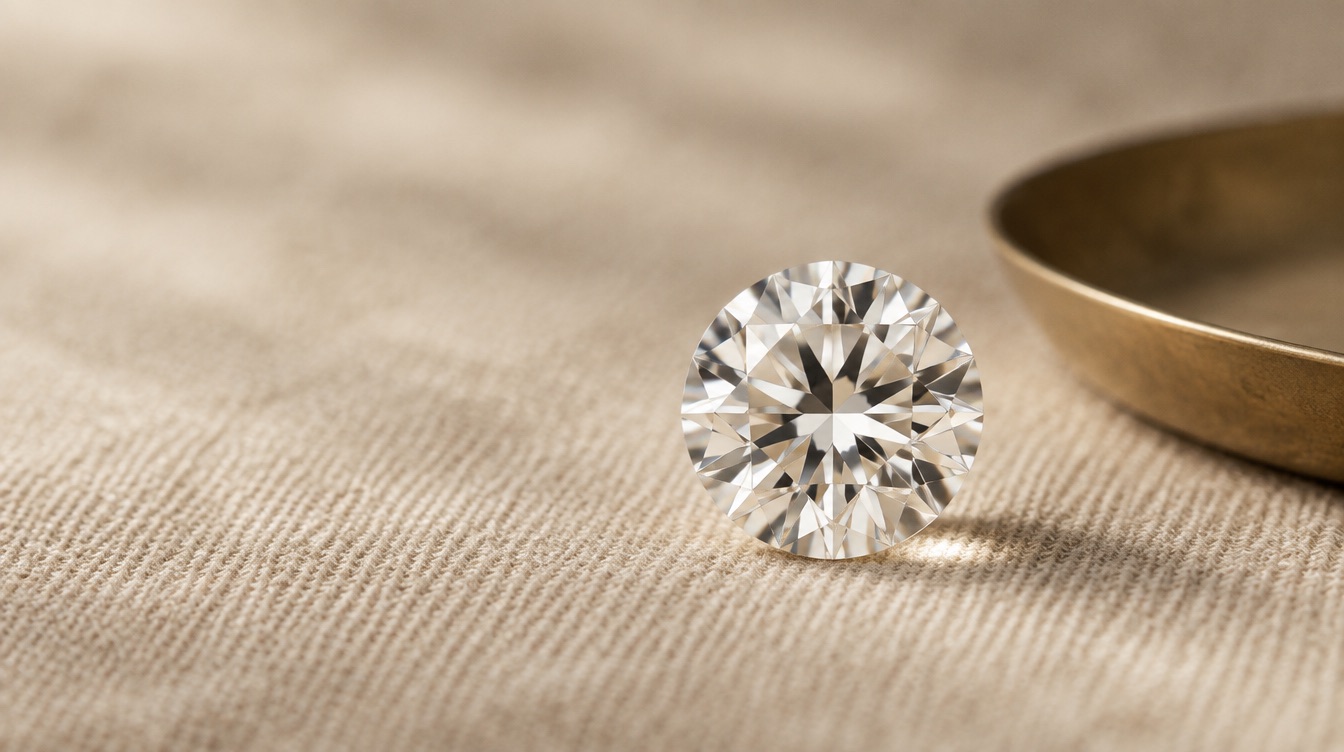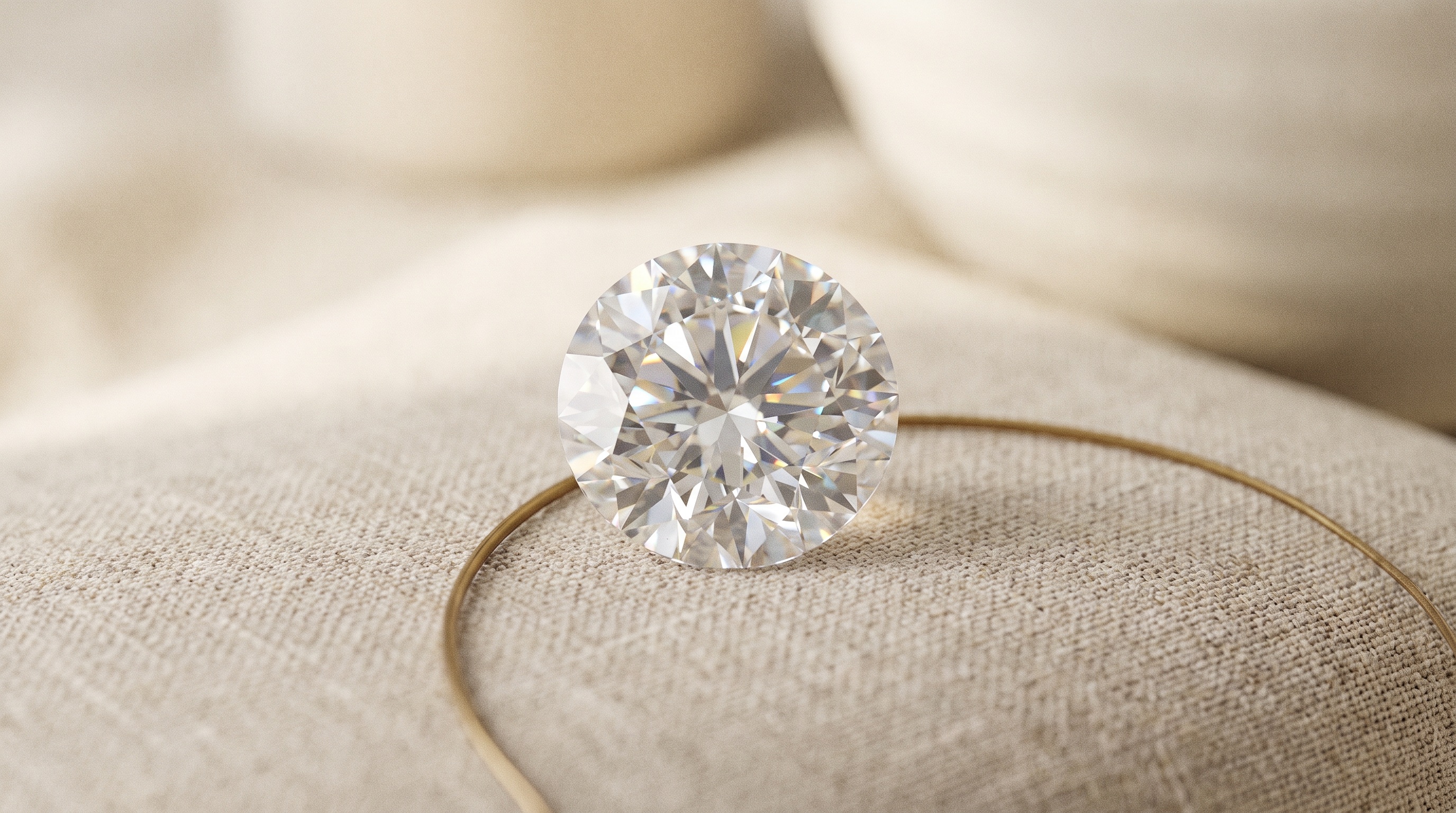
A modified brilliant cut is any diamond that uses brilliant-style faceting — small, triangular and kite-shaped facets radiating outward from the center to maximize light return — in a shape other than a plain round, or with additional facet rows layered onto the standard round-brilliant facet arrangement. GIA uses the term formally on diamond grading reports to classify fancy shapes like cushion, oval, radiant, and pear as brilliant-faceted, distinguishing them from step-cut shapes such as emerald and Asscher.
Despite being a real, standard piece of grading-report terminology, "modified brilliant cut" is one of the more misunderstood phrases in the trade — buyers often assume it describes a single specific shape, a defect, or a downgrade from a "true" round brilliant, when it actually describes an entire structural category that covers most of the fancy shapes sold in fine jewelry today. This guide covers what the term means on a certificate, how brilliant faceting differs mechanically from step-cut faceting, which common shapes fall into each category, why the distinction affects light performance and how a buyer should evaluate cut quality, how it appears on a grading report, and what wholesale buyers should ask when sourcing modified brilliant diamonds.
What "Modified Brilliant Cut" Actually Means
On a GIA diamond grading report, the "Shape and Cutting Style" field doesn't just list an outline like "oval" or "cushion" — it pairs the outline with a faceting classification. A round diamond cut with the standard 57-58 facet brilliant arrangement is reported simply as "Round Brilliant Cut." A fancy-shaped diamond cut with that same brilliant-style faceting logic — kite and triangular facets radiating from the center rather than long parallel rows — is reported as, for example, "Cushion Modified Brilliant Cut" or "Oval Modified Brilliant Cut." The word "modified" signals that the facet arrangement has been adapted from the standard round-brilliant template to suit a non-round outline, or that extra facet rows have been added beyond the standard 57-58 count to better manage light return and color across a larger or differently proportioned crown and pavilion.
This is a structural classification, not a subjective quality judgment. "Modified" does not mean "altered from an ideal" or "compromised" — it is simply the accurate technical description of how the facets are arranged relative to the round-brilliant baseline every brilliant-style cut is measured against. A well-cut cushion modified brilliant can display excellent light performance; the "modified" label only describes its facet structure, not how well that structure was executed.
Brilliant Faceting vs. Step-Cut Faceting: The Mechanical Difference
Every diamond facet pattern falls into one of two structural families, and understanding the mechanical difference between them is the foundation for understanding what "modified brilliant" actually classifies.
Brilliant faceting uses small, triangular and kite-shaped facets arranged to radiate outward from the culet (the point at the base of the pavilion) toward the girdle, then again from the girdle up through the crown to the table. This arrangement — the same logic behind the standard round brilliant's 57-58 facets — breaks light into many small points of reflection, producing high scintillation (the flashing, sparkling effect as the stone or viewer moves) and strong overall brilliance. A modified brilliant applies this same radiating, kite-and-triangle facet logic to a non-round outline, or adds extra facet rows to manage light return across a larger table or unconventional proportions.
Step-cut faceting uses long, flat, rectangular or trapezoidal facets arranged in parallel, concentric rows — "steps" — running around the crown and pavilion, typically beneath a large, open, rectangular or square table. This produces fewer, larger, more architectural flashes of light rather than pinpoint sparkle, often described as a "hall of mirrors" effect. Emerald and Asscher cuts are the two most familiar step-cut shapes; readers can see the full mechanics of that facet family in our step cut diamond guide.
The two facet families are not interchangeable finishing styles applied to the same underlying structure — they are fundamentally different approaches to how light enters, bounces, and exits the stone, and that difference is exactly what the "modified brilliant" vs. "step cut" classification on a grading report is communicating.
| Characteristic | Modified Brilliant Cut | Step Cut |
|---|---|---|
| Facet shape | Triangular and kite-shaped, radiating from the center | Long, flat rectangles or trapezoids in parallel rows |
| Facet count | Typically higher — 57 facets or more, sometimes with added rows | Typically lower — fewer, larger facets |
| Light performance | High scintillation; many small, quick flashes of light | Fewer, larger, calmer flashes ("hall of mirrors") |
| Inclusion visibility | Lower — facet pattern helps mask minor inclusions | Higher — the open table gives a clearer view into the stone |
| GIA report language | "[Shape] Modified Brilliant Cut," e.g., Cushion Modified Brilliant | "[Shape] Cut," e.g., Emerald Cut, Asscher Cut |
| Example shapes | Cushion, radiant, princess, oval, pear, marquise, heart | Emerald, Asscher, baguette, trapezoid |
How a Modified Brilliant Differs From a Standard Round Brilliant
A standard round brilliant follows a highly standardized facet count and arrangement — 57 facets (58 with a culet), applied to a perfectly round outline, refined by decades of proportion research into the crown-angle-to-pavilion-angle relationship that produces maximum light return. Readers can see that full anatomy in our round brilliant diamond cut guide.
A modified brilliant takes that same underlying logic — small facets radiating from the center rather than running in parallel rows — and adapts it to a different outline, or adds facets beyond the standard round count. Two adaptations account for most of what gets labeled "modified":
- Outline adaptation. Cutting a brilliant-style facet pattern onto an oval, cushion, pear, or marquise outline requires reworking the facet geometry to keep light return strong across a non-circular shape — the radiating kite-and-triangle logic is preserved, but the specific facet count and arrangement is adjusted for the outline.
- Added facet rows. Some brilliant-style cuts intentionally add extra rows of facets beyond the standard 57-58 — commonly seen in cuts developed specifically to intensify color saturation and depth of fire, particularly in fancy color diamonds, where more facet rows increase the amount of internal light bouncing that reinforces a stone's visible hue.
Either adaptation earns the "modified" designation on a grading report because the resulting facet arrangement diverges from the single, tightly standardized round-brilliant template — even though the underlying optical principle (small facets radiating from the center) is identical.
Common Shapes Classified as Modified Brilliant vs. Step Cut vs. Mixed Cut
Most fancy shapes sold in fine jewelry fall cleanly into one of the two facet families described above, though a small number of shapes deliberately combine both — a "mixed cut," most often a brilliant-faceted crown paired with a step-faceted pavilion, or vice versa. The table below is a classification reference, not a shape-by-shape guide — readers looking for a deep dive on any individual shape's proportions, sourcing, or design use should see that shape's own dedicated guide, several of which are linked throughout this post.
| Shape | Classification on a GIA Report | Facet Family |
|---|---|---|
| Round | Round Brilliant Cut | Brilliant (the baseline standard) |
| Cushion | Cushion Modified Brilliant Cut | Modified brilliant |
| Radiant | Radiant Cut / Radiant Modified Brilliant Cut | Modified brilliant |
| Princess | Princess Modified Brilliant Cut | Modified brilliant |
| Oval | Oval Modified Brilliant Cut | Modified brilliant |
| Pear | Pear Modified Brilliant Cut | Modified brilliant |
| Marquise | Marquise Modified Brilliant Cut | Modified brilliant |
| Heart | Heart Modified Brilliant Cut | Modified brilliant |
| Emerald | Emerald Cut | Step cut |
| Asscher | Asscher Cut / Square Emerald Cut | Step cut |
| Baguette / Trapezoid | Baguette Cut / Trapezoid Cut | Step cut |
| Some cushion and radiant variants | Cushion Cut (with step facets), Radiant Cut | Mixed cut (brilliant crown, step-influenced pavilion, or vice versa) |
A few things worth noting about this table. First, most of the fancy shapes buyers associate with modern engagement rings and center-stone jewelry — cushion, radiant, princess, oval, pear, marquise, heart — are brilliant-faceted at their core, which is why they behave optically much more like a round brilliant than like an emerald cut, despite their non-round outlines. Second, "radiant" occupies an interesting position: it was specifically developed to combine a rectangular, cut-cornered outline (borrowed visually from step cuts like emerald) with full brilliant-style faceting, which is why it's sometimes informally described as a "cut-cornered rectangular brilliant." Third, a handful of cuts genuinely mix both facet families in the same stone, which is where the "mixed cut" designation comes from — a construction detail worth confirming on a certificate rather than assuming from the outline alone.
Why This Classification Matters for Light Performance
The brilliant vs. step-cut vs. mixed-cut classification isn't just certificate trivia — it directly predicts how a stone will behave under light, and that has practical consequences for how a buyer should evaluate cut quality and set expectations with a client.
A modified brilliant, because it inherits the radiating kite-and-triangle facet logic, generally shows higher scintillation and more forgiving inclusion visibility than a step cut of comparable clarity — the facet pattern breaks up the view into the stone, which helps disguise minor inclusions and reduces how much a faint color tint reads through. This is the same underlying reason round brilliants tolerate lower clarity and color grades more gracefully than step cuts do. A step cut, by contrast, offers a large, clear window straight into the stone through its open table, which produces a cleaner, calmer light performance but demands higher clarity and color grades to avoid visible flaws or tint.
For a buyer, this means the facet-family classification should inform clarity and color expectations before carat weight and price ever enter the conversation. A modified brilliant fancy shape at SI1 clarity can look perfectly clean face-up in a way an emerald or Asscher cut at the same clarity grade often will not, simply because the facet structures handle light — and therefore handle inclusions — differently. Buyers who apply step-cut clarity standards to a modified brilliant purchase (or vice versa) routinely end up either overpaying for clarity that isn't visually necessary or underbuying clarity that turns out to matter.
How Modified Brilliant Appears on a Certificate
On a GIA report, the classification shows up primarily in the "Shape and Cutting Style" field near the top of the document, typically phrased as "[Shape] Modified Brilliant Cut" — for example, "Cushion Modified Brilliant Cut" or "Pear Modified Brilliant Cut." IGI and GCAL reports use comparable language, sometimes phrased slightly differently (a shape name followed by "brilliant cut" or "mixed cut") but communicating the same underlying facet-family information.
One important report-reading detail carries over directly from step cuts: GIA's numeric Excellent-to-Poor cut grade scale is built specifically around round brilliant proportions and does not extend to fancy shapes, including modified brilliants. A cushion modified brilliant or oval modified brilliant report will show detailed proportions — table percentage, depth percentage, girdle thickness, polish, and symmetry — but will not carry a single combined cut grade the way a round brilliant report does. Buyers evaluating a modified brilliant's cut quality need to read those individual proportion, polish, and symmetry fields directly rather than looking for one summary grade; our diamond cut grades guide and diamond anatomy guide cover how to interpret those fields in more depth. This is a genuine point of confusion for buyers used to shopping round brilliants, where the single Excellent/Very Good/Good/Fair/Poor grade does most of the evaluation work for them.
Cut Quality Grading for Modified Brilliants: What to Check Instead of a Single Grade
Without a standardized numeric cut grade to lean on, evaluating a modified brilliant's cut quality comes down to a handful of shape-appropriate checks:
- Symmetry and polish grades — both are still reported individually on the Excellent-to-Poor scale for fancy shapes, and are a reasonable proxy for overall cutting precision even without a combined cut grade.
- Table and depth percentage — reported the same way as on a round brilliant, and still meaningfully predictive of light return, though the "ideal" ranges differ by shape rather than following the round brilliant's ranges.
- Length-to-width ratio — matters most for elongated modified brilliants (oval, pear, marquise), where a ratio outside the commonly preferred range for that shape can produce a visibly stubby or overly narrow outline regardless of how well individual facets are cut.
- Bow-tie visibility — a dark, bow-tie-shaped shadow that can appear across the center of elongated modified brilliants (oval, marquise, pear) when facets don't reflect light evenly; it's a shape-specific phenomenon that a proportions report alone won't fully capture, and is best confirmed by photo or in-person inspection.
None of these checks are unique to modified brilliants specifically — they're the standard fancy-shape evaluation toolkit — but they matter more here than for step cuts precisely because a modified brilliant's forgiving facet pattern can mask genuine proportion problems that would be more obvious on a step cut's open table, making a careful read of the underlying proportion data more important, not less.
Common Buyer Misconceptions About "Modified Brilliant"
A few misunderstandings come up repeatedly when buyers encounter this term for the first time.
"Modified" does not mean "lower quality" or "not a real brilliant cut." It's a structural classification describing facet family and shape adaptation, not a quality judgment — a well-cut modified brilliant performs as well, within its shape's own proportion standards, as a well-cut round brilliant performs within its own.
Not every fancy shape is a modified brilliant. Emerald, Asscher, baguette, and trapezoid are step cuts, not modified brilliants — confusing the two categories leads buyers to misjudge how much clarity and color actually matter for a given stone, since the two facet families have genuinely different tolerance for inclusions and tint.
A rectangular or square outline doesn't automatically mean step cut. Radiant and princess cuts are both brilliant-faceted despite their rectangular and square outlines respectively — outline alone is not a reliable way to guess facet family, and the certificate's "Shape and Cutting Style" field is the only way to confirm it with certainty.
Modified brilliant is a category, not a single shape. Buyers occasionally search for "modified brilliant cut" expecting to find one specific product, when the term actually spans essentially every commercially popular brilliant-faceted fancy shape — the classification is a useful way to understand light-performance and grading behavior across that whole group at once, rather than describing one shape in particular.
Modified Brilliant Cuts in Fancy Color Diamonds
The added-facet-row variant of modified brilliant cutting has a particular, well-established role in fancy color diamonds. Because more facet rows increase the amount of internal light reflection contributing to a stone's visible hue, certain modified brilliant cuts are specifically favored for showcasing saturated fancy colors — a well-cut modified brilliant in yellow, pink, blue, or green can display noticeably deeper, more even color saturation than the same rough cut into a plainer facet arrangement. This is one of the more practical, non-cosmetic reasons the "modified" facet-count adaptation exists at all: it's not purely an aesthetic choice, but a deliberate optical strategy for intensifying body color in colored diamond material. Buyers and designers sourcing fancy color center stones should factor facet structure into the conversation alongside the standard color-grade and saturation questions, since two stones of the same color grade can present visibly different depth of hue depending on facet count and arrangement.
Sourcing Modified Brilliant Diamonds Wholesale
For a wholesale buyer, the practical value of understanding the modified brilliant classification is being able to ask sharper sourcing questions rather than sourcing purely by shape name. Worth confirming with any supplier: whether the specific stone in question is a true modified brilliant or a mixed cut (some cushion and radiant variants blend both facet families, which affects clarity and color recommendations); what the polish and symmetry grades look like independent of any single summary cut grade; and, for elongated shapes, what length-to-width ratio range is available, since that ratio drives visible outline more than almost any other single spec.
Guru Diam carries modified brilliant fancy shapes — including cushion, radiant, oval, pear, marquise, and heart — alongside step cuts, round brilliant, and antique cuts, across both CVD lab-grown and natural material, with IGI, GIA, and GCAL certification available on loose stones at 0.30ct and above. Buyers evaluating a modified brilliant purchase against genuine full grading documentation, rather than a shape name and a spec sheet alone, are far better positioned to judge light performance and true cut quality before committing. Loose certified inventory across shapes is browsable in the certified diamonds category, and buyers working with fancy color modified brilliants specifically can review current stock in the fancy color loose diamonds category. Jewelers designing a piece around a matched pair of modified brilliant side stones can also review the matching pairs category.
Trade accounts can review terms and current inventory at the wholesale hub or apply directly through trade partner. Designers building a full custom piece around a modified brilliant center stone can work through custom jewelry. For a broader view of how modified brilliants fit into the full cut landscape, see our types of diamond cuts guide and diamond cut chart guide.
Frequently Asked Questions
What does "modified brilliant cut" mean on a diamond certificate?
It means the diamond uses brilliant-style faceting — small triangular and kite-shaped facets radiating from the center — adapted to a fancy shape other than round, or with extra facet rows added beyond the standard round-brilliant count. GIA reports it in the "Shape and Cutting Style" field, phrased as "[Shape] Modified Brilliant Cut."
Is a modified brilliant cut lower quality than a round brilliant?
No. "Modified" describes facet structure and shape adaptation, not a quality downgrade. A well-cut modified brilliant, evaluated against its own shape-appropriate proportion standards, can display excellent light performance just as a well-cut round brilliant can.
What shapes are considered modified brilliant cuts?
Cushion, radiant, princess, oval, pear, marquise, and heart are the fancy shapes most commonly classified as modified brilliant on a GIA report, since all use brilliant-style faceting rather than parallel step-cut facets.
What is the difference between a modified brilliant cut and a step cut?
A modified brilliant uses small facets radiating from the center of the stone, producing high scintillation and more forgiving inclusion visibility. A step cut uses long, flat, parallel facets in concentric rows, producing fewer, larger flashes of light and a clearer view into the stone that makes inclusions and color tint more visible.
Does a modified brilliant cut have a GIA cut grade?
Not a single combined grade the way a round brilliant does. GIA's numeric Excellent-to-Poor cut grade scale applies only to round brilliants; a modified brilliant's report shows detailed proportions, polish, and symmetry individually instead, which buyers should read directly rather than looking for one summary grade.
Why does the modified brilliant classification matter when buying a diamond?
It predicts how forgiving a stone will be of clarity and color imperfections and how it will behave under light. Modified brilliants tolerate lower clarity grades more gracefully than step cuts do, which means the right clarity and color target for a purchase depends partly on which facet family the shape belongs to, not just on carat weight and budget.