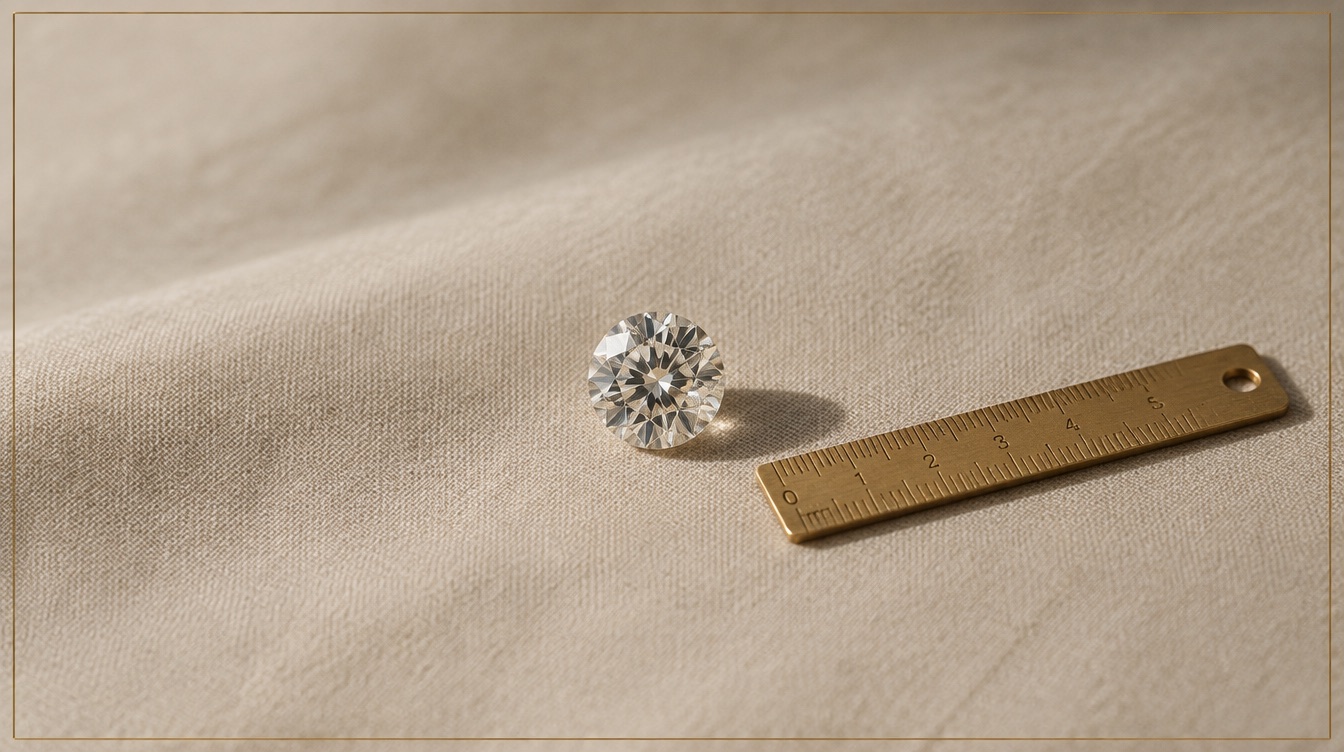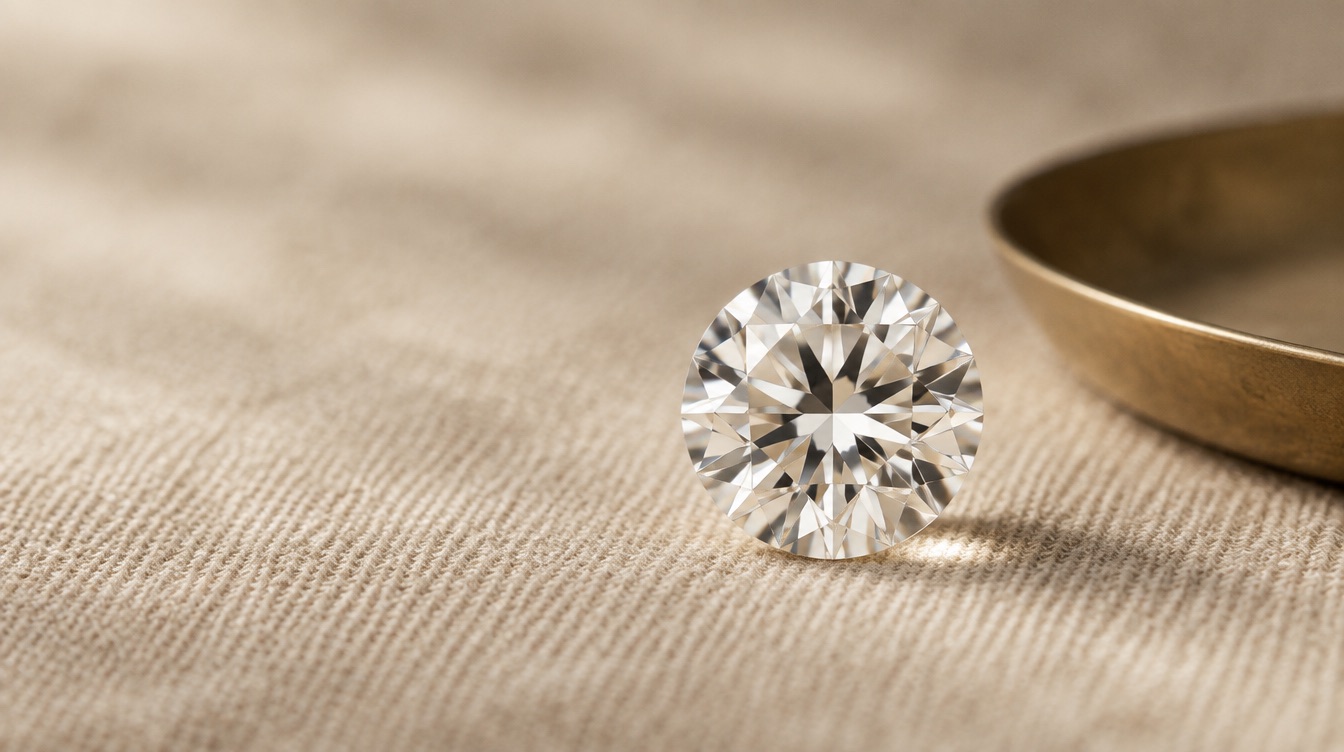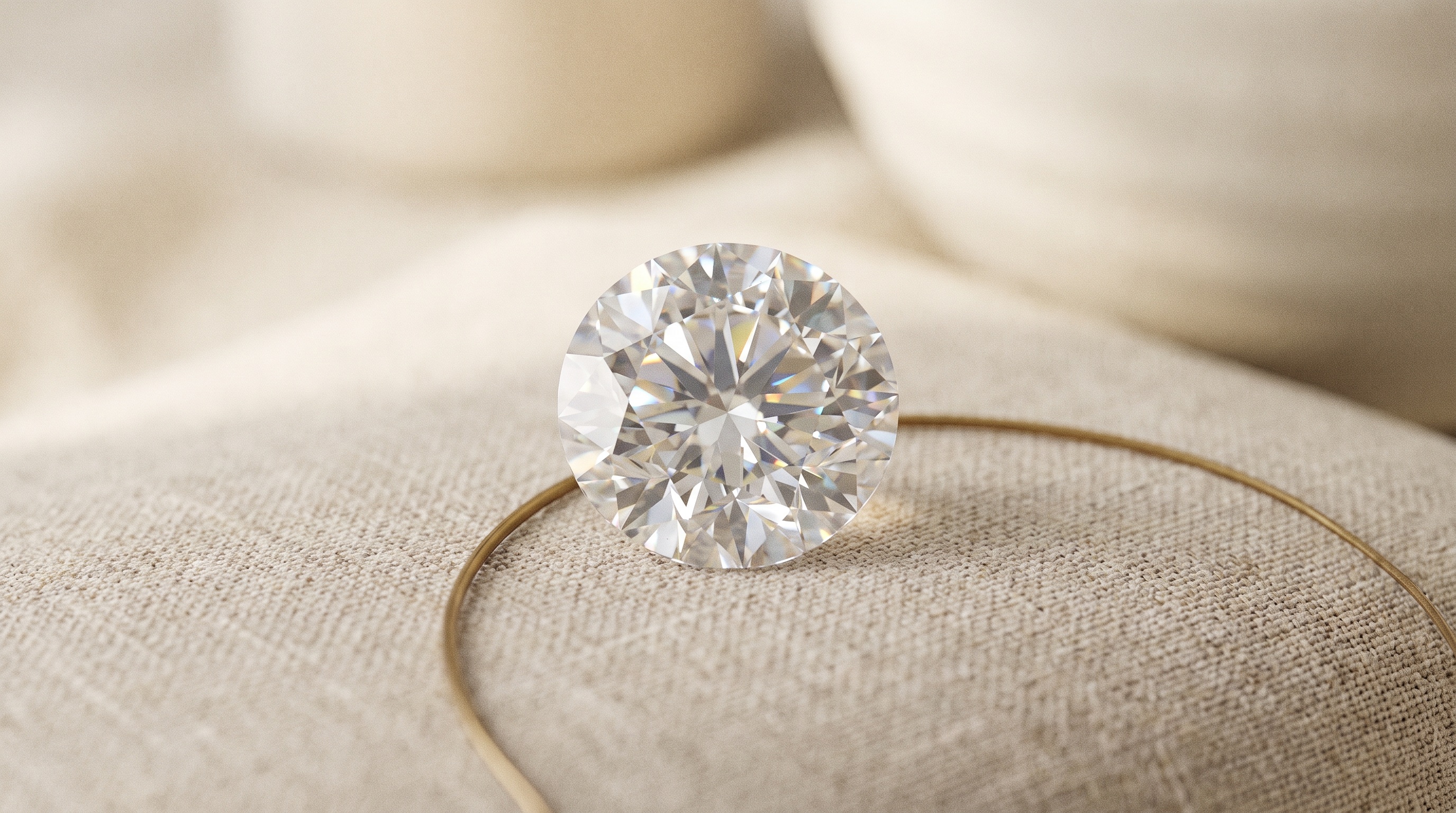
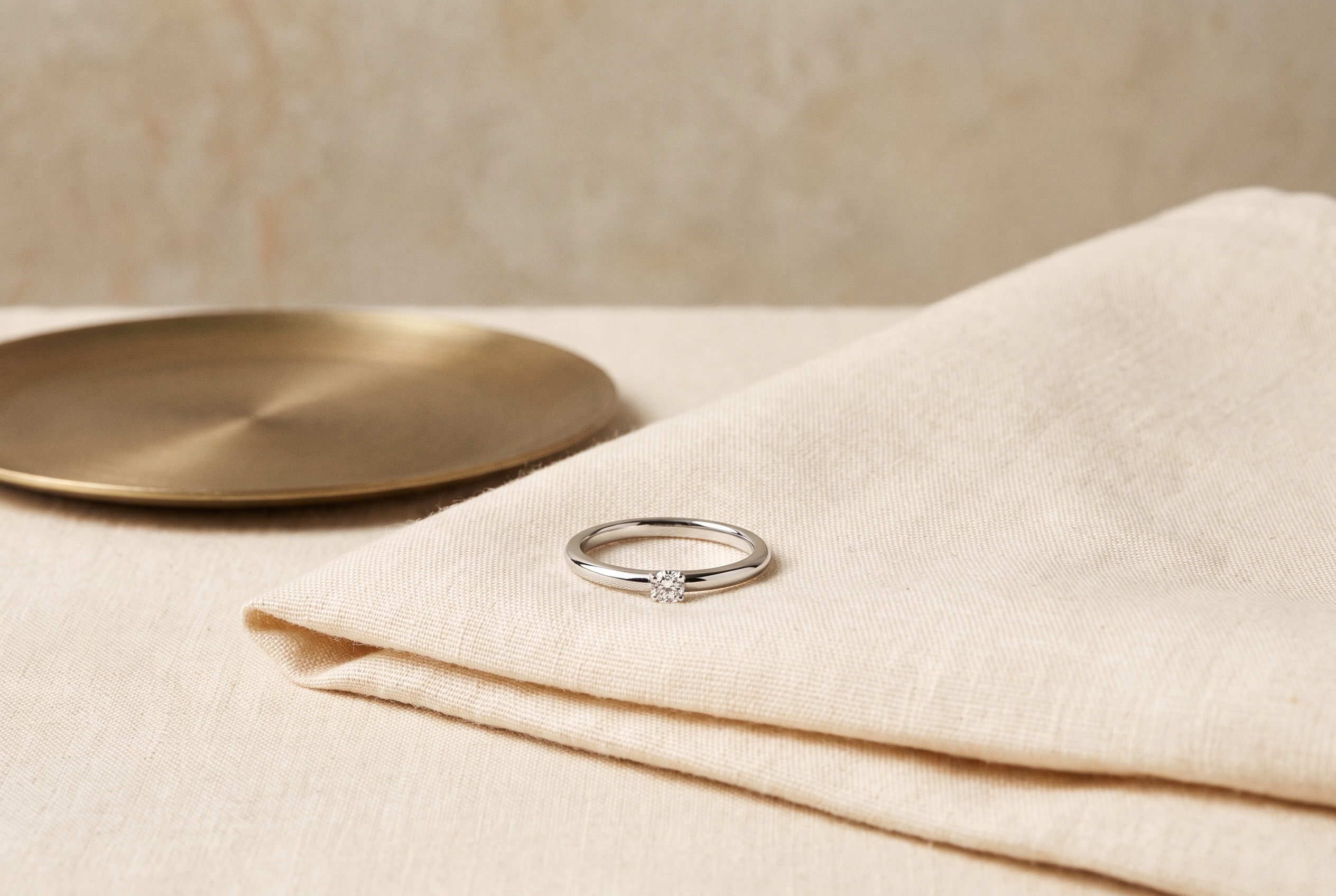
A minimalist diamond ring pairs a simple, low-detail band with a single stone or a small, restrained cluster, deliberately stripping away secondary detailing — engraving, halos, side stones, ornate galleries — in favor of clean lines and negative space. For jewelers and retailers, minimalist styling is less a single fixed design than a design philosophy that shows up across solitaires, thin bands, and simple stacking rings, and it's one of the more durable, low-churn categories to keep in stock because it doesn't chase a single trend cycle the way more ornate styles can.
This guide covers what defines minimalist diamond ring design, the setting and metal choices that support the look, sourcing considerations for stones that suit a minimalist mounting, and how to build or expand a minimalist line for retail.
What Defines a Minimalist Diamond Ring
Minimalist design in fine jewelry generally means: a thin or simply profiled band, a single stone or small restrained grouping rather than a cluster or halo, minimal or no engraving, and a low or moderate setting height that keeps the piece close to the finger. The style prioritizes proportion and clean geometry over embellishment — the stone and the band's line do the work, without additional decorative elements competing for attention. This makes minimalist rings a distinct design category from vintage-inspired, halo, or cluster styles, even when the underlying stone and carat weight are identical.
Why Minimalist Rings Are a Durable Retail Category
Unlike more ornate or trend-specific styles, minimalist design doesn't rely on a particular decorative motif that can date quickly. A clean solitaire or thin band reads as current across multiple years of retail cycles, which makes minimalist rings a lower-risk inventory commitment than a heavily trend-driven design. This durability is part of why the style has remained a consistent seller across engagement rings, everyday wear pieces, and stacking bands rather than functioning as a single passing trend — a useful characteristic for a retailer balancing trend-forward pieces against dependable core inventory.
Common Minimalist Setting Styles
Several setting styles support minimalist design particularly well:
Solitaire
A single stone held by simple prongs or a bezel, with no side stones or halo — the most direct expression of minimalist design, letting the stone and band speak entirely for themselves.
Bezel Setting
A metal rim encircling the stone's girdle produces an especially clean, architectural line and offers strong protection for the stone — see GD's bezel setting guide for how this setting style works in more detail. Bezel settings are a particularly popular choice within minimalist design specifically because the setting itself contributes to the clean-line aesthetic rather than just holding the stone.
Low-Profile Mountings
Reducing prong or bezel height brings the stone closer to the finger, reinforcing the pared-back look and improving everyday-wear durability. See GD's low-profile engagement ring guide for the durability and comfort tradeoffs specific to setting height.
Thin or Tapered Bands
A narrow band, sometimes tapering slightly toward the stone, keeps visual weight low and reinforces the overall restrained silhouette that defines the category.
Metal Choices for Minimalist Rings
Minimalist design pairs well with a range of metals, though the choice affects the overall visual weight of the piece:
- White gold or platinum — the most common choice, since a cool-toned metal recedes visually and lets the stone read as the clear focal point.
- Yellow gold — increasingly popular within minimalist design specifically, where a simple yellow gold band paired with a single stone reads as warm and modern rather than ornate, provided the design stays otherwise unadorned.
- Rose gold — similar logic to yellow gold; see GD's rose gold diamond ring guide for how rose gold pairs with different stone and design choices.
Stone Sourcing Considerations for Minimalist Design
Because a minimalist setting exposes the stone with less surrounding distraction than a halo or cluster design, cut quality and clarity in the eye-clean range matter more here than in a design where side stones or detailing draw some visual attention away from the center stone. A stone with strong light performance is particularly well suited to minimalist styling, since there's nothing else in the design competing for the eye — any flatness or dullness in the stone becomes more noticeable, not less, in a pared-back setting. Buyers building a minimalist line should prioritize proportion and light performance over marginal clarity upgrades that wouldn't be visible either way.
Shape Choices That Suit Minimalist Design
While any shape can be set minimally, certain shapes lend themselves particularly well to the aesthetic:
- Round brilliant — the classic, most versatile choice for a clean solitaire.
- Oval and pear — elongated shapes that read as modern and understated in a simple prong or bezel setting.
- Emerald and asscher (step cuts) — the geometric, architectural facet pattern of step cuts pairs naturally with minimalist design's overall clean-line sensibility.
- Marquise — an elongated, pointed shape that reads as distinctly modern when set simply, without the more traditional or vintage association it can carry in an ornate setting.
Minimalist vs. Traditional Design: A Comparison
| Element | Minimalist Design | Traditional / Ornate Design |
|---|---|---|
| Band detailing | Plain or minimal, no engraving | Milgrain, engraving, filigree common |
| Side stones / halo | Rare or absent | Common, often a defining feature |
| Setting height | Low to moderate | Often higher for maximum stone prominence |
| Trend sensitivity | Low — reads as current across years | Higher — some styles date more visibly |
| Stone quality emphasis | Cut and light performance prioritized | Overall carat and halo effect often prioritized |
Stacking Rings and Minimalist Design
Minimalist styling underpins much of the stacking ring category, where several thin, simply designed bands are worn together rather than a single statement piece carrying all the visual weight. Retailers building a stacking program should think about how individual pieces work both alone and combined — a minimalist band designed only to be worn solo may sit and read differently once stacked against two or three others, so testing combinations (or at least photographing them together) helps set accurate customer expectations before launch.
Custom Minimalist Ring Design
Because minimalist design relies so heavily on precise proportion — band width, setting height, and how cleanly a bezel or prong line reads — custom work in this category benefits particularly from CAD review before fabrication, since small proportion changes are more visually significant in a pared-back design than they'd be in an ornate one with more visual elements to absorb minor variation. A retailer offering custom minimalist pieces should build in a proportion-review step with the customer before finalizing production, since "simple" designs leave far less room to correct an off proportion after the fact than a more detailed design would.
Pricing and Margin Considerations
Minimalist rings often carry a lower total metal and labor cost than more detailed designs, since there's less material and bench time involved in a simple band and setting compared to an ornate mounting with engraving, a halo, or multiple side stones. This can make minimalist pieces an attractive margin category at a lower price point, provided the center stone's quality is strong enough to justify the design's simplicity — since, as covered above, a minimalist setting puts more visual weight on the stone itself rather than distributing attention across additional design elements.
Building a Minimalist Line for Retail
Retailers building out a minimalist category should think in terms of a small, well-curated core assortment — a handful of setting styles (solitaire, bezel, low-profile) across a couple of metal options — rather than a wide catalog of minor variations, since the category's appeal is precision and restraint rather than breadth of choice. Pairing a tight core assortment with strong stone quality tends to perform better in this category than a large catalog of lower-quality stones set simply, since the whole appeal of minimalist design rests on what's actually visible doing its job well.
Why Minimalist Design Became a Sustained Fine Jewelry Trend
Minimalist jewelry design's rise tracks broader shifts in how a meaningful share of buyers approach everyday fine jewelry — a preference for pieces that read as versatile and quietly confident across many contexts, rather than a single occasion-specific statement piece. This shift has been reinforced by how minimalist pieces photograph and wear in daily life: a clean solitaire or thin band pairs easily with other jewelry, doesn't compete visually with an outfit or other pieces being worn simultaneously, and holds up well across the kind of everyday wear (typing, washing hands, general activity) that a more delicate or ornate design might not tolerate as gracefully. Retailers should understand this as a genuine shift in buying preference rather than a passing aesthetic trend, since it reflects how customers actually want to wear jewelry day to day, not just how a piece looks in a single photograph.
Minimalist Wedding Bands and Eternity Bands
The minimalist philosophy extends naturally into wedding and eternity bands, where a thin, simply set diamond band — full, three-quarter, or half eternity, or a plain wedding band with no stones at all — pairs cleanly with a minimalist engagement ring or stands well on its own. See GD's eternity band guide for how full, three-quarter, and half eternity options compare as a product category; the same band-type structure applies whether the surrounding design leans minimalist or more traditional. A thin, low-profile eternity band in particular reinforces the minimalist aesthetic when stacked against a simple solitaire, since neither piece introduces competing visual weight.
Common Sourcing Mistakes When Building a Minimalist Line
A few recurring mistakes show up when retailers expand into minimalist design without adjusting their usual sourcing approach. The first is sourcing stones the same way as for a halo or cluster design, where a marginal cut or symmetry issue would be partially disguised by surrounding detail — in a minimalist setting, that same issue becomes the focal point rather than a minor flaw, since nothing else in the design distracts from it. The second is treating "simple" as "cheap to execute" and under-investing in setting craftsmanship — a clean bezel or prong line actually requires more precise fabrication to look intentional than a more forgiving, detail-heavy setting where small irregularities blend into the overall design. The third is building too broad a catalog of minor variations rather than a tight, well-executed core assortment, diluting the category's core appeal of precision and restraint.
Photographing and Marketing Minimalist Pieces
Because minimalist design relies on clean proportion rather than obvious detail, photography needs to work harder to communicate quality that a viewer might otherwise miss in a quick glance. Macro or close-up shots that show the setting's precise line, the stone's light performance, and how the piece sits on the hand tend to perform better for this category than wider lifestyle shots alone, since the details that justify a minimalist piece's price point are exactly the details a wide shot can hide. Retailers marketing a minimalist line should lean into this — showing setting precision and stone quality directly — rather than relying purely on lifestyle imagery the way a more visually dramatic, detail-heavy piece might.
Pairing Minimalist Rings With Other Jewelry
Because minimalist pieces are designed to avoid competing visually with other things being worn, they tend to pair unusually well across a retail customer's broader jewelry collection — a minimalist band doesn't clash with a more statement-driven necklace or earrings the way two competing "hero" pieces might. Retailers can use this as a genuine selling point: a minimalist ring isn't just a standalone design choice, it's also a practical, versatile piece that continues to work as a customer's broader jewelry collection grows and changes over time, which supports repeat purchasing within the same design philosophy rather than a one-time sale.
Minimalist Design for Men's Rings
Minimalist styling has become a particularly natural fit for men's diamond rings, where a single flush-set or bezel-set stone in a simple band reads as understated and wearable in a way that a more traditional, ornate design typically doesn't for this customer segment. See GD's men's diamond ring guide for the broader category context; within that category, minimalist styling in particular has become one of the more requested directions specifically because it avoids looking overtly decorative on a piece intended for daily, low-maintenance wear. Retailers building or expanding a men's ring assortment should consider minimalist design as a distinct, growing sub-category worth its own dedicated inventory rather than a minor variation folded into a general men's ring line.
Repair and Resizing Considerations for Minimalist Settings
Minimalist settings, particularly thin bands and low-profile bezels, sometimes require more careful handling during resizing than a heavier, more traditional band, since there's less metal mass to work with and less margin for error during the resizing process itself. A bench jeweler resizing a thin minimalist band needs to preserve the band's clean proportion and prong or bezel alignment precisely, since any small distortion is more visually obvious in a minimalist design than it would be in a design with more surrounding detail to absorb minor imperfection. Retailers offering minimalist pieces should make sure their resizing and repair partners have specific experience with thin or low-profile settings, and should set accurate customer expectations that some minimalist designs have a narrower resizing range than a heavier traditional band before a piece needs to be re-fabricated rather than simply resized.
Minimalist Rings Across Price Points
One of the category's practical strengths for retailers is that minimalist design scales cleanly across price points without changing its fundamental appeal. A smaller, more modest stone in a clean solitaire setting reads as intentional and complete at an accessible price point, in a way that a smaller stone in a design built around a large halo or cluster (where the design is implicitly compensating for center stone size) sometimes doesn't. This makes minimalist design a useful anchor for an entry-level or mid-range assortment, not just a premium category — provided, as covered earlier, that stone quality and cut proportions remain strong even at a lower price point, since the design offers no additional detail to fall back on if the stone itself underperforms.
Minimalist Design in Non-Engagement Diamond Jewelry
While engagement and bridal pieces are where minimalist design shows up most visibly, the same design philosophy extends naturally into everyday diamond jewelry — a single-stone pendant on a fine chain, small diamond stud earrings, or a slim diamond tennis-style bracelet built with restraint rather than maximum sparkle density. Retailers building a cohesive minimalist assortment across categories, not just rings, give customers a consistent design language to shop across multiple purchase occasions, which can support a stronger overall relationship with a customer than a single strong ring category in isolation. A jeweler positioning around minimalist design as a broader store identity, rather than a single product line, often sees this consistency reflected in repeat visits from customers who've come to associate the store with that specific aesthetic.
Balancing a Minimalist Line Against Trend-Driven Inventory
Because minimalist pieces are lower-risk, lower-churn inventory, they work well as a stabilizing counterweight to more trend-driven pieces that carry higher upside but also higher risk of falling out of favor. A retailer allocating too much of their diamond ring budget to trend-forward styles risks being caught with slow-moving inventory when a trend shifts; leaning too heavily on minimalist design alone risks missing the higher engagement and higher average sale that a well-timed trend piece can generate. Most successful assortments treat minimalist design as a dependable core rather than the entire strategy — a foundation the rest of the catalog builds around, not a replacement for staying current on faster-moving design trends.
Evaluating a Supplier for a Minimalist-Focused Line
Because minimalist design puts more visual pressure on stone quality and setting precision than a more forgiving, detail-heavy design, retailers building this category should evaluate potential stone and mounting suppliers specifically on those two criteria — light performance and cut precision on the stone side, and clean fabrication tolerances on the setting side — rather than relying on the same general supplier evaluation checklist used for a broader, more varied product line. A supplier who performs adequately for detail-heavy pieces, where minor imperfections are visually absorbed by the design, may not meet the bar minimalist design actually requires, since there's nowhere for a small flaw to hide in a pared-back setting.
Sourcing Stones and Mountings for Minimalist Rings Through Guru Diam
Guru Diam supplies certified loose diamonds — lab-grown CVD and natural — across round, fancy, and antique shapes, with the proportion and light-performance data buyers need to select stones well suited to minimalist, low-distraction settings. Custom engagement rings, including minimalist and low-profile designs, are finished in 4-6 days, unbranded by default so jewelers can resell under their own name. IGI, GIA, and GCAL certification are all available depending on the stone.
Browse certified stones through certified diamonds, or build a custom minimalist design through custom jewelry. Set up a trade account through trade partner to review inventory directly, or start at the wholesale hub for a general overview of wholesale sourcing.
Frequently Asked Questions
What makes a diamond ring "minimalist"?
A minimalist diamond ring pairs a simple, low-detail band with a single stone or a small restrained grouping, avoiding engraving, halos, and other decorative elements in favor of clean lines and proportion.
What setting style works best for a minimalist ring?
Solitaire and bezel settings are the most common choices, since both let the stone and the band's clean line carry the design without additional detailing competing for attention. Low-profile mountings reinforce the look further.
Which diamond shapes suit minimalist rings best?
Round brilliant, oval, pear, emerald, asscher, and marquise all work well in minimalist settings. Step cuts (emerald and asscher) and elongated shapes (oval, pear, marquise) tend to read as especially modern in a simple mounting.
Is stone quality more important in a minimalist setting?
Yes, relatively speaking. With no halo or side stones drawing attention elsewhere, the center stone's cut quality and light performance become more visually significant, since there's nothing else in the design to soften a dull or poorly proportioned stone.
Are minimalist rings a good margin category for retailers?
Often, yes. Lower metal and labor costs from a simpler design can support strong margins, provided the center stone's quality is strong enough to carry a design with less surrounding detail.
Do minimalist rings work well for stacking?
Yes — minimalist design's simplicity is a big part of why it underpins most stacking ring programs. Retailers should consider how individual pieces look both alone and combined when designing or curating a stacking assortment.