
Men’s fine jewelry — signet rings, cufflinks, subtle stone-set bands, chains, and small accent pieces — is real demand that most trade catalogs leave thin, and the fix isn’t stocking more of it speculatively. It’s offering the category through custom and made-to-order production, where you can say yes to a specific request without carrying dead stock in men’s sizes and finishes that sit in a case for a year. Bridal converges on a handful of recognizable archetypes, which is exactly why it stocks well. Men’s requests don’t converge the same way — they fragment across finger size, metal color, engraving, and how much (or how little) stone a man wants visible on his hand. That fragmentation is what makes the category hard to stock and easy to build to order, and it shows up on both sides of the counter: retailers under-case it because it won’t sit still on a velvet tray, and most wholesale suppliers skip it because their production systems were built around bridal SKU logic, not one-off engraved pieces.
Why the Men’s Case Sits Mostly Empty
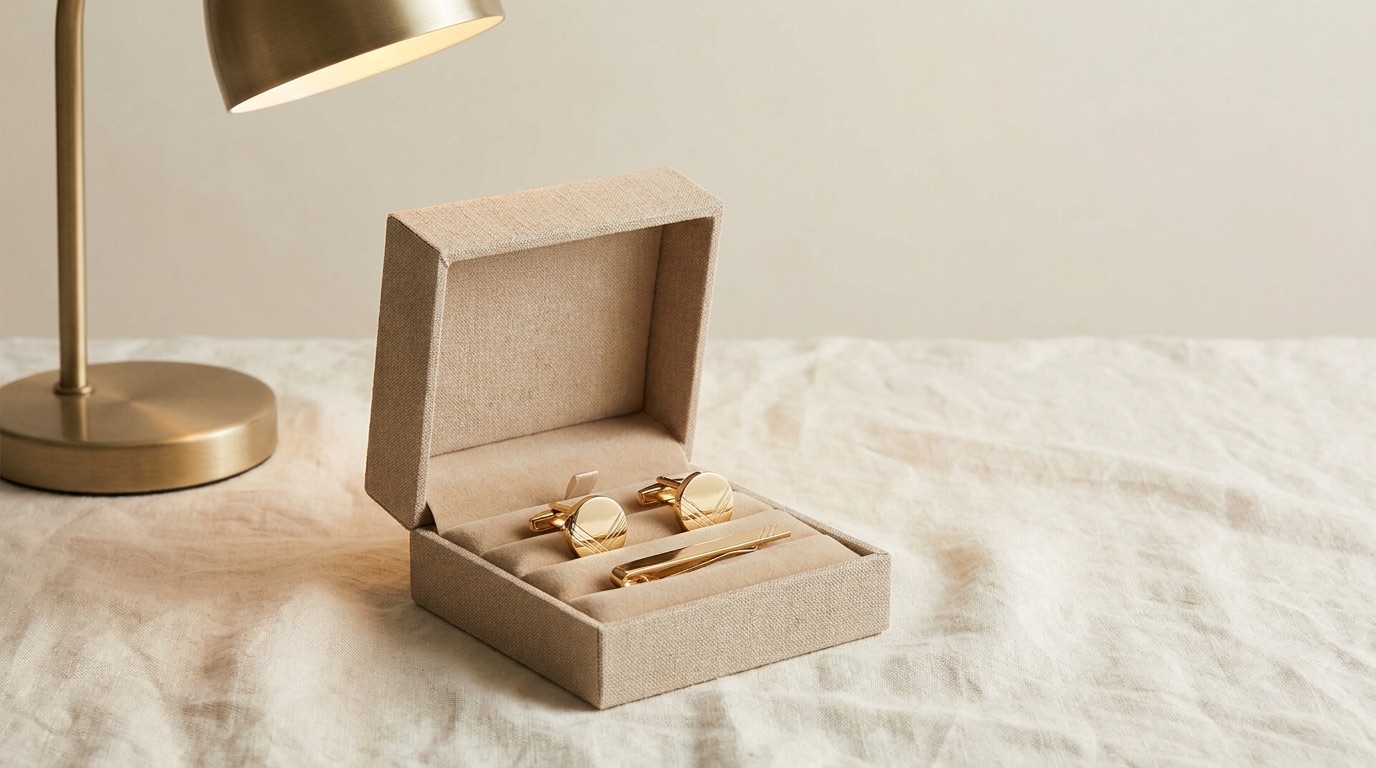
Walk into most independent jewelry stores and the men’s case is a fraction of the size of the bridal case, usually filled with a handful of plain bands, a watch or two, and maybe some cufflinks that haven’t moved in months. That’s not because men don’t buy fine jewelry — it’s because the category doesn’t behave like bridal, and retailers keep trying to stock it the same way.
Bridal inventory works on speculation because demand clusters tightly: a solitaire in white metal, a halo, a three-stone. Customers walking in already have a rough shape in mind, and a well-curated case captures most of that demand with a manageable number of SKUs.
Men’s jewelry doesn’t cluster the same way. A signet ring buyer wants a specific monogram or family-crest-style engraving. A cufflink buyer might want a corporate logo, a single flush-set stone, or nothing decorative at all. A groom looking at a wedding band wants a brushed finish in one metal, while the next customer wants the same silhouette in a different metal with a hammered texture. Every one of those requests is a different SKU if you’re trying to stock it — and most of them will never sell to anyone else if the specific customer doesn’t buy.
That’s the real gap. It’s not that men don’t want fine jewelry. It’s that the category resists the stocking model retailers already know how to run, so most stores give up and default to a token case of safe, generic pieces instead of actually serving the demand — the same three or four styles in every case in town, because those are the only SKUs low-risk enough to sit under glass for a year at a time.
Why Most Wholesale Suppliers Skip the Category Too
Retailers aren’t the only ones avoiding this category — most wholesale suppliers do too, for a related but distinct reason. A typical trade supplier’s production and inventory system is built around bridal logic: a limited set of mountings, a standard ring-size run, a narrow band of metal colors, and stone matching against a fixed set of shapes and grades. That system works because bridal demand clusters. It breaks down the moment a request doesn’t fit the mold — and men’s requests almost never do. A signet ring might need to run up to a size 13 or 14, well past where most bridal mounting runs stop. A cufflink order might need to match a corporate logo instead of any stone shape in the standard catalog. Each of those is a one-off production job, not a catalog pull, and one-off jobs don’t fit a supplier optimized around minimum order quantities and repeatable SKUs.
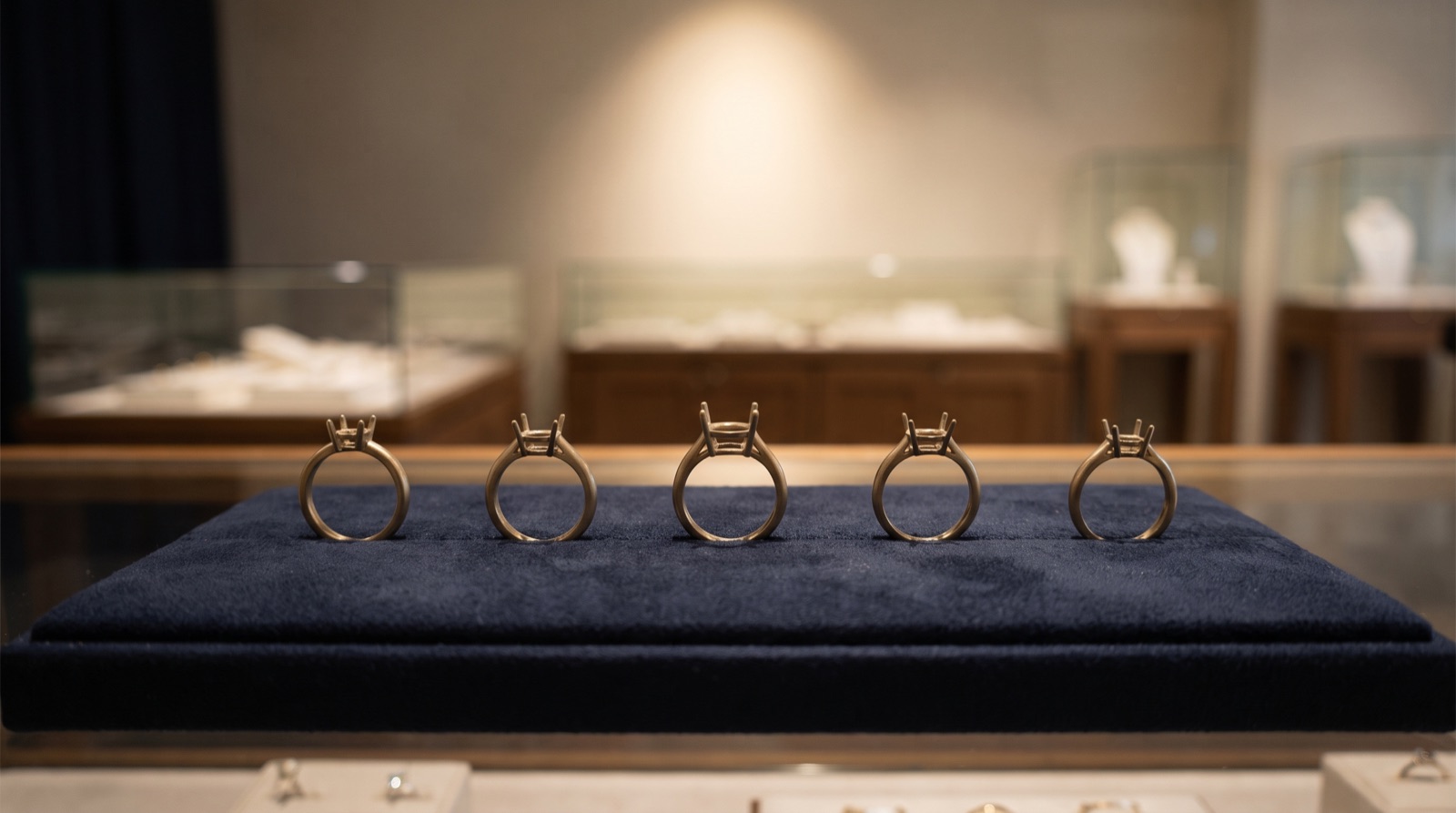
There’s a bench-skill gap underneath that, too. Setting a men’s piece well usually means flush (gypsy) or bezel work — the stone sits recessed or fully rimmed, low-profile enough not to catch on a jacket cuff or a laptop bag strap. That’s a different setting discipline from prong work, which is what most production floors are built around because prong work is what halo and pavé bridal builds demand. A bench team scaled around prong-setting bridal mountings at volume doesn’t automatically carry flush and bezel expertise, and re-staffing for a category that represents a small slice of overall order volume rarely pencils out.
Add in personalization — engraving, monograms, a logo that has to be precise across a dozen matching cufflinks for a corporate order — and most suppliers’ standard price lists simply don’t have a line item for it. The result is what shows up in most trade catalogs: men’s jewelry gets a token handful of plain, unpersonalized SKUs sourced the same way as everything else, and retailers are left to find a local bench or a separate custom vendor any time a customer wants something the catalog can’t cover.
Speculative Stock vs. Made-to-Order for This Category
The comparison is worth laying out plainly, because the instinct for a lot of retailers is still to try to solve this with more inventory.
| Factor | Speculative Case Inventory | Custom / Made-to-Order |
|---|---|---|
| Capital tied up | Sits on the books until it sells, per size/finish/metal combination | None until an order is placed |
| Sizing and finish match | Guessing across ring size, metal color, and texture multiplies SKUs fast | Built to the buyer’s exact spec every time |
| Personalization (engraving, monograms, logos) | Not stockable at all — personalization defeats speculative inventory by definition | The default mode of the category |
| Sell-through on a miss | Slow-moving or dead stock, often marked down | Not applicable — nothing is built until it’s sold |
| Margin structure | Standard keystone on goods you already own | Priced off landed cost plus design and consultation labor, typically higher |
| Return risk | Real, if the piece doesn’t fit or match expectations | Minimal — the buyer approved the CAD before production started |
| Supplier fit | Requires a supplier willing to commit to stocked SKUs and minimum order quantities across every size and finish combination | No minimum order — a single engraved piece is a normal order, not an exception |
The made-to-order column isn’t just lower-risk. It’s the only column that can actually carry engraving, monogramming, and metal-and-finish choices — which is most of what men are asking for in this category in the first place. It’s also the only column a supplier can realistically offer without restructuring their entire production model around a category that, on its own, doesn’t generate bridal-scale order volume.
What Men Actually Ask For
If you’ve fielded custom requests in this category before, the pattern is fairly consistent. It’s a narrower list than bridal, but it repeats:
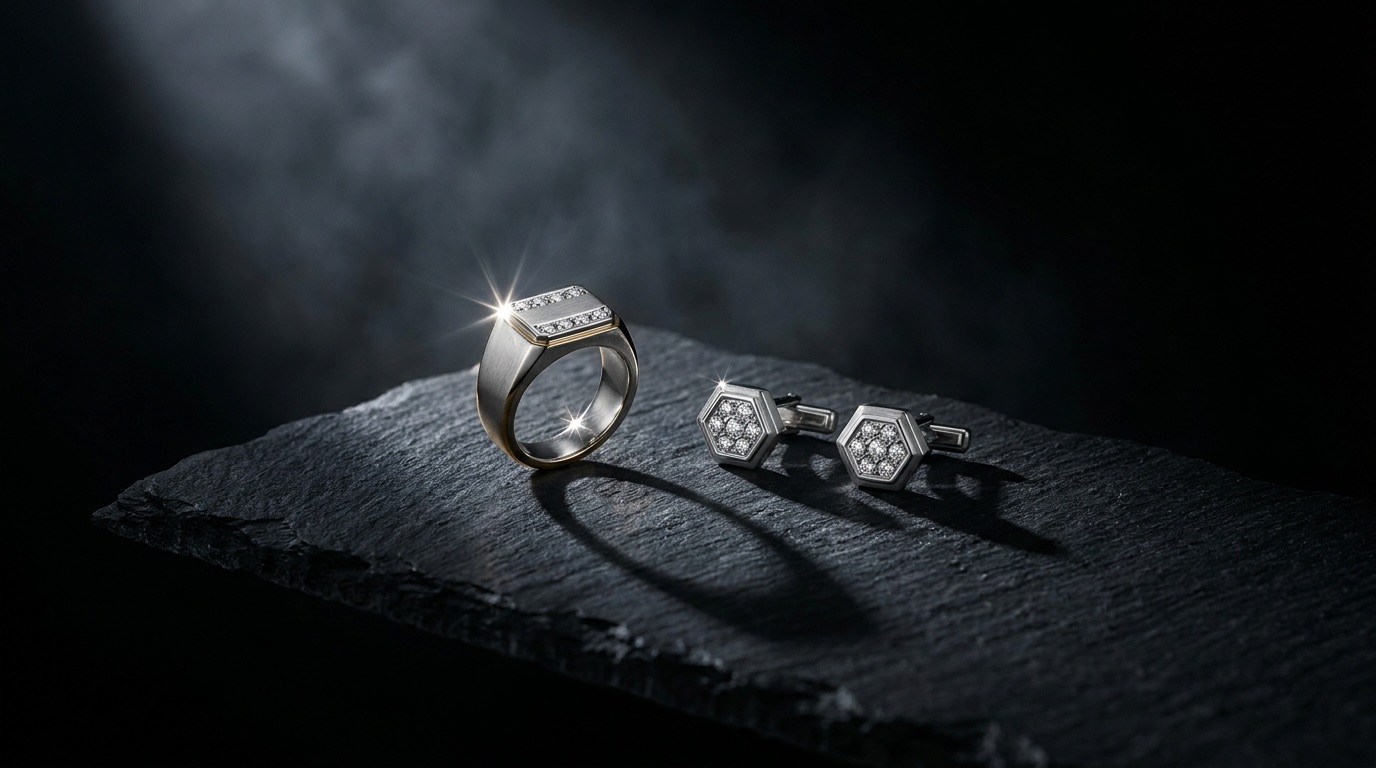
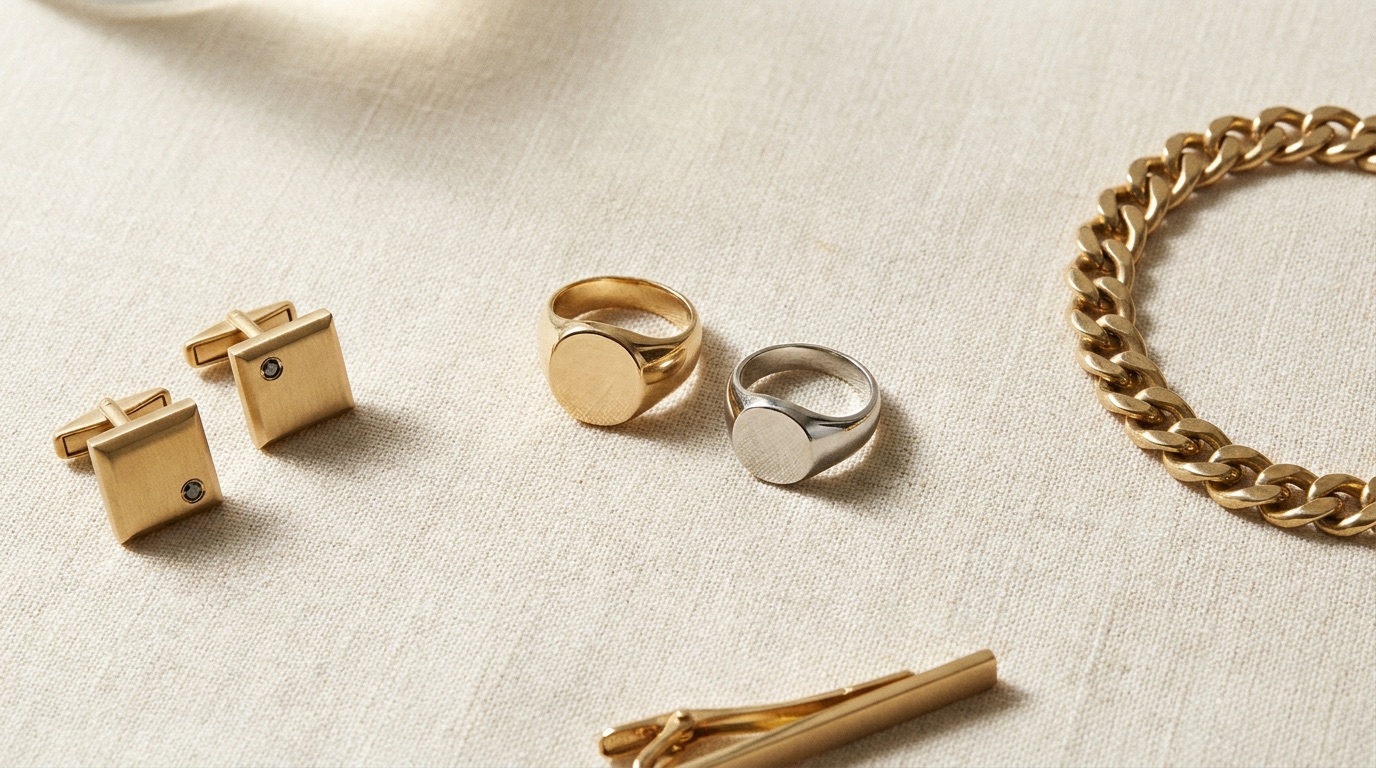
- Signet-style rings with a flat or slightly domed top for monogram, initials, or a family-crest-style engraving
- Cufflinks in restrained geometric shapes, sometimes with a single flush-set or bezel-set stone rather than a visible prong setting
- Wedding bands in brushed, hammered, or matte finishes — plain or with a low-profile stone channel, not a stone-heavy design (these sit in the same eternity/wedding-band family as women’s bands; they’re a finish and proportion variant, not a separate product line)
- Chain bracelets and simple pendant chains in heavier gauge than what’s typically stocked for women’s chains — men’s chain requests skew toward link styles built to read as substantial at a glance, since a fine-gauge chain scaled down from a women’s piece reads as thin and undersized on a man’s wrist or neck
- Tie bars and lapel pins with a single small accent stone, usually flush-set so nothing protrudes
- Pinky or signet-adjacent rings with a flush or gypsy-set stone instead of a raised setting that would catch on fabric or tools
- Money clips and card cases with a small flush-set accent stone or a monogram — less common than the pieces above, but a recurring corporate-gifting request that a made-to-order model can absorb without stocking a dedicated SKU for it
Nearly every item on that list has a personalization element — engraving, a specific finish, a specific stone placement — that a speculative case simply can’t anticipate. That’s not a coincidence. It’s the same reason the category doesn’t stock well. The personalization itself is worth walking through in more detail, because it’s the part of the men’s category most suppliers are least equipped to handle.
Personalization: Engraving, Monograms, and Corporate Marks
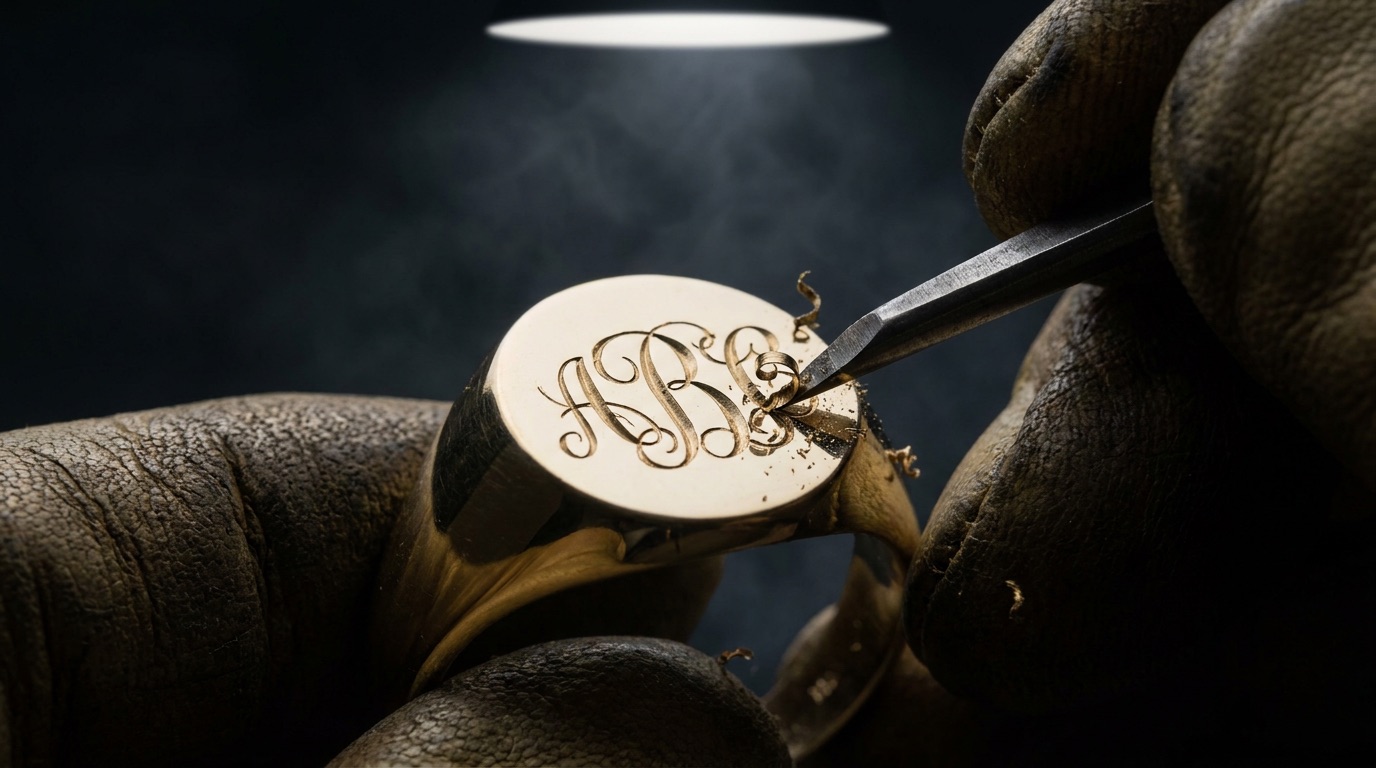
Personalization is the default mode for this category, not an upsell bolted onto a standard piece, and the technique matters as much as the design. Hand engraving — a graver cutting the metal directly — is the standard choice for a three-letter interlocking monogram on a signet top or a short inscription inside a band; it holds depth and a slightly irregular, cut-by-hand character that reads as intentional rather than machine-perfect. Rotary and laser engraving are the standard choice for anything that needs to repeat identically across multiple pieces — a corporate logo across a dozen cufflink pairs, for instance — because the precision holds exactly the same from the first piece to the last in a way freehand work can’t guarantee.
Placement follows a few consistent conventions: a monogram on a signet top is centered and sized to the flat or domed face of the ring, typically three letters in an interlocking or stacked arrangement; a monogram on a cufflink is usually a single letter or a compact two-letter mark, since a full three-letter monogram reads as cluttered at that scale; an inside-band inscription stays short by necessity — a date, initials, or a few words on a curved surface a fraction of an inch wide.
Because engraving happens during production rather than before it, it doesn’t add time on top of the standard custom-jewelry window. What it does add is a step retailers shouldn’t skip: get the exact engraving text, letter order, and font approved in writing before the order goes into production. A monogram is unfixable once it’s cut into a finished piece, and mismatched engraving is the single most common source of rework requests in this category.
Metal and Stone Choices That Actually Suit Men’s Pieces
Design requests for men’s pieces skew toward durability and restraint, and the metal and stone choices should follow that lead rather than defaulting to whatever’s standard on the bridal side.
Metal: Durability First
| Metal | Daily-wear durability | Where it fits best |
|---|---|---|
| Platinum | High — dense and resistant to wear, holds a setting securely over years of daily use | Signet rings and other pieces worn every day |
| 14K gold | High — harder than 18K, holds up well to daily knocks | Wedding bands, chains, anything worn continuously |
| 18K gold | Moderate — softer alloy, shows wear faster under daily impact | Cufflinks, tie bars, and other occasional-wear pieces where color depth matters more than daily abrasion resistance |
Weight and profile follow the same logic as finish: men’s pieces generally run a heavier gauge and a thicker band or shank than the equivalent women’s piece in the same metal, since a mounting scaled down from a standard women’s profile tends to read as undersized rather than refined.
A brushed, matte, or hammered finish is worth defaulting to over high polish for anything worn daily — it hides the fine scratching that accumulates on a man’s hands faster than most retailers expect, and it reads as intentional rather than worn-down the way a dulled high-polish finish does.
Stone Setting: Restrained by Default
Men’s pieces generally call for low-profile setting styles that won’t catch on clothing, tools, or a laptop bag strap:
- Flush (gypsy) setting — the stone sits recessed into the metal with no raised prongs, the most common choice for signet tops, tie bars, and lapel pins
- Bezel setting — a metal rim fully surrounds the stone; more visible than flush but still low-profile and secure for daily wear
- Channel setting — a row of stones set between two metal walls, useful for a subtle band accent without individual prongs to snag
Raised prong settings and pavé work, both common on the bridal side, tend to look and wear wrong on men’s pieces — they’re more common in halo and pavé bridal builds than in this category, and most male buyers are actively asking for the opposite: less visible stone, not more. Bezel setting is worth defaulting to for anything worn daily and handled roughly — a full metal rim protects the stone’s girdle from the kind of edge impact a signet ring or a heavy cufflink takes over years of use, in a way a flush setting doesn’t fully match and a prong setting doesn’t come close to.
Stone Choice
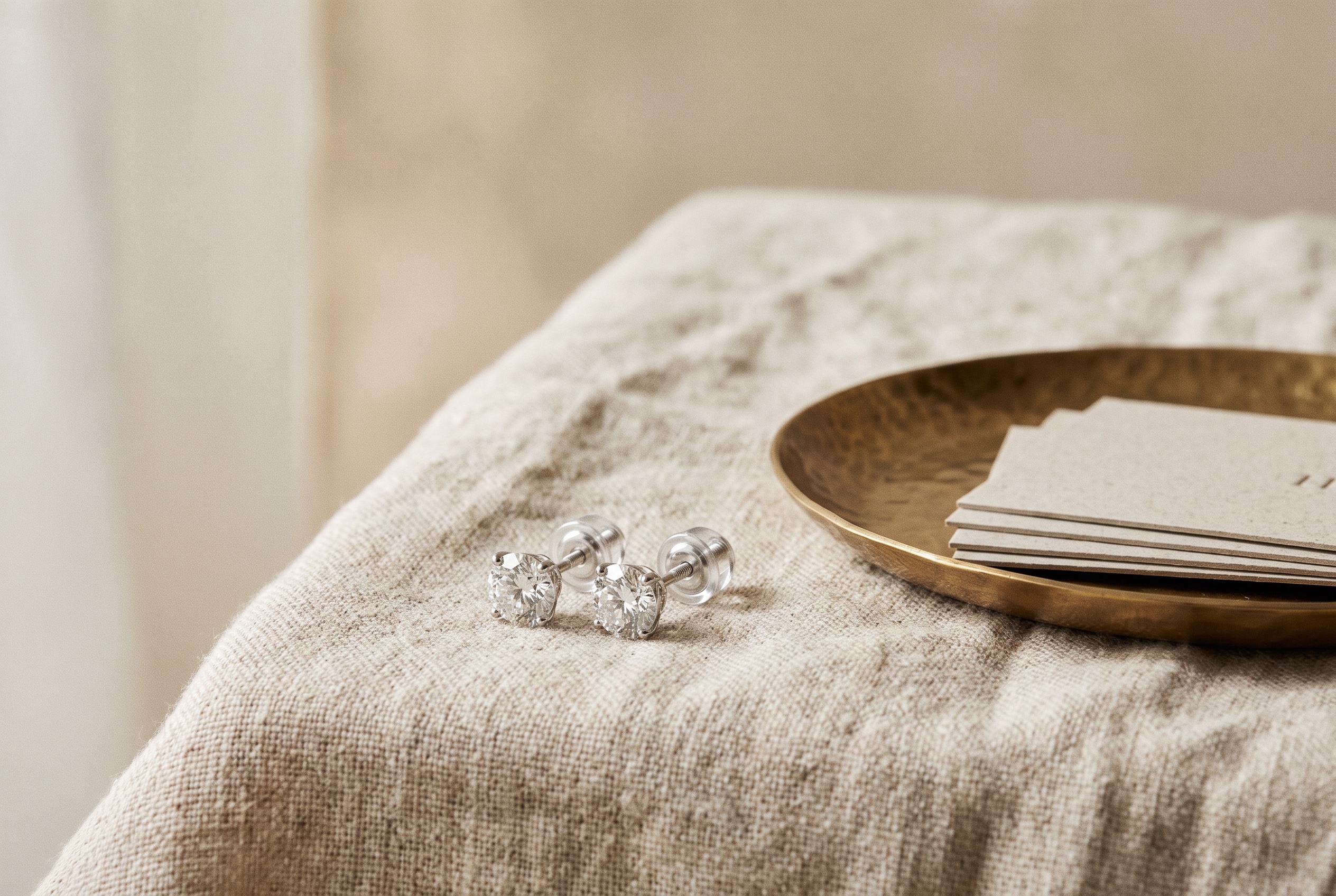
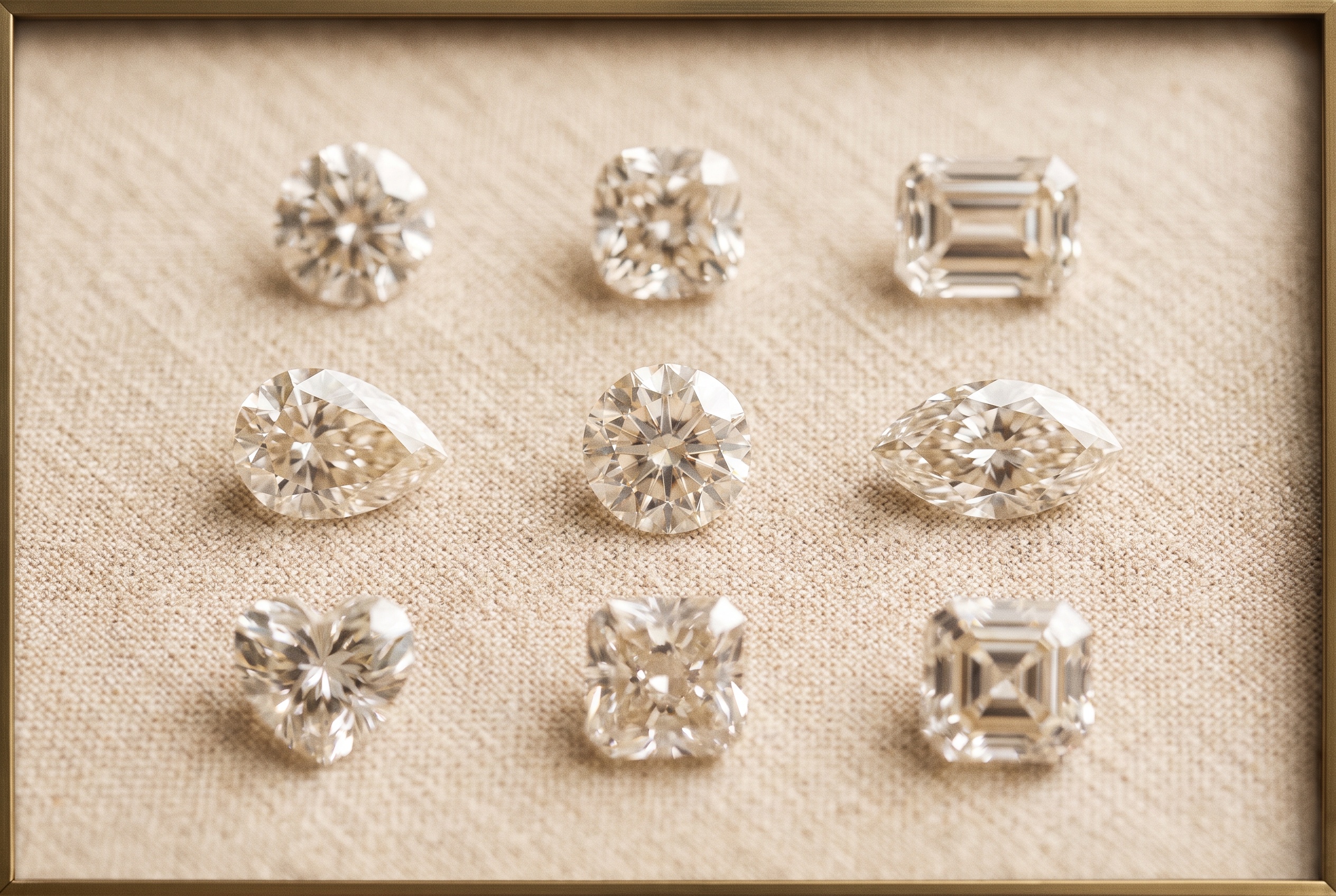
For the small accent stones common in this category — a flush-set signet stone, a single cufflink stone, a channel accent — round brilliant is the practical default: it’s the commodity tier, widely available and priced accordingly, which keeps small-accent builds affordable. For a buyer who wants something with more presence on a signet or cufflink, an emerald or trillion cut (both in the regular fancy tier) reads as clean and geometric without looking bridal. Every stone used — center or accent — is CVD lab-grown and cut and polished in-house, whether it ends up in a certified center stone or a small accent.
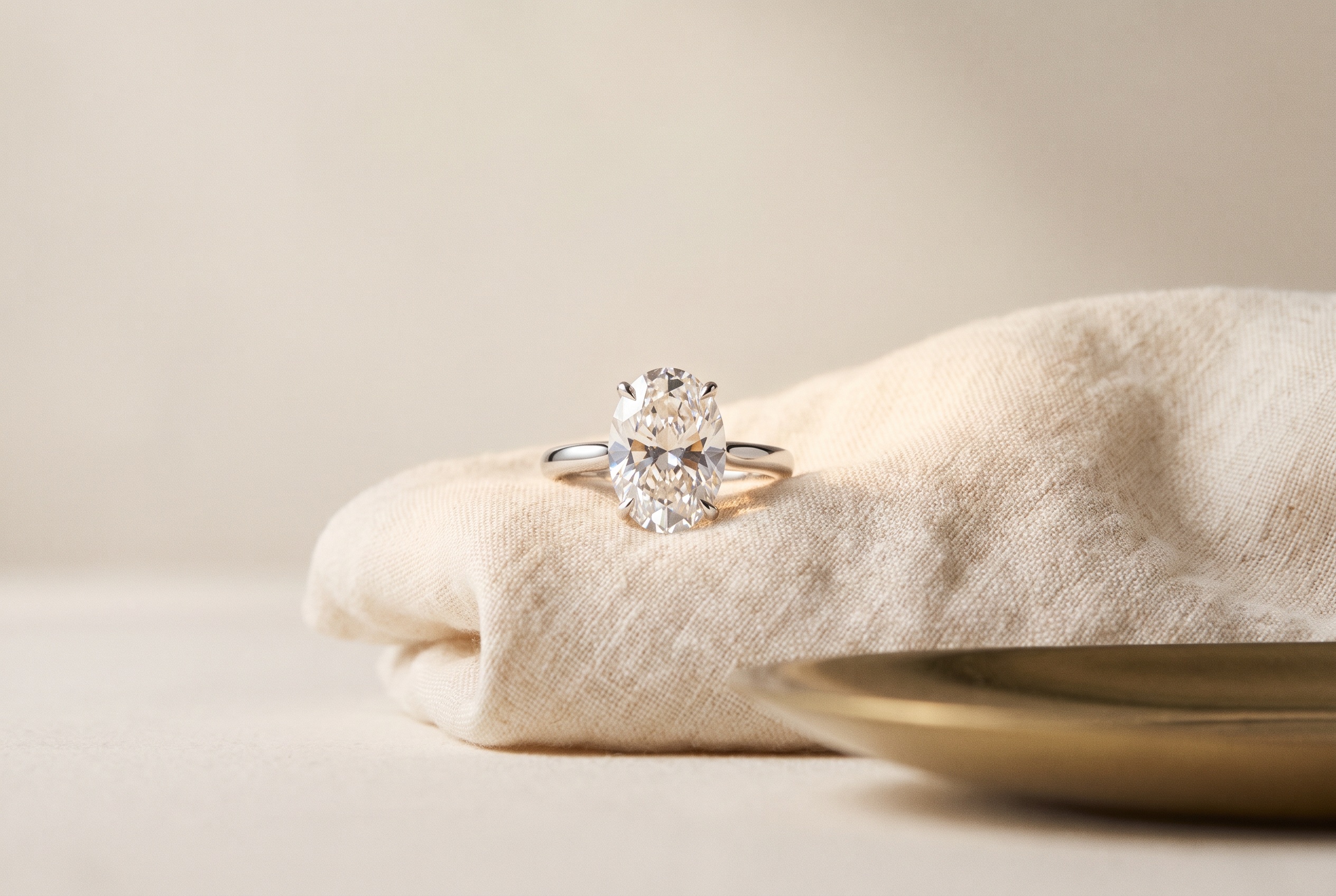
Small accent stones in this category are almost always melee — uncertified, calibrated parcel goods priced and matched against a color/clarity QC baseline rather than individually certified. If a customer wants a larger, standalone feature stone instead — a men’s ring built around a single sizable center stone rather than accents — anything 0.30 carat and up can carry IGI, GIA, or GCAL certification on request.
Building the Category Without Tying Up Capital
The operational case for offering this category through custom production rather than stock is the same case that applies to any low-volume, high-personalization category: don’t buy inventory to solve a problem that’s actually a sourcing and production problem.
Sourcing the stone and building the piece through one custom jewelry partner means one landed cost, one production timeline, and one point of accountability, instead of reconciling a stone order from one source against manufacturing from another every time a customer wants something outside your current case. In-house cutting, setting, and polishing keeps quality consistent across a category where every piece is effectively a one-off, and because finished custom pieces are typically delivered unbranded by default, you can present the men’s line as your own without disclosing who built it.
That single-source model matters more in this category than most, because personalization compounds the coordination problem a split supply chain already creates. An engraved monogram has to be proofed against the exact piece it’s being cut into, not a generic template — far easier to manage when one shop is sourcing the stone, setting it, and engraving it than when a retailer is routing a stone from one vendor to a separate bench for setting and a third specialist for engraving. That full sequence runs under one production process, the same one that already supports more than 2,000 active trade accounts placing custom orders.
For turnaround, the category benefits from the same finished-jewelry production window that applies to custom bridal work: roughly 4-6 days from CAD approval to finished piece. That’s fast enough to quote a men’s custom order with real confidence instead of a vague “a few weeks,” which matters for a category where a lot of purchases — an anniversary gift, a groomsman gift, a corporate award — are tied to a fixed date. Review the how it works process before you take your first men’s order so you know what CAD approval actually requires on the customer’s end.
Pricing and Margin: What Changes When You Go Custom
Pricing a custom men’s piece works differently from pricing off a stocked case, and it’s worth setting expectations up front rather than forcing a keystone number that doesn’t reflect what went into the piece. Stocked goods are priced on a standard keystone markup because the retailer already owns the inventory and is pricing to move it. A made-to-order piece is priced off landed stone cost plus labor — setting, finishing, any engraving or monogram work — plus the design and consultation time it took to get the customer from an idea to an approved CAD. That’s a materially different cost structure, and it typically supports a higher margin than a stocked SKU, because labor and consultation time are priced into the piece rather than absorbed as overhead across a whole case of inventory.
A deposit at CAD approval is standard practice worth building into the quote from the start — once a monogram or engraving is cut into a piece, there’s no resale market for it if the customer walks away, so the deposit protects the order the same way it would for any other one-off custom build. Knowing the production window in advance — roughly 4-6 days from CAD approval to finished piece — also lets a retailer quote a fixed delivery date with real confidence instead of a vague estimate, which matters for the deadline-driven purchases that make up a good share of this category’s demand.
Where This Fits in Your Assortment
The easiest entry point isn’t a standalone men’s counter — it’s attaching the category to traffic you already have. A groom accompanying a bridal appointment is already in the store; a signet ring or a matching wedding band quote takes five extra minutes and doesn’t require you to have anything in stock. That same appointment is often where a groomsmen order surfaces, too — matching cufflinks or tie bars, sometimes with a shared monogram, added alongside the groom’s own band as an extension of a sale you were already going to close.
Corporate and holiday gifting seasons are a second entry point, and they scale differently than a single retail sale. A company ordering a dozen identical cufflinks with an engraved logo for an executive gifting program is, functionally, a small wholesale order routed through a single retail relationship — exactly the kind of repeatable order a made-to-order model handles cleanly, since the personalization is identical across every piece. Cufflinks and tie bars with a subtle stone or a monogram fit that occasion well and don’t compete with your bridal case for shelf space, because there’s no shelf space involved.
If you want to formalize sourcing before your first order, set up trade access and review the current wholesale catalog structure so quoting a men’s custom piece is as fast as quoting anything else you sell.
Frequently Asked Questions
Is men’s jewelry actually worth building out as a category, or is it too small to bother with?
It’s a smaller category than bridal in absolute volume, but it’s underserved relative to the demand that exists — most stores carry a token case rather than actually serving the requests coming through the door. Since it’s built through custom production rather than stocked inventory, there’s no upfront capital risk to testing it: you’re not committing to a case full of SKUs, you’re just adding a sourcing option to appointments and gifting seasons you already have.
Why doesn’t men’s jewelry stock the way bridal does?
Bridal demand clusters around a small number of recognizable styles — solitaire, halo, three-stone — mostly in white metal, so a curated case captures most walk-in demand. Men’s requests fragment across ring size, metal color, finish, and personalization like engraving or monogramming, and personalization in particular can’t be stocked speculatively by definition. The category needs a made-to-order model, not a bigger case.
What metal holds up best for a men’s ring worn every day?
Platinum and 14K gold both outperform 18K gold for daily wear — 18K is a softer alloy and shows wear faster under the kind of continuous daily impact a man’s hands typically see. A brushed or matte finish also holds up visually better than high polish over time, since it doesn’t show fine scratching the way a mirror finish does.
Are the small accent stones in men’s pieces certified?
Not individually, in most cases. Flush-set or channel-set accent stones in this category are almost always melee — uncertified, calibrated parcel goods matched to a color/clarity QC baseline rather than certified stone by stone. If a piece is built around a single larger feature stone instead of small accents, that stone can carry IGI, GIA, or GCAL certification if it’s 0.30 carat or larger.
Can I sell custom men’s pieces under my own store’s name?
Yes. Custom pieces are delivered unbranded by default, which is specifically so retailers can present the finished piece as their own rather than disclosing where it was built. Confirm branding terms with your trade contact before your first order.
Does the 4-6 day turnaround apply to a custom men’s piece the same way it applies to bridal?
Yes, with the same caveat that applies across all custom work — the 4-6 day window covers the CAD-approved-to-finished-piece stage of production, not the time it takes to source or approve a loose stone beforehand. Once the design is approved, a signet ring or a set of cufflinks moves through production on the same finished-jewelry timeline as any other custom piece.