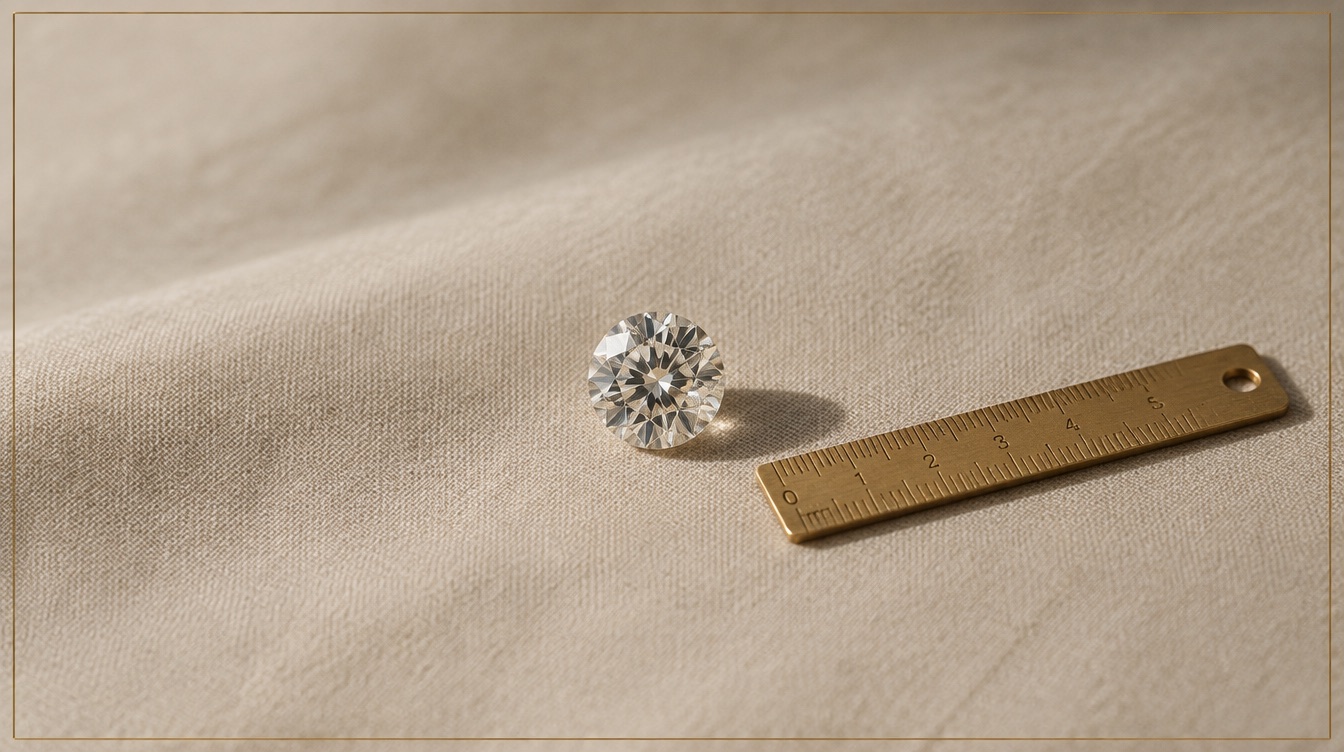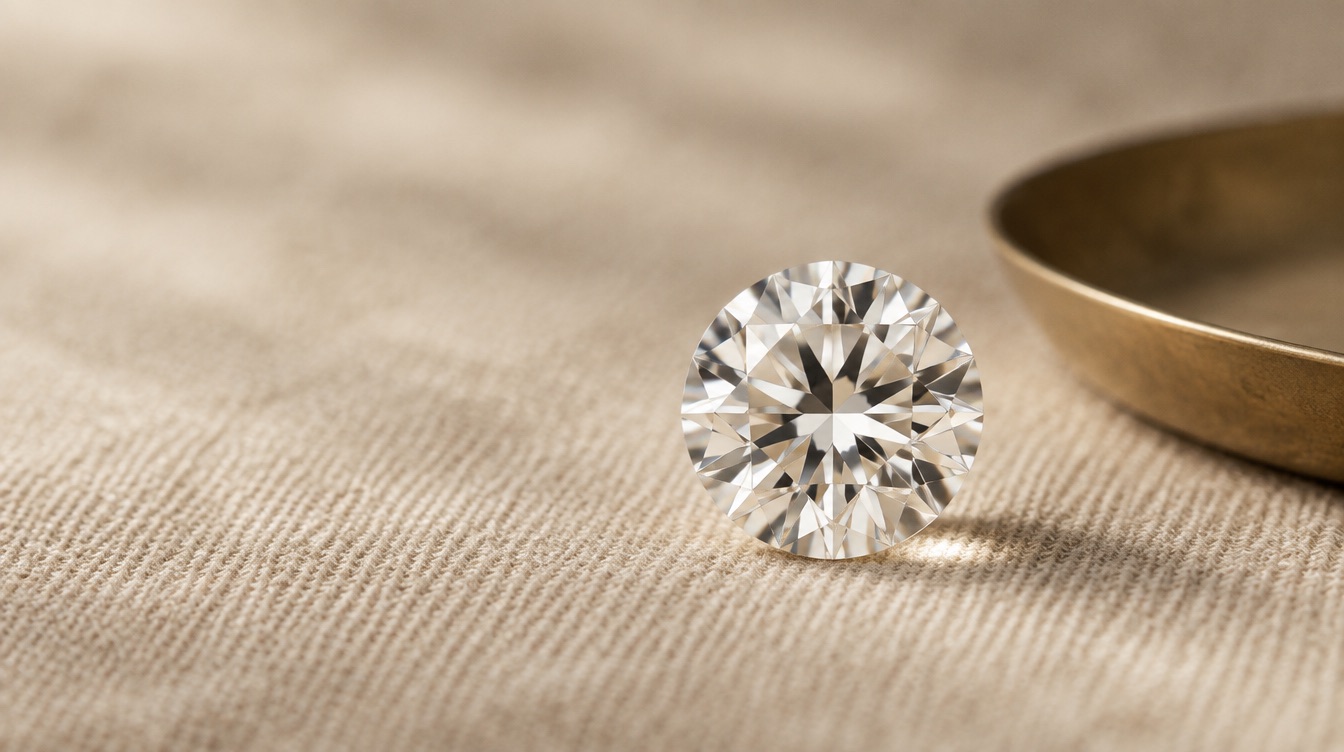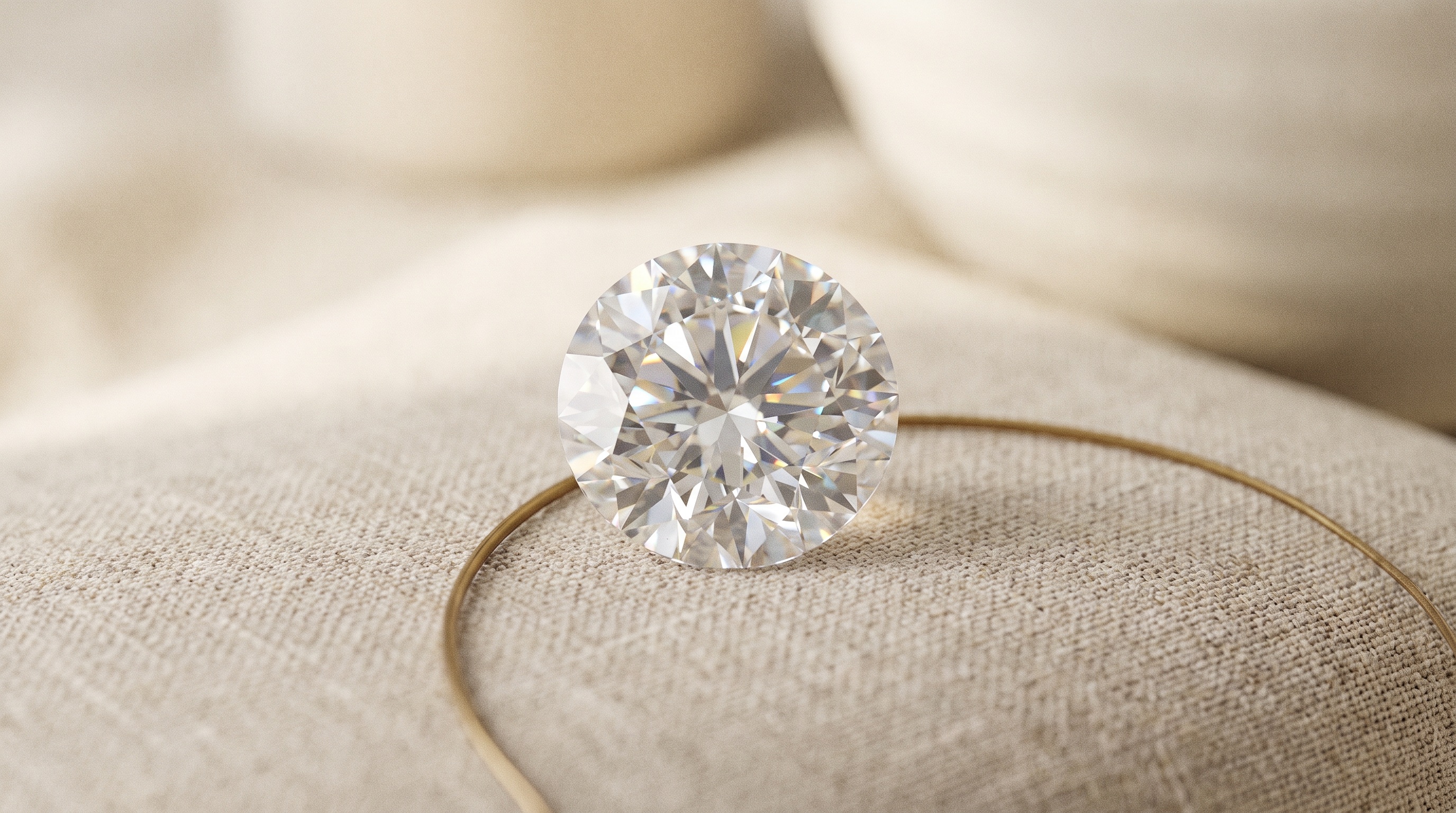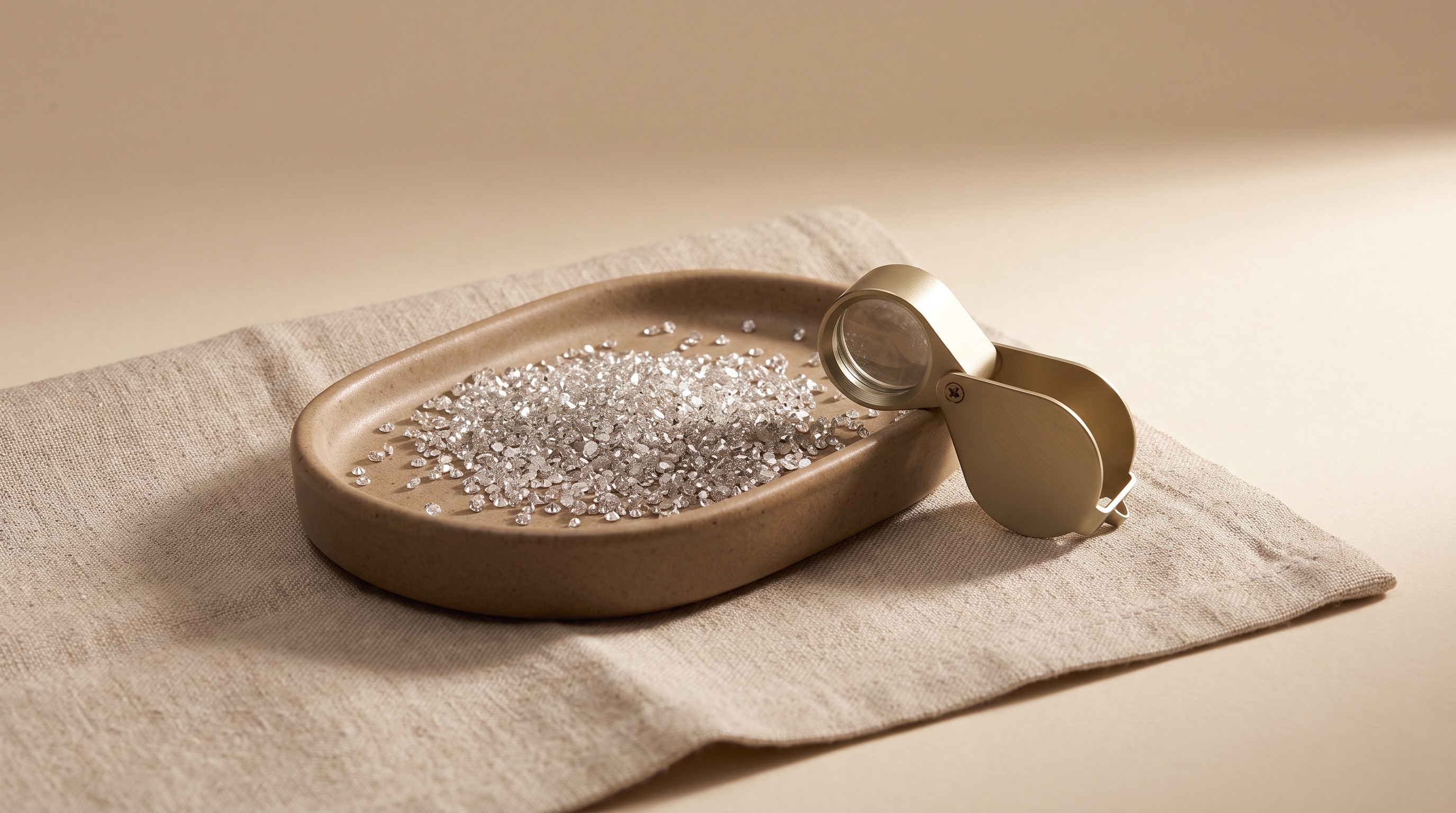
Melee diamonds are small diamonds, generally ranging from about 0.001 carat up to roughly 0.18 carat, used as accent stones alongside a larger center stone or set in clusters, pavé, and lines rather than sold as standalone pieces. The term comes from the French "mêlée," meaning a confused, mixed group — an apt description for how these stones are traded, sorted, and sold: not one at a time, but in matched or graded lots by size, color, and clarity.
For a jeweler or manufacturer, melee is quietly one of the most-used categories in the entire trade — nearly every halo ring, pavé band, tennis bracelet, cluster earring, and accented setting relies on a supply of consistent, well-matched small stones. Yet melee sourcing works differently from sourcing a single certified center stone, and buyers new to the category often make avoidable mistakes around grading expectations, lot consistency, and pricing structure. This guide covers what melee diamonds actually are, how they're classified and graded, how pricing works, and what to look for in a wholesale melee supplier.
What Counts as Melee vs. a Loose Stone
The line between "melee" and a standard loose stone is a matter of trade convention rather than a strict physical law, but the widely used cutoff sits around 0.18ct — stones below that size are treated as melee and sold as parcel goods, while stones at 0.30ct and above are treated as individual loose stones eligible for full grading reports. The 0.18ct–0.30ct range is something of a gray zone depending on the supplier and the specific shape, but the underlying logic holds across the trade: below a certain size, individually certifying and cataloging each stone stops making economic sense for either the supplier or the buyer, so the category shifts to lot-based grading instead.
Melee Sizes and the Millimeter-to-Carat Relationship
Melee is typically ordered and specified by millimeter diameter rather than carat weight alone, since a buyer building a specific setting (a halo, a channel, a pavé shank) needs stones that physically fit a defined space more than they need an exact carat total. Round melee sizing runs in small, standardized increments, and a supplier quoting melee should be able to confirm both the millimeter size and the approximate carat-per-stone figure for any given size, since the two move together predictably for round brilliant cuts but shift somewhat for fancy calibrated shapes.
| Approximate Diameter | Approximate Carat Weight (Round) | Common Use |
|---|---|---|
| 1.0mm | ~0.005ct | Fine pavé, micro-accent detailing |
| 1.3mm | ~0.01ct | Standard pavé, halo accents |
| 1.5mm | ~0.015ct | Halo settings, cluster work |
| 2.0mm | ~0.03ct | Larger halos, tennis-line accents |
| 2.5mm | ~0.06ct | Tennis bracelets/necklaces, prominent side stones |
| 3.0mm+ | ~0.10ct–0.18ct | Larger side stones, upper end of the melee range |
These figures are approximate and vary slightly by cut proportions and shape, but they give a buyer a reasonable planning reference before requesting an exact quote from a supplier for a specific design.
Round Brilliant vs. Fancy Calibrated Melee Shapes
Round brilliant is by far the most commonly stocked melee shape, since it's the most efficient cut for small stones and the easiest to source and match at volume. Fancy calibrated shapes — emerald, radiant, pear, marquise, and other shapes cut to standardized, consistent dimensions — are also available as melee for designs that call for a specific accent shape, such as baguette-style channel accents or pear-shaped halo stones, though supplier depth and lead time for fancy calibrated melee tend to be thinner than for round.
Natural vs. Lab-Grown (CVD) Melee
Melee is available in both natural and lab-grown material, and the choice has a real effect on program economics given how much total carat weight a melee-heavy design can use. CVD lab-grown melee is chemically, optically, and physically identical diamond material to natural melee — the difference is origin, not composition — and it typically costs meaningfully less per carat, which lets a retailer either widen margin at a given retail price or offer a larger, more prominent stone count at the same retail price point. Both natural and CVD melee are graded against the same color and clarity conventions, and a reputable supplier discloses growth method clearly on every lot regardless of which type is being quoted.
How Melee Is Graded: The DEF+/VS+ Standard
Because individually grading hundreds or thousands of tiny stones isn't practical, melee is graded and sold against a consistent commercial quality baseline rather than stone-by-stone paperwork. The most common commercial standard in the trade is DEF+/VS+ — meaning color in the near-colorless-to-colorless D-E-F range and clarity at VS (very slightly included) or better — which reads as clean and bright to the eye at melee sizes without pricing the lot at the level of individually certified inventory. Buyers targeting a higher-end line can request a tighter band (E-F color, VVS+ clarity) for a more uniformly white, eye-clean result, understanding that tightening the standard across an entire lot increases both cost and sourcing lead time.
Uncertified Parcel Goods vs. Certified Loose Stones
Melee ships as uncertified parcel goods graded against a stated quality baseline, not with individual grading reports — this is standard, expected trade practice, not a red flag, and buyers should be cautious of any supplier claiming individual certification on true melee-sized stones, since that claim doesn't match how the category is actually produced and sold. Loose stones at 0.30ct and above are a different tier entirely, eligible for full individual grading reports through labs like IGI, GIA, or GCAL. A buyer combining a certified center stone with melee accents in the same piece should expect certification paperwork only for the center stone, with the melee accompanied instead by a supplier's lot-quality statement.
What to Ask a Melee Supplier Before Ordering
- Is this sold as a matched, graded lot, or pulled from mixed, ungraded inventory? A supplier maintaining dedicated calibrated melee stock will hold tighter internal consistency than one selling from general parcel stock.
- What's the size tolerance across the lot? A tighter millimeter tolerance matters more for a continuous line (a tennis bracelet, a pavé band) than for scattered cluster work.
- Can I see a physical sample before committing to a full order? A spec sheet doesn't substitute for reviewing an actual representative sample, especially on a first order with a new supplier.
- Is growth method (natural vs. CVD) clearly disclosed on the lot, and is the lot single-origin rather than a blend?
- Can this exact grade be reliably reordered for a future production run, or does available stock vary meaningfully between orders?
Melee Pricing Structure
Melee is priced per carat at a stated quality standard, with per-carat rates generally improving at higher order volume and with looser size-tolerance requirements, since tighter calibration requires more selective sorting from a supplier's available stock. Buyers should request pricing broken out clearly by size range and quality tier rather than a single blended melee rate, since price per carat can shift meaningfully even within the same nominal color/clarity band as stone size changes — smaller stones are generally less expensive per carat to source in bulk but can carry higher relative sorting costs at the very smallest sizes used in fine pavé work.
Fancy Color Melee
Fancy color melee — yellow, pink, blue, and green being the commercially established colors — is used for color-matched accent work around a fancy color center stone or for standalone fancy color pieces like colored tennis bracelets. Matching fancy color melee across hue, tone, and saturation for a single piece is a meaningfully harder sourcing problem than matching colorless melee on clarity and color-scale position alone, and buyers should expect a longer lead time and a real price premium for a well-matched fancy color lot versus an equivalent colorless order. Champagne and cognac tones, sometimes marketed as fancy colors by natural-diamond sellers, aren't part of the commercially established lab-grown fancy color melee set.
Where the Word "Melee" Comes From
"Melee" entered the diamond trade as a borrowing from the French word for a confused, close-quarters skirmish — a fitting name for a category of stones that, unlike a single graded loose diamond, is bought, sorted, and sold as a mixed, moving group rather than as individual specimens. The term has been standard trade vocabulary for small accent diamonds for well over a century, predating modern grading terminology like the 4Cs, and it remains the universal term across cutters, wholesalers, and setters worldwide regardless of language, in the same way "carat" and "facet" are used across the trade without translation.
Melee, Side Stones, and Accent Stones: Overlapping but Distinct Terms
"Melee," "side stones," and "accent stones" are often used loosely and interchangeably, but they describe slightly different things. Melee specifically refers to a size category (roughly under 0.18ct) regardless of where the stones sit in a piece. Side stones and accent stones describe a stone's role in a design — flanking or surrounding a center stone — regardless of size, so a side stone can technically be larger than melee-range (a 0.25ct side stone in a three-stone ring, for instance, is a side stone but arguably not true melee). In practice, the great majority of side and accent stones used in modern jewelry do fall within melee sizing, which is why the terms get used interchangeably in casual trade conversation even though they're not strictly synonymous.
Common Mistakes Buyers Make With Melee
The most common mistake is treating melee as a commodity where any DEF+/VS+ lot from any supplier is interchangeable — in practice, calibration tightness, screening rigor, and reorder consistency vary meaningfully between suppliers even at the same nominal grade, and a buyer who only compares headline price per carat can end up with a technically-in-spec lot that still doesn't match visually once set. A second common mistake is under-ordering tolerance buffer for a production run — melee inevitably includes a small percentage of stones a setter will reject during mounting (chips, minor size outliers), and ordering the exact stone count needed with no buffer routinely causes production delays. A third mistake is assuming melee pricing scales linearly with size — very small sizes (under 1mm) can carry a higher relative sorting cost per carat than mid-range melee sizes, since sorting cost doesn't shrink proportionally with stone size the way raw material cost does.
Melee in Antique and Estate-Style Jewelry
Melee plays a particularly important role in antique-style and vintage-inspired jewelry, where designs like milgrain-edged halos, filigree clusters, and old-world pavé work rely on dense fields of small stones to create the intricate, textured look associated with period styles. Sourcing melee for an antique-style reproduction piece carries an added consideration beyond standard modern pavé: some antique designs historically used old mine or old European cut melee (a deeper, more faceted cut with a distinctly warmer, softer light return than a modern round brilliant), and a manufacturer aiming for genuine period accuracy in a reproduction piece should confirm whether a supplier can source antique-cut melee specifically, since standard modern round brilliant melee reads visibly different once set at scale in that kind of design.
Common Uses for Melee in Finished Jewelry
Halo settings surround a center stone with a ring of melee to visually increase apparent size and add brilliance. Pavé settings cover a band or surface with tightly set melee for continuous sparkle with minimal visible metal. Channel settings run melee between two parallel metal rails for a smooth, protected line. Cluster designs group melee stones together to simulate the visual weight of a larger single stone at a fraction of the cost. Tennis bracelets and necklaces use melee in a continuous line, which is the category's most demanding application from a matching-consistency standpoint since dozens to over a hundred stones sit side by side under close inspection.
Melee Screening and Synthetic Detection
Because melee ships without individual certification, screening for undisclosed lab-grown stones mixed into a natural parcel (or the reverse) is a real quality-control step reputable suppliers and buyers both take seriously. Melee screening devices — using shortwave UV fluorescence response, spectroscopic methods, or a combination — are standard equipment at reputable wholesale melee operations and are increasingly used by retailers receiving parcels as an additional check. A supplier who screens every lot before it ships and can speak clearly to their screening process is a meaningfully more trustworthy long-term melee partner than one who can't describe how disclosure is verified internally.
Reorder Consistency and Building a Melee Program
A retailer or manufacturer running a recurring melee-dependent product line — a signature halo ring style, a house pavé band, a standing tennis bracelet program — benefits significantly from a supplier relationship that can reliably reproduce the same size, color, and clarity band on reorder, rather than sourcing melee ad hoc from whatever's available each time. Establishing this kind of standing relationship also gives a buyer earlier visibility into upcoming availability gaps for a specific size or color combination, which matters more for melee than for single loose stones given how quickly a specific calibrated size can sell through a supplier's active stock.
Sourcing Melee Diamonds Wholesale
Guru Diam supplies calibrated diamond melee across the standard 0.8mm–9.0mm range, in round brilliant and fancy calibrated shapes, at DEF+/VS+ and tighter quality tiers, across both natural and CVD lab-grown material. As with the rest of Guru Diam's lab-grown catalog, CVD melee is cut and polished at the company's India workshop before final grading and shipment from the New York and Los Angeles locations. Fancy color melee is available in yellow, pink, blue, and green, round and fancy shapes. In-stock melee ships same-day (before 6pm EST from New York, before 4pm PST from Los Angeles), and trade accounts can browse current stock in matching pairs, review certified larger stones in certified diamonds, or check fancy color melee options in fancy color loose diamonds. Manufacturers building a custom piece around melee accents can start at custom jewelry, and new trade accounts can apply through trade partner, with current terms at the wholesale hub. For a deeper look at how melee scales into a specific finished-piece category, see our diamond tennis bracelet wholesale guide.
Melee and Traceability
As trade buyers and end customers alike have grown more attentive to sourcing transparency, melee traceability has become a more frequently asked-about topic even though the category's parcel-based grading model makes stone-by-stone chain-of-custody documentation impractical the way it is for a certified loose stone. What a buyer can reasonably expect from a reputable melee supplier is lot-level disclosure: growth method (natural or CVD), general origin, and confirmation of screening practices, rather than a certificate tracing an individual 1.3mm stone back to a specific rough parcel. Retailers fielding traceability questions from customers about a melee-heavy piece are best served by being able to speak clearly to their supplier's lot-level disclosure practices rather than overpromising a level of individual-stone documentation the category doesn't actually support.
Storage and Handling of Melee Inventory
Because melee ships and is typically stored in bulk parcel form rather than in individual mounts, proper handling matters more than it might seem for a category of "small, low-value" stones. Melee parcels should be stored in labeled, sealed paper or fold-over parcel envelopes rather than loose in a drawer or tray, both to prevent stones from different lots or quality grades from mixing accidentally and to maintain a clear paper trail linking a given parcel back to its purchase and grading documentation. A manufacturer running through melee at production volume benefits from a simple lot-tracking system — even a basic spreadsheet noting supplier, purchase date, size, quality grade, and remaining quantity per parcel — since melee mix-ups (an entering a lower grade parcel into a higher-grade production run by mistake) are a real, avoidable source of quality-control problems in shops that don't formalize this step.
Frequently Asked Questions
What size is considered a melee diamond?
Melee generally refers to diamonds from about 0.001ct up to roughly 0.18ct, sold as graded parcel goods rather than individually certified stones. The 0.18ct–0.30ct range is a gray zone depending on the supplier; stones at 0.30ct and above are treated as individual loose stones eligible for full certification.
Are melee diamonds individually certified?
No. Melee ships as uncertified parcel goods graded against a stated quality baseline (commonly DEF+/VS+), since individually certifying hundreds or thousands of small stones isn't practical for either the supplier or the buyer. A supplier claiming individual certification on true melee-sized stones should be questioned.
What's the difference between natural and lab-grown melee?
Origin only — CVD lab-grown melee is chemically, optically, and physically identical to natural melee. Lab-grown melee typically costs meaningfully less per carat, which is why it's widely used in melee-heavy designs like pavé and tennis lines. Both should be clearly disclosed by growth method on any lot.
How is melee priced?
Melee is priced per carat at a stated quality standard, with rates generally improving at higher order volume and looser size tolerance. Buyers should request pricing broken out by size range and quality tier rather than a single blended rate.
What should I check before ordering melee from a new supplier?
Whether it's sold as a matched, graded lot versus mixed parcel stock; the size tolerance across the lot; whether a physical sample is available before a full commitment; growth-method disclosure; and whether the supplier can reliably reproduce the same grade on a future reorder.
Can melee diamonds be fancy colors?
Yes — yellow, pink, blue, and green are the commercially established fancy color melee options. Matching fancy color melee across hue, tone, and saturation is harder than matching colorless melee, so expect a longer lead time and a real price premium for a well-matched fancy color lot.
Why does melee ship without individual certificates?
Grading each of hundreds or thousands of tiny stones individually isn't practical or cost-effective for either the supplier or the buyer, so the trade grades melee at the lot level against a stated quality baseline instead. This is standard, expected practice across the entire wholesale melee trade, not a sign of lower quality — it's simply a different, size-appropriate grading model than the one used for larger certified loose stones.
Guru Diam is a trade-only wholesale diamond supplier with locations in New York and Los Angeles, supplying calibrated diamond melee and certified loose stones across natural and CVD lab-grown material. Browse current melee inventory in matching pairs or apply for a trade account through trade partner.