M color is a diamond color grade on the GIA scale, the warmest grade in the "faint" color range (K-M), sitting just below the "very light" range (N-R). An M color diamond has a clearly visible light yellow or brown body tint in most lighting conditions and sizes — noticeably warmer than J or K, though still meaningfully lighter than the deeper, saturated color of a true fancy yellow or fancy brown diamond. M is chosen deliberately by buyers who want the largest possible stone for their budget, who prefer a warm-toned aesthetic, or who are working within antique or vintage-style jewelry where body color is part of the intended look.
Where M Color Sits on the GIA Scale
| Range | Grades | Description |
|---|---|---|
| Colorless | D, E, F | No detectable color, even to a trained grader without comparison |
| Near-colorless | G, H, I, J | Color present but difficult to detect without a side-by-side comparison |
| Faint | K, L, M | Faint yellow or brown tint, noticeable in most conditions; M is the warmest grade in this range |
| Very Light | N-R | Light color clearly visible to the naked eye |
| Light | S-Z | Noticeable color throughout; beyond Z, stones are graded as fancy color |
M sits at the bottom edge of the faint category, immediately before GIA's "very light" range begins at N. In practice, M color reads closer to a light champagne tone than a white diamond with some warmth — it's the point on the scale where the color is unambiguous rather than subtle, even to buyers without a trained eye. Some M color stones, depending on their specific hue, can visually approach the character of a very light fancy color diamond, though they remain classified and priced on the standard D-Z scale.
What M Color Actually Looks Like
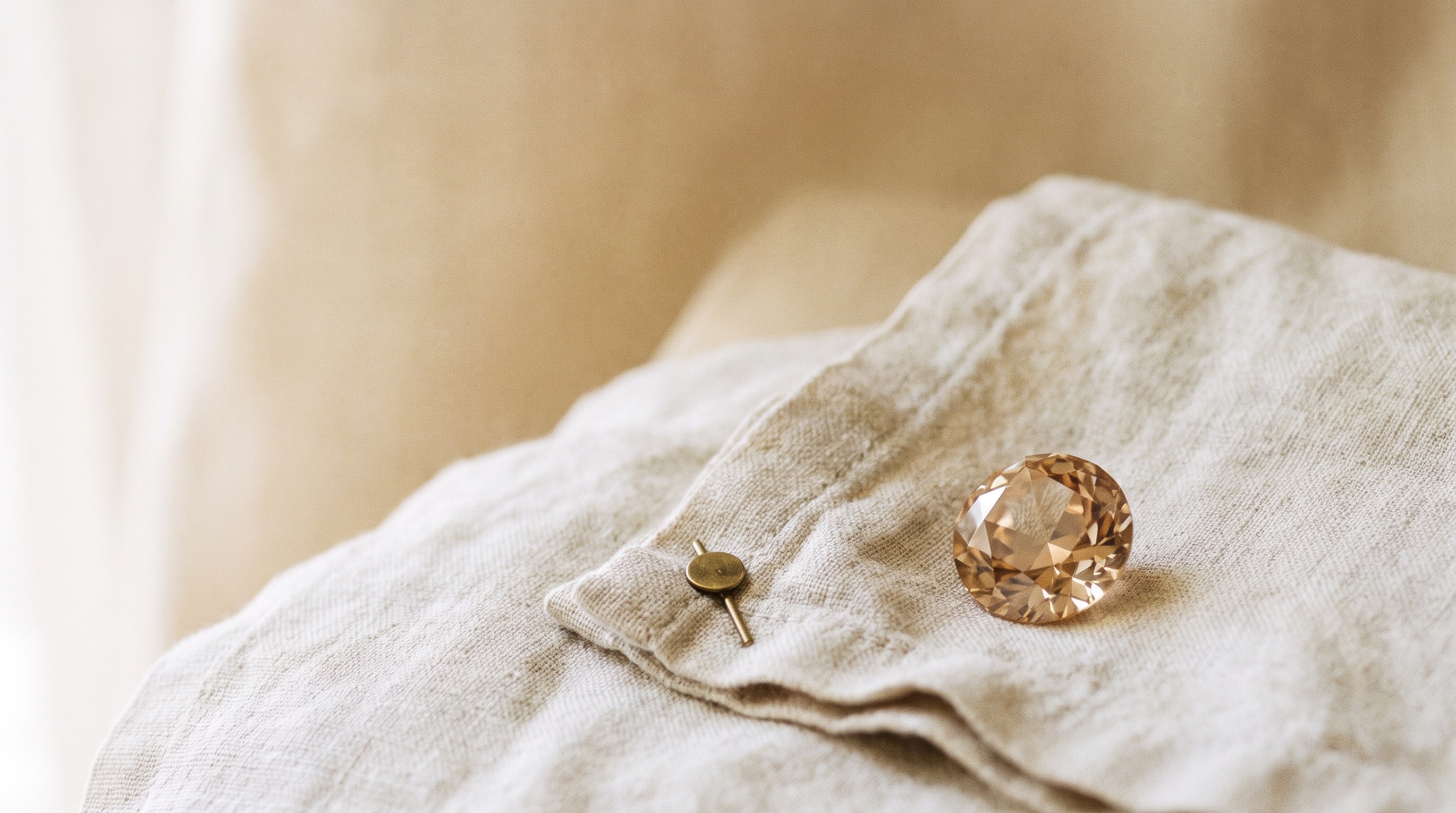
Face-up, an M color diamond typically presents as a light champagne or pale honey tone, with the color visible and consistent across the whole stone — a hallmark of body color rather than a localized inclusion. Unlike the near-colorless and even K/L grades, M color's warmth generally persists across essentially all lighting conditions, including most daylight, rather than fading in and out with the light source. This consistency is actually a practical advantage for buyers who want the warm-toned look specifically: there's little risk of the stone reading differently than expected from one setting or lighting condition to another.
Settings That Help (and Settings That Don't)
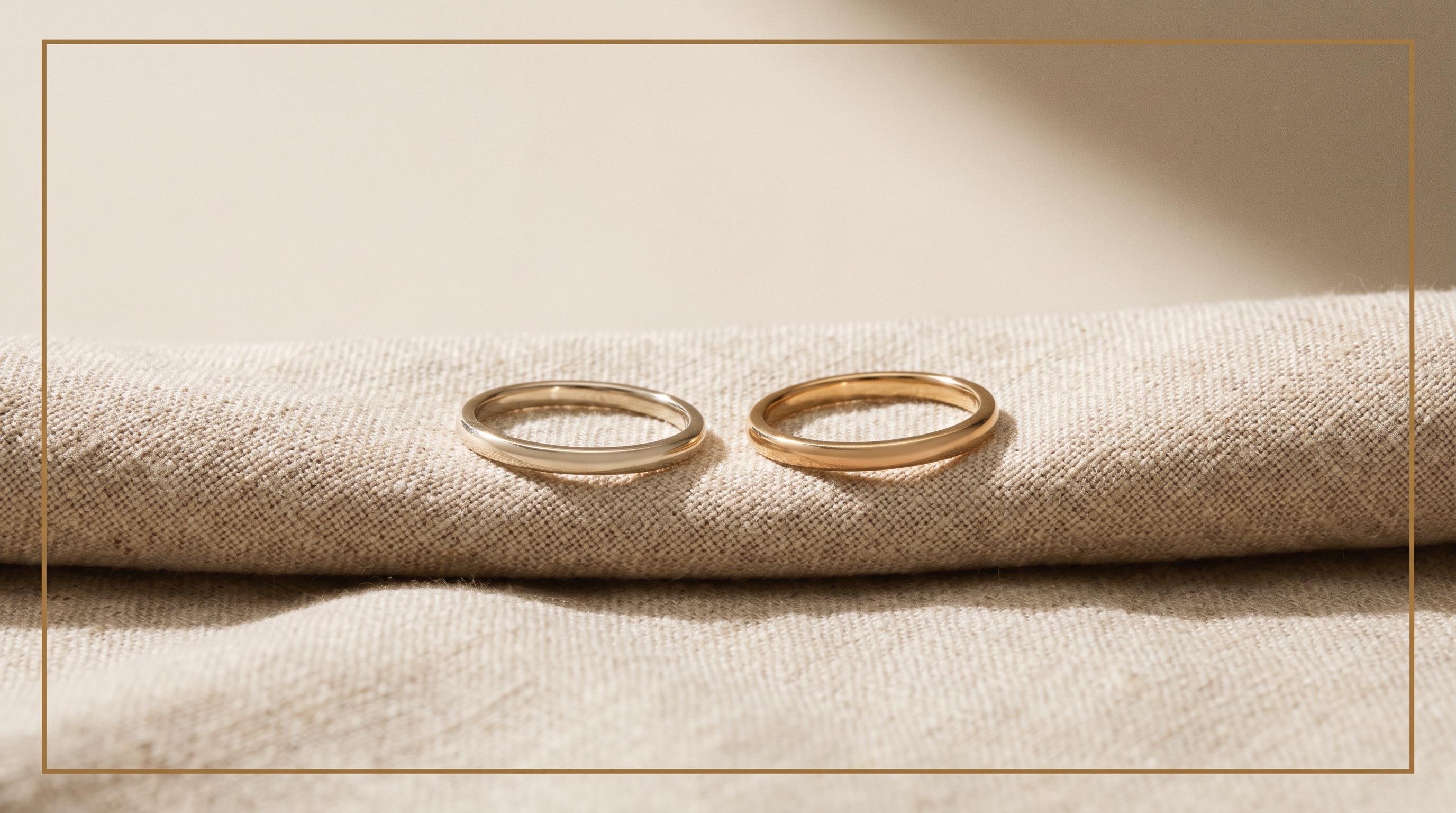
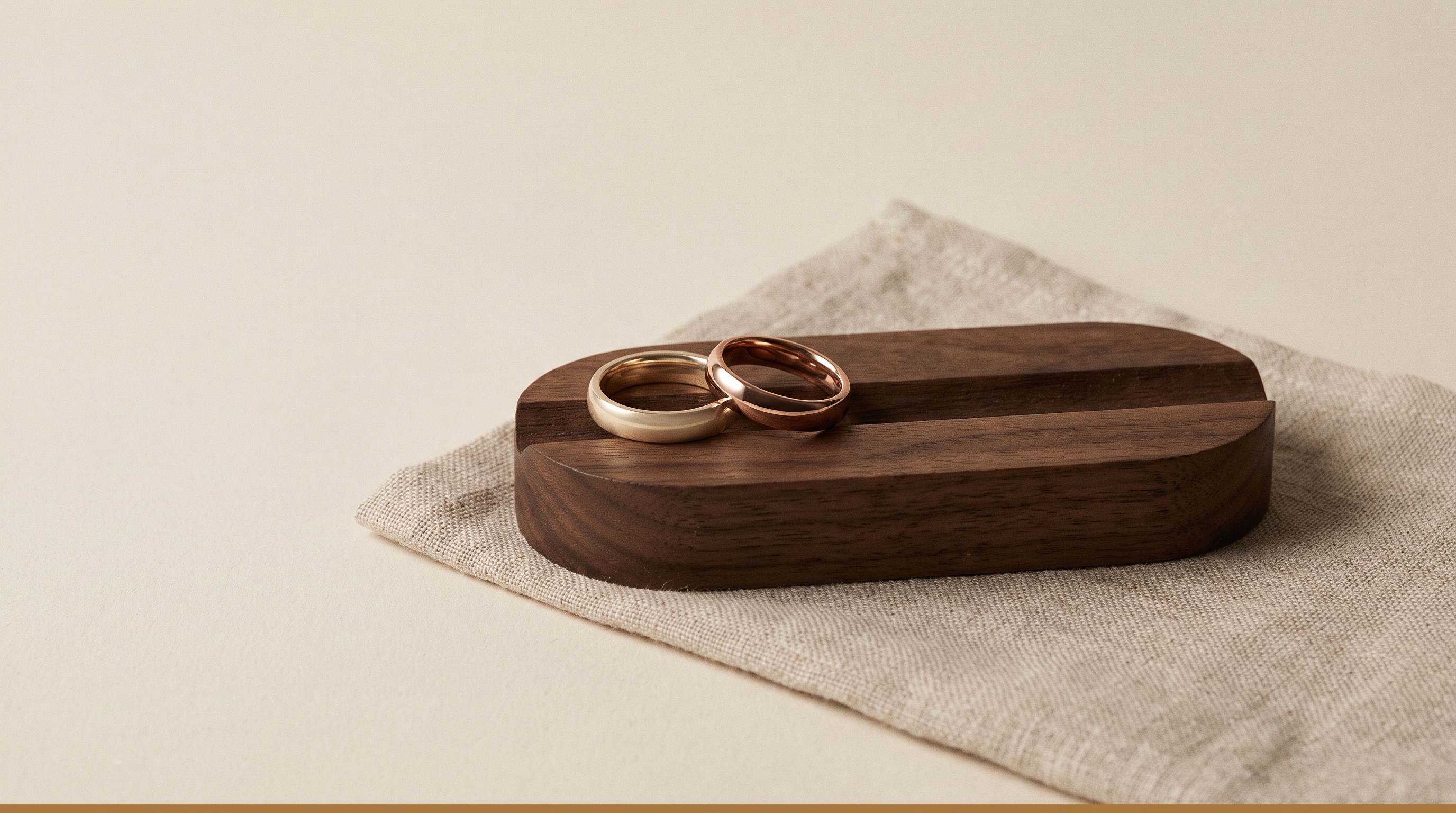
- Yellow gold and rose gold are close to essential for M color to read as an intentional, attractive warm-toned stone rather than a mismatched white diamond. The metal and stone tone work together rather than one fighting the other.
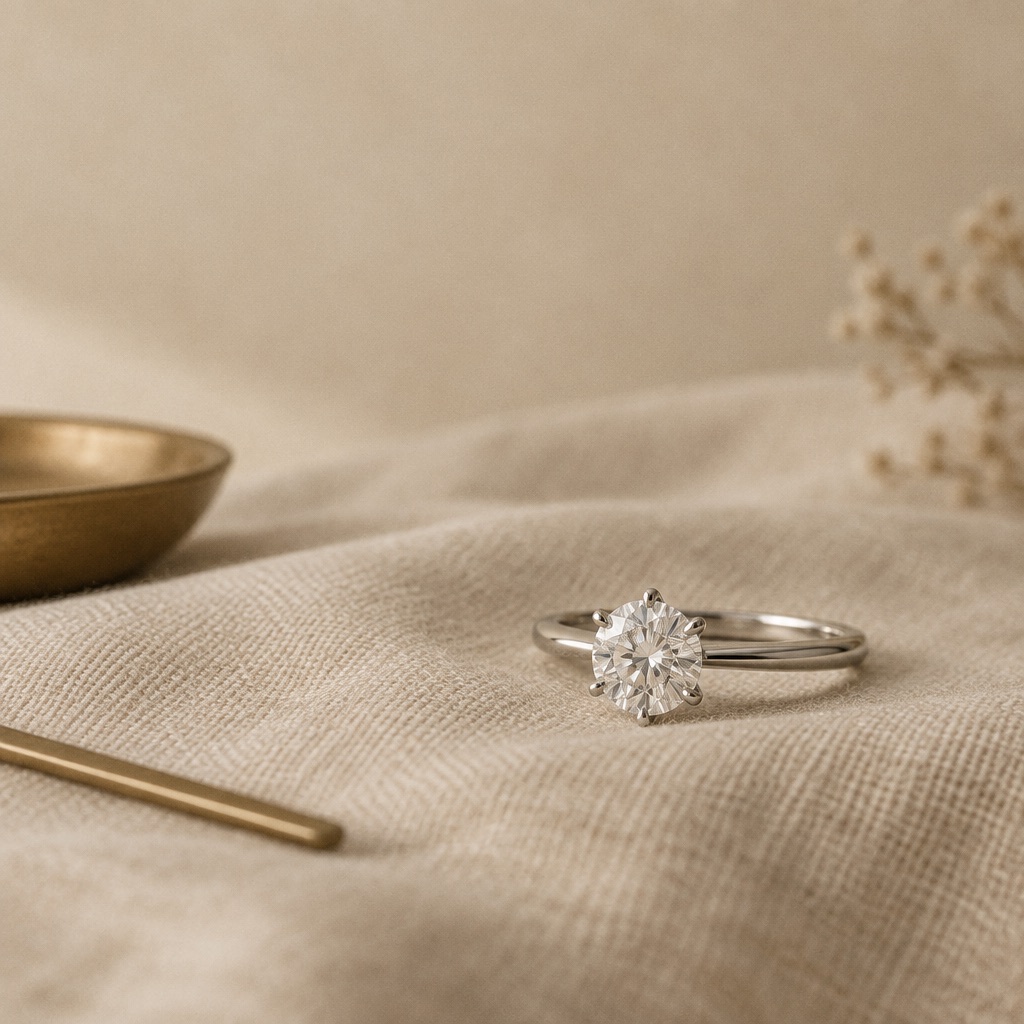
- White gold and platinum are generally not recommended for M color center stones — the contrast makes the tint highly visible and can make the piece look unintentional rather than styled. M in white metal is best reserved for buyers who specifically want that high-contrast warm-stone-in-cool-metal look as a design choice, not a default recommendation.
- Antique, vintage, and bohemian-style settings pair particularly well with M color — filigree, milgrain, and warm mixed-metal designs echo the kind of body color that was common and accepted in period jewelry long before colorless grading became the dominant modern standard.
M Color vs. Nearby Grades
| Grade | Face-up appearance | Best setting | Value position |
|---|---|---|---|
| K | Faint, generally noticeable warm tint | Yellow or rose gold strongly recommended | Strong budget/size choice |
| L | Faint tint, consistently visible across most lighting | Yellow or rose gold essential | Aggressive budget/size choice |
| M | Clearly visible light champagne/honey tone in nearly all conditions | Yellow or rose gold essential; vintage design strongly recommended | Maximum size-per-dollar within the D-Z scale |
| N (very light) | Distinctly light-colored, edging toward a pale fancy-color look | Warm metal, deliberately warm-toned design | Niche/specialty choice |
M represents the practical ceiling of the "affordable warm-toned diamond" category before crossing into the very light range, where the stone's color becomes even more of a defining, deliberate design feature rather than a budget trade-off. Buyers choosing M are, in nearly every case, doing so with full awareness of and often genuine preference for the warm tone.
Carat Size and M Color: Why Bigger Stones Show More Warmth
Color accumulates with the amount of material light travels through, so a larger M color stone shows more visible warmth than a smaller one at the same grade — and because M already starts from a clearly visible baseline, this effect is most pronounced of any grade in the faint range.
| Carat range | M color experience |
|---|---|
| Under 0.50ct | Warmth is clearly present, reading as a light champagne tone even at small sizes |
| 0.50-1.00ct | Tint is unmistakable face-up in essentially all lighting; yellow or rose gold is close to essential |
| 1.00-2.00ct | Color is a primary, defining visual feature of the stone — best suited to buyers who specifically want this look |
| 2.00ct+ | Visual character approaches the very light (N-R) range; confirm the buyer's intent matches the stone before committing at this size |
Comparing M Color to Fancy Color Diamonds
Because M color's warmth is unmistakable, buyers frequently ask how it relates to fancy color diamonds, and the distinction matters for setting accurate expectations. M is still classified as a "white" diamond on the standard D-Z scale, where color reduces value as saturation increases. Fancy color diamonds — including fancy yellow and fancy brown/cognac — are graded on an entirely separate scale once color saturation exceeds Z, and for those stones color is the primary value driver rather than a discount factor. Some M color stones can visually resemble a very light fancy color diamond, but they should never be priced or marketed as if they belong in that category — the value logic runs in opposite directions on either side of that boundary.
M Color and Fluorescence
Strong or very strong blue fluorescence can, in some M color stones, visually soften the yellow body tone under daylight or UV-rich lighting, similar to the effect documented at K and L, though the effect is proportionally smaller relative to M's more saturated baseline color. It's still worth checking directly on a specific M color stone with strong fluorescence, but buyers shouldn't expect fluorescence alone to meaningfully change M color's fundamentally warm-toned appearance.
Is M Color Diamond Good for an Engagement Ring?
Yes, specifically for buyers who want a warm-toned or vintage-style stone as a deliberate aesthetic choice, or who are prioritizing carat size or budget above all else and are fully comfortable with visible color. M color is a poor fit for buyers who want a diamond that reads as classically white — at this grade, the color is not subtle, and setting that expectation clearly and early is essential to buyer satisfaction. The single most important step in an M color sale is showing the actual stone or strong, well-lit photography before the client commits; M color should never be sold on the certificate alone.
M Color in Lab-Grown vs. Natural Diamonds
Color grading methodology is identical between CVD lab-grown and natural diamonds — the same D-to-Z scale, applied by the same major labs using the same master-stone comparison process. M color lab-grown diamonds present the same visual characteristics as M color natural stones, and the guidance above — favor warm-tone metal, understand the carat-scaling effect, always show the stone before the sale — applies equally to both.
A Practical Framework for Recommending M Color
M color earns a genuine recommendation for buyers who've expressed a preference for a warm, vintage, or champagne-toned stone; who are working within an antique-cut jewelry commission where warmth is period-appropriate; or who are maximizing carat weight for a fixed budget and have explicitly accepted the visible color trade-off. For buyers who want the whitest possible stone regardless of size, M is not the right recommendation at any price point — near-colorless or even faint-range K would serve that intent far better. The clearest practical signal for M color's fit: has the buyer seen the actual look (in person or strong photography) and responded positively, independent of the grade letter?
Common Misconceptions About M Color
- "M color is a fancy yellow diamond." M is still a "white" diamond by GIA's classification, graded on the standard D-Z scale — fancy yellow diamonds have distinctly stronger, more saturated color and are graded on a completely separate scale once saturation exceeds Z.
- "M color always looks bad." In yellow or rose gold with a vintage or warm-toned design intent, M color reads as an attractive, intentional champagne-toned stone — many buyers choose it specifically for that character.
- "Cut quality doesn't matter this far down the color scale." Cut quality still meaningfully affects brightness and liveliness; a well-cut M color stone looks noticeably better than a poorly cut one at the same grade.
How Color Grading Actually Works
GIA color grading is performed by trained graders comparing an unmounted diamond, viewed table-down, against a set of master stones with verified color grades, under controlled daylight-equivalent lighting. This face-down, unmounted condition is deliberately the most revealing way to assess color. Reputable labs — GIA, IGI, and GCAL among them — typically use more than one grader to reach consensus on borderline calls, which matters even at M, where the L/M and M/N boundaries still require careful, consistent judgment despite the color being more obviously visible overall than at higher grades.
Color grading captures body color specifically, independent of fluorescence, which is graded and reported as a separate field even though the two occasionally interact visually as covered above.
Why M Sits Where It Does: The Bottom of the Faint Range
The faint range (K-M) exists as a workable category within a continuous color gradient, and M sits at its warmest edge because its tint, while still technically "faint" by GIA's grading language, is consistently visible enough that most buyers perceive it as a genuinely warm-toned stone rather than a white diamond with minor warmth. The step from M to N (the first grade in the "very light" range) is where GIA's own category language shifts from "faint" to "light," reflecting a real, if gradual, increase in how obviously colored the stone appears.
M Color and Cut Quality
Cut quality continues to matter meaningfully even at M color. A diamond cut to strong proportions returns more light through the crown, creating brightness and scintillation that keeps the stone lively rather than flat — a well-cut M color diamond looks noticeably better and more intentional than a poorly cut one, even though cut alone can't neutralize the body color the way it can partially offset a subtler grade like J. For M color specifically, an Excellent or Ideal cut grade helps the stone read as a deliberately chosen warm-toned diamond rather than simply a lower-grade stone.
Comparing M Color Across Different Diamond Shapes
- Round brilliant remains the most forgiving shape overall, with the most effective light-scattering facet pattern of any cut, though even round brilliant M color shows visible warmth.
- Cushion and oval handle M color's warmth well and are popular choices for buyers deliberately seeking a vintage, champagne-toned look.
- Old Mine and Old European antique cuts are an especially strong match for M color — these cuts were historically produced and worn with a wide range of body color, and M's warmth complements their softer, less light-scattering facet structure in a way that feels period-authentic.
- Emerald and asscher (step cuts) show M color's warmth very prominently through their open facets — a combination that should be shown to the buyer directly before committing, since the effect is stronger than in any brilliant-style cut.
M Color for Side Stones vs. Center Stones
Color-matching between a center stone and side or accent stones is important at M, where the contrast against whiter melee or side stones is significant. The most visually cohesive approach fully embraces a warm-toned palette throughout the piece — matching side stones to the center's M grade or using warm-hued alternative accents — rather than mixing M with near-colorless stones, which tends to look unintentional. For melee and pavé work specifically, color grade requirements typically relax further than for a center stone, and M color melee remains a practical, budget-friendly option for accent work in a fully warm-toned design.
M Color for Antique and Vintage-Style Jewelry
M color has one of its strongest natural applications in antique-cut and vintage-inspired jewelry, where a genuinely warm-toned stone reads as historically accurate rather than as a lower grade. Old Mine and Old European cut diamonds were routinely set with body color well into the faint and even very light ranges throughout much of jewelry history — an M color old mine cut in yellow gold, particularly in a button-back or closed-back collet, reflects how these stones were actually sourced and worn rather than approximating the look with a modern colorless stone. For jewelers building genuinely period-inspired pieces, M color is frequently the most authentic and cost-effective choice available.
M Color and Resale or Upgrade Considerations
M color diamonds generally hold a lower resale value than higher color grades, consistent with their lower purchase price and reflecting the same color-price gradient that runs across the entire D-Z scale. For jewelers running trade-in or upgrade programs, it's worth setting this expectation clearly upfront — an M color stone purchased for its size, budget, or vintage character will typically trade toward another value-tier or warm-toned stone rather than a premium colorless one, unless the client specifically plans to move up the color scale later.
Evaluating a Specific M Color Stone Before Buying
Because M color's warmth is consistently visible, seeing the actual stone — or strong, well-lit photography or video — before purchase matters more here than at almost any other color grade. Ask whether the hue leans yellow, honey, or brown (yellow and honey tones generally read as more universally appealing than brown at this grade), and evaluate the stone next to comparable reference photography where possible. A certified report confirms the M grade, but hue character within that grade varies enough that direct evaluation is the single most useful step before committing to a significant M color purchase.
Regional and Cultural Preference Variance
Tolerance for warmer color grades like M varies significantly by market and individual taste. In some regions and among buyers who favor antique, Georgian, or bohemian aesthetics, a champagne-toned diamond in yellow gold is the preferred, deliberately chosen look rather than a fallback from a whiter stone. In markets or client segments that strongly favor an icy-white, colorless aesthetic, M color needs careful, upfront framing and is best positioned specifically for buyers who've already expressed interest in a warm-toned or vintage look — it's rarely the right default recommendation for a buyer who hasn't stated that preference. Identifying which category a given client falls into before proposing M color avoids nearly all of the dissatisfaction that can arise with grades this far down the color scale.
M Color and Overall Stone Character
As with any diamond, clarity, symmetry, and polish all contribute meaningfully to how an M color stone reads in the finished piece, not just the color grade in isolation. A well-cut, eye-clean M color stone with strong symmetry and polish will generally look more attractive and intentional than a poorly proportioned stone at a higher color grade — a useful point to make with buyers who are fixated on the color letter alone without considering the stone's overall quality. This is particularly relevant at M, where the temptation to judge the stone purely by its grade is strongest, simply because the color is the most immediately noticeable characteristic on paper.
Frequently Asked Questions
Is M color diamond very yellow?
M color has a clearly visible light champagne or honey tone — noticeably warmer than near-colorless or even K/L grades, but still well short of the saturation seen in a true fancy yellow diamond.
What's the best setting for M color diamonds?
Yellow gold or rose gold, close to essential at this grade to make the stone read as intentional. White metal creates strong, generally unflattering contrast against M color.
Is M color a good choice for an engagement ring?
Yes, for buyers who want a warm-toned or vintage-style stone specifically, or who prioritize carat size and budget and fully accept visible color as part of the trade-off.
Does M color look worse in a bigger diamond?
Warmth is already clearly visible at small sizes and becomes more pronounced as carat weight increases, since light travels through more material.
Is M color diamond the same as a fancy color diamond?
No. M is still graded on the standard D-Z scale as a "white" diamond with faint color; fancy color diamonds have distinctly stronger, more saturated color and are graded on a separate scale beyond Z.
Why would someone choose M color over a higher grade?
Primarily for budget and carat-size advantages, or because they specifically want the warm, champagne-toned look for a vintage or antique-inspired piece rather than a classically white diamond.
Does M color affect a diamond's resale value?
Yes — M color diamonds generally resell at a lower value than higher color grades, mirroring the same price gradient that made the stone more affordable to buy in the first place.
Sourcing M Color from Guru Diam
Guru Diam stocks a full color range including M across our certified loose diamond inventory, CVD lab-grown with IGI, GIA, and GCAL certification available. Our team can help match color grade to setting metal, shape, and design intent for a specific commission — particularly valuable for antique-cut and vintage-inspired pieces where M's warmth is genuinely the right aesthetic choice rather than a compromise. In-stock inventory ships same-day from New York or Los Angeles, our custom jewelry program finishes pieces in 4-6 days from CAD approval, and trade accounts can review our full color and shape matrix through the wholesale hub or a trade partner account.
Every stone we carry, M color included, ships with its full GIA, IGI, or GCAL grading report, and our team can pull comparison photography against other color grades on request — the most reliable way to confirm a client's expectations match the stone before a significant purchase. For commissions where setting metal, cut style, and design intent all interact with the color decision, we're glad to walk through the specific combination directly with your team.