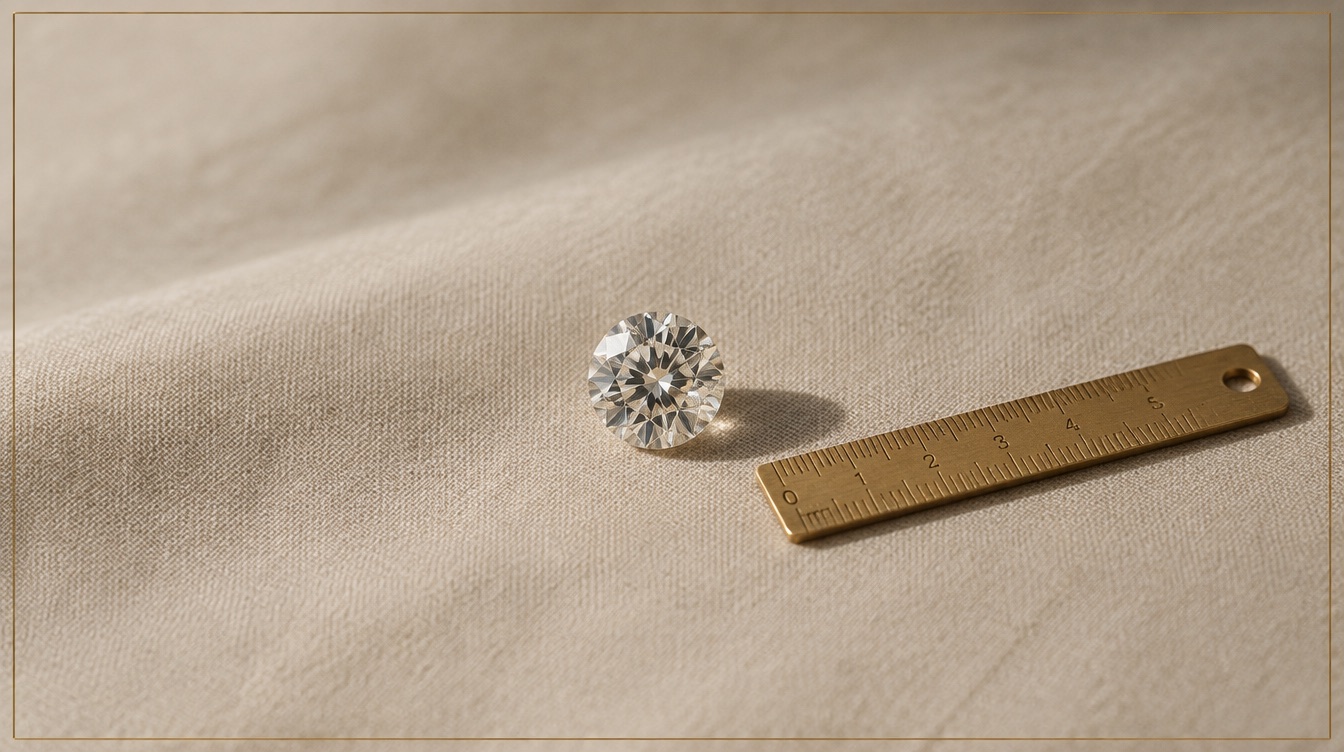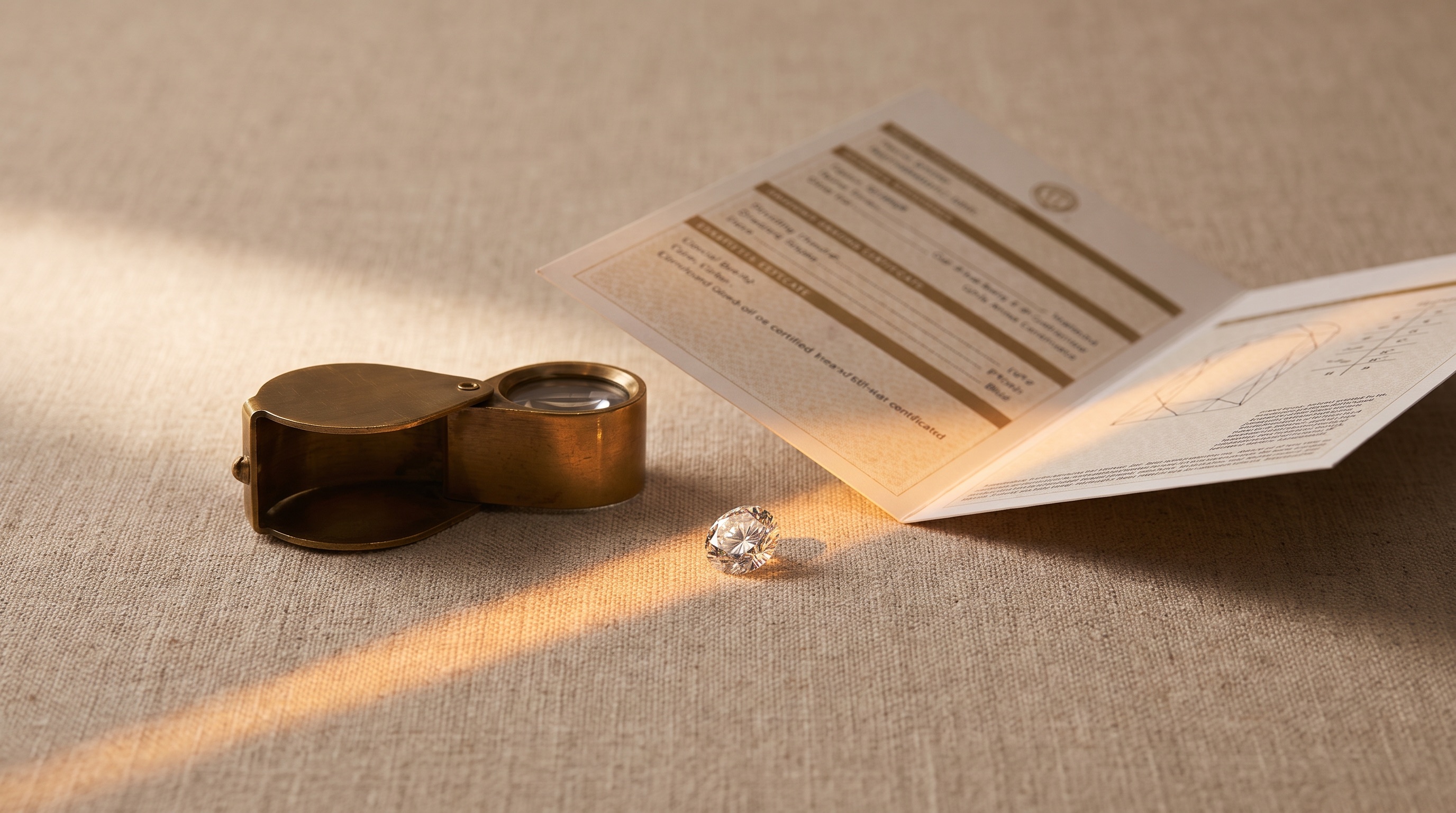
A laser drilled diamond is a natural diamond that has had a microscopically narrow channel bored into it with a laser, reaching from the stone's surface down to a dark inclusion, so the inclusion can be lightened or partially removed and made less visible. It's one of the two most common clarity-treatment methods used on natural diamonds — the other being fracture filling — and it's a permanent, decades-established treatment that grading labs disclose explicitly on the certificate rather than folding silently into the clarity grade.
This guide is written for the trade — jewelers, retailers, and designers evaluating laser-drilled stock in the wholesale market. It goes deep specifically on laser drilling: the two drilling techniques in use, how each shows up under magnification, how GIA, IGI, and GCAL each disclose it, what it does (and doesn't) do to durability, how it affects repair and resizing work, legal disclosure obligations, and how laser-drilled pricing compares to untreated and lab-grown alternatives. For fracture filling and a broader overview of clarity enhancement as a category, see our clarity-enhanced diamond guide — this guide focuses specifically on laser drilling in more depth than that broader overview covers.
How Laser Drilling Actually Works
Laser drilling targets a specific kind of flaw: a dark inclusion — typically a small included crystal, often black or dark graphite — sitting inside the diamond where it visibly reduces the stone's clarity and eye-clean appearance. A technician uses a precisely focused, high-powered laser to bore an extremely narrow channel, often thinner than a human hair, from the stone's surface directly to the inclusion. Once that channel reaches the flaw, one of two things typically happens: a bleaching or acid solution is introduced through the channel to dissolve or lighten the dark material, or in some cases the inclusion itself is partially vaporized by the drilling process. The result is a stone whose clarity grade and eye-clean appearance improve, sometimes substantially, without changing the diamond's actual carbon structure or weight in any meaningful way.
Laser drilling has been used commercially since the 1970s, making it one of the longest-established diamond treatments in the trade. Grading labs have had five decades to refine detection and disclosure standards for it, which is part of why it's handled more predictably and consistently across labs than newer or more variable treatments.
Two Drilling Techniques: Conventional Drilling vs. KM (Internal Laser) Drilling
Not all laser drilling looks the same under magnification, and the distinction matters for how easily a treatment is spotted and how it's described on paperwork:
- Conventional (open) drilling. The original technique, where the laser channel runs in a relatively straight line from the surface all the way to the inclusion, leaving a visible drill hole reaching the surface of the stone. This channel can be seen under 10x loupe magnification as a fine, straight, often whitish or reflective line running into the stone.
- KM (internal laser) drilling. A newer, more advanced technique that follows an existing internal fracture or cleavage plane to reach the inclusion rather than boring a new straight channel from the surface. Because it travels along a natural internal feature of the stone rather than creating a new visible surface-reaching hole, KM drilling can be considerably harder to spot under standard magnification than conventional drilling, which is part of why grading labs treat it as a distinct category worth flagging specifically.
A wholesale buyer evaluating laser-drilled stock should ask which technique was used, since KM-drilled stones can be more difficult to identify without lab-grade equipment and training, and a supplier who can specify the technique (rather than using "laser drilled" as a vague catch-all) is generally a more transparent and reliable source for this category.
How GIA, IGI, and GCAL Grade and Disclose Laser-Drilled Stones
| Lab | How It's Graded | How It's Disclosed |
|---|---|---|
| GIA | Issues a standard Diamond Grading Report, with the clarity grade reflecting the stone's post-treatment appearance | Notes "laser drilling" as a comment on the report; does not issue a separate report type the way it does for fracture-filled stones |
| IGI | Grades on a standard report, clarity reflecting post-treatment appearance | Notes drilling as a comment; identifies drill holes explicitly where detected |
| GCAL | Grades on a standard report | Discloses drilling as a comment, consistent with GIA and IGI practice |
The practical takeaway for a buyer reading paperwork: a laser-drilled diamond generally comes with what looks like an ordinary, standard-format certificate, with the treatment noted as a comment rather than triggering an entirely separate report type — this is a meaningful difference from fracture filling, which typically results in a distinctly labeled treated-diamond report instead. A buyer should always read the comments section of any certificate carefully, not just the headline grade, since drilling disclosure lives specifically there.
Does Laser Drilling Affect Durability?
This is one of the most commonly confused points between laser drilling and fracture filling, and it's worth stating plainly: laser drilling itself is a permanent, structurally stable treatment. Once the channel is bored and the inclusion treated, ordinary heat from jewelry repair work, sizing, or cleaning does not reverse or damage the treatment the way it can with a fracture-filled stone's glass-like filler. This is a genuine and meaningful difference between the two treatment categories, and it's a point wholesale buyers should understand clearly rather than assuming all "clarity-enhanced" stock carries the same heat-sensitivity caveat.
That said, laser drilling isn't entirely without durability considerations. The drill channel itself is a permanent physical alteration to the stone's structure — a narrow tunnel running from the surface toward the stone's interior — and while it doesn't meaningfully weaken a properly drilled diamond under normal wear, a conventionally (open) drilled stone's surface-reaching channel is a point some jewelers flag as worth extra care during ultrasonic cleaning or aggressive polishing, since the open channel could theoretically trap cleaning solution or debris over time. This is a minor, largely cosmetic-maintenance consideration rather than a structural risk, but it's worth mentioning to a retail customer alongside the treatment disclosure itself.
Disclosure Requirements for Retailers
In the United States, the FTC's Jewelry Guides require that laser drilling be disclosed to the purchaser at the point of sale, in terms a reasonable consumer would understand. Unlike fracture filling, laser drilling doesn't carry a special-care-instruction requirement tied to heat sensitivity, since the treatment itself doesn't create an ongoing durability vulnerability — but disclosure of the treatment's existence is still required regardless. This obligation runs independently with the stone: a retailer selling a laser-drilled diamond has its own disclosure duty to its customer, regardless of whether the wholesale supplier disclosed the treatment when the retailer purchased it.
How to Identify a Laser-Drilled Diamond
- Check the certificate comments section first. Any reputable lab discloses laser drilling explicitly as a comment — this should never require independent discovery on a properly documented stone.
- Look for the drill channel under 10x magnification. Conventionally drilled stones typically show a fine, straight channel reaching the surface, sometimes appearing as a thin white or reflective line. KM-drilled stones, which follow an internal fracture rather than boring a new straight path, are considerably harder to spot this way.
- Ask which drilling technique was used. A supplier who can specify conventional versus KM drilling — rather than a vague "laser treated" description — is more likely to be sourcing transparently documented stock.
- Get it in writing on the invoice, not just stated verbally, for any wholesale purchase of treated stock.
Pricing: Laser-Drilled vs. Untreated Natural vs. Lab-Grown
| Option | Typical Price Position | Durability | Resale Considerations |
|---|---|---|---|
| Untreated natural diamond | Highest for a given visual clarity level | No treatment-related considerations | Broadest resale market; no disclosure complications |
| Laser-drilled natural diamond | Discount to untreated natural at the same apparent clarity | Permanent, structurally stable treatment; not heat-sensitive the way fracture filling is | Resalable but must be disclosed; some buyers avoid treated stock on principle regardless of treatment type |
| Fracture-filled natural diamond | Larger discount than laser drilling typically commands | Filling can be damaged by heat from repairs or resizing | Narrower resale market; ongoing repair-risk disclosure needed |
| CVD lab-grown diamond (untreated) | Substantial discount to natural at comparable clarity | No treatment-related considerations | Growing, mainstream resale market; clean certification with no treatment disclosure needed |
Because laser drilling doesn't carry the same heat-sensitivity caveat as fracture filling, it typically commands a smaller discount off untreated natural pricing than fracture filling does at a comparable apparent clarity — buyers should expect the two treatment categories to price differently, not treat "clarity-enhanced" as a single flat discount tier.
Repair and Resizing: What's Actually Different From Fracture Filling
Because laser drilling isn't heat-sensitive, a jeweler performing standard repair work — sizing, prong retipping, soldering — on a piece containing a laser-drilled stone doesn't need to take the special precautions that a fracture-filled stone requires. This is a genuinely useful distinction for a retailer to communicate clearly to both sales staff and any repair partner: treating every "clarity-enhanced" stone as equally heat-sensitive overstates the actual risk on laser-drilled stock and can lead to unnecessary caution or, more commonly, confusion when a repair technician isn't sure which specific treatment a given stone carries. Confirming and documenting the specific treatment type — not just "enhanced" — on internal records avoids this ambiguity.
Laser Drilling and Melee: A Rare Combination
Like clarity enhancement generally, laser drilling is uncommon in melee-sized stones (roughly under 0.20ct), since the cost of drilling doesn't scale down proportionally with a small stone's value — it typically isn't economical to treat a low-value melee stone rather than simply grading and selling it at its natural clarity or sorting it into a lower commercial tier. Wholesale buyers are far more likely to encounter laser drilling in larger loose stones at 0.30ct and above, where the treatment's cost makes more sense relative to the stone's total value.
Common Retailer Mistakes When Stocking Laser-Drilled Diamonds
- Applying fracture-filling caution to laser-drilled stock. Conflating the two treatments' durability profiles leads to unnecessary handling caution on laser-drilled stones and, more importantly, can create confusion about which stones actually need heat-sensitive repair handling.
- Under-disclosing to the end customer. Even though laser drilling doesn't carry a heat-sensitivity warning, the treatment itself must still be disclosed under FTC guidance — retailers should build this into standard sales paperwork rather than treating disclosure as optional simply because durability risk is lower than with fracture filling.
- Not distinguishing conventional from KM drilling in inventory notes. Since KM drilling is harder to detect and sometimes commands different pricing or buyer perception than conventional drilling, tracking which technique applies to a given stone is useful inventory hygiene.
- Assuming all treated stock is equally discounted. As covered above, laser drilling and fracture filling typically price differently relative to untreated natural stock — treating "clarity-enhanced" as one flat pricing tier understates real differences between the two.
Insurance and Appraisal Considerations
A laser-drilled diamond's treatment status should be documented explicitly on any insurance appraisal, since replacement value calculations differ between treated and untreated stones of similar apparent clarity, even though laser drilling's discount is typically smaller than fracture filling's. An appraiser not told a stone was laser drilled may appraise it as though untreated, creating a mismatch between insured and actual market value that surfaces at claim time. Retailers should ensure the treatment carries forward accurately into any appraisal documentation, not just a verbal disclosure at the point of sale.
Questions Worth Asking a Supplier Before Stocking Laser-Drilled Diamonds
- Conventional or KM drilling? The two techniques differ in visibility and, sometimes, in how buyers perceive them — a supplier should be able to specify which applies to a given stone.
- What does the certificate's comment section say, and can it be reviewed before purchase? The treatment disclosure should appear on the actual grading document, not just a verbal or listing-level description.
- How does pricing compare to untreated natural at a similar apparent clarity, and to CVD lab-grown at the same apparent clarity? Having both comparisons in hand helps price the category honestly for retail customers.
- Is there any documentation trail confirming the treatment history, particularly for older stock that may have changed hands multiple times before reaching a current supplier?
Does Laser Drilling Change a Diamond's Weight?
Laser drilling removes an essentially negligible amount of material — the drill channel itself is microscopically narrow, and any bleaching or dissolving of the targeted inclusion affects an internal flaw rather than the stone's outer structure. In practice, laser drilling has no measurable effect on a diamond's carat weight, and grading labs don't apply any weight adjustment for the treatment on a certificate. This is a useful point to have on hand when a customer asks whether a laser-drilled stone is somehow "smaller" or "hollowed out" as a result of the treatment — it isn't, in any way that affects weight or overall structural integrity under normal wear.
Laser Drilling and Fancy Color Diamonds
Laser drilling is occasionally encountered in fancy color natural diamonds as well as colorless stock, typically applied for the same reason — reducing the visibility of a dark inclusion that would otherwise detract from the stone's overall appearance. Because fancy color diamonds are valued substantially on hue, tone, and saturation rather than on colorless-scale grading, a buyer evaluating a laser-drilled fancy color stone should confirm with the certifying lab's report whether the treatment has any noted interaction with the stone's color grading, since fancy color diamonds are graded through a materially different process than colorless stones and a lab's comments section is the authoritative source on any treatment-specific notes for a given stone.
How Laser Drilling Detection Has Improved Over Time
Detection technology and grading lab experience with laser drilling have both advanced substantially since the treatment's introduction in the 1970s. Early conventional drilling was relatively straightforward to spot under standard loupe magnification, but as KM (internal laser) drilling techniques developed and became more refined, labs invested in more advanced imaging methods — including specialized microscopy techniques capable of tracing a drill channel's path along an internal fracture plane that wouldn't be obvious under standard magnification alone. This is part of why sourcing laser-drilled stock specifically from major labs (GIA, IGI, GCAL) matters more for this treatment category than it might for a more visually obvious alteration: these labs have the specific institutional experience and equipment to reliably detect and disclose even the harder-to-spot KM technique, which a smaller or less specialized grading service may not catch as consistently.
Laser Drilling vs. No Treatment: How Retailers Should Frame the Choice for Customers
A retail customer weighing a laser-drilled stone against an untreated one at a lower price point benefits from a clear, honest framing of what they're actually trading off: a laser-drilled stone offers a visually cleaner appearance for less money than an untreated stone of genuinely equivalent natural clarity, with a permanent, structurally stable treatment that doesn't carry an ongoing repair-heat caveat. What it does carry is a disclosure obligation that follows the stone through any future resale or appraisal, and a segment of buyers who prefer to avoid treated stock on principle regardless of the specific treatment's durability profile. Sales staff equipped to explain this tradeoff plainly — rather than either overselling laser drilling as functionally identical to an untreated stone or underselling it as a lesser product — tend to close this category of sale with fewer post-purchase questions or returns than staff who gloss over the distinction either direction.
Where Laser Drilling Fits Among Broader Diamond Treatment Awareness
Retail customers researching diamonds independently increasingly encounter treatment terminology online before ever discussing it with a jeweler, which makes it worth a retailer's time to have a clear, consistent internal explanation ready rather than improvising one at the point of sale. Laser drilling sits at the more conservative end of the treatment spectrum a customer might ask about — more established and better understood than some newer treatment methods, structurally permanent in a way fracture filling isn't, and disclosed through a standard-format certificate rather than a distinctly flagged treated-stone report. Positioning it accurately within that broader context, rather than treating every treatment inquiry as a single undifferentiated category, helps a customer make an informed decision and helps the retailer avoid the kind of vague or inconsistent explanation that erodes trust in a sale involving any disclosed treatment.
Sourcing Certified, Untreated Diamonds at Wholesale
Guru Diam's loose diamond catalog — both natural and CVD lab-grown — is sourced and sold as untreated stock, certified through IGI, GIA, or GCAL depending on buyer preference, with no laser drilling anywhere in the line. For retailers who want to offer a laser-drilled option alongside untreated inventory, the distinctions covered in this guide are the starting point for sourcing that category responsibly and disclosing it correctly; for retailers who'd rather avoid treatment-disclosure obligations altogether, Guru Diam's certified natural and CVD lab-grown catalog offers a lower-cost alternative to untreated natural inventory without introducing any treatment considerations at all. Trade accounts can browse certified inventory through certified diamonds, review fancy color options through fancy color loose diamonds, and check current terms at the wholesale hub or by applying through trade partner.
Frequently Asked Questions
What is a laser drilled diamond?
A laser drilled diamond is a natural diamond that has had a microscopically narrow channel bored into it with a laser to reach and lighten or remove a dark inclusion, improving its clarity grade and eye-clean appearance. It's a permanent, decades-established treatment disclosed explicitly on grading reports.
Is a laser drilled diamond less durable than an untreated one?
Laser drilling itself is a stable, permanent treatment — ordinary heat from jewelry repair or cleaning does not reverse or damage it, unlike fracture filling. The drill channel is a minor permanent physical alteration but doesn't meaningfully compromise the stone's structural integrity under normal wear.
What's the difference between laser drilling and fracture filling?
Laser drilling bores a channel to a dark inclusion to lighten or remove it, and the result is heat-stable and permanent. Fracture filling injects a glass-like material into a surface-reaching crack to reduce its visibility, and that filler can be damaged or driven out by the heat used in normal jewelry repair work — a meaningfully different durability profile from laser drilling.
Does a laser drilled diamond need to be disclosed to a customer?
Yes. The FTC's Jewelry Guides require any diamond treatment, including laser drilling, to be disclosed to the purchaser at the point of sale, even though laser drilling doesn't carry the same special-care warning that fracture filling does.
How can you tell if a diamond has been laser drilled?
The certificate's comment section from a reputable lab should disclose it explicitly. Under 10x magnification, conventionally drilled stones typically show a fine channel reaching the surface, while KM (internal laser) drilled stones, which follow an existing internal fracture rather than boring a new path, are considerably harder to spot without lab-grade equipment.
Does laser drilling affect a diamond's price?
Yes — a laser-drilled diamond typically sells at a discount to an untreated natural stone of the same apparent clarity, though generally a smaller discount than a fracture-filled stone commands, since laser drilling doesn't carry fracture filling's heat-sensitivity risk.
Guru Diam is a trade-only wholesale diamond supplier with locations in New York and Los Angeles, supplying certified, untreated loose diamonds — natural and CVD lab-grown, with IGI, GIA, and GCAL certification all available. Browse certified inventory through certified diamonds or apply for a trade account through trade partner.