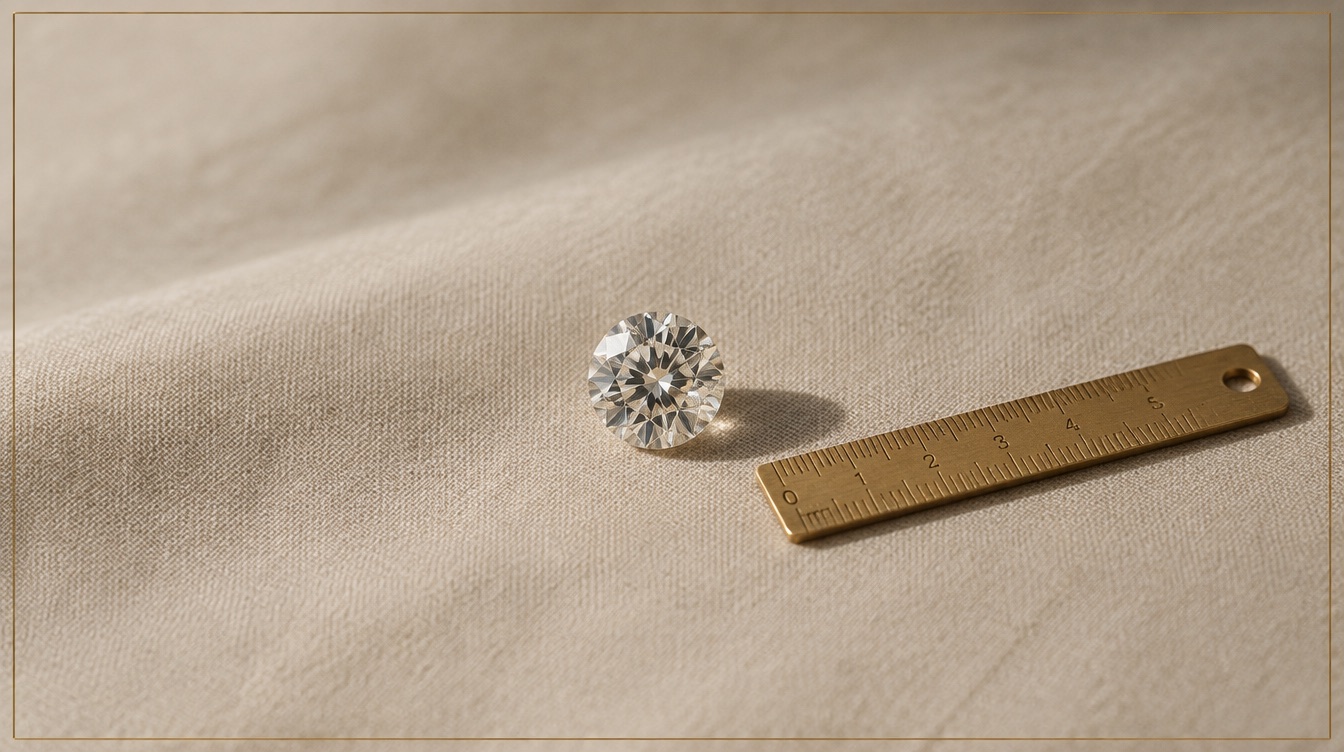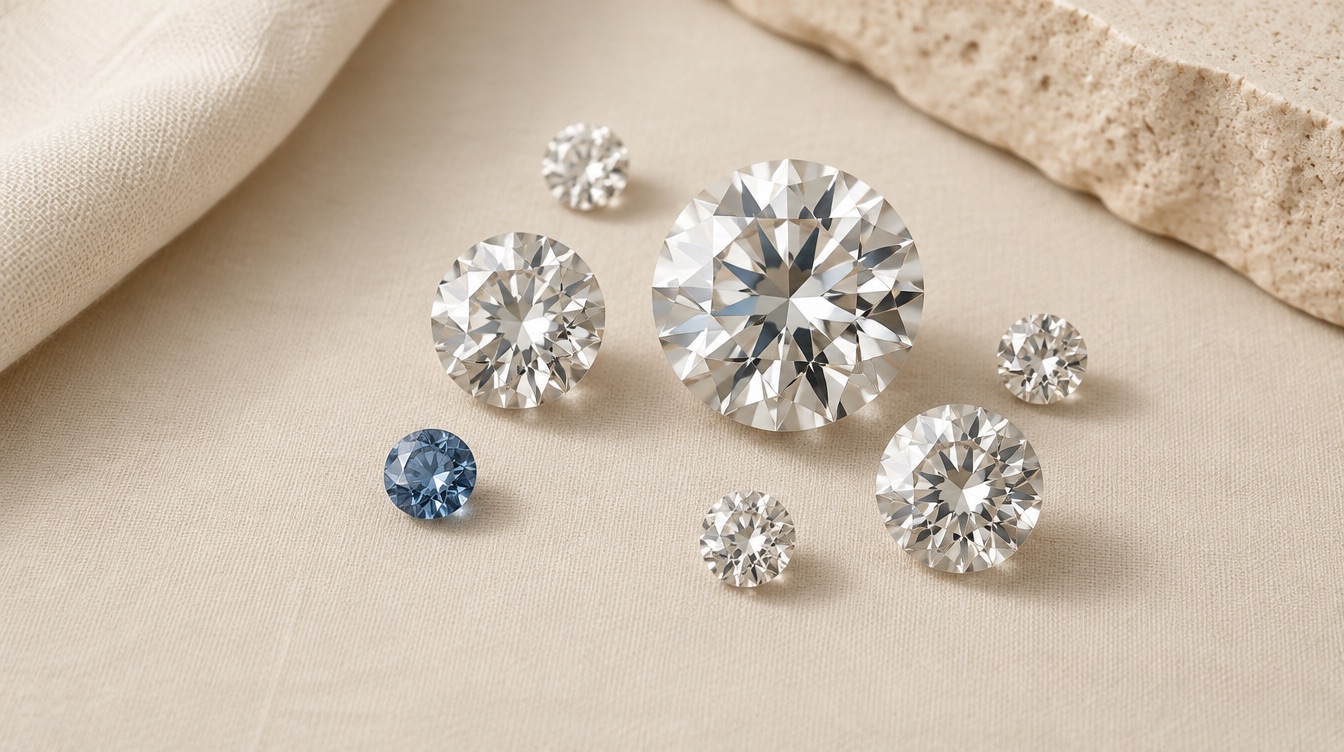
A lab-grown diamond manufacturer is a company that grows diamonds in a controlled reactor environment — using either chemical vapor deposition (CVD) or high-pressure high-temperature (HPHT) methods — rather than mining them, then cuts and polishes the resulting rough into finished, certified gemstones for the wholesale and retail trade.
This guide covers how lab-grown diamond manufacturing actually works, the difference between CVD and HPHT production methods, how manufacturing differs from cutting and wholesale distribution, what to evaluate when vetting a manufacturer or supplier, certification standards, and how lab-grown manufacturing fits into the broader diamond trade today.
The term "manufacturer" gets used loosely across the lab-grown diamond trade, and that looseness matters to a buyer trying to evaluate quality, consistency, and sourcing claims accurately. A jeweler who understands the actual production chain — growth, cutting, grading, distribution — and which parts a given company genuinely controls is far better equipped to vet a potential supplier than one relying on marketing language alone.
What "Lab-Grown Diamond Manufacturer" Actually Means
The term covers a range of different business models within the same broad category: some companies operate their own diamond-growing reactors directly, some purchase rough lab-grown material from growers and handle only cutting, polishing, and finishing, and many wholesale suppliers use "manufacturer" loosely to describe any point in the supply chain from raw growth through finished, certified stone. Understanding which part of that chain a specific company actually operates matters for a buyer evaluating claims about quality control, consistency, and traceability — a company growing its own rough has direct control over crystal quality from the start, while a company purchasing rough from third-party growers is really a cutting and finishing operation, whatever language it uses to describe itself.
How Lab-Grown Diamonds Are Actually Grown
Lab-grown diamonds form through one of two established production methods, both of which replicate the natural conditions that form diamonds underground, just compressed into a controlled industrial timeframe of weeks rather than the billion-plus years natural diamond formation takes.
| Method | How It Works | Typical Output |
|---|---|---|
| CVD (Chemical Vapor Deposition) | A diamond seed is placed in a sealed chamber filled with carbon-rich gas; the gas is heated into plasma, causing carbon atoms to bond to the seed layer by layer | High-purity crystal growth with strong control over consistency, the dominant modern method for gem-quality lab-grown diamond production |
| HPHT (High Pressure, High Temperature) | A diamond seed and carbon source are subjected to extreme pressure and heat, replicating the geological conditions of natural diamond formation more directly | Historically the older production method; can also be used to treat/enhance CVD-grown material's color |
Guru Diam's lab-grown catalog is CVD-only — a deliberate specialization choice covered in more detail below, not a claim that CVD is universally superior to HPHT for every possible use case.
CVD vs. HPHT: Why the Distinction Matters
Both methods produce genuine diamonds — chemically, physically, and optically identical to natural diamonds, verified and graded by the same major labs (GIA, IGI, GCAL) using the same 4Cs framework, with growth method disclosed on the certificate. The practical distinction for a buyer is less about finished-stone quality, since a well-executed CVD stone and a well-executed HPHT stone can both grade excellently, and more about production consistency, typical size and clarity ranges achievable by each method, and — for some buyers — a supplier's specialization and quality-control track record with one method specifically versus running both. A manufacturer that has built deep specialization and process control around a single growth method, rather than running both methods at lower depth each, often demonstrates more consistent output within that method's typical strengths.
From Rough to Finished Stone: The Full Manufacturing Chain
- Seed preparation and growth. A thin diamond seed is placed in the CVD or HPHT chamber, and growth proceeds over roughly several weeks depending on target size.
- Rough sorting and planning. Grown rough is evaluated to determine the best possible cut plan for each piece, balancing carat yield against clarity and symmetry potential.
- Cutting and polishing. Skilled cutters shape and facet the rough into a finished stone — the large majority of global diamond cutting, for both natural and lab-grown material, happens in specialized cutting centers, with Surat, India handling the majority of global cutting volume today.
- Grading and certification. The finished stone is submitted to an independent lab (GIA, IGI, or GCAL) for grading and certification, with growth method disclosed on the report.
- Distribution. Certified stones move to wholesale suppliers, who sell to jewelers, designers, and manufacturers for setting into finished jewelry.
A buyer evaluating a "manufacturer" should understand which of these stages a given company actually controls directly, since claims of quality control mean something different depending on whether a company is managing the full chain from growth through certification or only a portion of it.
What to Evaluate When Vetting a Lab-Grown Diamond Manufacturer
| Factor | Why It Matters |
|---|---|
| Independently verifiable certification | A report number should be directly look-up-able on the issuing lab's own website, confirming growth method and grade for the specific stone |
| Growth method transparency | A reputable manufacturer discloses CVD or HPHT clearly rather than using vague "lab-grown" language that obscures the method |
| Production vs. distribution clarity | Understanding whether a company grows, cuts, or only distributes helps set realistic expectations about quality-control claims |
| Consistency across orders | A manufacturer's ability to reliably fill repeat orders to consistent grade specifications matters more than any single stone's quality |
| Certification lab reputation | GIA, IGI, and GCAL each carry different market recognition; understanding which labs a manufacturer typically uses helps set customer expectations |
Common Misconceptions About Lab-Grown Diamond Manufacturing
- "Lab-grown diamonds are fake." They're chemically, physically, and optically real diamonds — the distinction from natural diamonds is origin (manufactured vs. mined), not authenticity.
- "All lab-grown diamonds are made the same way." CVD and HPHT are meaningfully different production methods with different typical strengths, not interchangeable synonyms.
- "A manufacturer that sells lab-grown diamonds necessarily grows them." Many companies described as manufacturers actually purchase rough or semi-finished material and handle cutting, finishing, and distribution rather than growth.
- "Bigger production volume automatically means better quality." Scale and quality control are related but distinct — a smaller, specialized operation can maintain tighter consistency than a larger, more generalized one, and vice versa.
How to Read a Lab-Grown Diamond Certificate
A lab-grown diamond certificate follows the same basic structure as a natural diamond report from the same lab — carat weight, color, clarity, and cut grade following the standard 4Cs framework — with growth method (CVD or HPHT) stated explicitly, usually near the top of the report alongside the shape and measurements. Some certificates also note whether a stone has undergone post-growth treatment, most commonly HPHT color treatment applied to as-grown CVD material to improve or adjust color grade; this should be disclosed just as clearly as the growth method itself, since an undisclosed treatment history would materially misrepresent the stone. A buyer reading a certificate for the first time should look specifically for the growth-method line, the treatment-disclosure section if present, and the lab's own report-number lookup tool to confirm the certificate matches the physical stone being sold.
What Drives Lab-Grown Diamond Pricing
| Factor | Effect on Price |
|---|---|
| Production capacity growth | More global growing capacity has driven per-carat pricing down substantially over the past several years, a trend expected to continue as capacity keeps expanding |
| Carat weight | Price increases with size, though far less steeply than natural diamonds, whose pricing accelerates sharply at certain carat thresholds due to rarity |
| Color and clarity grade | Higher grades command a premium, following the same 4Cs logic as natural diamonds, though the absolute price gaps between grades are typically smaller |
| Growth method | CVD and HPHT production costs and typical achievable sizes differ, which can affect relative pricing between otherwise comparable stones |
| Cutting and finishing quality | A well-cut stone with strong light performance commands a premium over a poorly cut stone of identical grade, same as with natural diamonds |
Understanding these drivers helps a jeweler explain lab-grown pricing to a customer accurately — the price gap between lab-grown and natural diamonds at equivalent grades reflects genuine differences in supply dynamics (manufacturing capacity vs. geological scarcity), not a quality difference in the finished stone.
How Lab-Grown Manufacturing Has Changed the Wholesale Market
The maturation of lab-grown diamond manufacturing over roughly the past decade has fundamentally changed wholesale diamond pricing and availability — production scale has grown substantially industry-wide, driving per-carat pricing down considerably from where it stood even five years ago, while quality and consistency have improved enough that lab-grown stones now compete directly with natural diamonds across most standard shapes and quality tiers rather than being treated as a niche alternative. This shift has given independent jewelers meaningfully more flexibility in serving different customer budgets — a lab-grown option lets a jeweler offer a larger, higher-clarity center stone at a price point that would only support a much smaller natural stone, without misrepresenting either option to the customer.
Certification Standards Across Growth Methods
GIA, IGI, and GCAL all certify both CVD and HPHT lab-grown diamonds using the same fundamental 4Cs grading framework applied to natural diamonds, with growth method and, where applicable, any post-growth treatment (such as HPHT color treatment applied to some CVD-grown material) clearly disclosed on the certificate. This standardized disclosure is what makes independent verification meaningful for a buyer regardless of which method produced a given stone — the certificate should specify growth method explicitly, not leave a buyer to infer it, and any color-treatment history should be disclosed as clearly as the growth method itself.
Why Guru Diam's Lab-Grown Catalog Is CVD-Only
Guru Diam's lab-grown diamond catalog is exclusively CVD-grown — no HPHT-grown stones anywhere in the lab-grown line — reflecting a deliberate specialization choice rather than a claim that HPHT-grown diamonds are categorically inferior. Concentrating exclusively on one growth method allows tighter, more consistent process control and quality standards across the catalog than running both methods at lower depth each would allow, the same specialization logic that benefits any manufacturing operation focused on doing one thing with real depth rather than several things more shallowly.
Sourcing From a Manufacturer vs. a Wholesale Distributor
A jeweler deciding between sourcing directly from a company that grows and cuts its own lab-grown diamonds versus a broader wholesale distributor carrying multiple manufacturers' output faces a genuine tradeoff: direct-from-manufacturer sourcing can offer tighter consistency and sometimes better pricing at volume, while a broader wholesale distributor typically offers wider selection across shapes, sizes, and quality tiers from a single account relationship. For most independent jewelers, particularly those not ordering at manufacturer-minimum volumes, a wholesale supplier offering consistent, well-certified inventory across a broad catalog — natural and lab-grown, standard and antique cuts — provides more practical value than managing multiple direct-manufacturer relationships to cover the same range.
Manufacturer Minimum Order Quantities and Why Most Jewelers Use a Distributor
Direct manufacturer relationships in the lab-grown diamond industry frequently come with minimum order quantities or volume commitments that make sense for large retail chains or high-volume online sellers but are impractical for a typical independent jeweler placing smaller, more varied orders across shapes and sizes as specific customer needs come in. A wholesale distributor carrying multiple manufacturers' output, by contrast, typically supports much smaller per-order minimums — down to individual stones for a specific customer request — while still offering trade pricing, since the distributor aggregates volume across many jeweler-customers rather than requiring any single buyer to commit to manufacturer-level volume. For most independent jewelers, this makes a wholesale distributor relationship the more practical sourcing model, reserving direct-manufacturer relationships for larger operations with the order volume to justify them. A distributor relationship also simplifies growth-method and quality consistency for the jeweler: rather than managing separate accounts and separate minimums with a CVD specialist and an HPHT specialist, a single distributor account carrying a curated, consistently graded catalog covers the range most independent jewelers actually need.
Environmental and Sustainability Claims: What's Verifiable
Lab-grown diamond marketing frequently emphasizes environmental advantages over mined diamonds, and while lab-grown production does avoid the large-scale land disturbance associated with diamond mining, the full picture is more nuanced than a simple "greener" claim suggests — CVD and HPHT growth chambers require substantial, sustained energy input, and a manufacturer's actual environmental footprint depends heavily on its energy source and facility efficiency, factors that vary considerably between manufacturers and are rarely disclosed with enough specificity for a buyer to independently verify. A jeweler discussing sustainability with a customer is better served by acknowledging this nuance — lab-grown diamonds avoid mining-related land disturbance, but broad "eco-friendly" claims about manufacturing energy use should be treated with the same skepticism as any unverifiable environmental claim, rather than repeated as an unqualified selling point. The most defensible, verifiable claim a jeweler can make is the narrow one — lab-grown production doesn't require excavating and processing large volumes of earth the way mining does — without extending that into a broader carbon-footprint or overall-sustainability comparison that individual manufacturers generally haven't published the data to support.
Cutting Origin and What It Means for Manufacturing Claims
A meaningful share of global diamond cutting and polishing — for both natural and lab-grown stones — happens in specialized cutting centers, with Surat, India handling the majority of global volume today given its scale, skilled labor base, and cost efficiency built up over decades of specialization. Guru Diam's diamonds are cut and polished in India before final grading and shipment from the company's New York and Los Angeles locations, a standard and well-established part of how modern diamond manufacturing works industry-wide, not a departure from typical practice. A buyer evaluating any manufacturer's claims should understand that "cut in-house" and "grown in-house" are two separate claims that don't necessarily both apply to a given company, and that centralized, specialized cutting is the norm across the modern diamond trade rather than an exception specific to any one supplier.
Sourcing Lab-Grown and Natural Diamonds From Guru Diam
Guru Diam is a trade-only wholesale supplier carrying CVD-only certified lab-grown diamonds alongside natural diamonds, certified loose stones, and finished and custom jewelry — antique cuts, standard fancy shapes, and round brilliant all included, with IGI, GIA, and GCAL certification available. In-stock inventory ships same-day from New York (before 6pm EST) and Los Angeles (before 4pm PST), and custom engagement rings are finished in 4-6 days, unbranded by default for jewelers reselling as their own.
Buyers can browse certified loose diamond inventory through the certified diamonds category, source matched pairs through matching pairs, and review fancy color stones through fancy color loose diamonds. Trade accounts can review terms at the wholesale hub or apply through trade partner, and jewelers building a full piece can work through custom jewelry for a setting finished in 4-6 days.
Questions to Ask a New Lab-Grown Diamond Supplier
Before committing to a new lab-grown supplier relationship, a jeweler should get clear answers to a short list of practical questions: which growth method (or methods) the supplier's catalog covers and whether that's disclosed consistently on certificates; which certification labs the supplier typically uses and whether report numbers can be verified independently before an order ships; what the supplier's return or exchange policy looks like for stones that don't match expectations on arrival; and how consistently the supplier has historically filled repeat orders to the same grade specifications. A supplier willing to answer all of these clearly and specifically, rather than with vague reassurance, is generally a stronger long-term sourcing partner than one that resists direct questions about its own production and certification practices.
Where Lab-Grown Diamond Manufacturing Is Headed
Industry-wide, lab-grown diamond manufacturing capacity has continued expanding, with ongoing improvements in growth-chamber efficiency, larger achievable rough sizes, and continued downward pressure on per-carat pricing as production scales further. For a wholesale buyer, this trajectory generally means continued improvement in the price-to-quality ratio available at every size and grade tier over time, alongside growing customer familiarity and comfort with lab-grown as a legitimate, well-established category rather than an emerging novelty — a shift that has already meaningfully reshaped how independent jewelers plan inventory and pricing across their full diamond offering, not just a lab-grown-specific product line. Jewelers who built their lab-grown offering several years ago should periodically revisit both pricing and supplier relationships, since a manufacturer or distributor that was competitive at the time may no longer reflect current market capacity, pricing, or certification standards as the category has matured this quickly.
Frequently Asked Questions
What's the difference between a lab-grown diamond manufacturer and a wholesale supplier?
A manufacturer specifically grows and/or cuts diamonds; a wholesale supplier distributes finished, certified stones, sometimes from multiple manufacturers. Some companies operate across both functions, but the terms aren't automatically interchangeable.
Is CVD or HPHT better for lab-grown diamonds?
Neither is categorically better — both produce genuine, gem-quality diamonds when executed well. CVD is the dominant modern method for gem-quality production and offers strong consistency; HPHT is also used for growth and for treating some CVD-grown material's color.
How can I verify a lab-grown diamond manufacturer's quality claims?
Check independently verifiable certification (GIA, IGI, or GCAL report number looked up directly on the issuing lab's site), confirm growth method disclosure, and evaluate consistency across multiple orders rather than a single stone.
Are lab-grown diamonds real diamonds?
Yes. Lab-grown diamonds are chemically, physically, and optically identical to natural diamonds — the distinction is origin (grown vs. mined), not authenticity, and they're graded using the same 4Cs framework by the same major labs.
Where are most lab-grown diamonds cut and polished?
A large share of global diamond cutting, for both natural and lab-grown stones, happens in specialized cutting centers, with Surat, India handling the majority of global cutting volume today — a standard, established part of modern diamond manufacturing.
Why do some manufacturers only offer CVD, not HPHT?
Specializing in one growth method allows a manufacturer tighter, more consistent process control than splitting focus across both methods at lower depth each — a deliberate quality-focused choice rather than a claim that the other method is inferior.