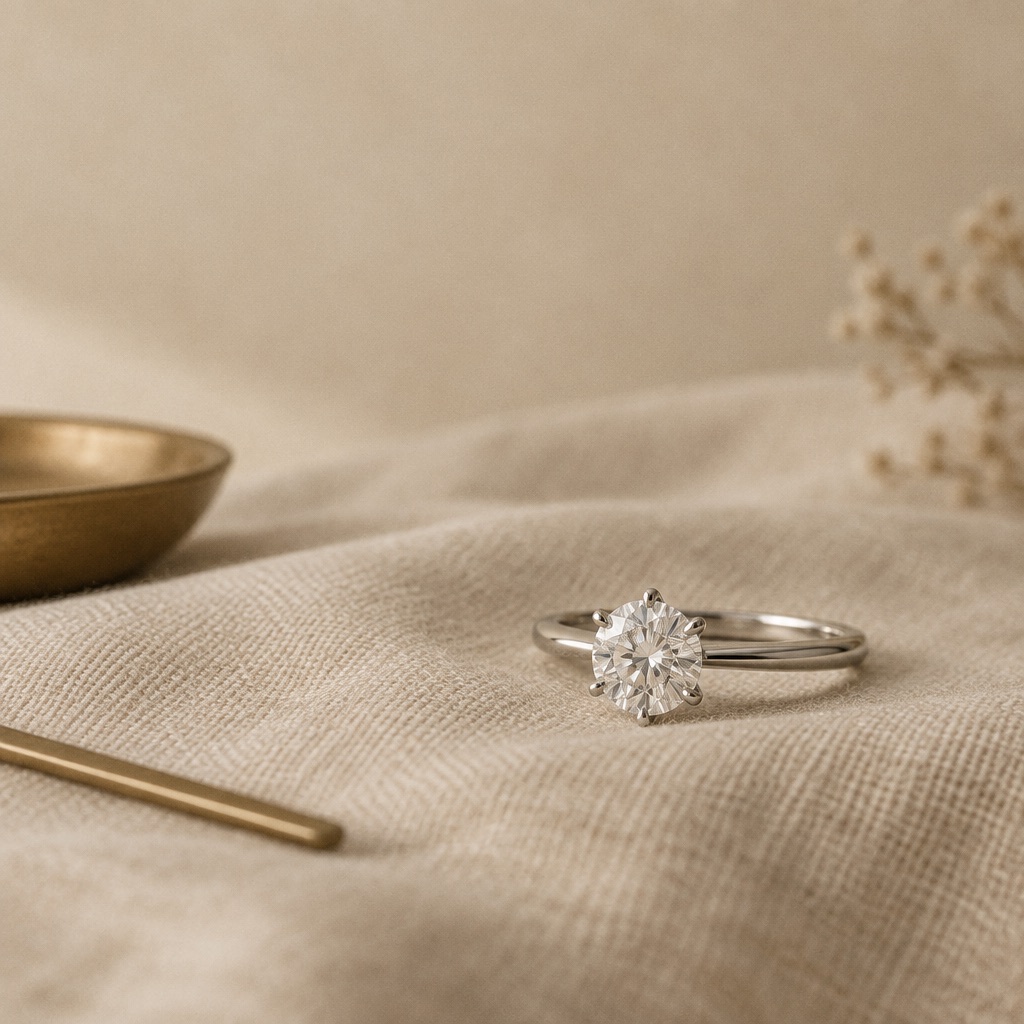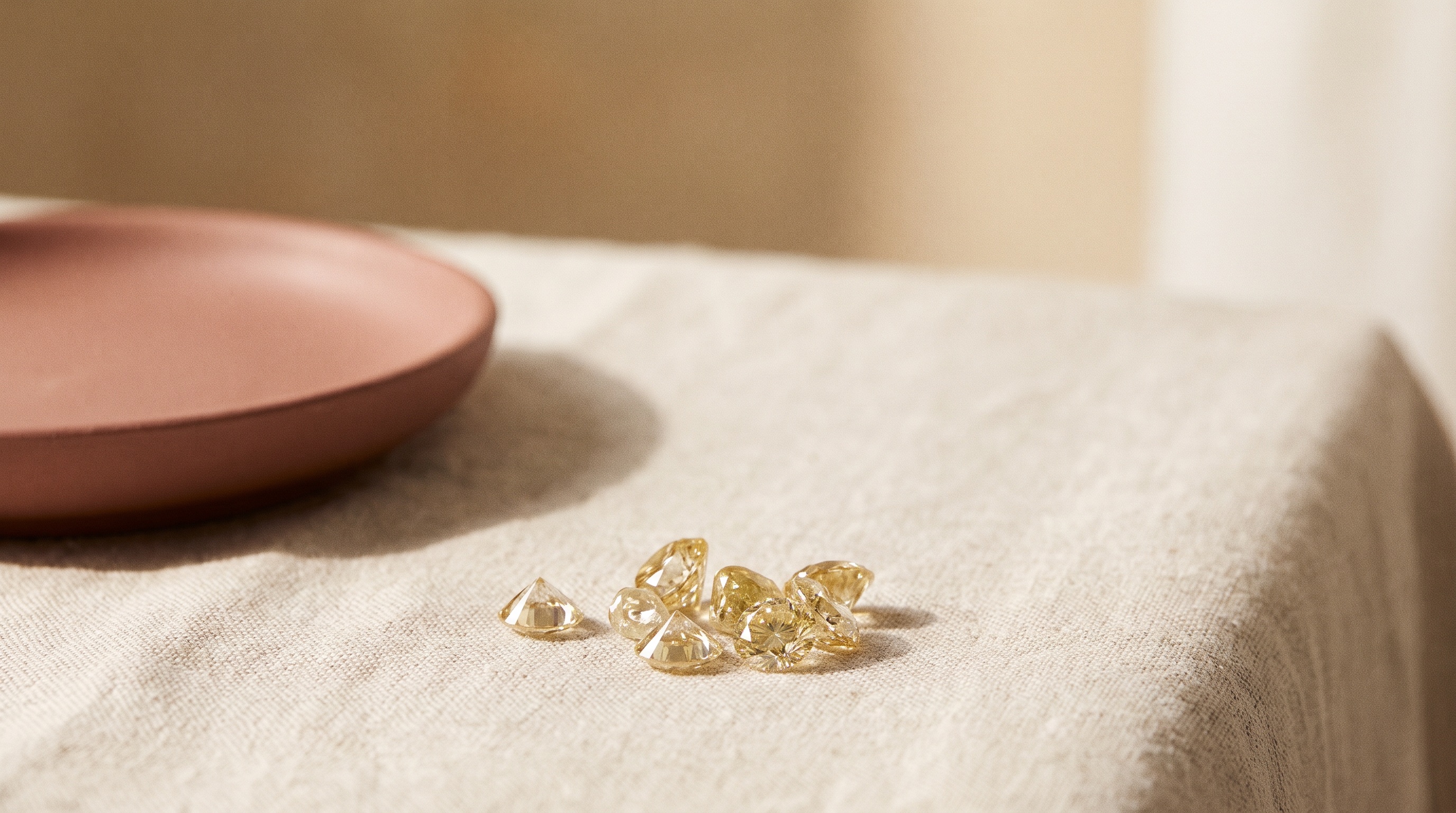
L color is a diamond color grade on the GIA scale, sitting in the middle of the "faint" color range (K-M), one step past K and one step before M. An L color diamond has a light, generally visible yellow or brown body tint — more consistently apparent than K across a wider range of lighting conditions, though still well short of the deeper color seen in fancy yellow or fancy brown diamonds. L is a deliberate value choice in the trade: it delivers meaningfully more carat weight or budget headroom than near-colorless grades, at the cost of a face-up warmth that most buyers will notice without needing a side-by-side comparison.
Where L Color Sits on the GIA Scale
| Range | Grades | Description |
|---|---|---|
| Colorless | D, E, F | No detectable color, even to a trained grader without comparison |
| Near-colorless | G, H, I, J | Color present but difficult to detect without a side-by-side comparison |
| Faint | K, L, M | Faint yellow or brown tint noticeable, especially in larger stones; L sits at the middle of this range |
| Very Light | N-R | Light color clearly visible to the naked eye |
| Light | S-Z | Noticeable color throughout; beyond Z, stones are graded as fancy color |
L sits directly between K and M, and in practice reads closer to a mild, warm champagne tone than a purely "white" diamond, even in favorable lighting. It's the point on the color scale where most buyers stop thinking of the stone as "a white diamond with some warmth" and start thinking of it as "a warm-toned diamond" — a shift in framing that matters for how the stone should be marketed and set.
What L Color Actually Looks Like
Face-up, an L color diamond typically presents as a light warm white to pale champagne, with the tint visible across the whole stone rather than localized to one area — consistent with body color rather than an inclusion. Unlike J or even K, L color's warmth generally persists across a wider range of lighting, including some daylight conditions, rather than appearing only under bright cool light. That said, L is still firmly within the "faint" category rather than the "very light" (N-R) range, meaning the color remains subtle rather than strongly saturated, and it responds well to the same lighting and metal strategies used for K, just with a smaller margin for disguising the tint.
Settings That Help (and Settings That Don't)
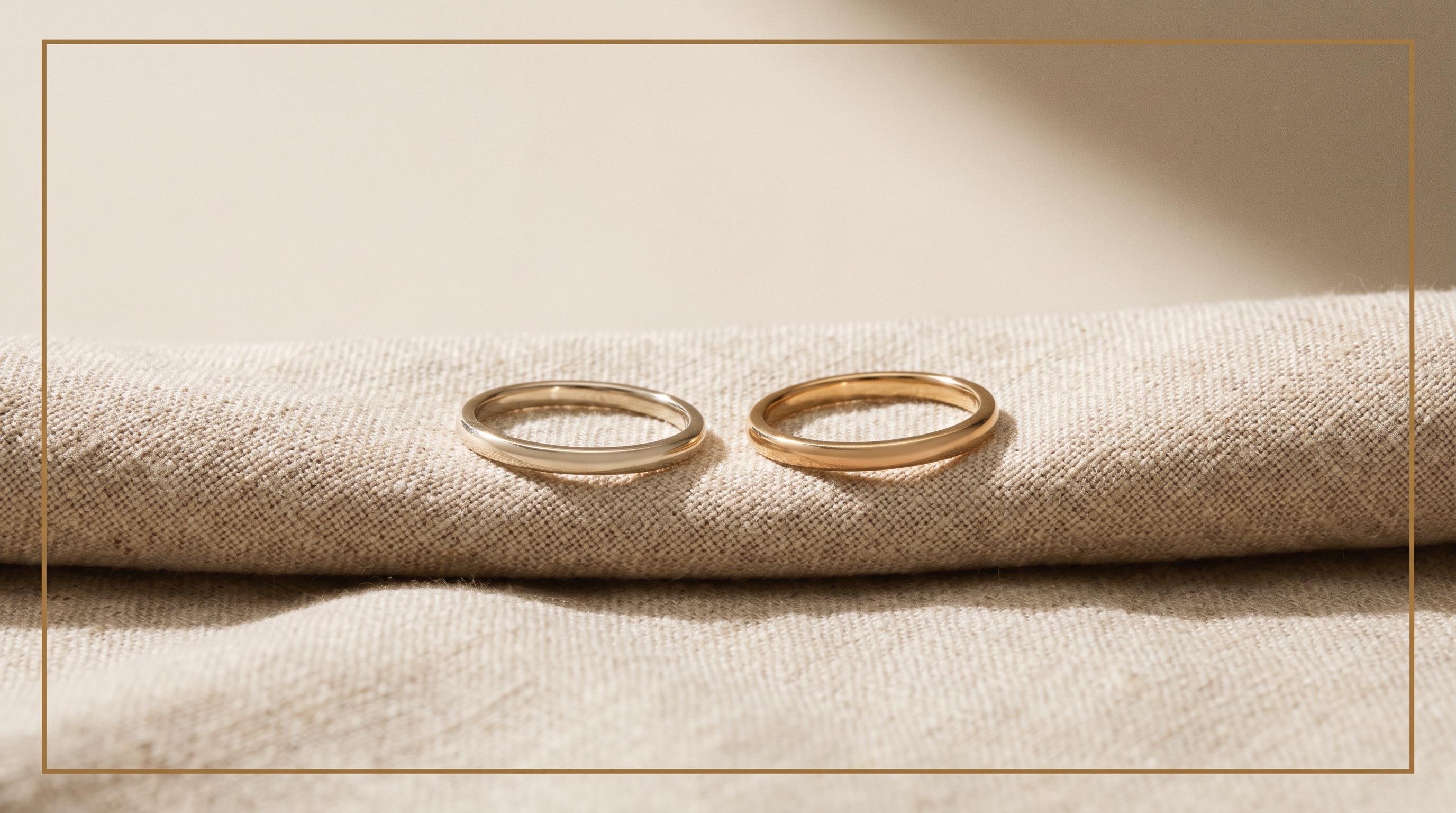
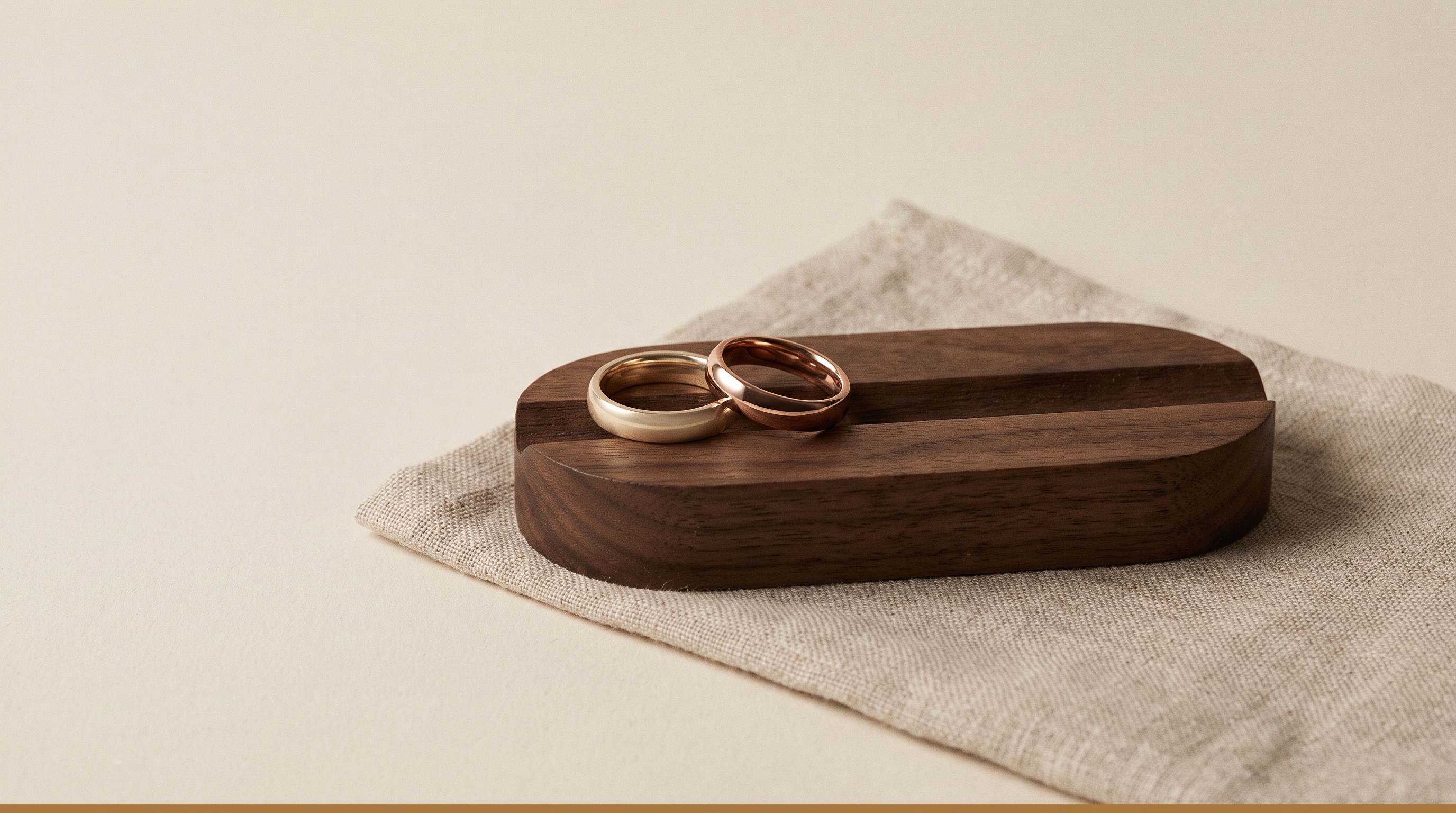
- Yellow gold and rose gold remain the strongest match for L color, and at this grade the pairing moves from "flattering" to close to essential for buyers who want the stone to read as intentional rather than compromised. The warm metal harmonizes with the stone's own tone rather than fighting it.
- White gold and platinum create strong contrast against L color and are generally not recommended unless the buyer has explicitly seen and accepted the look — in white metal, L color's tint reads clearly even to buyers without a trained eye.
- Warm, textured, or antique-style settings — filigree, milgrain, bezel-set designs — continue to pair well with L color, echoing how warmer-toned stones were historically set before colorless grading became the dominant modern preference.
L Color vs. Nearby Grades
| Grade | Face-up appearance | Best setting | Value position |
|---|---|---|---|
| J | Near-colorless with faint detectable warmth | Yellow or rose gold recommended; white metal workable | Best value in near-colorless range |
| K | Faint, generally noticeable warm tint | Yellow or rose gold strongly recommended | Strong budget/size choice |
| L | Faint tint, consistently visible across most lighting | Yellow or rose gold essential | Aggressive budget/size choice |
| M | Most visible tint within the faint range, borders on light champagne | Warm metal essential; best in vintage or statement designs | Maximum size-per-dollar within the faint tier |
The step from K to L is smaller in visual terms than the step from J to K, but it still meaningfully narrows the settings and shapes where the stone reads well. Buyers choosing L over K are almost always doing so specifically for the additional budget or carat headroom, having already accepted a visible warm tone as part of the deal.
Carat Size and L Color: Why Bigger Stones Show More Warmth
As with every color grade, warmth accumulates with the amount of material light travels through, so a larger L color stone shows more visible tint than a smaller one at the same grade — and because L already starts from a more visible baseline than K, this scaling effect shows up sooner.
| Carat range | L color experience |
|---|---|
| Under 0.50ct | Warmth is present and generally noticeable, though still modest; reads as a warm-white stone |
| 0.50-1.00ct | Tint is clearly visible face-up across most lighting; yellow or rose gold is close to essential |
| 1.00-2.00ct | Color becomes a defining visual feature; best suited to buyers who want the warm-toned look specifically |
| 2.00ct+ | Approaches the visual character of the very light (N-R) range in practice; confirm the buyer wants this look before committing at larger sizes |
L Color and Overall Stone Character
Beyond color and cut, L color stones benefit from the same holistic evaluation as any other diamond — clarity, symmetry, and polish all contribute to how the finished piece reads. A well-cut, eye-clean L color stone with strong polish and symmetry will generally outperform a poorly proportioned stone at a higher color grade in overall visual appeal, which is why experienced buyers and jewelers evaluate the whole picture rather than fixating on the color letter in isolation. This is especially relevant for L color, where the temptation to treat color as the single deciding factor is strongest simply because the tint is the most immediately noticeable characteristic.
L Color and Fluorescence
Strong or very strong blue fluorescence can, in some L color stones, visually offset a portion of the yellow body tone under daylight or UV-rich lighting, similar to the effect seen at K and J. The effect is stone-specific and shouldn't be assumed, but for an L color diamond with strong fluorescence, it's worth evaluating the combination directly — occasionally the pairing reads noticeably whiter than the color grade alone would suggest, which can be a useful angle for a budget-conscious buyer who's sensitive to the tint.
Is L Color Diamond Good for an Engagement Ring?
It can work well, specifically for buyers who want or accept a warm-toned stone as part of the design, in a yellow or rose gold setting, in a brilliant-cut shape, and generally under about one carat. L color is a harder sell for buyers who want a white-reading diamond but are shopping primarily on price without understanding what they're trading off — the tint at L is visible enough that it should never be a surprise after the sale. The single best practice for L color engagement ring sales is showing the actual stone, or strong photography of it, before the client commits, rather than relying on the grade letter alone to set expectations.
L Color in Lab-Grown vs. Natural Diamonds
Color grading methodology is identical between CVD lab-grown and natural diamonds — the same D-to-Z scale, the same master-stone comparison process, applied by the same major labs. L color lab-grown diamonds present the same visual characteristics as L color natural stones, and the guidance above — favor warm-tone metal, understand the carat-scaling effect, set expectations clearly — applies equally to both.
A Practical Framework for Recommending L Color
L color earns a genuine recommendation specifically for buyers who've expressed interest in a warm-toned or vintage-style stone, want the largest possible carat weight for a given budget, or are working within antique-cut jewelry where warmth is period-appropriate rather than a flaw. For buyers who simply want the whitest possible stone at the lowest price without a specific warm-tone preference, K or a near-colorless grade typically serves them better even at a smaller size. The clearest signal for whether L is right for a given client: have they seen the stone (or strong photography of a comparable one) and reacted positively, independent of the grade letter itself?
Common Misconceptions About L Color
- "L color is basically a fancy yellow diamond." L is a faint-tinted white diamond graded on the D-Z scale — fancy yellow diamonds have a distinctly stronger, more saturated color and sit on an entirely separate grading scale beyond Z.
- "L color always looks poor quality." In warm metal, with the right cut and shape, L color reads as an intentional warm-white stone — many buyers, particularly in vintage and antique-inspired jewelry, choose it specifically for that look.
- "There's no point paying attention to cut once you're this far down the color scale." Cut quality still meaningfully affects how bright an L color stone looks; a well-cut L can visually outperform a poorly cut K or even J.
How Color Grading Actually Works
GIA color grading is performed by trained graders comparing an unmounted diamond, viewed table-down, against a set of master stones with verified color grades, under controlled daylight-equivalent lighting. This unmounted, face-down condition is deliberately the most revealing way to assess color, which is part of why a diamond's grading-condition appearance and its everyday, mounted, face-up appearance can differ — often to L color's benefit once it's set in a complementary metal. Reputable labs, including GIA, IGI, and GCAL, typically use more than one grader to reach consensus on borderline calls, which matters at grade boundaries like K/L and L/M where a small shift in judgment changes the category.
Color grading captures body color specifically, independent of fluorescence, which is graded and reported as a separate field even though the two occasionally interact visually as covered above.
Why L Sits Where It Does: The Middle of the Faint Range
The faint range (K-M) exists as a workable category within a color gradient that doesn't have natural hard boundaries. L sits at the midpoint of that range because its tint is meaningfully more visible than K's across a wider range of lighting, yet still clearly short of the more saturated, consistently visible color that defines the very light (N-R) range. Understanding L's position — genuinely warm, but not approaching fancy-color territory — helps set accurate expectations for a client considering it.
L Color and Cut Quality
Cut quality remains one of the most effective levers for how an L color stone actually presents. A diamond cut to strong proportions returns more light through the crown, creating brightness that can visually offset body color — a well-cut L "reads" brighter and slightly whiter than its technical grade alone would suggest. A poorly cut L color stone, by contrast, looks duller and lets the tint show through more prominently. For L color specifically, prioritizing an Excellent or Ideal cut grade is one of the most reliable ways to keep the stone looking lively rather than flat.
Comparing L Color Across Different Diamond Shapes
- Round brilliant remains the most forgiving shape for L color, with the most effective light-scattering facet pattern of any cut.
- Cushion and oval handle L color reasonably well, though larger ovals can show more color concentration toward the pointed ends.
- Princess cut tends to hold visible color in its corners more than round or cushion — worth a closer look on larger L color princess cuts specifically.
- Emerald and asscher (step cuts) are the least forgiving shapes for L color; their open facets show body color readily, and step-cut L color should be evaluated carefully in person or via strong photography before committing.
L Color for Side Stones vs. Center Stones
Color-matching between a center stone and side or accent stones matters more at L than at higher grades, since the contrast between an L color center and whiter side stones is easy to spot. The more visually cohesive approach either matches side stone color closely to the center stone's L grade, or leans fully into a warm-tone metal and design that unifies the whole piece. For melee and pavé work, color grade requirements typically relax further than for a center stone, since small facets minimize how much body color reads at that scale — L color melee is a genuinely practical, budget-friendly choice for accent work in a warm-metal piece.
L Color for Antique and Vintage-Style Jewelry
L color fits naturally into antique-cut and vintage-inspired jewelry, where warmth reads as period-authentic rather than as a shortfall. Old Mine and Old European cut stones were historically set with a range of body color, including grades well into the faint range, even in fine period pieces — an L color old mine cut in yellow gold with a button-back collet genuinely reflects how these stones were sourced and worn historically. For jewelers building antique-inspired collections, L color is often a strong aesthetic and budget fit, particularly for buyers specifically seeking that warm, period-correct look rather than a modern colorless aesthetic in an antique mounting.
Evaluating a Specific L Color Stone Before Buying
Because L color's tint is consistently visible, the grade letter alone underrepresents how important it is to see the actual stone before committing, especially for a center stone. Request photography or video under both daylight-equivalent and warm indoor lighting, ask whether the hue leans yellow or brown (yellow generally reads more flattering and intentional than brown at this grade), and where possible view the stone next to a whiter reference. A certified report confirms the grade but doesn't convey hue character — for L color, seeing the stone directly is the single most useful step a buyer or jeweler can take before finalizing a significant purchase.
L Color and Resale or Upgrade Considerations
Buyers occasionally ask how color grade affects a stone's long-term value. L color diamonds generally hold a lower resale value than near-colorless or even K color grades, consistent with their lower purchase price — this reflects the same color-price gradient that runs in both directions across the scale, not a downside specific to L. For jewelers running trade-in or upgrade programs, it's worth setting the expectation early that an L color stone purchased primarily for size or budget will typically trade toward another value-tier stone rather than a premium colorless one, unless the client is specifically planning to move up the color scale as part of a future upgrade.
Regional and Cultural Preference Variance
Tolerance for warmer color grades like L varies meaningfully by market and by individual taste. In some regions and among buyers with a strong preference for antique or vintage aesthetics, a warm-toned diamond in yellow gold is the preferred, traditional look, chosen deliberately rather than as a fallback. In markets or client segments that strongly favor an icy-white, colorless look, L color needs careful framing and tends to work best as an accent stone, in vintage-inspired center pieces, or for clients who've explicitly prioritized size or budget over color purity. Identifying which category a given client falls into before recommending L color heads off most of the friction that can come up with grades this far down the color scale.
Comparing L Color to Fancy Color Diamonds
Because L color's warmth is more consistently visible than higher grades, buyers sometimes wonder how it relates to fancy color diamonds — the distinction is worth making clearly. L is still a "white" diamond by GIA's classification system, graded on the standard D-Z scale; its color is a mild, faint tint rather than a true hue. Fancy color diamonds (yellow, brown/cognac, and other natural colors) are graded on a completely separate scale once color saturation exceeds the Z boundary, and their color is the primary value driver of the stone rather than a factor that reduces value the way it does across D-Z. An L color diamond should never be marketed or priced as if it approaches fancy color territory — the two categories serve different buyer intents entirely.
Frequently Asked Questions
Is L color diamond noticeably yellow?
It carries a light, generally visible warm tint rather than a strong yellow — more consistently noticeable than K color, but still well short of the saturation seen in fancy color diamonds.
What's the best setting for L color diamonds?
Yellow gold or rose gold, which harmonize with the stone's warmth. White gold and platinum tend to make the tint stand out more clearly at this grade.
Is L color a good value for an engagement ring?
Yes, for buyers who want or accept a warm-toned stone, especially in yellow or rose gold and under about one carat — the budget or size advantage over near-colorless grades is substantial.
Does L color look worse in a larger diamond?
Yes — warmth becomes more visible as carat size increases because light travels through more material, and L already starts from a more visible baseline than higher grades.
How does L color compare to K color?
L sits one step warmer than K on the GIA scale; its tint is more consistently visible across a wider range of lighting conditions, though the difference between the two is smaller than the difference between J and K.
Is L color diamond suitable for antique-style jewelry?
Very much so — L color's warmth reads as period-authentic in antique-cut and vintage-inspired designs, particularly Old Mine and Old European cuts set in yellow gold.
Does L color affect a diamond's resale value?
Yes — L color diamonds generally resell at a lower value than near-colorless grades, mirroring the same price gradient that made the stone more affordable to buy in the first place.
Sourcing L Color from Guru Diam
Guru Diam stocks a full color range including L across our certified loose diamond inventory, CVD lab-grown with IGI, GIA, and GCAL certification available. Our team can help match color grade to setting metal, shape, and design intent for a specific commission — particularly useful when a client is deliberately choosing warmth for a vintage or antique-inspired piece rather than treating it as a compromise. In-stock inventory ships same-day from New York or Los Angeles, our custom jewelry program finishes pieces in 4-6 days from CAD approval, and trade accounts can review our full color and shape matrix through the wholesale hub or a trade partner account.
Every stone we carry, L color included, ships with its full GIA, IGI, or GCAL grading report, and our team can pull side-by-side comparison photography against higher color grades on request — the most reliable way to confirm a client's expectations match the stone before a significant purchase. For commissions where setting metal, shape, and design language all interact with the color decision, we're glad to walk through the specific combination directly with your team.