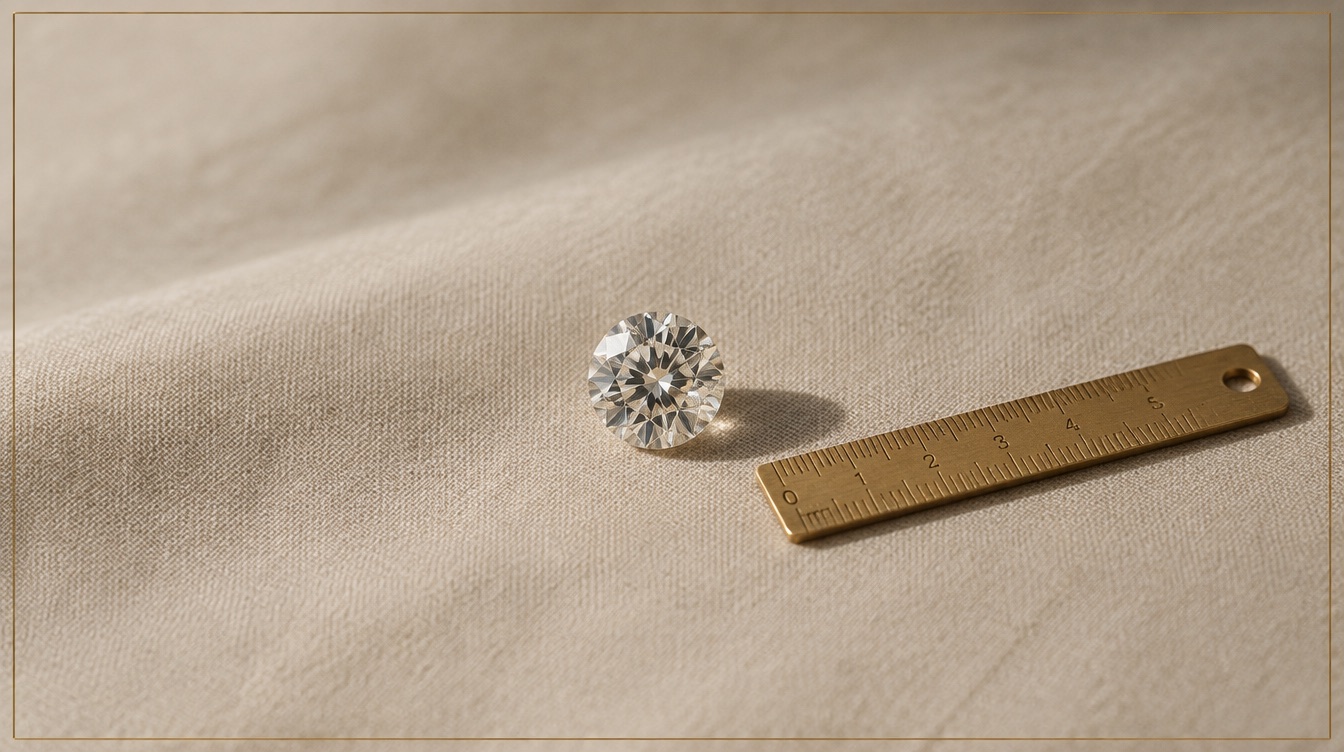
Jwaneng is a large open-pit kimberlite diamond mine in southern Botswana, operated by Debswana (a 50/50 joint venture between the Botswana government and De Beers), and it is frequently described in the diamond trade as the richest diamond mine in the world by value, reflecting the exceptional quality and volume of gem-quality stones recovered relative to the ore processed there. Operating continuously since 1982, Jwaneng has been central to Botswana's diamond-driven economy for over four decades and remains one of the most closely watched single mining operations in the global natural diamond trade.
This guide explains what Jwaneng actually is, how it operates, why it carries the "richest mine" reputation, its role within Botswana's broader diamond economy, and what wholesale buyers should understand about how mine-level supply from an operation like Jwaneng connects to the broader global natural diamond trade.
Where Jwaneng Is Located and How It Started
Jwaneng is located in southern Botswana, roughly 120 kilometers west of the capital Gaborone, near the town that shares the mine's name. The mine's kimberlite pipe was discovered in the 1970s and began production in 1982, roughly a decade after Botswana's first major mine, Orapa, entered operation. Jwaneng's discovery and development built directly on the institutional and technical foundation Orapa had already established — the same Debswana partnership structure, the same large-scale open-pit kimberlite mining approach — but Jwaneng's ore quickly proved exceptional even by the standards of Botswana's other rich deposits.
How Jwaneng Operates as a Mine
Jwaneng is an open-pit kimberlite mine, meaning diamond-bearing ore is extracted from a large surface excavation rather than through underground tunneling, a method well suited to Botswana's large, near-surface kimberlite pipes. The mine processes enormous volumes of ore to recover its diamonds, a normal characteristic of kimberlite mining generally, where diamonds represent an extremely small fraction by weight of the total rock processed. What sets Jwaneng apart is the exceptional concentration and quality of gem-quality stones within that processed ore relative to other major mines worldwide, which is the basis for its "richest mine by value" reputation in the trade.
As with other long-running open-pit operations, Jwaneng's pit has grown substantially deeper over its operating decades, and Debswana has invested significantly in extending the mine's productive life through deeper pit development and planning for eventual underground mining phases as the most accessible near-surface ore is worked out.
Why Jwaneng Is Called the World's Richest Diamond Mine
| Factor | What It Means |
|---|---|
| Value per tonne of ore | Jwaneng's ore yields an exceptionally high dollar value of diamonds relative to the volume of rock processed, the basis of the "richest by value" description |
| Gem-quality proportion | A high share of Jwaneng's output is gem-quality rather than industrial-grade, directly driving its per-carat value |
| Consistent output | Jwaneng has maintained strong production quality across four decades of continuous operation rather than a single exceptional but short-lived find |
| Scale | Large enough operation that its exceptional per-tonne value translates into genuinely significant total output, not just a small specialty deposit |
"Richest by value" is a distinct claim from "largest by volume" — Russia and other major producers process more total carats, but Jwaneng's combination of scale and exceptional per-tonne value is what earns it the specific "richest mine" description used throughout the trade.
Jwaneng's Role in Botswana's Diamond Economy
Jwaneng is widely considered the single most economically significant mine within Botswana's Debswana portfolio, a meaningful distinction in a country where diamond mining has historically driven a substantial share of national GDP, government revenue, and export earnings. Because Botswana's government holds a direct 50% ownership stake in Debswana, Jwaneng's output translates unusually directly into public revenue compared to a mine operated under a purely private, royalty-only structure — part of the broader partnership model that has made Botswana a frequently cited example of resource wealth managed for broad national benefit rather than flowing primarily to a foreign operator or a narrow domestic elite.
How Jwaneng's Rough Diamonds Reach the Market
Rough diamonds recovered at Jwaneng are sorted and valued domestically in Botswana before entering the broader international trade, consistent with Botswana's deliberate policy over the past two decades to capture more value domestically rather than exporting all rough stones for sorting and sale elsewhere. From there, rough stones move into the international trade pipeline — sold to manufacturers and cutting houses, with a large share ultimately cut and polished in Surat, India, which handles the majority of global cutting volume, before being graded by labs like GIA, IGI, or GCAL and entering wholesale and retail markets worldwide.
Jwaneng vs. Orapa: Botswana's Two Flagship Mines
| Aspect | Jwaneng | Orapa |
|---|---|---|
| Location | Southern Botswana | Central Botswana |
| Operating since | 1982 | 1971 |
| Primary reputation | Richest mine in the world by value | One of the largest mines by area and among the highest by volume |
| Character | Exceptional value concentration per tonne of ore | Botswana's founding mine, large-scale high-volume production |
Both mines are central to Debswana's overall output, and both illustrate different dimensions of what makes a diamond mine significant — Orapa for its founding role and sheer scale, Jwaneng for the exceptional quality and value concentration of its ore.
Kimberley Process and Ethical Sourcing Standing
As a Debswana operation, Jwaneng's production falls under Botswana's Kimberley Process Certification Scheme compliance, the international framework certifying rough diamond exports as conflict-free. Botswana's diamond industry, Jwaneng included, is widely regarded in the trade as one of the more transparent and well-regulated national diamond sectors globally, reflecting Botswana's stable governance and its direct government partnership in mining operations, which gives the state significant visibility into production and export practices.
Jwaneng Diamonds vs. Lab-Grown CVD Diamonds
| Aspect | Jwaneng Natural Diamonds | Lab-Grown CVD Diamonds |
|---|---|---|
| Origin | Mined from a kimberlite pipe, formed over 1+ billion years | Grown in a lab reactor over weeks using chemical vapor deposition |
| Certification | Graded by GIA, IGI, GCAL, and others under standard natural-diamond reporting | Graded by the same labs, with growth method clearly disclosed on the report |
| Traceability | Kimberley Process-certified at export; Botswana has invested in enhanced domestic traceability | Traceable to a specific grower/reactor batch |
| Supply dynamics | Finite — tied to Jwaneng's remaining productive mine life | Scales with manufacturing capacity, not geological scarcity |
Neither origin determines a stone's visible quality — a well-cut, well-graded diamond recovered at Jwaneng and a well-cut, well-graded lab-grown CVD diamond can look identical to the naked eye and carry equivalent 4Cs grades. The distinction buyers weigh is origin, price per carat, supply dynamics, and, for some buyers, the significance of a stone's specific mine-level provenance.
Why Jwaneng's Story Matters for a Wholesale Buyer
Understanding Jwaneng's specific reputation helps a trade buyer speak accurately to customers who ask detailed provenance questions, particularly buyers who specifically value or ask about natural diamond origin at the mine level rather than simply the country level. That said, mine-specific sourcing for an individual stone typically isn't something a retail buyer can specify or guarantee at the point of purchase unless working with a supplier who tracks and discloses mine-of-origin data specifically — most natural diamond inventory moves through international trading and cutting channels without stone-by-stone mine tracking preserved all the way to the final certified, polished product. A customer specifically asking whether a stone came from Jwaneng is usually better served by an accurate explanation of how natural diamond supply chains actually work than by an unverifiable mine-specific claim.
Sourcing Natural and Lab-Grown Diamonds From One Supplier
Guru Diam is a trade-only wholesale supplier carrying both certified natural diamonds and CVD lab-grown diamonds, along with certified loose stones and finished and custom jewelry — antique cuts, standard fancy shapes, and round brilliant all included, with IGI, GIA, and GCAL certification available for either origin. In-stock inventory ships same-day from New York (before 6pm EST) and Los Angeles (before 4pm PST), giving jewelers serving customers interested in natural diamond provenance — Botswana or otherwise — and lab-grown alternatives a single sourcing relationship for both.
Buyers can browse certified loose diamond inventory through the certified diamonds category, source matched pairs through matching pairs, and review fancy color stones through fancy color loose diamonds. Trade accounts can review terms at the wholesale hub or apply through trade partner, and jewelers building a full piece can work through custom jewelry for a setting finished in 4-6 days.
Jwaneng Compared to Other Major World Mines
| Mine | Country | Notable Distinction |
|---|---|---|
| Jwaneng | Botswana | Frequently cited as the world's richest diamond mine by value |
| Mir | Russia | Historic Soviet-era mine, among the largest man-made excavations ever created |
| Diavik | Canada | Remote Arctic mine known for strict environmental and traceability standards |
| Cullinan | South Africa | Source of the largest gem-quality rough diamond ever found |
| Orapa | Botswana | One of the largest mines by area and volume; Botswana's founding mine |
Extending Jwaneng's Productive Life
As Jwaneng's open pit has deepened over more than four decades of continuous operation, Debswana has invested substantially in engineering work to extend the mine's productive life, including deeper pit-cut development and long-term planning for a transition toward underground mining as near-surface ore becomes less accessible. These investments reflect Jwaneng's outsized importance to both Debswana's overall output and Botswana's national revenue — extending a mine of this significance by even a few additional years of productive operation represents a substantial economic outcome for the country, distinct from the calculus at a smaller or less exceptional deposit.
Notable Large Stones Recovered at Jwaneng
Jwaneng has periodically produced exceptionally large and high-quality rough diamonds over its operating history, consistent with its reputation for recovering an unusually high proportion of large, high-value gem-quality stones relative to total ore processed. These headline discoveries draw significant attention in trade press and among specialist rough-diamond buyers, since stones of exceptional size require specialized cutting planning and often command significant premiums well beyond standard per-carat commercial pricing. Large discoveries represent a small fraction of Jwaneng's overall output, but they reinforce the mine's reputation for exceptional as well as consistently high-value commercial production.
Environmental and Community Programs at Jwaneng
Jwaneng's operations include environmental management and community development programs consistent with Debswana's broader approach across its Botswana mines, reflecting both regulatory requirements and the Botswana government's direct ownership stake, which gives the state a more immediate interest in long-term environmental and social outcomes than a purely private, foreign-owned operation might have. Programs have included land and water management given the demands of large-scale ore processing, and community investment in the town of Jwaneng and surrounding areas funded through diamond revenue, part of the broader pattern of diamond-funded infrastructure and social investment that has characterized Botswana's development since major mining began.
How Global Lab-Grown Competition Affects a Mine Like Jwaneng
The growth of lab-grown CVD diamonds as a mainstream, lower-cost alternative has created real strategic pressure on natural diamond producers generally, and a flagship mine like Jwaneng is directly exposed to that broader shift in demand dynamics, given how central its output is to Botswana's national economy. Botswana's response has centered on emphasizing what lab-grown production can't replicate — geological rarity, a specific national and mine-level provenance story, and the country's transparent, government-partnered production model — while continuing to invest in extending mines like Jwaneng's productive life and building domestic value-capture capacity. How that positioning holds up against continued lab-grown price and volume growth remains one of the more closely watched dynamics in the natural diamond trade, with real stakes for a mine as economically significant as Jwaneng.
What Jwaneng's Reputation Means for Understanding Diamond Provenance
Jwaneng's story illustrates why "where was this diamond mined" can matter down to the level of a specific mine, not just a country — two natural stones both labeled "Botswana natural diamond" could come from a mine like Jwaneng, with its exceptional per-tonne value reputation, or from a smaller, less distinguished operation, without that distinction being visible on a standard grading report. A jeweler who understands this level of nuance can have a genuinely more informed conversation with a customer who asks detailed provenance questions, rather than treating "natural diamond" or even "Botswana diamond" as a single undifferentiated category.
Jwaneng's Workforce and Technical Operations
Jwaneng employs a substantial skilled workforce spanning mining engineering, ore processing, geology, and logistics, and Debswana has invested significantly over the mine's operating history in developing domestically trained talent for these technical roles rather than relying primarily on rotating foreign specialists. This workforce development mirrors Botswana's broader diamond-sector strategy of building durable local technical capacity, supported by targeted education and training programs funded directly or indirectly through diamond revenue. A mine of Jwaneng's scale and economic significance requires a genuinely sophisticated technical operation to run reliably across decades — deep-pit engineering, large-scale ore processing logistics, and rigorous security given the value of material moving through the site daily — and Botswana's investment in building that expertise domestically has become a meaningful, if less visible, part of the country's broader economic development story.
How Jwaneng's Output Is Sold and Marketed Globally
Rough diamonds from Jwaneng, once sorted and valued domestically, enter the broader international market primarily through De Beers' global sales operations, which has historically sold rough diamonds through structured contract sales (known within the trade as "sights") to a select group of approved buyers called sightholders, rather than through open-market auction for the majority of production. This sales model gives Debswana, and by extension Botswana's government, a degree of pricing stability across market cycles that a purely spot-market sales approach wouldn't provide, though Botswana has pushed in recent years for greater direct control over marketing its own share of Jwaneng and other Debswana mines' output, seeking a larger role in decisions historically centralized within De Beers' global sales structure.
Security and Logistics at a High-Value Mining Operation
A mine with the per-tonne value reputation Jwaneng carries requires exceptionally rigorous security and chain-of-custody controls throughout its production process, from the moment ore is extracted through sorting, valuation, and eventual export. These controls are standard practice at every major kimberlite mine globally, but they carry particular weight at an operation like Jwaneng given the concentrated value moving through the site daily. Debswana's security and logistics investment at Jwaneng reflects the same broader pattern seen across the modern natural diamond industry: as individual mines and shipments represent increasingly significant sums of money, the operational infrastructure required to protect that value — secure transport, restricted-access processing facilities, and rigorous internal auditing — has become as sophisticated as the extraction technology itself.
Why Individual Mine Names Matter to Trade Professionals
A trade professional's ability to recognize and discuss specific mines by name — Jwaneng, Orapa, Diavik, Mir — reflects a level of industry knowledge that goes beyond simply knowing the 4Cs or current per-carat pricing, and it's a genuinely useful conversational tool when working with customers who have specific questions about natural diamond origin or history. Mine-level knowledge also helps a jeweler contextualize pricing and availability trends more accurately than country-level knowledge alone, since a single country's production can span mines with very different cost structures, output quality, and remaining productive life — Botswana's own Jwaneng and Orapa illustrate this internal variation well, given how differently each mine is characterized within the same national production portfolio.
Jwaneng's Long-Term Planning Amid a Changing Global Market
Debswana's long-term planning for Jwaneng has to account for two simultaneous, largely independent pressures: the ordinary geological reality that even an exceptional mine eventually depletes its most accessible ore, and the broader competitive pressure natural diamond producers face from growing lab-grown CVD supply reshaping global demand patterns. These two forces interact in a genuinely complex way — a mine approaching the more expensive, technically demanding phase of underground development needs strong natural diamond pricing to justify that continued investment, at precisely the point in the market cycle when lab-grown competition is exerting downward pressure on natural diamond prices generally. How Debswana and Botswana's government navigate that overlap will meaningfully shape not just Jwaneng's own remaining operating decades, but a meaningful share of Botswana's national fiscal planning given how central the mine remains to the country's broader diamond-dependent economy.
Why Trade Professionals Track Individual Mine Performance
Trade professionals who follow the natural diamond supply side closely track individual mine performance — production volume, ore grade trends, and remaining estimated mine life — at a level of detail well beyond what most consumer-facing jewelers need day to day, because that mine-level data feeds directly into longer-term natural diamond pricing and availability expectations. A flagship mine like Jwaneng approaching a major production transition, such as a shift from open-pit to underground mining, is the kind of development that can meaningfully influence natural diamond supply expectations over a multi-year horizon, even though it rarely shows up in day-to-day retail pricing conversations. This kind of granular, mine-level awareness is part of what separates a genuinely well-informed wholesale sourcing operation from one relying purely on current spot pricing without deeper context for where that pricing might be headed.
Frequently Asked Questions
Why is Jwaneng called the world's richest diamond mine?
Jwaneng earns that description from the exceptional dollar value of diamonds recovered per tonne of ore processed, driven by a high proportion of gem-quality stones, sustained consistently across more than four decades of operation.
Who operates Jwaneng?
Jwaneng is operated by Debswana, a 50-50 joint venture between the Government of Botswana and De Beers, the same partnership that operates Botswana's other major mines.
How does Jwaneng compare to Botswana's other major mine, Orapa?
Orapa is Botswana's founding mine, notable for its large scale and high volume since 1971. Jwaneng, operating since 1982, is distinguished specifically by the exceptional value concentration of its ore rather than sheer volume alone.
Are Jwaneng's diamonds ethically sourced?
Jwaneng's production falls under Botswana's Kimberley Process compliance, and Botswana's diamond industry is widely regarded as one of the more transparent, well-regulated national diamond sectors globally.
Can I specifically buy a diamond sourced from Jwaneng?
Mine-specific tracking for an individual polished stone typically isn't preserved through standard international cutting and certification unless a supplier specifically tracks and discloses it — most natural diamond inventory moves through international trading channels without stone-by-stone mine-of-origin data carried to the final product.
How does Jwaneng compare to lab-grown diamond production?
Jwaneng's diamonds are mined from a kimberlite pipe formed over geologic time, a finite resource tied to the mine's remaining productive life, while lab-grown CVD diamonds are manufactured in reactors and scale with production capacity rather than geological scarcity.