Jewelry manufacturing is the sequence that turns a design and a set of raw materials — precious metal and loose diamonds or gemstones — into a finished, wearable piece: design and CAD modeling, casting or 3D printing the metal shell, stone setting, polishing and finishing, and quality control before the piece ships. Most fine jewelry made at any real production volume today follows this same core sequence, whether it's a one-off custom engagement ring or a repeatable wholesale line, with the specific tools and tolerances shifting by piece complexity and order volume.
This guide walks through each stage of the jewelry manufacturing process in the order it actually happens on a bench and in a casting house, compares the main production methods available at each stage, and covers what a wholesale buyer or independent jeweler should understand about how manufacturing choices affect cost, lead time, and finished quality.
Design and CAD Modeling
Every manufactured piece starts as a design, and in modern jewelry production that design is almost always built first as a computer-aided design (CAD) file rather than sketched and carved by hand. A CAD designer builds a precise 3D model of the piece — ring shank, prong or bezel geometry, stone seats sized to the exact millimeter dimensions of the diamonds or gemstones that will be set — using specialized jewelry CAD software (RhinoGold, Matrix, or similar platforms built on top of general 3D modeling tools). The CAD stage is where structural decisions get made: prong count and placement, metal thickness at stress points, how a halo or pavé setting's stone seats will be spaced, and how the piece will actually hold up to years of wear rather than just look correct as a still image.
CAD modeling replaced hand-carved wax models as the dominant starting point for a reason: it lets a manufacturer make structural and sizing changes in minutes instead of re-carving a physical model, produces files that can be resized or mirrored instantly for left/right pairs or a full ring-size run, and feeds directly into the next stage — 3D printing or CNC milling a physical model — without a skilled hand-carver's time being the bottleneck. Custom pieces still typically go through a rendering and revision round with the customer before the file is finalized, since a 3D render lets a buyer or end customer approve proportions and stone placement before any metal is cast.
From CAD File to Physical Model
Once a CAD file is finalized, it needs to become a physical object before it can be cast in metal. There are two dominant paths:
- 3D printing (resin/wax printing): The CAD file is printed on a resin or wax 3D printer, producing a physical model in a castable or directly-printable material at high geometric accuracy. This is now the standard path for the large majority of production jewelry, since it scales cleanly from one piece to hundreds with no added hand-labor per unit.
- CNC milling: Less common for jewelry specifically than for master-model or mold-tooling work, CNC milling cuts a physical model directly from a wax or metal blank. It's typically reserved for pieces or components where the geometry or material doesn't suit resin printing well.
Hand-carving a wax model from a CAD render or a sketch still exists, mainly among small ateliers and specific antique-style or one-of-a-kind pieces where a master carver's judgment adds something a printer's literal interpretation of a file doesn't — but it's the exception in current production jewelry, not the rule, given the cost and lead-time gap versus 3D printing at any real order volume.
Casting: Turning the Model Into Metal
Casting is the stage that actually produces the metal piece, using the centuries-old lost-wax casting process adapted to modern equipment. The printed or carved model is attached to a "tree" of similar models, invested in a plaster-like mold material, then burned out in a kiln — the wax or resin model vaporizes, leaving a precise negative cavity in the mold. Molten precious metal (gold, platinum, or silver alloy, depending on the piece) is then cast into that cavity, typically using vacuum or centrifugal casting to force the metal fully into fine detail, and the mold is broken away once the metal cools, leaving a rough metal casting still attached to its tree.
| Production method | Best suited for | Typical lead-time driver | Cost profile at scale |
|---|---|---|---|
| Lost-wax casting (CAD/3D-print to cast) | Most rings, pendants, earrings — the default method for the large majority of production jewelry | Casting-tree batching, investment/burnout kiln cycle | Low per-unit cost at any meaningful order volume |
| Hand fabrication | Structural or design elements that don't cast cleanly, high-end one-off pieces | Skilled bench-jeweler hours per piece | High — doesn't scale, priced per hour of bench time |
| Stamping/die-striking | High-volume, simple repeatable forms (plain bands, chain components) | Die tooling cost upfront, then very fast per-unit | Very low per-unit once tooling is paid off, high upfront tooling cost |
| CNC milling from solid metal | Specific structural components, master models, some minimalist geometric designs | Machine time per piece | Moderate to high, scales worse than casting for complex organic forms |
Hand fabrication — building a piece from sheet and wire metal stock using saws, files, and soldering rather than casting a shape — still has a real place in jewelry manufacturing, particularly for structural elements a cast piece handles poorly (certain bezel constructions, some platinum work, and repair/restoration on existing pieces) and for genuinely one-of-a-kind high jewelry where a bench jeweler's direct control over the metal produces a result casting can't replicate. But it doesn't scale the way casting does — a fabricated piece takes a skilled jeweler's direct hours, while a casting tree can produce dozens of identical pieces from a single kiln cycle — so most wholesale production jewelry defaults to casting wherever the design allows it, reserving hand fabrication for the specific elements that need it.
Cleaning Up the Raw Casting
A piece straight out of the casting tree is not ready to set stones in — it has a rough surface texture from the investment mold, a sprue nub where it was attached to the tree, and often small surface porosity or casting imperfections that need to be addressed before the piece moves forward. This stage covers cutting the piece free from the tree, filing and sanding down the sprue connection point, and a first-pass polish or tumbling to smooth the surface enough for a bench jeweler to properly inspect the casting for structural defects before committing further labor (stone setting, detailed finishing) to a piece that might have a casting flaw serious enough to require re-casting.
Stone Setting
Stone setting is where loose diamonds or gemstones are secured into the piece's prepared seats, and it's one of the most skill-dependent stages in the entire manufacturing process — a setter's precision directly determines whether stones sit level and secure, whether prongs damage the stone during setting, and how the finished piece actually performs optically once stones are in place rather than just sitting loose next to a CAD render. Common setting styles include:
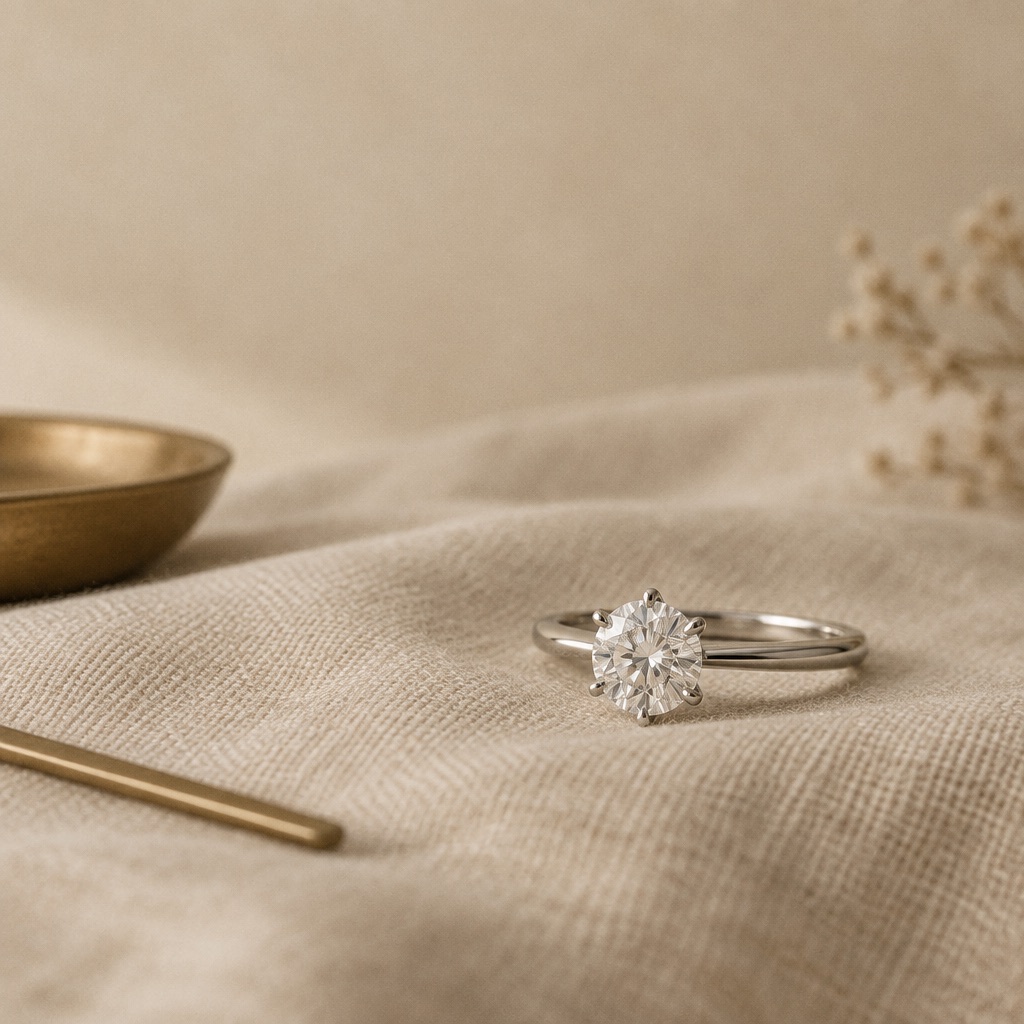
- Prong setting — metal claws (typically 4 or 6) gripping the stone at points around its girdle, maximizing light exposure to the stone
- Bezel setting — a continuous metal rim encircling the stone's girdle, maximizing protection and durability
- Pavé and micro-pavé — small stones set closely together with tiny shared or individual prongs/beads, used to cover a surface in continuous sparkle
- Channel setting — stones set in a row between two parallel metal walls with no visible prongs
- Invisible setting — stones cut with grooves on their girdle that slot into a metal rail structure with no visible metal from the top, an especially demanding and slow technique
Setting is typically done by hand under magnification, using specialized hand tools (setting burs, pushers, hammer handpieces) even in an otherwise highly mechanized production shop, because the tolerances involved — a fraction of a millimeter of prong movement can mean the difference between a securely set stone and one that's loose or chipped — don't currently have a reliable, cost-effective automated substitute at the quality level fine jewelry manufacturing requires. This is a major reason stone setting remains a genuine bottleneck stage and a real driver of manufacturing lead time, especially for pavé-heavy or invisible-set designs with a high stone count per piece.
Polishing and Finishing
Once stones are set, the piece goes through final polishing — removing any remaining tool marks from setting, restoring a full mirror finish (or the specific finish the design calls for, such as matte, hammered, or brushed), and cleaning the piece thoroughly before quality control. This stage typically moves through progressively finer polishing compounds and wheels, finished by hand for detail areas a polishing wheel can't safely reach without risking damage to set stones. Rhodium plating is applied at this stage for white gold pieces, since white gold's natural color has a faint warm tint and rhodium plating gives it the bright white finish most buyers expect — a detail worth knowing because rhodium plating wears over time with daily use and needs periodic re-plating, which is routine maintenance rather than a manufacturing defect.
Quality Control
Before a finished piece ships, it goes through quality control: checking that every stone is securely set and sits at the correct height and alignment, that the metal finish is clean and free of tool marks or porosity, that the piece matches its design specification (ring size, stone count, total carat weight), and that any certification paperwork matches the actual stones set in the piece. For pieces built around certified stones, QC includes confirming the certified stone's identifying characteristics (laser inscription, if present, or measurements matching the certificate) against the actual stone in the setting — a step that matters more than it might seem, since a mismatched certificate is both a compliance problem and a trust problem with the end buyer.
Manufacturing Custom vs. Repeatable Production Pieces
Custom, one-off pieces and repeatable production lines both follow the same core process, but the economics and lead-time drivers differ meaningfully. A custom piece pays the full CAD-design and casting-tree setup cost for a single unit, and its lead time is dominated by design revision rounds with the customer before anything gets cast. A repeatable production line spreads CAD and tooling cost across many identical units cast from the same tree pattern, and its lead time is dominated by batch scheduling and stone-setting labor rather than design iteration. Wholesale buyers sourcing finished jewelry should understand which model a given order falls into, since a small custom order priced and scheduled as if it were a repeatable production run (or vice versa) is a common source of missed expectations on both cost and delivery timing.
What Drives Manufacturing Lead Time
| Stage | Typical time driver |
|---|---|
| CAD design | Revision rounds on custom pieces; near-instant reuse on repeatable designs |
| 3D printing / model prep | Print batching, usually fast (hours, not days) |
| Casting | Kiln burnout/casting cycle, usually the shortest single stage in elapsed time |
| Stone setting | Setter hours per piece — the single biggest lead-time driver on stone-heavy designs |
| Polishing/finishing | Fast per piece, but queues behind setting |
| QC and certification matching | Fast, but blocking — nothing ships without it |
Stone setting is consistently the real bottleneck in jewelry manufacturing lead time, not casting — a point worth understanding when evaluating a manufacturer's quoted turnaround, since a supplier promising an unusually fast turnaround on a stone-heavy custom design is either running a highly efficient, well-staffed setting bench or cutting corners somewhere in the setting or QC process.
CAD, Casting, and Rendering: How the Terms Relate
Buyers new to sourcing sometimes use "CAD," "casting," and "rendering" as if they're interchangeable, but they refer to distinct stages: CAD is the digital design file itself; a rendering is a photorealistic image generated from that CAD file, used to show a customer what the piece will look like before anything is manufactured; and casting is the physical metal-production step that happens only after the CAD file (and any customer approval based on its rendering) is finalized. A manufacturer that skips a rendering approval step on custom work and goes straight from CAD to casting is taking on more revision risk after metal has already been produced, which is a meaningful quality-process signal worth asking about when evaluating a custom jewelry manufacturing partner.
Materials Used in Jewelry Manufacturing
Precious metal choice affects several manufacturing decisions downstream. Platinum has a higher melting point and different casting behavior than gold alloys, generally requiring more specialized casting equipment and experienced casters to avoid porosity issues; it's also denser and more resistant to prong wear over time, which is part of why it remains a preferred choice for high-value stone settings despite costing more to cast and finish than gold. Gold alloys (10k, 14k, 18k, in yellow, white, and rose) each cast and polish somewhat differently based on the specific alloy composition — 18k gold is softer and requires more care in stone setting and everyday-wear structural design than 14k, since prong wear and metal fatigue happen faster in a softer alloy. Sterling silver casts and finishes similarly to gold at a much lower material cost, but is softer still and less commonly used for fine stone-set jewelry beyond costume or fashion lines.
Common Manufacturing Defects and What Causes Them
- Porosity — small voids or pits in the cast metal, usually from trapped gas or shrinkage during cooling; caught in the post-casting inspection stage before stone setting proceeds.
- Loose or misaligned prongs — a setting error, usually from insufficient metal thickness at the prong (a CAD design flaw) or a setter rushing the tightening process.
- Stone damage during setting — chipping or fracturing a stone's girdle or facet edge during the setting process, most common with brittle stones or step-cut shapes with vulnerable corners, and a direct reason experienced setters charge more for handling higher-risk stone shapes.
- Finish inconsistency — uneven polish or plating, usually from rushing the finishing stage or inconsistent quality control between batches.
How Order Volume Changes the Manufacturing Approach
A single custom piece and a 50-unit wholesale order of the same design go through the same core stages, but volume changes which stage dominates cost and scheduling. At single-piece volume, CAD design time is the largest fixed cost relative to the piece's total production cost. At production volume, that same CAD file is reused across the full run at near-zero marginal design cost, and stone-setting labor — which scales roughly linearly with unit count and stone count per unit — becomes the dominant driver of both cost and lead time. This is why wholesale buyers placing repeatable orders should expect per-unit pricing to improve meaningfully with volume on the design/tooling side, while setting-labor cost per unit stays comparatively flat regardless of order size.
In-House vs. Outsourced Manufacturing
Jewelry brands and wholesale suppliers generally take one of two approaches: manufacturing in-house across the full process (CAD through QC), or outsourcing specific stages — most commonly casting, which requires equipment and expertise many smaller operations don't want to maintain in-house — to a specialized casting house while keeping design and setting under direct control. Full in-house manufacturing gives a supplier the most direct control over quality and lead time at every stage, since there's no handoff to an outside vendor's own scheduling and quality standards to account for, but it requires maintaining CAD, casting, setting, and finishing capability and staff all under one roof. Suppliers combining these capabilities in-house with same-day shipping on in-stock loose inventory and short turnaround on custom-manufactured pieces are positioned to serve wholesale buyers who need both fast sourcing and fast production without coordinating multiple vendors.
Sourcing Loose Stones for Manufacturing
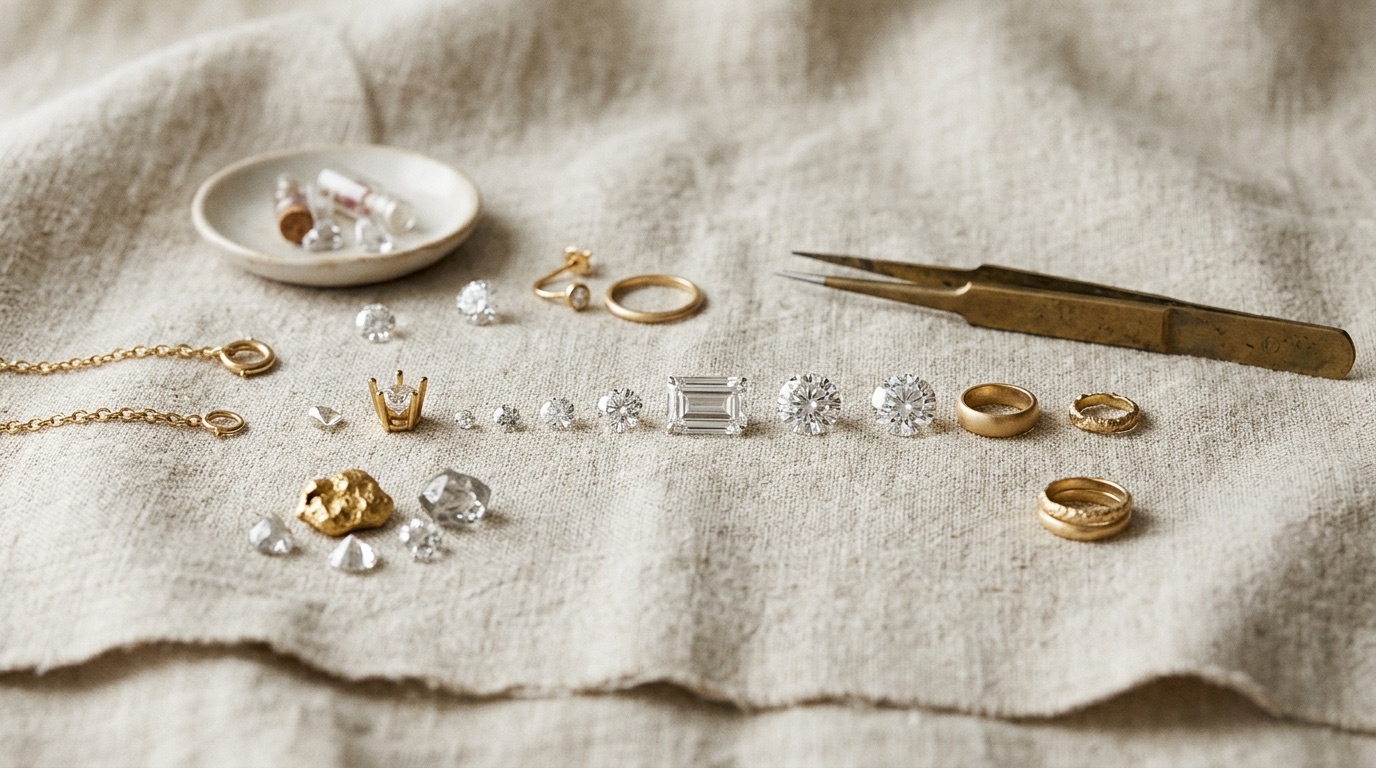
Manufacturing quality is only as good as the stones going into a piece, which is why wholesale buyers building a stone-set jewelry program need a reliable source of certified loose diamonds sized correctly for the CAD design's stone seats before manufacturing even begins. Guru Diam carries loose diamonds across its CVD lab-grown and natural catalogs — standard, antique, and exotic shapes, with IGI, GIA, and GCAL certification available — cut, set, and polished in-house before shipment from Guru Diam's New York and Los Angeles locations. In-stock inventory ships same-day (before 6pm EST from New York, before 4pm PST from Los Angeles), and Guru Diam's custom engagement ring manufacturing turns finished pieces in 4-6 days. Trade buyers can source certified stones through certified diamonds, source matched side stones for pavé or channel-set designs through matching pairs, build a full custom piece through custom jewelry, review sourcing terms at the wholesale hub, or apply for a trade account through trade partner.
Evaluating a Jewelry Manufacturing Partner
Wholesale buyers evaluating a manufacturing partner should look past a finished-piece photo and ask about the specific process behind it: whether CAD renders are provided for approval before casting, what casting method and metal alloys are used, who does the actual stone setting and what their error/remake rate looks like, and what QC checks happen before a piece ships. A manufacturer willing to walk through its actual process stage by stage — rather than treating manufacturing as a black box between order and delivery — is generally a stronger long-term sourcing partner than one that can't or won't explain how a specific piece gets made.
Frequently Asked Questions
What are the main steps in the jewelry manufacturing process?
CAD design, 3D printing or milling a physical model, lost-wax casting into metal, stone setting, polishing and finishing, and quality control before the piece ships. Most production jewelry follows this same sequence regardless of piece complexity.
What is the difference between CAD and casting in jewelry manufacturing?
CAD is the digital design stage — a 3D model built in jewelry design software. Casting is the physical stage that follows, where a printed or milled model of that CAD file is used to produce the actual metal piece via the lost-wax casting process.
Why does stone setting take so long in jewelry manufacturing?
Stone setting is done by hand under magnification because the tolerances involved are too fine for reliable automation at fine-jewelry quality — a setter's precision directly affects whether a stone sits securely without being damaged. It's consistently the biggest lead-time driver in the whole manufacturing process, especially on stone-heavy designs.
Is hand fabrication still used in modern jewelry manufacturing?
Yes, but selectively — mainly for structural elements that don't cast cleanly, certain platinum work, repairs, and genuinely one-of-a-kind high jewelry. It doesn't scale the way casting does, since it takes direct skilled-jeweler hours per piece rather than producing many identical units from one casting tree.
What causes porosity in cast jewelry?
Porosity is small voids or pits in the cast metal, usually caused by trapped gas or shrinkage during cooling. It's caught during post-casting inspection, before the piece moves on to stone setting.
How does order volume affect jewelry manufacturing cost?
CAD design cost is spread across a full production run at higher volume, making per-unit design cost drop significantly compared to a single custom piece. Stone-setting labor, by contrast, scales roughly linearly with unit and stone count and stays comparatively flat per unit regardless of order size.