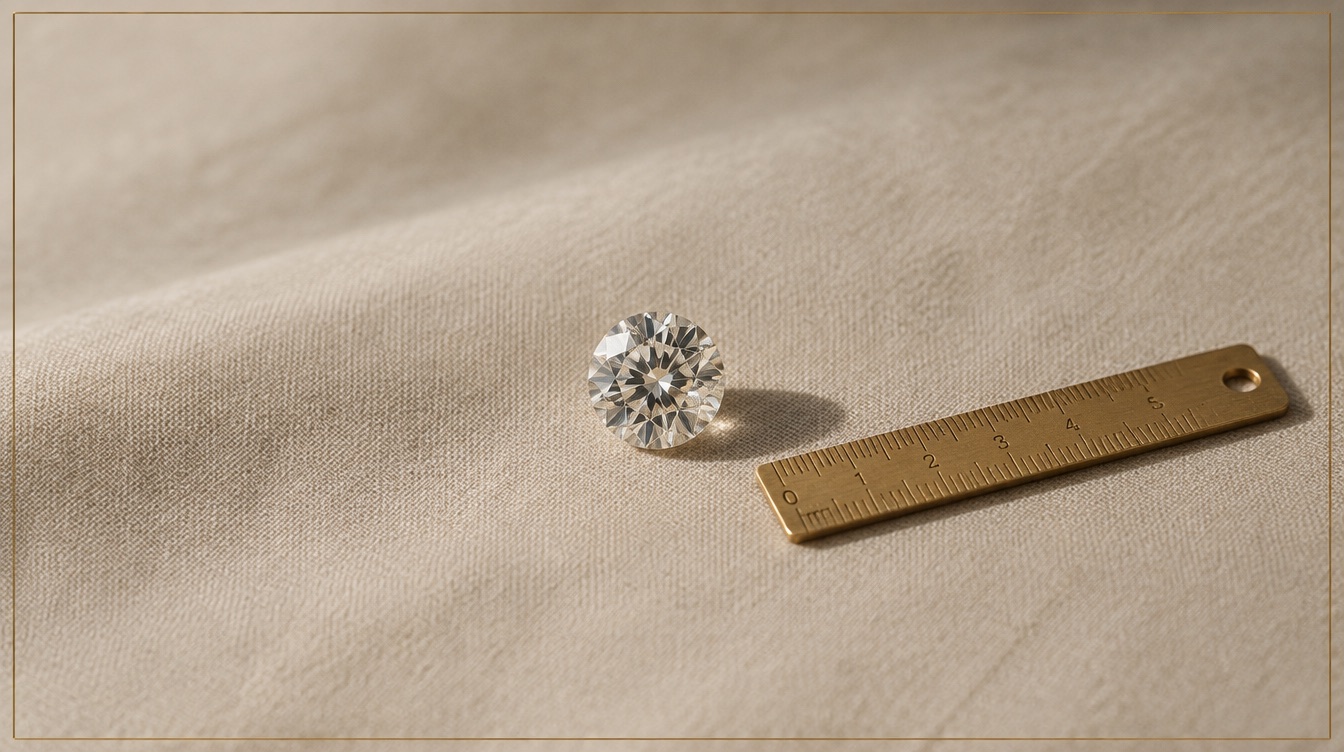
For a wholesale loose-stone purchase or a custom order built around a center stone, IGI certification generally lands the total cost lower than GIA certification on a comparable stone — GIA-certified goods typically carry a higher price premium than IGI-certified goods of the same specifications. Neither lab is the "wrong" choice. The right one depends on budget, whether the certificate needs to satisfy insurance scheduling, and whether the stone is being bought to keep, resell, or stock. This post is about that cost and fee structure specifically — submission fees, turnaround-based pricing tiers, and what a resubmission actually costs — not about which lab grades more strictly or which report carries more name recognition. That's a separate conversation, covered elsewhere.
How Certification Fees Are Actually Structured
Independent grading labs don't charge a single flat number to certify a diamond. Across the trade, certification fees are generally structured around two variables: the carat weight of the stone and the turnaround speed requested. Neither lab publishes one price for "certification" — the fee moves with the stone and the service level, and understanding that structure is what lets a wholesale buyer actually predict cost instead of guessing at it.
Carat weight matters because grading time and equipment use scale with the stone. Labs generally price in carat-weight bands rather than a single per-stone rate — a small loose diamond and a large center stone don't cost the same to grade, and the fee schedule reflects that with breakpoints rather than a smooth per-carat multiplier. A stone that falls just above a breakpoint can carry a noticeably higher fee than one just below it, which is worth knowing before assuming a stone's fee scales in a straight line with its size.
Turnaround speed is the second lever, and it's the one buyers overlook most often. Every major lab offers more than one service tier: a standard queue at the base fee, and one or more expedited or rush tiers that cost more for faster processing. The premium for faster service isn't a rounding error — it can meaningfully change what a stone costs to certify, and it applies on top of the carat-weight-based base fee, not instead of it. A wholesale buyer requesting rush turnaround on a batch of stones is paying two variables stacked on top of each other, not one.

The practical takeaway: before assuming a certification cost, know which carat band the stone falls into and which turnaround tier the order actually needs. Most wholesale purchases don't require rush service, and requesting it by default when standard turnaround would do is one of the more common ways certification cost creeps into a quote unnecessarily.
Who Pays for Certification in a Wholesale Transaction
On pre-certified stock — a loose diamond that already carries an IGI or GIA report before a buyer ever sees it — the certification cost is baked into the quoted per-carat price. The buyer never sees it as a separate line item because it isn't one; it was absorbed by the supplier before the stone went into inventory, the same way cutting and polishing cost is absorbed before a stone is offered for sale. That's the norm for the overwhelming majority of wholesale transactions: certification is a supplier-side cost recovered inside the price of the goods, not itemized to the buyer.
The transaction changes shape when a buyer requests something outside the supplier's standard inventory — a specific lab the supplier doesn't default to, a rush turnaround on a stone that would otherwise ship on standard timing, or a fresh submission on a stone the buyer is supplying themselves. In those cases, the incremental cost of the request is more commonly passed through to the party asking for it, either itemized on the invoice or built into an adjusted quote. That's a reasonable norm on both sides: a supplier shouldn't absorb a one-off request that falls outside its standard process, and a buyer requesting something specific should expect to see what that specific request costs.
The distinction worth remembering: "who pays" isn't a fixed rule, it's a function of whether the certification is standard to the goods as offered or a customization layered on top of them. A buyer negotiating a large recurring order has more room to ask a supplier to hold a non-default lab as their new standard — at which point it moves back into the "baked into the price" category — than a buyer making a single one-off request for the same thing.
Certification Cost, Tier by Tier: What Actually Moves the Number
IGI vs GIA: The Cost-Relevant Differences
Leaving aside grading philosophy and lab reputation — covered elsewhere — here's what actually moves the needle on cost, whether the purchase is a loose wholesale stone or a finished custom piece:
| Cost Factor | IGI | GIA |
|---|---|---|
| Typical premium on the stone itself | Lower | Higher |
| Best-fit price point for the finished piece | Entry to mid-range orders | Mid-range to top-tier orders |
| Insurance/appraisal acceptance | Accepted by most insurers and appraisers | Accepted by virtually all insurers and appraisers |
| Resale/trade-in expectations | Fine for keepsake pieces; softer secondary-market recognition | Stronger secondary-market recognition, matters more if resale is likely |
| Availability on lab-grown center stones | Widely available across shapes and carat weights | Widely available across shapes and carat weights |
The last row matters: this isn't a case where one lab only covers certain shapes or sizes. Both are viable on nearly any center stone spec a buyer would put into wholesale inventory or a custom piece, so the decision comes down to budget and end use, not availability.
Certification Service Tiers: Cost and Turnaround at a Glance
Layered on top of the lab choice is the service-tier decision covered above — standard versus expedited versus rush processing. In general industry terms, without pinning to any one lab's specific published rate, the tradeoff looks like this:
| Service Tier | Relative Cost | Relative Turnaround | Best Fit |
|---|---|---|---|
| Standard | Baseline | Slowest of the three, but the default for most volume | Regular inventory replenishment, non-urgent custom orders |
| Expedited | Moderate premium over standard | Faster than standard | Time-sensitive custom orders where the center stone isn't yet in hand |
| Rush | Highest premium of the three | Fastest available | One-off situations where speed matters more than cost — used sparingly |
The pattern holds regardless of which lab is issuing the report: faster service costs more, and the premium stacks on top of whatever the carat-weight band already sets as the base fee. A buyer who defaults to rush turnaround out of habit, rather than genuine need, is paying for a service level most orders don't require.
How Certification Cost Factors Into Wholesale Pricing

Every certified stone carries its certification cost inside the price before it ever reaches a buyer's invoice — that cost isn't flat across labs or service tiers, and the difference shows up directly in what gets quoted. The practical question for a wholesale buyer is simple: does the certification premium on this particular stone or parcel make sense given what the goods are being bought for and what happens to them afterward?
The size of that premium matters more on some purchases than others. It helps to think in fixed-dollar terms rather than percentages: a certification premium is generally a fixed swing on a stone's cost, not a percentage that scales with the stone's total value. That's exactly why it matters more on a lower-value stone or a budget-sensitive order than on a high-ticket one. On a smaller, lower-cost stone, a certification premium can be the difference between a competitive quote and a losing one. On a larger, higher-value stone, the same dollar premium barely moves the total. That's the core logic for deciding lab and tier on a per-order or per-parcel basis, rather than defaulting to one certification standard across an entire book of business.
This is also why certification cost deserves its own line in a landed-cost model rather than getting folded silently into "stone cost." A buyer who tracks cutting, certification, and margin as separate cost components can see exactly where a quote is coming from and negotiate the right variable — instead of negotiating on the stone's price when the actual lever is the certification tier attached to it.
When Certification Makes Sense — and When Uncertified Is the Right Call
Certification is not a default that applies to every stone in the trade, and the melee-versus-center-stone split is the clearest example of why. For loose diamonds at 0.30ct and above, individual certification is standard practice: the grading fee is a small fraction of the stone's value, easily justified by the documentation it provides for pricing, resale, and insurance scheduling.
Melee-weight goods sit on the other side of that line. Melee is not individually or parcel-certified — it moves as uncertified parcel goods sold against a color and clarity quality-control baseline instead of a per-stone grading report. The economics explain why: a per-stone grading fee doesn't scale down proportionally with carat weight below a certain threshold, so certifying each stone in a parcel of small calibrated goods would add a cost with no relationship to what any individual stone is worth. Selling melee against a QC baseline instead of a per-stone certificate is the industry-standard way of avoiding that mismatch, not a shortcut on quality control.
For a wholesale buyer, the practical rule is straightforward: certification earns its cost on stones large enough that the fee is a rounding error against the stone's value, and it stops making economic sense well before that fee becomes a meaningful percentage of what the stone itself costs. Anything in between — a stone technically eligible for certification but small enough that the fee eats into margin disproportionately — is worth a case-by-case look rather than a blanket policy either way.
Resubmission and Upgrade Costs: What Changes a Lab Choice Later Actually Costs
Certification cost planning doesn't end at the initial grading decision. Two situations come up regularly enough in wholesale trading that they're worth budgeting for upfront rather than treating as surprises.
The first is resubmission — sending a stone back to a lab because a report needs to be reissued, a discrepancy needs to be checked, or a stone's condition changed since the original grading. Resubmission generally carries its own fee, separate from the original certification cost, and it adds processing time on top of whatever the original turnaround was. It's not automatically the same cost as a first-time submission, but it's also not free, and treating it as a zero-cost formality is a common way buyers underbudget a purchase that ends up needing a second look.
The second is an upgrade or lab switch — moving a stone from one lab's report to another, whether because an end client specifically wants a different lab's paper or because the original certification no longer fits how the stone is being sold. This is functionally a new submission: the stone goes through grading again under the new lab, at that lab's standard fee structure for its carat weight and requested turnaround. There's no shortcut that makes a lab switch cheaper than the certification would have cost if that lab had been chosen from the start — plan for the full fee, not a partial one.
For a wholesale buyer, the operating principle is the same in both cases: confirm the lab and tier before the order is finalized, because changing course afterward is a second cost, not a correction to the first one.
Budgeting Certification Cost Into a Wholesale Purchase
A few habits keep certification cost from becoming a surprise line on an invoice rather than a planned part of the purchase.
- Separate it from stone cost in your own records. Track certification as its own line in a landed-cost model, even when a supplier quotes it as a single all-in per-carat price. Knowing what portion of that price is certification versus stone cost makes it possible to compare quotes accurately across suppliers with different default labs.
- Confirm the lab default before requesting a quote. Ask which lab a supplier's standard inventory carries and at what carat threshold certification starts applying, rather than assuming it matches the last order.
- Decide the turnaround need honestly. Standard tier covers the overwhelming majority of wholesale purchases and custom orders. Reserve expedited or rush requests for the specific situations that actually require them, since that premium stacks on top of the carat-based fee every time it's requested.
- Batch where possible. Submitting multiple stones together, rather than one at a time as each order comes in, generally produces a better effective per-stone cost than repeated single-stone submissions — worth structuring purchasing schedules around when volume allows.
- Budget resubmission and upgrade risk separately. If there's a real chance a stone will need a lab switch later — a client-facing program that sometimes requests a specific lab, for instance — build that contingency into the purchase plan instead of treating it as an unbudgeted cost if it happens.
None of this requires new software or a complicated model — it requires treating certification as a cost variable with its own logic, not an assumed constant folded into "the price of the stone."
How Guru Diam Handles Certification Cost
Guru Diam's loose lab-grown diamonds at 0.30ct and above are IGI-certified as standard, with GIA available on request. That default keeps the bulk of inventory moving on the lab that trades efficiently across the widest range of buyers, while leaving the door open for the specific orders — a client program, a resale-focused piece, a customer who asks for GIA by name — where the other lab's report is the better fit.
Because both labs are genuinely available rather than one being a special-order exception, the certification decision stays a per-order choice instead of a default a buyer is stuck with. That matters for exactly the cost planning this post is about: a buyer isn't boxed into paying one lab's premium across an entire book of business just because that's what a supplier happens to carry.
Certification lab or service tier does not change finished-jewelry build time. Once a center stone is selected and the design approved, finished custom jewelry turns around on the standard in-house timeline of 4 to 6 business days regardless of which lab or tier certified the stone.
Melee-weight goods follow the industry-standard split described above — sold as uncertified parcel stones against a color and clarity quality-control baseline rather than individually graded, since certification doesn't make economic sense at that weight. Certification applies specifically to loose center stones at 0.30ct and above, sourced through /category/cert-diamonds, with melee handled separately through /wholesale-melee.
Sourcing the certified stone and, where applicable, the finished piece it goes into through a single supplier also keeps the total cost picture simpler: one shipment, one invoice, one relationship to manage, instead of reconciling certification cost against a separate stone vendor and a separate manufacturer. That consolidation lowers the total cost of running a wholesale purchasing program, independent of which lab ends up on any individual report. Full custom build details live at /custom-jewelry, and current wholesale account information is available through /wholesale-hub.
Buyer Checklist: Planning for Certification Cost Before You Quote

A short set of questions before locking in a purchase saves a re-quote later:
- What's the carat weight, and which fee band does it fall into? Confirm this before assuming a certification cost scales in a straight line with size.
- Is certification already included in the quoted price, or itemized separately? Know which one is being compared before evaluating quotes across suppliers.
- Which lab is the supplier's default, and does the order need something else? A non-default lab request usually carries its own incremental cost.
- What turnaround tier does this order actually need? Standard, expedited, and rush aren't interchangeable in cost, and defaulting to a faster tier out of habit adds cost without adding value most of the time.
- Is there a realistic chance this stone gets resubmitted or switched to another lab later? If yes, budget that as a separate future cost rather than assuming it's covered by the original fee.
- Does batching this order with others make sense? Combining submissions where volume allows generally improves the effective per-stone cost.
Walking through these before finalizing a purchase order keeps certification cost aligned with what the stone is actually being bought for, instead of defaulting to habit or whatever a single quote happens to itemize.
Frequently Asked Questions
Who pays the certification cost in a wholesale transaction — the buyer or the supplier?
On pre-certified stock, the supplier absorbs certification cost into the quoted per-carat price, so the buyer doesn't see it as a separate line. On a custom request — a non-default lab, a rush turnaround, or a fresh submission outside standard inventory — the incremental cost is more commonly passed through to whoever requested it, itemized or built into an adjusted quote.
How are certification fees typically structured?
Generally by two variables: carat weight and turnaround speed. Labs price in carat-weight bands rather than a flat per-stone rate, and every major lab offers multiple service tiers — a standard queue at a base fee, and expedited or rush options that add a premium on top of that base fee for faster processing.
Does resubmitting a diamond for certification cost extra?
Generally, yes. Resubmission — whether for a discrepancy check, a reissued report, or a stone that changed condition — typically carries its own fee separate from the original certification cost, plus additional processing time. It shouldn't be budgeted as a free formality.
Can I request faster certification turnaround, and does it cost more?
Yes to both. Expedited and rush tiers are available at most labs, and the faster the turnaround, the higher the premium on top of the standard carat-weight-based fee. Most wholesale purchases and custom orders don't need to pay for the fastest tier — it's worth confirming the order's real timeline before requesting it.
Does certification apply to melee-weight stones used as accents?
No. Melee-weight goods are sold as uncertified parcel stones against a color and clarity quality-control baseline, not individually graded by IGI or GIA. Certification applies to loose center stones at 0.30ct and above. Melee sourcing is handled separately through /wholesale-melee.
Is switching a stone from one certification lab to another cheaper than a first-time submission?
No. A lab switch or upgrade is functionally a new submission — the stone is graded again under the new lab's standard fee structure for its carat weight and requested turnaround. There's no discount for having been certified elsewhere first, so it should be budgeted at the full fee, not a partial one.