I1 (Included 1) is the highest of the three "Included" clarity grades on the GIA scale — below Flawless, VVS, VS, and SI, and above I2 and I3 — meaning the stone has inclusions visible to the naked eye under normal viewing conditions, without magnification. I1 is not a defect grade or a rejected stone; it's a legitimate, commonly stocked clarity tier that serves a real segment of the market, and for a wholesale buyer, deciding whether and how to carry I1 inventory comes down to understanding exactly what "visible inclusions" means in practice and which shapes, uses, and price points make an I1 stone a sound purchase rather than a compromise.
This guide covers what I1 clarity actually means on a certificate, how it differs from the SI tier just above it, which shapes and settings make I1 inclusions more or less noticeable, how to evaluate a specific I1 stone rather than relying on the grade letter alone, and how jewelers price and position I1 inventory for their own customers.
Where I1 Sits on the Clarity Scale
The GIA clarity scale runs, from best to worst: Flawless (FL), Internally Flawless (IF), VVS1, VVS2, VS1, VS2, SI1, SI2, I1, I2, I3. I1 is the first grade at which inclusions are expected to be visible to the unaided eye in the large majority of stones, though visibility still depends heavily on the specific inclusion's size, position, and contrast against the stone's background. IGI and GCAL use the identical scale and identical grading criteria, so an I1 grade means the same thing regardless of which of the three labs issued the report. For a full breakdown of every grade on the scale, see our diamond clarity chart guide.
What "Visible Inclusion" Actually Means at I1
At I1, a trained grader can see the inclusion without magnification, and in most cases so can an untrained buyer looking closely at the stone under good light — but "visible" covers a wide range in practice. Some I1 stones show a single, small, well-contained inclusion that's noticeable only on close inspection and reads as clean at a normal conversational viewing distance. Others show inclusions large enough, numerous enough, or positioned centrally enough under the table that they're obvious at a glance, and in more severe I1 cases can affect the stone's overall transparency or brightness, sometimes described in the trade as a stone with a hazy or "sleepy" appearance. This spread is exactly why the grade letter alone doesn't tell a buyer everything they need to know — two I1 stones with the same certificate grade can look meaningfully different face-up, and treating "I1" as a single uniform outcome rather than a range is one of the more common sourcing mistakes at this tier.
I1 vs. SI2: The Real Comparison Point
| Factor | SI2 | I1 |
|---|---|---|
| Visibility without magnification | Sometimes, depending on stone and shape | Typically yes, in most stones |
| Effect on brightness/transparency | Rare, usually cosmetic only | Possible in more heavily included examples |
| Price relative to SI1 | Meaningful discount | Larger discount |
| Typical use case | Value-focused center stones, most shapes | Budget center stones, melee, accent stones |
| Individual stone review needed | Recommended | Strongly recommended |
The gap between SI2 and I1 is where the clarity scale's price curve drops fastest, which is exactly why buyers focused purely on price-per-carat gravitate toward this range — but it's also where the gap between "graded I1" and "looks acceptable to a customer" widens the most, making individual stone review more important here than at almost any other point on the scale.
Shape Matters More at I1 Than at Almost Any Other Grade
Facet structure has an outsized effect on how forgiving a stone is of inclusions, and that effect is magnified at the I1 tier because there's more inclusion to potentially hide or reveal.
- Round brilliant: the most forgiving shape at any clarity tier, including I1 — its dense facet pattern scatters light in a way that can camouflage a moderate inclusion better than almost any other shape.
- Cushion, princess, radiant: moderately forgiving mixed-cut shapes; an I1 in one of these can read reasonably clean if the inclusion is well-positioned, but there's less margin for error than in a round.
- Step cuts (emerald, Asscher): the least forgiving shape at I1 by a wide margin. The open table and large, flat facets of a step cut act like a window into the stone, and an I1-grade inclusion that would be camouflaged in a round brilliant can be immediately obvious in an emerald cut of the same carat weight. I1 in a step cut is a genuinely higher-risk purchase and warrants the most careful individual review of any shape-clarity combination on this list.
Where I1 Makes Sense as a Sourcing Tier
I1 clarity is a legitimate, commonly used tier in several specific contexts rather than a fallback for stones that failed to grade higher:
- Melee and accent stones, where individual inclusion visibility matters far less than overall sparkle and consistency across a parcel, and where I1 (or uncertified parcel goods at an equivalent quality baseline) is standard, cost-effective inventory for pavé, halo, and channel-set accent work.
- Budget-tier center stones in forgiving shapes, particularly round brilliant, where a carefully selected I1 can deliver meaningfully more visible size per dollar than the equivalent carat weight in SI or VS clarity.
- Larger carat weights where per-carat price sensitivity is high, since the dollar gap between clarity tiers compounds with carat weight — a 2-carat or 3-carat stone sees a much larger absolute price difference between SI2 and I1 than a 0.50-carat stone does, making I1 a meaningful cost lever specifically at larger sizes.
Where I1 Is a Riskier Choice
I1 is a poor fit for step-cut center stones of any real size, for any stone being sold sight-unseen purely on a spec sheet without a plot or photos, and for any customer transaction where clarity is being marketed as "eye-clean" without individual verification — a blanket "eye-clean" claim is far less reliable at I1 than at SI1 or SI2, and overselling it is a common source of buyer dissatisfaction and returns.
Natural Diamond Clarity Enhancement at I1
Because I1 and lower grades in natural diamond are more likely to carry visually significant inclusions, this tier is also where clarity-enhancement treatments — laser drilling to lighten a dark inclusion, or fracture filling to reduce the visibility of a feather — show up more often in the natural diamond trade than at higher clarity grades. Any treatment must be disclosed on the accompanying report and, ideally, in the stone's own documentation; an undisclosed treated stone sold as untreated I1 natural material is a real compliance and trust issue, and buyers sourcing natural I1 inventory should specifically confirm treatment status rather than assuming an I1 grade means untreated. This consideration does not apply to CVD lab-grown material, which is graded on the same clarity scale without the natural-treatment question in play.
CVD Lab-Grown I1 Diamonds
I1 clarity in CVD lab-grown material grades and behaves identically to I1 in natural diamond — the same visibility characteristics, the same shape sensitivity, and the same GIA/IGI/GCAL grading criteria apply regardless of origin. Because lab-grown material is already priced well below natural at every clarity tier, an I1 lab-grown stone represents one of the most cost-efficient ways to source visible carat weight for a budget-conscious finished piece, particularly in round brilliant or another forgiving shape.
I1 Clarity in Fancy Color Diamonds
Clarity plays a smaller role in how a fancy color diamond is judged than it does in a colorless stone, since a saturated body color naturally masks minor inclusions far more effectively than a colorless or near-colorless stone can. This means an I1-clarity fancy color diamond — in a strongly saturated yellow, pink, blue, or green, for example — can present a very different value proposition than an I1 colorless stone of the same carat weight: the primary value driver is color saturation and hue, and a well-selected I1 fancy color stone can look entirely acceptable, and sometimes indistinguishable from a higher clarity grade, once the color itself is strong enough to draw the eye first. This is a genuinely different calculation from a colorless I1 purchase and worth understanding separately if fancy color inventory is part of a buyer's mix; see our color-specific buying guides for more on how the 4Cs are weighted differently across fancy colors. Buyers new to fancy color sourcing sometimes over-index on clarity out of habit from colorless-stone buying, when hue and saturation are the far more important levers to evaluate first at any clarity tier, I1 included.
Common Misconceptions About I1 Clarity
- "I1 means the diamond is damaged or defective." I1 describes visible inclusions, not structural damage or reduced durability in the vast majority of cases — a diamond's hardness and wearability are unaffected by clarity grade except in the rare, most severe I2/I3 cases where an inclusion reaches the surface and creates a genuine durability risk.
- "All I1 stones look the same." Two I1 stones with identical certificates can look meaningfully different face-up depending on inclusion position, size, and how the specific shape's facet pattern interacts with it — the grade is a floor, not a precise visual description.
- "I1 clarity isn't worth certifying." I1 stones above 0.30 carats are certified the same way as any other clarity tier by GIA, IGI, and GCAL; certification documents the grade and clarity plot regardless of where a stone falls on the scale.
- "A lower clarity grade always means a worse-looking stone." Shape, color, and cut quality all interact with clarity to determine final appearance — a well-cut, well-colored I1 round can outperform a poorly cut SI1 stone in a less forgiving shape.
Certification Consistency Across Labs
GIA, IGI, and GCAL apply the same clarity scale and grading criteria, so an I1 grade from any of the three labs describes the same underlying standard. In practice, grading is a human judgment exercise performed under controlled conditions, and buyers who source at meaningful volume across multiple labs sometimes observe minor grading variance at borderline calls between adjacent grades — this is a normal characteristic of subjective visual grading generally, not specific to I1, and it's exactly why reviewing the clarity plot and, where possible, the physical stone remains good practice regardless of which lab issued the report. A buyer building a recurring I1 program at volume benefits from establishing a consistent working relationship with one supplier's grading standards over time, rather than mixing small one-off purchases across several different sources with potentially different internal tolerances for borderline calls.
How to Evaluate a Specific I1 Stone Before Buying
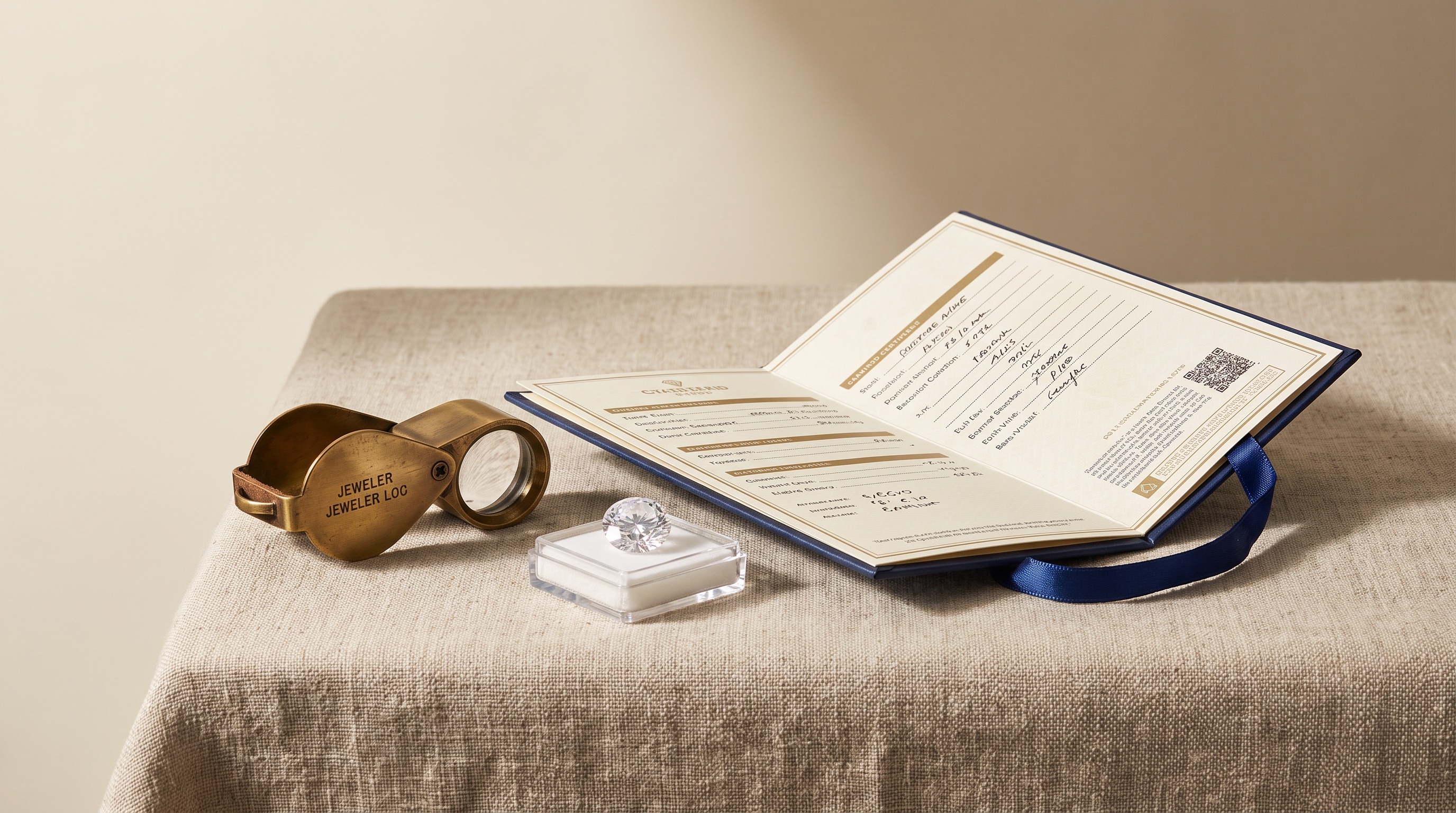
- Always review the clarity plot, the diagram on the certificate mapping exactly where each inclusion sits, rather than relying on the grade letter alone — an I1 with its inclusion tucked near the girdle behaves very differently face-up than an I1 with the same size inclusion centered under the table.
- Request actual photos or video of the specific stone under normal lighting, not just magnified lab imagery, to judge how it will actually look to a customer at arm's length.
- Match the shape to the risk tolerance — favor round brilliant or another forgiving shape for I1 purchases, and reserve step cuts for SI2 or better clarity unless the specific individual stone has been carefully reviewed and separately approved before purchase.
- Confirm treatment disclosure on any natural I1 stone before purchase, since this tier carries a higher likelihood of clarity enhancement than higher grades.
I1-Equivalent Quality in Melee Parcels
Melee diamonds — the small, calibrated stones used in pavé, halo, and channel settings — are typically not individually certified; instead, they're sold as uncertified parcel goods QC'd against a defined color/clarity baseline, commonly a DEF+/VS+ standard for premium melee programs. A parcel priced and sold at a lower quality baseline closer to I1-equivalent clarity behaves the same way individual I1 stones do: overall sparkle and consistency across the parcel matter more than any single stone's inclusion profile, since melee stones are viewed in aggregate rather than individually inspected by the end customer. Buyers building a melee program at this tier should confirm the parcel's actual QC baseline in writing rather than assuming "budget melee" and "I1-equivalent" mean identically the same thing across every supplier, since baseline definitions can vary from one vendor to the next and a mismatch discovered after a large order ships is far costlier to correct than confirming it upfront.
Setting Style Can Offset Visible Inclusions
Beyond shape, the setting itself can meaningfully change how noticeable an I1 inclusion reads in the finished piece. A halo of smaller melee stones surrounding an I1 center stone draws the eye outward across the full design rather than concentrating attention on the center stone alone, which can soften the visual impact of a borderline I1. Similarly, a pavé or cluster design distributes visual weight across many small stones rather than one larger one, making individual clarity less of a determining factor in how the finished piece reads overall. Jewelers building budget-conscious pieces around I1 center stones often lean on exactly this kind of design choice — pairing a lower clarity center stone with a halo or cluster of well-matched melee — to deliver a visually satisfying result at a lower total cost than an equivalent SI-clarity solitaire.
Pricing and Positioning I1 Inventory for Customers
For a retail-facing jeweler, I1 inventory is best positioned honestly — as a genuine value tier for customers prioritizing size and price over absolute clarity, not marketed with the same "eye-clean" language used for SI1 or better. Being transparent about what I1 means, and showing the specific stone rather than only the certificate, tends to produce more satisfied customers and fewer post-sale disputes than a blanket clean-sounding pitch applied uniformly across clarity tiers. A well-selected I1 in a forgiving shape, sold with a clear expectation set upfront, is a legitimate and profitable part of a balanced inventory mix rather than a compromise to apologize for.
Sourcing I1 and Other Clarity Tiers at Wholesale
Guru Diam carries certified loose diamonds across the full clarity range, from Flawless through the Included grades, in both CVD lab-grown and natural material, with IGI, GIA, and GCAL certification available. For buyers building an inventory mix that spans multiple price points, having one supplier who can source consistently across the clarity scale — rather than sourcing premium and value tiers from separate vendors — simplifies both quality control and reorder logistics, particularly for a jeweler running a broad price-point catalog where value-tier I1 inventory sits alongside VS- and VVS-clarity stones from the same account. Certified stones ship same-day on in-stock inventory from the New York and Los Angeles locations, before 6pm EST and 4pm PST respectively, so a buyer who needs to fill out a value-tier order alongside a premium order doesn't need to manage two separate vendor relationships or two separate shipment schedules.
Buyers can browse current certified inventory in the certified diamonds category, review matched melee and accent-stone options in the matching pairs category, or apply for a trade account at trade partner. For more on how clarity interacts with the other 4Cs, see our 4Cs of diamonds guide, our eye-clean diamond guide, and our diamond clarity chart guide for the full grade-by-grade breakdown above I1.
Frequently Asked Questions
Is I1 clarity a bad diamond?
No — I1 is a legitimate clarity grade, not a defect. It means inclusions are typically visible without magnification, which makes it a genuine value tier for budget-conscious buyers and a standard grade for melee and accent stones, provided the specific stone is reviewed rather than purchased on the grade letter alone.
Can I1 clarity be eye-clean?
Sometimes, depending on the inclusion's size and position and the stone's shape — a well-positioned inclusion in a round brilliant can read as clean at normal viewing distance. It's far less reliable than at SI1 or SI2, so any eye-clean claim at I1 should be based on reviewing the actual stone, not assumed from the grade.
What is the difference between SI2 and I1 clarity?
SI2 inclusions are sometimes visible without magnification depending on the stone and shape; I1 inclusions are typically visible without magnification in most stones. I1 also carries a larger price discount than the SI2-to-SI1 gap, making it the point where the clarity price curve drops fastest.
Is I1 clarity good for a round diamond?
Round brilliant is the most forgiving shape for I1, since its dense facet pattern scatters light in a way that can camouflage a moderate inclusion better than other shapes. A carefully selected I1 round can offer meaningfully more visible size per dollar than a higher clarity grade.
Should I buy an I1 clarity emerald or Asscher cut?
Generally not without individually reviewing the specific stone first. Step cuts have an open table that acts like a window into the stone, making I1 inclusions far more visible than in a round brilliant of the same grade — this is the highest-risk shape-clarity combination for I1.
Are I1 diamonds ever treated to improve clarity?
In natural diamond, I1 and lower grades are more likely to have undergone laser drilling or fracture filling to reduce inclusion visibility than higher clarity grades. Any such treatment must be disclosed on the certificate, and buyers sourcing natural I1 material should confirm treatment status before purchase.
Does I1 clarity matter for fancy color diamonds?
Less than it does for colorless stones. A strong body color naturally masks minor inclusions, so a well-selected I1 fancy color diamond in a saturated yellow, pink, blue, or green can look entirely acceptable, since color saturation — not clarity — is the primary value driver for fancy color stones.
Can I1 melee stones be used in a halo or pavé setting?
Yes — melee is typically sold as uncertified parcel goods against a defined quality baseline rather than individually graded, and at lower baselines closer to I1-equivalent clarity, overall sparkle and consistency across the parcel matter more than any single stone's inclusion profile.