Designing a custom engagement ring means working through a defined sequence of decisions — budget, center stone, setting style, metal, and personalization details — before a jeweler or manufacturer turns those choices into a CAD rendering, then a cast and finished piece. The process typically runs from an initial consultation through CAD approval to a finished ring in a matter of days to a few weeks, depending on how much of the design is truly bespoke versus built from an established setting style.
For jewelers and designers guiding a customer through this process — or for independent designers building their own pieces to sell — understanding each stage in order matters more than knowing the finished-product options alone. Skipping a step, or sequencing decisions out of order, is where most custom-ring timelines slip and budgets blow past their original estimate. This guide walks through the full design process stage by stage, covers the difference between custom, semi-custom, and fully bespoke work, and closes with how a wholesale supplier's design and production pipeline fits into that process for a trade buyer.
The Custom Engagement Ring Design Process, Step by Step
At a high level, custom engagement ring design follows the same sequence regardless of who's building it — an independent designer, an in-house jeweler, or a wholesale manufacturer working from a trade order:
- Set a realistic budget before any stone or setting decisions are made
- Choose the center stone — shape, cut tier, and natural versus lab-grown
- Choose a setting style that suits the stone and the wearer's lifestyle
- Choose a metal
- Decide on personalization details — engraving, hidden accents, unusual proportions
- Review and approve a CAD rendering before any metal is cast
- Casting, stone setting, polishing, and final quality inspection
Each stage constrains the ones that follow it. A budget set too late, after a customer has already fallen for an ambitious stone, is a common cause of mid-process redesigns. Getting the sequence right up front avoids that.
Step 1: Setting a Budget Before You Start
Budget should be the very first conversation, not the last. Center stone cost typically represents the largest single line item in a custom ring, often 60-75% of total spend depending on carat weight and whether the stone is natural or lab-grown, so establishing a firm ceiling before shape and cut conversations begin prevents a customer from designing toward a stone they can't actually afford once the setting and labor are added. A useful practice is separating the budget into three rough buckets early: center stone, setting and metal, and labor/finishing — even a rough split keeps expectations grounded as design decisions get made. It also helps to build in a small contingency, typically 5-10% of the total, for personalization requests that surface once a customer sees a CAD render and wants to add a detail they hadn't originally mentioned — this is common enough that planning for it up front avoids an awkward renegotiation mid-project.
Step 2: Choosing the Center Stone
Once budget is set, the center stone comes next because it drives every subsequent design decision — a setting that flatters a round brilliant doesn't necessarily flatter a marquise or an antique cushion.
Shape
Shape is largely aesthetic preference, but it interacts with practical considerations: elongated shapes (oval, marquise, pear) tend to read larger per carat than round or cushion shapes of equivalent weight, and shapes with pointed corners (marquise, pear, heart) need protective prong or bezel work at the point to prevent chipping.
Natural vs. lab-grown
This is a budget and values decision as much as an aesthetic one. Lab-grown CVD diamonds are chemically, physically, and optically identical to natural diamonds, graded by the same major labs (GIA, IGI, GCAL), but priced substantially lower per carat — meaning a given budget buys meaningfully more size or clarity in lab-grown than in natural. Some customers have a strong preference either way; others are simply optimizing for the largest, cleanest stone their budget allows and land on lab-grown for that reason alone.
Cut tier
Beyond shape, cut style matters: standard round and fancy shapes (oval, cushion, emerald, pear, marquise, princess, radiant, heart, asscher) sit in the commodity-to-mid-market tier, while antique-style cuts — Old Mine, Old European, Kite, Trillion, Hexagonal, Criss-Cut — carry a premium for their scarcity and the specialized cutting skill they require, and read distinctly different in a finished piece, with softer, warmer light performance than a modern brilliant cut.
Step 3: Choosing a Setting Style
The setting protects the stone and defines the ring's overall character. A few style families cover most custom requests:
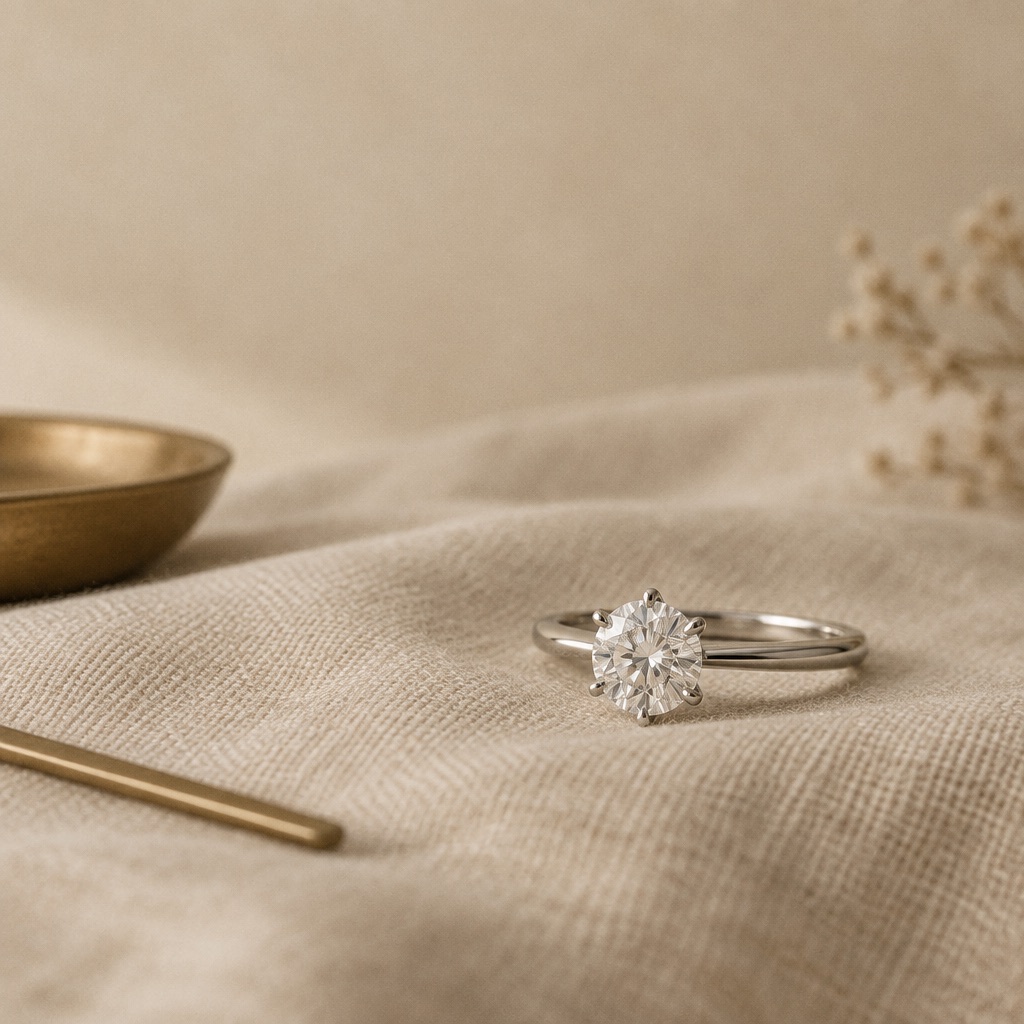
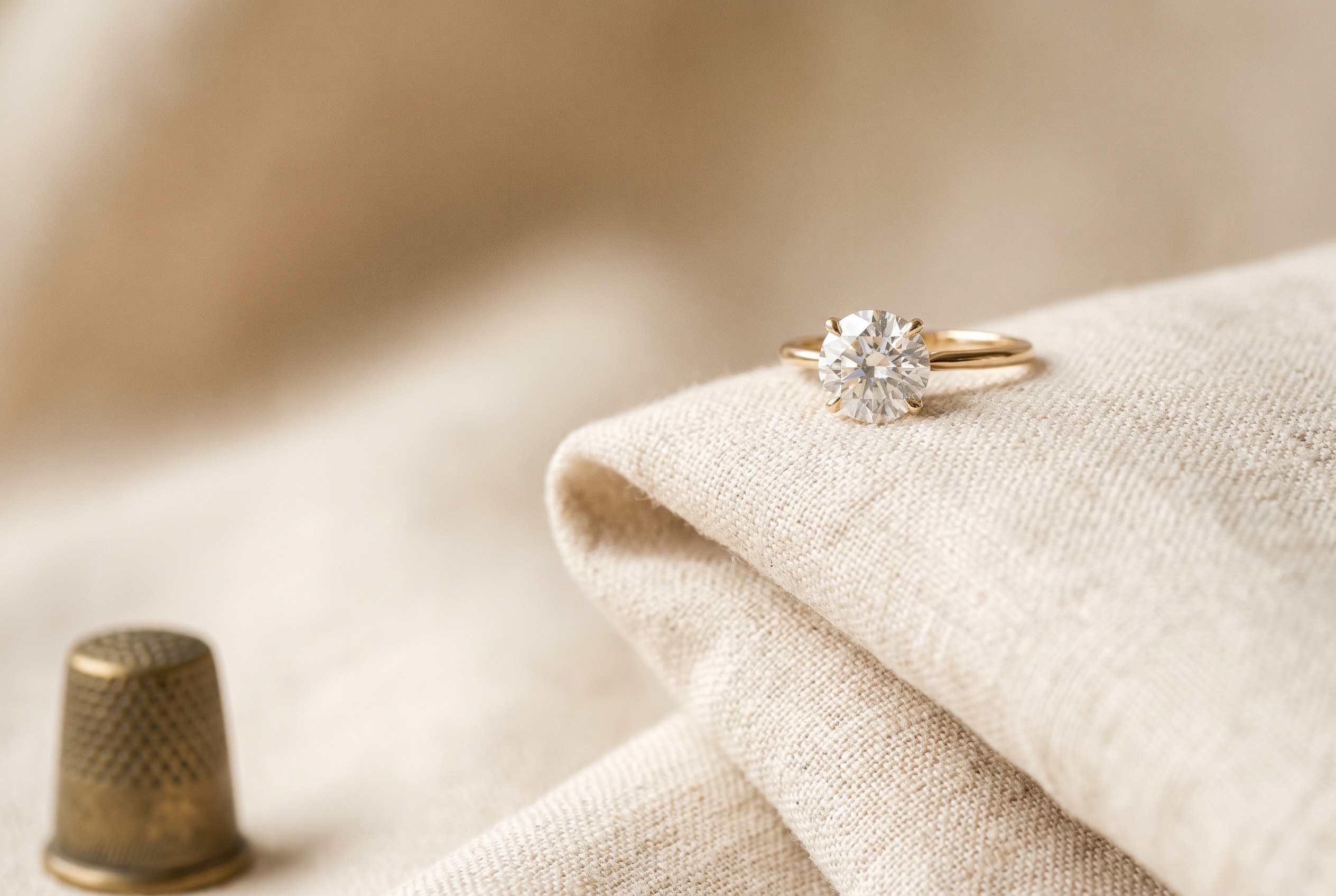
- Solitaire — a single center stone, minimal distraction, the most versatile and lowest-labor option
- Halo — a ring of small accent stones surrounding the center stone, increasing apparent size and adding sparkle
- Three-stone — a center stone flanked by two side stones, often carrying symbolic past-present-future meaning
- Cathedral — arched shoulders that lift the center stone, giving a classic, elevated profile
- Tension — the stone appears to float, held by pressure between two metal arms, a modern, minimal-prong look
- Channel or pavé — small stones set into the band itself, adding continuous sparkle along the shoulders
Lifestyle matters here as much as aesthetics: a customer with an active, hands-on job or hobby is generally better served by a lower-profile setting with well-protected prongs than by a high halo or exposed tension setting, regardless of which style they're initially drawn to.
Step 4: Choosing Metal
Platinum, 18k and 14k white gold, yellow gold, and rose gold are the standard options. Platinum is the most durable and hypoallergenic, holds prongs more securely over time, but costs more and develops a matte patina some customers prefer polished away periodically. White gold is rhodium-plated to achieve its bright white finish, which means periodic re-plating as maintenance; yellow and rose gold don't require that step and have both seen a strong resurgence in custom work in recent years, particularly paired with antique-style center stones.
Step 5: Personalization Details
This is where a custom ring earns the word "custom" beyond simply picking from a catalog of standard styles. Common personalization requests include hidden halos (a ring of small stones under the center stone, invisible from above but visible from the side), engraving on the interior band, milgrain edging for a vintage texture, a hidden gemstone accent in a color meaningful to the couple, or non-standard proportions — a slightly taller or lower profile than a stock setting would offer. Each of these adds labor time and should be flagged before CAD rendering begins, not requested as a change after the first render, since it can mean re-modeling from a substantially earlier stage.
Step 6: CAD Rendering and Design Approval
Before any metal is cast, the full design — stone, setting, metal, and any personalization — is modeled in CAD software and rendered for approval. This is the single most important checkpoint in the entire process: a CAD proof catches proportion issues, prong placement, and overall balance while changes are still cheap, versus after casting when correcting a proportion error means starting over. A thorough CAD review checks stone size and placement relative to the band, prong count and positioning, band width and profile, and any engraving or hidden details, ideally from multiple rendered angles rather than a single front-facing view. Most professional workflows allow for one or two rounds of revision at this stage before the design is locked and sent to production — more than that starts to erode the timeline advantage custom work is supposed to offer over generic bespoke commissions.
Step 7: Casting, Setting, and Finishing
Once CAD is approved, the ring moves to production: the CAD file drives a wax or resin pattern, which is cast in the chosen metal using the lost-wax casting method, then hand-finished, set with the center stone and any accents, polished, and quality-inspected before final delivery. This stage is largely mechanical once the design is locked — the design decisions made in steps 1 through 6 are what actually determine how the finished ring looks and functions.
Custom vs. Semi-Custom vs. Fully Bespoke: What's the Difference
| Approach | What changes | Typical turnaround | Best for |
|---|---|---|---|
| Semi-custom | Existing setting style, customer chooses stone/metal only | Fastest — often days | Customers who like an established style and want speed |
| Custom | Existing setting modified — different profile, added detail, adjusted proportions | Moderate — several days to about a week | Most real-world "custom" requests |
| Fully bespoke | Entirely new design built from a sketch or concept with no existing base setting | Longest — a week or more, depending on complexity | Customers with a specific vision no existing style matches |
Most requests that customers describe as "custom" actually fall into the middle category — a known, provable setting style with meaningful modifications — rather than fully bespoke work built from nothing. Being clear about which category a request actually falls into, early, keeps timeline expectations realistic.
How Long Custom Engagement Ring Design Actually Takes
Industry-wide, fully bespoke custom design can run two to six weeks from first consultation to finished ring, factoring in sketch/concept time, CAD rounds, and production. Working from an established setting style with modifications compresses that considerably — a well-run pipeline with efficient CAD turnaround and in-stock center stone inventory can finish a custom ring build in a matter of days once the design is locked, which is a meaningfully different promise than the industry-wide bespoke timeline and worth being explicit about with a customer expecting speed.
Questions to Settle Before the First CAD File Is Opened
A short intake checklist prevents most mid-process delays. Before CAD work begins, confirm: the firm budget ceiling and how it splits across stone, setting, and labor; the exact stone (shape, carat, natural or lab-grown, and whether it's already in hand or still being sourced); the setting family and any specific reference images the customer has in mind; metal choice, including whether re-plating maintenance for white gold was discussed; ring size, including whether a comfort-fit interior or a particular band width is wanted; and every personalization detail — engraving text, hidden accents, unusual proportions — spelled out in writing rather than left as a verbal aside. Treating this as a formal intake step, rather than gathering the information piecemeal across several conversations, is one of the simplest ways to protect a custom program's turnaround time.
Common Mistakes When Designing a Custom Ring
- Choosing the stone before setting a budget — leads to a setting budget squeeze once the stone is already emotionally locked in
- Skipping multi-angle CAD review — a single front-facing render hides proportion and prong-placement issues a side or top-down view would catch
- Adding personalization after CAD approval — re-opens modeling work that should have been scoped up front
- Choosing a high-profile or exposed setting for an active lifestyle — leads to snagging, prong wear, or stone loss well ahead of normal timelines
- Not confirming certification and stone specs match the CAD proof's assumptions — a stone substitution after rendering can throw off proportions the CAD file was built around
Sourcing the Center Stone: In-Stock vs. Special Order
How the center stone is sourced has a bigger effect on total timeline than most customers expect. An in-stock stone that already matches the chosen shape, size, and quality tier can move into CAD design the same day it's selected. A special-order stone — a specific antique cut at an unusual size, or a natural stone with narrow color and clarity requirements — can add days to weeks before design work even starts, independent of how fast the setting itself is produced. For a jeweler managing a customer's expectations, it's worth confirming stone availability before quoting a turnaround, rather than assuming the setting timeline is the only variable. This is one reason working with a supplier that carries broad in-stock inventory across standard, antique, and fancy shapes — rather than sourcing each stone to order — meaningfully shortens the front end of a custom project.
Sizing and Fit: Decisions That Belong Early, Not Late
Ring size is an obvious requirement, but a few related fit decisions are easy to overlook until late in the process. Band width affects how a given ring size actually feels and looks on the hand — a wider band typically needs to be ordered a half-size larger than a narrow band to fit the same finger comfortably. Comfort-fit interior shaping (a slightly domed interior profile) makes a ring easier to remove and put on but adds a small amount of metal and cost. And for settings with a raised profile — high prongs, a tall halo — some customers find the added height changes how the ring interacts with gloves, tools, or an existing wedding band meant to sit flush against it. Raising these questions during the setting-style conversation, rather than after the ring arrives, avoids a resize or rebuild down the line.
Where Custom Ring Budget Actually Goes
A rough breakdown helps set expectations before design work starts. Center stone cost is typically the largest share of total spend — often 60-75% depending on carat weight and whether the stone is natural or lab-grown. Metal cost scales with the ring's total metal weight and the chosen alloy, with platinum running meaningfully higher than 14k gold for an equivalent design. Labor — CAD modeling, casting, stone setting, polishing, and any personalization work like engraving or milgrain — makes up the remainder, and scales with design complexity rather than stone value: a modest stone in an intricate, heavily personalized setting can carry more labor cost than a larger stone in a simple solitaire. Knowing this breakdown in advance helps a customer understand where a request to modify the budget will actually have the most effect.
Semi-Custom Starting Points: Why Most "Custom" Requests Aren't Fully Bespoke
Most working jewelers build the bulk of their custom business from a library of proven setting styles — solitaire, halo, three-stone, cathedral — modified per customer rather than designed from a blank page every time. This isn't a compromise; it's a practical efficiency that keeps turnaround fast without sacrificing the personalization that makes a ring feel custom to the person wearing it. A customer rarely needs an entirely novel setting architecture — they need their stone, their proportions, and their personal details applied to a setting style that's already been proven to wear well and set securely. Recognizing which requests can be handled this way, versus which genuinely require new engineering from scratch, is part of what keeps a custom program both fast and reliable. A useful gut check: if the requested changes are proportional or decorative — a different band width, an added row of pavé, a modified halo height — a proven base setting can almost always absorb them. If the request changes the underlying structural architecture — how the stone is actually held, or an entirely new silhouette with no comparable existing style — it belongs in the fully bespoke category, with the longer timeline that honestly implies.
Working With a Wholesale Supplier on Custom Designs
For an independent jeweler or designer, the operational challenge of custom work isn't usually creativity — it's coordinating stone sourcing, CAD turnaround, and production against a customer's timeline expectations, often while managing several projects at once. Guru Diam supports this as a trade-only wholesale supplier carrying certified natural and CVD lab-grown loose diamonds across standard, antique, and fancy shapes, alongside custom engagement ring production finished in 4-6 days once a design is approved — with IGI, GIA, and GCAL certification available depending on the stone. Custom builds are unbranded by default, so jewelers can present finished work as their own. In-stock loose stone inventory ships same-day when ordered before 6pm EST from New York or 4pm PST from Los Angeles, which matters for jewelers trying to keep a custom project's stone-selection stage from becoming the timeline bottleneck. Buyers can review loose stone inventory through the certified diamonds category, start a custom build through custom jewelry, and review trade account terms through the wholesale hub or trade partner program.
Frequently Asked Questions
How long does it take to design a custom engagement ring?
It depends on how bespoke the design is. A modified version of an existing setting style can be designed, CAD-approved, and produced in a matter of days with an efficient pipeline; a fully bespoke design built from scratch typically takes two to six weeks industry-wide, factoring in concept, CAD revisions, and production.
What's the first decision I should make when designing a custom ring?
Budget, before any stone or setting conversations begin. Center stone cost is usually the largest line item, and setting a ceiling first prevents a customer from designing around a stone that leaves no room for the setting and labor.
Do I need to approve a CAD rendering before my ring is made?
Yes, and this step should never be skipped. CAD approval is the last checkpoint before metal is cast — it's far cheaper to fix a proportion or prong-placement issue in a digital render than after casting, when correcting the same issue can mean starting the piece over.
Is a lab-grown diamond a good choice for a custom engagement ring?
Lab-grown CVD diamonds are chemically and optically identical to natural diamonds and are graded by the same labs (GIA, IGI, GCAL), typically at a lower price per carat — meaning a given budget can buy a larger or cleaner stone. The choice ultimately comes down to a customer's personal preference and budget priorities rather than any quality difference.
What's the difference between custom and semi-custom engagement rings?
Semi-custom means choosing a stone and metal within an existing, unmodified setting style — the fastest option. Custom typically means an existing setting modified with proportion changes or added details. Fully bespoke means an entirely new design built without any existing base setting, which takes the longest.
Can I add engraving or hidden details to a custom ring?
Yes — interior engraving, hidden halos, milgrain texture, and hidden colored-stone accents are all common personalization requests. These should be specified before CAD rendering begins, since adding them after a design is approved often requires re-modeling the piece.