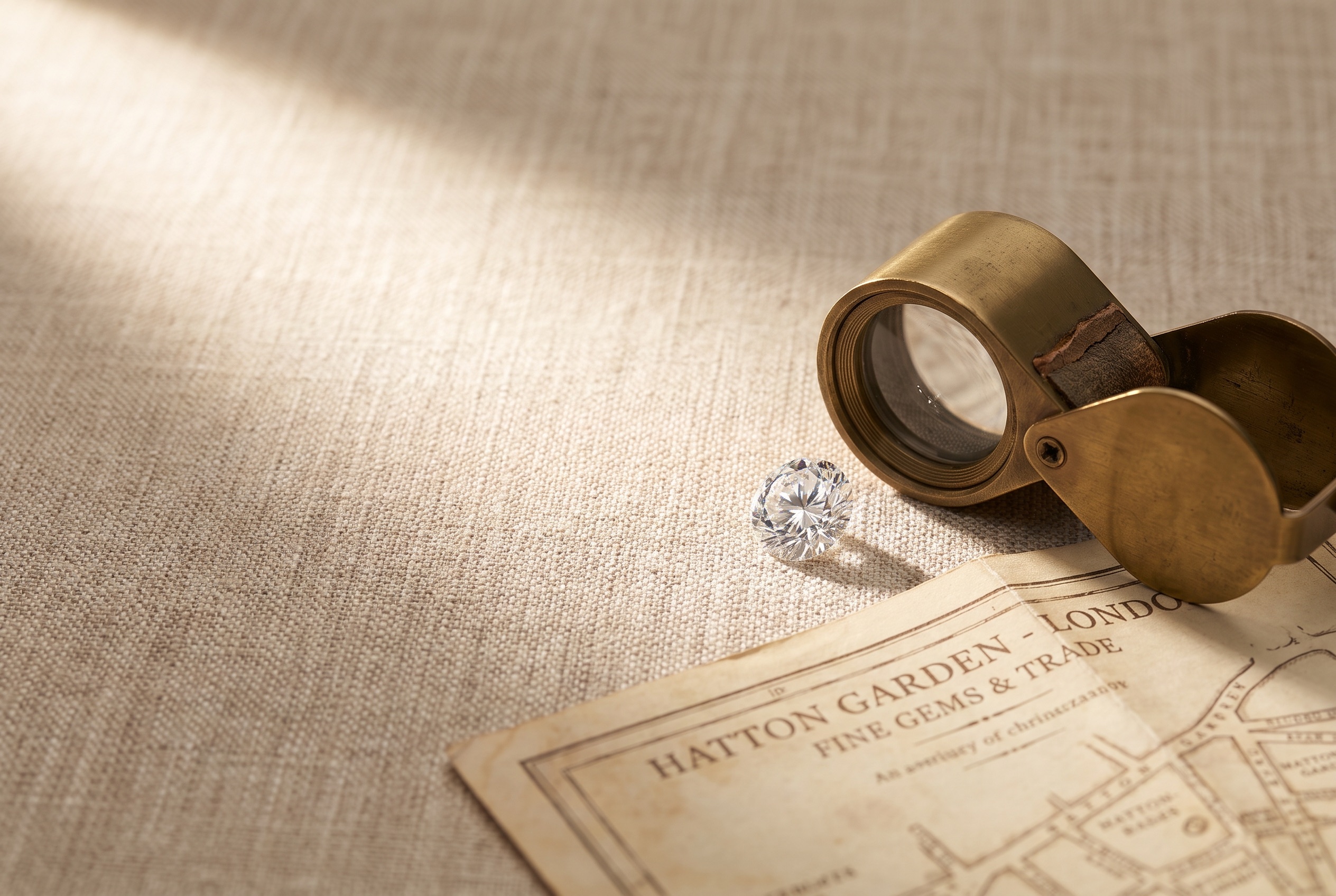
Hatton Garden is a street and surrounding quarter in Holborn, London, that has functioned as the United Kingdom's principal center for diamond and jewellery trading for well over a century. It hosts dense street-level jewellery retail, upper-floor wholesale trade offices, and the London Diamond Bourse, a member-only trading body affiliated with the World Federation of Diamond Bourses. This guide explains what Hatton Garden actually is, its history, how its trade infrastructure works, and what it means for a wholesale buyer sourcing diamonds today.
This guide covers Hatton Garden's location and layout, its history and the communities that built its trading culture, the London Diamond Bourse, its 2015 safe deposit burglary, how it compares to other global diamond trading centers, and what a wholesale buyer should understand about sourcing from a district on the other side of the Atlantic.
Where Hatton Garden Is and What the District Actually Covers
Hatton Garden is a street in Holborn, in the London Borough of Camden near the boundary with the City of London, running roughly between Clerkenwell Road and Charterhouse Street. The name has come to refer not just to the street itself but to the surrounding cluster of jewellery-trade activity in the immediate area, similar to how "47th Street" in New York refers to both a specific block and the broader trading ecosystem that has grown up around it. Hatton Garden combines street-level retail jewellers, many of them independent, family-run businesses, with upper-floor wholesale offices, workshops, and the London Diamond Bourse's private trading floor, a layered structure that echoes the two-tier model seen in most major diamond trading districts worldwide.
A Brief History of London's Jewellery Quarter
Hatton Garden's association with goldsmithing and jewellery dates back centuries, but its modern reputation as Britain's diamond trading center took shape mainly from the late nineteenth and early twentieth centuries onward, as diamond cutters and dealers, many of them Jewish immigrants arriving from Antwerp, Amsterdam, and Eastern Europe, established workshops and trading offices in the area. That immigrant trading community brought established diamond-cutting expertise and international trade relationships with them, building the concentrated network of dealers, cutters, and polishers that gave Hatton Garden its enduring reputation as London's — and by extension the UK's — center of the diamond trade.
Through the twentieth century, Hatton Garden solidified this role as London's principal jewellery quarter, developing the same kind of trust-based, relationship-driven trading culture found in other historic diamond districts, where reputation and standing within a tightly networked trading community function as much as formal contracts do in day-to-day dealing.
The London Diamond Bourse
The London Diamond Bourse (LDB) is the United Kingdom's member-only diamond trading organization, based on Hatton Garden itself and affiliated with the World Federation of Diamond Bourses, the umbrella body coordinating major diamond trading floors internationally alongside counterparts like New York's Diamond Dealers Club, the Antwerp World Diamond Centre, and the Bharat Diamond Bourse in Mumbai. Like other national bourses, the LDB provides a private, secure trading environment for vetted members to buy, sell, and broker diamonds among themselves, along with the kind of self-regulating structure — membership vetting, internal codes of conduct — common across the world's major diamond trading bodies.
As the UK's principal diamond trading institution, the LDB functions as Hatton Garden's institutional anchor in much the same way the Diamond Dealers Club anchors New York's 47th Street district, giving the area's wholesale trade a formal, member-based structure that complements the informal, relationship-driven dealing that also characterizes how business gets done in a district this old and this densely networked.
Hatton Garden's Two-Tier Trading Structure
| Layer | What Happens There |
|---|---|
| Street level | Independent retail jewellers, many family-run over multiple generations, selling directly to walk-in consumers |
| Upper-floor offices | Wholesale dealers, cutters, polishers, and manufacturers, largely trading with other trade professionals rather than the public |
| London Diamond Bourse | A private, member-only trading floor for vetted LDB members buying, selling, and brokering diamonds among themselves |
This structure means a visitor walking Hatton Garden's street level sees only a fraction of the district's actual trading activity, the same pattern found in New York, Antwerp, and Mumbai's major diamond districts, where the visible retail layer sits above a much larger, less visible wholesale trading ecosystem.
The 2015 Hatton Garden Safe Deposit Burglary
Hatton Garden is internationally known for one of the largest burglaries in English legal history: over the Easter bank holiday weekend in April 2015, a gang broke into the Hatton Garden Safe Deposit Company, drilling through a reinforced concrete wall to access the vault and stealing an estimated tens of millions of pounds in cash, jewellery, and gems from safe deposit boxes rented by local dealers and members of the public. Several of the men involved were later convicted and given lengthy prison sentences, and the case drew extensive UK and international media coverage, later inspiring both documentary and dramatized film treatments.
The burglary is a genuinely significant part of Hatton Garden's modern story, and it prompted real changes in security practices across the district's dealers and safe deposit facilities in the years since. A buyer or jeweler discussing Hatton Garden with a customer should be able to speak to this history accurately — it's a well-documented, widely reported event, not district gossip — as part of giving a complete, balanced picture of the area rather than only its trading pedigree.
Hatton Garden Compared to Other Global Diamond Trading Centers
| Aspect | Hatton Garden (London) | 47th Street (New York) | Antwerp |
|---|---|---|---|
| Institutional anchor | London Diamond Bourse | Diamond Dealers Club | Antwerp World Diamond Centre |
| Historical roots | Late 19th/early 20th-century immigrant diamond-cutting community | WWII-era relocation of Antwerp dealers fleeing Nazi occupation | Centuries-long trading history dating to the 15th century; largest rough-trading hub globally |
| Layout | Two-tier — street-level retail plus upper-floor wholesale trade | Two-tier — dense street-level storefronts plus a larger upper-floor wholesale layer | Concentrated within a compact secured trading district |
| Scale | UK's principal diamond and jewellery trading center | Largest diamond trading concentration in the US | Generally considered the largest and most historically dominant hub globally |
Each of these districts grew out of a broadly similar pattern — immigrant trading communities building dense, trust-based networks around a formal bourse institution — while developing distinct local character shaped by their own history, scale, and the specific communities that built them.
What Buyers Can Source in Hatton Garden
- Loose diamonds and finished jewellery across a wide range of price points, from independent retail jewellers to specialist wholesale dealers.
- Bespoke and custom design services, with numerous workshops offering design, casting, and finishing for both trade buyers and individual consumers.
- Antique and estate jewellery, an area where several long-established Hatton Garden dealers have built particular specialist reputations over decades.
- Repair, valuation, and appraisal services, supported by the district's dense concentration of gemological and bench expertise.
- Trade-only wholesale inventory, sourced through London Diamond Bourse members and other upper-floor dealers working primarily with other trade professionals.
The Practical Tradeoffs of Sourcing In-Person Overseas
For a US-based jeweler, sourcing directly through Hatton Garden means the same practical tradeoffs any overseas trade district presents: the value of in-person inspection and a genuine trading relationship, weighed against international shipping, customs, currency exchange, and the time cost of building relationships in a market thousands of miles away. Those tradeoffs are rarely worth it for routine, recurring inventory needs, where a domestic wholesale supplier with same-day shipping and transparent, published terms is generally the more practical sourcing path — but they can matter for a buyer specifically seeking UK-market antique or estate pieces with a documented Hatton Garden trading history.
Certification Standards Apply Regardless of Trading Location
Whether a diamond is purchased through a Hatton Garden dealer, a New York supplier, or any other trading center, IGI, GIA, and GCAL certification documents a stone's actual 4Cs and quality characteristics independent of where the transaction took place. A buyer evaluating Hatton Garden-sourced inventory should treat certification consistency, not the prestige of the trading location alone, as the primary quality signal, the same standard that applies to sourcing from any major diamond district worldwide.
Why Historic Trading Districts Like Hatton Garden Still Matter
Even as most day-to-day, recurring wholesale purchasing has moved toward established supplier accounts with transparent, published terms rather than in-person trading-floor relationships, a district with Hatton Garden's depth of specialist expertise, particularly in antique and estate jewellery, continues to serve a function a purely remote relationship can't fully replace. That's a genuine, durable strength rooted in more than a century of concentrated trading activity in one place, not a nostalgic one, and it's part of why Hatton Garden remains the reference point for the UK diamond trade in the same way 47th Street functions for the US market.
Sourcing Wholesale Diamonds and Jewelry Through Guru Diam
Guru Diam is a US-based, trade-only wholesale supplier carrying certified natural and CVD lab-grown diamonds, calibrated melee, certified loose stones, and custom finished jewelry, serving trade buyers nationally from its New York and Los Angeles locations. Certified loose stones can be browsed through the certified diamonds category, matched pairs through the matching pairs category, and fancy color options through fancy color loose diamonds. Trade accounts can review wholesale terms at the wholesale hub or apply through trade partner, and jewelers building a custom piece can work through custom jewelry, with rings finished in 4-6 days.
In-stock inventory ships same-day from New York (before 6pm EST) and Los Angeles (before 4pm PST), giving US-based jewelers a domestic sourcing option with the certification consistency and reliable turnaround that a routine, recurring order needs, distinct from the specialist, in-person value a district like Hatton Garden offers for particular categories like antique and estate pieces.
Hatton Garden's Bridal and Engagement Ring Reputation
Beyond its wholesale trading function, Hatton Garden has built a strong consumer-facing reputation specifically around engagement rings and bridal jewellery, drawing shoppers from across London and further afield who want to buy directly from a jeweller with genuine cutting and setting expertise rather than a purely retail chain storefront. Many Hatton Garden retailers offer bespoke design services alongside ready-made inventory, letting a customer work directly with a jeweller on a custom setting in a way that's harder to replicate at a typical high-street retail chain. This consumer-facing bridal specialty runs alongside, and is largely separate from, the district's trade-only wholesale layer, though the two draw on much of the same underlying gemological and bench expertise concentrated in the area.
Workshops, Bench Jewellers, and Behind-the-Scenes Craft
A significant share of Hatton Garden's ongoing relevance comes from the working jewellery workshops still operating in and around the district, where bench jewellers handle setting, repair, and custom fabrication work for both local retailers and outside clients. This hands-on manufacturing capacity, built up over generations, is part of what distinguishes a historic trade district like Hatton Garden from a purely retail shopping street — the presence of genuine production and repair infrastructure, not just point-of-sale counters, is a meaningful part of why the district has retained real trade relevance even as online and remote sourcing have changed how much routine wholesale purchasing actually requires an in-person district visit.
Security Culture Since 2015
The 2015 burglary prompted a genuine, lasting shift in how Hatton Garden's dealers and safe deposit facilities approach physical security, with increased investment in vault technology, monitoring, and insurance practices across the district in the years since. That shift reflects a broader pattern common to historic trading districts handling concentrated, high value goods: a major security failure tends to drive systematic changes in practice across an entire district, not just the specific business directly affected, given how much a district's overall reputation for security matters to every dealer operating within it. A buyer or customer asking about security today should understand this as a meaningfully different landscape than existed before 2015, not an unresolved ongoing vulnerability.
How International Buyers Can Verify a Hatton Garden Dealer
A buyer outside the UK considering a Hatton Garden dealer, whether for a specific antique piece or a broader trade relationship, should verify London Diamond Bourse membership directly where relevant, request independent verification of any certification through the issuing lab (GIA, IGI, or GCAL) rather than relying solely on a printed certificate, and ask for references or an established trading history before committing to a significant purchase or ongoing relationship. These are the same basic due-diligence steps that apply to any historic trade district worldwide, not a Hatton Garden-specific concern, but they matter particularly for an international buyer without the benefit of existing local relationships or word-of-mouth reputation to lean on.
Hatton Garden in Popular Culture
Beyond the 2015 burglary's own extensive news coverage, Hatton Garden and its trading culture have appeared repeatedly in British film, television, and journalism over the decades, reflecting the district's broader cultural significance in the UK beyond its purely commercial role. This level of public recognition is itself a notable feature among the world's diamond trading districts — few carry the same degree of mainstream cultural visibility outside the trade press that Hatton Garden has accumulated, particularly following the burglary and its dramatized retellings, which introduced the district's name to audiences who had never previously had reason to know it as a diamond trading center at all.
What First-Time Researchers Often Get Wrong About Hatton Garden
- Assuming it's a single shop or building. Hatton Garden is a street and surrounding trading district housing many independent businesses, not one company or storefront.
- Treating it as open, walk-in wholesale access. Much of the district's wholesale trade, including London Diamond Bourse membership, works through vetted relationships rather than open public access.
- Overlooking its documented security history. The 2015 burglary is a well-established, widely reported part of the district's modern history, not a minor footnote.
- Assuming UK sourcing is necessary for UK-market credibility. Certification standards (GIA, IGI, GCAL) apply consistently regardless of where a stone was purchased.
Hatton Garden's Role in the UK's Broader Jewellery Industry
Beyond serving London directly, Hatton Garden functions as a national reference point for the UK jewellery trade more broadly, similar to how 47th Street serves as more than just a New York City resource for American jewelers. Retailers and designers from across the UK travel to or maintain relationships with Hatton Garden dealers specifically for categories — antique and estate pieces, bespoke design, specialist repair work — where the district's concentrated expertise outweighs the convenience of a more local option. This national-hub role, built over more than a century of accumulated specialist knowledge, is part of why Hatton Garden's reputation extends well beyond London itself and why it remains the reference point most UK jewelry trade press and industry conversation defaults to when discussing where Britain's diamond trade is actually concentrated.
Seasonal Patterns and District Rhythms
Like other major jewellery trading hubs, Hatton Garden sees a seasonal rhythm tied to the broader engagement and bridal calendar, with increased activity heading into the holiday season and again ahead of spring and early-summer wedding planning, a pattern echoed across Western jewelry markets generally. Central London's own tourism and foot-traffic patterns layer on top of that trade seasonality, since the district draws both UK trade visitors and international shoppers simultaneously. Because a meaningful share of the district's specialist and bespoke work runs by appointment, confirming a dealer's availability ahead of a visit matters more during these peak periods, when established relationships tend to receive priority attention over unscheduled inquiries.
How Hatton Garden's Trade Ecosystem Has Adapted Online
Many Hatton Garden dealers and retailers have built out online sales and consultation channels over the past decade, extending the district's reach well beyond anyone able to physically visit London. This mirrors a broader pattern across historic diamond trading districts worldwide, where an in-person, relationship-driven trading culture increasingly coexists with digital storefronts and remote consultation for routine purchases, while the most specialized and highest-value transactions still tend to happen through in-person, trust-based relationships built over time within the district itself.
What This Means for a US-Based Trade Professional
Understanding Hatton Garden's history, institutional structure, and reputation is genuinely useful knowledge for a US-based jeweler even without any direct sourcing relationship there, since customers researching diamond provenance and international trading centers online frequently encounter the district's name and may ask about it directly. Being able to explain accurately what Hatton Garden is, how it compares to districts a US jeweler's customers may be more familiar with, and what its documented history actually includes gives a jeweler a more complete, more credible answer than a vague gesture toward "London's diamond district" without any real substance behind it.
Frequently Asked Questions
What is Hatton Garden?
Hatton Garden is a street and surrounding jewellery quarter in Holborn, London, that has functioned as the United Kingdom's principal center for diamond and jewellery trading since the late 19th and early 20th centuries.
Is Hatton Garden open to the general public?
Partly. Street-level retail jewellers welcome walk-in consumers, but much of the district's wholesale trade, including London Diamond Bourse membership, operates through vetted trade relationships rather than open public access.
What is the London Diamond Bourse?
The London Diamond Bourse is the UK's member-only diamond trading organization, based in Hatton Garden and affiliated with the World Federation of Diamond Bourses, the international body connecting major national diamond trading floors.
What happened in the Hatton Garden burglary?
Over the Easter weekend in April 2015, a gang broke into the Hatton Garden Safe Deposit Company vault, drilling through a concrete wall and stealing an estimated tens of millions of pounds in cash, jewellery, and gems. It remains one of the largest burglaries in English legal history.
How does Hatton Garden compare to New York's 47th Street or Antwerp?
All three grew from immigrant diamond-trading communities building dense, trust-based networks around a formal bourse institution — the London Diamond Bourse, the Diamond Dealers Club, and the Antwerp World Diamond Centre, respectively — though each developed its own scale and specialization over its distinct history.
Can a US-based jeweler source wholesale diamonds from Hatton Garden?
It's possible but generally impractical for routine, recurring purchasing given international shipping, customs, and relationship-building involved. Most US-based jewelers are better served by a domestic wholesale supplier for everyday sourcing, reserving international trade-district relationships for specialist categories.