Diamond necklace styles refer to the distinct construction categories a piece can fall into — tennis, choker, drop/pendant, infinity, toi-et-moi, bar, cluster, cross pendant, eternity, and initial/letter/name designs among the most common — each defined by how the diamonds are set and arranged along the chain rather than by any single stone shape or metal choice. For a wholesale buyer deciding what to stock or produce, the practical differences between these styles show up in chain length, diamond count and total carat weight, price-tier positioning, and which occasions each one is actually bought for.
This guide is written for jewelers, designers, and manufacturers evaluating which necklace styles belong in a wholesale assortment or a custom production line — not a consumer shopping guide, and not a deep construction walkthrough of any single style. Guru Diam publishes separate, more detailed sourcing guides for several of the individual styles referenced here; this piece is deliberately the higher-altitude comparison a buyer needs before deciding where to allocate inventory or production capacity across the category as a whole.
What "Diamond Necklace Style" Means for a Wholesale Buyer
The word "style" in this context is doing two jobs at once, and it's worth separating them before comparing anything. One is construction — how the diamonds are physically arranged and set: a continuous line (tennis), a cluster of stones grouped densely in one area, a single stone or small group suspended below the chain (drop/pendant), or a chain that carries no diamonds at all except at one symbolic point (cross, initial). The other is positioning — where a given style sits in a buyer's assortment relative to price, occasion, and how often a customer is likely to buy one versus wear one they already own for years.
Both dimensions matter for stocking decisions. Two styles can look similarly priced on paper and still behave completely differently in a case: an initial necklace is typically a lower-ticket, higher-frequency gifting item bought repeatedly across a customer's life (a new relationship, a new child, a milestone birthday), while a tennis necklace is a higher-ticket, lower-frequency purchase that a buyer often researches for weeks before committing. Treating every diamond necklace as one undifferentiated product category — sourced and priced the same way — is the most common mistake a buyer expanding into necklaces for the first time makes.
Diamond Necklace Styles at a Glance
The table below is a starting reference point, not a substitute for style-specific sourcing detail. Chain lengths, price tiers, and TCW ranges vary with stone size and quality tier within every style listed; treat these as typical commercial ranges rather than fixed specifications.
| Style | Typical Chain Length | Primary Occasion | Relative Price Tier | Construction Note |
|---|---|---|---|---|
| Tennis | 14–20+ in | Statement / milestone gift | High | Continuous line of matched stones, dozens per piece |
| Choker | 14–16 in | Evening / event | Mid–High | Sits at or just below the throat; often line-set or clustered |
| Drop / Pendant | 16–18 in (chain sold separately from pendant) | Everyday / gifting | Low–Mid | Single stone or small cluster hangs below a plain chain |
| Infinity | 16–18 in | Gifting / symbolic | Low–Mid | Small diamond line following a figure-eight motif |
| Toi et Moi | 16–18 in | Romantic gifting / bridal-adjacent | Mid | Two stones set side by side or crossing, symbolic pairing |
| Bar | 16–18 in | Everyday / layering | Low–Mid | Horizontal line of small stones set in a rigid metal bar |
| Cluster | 16–18 in | Statement / evening | Mid–High | Multiple stones grouped densely as one visual focal point |
| Cross Pendant | 16–20 in | Gifting / religious milestone | Low–Mid | Diamond-set cross motif, usually pavé or channel-set |
| Eternity | 14–18 in | Anniversary / bridal-adjacent | Mid–High | Diamonds set continuously (or near-continuously) around the full chain |
| Initial / Letter / Name | 16–18 in | Personal gifting | Low | Diamond accents on a script or block letterform pendant |
The Ten Core Styles, Compared
Tennis Necklace
A continuous, unbroken line of individually set diamonds of matching size and cut, worn as a full-circumference statement piece. It carries the highest stone count and typically the highest total carat weight in the category, which puts it at the top of the price-tier range and makes lot consistency — not any single stone's quality — the dominant sourcing consideration.
Choker
Any necklace style set short enough to sit at or just below the throat, generally in the 14–16 inch range. Chokers are frequently built as either a scaled-down tennis line or a dense cluster design, so their sourcing profile borrows from whichever underlying construction is used; the defining feature is length and fit, not a construction method of its own.
Drop / Pendant Necklace
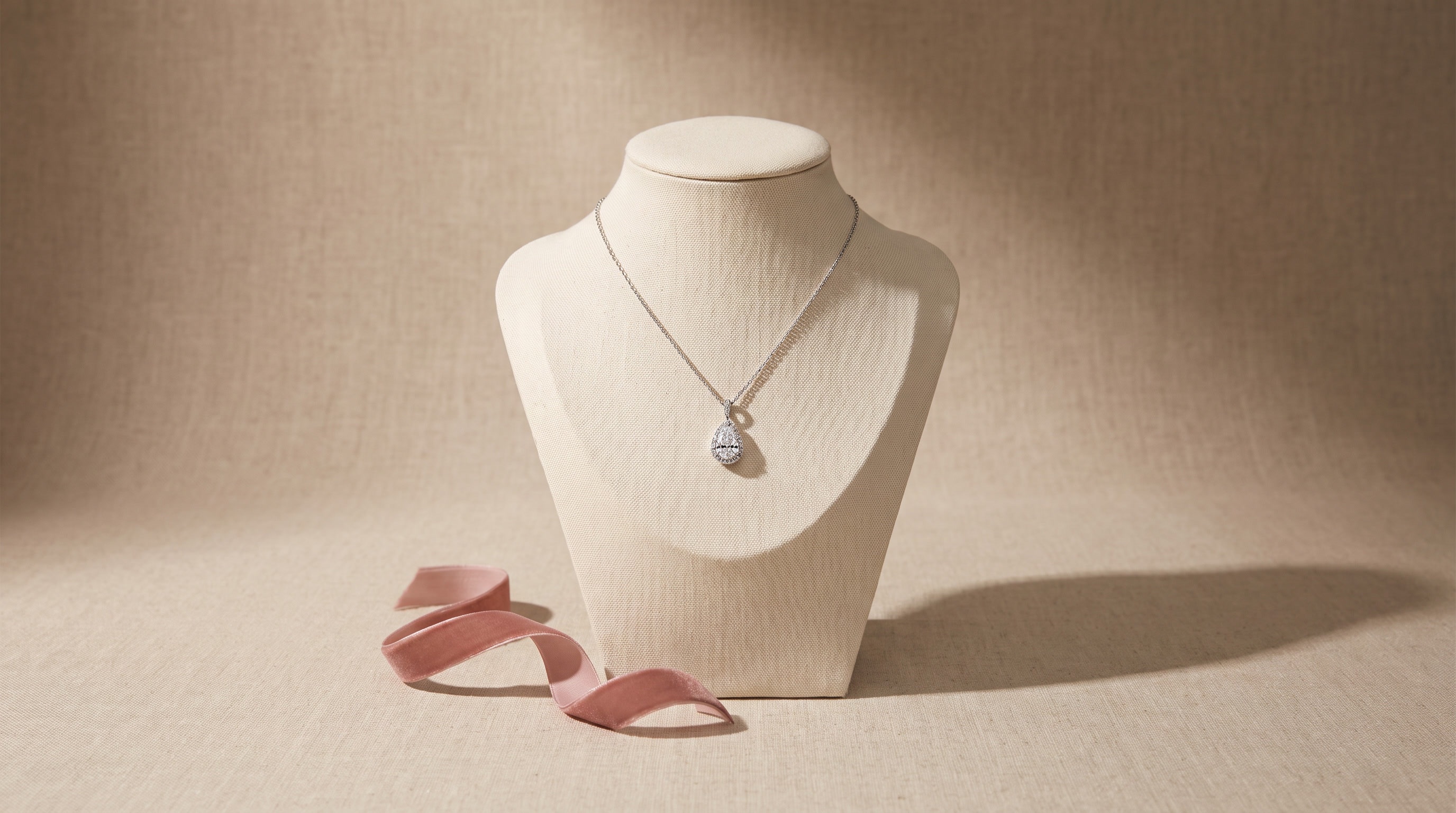
A single stone, or a small cluster of stones, suspended from a plain chain so it hangs below the collarbone. This is the most flexible and typically most accessible style in the category from a price standpoint, since the diamond investment is concentrated in one focal point rather than spread across dozens of stones, and the chain itself can be sold or swapped independently.
Infinity Necklace
A small line or pavé setting of diamonds following a figure-eight (infinity symbol) motif, usually worn as a pendant on a fine chain. It's a low-to-mid price-tier, symbolism-driven style that performs well as a gift item precisely because the shape itself carries an established meaning without requiring explanation.
Toi et Moi Necklace
French for "you and me," this style sets two stones side by side or in a crossing arrangement, symbolizing a pairing rather than a single focal stone. It occupies a mid-tier price point between a single-stone pendant and a cluster piece, and its romantic symbolism makes it a common adjacent purchase for buyers who also stock toi-et-moi engagement rings.
Bar Necklace
A rigid horizontal metal bar set with a line of small diamonds, worn as a minimalist pendant on a fine chain. Bar necklaces sit at the accessible end of the price range because the diamond content is modest relative to the piece's visual footprint, and they're commonly bought as a single item or as part of a layered, multi-necklace look.
Cluster Necklace
Multiple diamonds grouped densely together to form one concentrated visual focal point, rather than spread along a line or set singly. Cluster designs can reach a comparable total carat weight to a tennis necklace in a much smaller physical footprint, which positions them as a statement, evening-oriented style at a mid-to-high price tier.
Cross Pendant
A diamond-set cross, most commonly finished with pavé or channel-set stones along the arms of the cross motif. It's a gifting-driven, milestone-occasion style (confirmations, christenings, graduations) with a price tier that tracks closely with the number and size of stones used to outline the cross shape.
Eternity Necklace
A necklace with diamonds set continuously, or in a tightly repeating pattern, around the full visible length of the chain — the necklace equivalent of an eternity band. It reads as a higher-commitment, anniversary or milestone-gift piece, and its construction and total carat weight sit closer to a tennis necklace than to most other styles on this list.
Initial / Letter / Name Necklace
A pendant in the shape of a script or block letterform — a single initial, a monogram, or a full name — accented with diamonds along the letterform itself. This is consistently the most accessible price tier in the category because diamond content is minimal and decorative, and it's the style with the highest repeat-purchase frequency, since customers buy new pieces as relationships, children, and milestones change.
Chain Length and How It Pairs With Each Style
Chain length is one of the most overlooked variables in necklace stocking, and it interacts with style in two distinct ways. First, some styles are inherently length-locked: a tennis necklace, choker, or eternity design is set with diamonds along its entire visible length, so the chain length is effectively baked into the piece's design and can't be swapped without re-setting stones. Second, pendant-driven styles — drop, infinity, toi et moi, bar, cross, and initial necklaces — carry their diamond content in a fixed pendant on a plain, swappable chain, which means the same pendant can be offered across multiple chain-length options without touching the diamond setting at all.
This distinction has a direct assortment implication. A buyer stocking pendant-driven styles gets meaningful merchandising flexibility for very little added sourcing complexity — a single pendant SKU can be offered on a 16-inch, 18-inch, and 20-inch chain as three listings — while a buyer stocking line-set or cluster styles needs to commit to a specific length at the point of production, since altering length later generally means adding or removing set stones rather than swapping a component. Layering trends have also pushed shorter lengths (14–16 inches) higher in demand across nearly every pendant-driven style, as customers increasingly buy multiple necklaces to wear stacked rather than a single statement piece worn alone.
Occasion Fit: Matching Style to Buyer Intent
Every style in this category maps loosely to a dominant purchase occasion, and understanding that mapping helps a buyer decide how much floor space or production capacity a given style deserves relative to its price tier. Everyday, self-purchase, and low-consideration gifting occasions are dominated by bar, drop/pendant, and initial/letter/name necklaces — accessible, versatile pieces bought without much deliberation and often bought more than once. Milestone and symbolic gifting (an anniversary, a new relationship, a religious milestone, a graduation) skews toward infinity, toi-et-moi, and cross pendant styles, where the shape itself carries meaning that does some of the gift-giving work.
Statement and evening-wear occasions — galas, weddings as a guest or bridal party member, and other dress-up events — are where tennis necklaces, chokers, and cluster designs concentrate, since these styles are built to be visually prominent rather than worn quietly under a collar. Eternity necklaces sit slightly apart from all of these, occupying an anniversary-and-commitment-signaling niche that borrows some of the emotional weight of an eternity band without being tied to a wedding transaction specifically. None of these occasion mappings are exclusive — a customer absolutely buys a tennis necklace as an everyday piece, and an initial necklace occasionally gets bought as a serious milestone gift — but they're reliable enough patterns to inform assortment planning and seasonal merchandising.
Price-Tier Positioning Across the Category
Price tier in diamond necklaces tracks two variables more than any other: total carat weight and stone count. Styles that concentrate diamonds along a continuous line or a dense cluster — tennis, eternity, cluster, and to a lesser extent choker — carry the highest total diamond content per piece and sit at the top of the category's price range as a result. Styles that use diamonds decoratively, as an accent to a metal-dominant design — initial/letter/name, bar, and cross pendant necklaces — keep diamond content low relative to the piece's overall size and price out substantially lower, which is precisely what makes them accessible, high-frequency purchase items rather than considered, once-in-a-while pieces.
Drop/pendant, infinity, and toi-et-moi necklaces occupy the middle of this range, since their diamond content is concentrated in one or two focal stones rather than spread across a line, but the stone or stones used are typically larger and more prominent than the small melee-scale accents used in bar or letter designs. For a buyer building a full assortment across price tiers, this natural spread across the category — from letter necklaces at the accessible end through tennis and eternity necklaces at the top — is useful to plan for deliberately, since it lets a single necklace category serve nearly every price point in a case rather than clustering entirely in one tier.
Total Carat Weight (TCW) Considerations Across Styles
Because most diamond necklace styles other than a solitaire-style drop pendant use more than one stone, total carat weight — not any single stone's carat weight — is the right way to think about, price, and compare cost across the category. Line-set and cluster-heavy styles (tennis, eternity, cluster, some choker designs) can range from roughly 2 TCW at a shorter, smaller-stone build up to 10+ TCW for a longer piece set with larger stones. Pendant-driven and accent-diamond styles (drop, infinity, toi et moi, bar, cross, initial) generally run well under 1 TCW total, since the diamond content is either a single modest focal stone or a scattering of small melee-scale accents rather than a continuous line.
This gap matters for wholesale planning because it means the two broad construction categories described earlier in this guide — line/cluster-set versus pendant/accent-set — are effectively sourced as different products even when they're merchandised in the same necklace case. A buyer who's used to sourcing loose stones or melee for one category shouldn't assume the same lot-sourcing approach transfers directly to the other; matched, calibrated melee sourcing for a continuous line is a fundamentally different request to a supplier than sourcing a handful of well-matched accent stones for a letter pendant.
Natural vs. Lab-Grown Across the Necklace Category
The natural-versus-lab-grown decision affects every style in this category, but its financial impact scales directly with total carat weight — which means it matters enormously for tennis, eternity, and cluster necklaces and comparatively little for a letter or bar necklace with minimal diamond content. CVD lab-grown diamonds let a manufacturer offer a meaningfully higher total carat weight at a given price point (or hold price steady at a higher TCW) compared to natural material of equivalent color and clarity, which is a large part of why lab-grown material has become common in higher-TCW styles specifically — the cost difference compounds across dozens of stones in a way it simply doesn't across two or three.
For lower-TCW, accent-driven styles, the natural-versus-lab-grown choice is more of a straightforward brand and positioning decision than a major cost lever, since the total diamond content involved is small either way. Both natural and CVD lab-grown material can meet the same commercial quality standards across every style in this guide; the origin decision is a pricing and retail-positioning question for the buyer, not a difference in how a finished piece looks or wears once it's set.
Certification Considerations by Style
Certification practice follows stone size, not necklace style specifically. Individual diamonds below roughly 0.18–0.30ct — the melee-scale stones used in tennis, eternity, cluster, bar, and initial-necklace accents — are not individually or parcel-certified in standard wholesale practice; they ship as graded lots against a consistent commercial quality baseline rather than with stone-by-stone paperwork, since certifying dozens or hundreds of individual small stones per piece isn't practical for either supplier or buyer. Larger individual stones — the kind used as the focal point in a drop/pendant, infinity, toi-et-moi, or cross-pendant design — can be certified the same way any loose diamond would be, typically starting around 0.30ct.
IGI, GIA, and GCAL are the three certification bodies most commonly requested by wholesale buyers across all of these styles, and a supplier who can provide any of the three for larger focal stones gives a buyer flexibility to match certification choice to the retail price point and market the finished piece is aimed at, without changing sourcing relationships between different necklace styles in the same assortment.
Building a Balanced Wholesale Necklace Assortment
A wholesale buyer stocking diamond necklaces for the first time, or expanding an existing case, generally benefits from covering at least one style from each of the three broad tiers this guide has outlined: an accessible, high-frequency style (initial/letter, bar, or cross pendant), a mid-tier, considered-purchase style (drop/pendant, infinity, or toi et moi), and a top-tier statement style (tennis, cluster, choker, or eternity). This spread does more than fill price points on a shelf — it also spreads purchase occasions across the calendar, since accessible styles sell steadily as gifting items year-round while statement styles concentrate around specific gifting seasons and events.
It's also worth planning inventory and production capacity around the construction split described earlier: line/cluster-set styles require calibrated melee sourcing and setting capacity that scales with stone count, while pendant-driven styles need a smaller, more curated set of well-matched focal stones and a flexible chain-length offering. A buyer who treats the entire necklace category as one sourcing problem, rather than recognizing this underlying construction split, typically ends up over-invested in one direction — usually too much line-set inventory relative to actual sell-through in the accessible, gifting-driven tiers, which tend to turn over faster per unit even at lower individual price points.
Sourcing Diamond Necklace Components Wholesale
Guru Diam supplies both calibrated diamond melee for line-set and cluster styles and certified loose diamonds for focal-stone styles like drop pendants, toi-et-moi, and cross pendant necklaces, across natural and CVD lab-grown material, so a buyer building out a full necklace assortment across price tiers isn't sourcing melee from one vendor and focal stones from another. Certification is available through IGI, GIA, and GCAL depending on what a given style and price tier calls for, and in-stock inventory ships same-day from Guru Diam's New York and Los Angeles locations (before 6pm EST in New York, before 4pm PST in Los Angeles) so a manufacturer isn't waiting weeks on component diamonds to keep a production line moving.
For custom necklace designs — a specific cluster arrangement, a graduated eternity build, or a bespoke toi-et-moi pairing — Guru Diam's custom jewelry service finishes custom pieces in 4–6 days once diamonds and design are confirmed, considerably faster than the multi-week turnaround typical of the category. Trade accounts can browse calibrated melee and matched stone pairs at matching pairs, review certified loose diamonds for focal-stone designs at certified diamonds, or source fancy color stones for a colored necklace line at fancy color loose diamonds. Custom builds can start at custom jewelry, current wholesale terms are posted at the wholesale hub, and new trade buyers can apply for an account through trade partner.
Frequently Asked Questions
What is the most popular diamond necklace style for wholesale buyers to stock?
There's no single most popular style across the whole trade — it depends on price tier and customer base. Drop/pendant and initial/letter necklaces tend to be the highest-turnover, most consistently reordered styles because of their accessible price point and gifting frequency, while tennis and eternity necklaces generate the highest revenue per unit sold despite lower unit volume.
What's the difference between a choker and a regular diamond necklace?
A choker is defined by length, not construction — it's set short enough (typically 14–16 inches) to sit at or just below the throat, whereas a standard necklace usually falls in the 16–18 inch range and sits lower on the chest. Chokers can be built using tennis-line, cluster, or other underlying construction methods; "choker" describes fit, not a diamond-setting technique.
How do I decide what total carat weight to source for a necklace order?
Total carat weight should be planned around the style's construction category first: line-set and cluster styles (tennis, eternity, cluster) typically run 2–15+ TCW depending on length and stone size, while pendant-driven and accent styles (drop, infinity, toi et moi, bar, cross, initial) usually stay well under 1 TCW. Confirming which category a design falls into before requesting a quote makes for a much more accurate sourcing conversation with a supplier.
Are all diamond necklace styles individually certified?
No — certification tracks stone size rather than necklace style. Melee-scale stones under roughly 0.18–0.30ct, common in line-set and cluster designs, ship as graded parcel lots rather than individually certified stones, while larger focal stones used in pendant, infinity, or toi-et-moi designs can be certified individually, typically from around 0.30ct up.
Should a wholesale buyer stock natural or lab-grown diamonds for necklaces?
Both are viable and can meet identical commercial quality standards across every style. The decision matters most financially for high-TCW styles like tennis, eternity, and cluster necklaces, where CVD lab-grown material lets a buyer offer meaningfully more total carat weight at a given price point; for lower-TCW accent styles like initial or bar necklaces, the choice is more of a brand and positioning decision than a major cost driver.
How long does it take to source or produce a custom diamond necklace?
Turnaround depends heavily on the style and whether it's a custom build or an in-stock order. In-stock components ship same-day from a supplier with ready inventory, while a fully custom finished necklace commonly takes 4–6 days once the design and diamonds are confirmed, compared to the multi-week timelines typical elsewhere in the category.
Guru Diam is a trade-only wholesale diamond supplier with locations in New York and Los Angeles, sourcing calibrated diamond melee and certified loose diamonds — natural and CVD lab-grown — for jewelers and manufacturers building diamond necklace programs across every style and price tier. Browse current inventory at certified diamonds or apply for a trade account through trade partner.