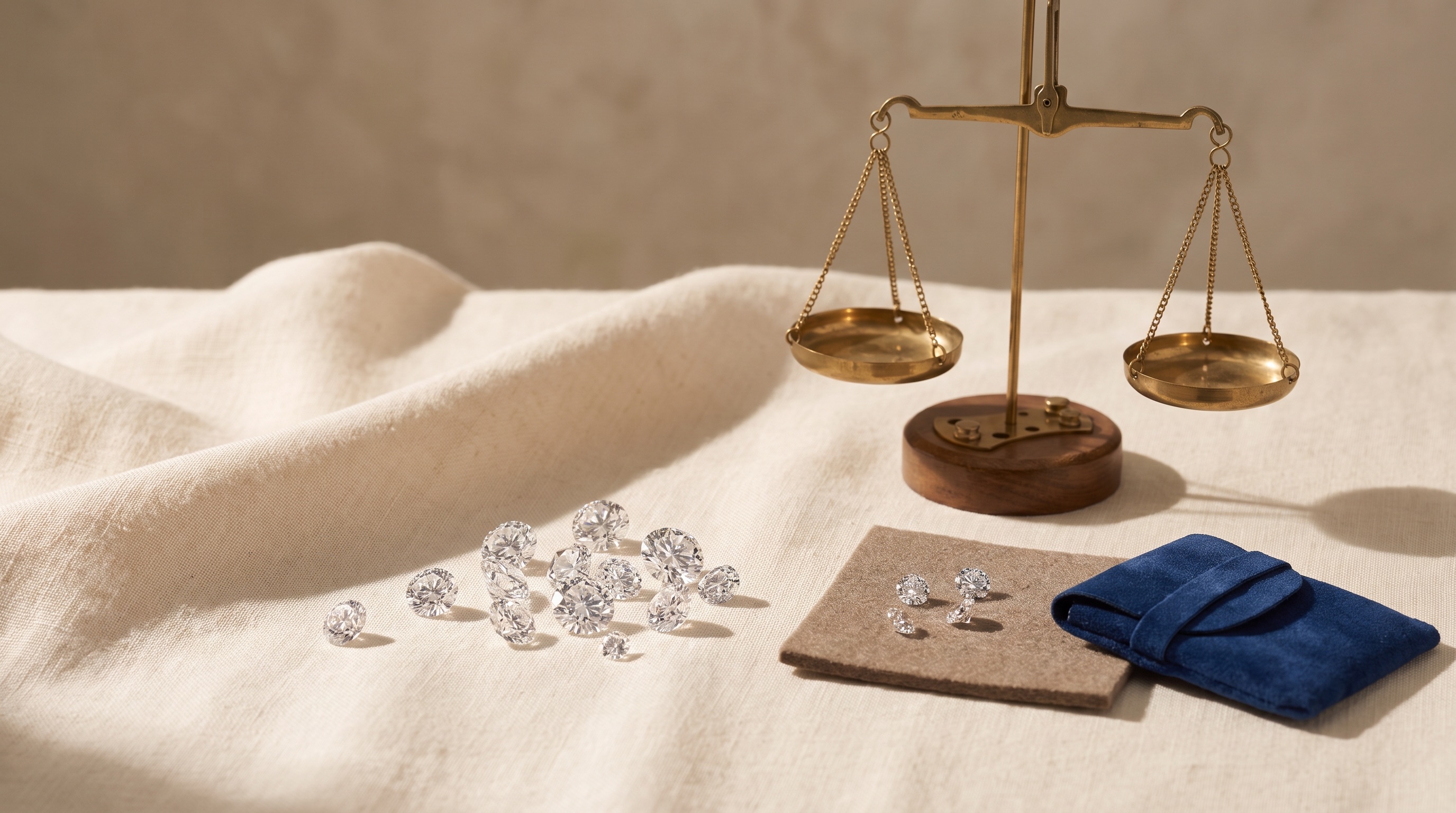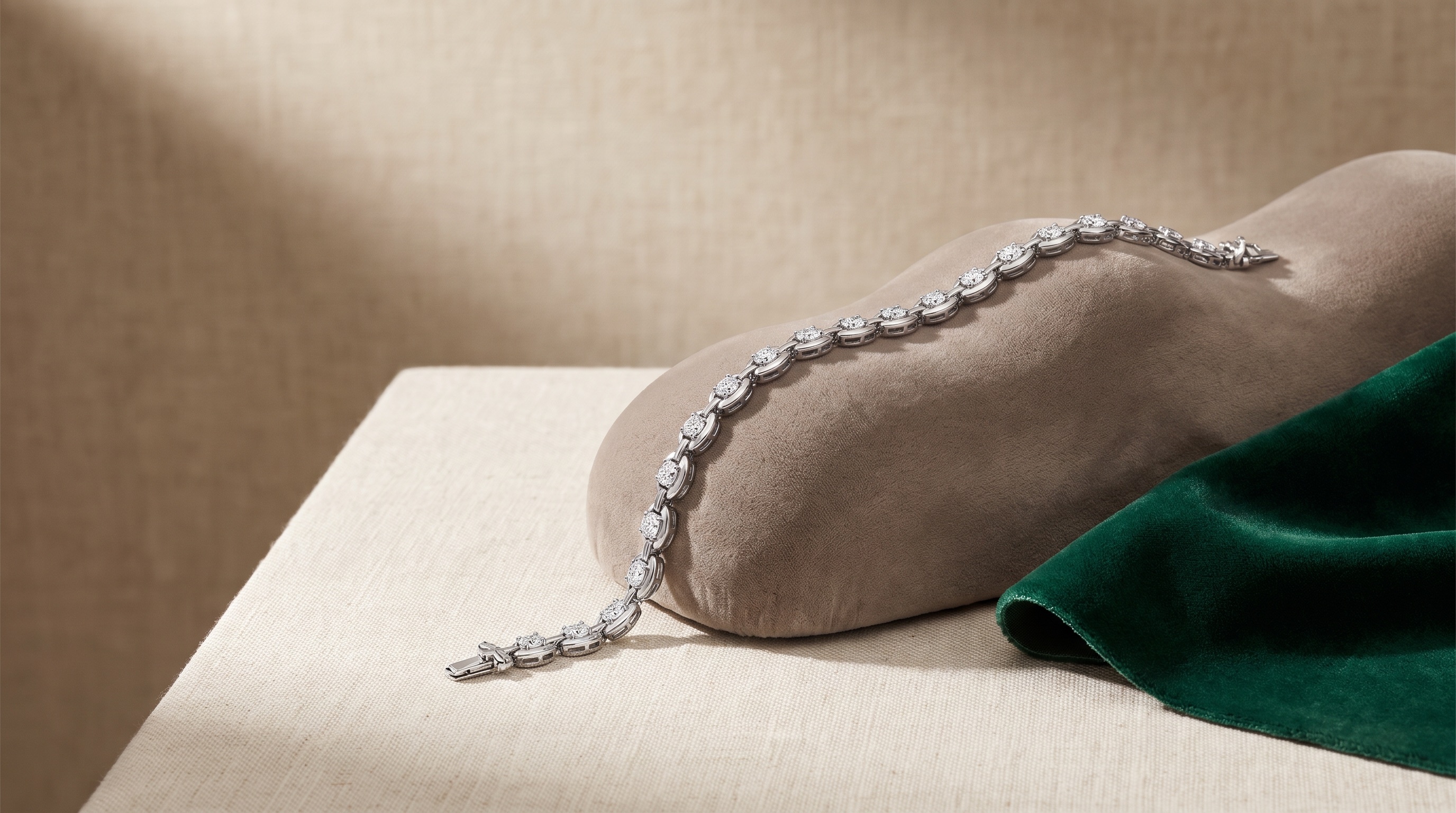
A diamond link bracelet is built from a series of larger, individually distinct metal links — each one a real design feature in its own right, not just a structural connector — with diamonds set into some or all of those links. This distinguishes it from a fine chain bracelet, where the underlying chain is comparatively delicate and diamonds are the visual focus running along it. For a jeweler or manufacturer sourcing diamonds for link bracelet production, the individual link shape itself becomes the primary sourcing constraint: stone size, setting style, and quantity all follow from the dimensions and geometry of the link design.
This guide covers diamond link bracelet sourcing from a trade perspective — how link shape and size drive diamond specification, quality and certification norms, setting approaches suited to larger individual links, and what to look for in a wholesale diamond supplier for this category.
What Distinguishes a Link Bracelet From a Chain Bracelet
The line between "link bracelet" and "chain bracelet" is genuinely blurry in casual trade usage, but the more useful working distinction for sourcing purposes is scale and visual weight: a link bracelet's individual links are large enough and distinct enough to function as standalone design elements — think oval, rectangular, or geometric links a jeweler might photograph and describe individually — while a chain bracelet's links are smaller, more repetitive, and read collectively as a continuous chain rather than as individual features. This distinction matters for a diamond order because a link bracelet's larger link scale typically supports larger individual stones or small clusters per link, rather than the fine melee that dominates most chain bracelet sourcing.
Common Link Shapes and Their Diamond-Setting Implications
| Link Shape | Typical Diamond Placement | Sourcing Note |
|---|---|---|
| Oval/paperclip links | Pavé along the link's outer edge, or a single stone centered in the link | Elongated shape supports a run of small stones or one moderate center stone |
| Rectangular/panel links | Pavé cluster filling the panel face | Larger flat surface supports the highest stone count per link of common shapes |
| Circular/round links | Halo-style ring of small stones around the link's inner or outer edge | Symmetrical design; stone count typically fixed by link diameter |
| Cuban/curb-style heavy links | Pavé across the link's twisted flat face | Common in men's link bracelets; supports larger stones given heavier link mass |
Diamond Quality Standards for Link Bracelets
Because individual links in this category are larger and more visually prominent than fine chain links, buyers have more room to make deliberate quality-tier decisions per link than in a fully iced fine chain design. Most commercial link bracelet production still standardizes on a DEF+/VS+ baseline — near-colorless to colorless, very slightly included or better — for the bulk of pavé stone content, since this reads clean and bright at normal viewing distance without pushing cost into premium territory. Designs built around fewer, larger stones per link — a single centered diamond in each oval link, for instance, rather than a pavé cluster — often justify a tighter individual-stone standard, since each stone is more visually prominent on its own and any single inclusion or color shift is more noticeable than it would be diluted across a dense pavé cluster.
Certification Norms for Link Bracelet Diamonds
Link bracelets frequently mix certification tiers within a single piece more than fine chain bracelets typically do, given the larger link scale. Pavé melee filling a link's surface — generally below roughly 0.18ct per stone — ships as uncertified parcel goods graded against a stated quality baseline, standard practice across the melee category. A design using a single larger centered stone per link, particularly at 0.30ct or above, should have those stones individually certified through IGI, GIA, or GCAL, since a link bracelet built around visible individual stones invites more scrutiny per stone than a dense pavé design would. Buyers should specify per-link stone size clearly to a supplier up front, since a single link bracelet order can genuinely span both certification tiers depending on design.
Setting Methods for Larger Individual Links
Pavé Filling
Small stones set with shared prongs across a link's flat or curved face, the standard approach for maximizing perceived diamond coverage on rectangular or oval panel links without requiring large individual stones.
Bezel-Set Center Stone Per Link
A single stone bezel-set at the center of each link, offering the strongest physical protection of common link-bracelet setting styles and a cleaner, more architectural look than pavé — well suited to a link bracelet's larger, more sculptural link shapes.
Prong-Set Center Stone Per Link
Similar placement to bezel-set, but with a prong setting that maximizes light entry and brilliance on the individual stone at some cost to physical protection, a tradeoff worth flagging for a piece worn on the wrist.
Halo-Style Edge Setting
A ring of small stones set around a link's inner or outer perimeter, common on circular and oval link shapes, producing a graphic, symmetrical look distinct from a filled pavé center.
Link Size and Its Effect on Stone Sizing
As with any link-based construction, the physical dimensions of each link cap the realistic maximum stone size a design can carry at that point without looking disproportionate or compromising the link's structural strength. A manufacturer should settle link dimensions — length, width, and metal thickness — before finalizing a diamond order, since the same design concept scaled to a delicate link versus a substantial, chunky link calls for meaningfully different stone sizing, and ordering diamonds before this decision is finalized is a common and costly sequencing mistake in this category.
Lab-Grown vs. Natural Diamonds for Link Bracelet Production
Because link bracelets can be built around either dense pavé melee or fewer, larger center stones per link, the lab-grown-versus-natural decision plays out somewhat differently depending on which construction style a given design uses. For pavé-heavy designs, CVD lab-grown diamonds let a manufacturer offer denser coverage or more links set at a given price point, similar to the cost dynamic in fully iced chain bracelets. For designs built around fewer, larger center stones per link, the lab-grown-versus-natural choice functions more like it would for any single-stone piece — a meaningful per-stone price difference at comparable color and clarity, with both origins meeting the same visual and quality standard once set. Either way, origin is a pricing and positioning decision for the retailer, not a visual difference in the finished bracelet.
Matched-Lot and Matched-Stone Consistency
- For pavé-set links: is the melee sold as a matched, graded lot sized appropriately for the specific link's setting area, not just a generic melee size range?
- For center-stone-per-link designs: can the supplier provide a matched set of individually similar stones — consistent color, clarity, and cut across every link — rather than a mixed group that would read as inconsistent link to link?
- What's the realistic lead time difference between a matched-set order and a standard mixed-parcel order, given that assembling a genuinely matched set of larger individual stones takes more selective sorting than filling a pavé cluster from general melee stock?
- Can this exact grade and matching standard be reordered consistently for an ongoing SKU, particularly relevant for a link bracelet sold as an expandable or add-a-link product?
Wholesale Pricing Structure
Pricing structure in this category depends heavily on construction style. Pavé-heavy link bracelets are typically quoted per total carat weight at a specified quality standard, similar to chain bracelet pricing. Center-stone-per-link designs are more often quoted per stone or per matched set at a target size and grade, since the buyer is really purchasing a specific number of individually meaningful stones rather than a bulk melee allocation. Buyers should clarify which pricing model applies to their specific design early in the sourcing conversation, since the two models respond differently to order-volume discounts and lead-time tradeoffs.
Expandable and Add-a-Link Bracelet Designs
A distinct sub-category within link bracelets sells as an expandable product — a base bracelet with a smaller number of links, designed so a customer can purchase and add matching diamond-set links over time, either as a personal upgrade purchase or as a gift from someone else. This retail model has real sourcing implications: a manufacturer needs to guarantee that additional links purchased months or years after the original piece will match in metal tone, link dimension, and diamond grade closely enough that the addition doesn't read as visually inconsistent with the original purchase. This makes supplier consistency on reorder a genuinely load-bearing requirement for this sub-category specifically, more so than in a link bracelet sold as a single complete piece with no expansion path.
Men's Link Bracelets: A Distinct Sourcing Profile
Link bracelets, like chain bracelets, have a substantial and distinct men's market, typically built around heavier, chunkier link styles — Cuban-style curb links in particular — with diamond content concentrated as pavé across the link's flat face rather than delicate center-stone settings. Buyers sourcing for a men's link bracelet line should expect to specify heavier link gauges and correspondingly denser or larger pavé stone content than a comparable women's link design, and should treat men's and women's link bracelet sourcing as two distinct specifications rather than one design simply scaled up or down.
Common Manufacturing Defects to Screen For
Beyond standard setting-quality checks, link bracelets carry a category-specific risk worth screening for: link-to-link hinge or connection wear, since a link bracelet's individual links move against each other at every joint far more than a fine chain's smaller links do, and a poorly finished connection point can develop looseness or metal fatigue faster than expected under normal wear. Retailers and manufacturers should request a sample tested for joint and connection durability, not just diamond setting security, before approving a full production run with a new setting or manufacturing partner, particularly for a heavier men's-scale link design where each connection bears more mechanical stress. Flexing the sample through a reasonable number of open-and-close or wrist-motion cycles before final approval — rather than relying solely on a static visual inspection — catches a meaningful share of connection-fatigue issues that wouldn't otherwise surface until the piece has already been sold and worn for months.
Repair and Warranty Considerations
Link bracelets generally carry a somewhat more favorable repair profile than a fully iced fine chain bracelet, since fewer, larger settings mean fewer individual points of potential stone-loss failure across the piece — a genuine structural advantage of the category worth mentioning to retail customers weighing link versus fine chain options. That said, a center-stone-per-link design still benefits from the same reserve-stock practice recommended across line-set categories: keeping a small supply of matching replacement stones from the original production lot or matched set, so a future single-link repair doesn't require resourcing a stone that may no longer be available at the same original grade.
Metal Choice and Its Effect on Link Design
Link bracelets are produced across 14k and 18k gold in yellow, white, and rose, and metal tone interacts with link design more visibly in this category than in fine chain construction, simply because each link is large enough to read as its own distinct surface. A two-tone link bracelet — alternating white and yellow gold links, or a mixed-metal link-and-diamond pattern — is a common and popular styling choice precisely because larger individual links make metal-tone alternation a clear, deliberate visual pattern rather than a subtle detail. Manufacturers planning a two-tone link design should decide the metal-alternation pattern before finalizing diamond placement, since it's generally more effective to concentrate diamond-set links within one metal tone as a clear focal run rather than scattering diamond content evenly across both tones.
Seasonal Demand and Gifting Patterns
Link bracelets see a similar seasonal gifting lift to other bracelet categories around the winter holidays and Valentine's Day, with an additional graduation and milestone-gift pattern that skews somewhat more toward link bracelets than fine chain styles, given the category's association with a more substantial, statement-piece gift compared to a delicate accent chain. Retailers and manufacturers planning link bracelet inventory for these periods should account for the generally longer lead time a matched-stone or matched-set order requires compared to standard melee sourcing, placing orders early enough that a milestone-gifting season doesn't arrive before matched inventory is ready.
Diamond Link Bracelets vs. Diamond Chain Bracelets Sourcing
The two categories share core sourcing logic — matched-lot or matched-stone consistency, link-first specification before diamond ordering, density and construction planning before committing to a stone order — but differ meaningfully in typical stone scale and certification mix, given a link bracelet's larger individual link size compared to fine chain construction. Buyers building a line that spans both categories should treat them as related but distinct sourcing projects rather than variations on a single spec sheet. For sourcing guidance specific to fine chain construction, see our diamond chain bracelet sourcing guide.
Working With a New Setting Partner on Matched-Set Designs
Center-stone-per-link designs place a real premium on a setting partner's ability to hold consistent depth and positioning across every link, since even a small variance in how deep or how centered each stone sits reads as an obvious flaw once the full bracelet is assembled and viewed as a whole. Buyers working with a new setting partner for a matched-set link design should request a small trial run — three or four links set and finished — before committing a full matched set of diamonds to production, since positioning issues are far cheaper to identify and correct at trial scale than after an entire matched set has already been set into a full bracelet. This is a modest additional step relative to the cost of discovering an inconsistency only after final assembly, when correcting it may require resetting multiple links or, in a worse case, resourcing replacement stones to match a set that's already partially used.
Evaluating a Link Bracelet Supplier Beyond Price
Because link bracelet sourcing spans two genuinely different diamond-buying models — bulk melee for pavé work and matched individual stones for center-stone designs — a supplier's strength in one doesn't guarantee strength in the other. A buyer building a link bracelet program spanning both construction styles should evaluate a prospective supplier separately on each: melee consistency and calibration for pavé-heavy designs, and matched-stone sourcing depth (the ability to pull a genuinely well-matched set of individually similar stones from available inventory, not just similarly graded ones) for center-stone designs. Asking for a physical sample of each type before committing to a full program gives a clearer read on supplier capability than relying on a spec sheet or grading report alone, and a supplier genuinely strong in both areas is a more valuable long-term partner for a buyer planning to expand a link bracelet line across multiple construction styles over time, rather than sourcing each new SKU from a different vendor.
Sourcing Link Bracelet Diamonds Wholesale
Guru Diam supplies both calibrated diamond melee for pavé-set link work and certified larger loose stones for center-stone-per-link designs, across natural and CVD lab-grown material, for jewelers and manufacturers building link bracelet lines — CVD is the only lab-grown category Guru Diam carries, with no HPHT material anywhere in the catalog. Melee is sold as consistent, gradable lots at DEF+/VS+ and tighter tiers, and larger stones at 0.30ct and above can be certified individually or sourced as a matched set through IGI, GIA, and GCAL. In-stock inventory ships same-day from Guru Diam's New York and Los Angeles locations, and trade accounts can review current melee stock in matching pairs or browse certified stones in certified diamonds. Manufacturers developing a custom link bracelet design, including an expandable add-a-link concept, can start at custom jewelry, and new trade accounts can apply through trade partner, with current terms at the wholesale hub.
Frequently Asked Questions
What is a diamond link bracelet?
A diamond link bracelet is built from larger, individually distinct metal links — oval, rectangular, circular, or Cuban-style, among other shapes — with diamonds set into some or all of those links, either as a pavé cluster filling each link or as a single larger center stone per link.
How is a link bracelet different from a chain bracelet?
The distinction is mainly scale and visual weight: a link bracelet's individual links are large enough to function as standalone design features, while a chain bracelet's links are smaller and read collectively as a continuous chain. This scale difference typically means a link bracelet supports larger stones or clusters per link than the fine melee used throughout most chain bracelets.
Are diamond link bracelet stones individually certified?
It depends on construction. Pavé melee filling a link's surface, generally below roughly 0.18ct per stone, ships as graded parcel goods without individual certification. A single larger center stone per link, particularly at 0.30ct or above, is typically individually certified through IGI, GIA, or GCAL.
What quality grade is standard for link bracelet diamonds?
A DEF+/VS+ baseline is common for pavé stone content. Designs built around fewer, more visually prominent center stones per link often justify a tighter individual-stone grade, since each stone draws more individual scrutiny than a diluted pavé cluster does.
Should link bracelet diamonds be natural or lab-grown?
Either can meet the same quality standard and look identical once set. CVD lab-grown diamonds typically offer better value for denser pavé coverage or larger center stones at a given price point, making origin primarily a pricing and positioning decision rather than a visual difference.
What is an add-a-link diamond bracelet?
An expandable design sold as a base bracelet with a smaller number of links, where a customer can purchase and add matching diamond-set links over time. This requires a supplier who can consistently reproduce the same metal tone, link dimension, and diamond grade on reorder, so future additions match the original piece.
Guru Diam is a trade-only wholesale diamond supplier with locations in New York and Los Angeles, supplying calibrated diamond melee and certified loose stones — natural and CVD lab-grown — for jewelers and manufacturers producing link bracelets and other line-set jewelry. Browse current inventory in certified diamonds or apply for a trade account through trade partner.