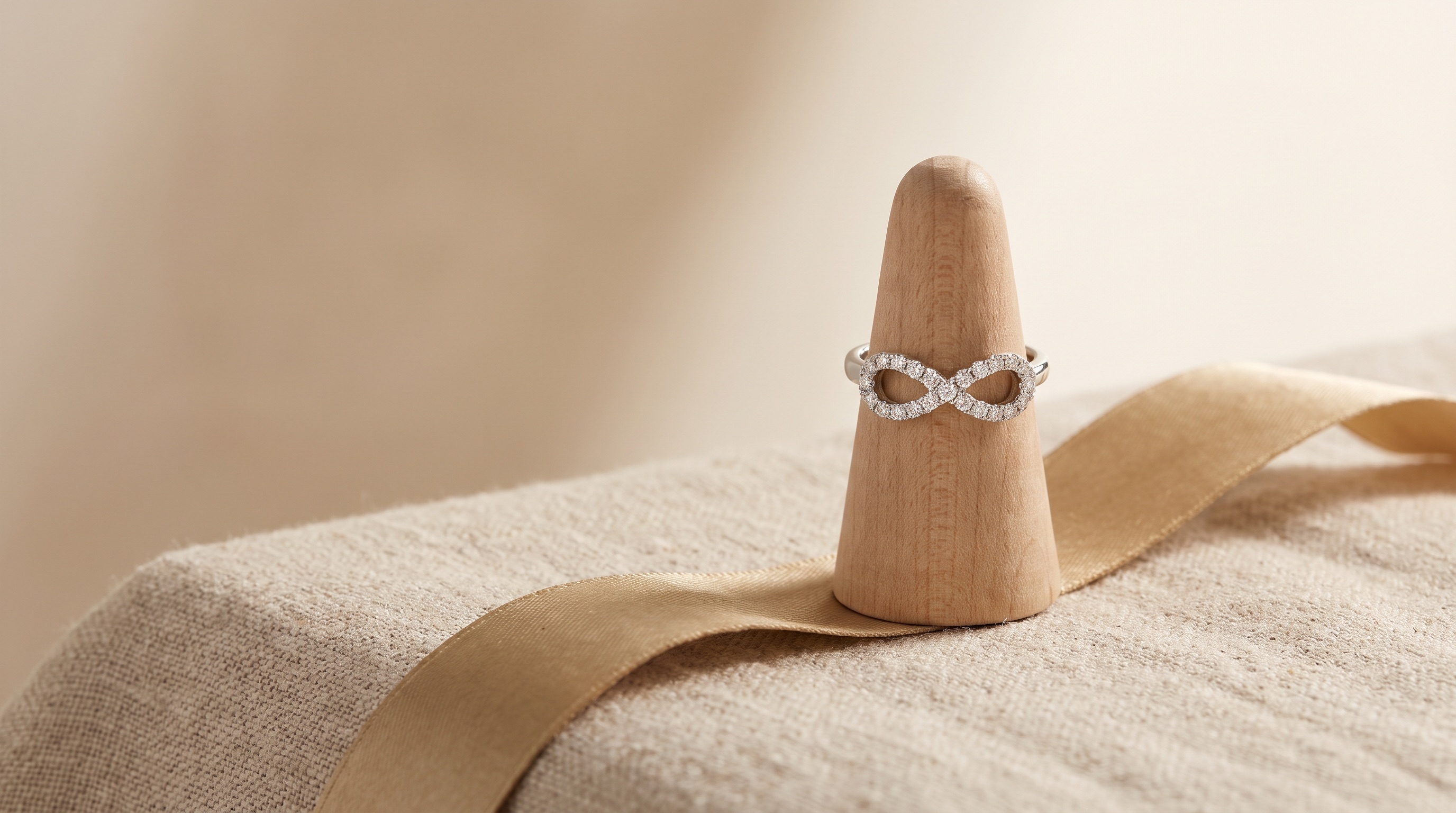
A diamond infinity ring sets a line of diamonds along a figure-eight or looped infinity symbol, either as the ring's entire band motif or as a standalone element on top of a plain shank. For a jeweler or manufacturer, sourcing for this category is a melee-matching problem constrained by an unusual physical shape — the infinity symbol's curves mean stone spacing and sizing have to follow a continuous curved line rather than a straight or simply-circular path, which affects both the melee specification and the setting approach compared to a standard pavé band or halo.
This guide is written for the trade — jewelers, designers, and manufacturers sourcing loose diamonds and melee to build infinity rings for their own retail or wholesale lines. It covers what the infinity motif requires from a sourcing and setting standpoint, melee sizing along a curved line, common infinity ring formats, and what to ask a wholesale supplier before placing an order for this specific category.
Why the Infinity Motif Is a Distinct Sourcing Case
Most melee-set jewelry categories — pavé bands, tennis lines, halos — follow a straight line or a simple circle, which makes stone spacing relatively straightforward to plan and set. The infinity symbol's figure-eight curve changes direction continuously, including a tight crossover point at the symbol's center, which means the melee used has to be small and consistently sized enough to follow the curve cleanly without gaps or visible crowding at the tightest part of the loop. This makes infinity ring melee sourcing closer in precision requirement to a fine pavé application than to a standard tennis-line order, even though the total carat weight involved is often much smaller than a full tennis piece.
Melee Sizing for Infinity Ring Construction
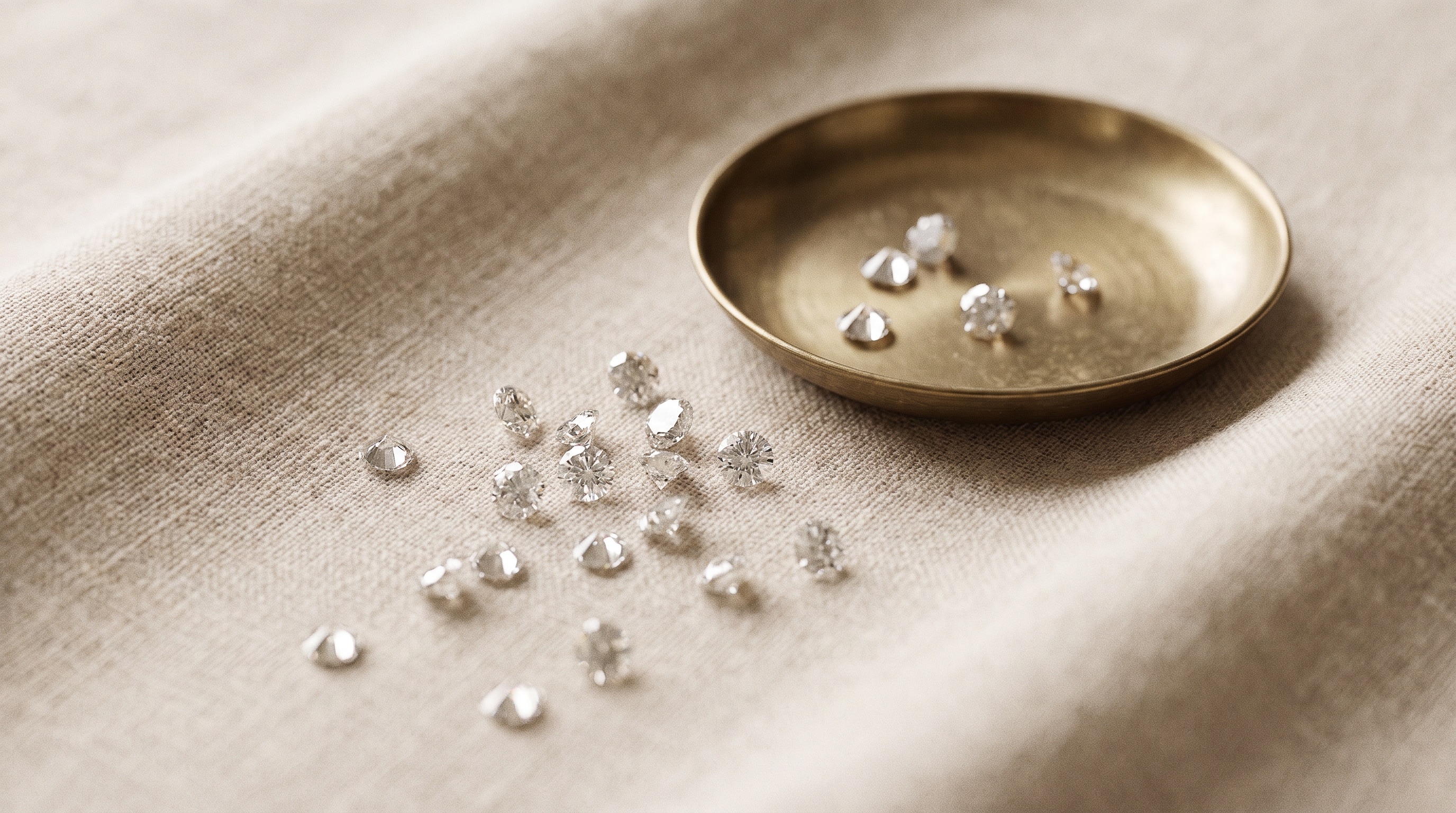
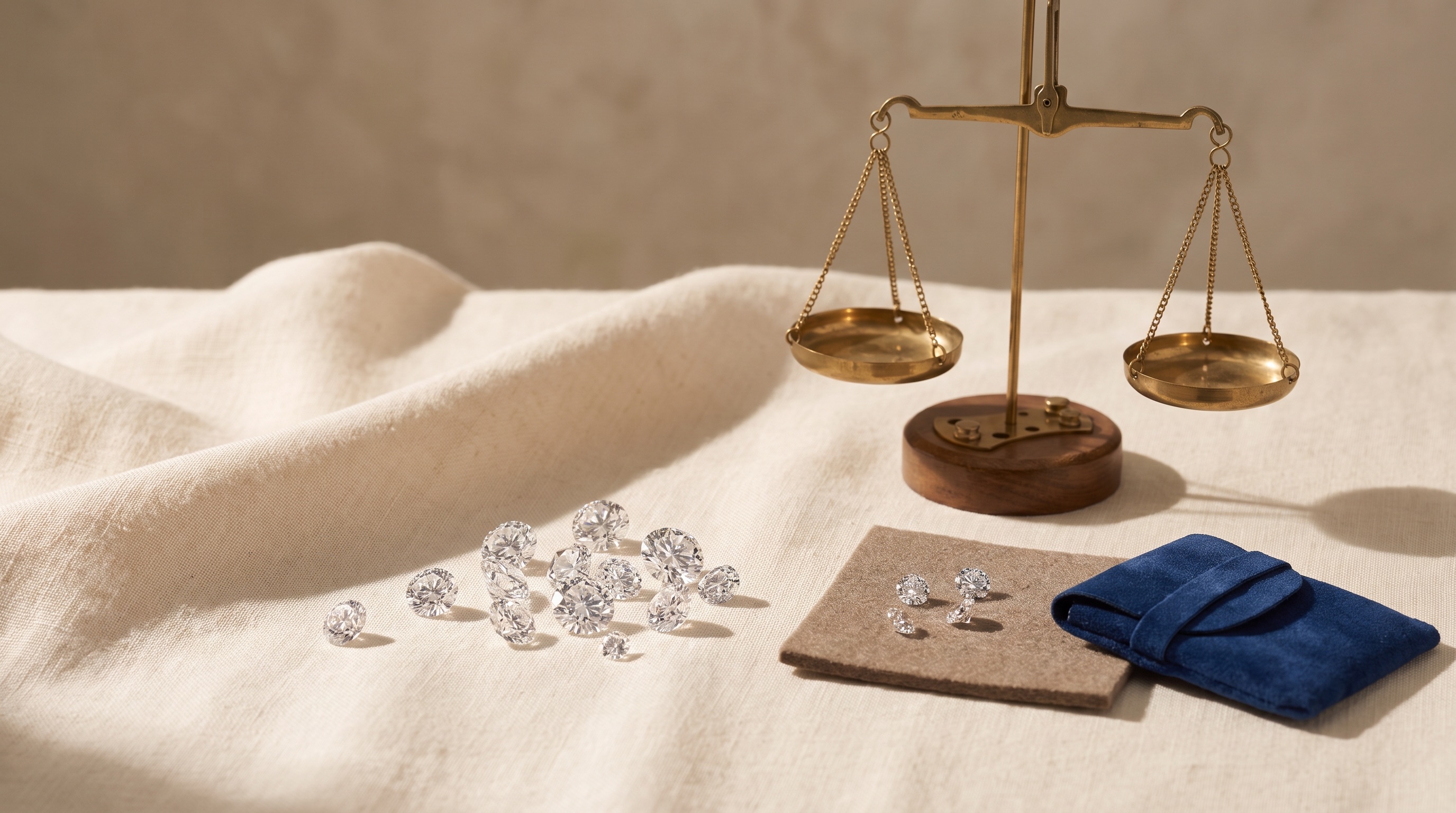
Because the infinity symbol's curve tightens significantly at its center crossover point, most infinity rings use smaller melee sizes throughout the design — commonly in the 1.0mm to 1.5mm range — rather than the larger stones used in some other line-set categories, since larger stones simply can't follow the tight curve without looking crowded or requiring a design that increases the symbol's overall scale beyond what most customers want in a ring. A manufacturer planning an infinity ring style should specify melee size based on the smallest radius point in the design (the crossover) rather than the more open curves elsewhere in the symbol, since that's the physical constraint that actually determines what will fit cleanly.
Total Carat Weight and Stone Count
| Infinity Ring Style | Typical Stone Count | Common TCW Range |
|---|---|---|
| Delicate single-line infinity band | 14–20 stones | 0.10–0.25 TCW |
| Standard infinity band (full loop coverage) | 20–30 stones | 0.20–0.40 TCW |
| Infinity band with a center accent stone | 16–24 melee + 1 accent | 0.25–0.50+ TCW |
Because infinity rings are typically built from smaller melee than tennis or eternity bands, total carat weight runs meaningfully lower across the category as a whole, which is part of the design's retail appeal — it delivers a distinctive, symbolically meaningful line-set look at a lower total diamond cost than a full eternity band or tennis-style piece.
Setting Styles for Infinity Rings
Prong (Shared-Prong) Setting
Small shared prongs hold each stone along the curve, maximizing light entry — the standard approach for most infinity ring designs, though the crossover point requires more careful prong placement than a straight or simply-circular line since the direction of stress on each prong changes as the curve reverses.
Channel Setting
Stones sit between two parallel metal rails following the infinity curve, giving a smooth, low-profile line with no visible prongs. Channel setting an infinity motif requires tighter manufacturing tolerances than a straight channel, since the rails themselves have to be formed to follow the curve precisely before stones are set.
Bezel-Set Infinity Accents
Some infinity designs, particularly those using slightly larger stones at wider points in the curve, use small individual bezels rather than shared prongs, trading a small amount of brilliance for added stone security and a more modern, geometric look along the line.
Certification Approach for Infinity Ring Diamonds
Because infinity rings are built almost entirely from melee-range stones, the vast majority of an infinity ring's diamonds ship as graded parcel goods against a stated commercial standard (commonly DEF+/VS+) rather than individually certified. Designs that include a single larger accent or center stone at 0.30ct or above can have that specific stone individually certified through IGI, GIA, or GCAL, with the surrounding infinity-motif melee still following the standard parcel-grading approach. Buyers should confirm which parts of a given infinity design, if any, carry individual certification before quoting a finished price to a retail customer.
What to Ask a Supplier When Sourcing for Infinity Rings
- What's the smallest melee size available as a consistent, matched lot, since infinity designs often need smaller stones than other line-set categories?
- Is the melee sold specifically for fine line-set or pavé work, where tight size consistency matters more than it would for a scattered cluster design?
- Can the supplier provide enough stones from a single consistent lot to complete an entire infinity motif without a visible transition partway through the curve?
- What's the reorder consistency for this specific fine melee size, if the infinity design becomes a standing retail item?
Natural vs. Lab-Grown Diamonds for Infinity Rings
Given that infinity rings typically use a lower total carat weight than other melee-heavy categories, the cost difference between natural and CVD lab-grown material is smaller in absolute dollar terms here than it would be on a full tennis bracelet or eternity band — but the relative savings percentage is the same, and lab-grown material remains the more common choice in this price-accessible category, since infinity rings are frequently positioned as an affordable symbolic piece (anniversary, friendship, or promise gifting) where value relative to price matters directly to the target customer.
The Infinity Symbol's Meaning in Jewelry Retail
The infinity symbol (∞) has been used mathematically since the 17th century, but its adoption in jewelry design as a symbol of eternal love, friendship, or connection is a more modern retail phenomenon, giving the category a strong gift-occasion narrative that retailers can lean into directly — anniversaries, friendship jewelry, and "always and forever" bridal-adjacent gifting all map naturally onto the symbol's meaning. This narrative hook is part of why infinity rings perform well as an entry-price gifting category: the design tells its own story without requiring extensive sales explanation, which shortens the sales conversation for a retailer working with a customer who already understands what an infinity symbol represents.
Common Infinity Ring Formats Beyond the Basic Band
Beyond a plain infinity band, common variations include a double-infinity design (two interlocking infinity symbols, often used to represent two people or relationships), an infinity symbol set as a standalone element on top of a plain or twisted shank rather than wrapping the full band, and a diamond infinity design combined with a colored gemstone accent at the crossover point for a birthstone or anniversary-specific piece. Each variation changes the melee-sizing and setting calculation somewhat — a standalone top-mounted infinity symbol, for instance, can use a design scaled independently of the ring's actual band width, giving a manufacturer more flexibility in stone size than a design where the infinity motif has to match the band's physical dimensions exactly.
Stackability and Pairing With Other Rings
Infinity rings, particularly delicate single-line designs, are commonly marketed and worn as stackable pieces alongside other bands rather than as a sole statement ring, which is a relevant consideration for a retailer's merchandising approach — presenting an infinity band as part of a stacking set, alongside a plain band or a second symbolic design, tends to increase average order value compared to selling the infinity ring as a single standalone item. Manufacturers designing an infinity ring line should consider band width and profile specifically with stacking in mind, since a band that sits too high or too wide can make comfortable stacking difficult regardless of how well the infinity motif itself is executed.
Metal Choices for Infinity Ring Construction
Infinity rings are produced across the full range of standard ring metals — 14k and 18k white, yellow, and rose gold, and platinum — with metal choice for this category driven more by fashion preference than by any technical constraint tied to the motif itself, unlike some line-set categories where warmer metals are avoided to keep focus on the stones. Because infinity rings are frequently stacked with other bands, retailers often stock the same infinity design across two or three metal tones specifically to support mixed-metal stacking looks, which have grown as a popular styling trend independent of any single metal being inherently more "correct" for the infinity motif itself.
Infinity Rings as an Entry Point Into Fine Jewelry
Because infinity rings typically carry a lower total diamond investment than an eternity band, tennis bracelet, or solitaire engagement ring, the category frequently functions as a customer's first purchase of genuine diamond fine jewelry rather than costume or simulant pieces — a meaningful consideration for a retailer thinking about long-term customer relationships rather than single-transaction value. A first-time fine jewelry buyer who has a positive experience with an accessible infinity ring purchase is a reasonable candidate for a retailer's higher-value categories later (engagement rings, tennis bracelets, statement pieces), which is one reason many retailers treat infinity rings and similarly accessible symbolic categories as a deliberate customer-acquisition tool rather than purely a standalone product line judged only on its own margin.
Engraving and Personalization Options
Infinity rings are commonly offered with an inner-band engraving option — initials, a date, or a short phrase — since the symbol's meaning (connection, permanence) lends itself naturally to personalized gifting occasions like anniversaries and commitment gifts that don't necessarily involve a formal engagement. Manufacturers offering an engraving option alongside an infinity design should confirm with their setting and engraving partner what shank thickness is needed to engrave cleanly without weakening the band, since some infinity designs use a thinner shank profile than a standard ring band to keep the overall look delicate, which can constrain how much text can be engraved legibly without compromising structural integrity.
Building an Infinity Ring Line Across Price Tiers
A well-built infinity ring line typically spans at least two or three price tiers: a delicate, lower-carat entry piece for accessible gifting, a standard mid-tier design with fuller melee coverage around the loop, and a premium tier that adds a certified center or accent stone alongside the infinity motif. Manufacturers should plan melee sourcing across the whole tier structure at once rather than developing each tier independently, since a supplier who can deliver consistent grading across multiple size specifications from one relationship simplifies quality control across the full product line far more than sourcing each tier's melee from a different vendor would, and also makes it easier to keep certification and disclosure language uniform across every price point a customer might compare side by side in-store.
Common Manufacturing Defects to Screen For
Because the infinity motif's crossover point concentrates several direction changes into a small physical area, that section of the ring is the most common point of manufacturing defect — uneven stone spacing right at the crossover, prongs that sit awkwardly due to the tight curve, or a visible gap where the curve's direction reverses are the issues most worth checking closely before accepting a finished piece from a setting partner. A physical inspection under magnification specifically at the crossover point, rather than a general once-over of the whole ring, is the most efficient quality-control step for this particular category.
Sizing and Resizing Considerations
Because an infinity ring's diamond line typically runs along the entire visible top and sides of the band rather than sitting only at the top like a solitaire, resizing an infinity ring after the fact is more limited than resizing a plain band — cutting and rejoining the shank at the back, the standard resizing approach for most rings, works fine when the motif sits only at the top of the ring but becomes more visually disruptive on a design where the infinity pattern wraps further around the band. Retailers should confirm and clearly communicate resizing limitations to customers at the point of sale for any infinity design that extends significantly around the band's circumference, rather than assuming standard resizing methods apply without visual compromise.
Infinity Motifs Beyond Rings
The same figure-eight melee-line construction used in infinity rings extends naturally into other jewelry categories — infinity pendants, infinity bracelets, and infinity earring drops all use the same fine melee-sizing and crossover-point setting logic described above for rings. A manufacturer who has already worked out reliable melee sourcing and setting practices for an infinity ring line can generally extend the same supplier relationship and quality standards to these adjacent categories with minimal additional sourcing work, since the core technical challenge — small, consistently sized stones following a tight curved line — doesn't change meaningfully between a ring, a pendant, and a bracelet version of the same motif.
Comparing Infinity Rings to Other Symbolic Line-Set Categories
| Category | Typical TCW | Sourcing Complexity |
|---|---|---|
| Infinity ring | 0.10–0.50 TCW | Moderate — small melee, tight crossover curve |
| Diamond eternity band | 0.50–2.00+ TCW | Moderate — full-circle consistent melee line |
| Diamond tennis bracelet | 2.00–10.00+ TCW | High — long line, large stone count, strict matching |
Infinity rings sit at the more accessible end of this comparison both in total diamond investment and in overall sourcing complexity, which is a large part of why the category works well as an approachable entry point into melee-set jewelry for both smaller independent jewelers sourcing at modest volume and for customers buying their first genuine diamond fine jewelry piece.
Seasonal and Occasion-Based Demand Patterns
Infinity rings see identifiable demand spikes around specific gifting occasions — Valentine's Day, anniversaries generally, and graduation or friendship-gifting periods in late spring — more distinctly than some other diamond jewelry categories that sell at a steadier year-round pace. Retailers planning inventory for an infinity ring line benefit from timing reorders ahead of these known demand windows rather than treating restocking as a purely reactive, sold-out-triggered process, since a supplier's own lead time for a specific melee size and grade can extend beyond the runway a purely reactive reorder approach leaves available before a seasonal demand spike hits — a gap that's easy to avoid with modest advance planning but costly to recover from mid-season once a popular size or metal tone sells out.
Sourcing Infinity Ring Diamonds Wholesale
Guru Diam supplies calibrated diamond melee suited to fine line-set and pavé work, including the smaller sizes commonly used in infinity ring construction, across natural and CVD lab-grown material. As with the rest of Guru Diam's lab-grown catalog, CVD stones are cut and polished at the company's India workshop before final grading and shipment from the New York and Los Angeles locations. Melee ships as consistent, gradable lots at DEF+/VS+ and tighter tiers rather than mixed parcel stock, and larger accent or center stones for infinity designs incorporating one can be sourced and certified separately at 0.30ct and above. In-stock inventory ships same-day (before 6pm EST from New York, before 4pm PST from Los Angeles), and trade accounts can browse current melee stock in matching pairs or source certified accent stones in certified diamonds. Manufacturers building a custom infinity design can start at custom jewelry, and new trade accounts can apply through trade partner, with current terms at the wholesale hub. For general melee-sourcing background before building a specific fine line-set design, see our melee diamonds guide.
Frequently Asked Questions
What size diamonds are used in infinity rings?
Most infinity rings use small melee, commonly in the 1.0mm to 1.5mm range, since the figure-eight curve's tight crossover point constrains how large a stone can fit while following the shape cleanly. Larger accent stones are sometimes added separately at wider points in the design.
Are infinity ring diamonds individually certified?
Most of an infinity ring's diamonds are melee-range and ship as graded parcel goods rather than individually certified. A design that includes a single larger accent or center stone at 0.30ct or above can have that specific stone individually certified separately.
How much total carat weight is typical for an infinity ring?
Typically lower than other line-set categories — commonly 0.10 to 0.40 TCW for a standard band, with designs that add a center accent stone running somewhat higher. This lower carat requirement is part of the category's appeal as an accessible gifting piece.
Can an infinity ring be resized?
It depends on how far the motif extends around the band. Standard resizing (cutting and rejoining the shank at the back) works cleanly when the infinity pattern sits mainly at the top of the ring but can visually disrupt the design on styles that wrap further around the circumference.
Should infinity rings use natural or lab-grown diamonds?
Either works and looks identical once set. Lab-grown material is common in this category since infinity rings are frequently positioned as accessible symbolic gifts, where value relative to price is a meaningful factor for the target customer.
What setting style works best for the infinity motif's crossover point?
Shared-prong settings are the most common choice and require careful placement at the crossover, where the curve's direction reverses. Channel settings give a smoother look but need tighter manufacturing tolerances to form the rails around the curve precisely.
Do infinity ring designs extend into other jewelry categories?
Yes — the same figure-eight melee-line construction is commonly used in infinity pendants, bracelets, and earring drops. A manufacturer with established melee sourcing and setting practices for infinity rings can generally extend that same relationship to these adjacent categories with minimal additional sourcing work.
Guru Diam is a trade-only wholesale diamond supplier with locations in New York and Los Angeles, supplying calibrated diamond melee and certified loose stones — natural and CVD lab-grown — for jewelers and manufacturers producing infinity rings and other fine line-set jewelry. Browse current melee inventory in matching pairs or apply for a trade account through trade partner.