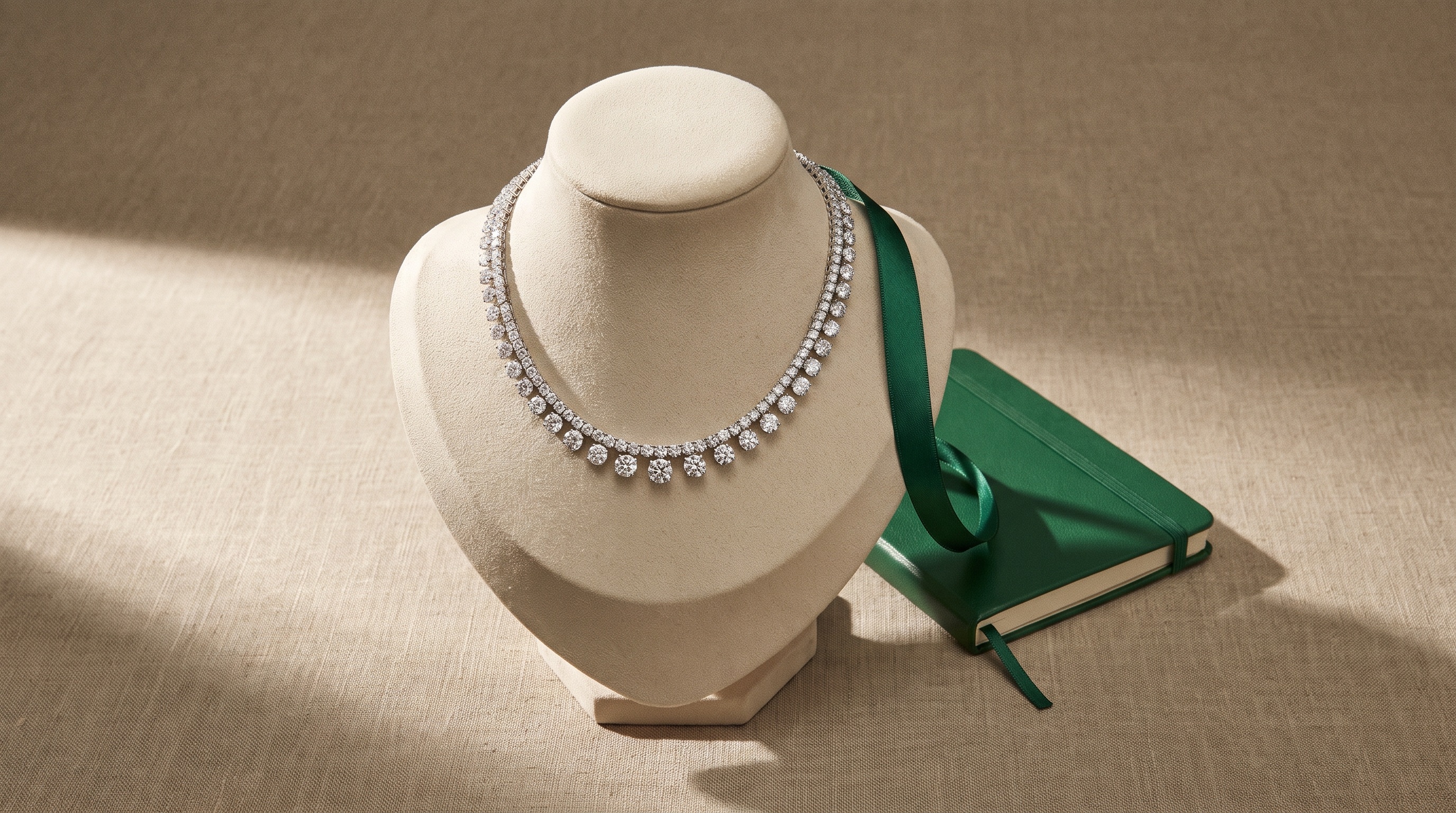
A diamond eternity necklace applies the same continuous, unbroken line of matched diamonds that defines an eternity ring to a necklace format — a chain or pendant-style piece where diamonds run in a full or partial line rather than centering on a single stone. For a jeweler or manufacturer, the term covers two genuinely distinct product types that get sourced differently: a rigid or semi-rigid eternity-style collar or bar necklace with a continuous diamond line similar to a tennis necklace, and a pendant-and-chain piece where an eternity-inspired diamond bar or circle hangs from a standard chain. Getting the sourcing approach right starts with knowing which of the two a given design actually is.
This guide is written for the trade — retailers, designers, and manufacturers sourcing loose diamonds and diamond melee to build or expand an eternity necklace line, not a consumer shopping guide. It covers the two common eternity necklace formats, carat and stone-count planning, setting styles, matched-lot sourcing, and what to look for in a wholesale diamond supplier for this category.
Two Distinct Eternity Necklace Formats
The phrase "eternity necklace" gets used for two meaningfully different pieces in the trade, and confusing the two leads to mismatched sourcing. The first is a full continuous-line necklace — diamonds set edge to edge (or nearly so) around the entire visible portion of the piece, following the same design logic as a tennis necklace or a full eternity ring, just applied to neck rather than wrist or finger. The second, more common in current retail assortments, is a pendant-style eternity necklace: a straight bar or a small circular element, fully or partially set with a diamond line, suspended from a standard cable or box chain rather than running continuously around the neck itself. The pendant format uses dramatically fewer stones and a much lower total carat weight than the full continuous-line format, so a manufacturer's first sourcing decision should be pinning down which of these two a given design brief actually describes before requesting a diamond quote.
| Format | Typical Stone Count | Typical TCW Range | Sourcing Emphasis |
|---|---|---|---|
| Full continuous-line eternity necklace | Roughly 50–90 stones | 3–10+ TCW | Lot consistency across a long line, similar to a tennis necklace |
| Eternity bar/circle pendant on chain | Roughly 7–20 stones | 0.15–1.5 TCW | Precise small-stone matching within a compact element |
Carat Weight Planning for Pendant-Style Eternity Necklaces
Because the pendant-style eternity necklace is the more commonly requested format today, most current wholesale demand runs through smaller total carat weights than a full continuous-line piece. A manufacturer planning a pendant eternity line should think in terms of the bar or circle element's physical length and the stone size that comfortably fits within it — a short bar (roughly half an inch) typically holds 7–10 small stones, while a longer bar or a full circular pendant can hold 12–20. Getting the stone size and count right for the element's physical dimensions matters more here than in a full continuous-line piece, since an undersized bar crowded with too many stones, or an oversized bar sparsely set, are both common design missteps in lower-quality pendant eternity production.
Diamond Quality Standards for Eternity Necklaces
Both eternity necklace formats typically use a consistent commercial quality tier across the full stone line rather than mixing grades — a DEF+/VS+ baseline (near-colorless to colorless, very slightly included or better) is the common standard, reading clean and bright without pricing the piece at fully certified-inventory levels. As with other line-set melee jewelry, individual stones below roughly 0.18ct in an eternity necklace design are not individually certified — they're sourced as a consistent, graded commercial lot rather than stone-by-stone paperwork. A retailer positioning an eternity necklace line at a premium tier sometimes tightens to E-F color or VVS+ clarity, understanding that tightening the standard across every stone in the line increases both sourcing cost and lead time versus a standard commercial grade.
Setting Styles for Eternity Necklace Lines
Shared-Prong Setting
The classic construction for a continuous diamond line, where adjacent stones share prongs to maximize light entry into each stone. This is the standard approach for both the full continuous-line format and the diamond-set bar or circle in a pendant-style piece.
Bezel Setting
A metal rim surrounds each stone individually, offering more physical protection at the cost of somewhat reduced light entry — a relevant tradeoff for a pendant piece that sits against skin and clothing throughout the day and is handled more directly (clasping, adjusting) than a ring.
Channel Setting
Stones sit between two parallel metal rails, giving a smooth, gapless line with no visible prongs, common on bar-style eternity pendants specifically because the rectangular bar shape suits a channel's linear geometry well. Channel construction requires tighter manufacturing tolerances to keep the line properly aligned within the bar's frame.
Matched-Lot Sourcing for Eternity Necklace Production
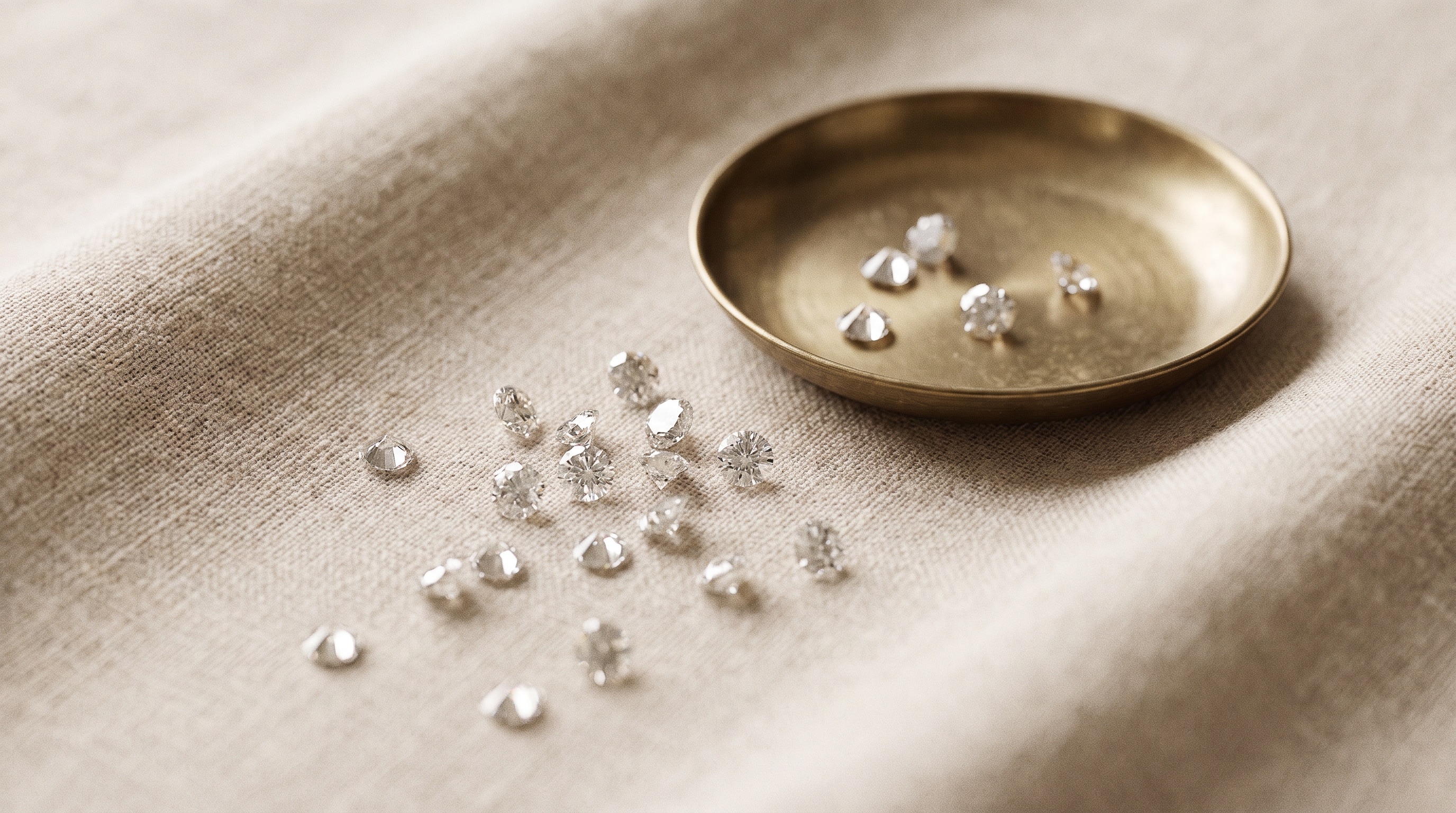
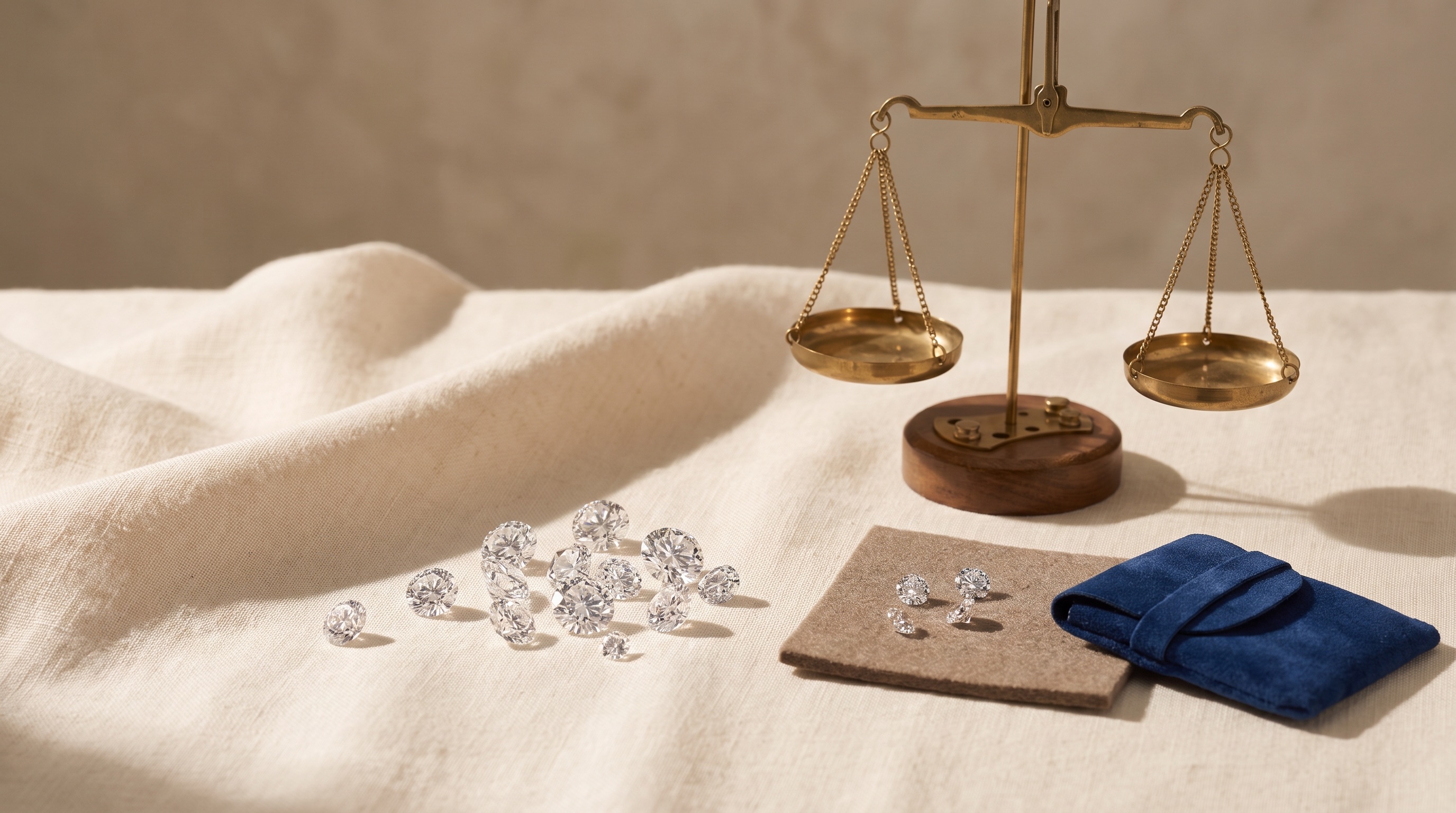
- Is the melee sold as a pre-matched, graded lot suited to line-set jewelry, or pulled from mixed general inventory? A supplier who maintains dedicated line-set lots will deliver tighter internal consistency than one selling loose parcel stock.
- What's the size tolerance across the lot? Tight millimeter consistency matters more for a continuous line, where any visible size variation breaks the design's clean read, than it would for a scattered-stone piece.
- Can a physical sample of the lot be reviewed before a full production order? Standard practice for a first order with a new supplier, and worth insisting on rather than committing to a full quantity from a spec sheet alone.
- What's the reorder consistency if the same commercial grade needs to be matched again for a future production run? This matters more for a retailer running an eternity necklace as a standing catalog item than for a one-off custom piece.
Lab-Grown vs. Natural Diamonds for Eternity Necklace Production
Because an eternity necklace's total cost scales with the combined weight of every stone in the line, the natural-versus-lab-grown decision has an outsized effect on total piece cost, more so for the full continuous-line format than the smaller pendant format, though the effect holds in both directions. CVD lab-grown diamonds let a manufacturer offer either a larger total carat weight at a given price point, or the same carat weight at a meaningfully lower price point, than natural material of comparable color and clarity. Both origins can meet the identical DEF+/VS+ commercial standard described above and look indistinguishable once mounted; the choice is primarily a pricing and retail-positioning decision for the retailer rather than a difference in finished appearance or durability.
Metal and Chain Choices for Eternity Necklaces
The diamond-set element itself — the full line, bar, or circle — is most commonly built in 14k or 18k white gold or platinum, both of which read as neutral against the diamonds. For a pendant-style piece, chain choice is a separate but related decision: a cable chain in the same metal as the diamond-set element is the most common pairing, while a box chain offers a slightly more substantial, structured look. Chain length also affects how the pendant sits — a shorter 16–18 inch chain positions the diamond element at the collarbone, while an 18–20 inch length sits it somewhat lower on the chest, and manufacturers should confirm the intended sitting length with a retailer's design brief before finalizing chain specifications, since this is a detail that's easy to leave ambiguous until a finished piece doesn't sit the way a buyer expected.
Clasp Considerations for Eternity Necklaces
A full continuous-line eternity necklace, like a tennis necklace, carries real value across its entire diamond line and benefits from the same clasp reliability considerations: a box clasp with a secondary safety latch, or a lobster clasp reinforced with a figure-eight safety chain, rather than a single-point closure. A pendant-style eternity necklace on a standard chain has a somewhat lower stakes clasp requirement, since the diamond-set element itself is a fixed pendant rather than part of a continuous high-value line, but a secure, well-finished spring-ring or lobster clasp remains standard practice regardless of format.
Common Production Defects to Screen For
For the full continuous-line format, the same defects that affect tennis necklaces apply directly: uneven spacing between stones, visible size mismatches along the line, and under-finished prongs that catch on fabric or hair. For the pendant bar or circle format, the most common defect is an element that appears crowded or unevenly spaced within its frame — a sign that stone sizing wasn't planned carefully against the element's physical dimensions before production. Requesting a physical sample under magnification, for either format, before approving a full production run is standard practice, particularly with a new setting partner whose finishing quality hasn't yet been established through a track record of prior orders.
Wholesale Pricing Structure for Eternity Necklace Diamonds
Diamonds for both eternity necklace formats are typically quoted per total carat weight at a specified commercial quality standard, rather than per individual stone, since a manufacturer plans the piece around a target TCW during design regardless of which format is being built. Buyers ordering at production volume — multiple pieces per order, or a standing reorder relationship for a retail line — should expect per-carat pricing to improve with order size and with a looser size-matching tolerance, since tighter calibration requirements demand more selective sorting from a supplier's available lot.
Positioning an Eternity Necklace Line Against Related Categories
Retailers already carrying eternity rings or diamond tennis bracelets have a natural cross-sell opportunity with an eternity necklace line, since the underlying design language — a continuous or near-continuous diamond line — is already familiar to that customer segment and can be marketed as a coordinated set across ring, bracelet, and necklace. A manufacturer building an eternity necklace specifically to complement an existing eternity ring line should aim to match the same stone quality standard and, where feasible, source from the same commercial grade lot across the coordinated pieces, so the finished set reads as genuinely matched rather than merely thematically related.
Adjustable Length and Sliding Bail Construction
Many pendant-style eternity necklaces use a sliding bail rather than a fixed jump ring to attach the diamond-set element to the chain, letting the pendant sit at a range of positions along the chain rather than one fixed point. This is a small mechanical detail, but it affects sourcing in a practical way: a sliding bail needs an opening wide enough to move freely along the chain's gauge without excessive friction, and too tight a fit is one of the more common finishing complaints reported on lower-cost pendant production, since a bail that binds defeats the purpose of the adjustable design. Manufacturers should confirm bail-to-chain fit as part of a finished-sample review rather than assuming a standard bail casting will fit correctly against whatever chain gauge is paired with it, since chain thickness varies meaningfully across suppliers and even across different metals from the same supplier.
Some retailers offer eternity pendants with a choice of chain length at point of sale, using an adjustable slider clasp along the chain itself so a single piece can be worn shorter or longer depending on neckline and preference. This adds a small amount of chain-component cost but reduces the number of distinct SKUs a retailer needs to stock to cover a range of customer preferences, which is worth weighing against the simpler, lower-cost approach of offering a single fixed chain length per pendant style.
Layering Considerations for Pendant-Style Eternity Necklaces
Pendant eternity necklaces are frequently worn layered with other necklaces of varying lengths — a styling trend that has shaped how many retailers now design and photograph this category. A manufacturer building a pendant eternity line with layering in mind should keep the diamond-set element relatively flat and low-profile, since a bulkier three-dimensional pendant is more prone to tangling with adjacent chains and catching against other pieces during normal wear. Chain gauge also matters for layering specifically: a chain that's too fine can tangle more readily with a slightly heavier companion piece, while a chain that's too heavy can visually overwhelm a delicate diamond element rather than complementing it. Retailers marketing an eternity necklace as part of a layering system, rather than as a stand-alone piece, benefit from offering it in more than one chain length so it can be positioned at a distinct height relative to other pieces in a typical layered stack, avoiding visual overlap with commonly paired complementary pieces.
Why "Eternity" Carries Over From Rings to Necklaces
The eternity ring concept — a continuous band of diamonds symbolizing an unbroken, ongoing commitment — is one of the more established pieces of jewelry symbolism in the bridal category, traditionally given as an anniversary piece rather than an engagement ring. Extending that same visual language and symbolic framing to a necklace format gives retailers a ready-made storytelling angle for the category: an eternity necklace can be positioned as an anniversary, milestone, or self-purchase gift carrying the same "continuous, unbroken" symbolism as the ring version, without requiring a retailer to build new messaging from scratch. This is a genuinely useful, low-effort merchandising asset, particularly for retailers who already sell eternity rings and can cross-market the necklace to the same symbolically-minded customer base rather than treating it as an unrelated new category requiring separate positioning work.
That said, the "eternity" name is applied somewhat loosely in current retail use — a small diamond-set bar pendant with seven stones carries the name as readily as a full continuous-line necklace with ninety, even though the two are very different products from a sourcing standpoint, as covered above. Retailers should be intentional about which meaning of "eternity" they're actually building toward and marketing, since a customer expecting the fuller symbolic weight of a true continuous line may be underwhelmed by a compact pendant version if the distinction isn't made clear at the point of sale.
Coordinating an Eternity Necklace With an Existing Ring or Bracelet Line
Beyond simple cross-selling, some retailers build eternity necklaces specifically as a matched-set companion to a specific eternity ring or tennis bracelet SKU already in their catalog, using the identical stone size, quality grade, and setting style across all three pieces so they can be marketed and sold together as a coordinated set. This requires closer coordination with a diamond supplier than sourcing each piece independently, since the manufacturer needs the same commercial-grade lot — or a lot matched closely enough in color and clarity to be visually indistinguishable — available across three separate production runs that may happen at different times as each piece sells through and gets restocked. A supplier who can reliably reproduce a specific commercial grade on demand, order after order, is more valuable for this kind of coordinated-set strategy than one whose available stock composition shifts meaningfully between orders, since a visible quality mismatch between the ring and its companion necklace defeats the purpose of marketing them as a matched set.
Sourcing Eternity Necklace Diamonds Wholesale
Guru Diam supplies calibrated diamond melee sorted for continuous-line and matched-set jewelry, alongside larger certified loose stones, across natural and CVD lab-grown material and across the color and clarity ranges used in commercial eternity necklace production. Melee is available in round brilliant and calibrated fancy shapes at DEF+/VS+ and tighter tiers, sold as consistent, gradable lots rather than mixed parcel stock — exactly what a continuous-line or bar-style eternity piece needs from a supplier. In-stock inventory ships same-day from Guru Diam's New York and Los Angeles locations, and trade accounts can review current melee stock in matching pairs, browse certified larger stones in certified diamonds, or check fancy color options for a colored eternity line in fancy color loose diamonds. Manufacturers building a custom eternity design can start at custom jewelry, and new trade accounts can apply through trade partner, with current terms available at the wholesale hub. For related sourcing guidance on other continuous-line jewelry categories, see our diamond tennis necklace sourcing guide.
Frequently Asked Questions
What is a diamond eternity necklace?
A diamond eternity necklace applies the continuous, unbroken diamond-line concept from an eternity ring to a necklace. In current retail assortments it most commonly appears as a diamond-set bar or circular pendant on a standard chain, though a full continuous-line collar-style version, similar to a tennis necklace, also exists as a distinct, higher-carat-weight product.
How many diamonds are in a diamond eternity necklace?
It depends heavily on format. A pendant-style bar or circle typically holds 7–20 small stones, while a full continuous-line eternity necklace can run 50–90 stones or more, similar in scale to a tennis necklace. Sourcing and pricing are generally planned around total carat weight rather than stone count alone.
Are eternity necklace diamonds individually certified?
Individual melee-sized stones (typically below roughly 0.18ct) used in either format are not individually certified — they're sourced as a consistent, graded commercial lot. A larger individual stone used as part of a design can be certified at 0.30ct and above.
What's the difference between a full eternity necklace and a pendant eternity necklace?
A full eternity necklace runs a continuous diamond line around the entire visible portion of the piece, similar to a tennis necklace, and uses a much higher total carat weight. A pendant eternity necklace suspends a smaller diamond-set bar or circle from a standard chain, using far fewer stones and a much lower total carat weight, and is currently the more commonly requested format.
Should an eternity necklace use natural or lab-grown diamonds?
Either can meet the same commercial quality standard and look identical once mounted. Because total cost scales with the combined weight of every stone in the line, CVD lab-grown diamonds let a manufacturer offer a higher total carat weight or a tighter quality standard at a lower total cost, which is why lab-grown material is common in this category.
How is eternity necklace diamond pricing quoted?
Wholesale pricing is typically quoted per total carat weight at a specified commercial quality standard, rather than per individual stone, for both the full continuous-line and pendant-bar formats.
What setting style works best for an eternity necklace?
Shared-prong settings are the standard choice and maximize brilliance, bezel settings add physical protection at a modest cost to light entry, and channel settings suit the linear geometry of a bar-style pendant particularly well. The right choice depends on the format and target price point.
Guru Diam is a trade-only wholesale diamond supplier with locations in New York and Los Angeles, supplying calibrated diamond melee and certified loose stones — natural and CVD lab-grown — for jewelers and manufacturers producing eternity necklaces and other continuous-line jewelry. Browse current melee inventory in matching pairs or apply for a trade account through trade partner.