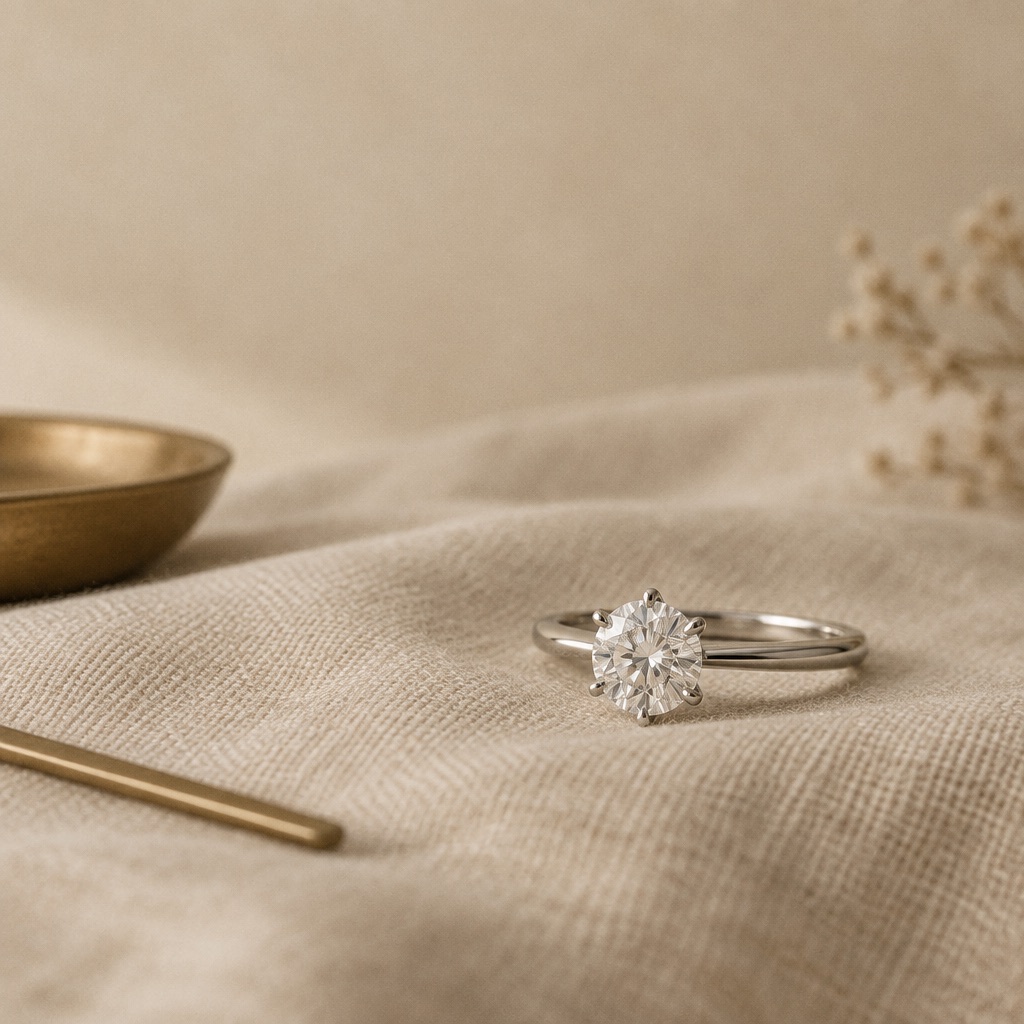

Memphis does not have a dedicated diamond district in the way New York has 47th Street or Chicago has Jewelers Row. The city's jewelry trade is instead concentrated in a handful of retail corridors — most notably the Laurelwood and Regalia shopping areas in East Memphis — alongside independent jewelers scattered through Midtown, Germantown, and Collierville, with a much smaller resale-oriented cluster remaining downtown.
This guide covers what a "Memphis diamond district" search actually turns up, why a city with Memphis's particular economic history never developed a formal wholesale trade zone, where local buyers and jewelers actually shop and source today, and how independent Memphis-area jewelers use national wholesale suppliers to fill the gap a local trade floor would otherwise cover — including how the city's status as a major logistics hub actually plays into that sourcing relationship, and what that means for buyers browsing the historic downtown resale market versus East Memphis's newer retail corridors.
What People Mean by "Memphis Diamond District"
A "Memphis diamond district" search is usually looking for one of two things: a place to shop for an engagement ring or fine jewelry as a consumer, or a wholesale sourcing point for an independent jeweler or designer. Memphis doesn't have a single dedicated answer to either. No historically branded jewelry trade block exists here the way it does in a small number of older US cities that built dense trade infrastructure around early-20th-century manufacturing and immigrant merchant networks — Memphis's downtown core historically centered on cotton trading, riverboat commerce, and later music and manufacturing, not jewelry wholesaling.
Laurelwood and Regalia: Memphis's Retail Jewelry Hubs
The closest thing Memphis has to a jewelry-shopping center of gravity is East Memphis, where the Laurelwood Shopping Center and the nearby Regalia development host a concentration of fine-jewelry retailers alongside upscale boutiques and restaurants. This area draws shoppers from across the metro and from parts of Mississippi and Arkansas that fall within Memphis's regional retail pull. Like most such corridors, it's a retail destination rather than a wholesale trade district — there's no back-of-house trading floor or cluster of independent diamond dealers doing business-to-business trade there.
Independent Jewelers Across the Metro
Outside East Memphis, the city's independent jewelers and family-owned shops are dispersed across the wider metro — long-established names in Midtown and the Poplar Avenue corridor, plus a growing number of independent jewelers and designers in the fast-growing eastern suburbs of Germantown and Collierville. Several of Memphis's family jewelers have operated in the same neighborhoods for multiple decades, and that longevity carries real weight in a market without a concentrated trade district to serve as an informal quality signal — Memphis buyers lean heavily on long-standing local reputation and referral when choosing where to make a significant purchase, often across multiple generations of the same family.
Memphis Compared to Cities With a True Diamond District
| City | What Exists Locally | Why It Developed |
|---|---|---|
| Memphis, TN | Laurelwood/Regalia retail cluster, dispersed independents | Cotton-trade and river-commerce economic history, not jewelry manufacturing |
| New York, NY | 47th Street Diamond District, a true wholesale trade block | Century-old immigrant trade network, still the largest US wholesale hub |
| Chicago, IL | Jewelers Row, a historic vertical wholesale trade district | Long-running Midwest wholesale and manufacturing concentration |
| Los Angeles, CA | Downtown LA Jewelry District, a dense multi-block wholesale zone | Built around the mid-20th-century garment and jewelry manufacturing district |
| Nashville, TN | Green Hills retail cluster, dispersed independents | Also lacks historic jewelry-trade manufacturing infrastructure |
Memphis's pattern sits alongside most mid-sized American metros: genuine retail jewelry presence without a formally organized wholesale district. Even within Tennessee, neither Memphis nor Nashville developed the kind of dense, block-scale trade infrastructure found in the handful of larger, older cities that had early-20th-century manufacturing and immigrant-trade economies dense enough to sustain one. Memphis's own economic identity ran through cotton, river trade, and later distribution and logistics — a different foundation that never produced a jewelry trade district as a byproduct.
Why Memphis Never Developed a Formal Trade District
Memphis grew historically as a commercial river port and, for much of the 19th and early 20th centuries, the world's largest inland cotton market. That commercial identity shaped the city's downtown core around trading floors, warehouses, and shipping infrastructure tied to agricultural commodities rather than luxury-goods manufacturing. The wholesale jewelry districts that formed in cities like New York, Chicago, and Los Angeles grew out of dense immigrant merchant communities working in jewelry manufacturing and trade specifically — an economic pattern Memphis's cotton-and-river-commerce history simply didn't produce.
Memphis's Modern Logistics Identity and What It Means for Shipping
Memphis's more recent economic identity — as home to FedEx's global "Superhub" air-cargo operation at Memphis International Airport — makes it one of the best-connected cities in the country for fast shipping, even though that infrastructure developed around package logistics generally rather than jewelry trade specifically. For a Memphis-area jeweler sourcing from a national wholesale supplier, that logistics infrastructure works in their favor: overnight and next-day delivery windows into Memphis tend to be reliable and well-established, since so much of the country's air-cargo network already routes through the city daily.
What Buyers Can Realistically Find in Memphis
A consumer shopping in Memphis has real, solid options: the Laurelwood/Regalia cluster covers a good range of national and regional jewelry brands, and the metro's independent and family-owned jewelers offer a more personalized alternative for engagement rings and custom pieces. What Memphis doesn't offer is a wholesale trade floor where an independent jeweler could walk in and buy loose certified stones at trade pricing the way they could on 47th Street or in downtown LA's Jewelry District. That distinction matters most for the business-to-business side of the trade — sourcing loose stones for custom work or restocking retail inventory — which in Memphis, as in most mid-sized American cities, runs almost entirely through national suppliers rather than any local alternative.
Historic downtown Memphis, along the Main Street corridor and near Beale Street, retains a scattering of longstanding pawn shops and estate-jewelry dealers that predate the city's shift of retail gravity toward East Memphis. These businesses handle real diamond and jewelry transactions — buying, selling, and reselling estate and secondhand pieces — but they function as a secondary, resale-oriented market rather than anything resembling a wholesale trade district for new certified inventory. A buyer looking for a certified new stone or a custom-built piece is generally better served by Laurelwood-area retailers, independent designers, or a jeweler working through a national wholesale account than by the downtown resale market, which serves a genuinely different purpose.
How Memphis-Area Jewelers Source Wholesale Inventory
Because there's no local trade floor, independent jewelers, designers, and appraisers based in and around Memphis source their loose-diamond and finished-jewelry inventory from national wholesale suppliers rather than a local trading network. This is the standard model for the large majority of American jewelry businesses outside the small handful of cities with a genuine historic trade district, and Memphis's strong outbound and inbound air-cargo infrastructure makes that national-supplier relationship work especially smoothly in practice.
Verifying Certification When Buying in Memphis
Wherever a Memphis buyer purchases — Laurelwood, an independent Midtown jeweler, or diamonds sourced through a jeweler's national wholesale account — the same verification habit applies: look up the certificate report number directly on the issuing lab's own website (GIA, IGI, or GCAL) rather than relying on a printed card alone. This matters equally regardless of the seller and is the most reliable way to confirm a stone's actual grading matches what's represented at the point of sale.
Natural vs. Lab-Grown Diamonds in the Memphis Market
Memphis's jewelry buyers, like most of the country, increasingly encounter both natural and lab-grown CVD diamonds side by side, whether shopping at Laurelwood or working with an independent jeweler on a custom piece. The national shift toward lab-grown gaining meaningful market share alongside natural stones shows up in Memphis the same way it does in most mid-sized US metros — buyers weighing price-per-carat against provenance preference within the same shopping decision.
Custom Jewelry and Private-Label Sourcing for Memphis Jewelers
Memphis's independent jewelers and family-owned studios typically need a wholesale partner that can deliver finished custom pieces on a fast, predictable timeline and, ideally, unbranded so the jeweler can present the finished piece as their own work to their client. A supplier offering same-day shipping on in-stock loose inventory and a short, defined turnaround on custom rings lets a Memphis-based jeweler commit to client deadlines — engagement season proposals especially — with more confidence than a slower manufacturing partner would allow.
Sourcing Certified Diamonds and Custom Jewelry From Guru Diam
Guru Diam is a trade-only wholesale supplier carrying certified CVD lab-grown diamonds, natural diamonds, certified loose stones, and finished and custom jewelry — antique cuts, standard fancy shapes, and round brilliant all included, with IGI, GIA, and GCAL certification available. In-stock inventory ships same-day nationwide from New York (before 6pm EST) and Los Angeles (before 4pm PST), giving Memphis-area jewelers and designers fast, reliable access to a full wholesale catalog without a local diamond trade district to rely on. Custom engagement rings are finished in 4-6 days, unbranded by default for jewelers reselling as their own.
Buyers can browse certified loose diamond inventory through the certified diamonds category, source matched pairs through matching pairs, and review fancy color stones through fancy color loose diamonds. Trade accounts can review terms at the wholesale hub or apply through trade partner, and jewelers building a full piece can work through custom jewelry for a setting finished in 4-6 days.
What Opening a Trade Account Actually Involves
For a Memphis-area jeweler who has never worked with a national wholesale supplier before, opening a trade account is more straightforward than the absence of a local trade floor might suggest. Most legitimate wholesale suppliers require basic verification that the applicant is a genuine trade buyer — a resale certificate or business license, and often a jewelry-industry credential or existing supplier reference — rather than an in-person storefront visit. Once approved, a trade account typically unlocks wholesale pricing tiers, full certified inventory access rather than a curated retail selection, and the ability to place custom orders directly. For a Memphis jeweler used to sourcing loose stones through a limited local selection or a regional middleman, this step alone often meaningfully expands both pricing and selection.
Evaluating a Memphis-Area Jeweler or Designer
Without a local trade floor to serve as an informal quality filter, a Memphis buyer evaluating an independent jeweler has to do a bit more of that vetting themselves. A few habits carry most of the weight: ask directly whether loose stones come with independent lab certification (GIA, IGI, or GCAL) rather than an in-house grading claim, ask how the jeweler sources custom-setting inventory and whether they work with a wholesale supplier or a slower manufacturing partner, and request to see prior custom work with client permission where possible. None of this is unique to Memphis, but it matters more in a market without a concentrated trade district where reputations circulate primarily through word of mouth and long-standing family relationships rather than proximity to competing dealers.
This dynamic plays out differently than it would in a city with a concentrated trade district, where competing dealers sitting a few doors apart give buyers an easy way to comparison-shop in person. Memphis's independent jewelers have historically built exactly this kind of reputation-based trust — several of the city's family-owned shops trace back three or more decades in the same neighborhoods, and that continuity carries real weight with local buyers who've watched a jeweler serve their extended family or community across multiple generations of purchases.
Insurance and Appraisal Considerations for Memphis Buyers
Whether a diamond purchase happens at Laurelwood or through an independent Memphis jeweler, an independent appraisal separate from the point of sale is worth obtaining for insurance purposes on any meaningful purchase. Memphis has a reasonable base of independent, non-selling appraisers who can provide a replacement-value appraisal for a homeowner's or renter's insurance rider. This is a distinct service from lab certification — GIA, IGI, and GCAL grade the stone itself, while an appraiser assigns a current replacement-cost value for insurance purposes — and buyers sometimes conflate the two, but both matter for a complete paper trail on a significant purchase.
Memphis's Growth and What It Means for Future Jewelry Demand
Memphis's population growth has been more modest than fast-growing Sunbelt peers, but the metro's eastern suburbs — Germantown, Collierville, and Cordova in particular — have seen steady household-income growth over the past decade, supporting a real base of custom-jewelry and fine-jewelry retail demand even without dramatic overall population growth. That steadier, more localized growth pattern reinforces rather than changes the dispersed-retail model described above: it supports continued investment in existing retail corridors like Laurelwood and continued demand for independent jewelers in the growing eastern suburbs, without creating pressure toward a formal wholesale trade district the way explosive Sunbelt growth sometimes does elsewhere.
What First-Time Searchers Often Misunderstand
- Expecting a single dedicated wholesale trade zone. Memphis's jewelry trade is spread across Laurelwood, Regalia, and dispersed independent jewelers across the metro, not concentrated in one wholesale district.
- Assuming Laurelwood is a wholesale destination. It's a retail shopping cluster serving consumers directly, not a trade floor for independent jewelers to buy at wholesale pricing.
- Confusing Memphis's logistics infrastructure with a jewelry trade district. FedEx's air-cargo hub makes shipping into and out of Memphis unusually fast and reliable, but it has nothing to do with a local wholesale diamond trade — it just makes working with an out-of-state national supplier more convenient.
- Not verifying certification regardless of source. Whether buying at Laurelwood, from an independent jeweler, or through a national wholesale supplier, independent certificate verification matters equally.
Seasonal Demand Patterns for Memphis Jewelry Buyers
Memphis follows the same broad seasonal demand curve as most US markets: a holiday-season retail spike at Laurelwood and Regalia, followed by a proposal-season surge around Valentine's Day and into early spring, when custom-ring inquiries to independent jewelers typically pick up. Jewelers working with a national wholesale supplier benefit from being able to place orders against predictable demand spikes without carrying excess inventory the rest of the year — and Memphis's air-cargo-driven shipping speed makes that just-in-time approach especially practical compared with many other mid-sized metros.
How Memphis Fits a Broader Mid-South Sourcing Strategy
For a Memphis-area jeweler or designer, and for jewelers elsewhere in the Mid-South region who treat Memphis as their nearest metro hub, the practical sourcing strategy mirrors what independent jewelry businesses in most mid-sized US cities without a dedicated wholesale diamond district have settled on: use local relationships for the specialized, in-person, design-driven work that genuinely benefits from proximity, and rely on a national wholesale supplier with strong certification standards and fast shipping for the bulk of routine loose-diamond and custom-jewelry sourcing. Memphis's unusual strength as a logistics hub only reinforces the case for this model, since it removes most of the practical shipping-speed disadvantage a mid-sized city without a local trade district might otherwise face.
This blended approach scales naturally as a Memphis-area jewelry business grows. A newer or smaller independent jeweler might lean more heavily on local relationships early on, while a more established retailer with steadier order volume typically shifts a larger share of routine purchasing toward a national wholesale account for the breadth, consistency, and certified inventory depth that Memphis's dispersed local market alone can't fully replicate — all while benefiting from some of the fastest inbound shipping infrastructure of any mid-sized American city.
Jewelers serving the wider Mid-South catchment area — parts of northern Mississippi, eastern Arkansas, and western Tennessee that treat Memphis as their nearest major retail and service hub — face the same basic sourcing math, just with an added step of getting inventory from Memphis out to a smaller surrounding market. Here again, Memphis's logistics strength works in a jeweler's favor: a supplier that can get certified stones or finished pieces into Memphis quickly makes it correspondingly easier for a Memphis-based jeweler to keep their own regional delivery commitments to smaller-market clients, effectively extending the benefit of fast national shipping one layer further down the supply chain and into towns that would otherwise have no realistic path to same-week certified inventory at all.
Frequently Asked Questions
Does Memphis have a diamond district?
Not a dedicated one like New York's 47th Street. Memphis's jewelry trade is concentrated around the Laurelwood and Regalia retail centers in East Memphis, with independent jewelers dispersed across the wider metro.
Where do jewelers shop in Memphis?
Consumers typically shop at Laurelwood, Regalia, or independent jewelers across Midtown, Germantown, and Collierville. Independent jewelers themselves generally source wholesale inventory from national suppliers rather than a local trade floor.
What is Laurelwood known for?
Laurelwood is East Memphis's primary upscale retail center, home to a concentration of fine-jewelry retailers alongside boutiques and restaurants, along with the adjacent Regalia development.
Can I buy wholesale diamonds in Memphis?
Memphis doesn't have a concentrated wholesale diamond trading district. Most Memphis-area jewelers source wholesale inventory from national suppliers rather than a local trade floor.
Does Memphis's FedEx hub help jewelers get inventory faster?
Yes, indirectly. Memphis's status as FedEx's global air-cargo hub means shipping into and out of the city is unusually fast and reliable, which makes sourcing from an out-of-state national wholesale supplier more practical — though it doesn't create a local wholesale trade district on its own.
Does Memphis have both natural and lab-grown diamond options?
Yes. Memphis's retailers and independent jewelers increasingly carry both, following the national shift toward lab-grown CVD diamonds gaining meaningful market share alongside natural stones.
Is downtown Memphis's Beale Street area a good place to buy diamonds?
Downtown Memphis has a scattering of pawn shops and estate-jewelry dealers handling resale and secondhand pieces, but it isn't a source for new certified inventory or custom work. Buyers looking for a new certified stone or a custom-built piece are better served by East Memphis retailers, independent designers, or a jeweler working through a national wholesale account.