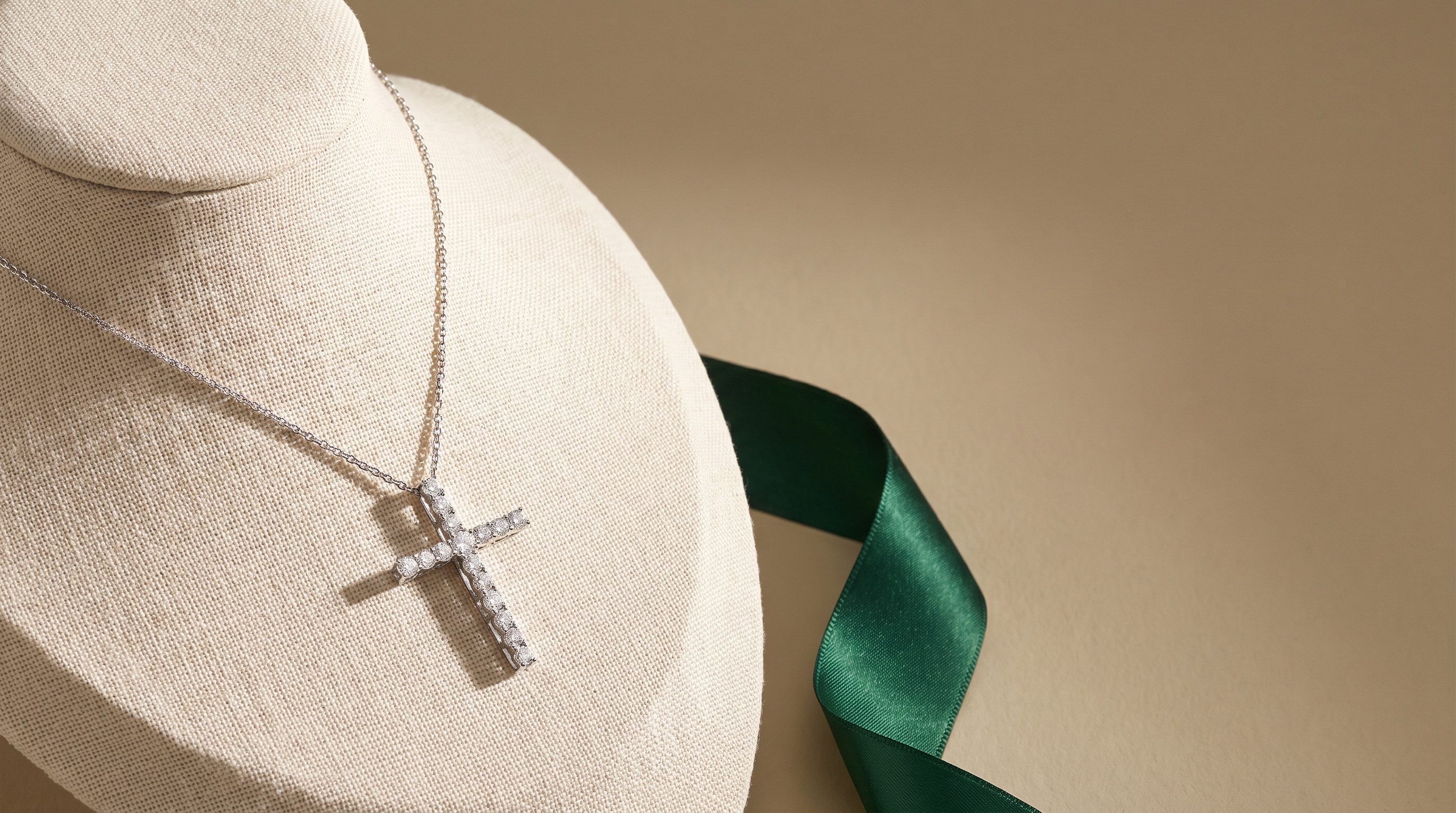
A diamond cross pendant is a cross-shaped pendant set with one or more diamonds, worn on a chain as a religious, gift, or fashion piece. For a jeweler or manufacturer sourcing diamonds for cross pendant production, the shape itself drives most of the sourcing decisions: a cross has more linear edges and narrower arms than a round or oval pendant outline, which shapes stone size, setting style, and how diamonds are distributed across the design.
This guide covers cross pendant sourcing from a trade perspective — setting styles suited to the cross shape, stone size and count planning, chain pairing, seasonal demand patterns specific to this category, and what to ask a wholesale supplier before committing to a production order.
What Makes Cross Pendant Sourcing Different
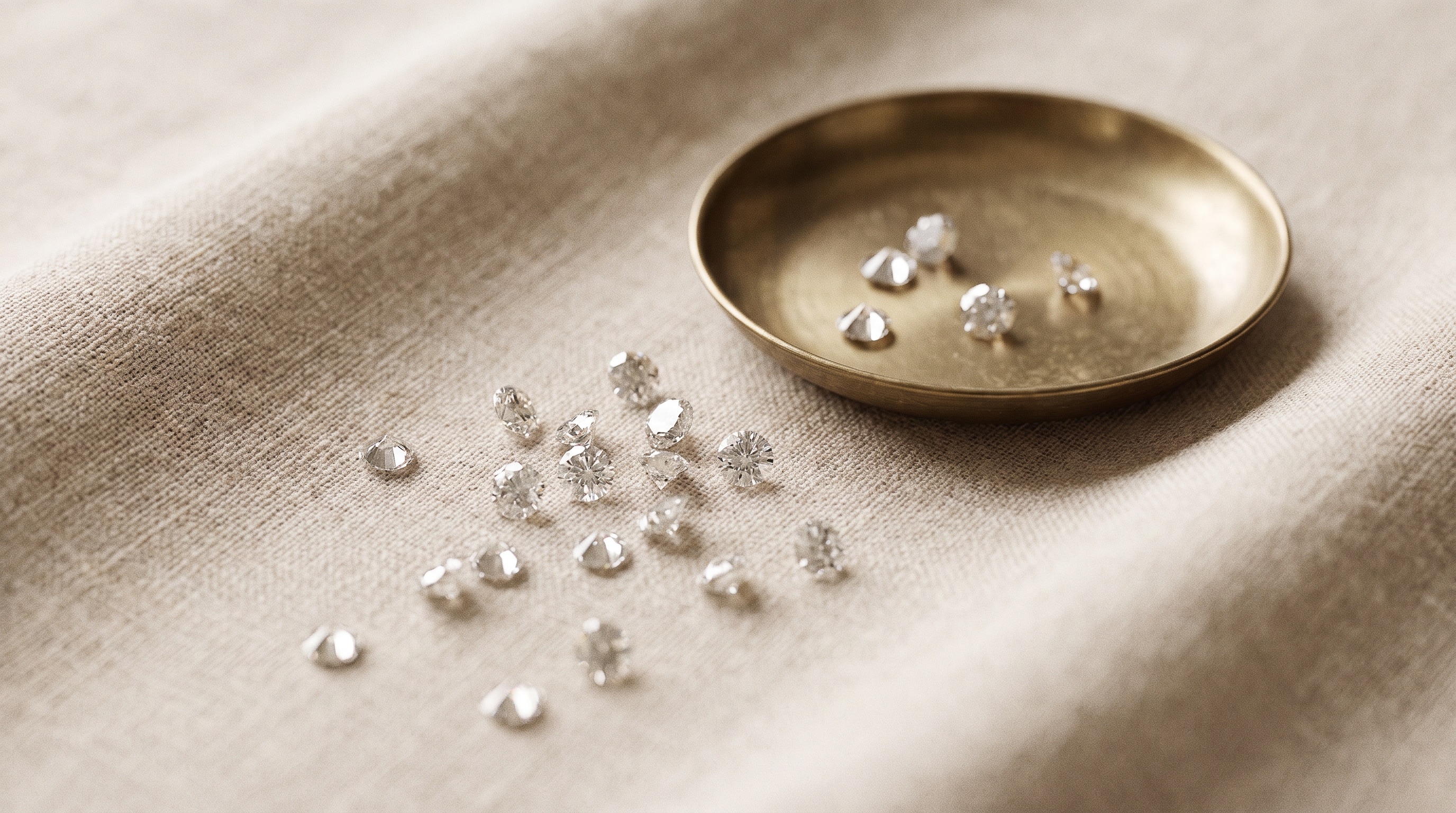
A cross's shape — four narrow arms meeting at a center point — creates sourcing and design constraints that a round or teardrop pendant outline doesn't have. Diamonds need to be sized and arranged to fit within a comparatively narrow arm width without the metal frame around each stone becoming too thin to be structurally sound, and designs that taper the diamond size down toward the ends of each arm (larger stones near the center, smaller stones toward the tips) require a graduated melee lot rather than a single uniform stone size. Manufacturers sourcing for a cross pendant line should think of it as a graduated, multi-size sourcing project by default, closer in complexity to a graduated tennis piece than to a single center-stone pendant.
Setting Styles for Diamond Cross Pendants
Pavé Setting
Small diamonds are set closely together across the surface of the cross with minimal visible metal between them, creating a continuous sparkle across the whole shape. Pavé is the most common setting style for cross pendants because it works naturally with the cross's narrow arms and doesn't require the wider metal frame that a larger prong-set stone would need.
Channel Setting
Diamonds are set into channels running along the length of each arm, fully recessed between two metal rails. This gives a cleaner, more structured look than pavé and offers better physical protection for the stones, since nothing sits proud of the metal surface — a meaningful durability advantage for a piece worn daily on a chain that moves against clothing and skin.
Prong Setting (Center Stone)
Many cross pendant designs use a single larger prong-set stone at the intersection point of the cross, surrounded by smaller pavé or channel-set stones along the arms. This combination lets a manufacturer offer a visual focal point at the center while keeping overall diamond cost manageable by using smaller, less expensive stones for the arms.
Bezel Setting
A full metal rim around each stone, used less often than pavé or channel in this category but offering the strongest physical protection — sometimes chosen for a center stone specifically, or for a simpler, more minimal cross design using fewer, larger stones.
Typical Stone Sizes and Counts
Cross pendants vary widely in scale, from small, delicate designs with a handful of tiny melee stones to larger statement pieces with a substantial center stone and dozens of pavé accents. A common mid-market design uses somewhere between 20 and 50 small pavé stones (generally under 0.02ct each) distributed across the arms, plus an optional center stone in the 0.10ct to 0.50ct range at the intersection point. Total carat weight for a typical pavé cross pendant commonly falls between 0.10ct and 0.50ct TW for a smaller design, up to 1.00ct TW or more for a larger statement piece with a prominent center stone.
| Pendant Size/Style | Typical Pavé Stone Count | Common TCW Range |
|---|---|---|
| Small/delicate | 10–20 stones | 0.05–0.15 TCW |
| Mid-size, pavé only | 20–40 stones | 0.15–0.40 TCW |
| Mid-size with center stone | 20–40 stones + 1 center | 0.30–0.75 TCW |
| Large statement piece | 40+ stones + 1 larger center | 0.75–1.50+ TCW |
Certification Considerations
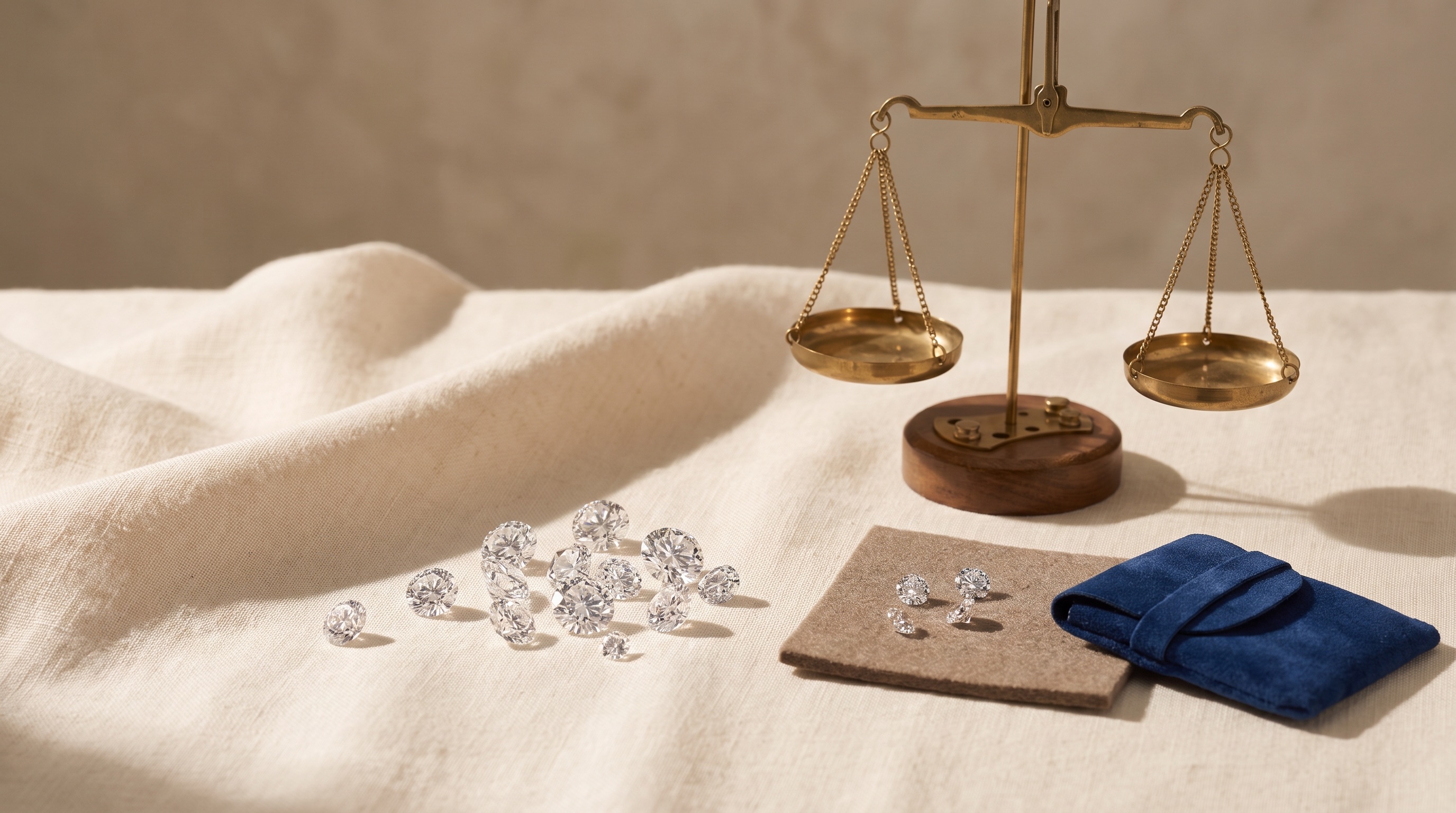
Because most of the diamonds in a pavé cross pendant fall at melee size, they're typically sourced and sold as graded parcel goods against a stated quality standard (commonly DEF+/VS+) rather than individually certified — the same approach used for melee in any other line- or pavé-set jewelry category. A larger individual center stone, where a design includes one, can be certified individually through IGI, GIA, or GCAL at 0.30ct and above, giving a retailer a certificate to point to for that specific stone even when the surrounding pavé accents are uncertified parcel goods.
Cross Pendants vs. Other Pavé Pendant Shapes
Much of the sourcing logic described here — graduated melee sizing, pavé consistency, an optional certified center stone — applies broadly across other pavé-set pendant shapes as well, including initial/letter pendants and other symbol pendants. What's specific to the cross is the arm geometry: a letter pendant's outline varies significantly by letter (an "I" is narrow throughout, an "O" is a continuous curve, an "M" has multiple narrow strokes), while a cross has a consistent, symmetrical four-arm structure that makes graduated sizing more predictable and repeatable across a full production run. A manufacturer already sourcing pavé melee for an initial pendant line — see our diamond initial necklace sourcing guide — can generally apply the same lot-consistency principles directly to a cross pendant program, with less letter-by-letter variability to account for.
Chain Pairing and Sourcing Coordination
A cross pendant is sold and worn on a chain, and manufacturers building a cross pendant line should decide early whether chains will be sourced and sold together with the pendant as a complete piece, or sold separately so a customer can choose their own length and chain style. Common chain lengths for cross pendants run from 16 to 20 inches, with 18 inches being the most broadly popular default for a mixed audience. Chain and pendant metal should match (or be offered in coordinated matching options) rather than assuming a customer will source a compatible chain elsewhere, since a mismatched metal tone between pendant and chain is an easily avoidable but common merchandising mistake.
Lab-Grown vs. Natural Diamonds for Cross Pendant Production
Because pavé-style cross pendants use a large number of small stones, total diamond cost scales with stone count more than with any single stone's size — which makes the lab-grown-versus-natural decision meaningful even at melee scale. CVD lab-grown diamonds let a manufacturer offer a fuller pavé coverage or a larger center stone at the same price point as natural material of comparable color and clarity, or hold the same design at a lower cost. Both materials meet the same DEF+/VS+ commercial standard and look identical once set — the origin decision is a pricing and positioning choice for the retailer.
Seasonal Demand Patterns
Diamond cross pendants see pronounced seasonal demand tied to religious and gifting calendars — Christmas, Easter, First Communion and Confirmation season (commonly spring), baptisms, and graduation are all recurring purchase occasions for this specific category, on top of general year-round demand as an everyday religious or fashion piece. Because these purchase occasions cluster into predictable windows each year, retailers and manufacturers should plan diamond orders for cross pendant inventory well ahead of each relevant season rather than reactively, given the real lead time needed to source a graduated, consistent pavé lot and complete finished-piece production before demand peaks.
Openwork and Filigree Cross Designs
Beyond a solid pavé surface, openwork designs — where the cross's metal frame is cut away between diamonds to create a lighter, lace-like structure — are a popular higher-end variation that reduces overall metal weight and gives a more delicate visual finish. Openwork requires more precise fabrication than a solid-backed pavé design, since the metal frame around each stone has less surrounding support, which raises both fabrication cost and the importance of using well-calibrated melee with consistent, predictable dimensions — a lot with wider-than-specified size variance is more likely to cause fit or setting problems in an openwork frame than in a solid-backed design with more forgiving tolerances.
Sourcing a Cross Pendant Program: What to Ask a Supplier
- Is the pavé melee sold as a graduated, matched lot suitable for a tapering cross-arm design, or general mixed-size inventory that would need to be sorted by hand?
- What's the size and color consistency across the lot, especially for a fully pavé-set design where every stone is visible at once across the whole surface?
- If the design includes a center stone, can it be certified individually while the surrounding pavé remains parcel-graded, and does the supplier handle that mixed order type smoothly?
- Can the supplier reliably reproduce the same graduated lot on reorder for an ongoing cross pendant line, particularly ahead of predictable seasonal demand spikes?
Wholesale Pricing Structure
Cross pendant diamonds are typically quoted per total carat weight for the pavé portion at a specified quality standard, plus a separate line item for any certified center stone where the design includes one. Buyers ordering at production volume ahead of a seasonal demand window should expect per-carat pricing to improve with order size, the same as with other melee-based categories, and should factor seasonal lead times into order timing rather than placing orders reactively once a season's demand has already begun.
Design Variations Within the Cross Category
Beyond the classic Latin cross outline, several design variations are common in the wholesale trade: a more compact "petite" cross with shorter, more even-length arms suited to a minimal everyday piece; an ornate design incorporating additional decorative elements like a halo border or filigree-style openwork around the pavé; and cross pendants that incorporate colored gemstone accents alongside diamonds for a more personalized or birthstone-themed piece. Each variation changes the stone-count and sizing math somewhat, but the core sourcing principles — a graduated, consistent pavé lot plus an optional certified center stone — apply across all of them.
Metal Choices for Cross Pendants
Cross pendants are produced across the full range of standard jewelry metals — 14k and 18k white, yellow, and rose gold, platinum, and (at a lower price tier) sterling silver — and metal choice for this category tends to follow personal and generational taste more than any technical constraint tied to the diamonds themselves. Yellow gold has traditionally been the most common choice for religious jewelry specifically, though white gold and platinum have grown steadily as an alternative for buyers wanting a more neutral, modern look, and rose gold sees consistent demand as a distinct third option. Metal choice doesn't change pavé diamond sourcing requirements directly, but a manufacturer building out a cross pendant line should plan to offer the design across at least two or three metal options given how much this category's demand splits along personal preference rather than clustering around one dominant choice.
Gender-Neutral and Men's Cross Pendant Sourcing
Diamond cross pendants are one of the more gender-neutral categories in fine jewelry, worn by men and women alike, which has real implications for design and sourcing. Men's cross pendants tend to run larger and heavier in overall scale with a bolder, thicker outline, sometimes forgoing pavé entirely in favor of a smaller number of larger bezel or flush-set stones for a more understated, masculine look consistent with broader men's jewelry trends. A manufacturer building a cross pendant line for a broad audience should plan two related but distinct design tracks — a more delicate pavé-forward design and a bolder, larger-format design — rather than assuming one design scales appropriately across the full range of intended wearers.
Custom and Personalized Cross Pendant Requests
Because cross pendants are frequently purchased for milestone religious occasions — baptism, First Communion, Confirmation, graduation — retailers commonly field requests for personalization: an engraved name or date on the reverse side, a birthstone accent alongside the diamonds, or a specific carat-weight target tied to a gift budget. Manufacturers building a cross pendant program should plan for this by working with a custom jewelry partner capable of handling engraving and small design modifications on top of a standard base design, rather than offering only a fixed, non-customizable catalog — a meaningful share of this category's demand comes specifically from gift-giving occasions where personalization is part of the purchase decision.
Common Manufacturing Defects to Screen For
A pavé-set cross pendant, like any pavé piece, is vulnerable to specific manufacturing defects worth screening for before accepting a finished sample: stones set unevenly so some sit higher or lower than their neighbors across the surface, visible gaps in metal coverage between adjacent stones (a common cause of stones loosening or falling out over time), and inconsistent stone size progression in a tapered design where the size steps down unevenly rather than smoothly along each arm. Requesting a physical sample under magnification before approving a full production run is standard practice for pavé work generally, and particularly worthwhile for a shape like a cross where uneven stone placement is highly visible given the design's geometric symmetry.
Fancy Color Cross Pendants
While white diamonds are the default for this category, colored cross pendants — using yellow, pink, or blue fancy color melee either throughout the pavé or as an accent within a primarily white-diamond design — are a real, if smaller, sub-category, often positioned as a birthstone-adjacent or more personalized alternative to a standard white pavé cross. Sourcing fancy color melee for a cross pendant carries the same consistency requirement described for other line- and pavé-set fancy color pieces: every stone needs to match not just size but hue, tone, and saturation closely enough to read as a deliberate, uniform color choice rather than a mismatched mix, which typically means a longer lead time and higher per-carat cost than an equivalent white-diamond design.
Sourcing Diamond Cross Pendant Stones Wholesale
Guru Diam supplies calibrated diamond melee and certified loose stones for jewelers and manufacturers building cross pendant lines, across natural and CVD lab-grown material — CVD only in the lab-grown catalog, with no HPHT stones anywhere. Melee is available in consistent, gradable lots suited to graduated pavé designs, and larger center stones can be certified through IGI, GIA, or GCAL depending on size and buyer preference. As with the rest of Guru Diam's lab-grown catalog, CVD stones are cut and polished at the company's India workshop before final grading and shipment from the New York and Los Angeles locations. In-stock inventory ships same-day from both locations, and trade accounts can review current melee stock in matching pairs or certified stones in certified diamonds. Manufacturers building a custom cross pendant design can start at custom jewelry, and new trade accounts can apply through trade partner, with current terms at the wholesale hub.
Frequently Asked Questions
How many diamonds are typically in a diamond cross pendant?
A common mid-size pavé design uses roughly 20 to 40 small stones distributed across the arms, plus an optional larger center stone at the intersection point. Small, delicate designs may use as few as 10, while large statement pieces can use 40 or more.
Are the diamonds in a cross pendant individually certified?
Most stones in a pavé cross pendant are melee-sized and sold as graded parcel goods against a stated quality standard rather than individually certified. A larger individual center stone, where the design includes one, can be certified at 0.30ct and above.
What setting style is best for a diamond cross pendant?
Pavé is the most common choice for the arms since it fits the cross's narrow shape naturally, while channel setting offers better durability with a cleaner look. A prong or bezel-set center stone is often combined with pavé arms for a design with a clear focal point.
What chain length is standard for a diamond cross pendant?
18 inches is the most broadly popular default length, though 16 to 20 inches all see regular demand depending on the intended fit and the wearer's preference.
Should a diamond cross pendant use natural or lab-grown diamonds?
Either meets the same quality standard and looks identical once set. Because pavé designs use a large number of small stones, CVD lab-grown diamonds let a manufacturer offer fuller pavé coverage or a larger center stone at the same price point as natural material, making the choice primarily about pricing.
When should retailers order diamond cross pendant inventory?
Given seasonal demand tied to Christmas, Easter, First Communion/Confirmation season, and other religious and gifting occasions, retailers should place orders well ahead of each relevant season rather than reactively, given the lead time needed to source a consistent graduated pavé lot.
Can diamond cross pendants be personalized?
Yes. Common personalization requests include reverse-side engraving, a birthstone accent alongside the diamonds, or a specific carat-weight target tied to a gift budget — retailers should plan for this demand given how often cross pendants are purchased for milestone religious occasions.
Guru Diam is a trade-only wholesale diamond supplier with locations in New York and Los Angeles, supplying calibrated diamond melee and certified loose stones — natural and CVD lab-grown — for jewelers and manufacturers producing cross pendants and other finished jewelry. Browse current melee inventory in matching pairs or apply for a trade account through trade partner.