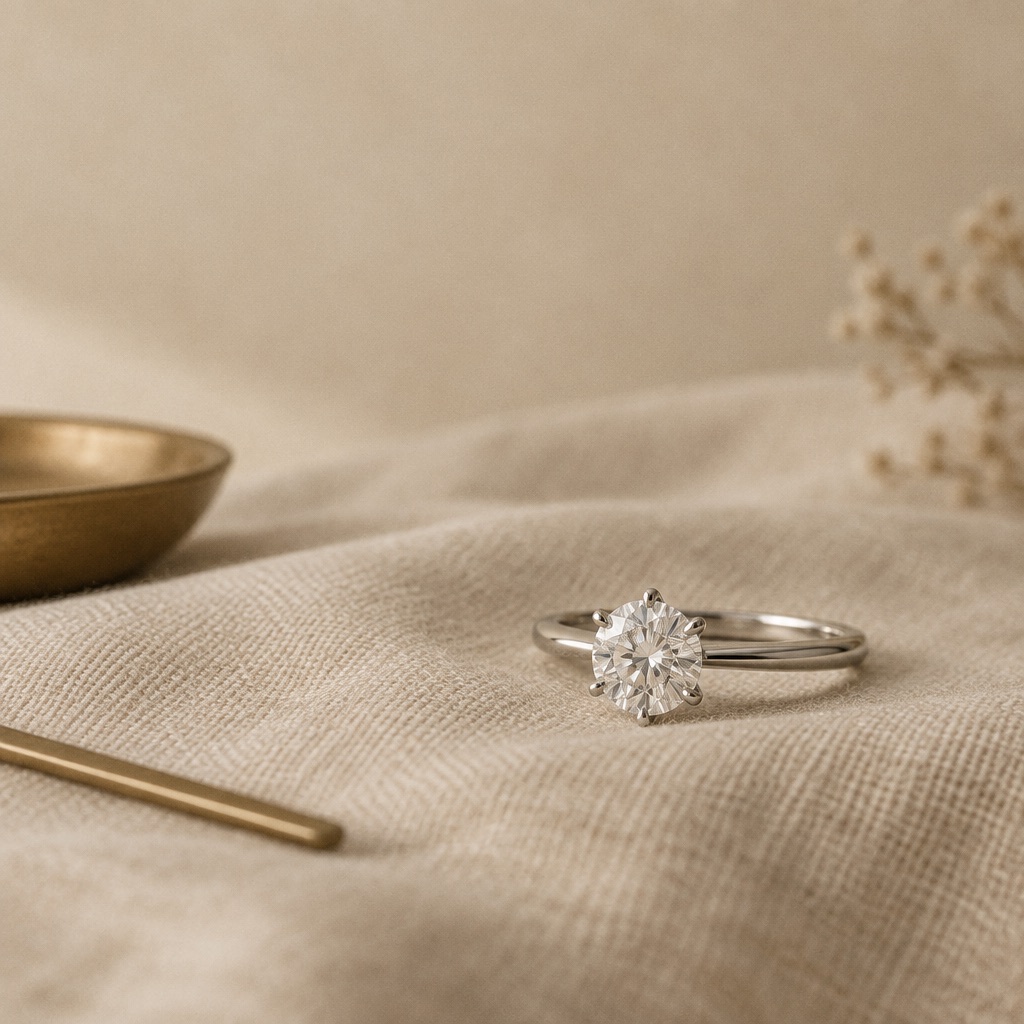
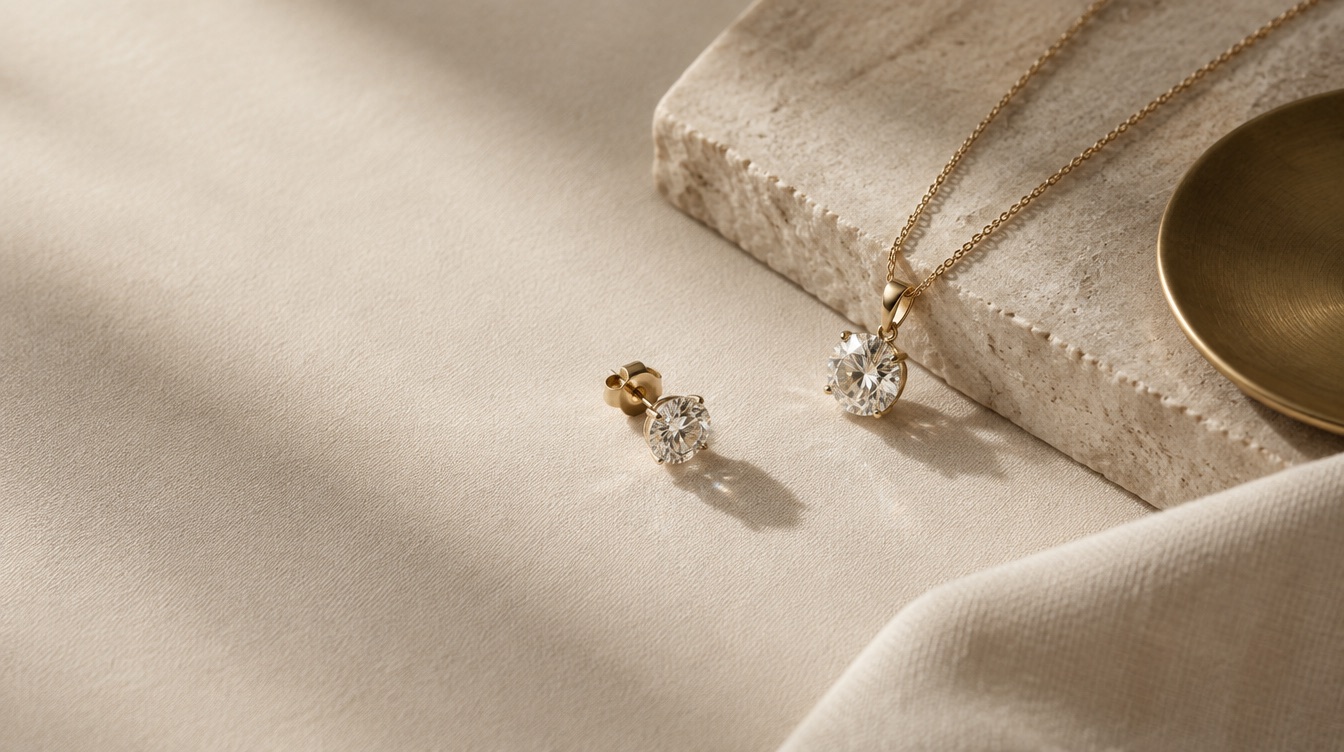
Lightbox is De Beers' own lab-grown diamond brand, launched in 2018 as the natural-diamond mining giant's direct entry into manufactured-diamond jewelry. It sells lab-grown diamond jewelry direct-to-consumer at a flat, below-market per-carat price point, explicitly positioned as affordable fashion jewelry rather than as a bridal or engagement-ring alternative — a deliberate strategic move from a company whose core business is built on natural diamond mining and marketing.
This guide covers what Lightbox actually is, how its pricing and positioning work, why De Beers built a lab-grown brand at all given its natural-diamond business, how Lightbox compares to trade-grade CVD lab-grown sourcing, and what the brand's existence signals for a wholesale jeweler thinking about the lab-grown category.
What Lightbox Actually Is
Lightbox is a direct-to-consumer jewelry brand selling lab-grown diamond jewelry, created and owned by De Beers Group — the same company whose core historical business is natural diamond mining, and which also funds natural-diamond category marketing through affiliated industry bodies. Lightbox diamonds are grown using CVD (chemical vapor deposition) technology at a dedicated production facility, then set into jewelry designs sold directly to consumers online and through limited retail partnerships, bypassing the traditional multi-tier wholesale-to-retail jewelry trade De Beers has historically operated within on the natural-diamond side of its business.
Why De Beers Built a Lab-Grown Brand
De Beers' entry into lab-grown diamonds represented a significant strategic shift for a company that had, for decades, positioned natural diamond rarity and "a diamond is forever" permanence as the foundation of its entire marketing approach — a message inherently in tension with a manufactured, non-rare alternative product. The move is widely understood within the industry as a defensive and market-shaping strategy rather than a simple new revenue line: by entering the lab-grown category itself, De Beers gained the ability to influence how lab-grown diamonds are priced and positioned in the broader market, specifically by launching Lightbox at a low, flat price point explicitly framed around fashion jewelry rather than engagement rings — a positioning that, intentionally or not, pushes against lab-grown diamonds being marketed as a direct, comparably-priced-per-quality bridal alternative to natural diamonds.
This strategic reading is reinforced by De Beers' own public statements at Lightbox's launch, which explicitly framed the brand around affordable, low-commitment fashion jewelry — "a fun piece of jewelry that doesn't need a bank loan," in the spirit of the brand's original marketing message — rather than competing head-on in the bridal and engagement-ring segment where natural diamonds remain De Beers' core business interest.
Lightbox's Pricing and Positioning Model
| Aspect | Lightbox's Approach |
|---|---|
| Pricing structure | Flat, simplified per-carat pricing rather than 4Cs-driven grading-based pricing |
| Market positioning | Affordable fashion jewelry, explicitly not marketed as a primary bridal/engagement category |
| Sales channel | Direct-to-consumer online, with limited retail partnerships — not the traditional wholesale-to-independent-jeweler trade model |
| Grading approach | Not independently graded the way a bridal-grade certified stone typically is — consistent with its fashion-jewelry, not investment-grade, positioning |
| Growth method | CVD (chemical vapor deposition) |
This model is a deliberate departure from how De Beers has historically sold natural diamonds — through a multi-tier wholesale trade reaching independent jewelers — and also a departure from how most other lab-grown diamond brands and wholesalers compete, which is typically on quality-graded, certified stones sold through or alongside the same trade channels natural diamonds move through. Lightbox essentially created its own separate lane: low-commitment, flat-priced, direct-to-consumer fashion jewelry, distinct from both De Beers' own natural-diamond wholesale business and the broader trade-grade lab-grown diamond market.
Lightbox vs. Trade-Grade CVD Lab-Grown Diamonds
| Aspect | Lightbox | Trade-Grade CVD Lab-Grown (Wholesale) |
|---|---|---|
| Typical use case | Fashion jewelry, direct-to-consumer | Bridal, engagement, and fine jewelry, sourced through jewelers |
| Grading | Not independently graded per stone in the way bridal-grade stones typically are | Independently graded — IGI, GIA, or GCAL certification available |
| Pricing logic | Flat per-carat, simplified | 4Cs-driven, comparable to how natural diamonds are priced within the lab-grown category |
| Sales channel | Direct-to-consumer, limited retail partnerships | Wholesale to independent jewelers and designers |
| Shape/cut range | Limited, fashion-jewelry-focused designs | Full range including antique, standard fancy, and round brilliant cuts |
A jeweler evaluating "should I carry Lightbox" versus "should I source trade-grade CVD lab-grown diamonds" is really evaluating two different business models, not two competing versions of the same product — Lightbox is a closed, direct-to-consumer brand a jeweler generally can't source wholesale and resell the way they would trade-grade certified inventory, while trade-grade CVD lab-grown diamonds are built specifically for the traditional wholesale-to-retail jewelry trade Lightbox largely bypasses.
What Lightbox Signals About the Broader Lab-Grown Market
De Beers launching its own lab-grown brand, after years of natural-diamond-focused marketing that had at points been read as skeptical of or resistant to lab-grown diamonds gaining mainstream acceptance, is widely read within the trade as a significant signal that lab-grown production had become impossible for even the largest natural-diamond company to ignore or dismiss as a passing trend. Whatever De Beers' specific strategic intent behind Lightbox's pricing and positioning, the brand's existence is itself evidence that lab-grown CVD diamonds had, by 2018, achieved enough consumer awareness, production scale, and market legitimacy that the industry's largest natural-diamond company judged it worth building its own manufactured-diamond offering rather than leaving that market entirely to independent lab-grown producers.
Lightbox's Pricing Strategy and Its Effect on Lab-Grown Perception
Lightbox's flat, low per-carat pricing at launch was set meaningfully below prevailing prices for graded lab-grown diamonds sold through the traditional trade at the time, a pricing decision some industry observers read as intended to reinforce a "lab-grown is inherently low-value, fashion-tier" perception in the broader consumer market — a framing that, if it took hold broadly, would tend to protect natural diamonds' premium positioning in the bridal and engagement segment where De Beers' core natural-diamond business is concentrated. Independent lab-grown producers and wholesalers, whose businesses depend on lab-grown diamonds being taken seriously as a quality-graded, certified bridal-appropriate product, have generally pushed back against that framing, pointing to independent grading, the same 4Cs standards, and the same optical and chemical properties lab-grown CVD diamonds share with natural stones as the more accurate basis for comparison than Lightbox's specific fashion-tier pricing and positioning choice.
Why This Matters for an Independent Jeweler's Customer Conversations
Customers sometimes reference Lightbox by name when asking about lab-grown diamond pricing, since it's one of the more widely publicized consumer lab-grown brands given De Beers' name recognition — but a jeweler fielding that question benefits from clarifying that Lightbox's specific pricing and fashion-jewelry positioning isn't representative of trade-grade, independently graded CVD lab-grown diamonds available through standard wholesale channels. A customer comparing Lightbox's flat fashion pricing against a graded, certified bridal-grade lab-grown stone's price is comparing two different product tiers, not evidence that one is overpriced relative to the other — similar to how comparing a fast-fashion garment's price to a tailored, higher-quality piece in the same broad category (clothing) doesn't tell you much about either item's actual value for its intended purpose.
Lightbox's Shape and Product Range
Consistent with its fashion-jewelry positioning, Lightbox's product range has historically focused on a more limited set of jewelry styles and diamond shapes suited to accessible, lower-commitment fashion pieces, rather than the full breadth of shapes and cuts — including antique cuts like Old Mine or Old European, and the full range of standard fancy shapes — that a trade-grade wholesale lab-grown supplier typically carries for jewelers building bridal and fine jewelry lines. This narrower range is a direct reflection of Lightbox's target use case; it isn't designed or positioned to serve the same breadth of design and sourcing needs an independent jeweler building custom bridal pieces requires.
How Other Major Natural-Diamond Producers Have Responded
De Beers isn't the only major natural-diamond mining company to have engaged with lab-grown diamonds in some form, though approaches have varied — some producers have maintained a firmly natural-only position and continued funding natural-diamond category marketing exclusively, while others have taken more measured or exploratory steps into lab-grown adjacent business lines. Lightbox remains one of the most prominent and directly comparable examples of a major natural-diamond mining company building its own consumer-facing lab-grown brand, making it a frequently cited reference point in industry discussions about how the natural and lab-grown sides of the diamond trade are positioning relative to each other as lab-grown production and consumer awareness have continued to grow.
Sourcing Trade-Grade CVD Lab-Grown Diamonds for Bridal and Fine Jewelry
Guru Diam is a trade-only wholesale supplier carrying certified CVD lab-grown diamonds — CVD-only, never HPHT — sold through the traditional trade channel Lightbox largely bypasses, with IGI, GIA, and GCAL certification available and the full range of antique cuts, standard fancy shapes, and round brilliant. This is graded, certified inventory built specifically for jewelers sourcing bridal and fine jewelry-grade stones, a different product tier and business model from Lightbox's direct-to-consumer fashion positioning. Guru Diam also carries natural diamonds, certified loose stones, and finished and custom jewelry, giving a jeweler a single wholesale relationship across both diamond origins.
Buyers can browse certified loose diamond inventory through the certified diamonds category, source matched pairs through matching pairs, and review fancy color stones through fancy color loose diamonds. Trade accounts can review terms at the wholesale hub or apply through trade partner, and jewelers building a full piece can work through custom jewelry for a setting finished in 4-6 days. In-stock inventory ships same-day from New York (before 6pm EST) and Los Angeles (before 4pm PST).
What Lightbox Doesn't Change About Trade-Grade Sourcing
Whatever Lightbox's effect on broader consumer perception of lab-grown pricing, it hasn't changed the fundamentals of how trade-grade CVD lab-grown diamonds are sourced, graded, and priced for the independent jewelry trade — that market continues to run on the same 4Cs-based grading and independent certification standards that govern natural diamonds, sold through the same wholesale-to-retail trade structure Lightbox was specifically built to bypass. A jeweler sourcing lab-grown inventory for bridal and fine jewelry should expect and ask for the same certification rigor (GIA, IGI, or GCAL grading) regardless of any comparison a customer might raise to Lightbox's differently positioned, differently priced fashion product.
Lightbox's Product Categories Over Time
Lightbox launched initially with a narrow focus on affordable fashion pieces — studs, pendants, and simple settings priced around its flat per-carat structure — explicitly avoiding the engagement-ring category at first. The brand has since broadened its offering somewhat, including introducing bridal-oriented pieces at points as consumer demand and market conditions evolved, though its core identity and pricing philosophy have remained anchored to accessible, simplified pricing rather than the 4Cs-driven, quality-tiered pricing model that governs both natural diamonds and trade-grade lab-grown diamonds sold through standard wholesale channels. This gradual broadening reflects a genuine tension in Lightbox's original strategy: a brand explicitly positioned to keep lab-grown diamonds out of the bridal conversation has had to respond, over time, to consumers who wanted exactly that — an affordable lab-grown option for engagement jewelry — even if that wasn't the brand's original intended lane.
The Element Six Connection
Lightbox's diamonds are produced at a dedicated growing facility operated in connection with Element Six, De Beers Group's industrial and synthetic diamond materials subsidiary, which has decades of experience producing synthetic diamond material for industrial applications (cutting tools, abrasives, and technical uses) well before the gem-quality lab-grown jewelry market existed in its current form. This industrial synthetic-diamond heritage is part of what gave De Beers the underlying technical capability to enter gem-quality lab-grown production relatively quickly once it made the strategic decision to do so — Element Six's existing CVD growing expertise, developed originally for non-jewelry applications, provided a foundation Lightbox could build consumer-facing gem production on top of, rather than needing to develop growing technology from scratch the way some standalone lab-grown jewelry brands have had to.
How Lightbox Fits Into De Beers' Overall Corporate Strategy
De Beers Group's core business remains natural diamond mining and the associated marketing, sorting, and sales infrastructure built around that business over more than a century, with Lightbox representing a relatively small, strategically distinct division rather than a fundamental shift in the company's overall business model. This matters for understanding Lightbox's specific pricing and positioning choices: they're best read as protecting and complementing De Beers' core natural-diamond business rather than as the company making a genuine bet that lab-grown diamonds represent its primary future growth category. A company fully committed to lab-grown as a core growth strategy would generally be expected to price and position a jewelry brand to compete as directly as possible across all diamond jewelry categories, including bridal, rather than deliberately positioning it toward a narrower fashion-jewelry lane, as Lightbox was originally built to do.
Industry Reactions to Lightbox's Launch
Lightbox's 2018 launch drew significant industry commentary and, in some cases, direct pushback from independent lab-grown diamond producers and wholesalers who read the brand's pricing and positioning as an attempt by the dominant natural-diamond player to devalue the broader lab-grown category rather than compete within it on equal terms. Some industry voices argued the flat, low pricing structure was specifically designed to anchor consumer price expectations for lab-grown diamonds at an artificially low level, making it harder for independent lab-grown producers selling graded, certified stones at prices reflecting actual quality tiers to compete on the same shelf. Others in the industry took a more neutral view, treating Lightbox's entry as simply confirming lab-grown diamonds' mainstream arrival, regardless of any strategic intent behind the specific pricing choices. Both readings have circulated in trade commentary since the brand's launch, and neither is universally accepted as the definitive interpretation of De Beers' actual internal strategic reasoning.
What Independent Lab-Grown Wholesalers Emphasize by Contrast
In response to Lightbox's flat-pricing, ungraded fashion positioning, independent lab-grown wholesalers and jewelers have generally emphasized the opposite set of characteristics in their own marketing and sourcing standards: individually graded and certified stones evaluated on the same 4Cs criteria used for natural diamonds, full transparency about growth method (with reputable CVD-only suppliers being explicit that their inventory involves no HPHT material), and a full range of shapes and cuts suited to genuine bridal and fine jewelry design rather than a narrower fashion-jewelry product line. This contrast has become something of a standard industry talking point when a jeweler needs to explain to a customer why a graded, certified lab-grown stone priced through the standard trade differs meaningfully from Lightbox's specific, differently positioned product.
Lightbox as a Case Study in Category Positioning
Beyond its direct business implications, Lightbox has become a frequently cited case study in how a dominant incumbent in an established category (natural diamonds) can respond strategically to a disruptive new entrant (lab-grown diamonds) — not by ignoring it, and not by competing head-on within the disruptor's own strongest positioning, but by entering the new category on terms that protect the incumbent's core business, in this case by deliberately keeping the new offering out of direct bridal-category competition with natural diamonds. Business and trade analysts outside the jewelry industry specifically have referenced Lightbox in broader discussions of incumbent-versus-disruptor competitive strategy, which is a useful reminder that Lightbox's significance extends somewhat beyond the diamond trade's own internal conversations about it.
What This Means for a Jeweler Deciding Whether to Enter Lab-Grown
An independent jeweler weighing whether to add lab-grown diamonds to their offering shouldn't read Lightbox's specific pricing and positioning as a signal about what lab-grown diamonds are inherently worth or how they should be priced in a bridal or fine jewelry context — Lightbox is one company's deliberate strategic choice for a narrow fashion-jewelry product line, not a market-wide pricing benchmark for graded, certified lab-grown diamonds. The more relevant reference points for a jeweler building a bridal-grade lab-grown offering are the standard 4Cs-based pricing and independent grading practices that govern trade-grade CVD lab-grown diamonds sold through wholesale channels, which have continued to develop along the same quality-tiered logic as natural diamond pricing, largely independent of Lightbox's separate fashion-jewelry lane.
The Broader Lesson: One Brand Isn't the Whole Category
Lightbox is a genuinely useful example for illustrating a broader point worth keeping in mind whenever a single branded product gets outsized attention within a larger category: one company's specific strategic positioning, however prominent that company is, doesn't define the full range of quality, pricing, and use cases available within the broader category it operates in. Lab-grown CVD diamonds span everything from Lightbox's flat-priced fashion pieces to fully graded, certified stones in antique cuts destined for high-end custom bridal work — a range at least as wide as what exists within natural diamonds themselves. A jeweler or customer encountering Lightbox as their primary reference point for "what lab-grown diamonds are" is working from an incomplete picture of a genuinely broad and varied category — one that includes plenty of graded, certified, fully bridal-appropriate options that a single fashion-focused brand was never designed or intended to represent in the first place.
Frequently Asked Questions
What is De Beers Lightbox?
Lightbox is De Beers Group's own lab-grown diamond jewelry brand, launched in 2018, selling CVD lab-grown diamond jewelry direct-to-consumer at flat, below-market pricing, positioned as fashion jewelry rather than bridal or engagement jewelry.
Why did De Beers, a natural-diamond company, launch a lab-grown brand?
It's widely read as a strategic move to shape how lab-grown diamonds are priced and perceived in the broader market — positioning them as affordable fashion jewelry rather than a direct, comparably priced bridal alternative to natural diamonds, which De Beers' core business depends on.
Can a jeweler source Lightbox diamonds wholesale?
No, not in the traditional sense. Lightbox sells direct-to-consumer with limited retail partnerships, bypassing the standard wholesale-to-independent-jeweler trade channel that trade-grade CVD lab-grown diamonds move through.
Are Lightbox diamonds independently graded like bridal-grade lab-grown diamonds?
Not in the same way. Lightbox's flat-pricing, fashion-jewelry model doesn't include the same individual stone-level independent grading (GIA, IGI, GCAL) that trade-grade, bridal-appropriate lab-grown diamonds typically carry.
Is Lightbox's pricing representative of trade-grade lab-grown diamond prices?
No. Lightbox's flat, below-market fashion pricing is specific to its own brand positioning and isn't representative of graded, certified CVD lab-grown diamonds sold through standard wholesale trade channels for bridal and fine jewelry.
What growth method does Lightbox use?
Lightbox diamonds are grown using CVD (chemical vapor deposition) technology.