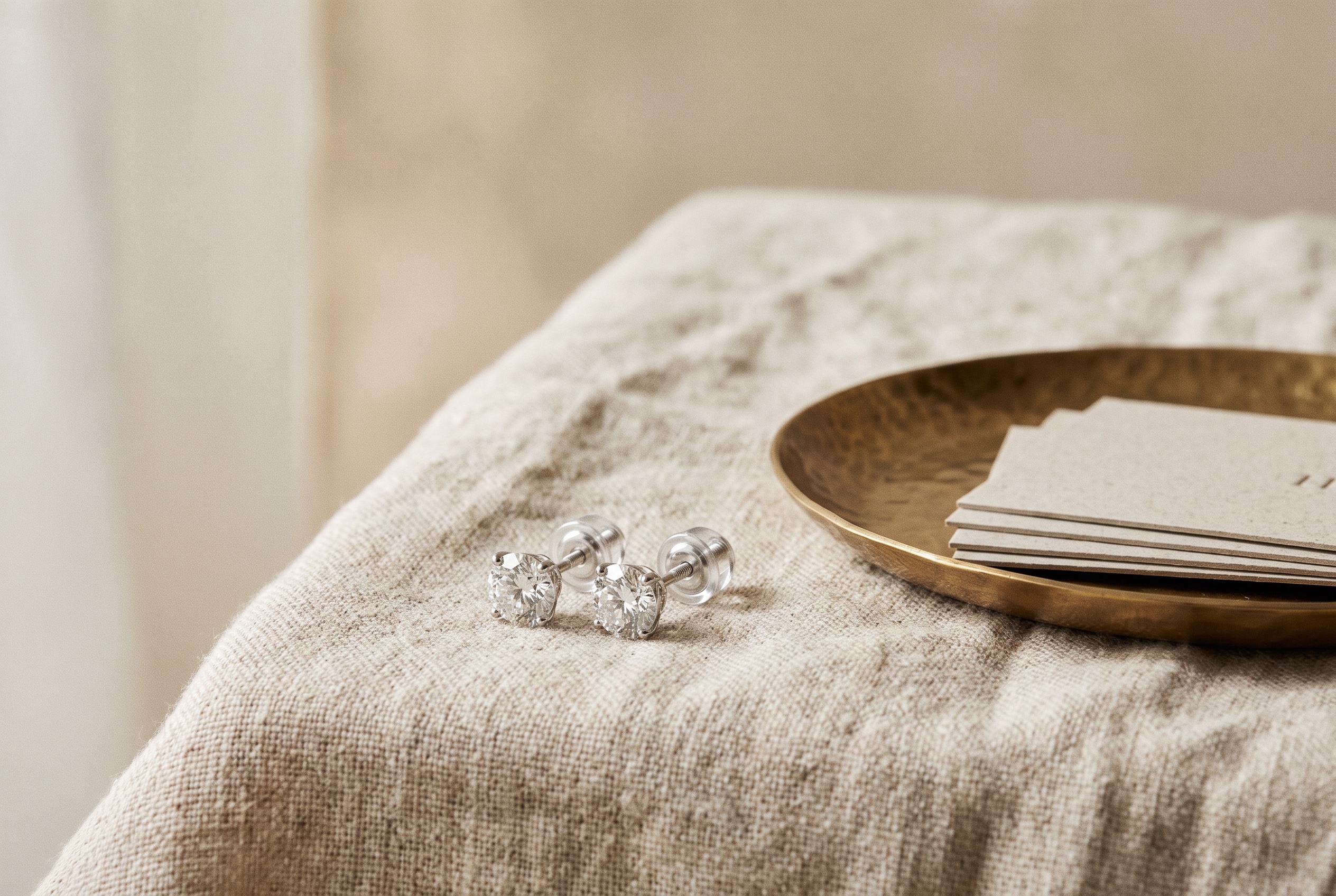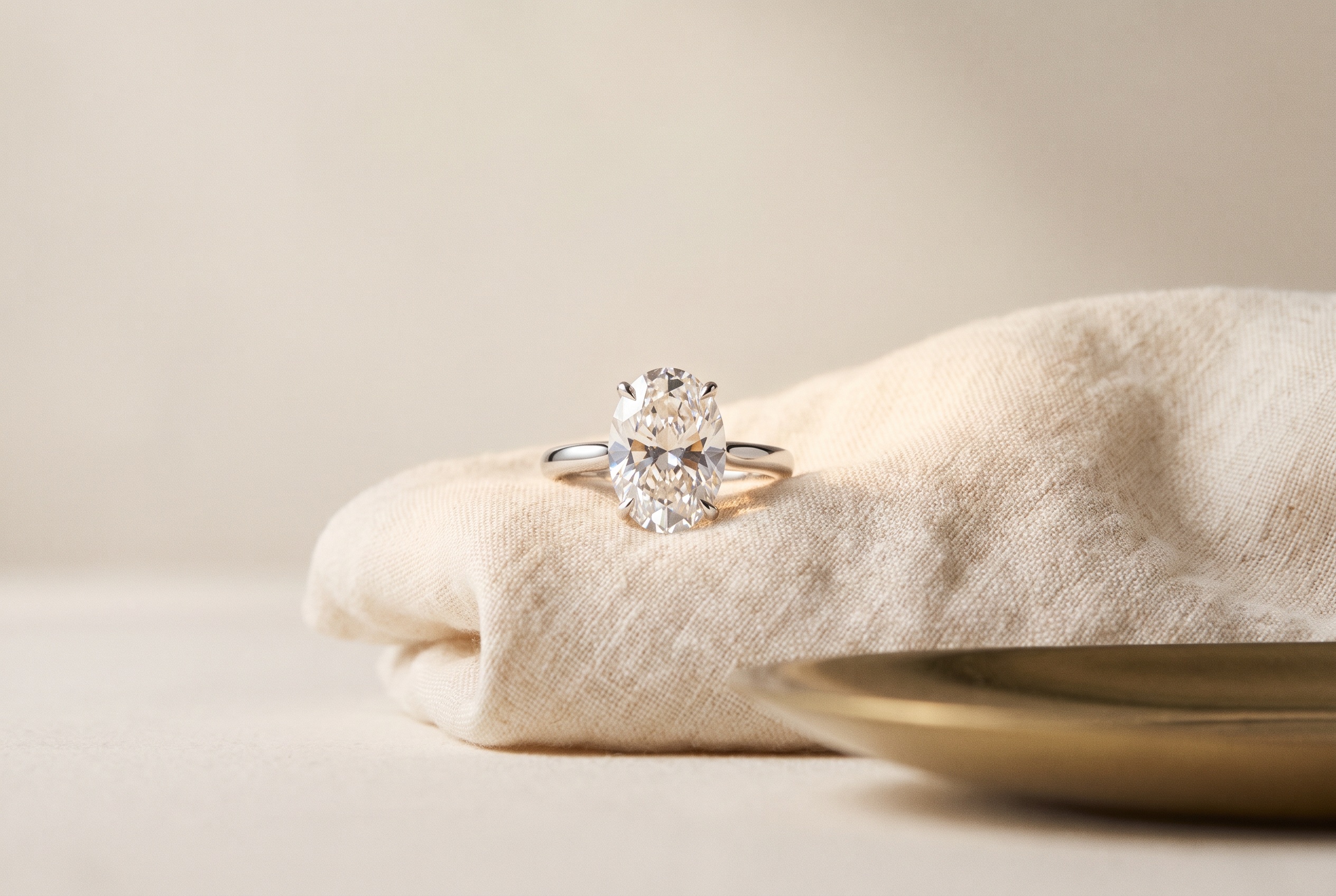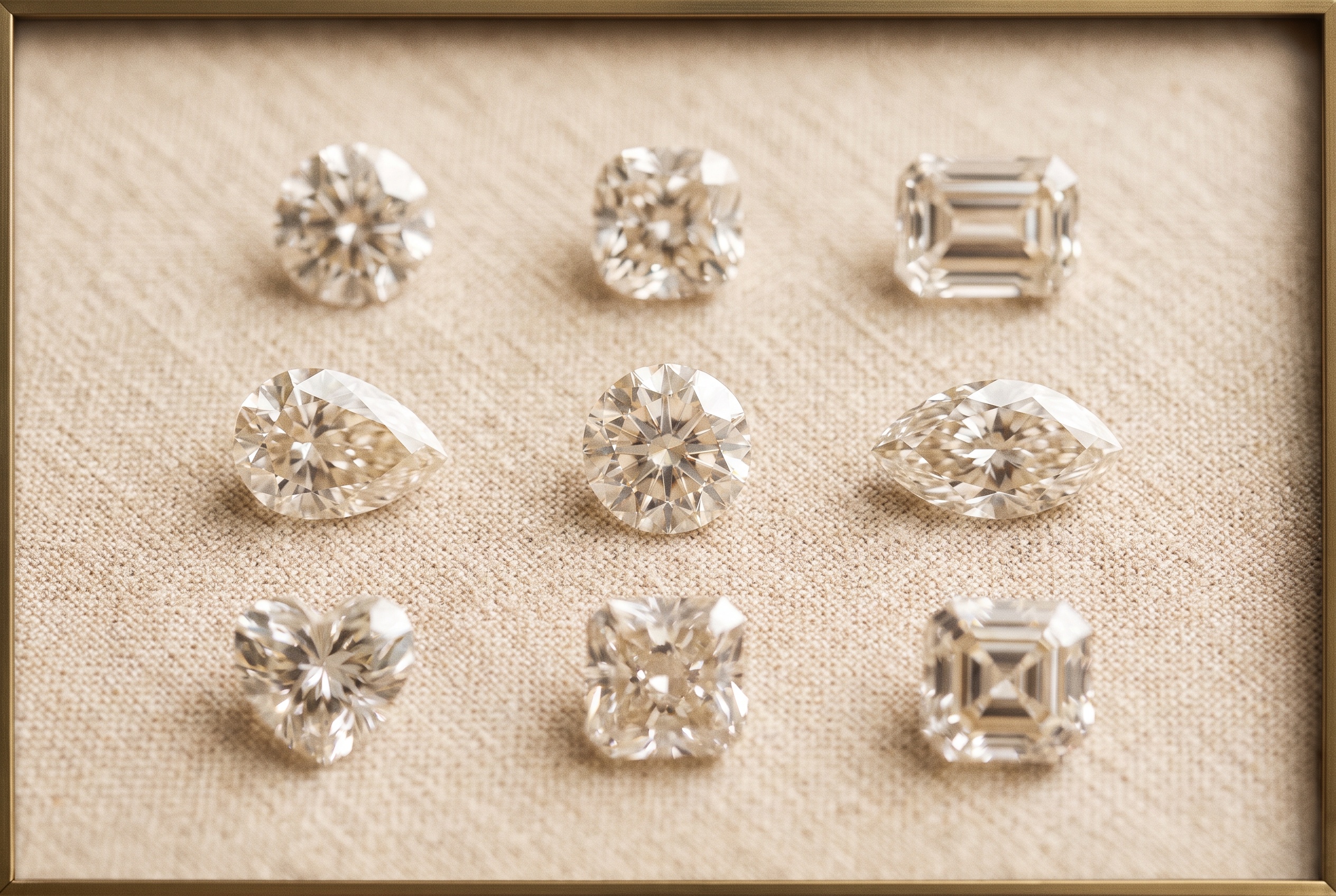

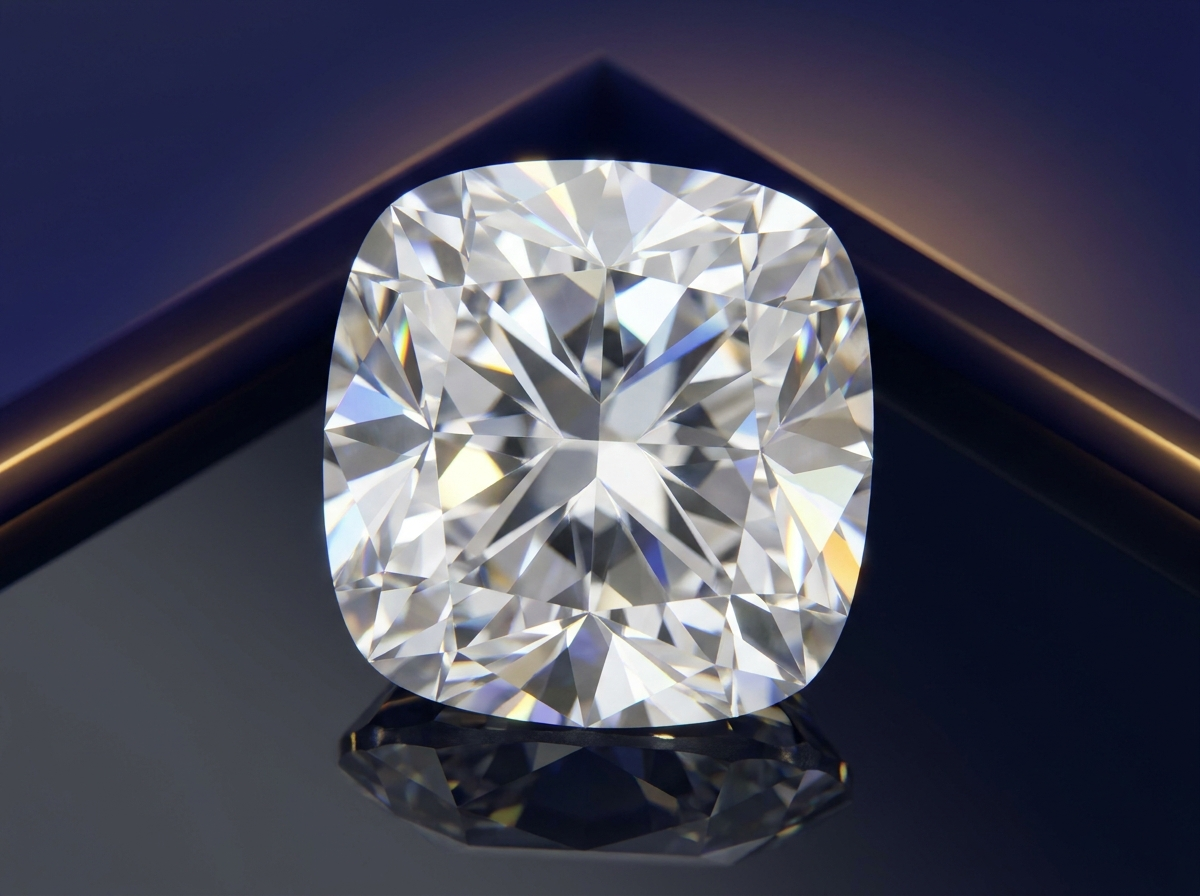
A cushion brilliant uses a standard brilliant facet arrangement — around 58 facets — on the pillow-shaped cushion outline, producing large, bright flashes. A cushion modified brilliant keeps the same rounded-corner, square-to-rectangular silhouette but adds extra facet rows, pushing the total to roughly 61–70+ facets and trading big flashes for a denser, more granular sparkle pattern trade buyers usually call "crushed ice." Both are stocked at Guru Diam across a 382-piece cushion inventory, CVD-grown and IGI-certified, ready to move on trade accounts out of New York and Los Angeles. Everything past that one-line distinction is where most jewelers, and a fair number of diamond sellers, start guessing — so this is a facet-by-facet breakdown of what actually separates the two, why it changes how a stone grades, prices, and sells, and how to match the right one to a client brief before you memo either.
This is not a general cushion-cut primer — that ground is already covered in Guru Diam's broader cushion guides. This piece stays narrow, on purpose: the technical difference between cushion brilliant and cushion modified brilliant facet patterns, and what that difference means for a wholesale buyer standing at a case deciding which one to pull.
What Buyers Mean By "Cushion Brilliant" vs. "Cushion Modified Brilliant"
Both terms describe the same outline — a squarish or rectangular shape with rounded corners, sometimes called "pillow cut" in retail-facing language. The outline is identical enough on a loupe check that a jeweler flipping through a parcel by silhouette alone can't reliably tell them apart. The split happens on the crown and pavilion: how many facets are cut, in what pattern, and at what angles.
Cushion brilliant follows the classic round-brilliant facet logic — kite facets, star facets, upper and lower girdle facets — mapped onto the cushion outline. It's the more traditional faceting choice and the one most buyers picture by default when a client says "cushion cut."
Cushion modified brilliant starts from the same brilliant logic, then adds a second layer of facets — extra rows on the pavilion, sometimes the crown too — splitting each of the standard facets into two or more smaller ones. In the trade this is often shorthanded as "double cushion" faceting, because the facet count roughly doubles in the areas where the extra rows sit. Some cutters and certification reports also use "cushion modified brilliant cut" as the formal shape descriptor, which is the language you'll see on an IGI or GIA report.
Neither term refers to a different rough source, a different growth process, or a different quality tier — it's purely a faceting decision made at the cutting wheel, which is exactly why two stones with identical carat weight, color, and clarity grades can look meaningfully different face-up.
Facet Structure: Counting the Difference
Facet count is the one spec that actually defines the split, so it's worth being precise about where the extra facets go rather than just citing a number.
Standard Cushion Brilliant: The 58-Facet Arrangement
A standard cushion brilliant carries the conventional brilliant-cut facet map: a table, 8 star facets, 8 kite (bezel) facets, and 16 upper-girdle facets on the crown; a culet or point, 8 pavilion main facets, and 16 lower-girdle facets on the pavilion; plus the girdle itself. That totals to roughly 58 facets — the same count as a round brilliant, just reshaped around a cushion outline instead of a circular one. Each facet is comparatively large relative to the stone's face-up area, which is the structural reason the light return reads as bigger, fewer flashes.
Cushion Modified Brilliant: Extra Facet Rows and the "Double Cushion" Pattern
A cushion modified brilliant takes that same 58-facet base and adds one or more extra rows — most commonly splitting the pavilion mains and/or the upper girdle facets into pairs. The result lands anywhere from roughly 61 facets on a lightly modified stone up to 70-plus on a heavily modified one, depending on how many rows the cutter adds and how deep into the crown the modification extends. Because each individual facet is now smaller, light exits the stone in more, smaller segments — which is the structural cause of the "crushed ice" look rather than a marketing description of it. Buyers sometimes ask whether more facets simply means "better cut" — it doesn't. It's a different optical strategy, not an upgrade.
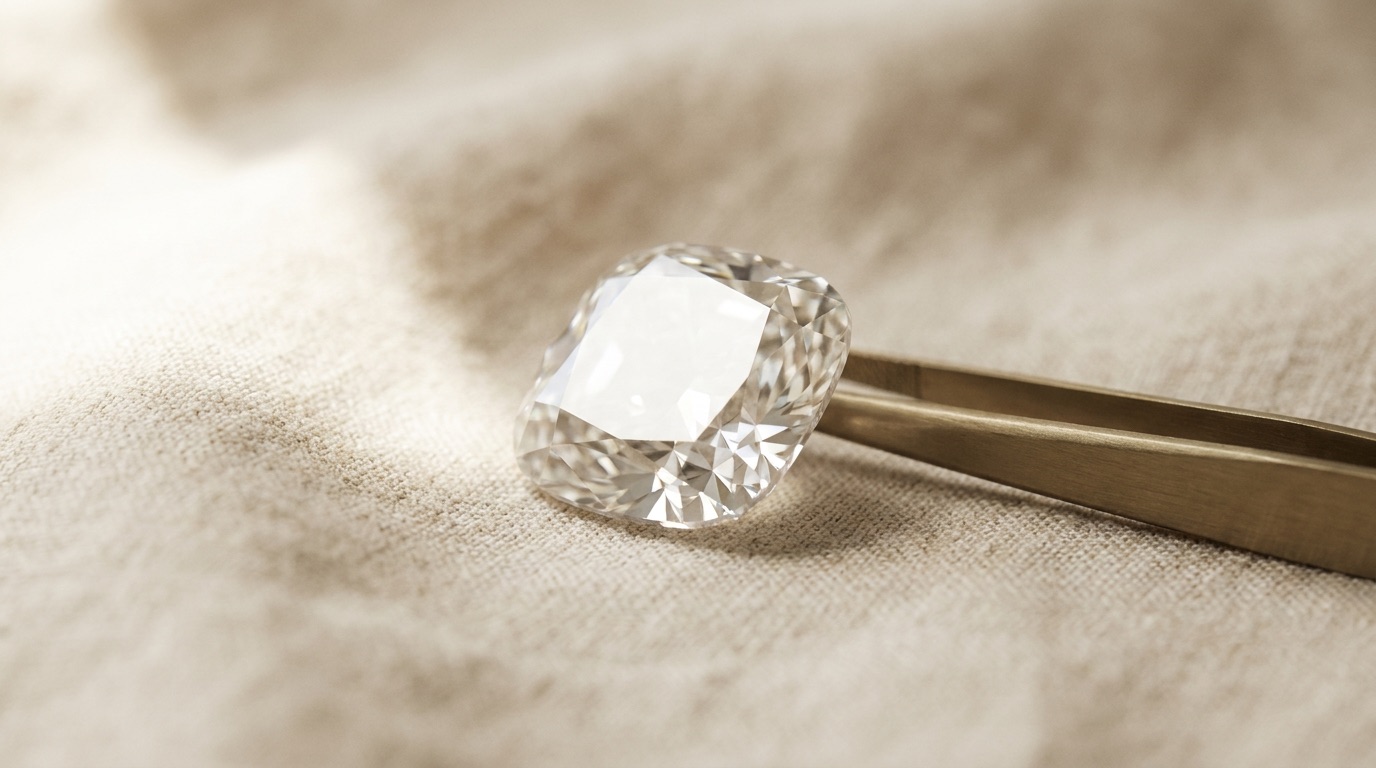
Light Performance: Broad Flash vs. Crushed Ice
Facet count translates directly into how a stone behaves under light, and this is the spec that actually drives most reorders — buyers come back asking for "the sparkly one" or "the classic one" far more often than they cite a facet count.
Standard cushion brilliant produces larger, slower flashes — what the trade calls a "broad flash" look. Tilt the stone and you see fewer, bigger bursts of light and dark as facets catch and lose the light source. It reads calmer, closer to the softer light pattern associated with antique-cut diamonds, even though the facet arrangement itself is modern brilliant-cut, not antique.
Cushion modified brilliant produces smaller, more numerous flashes — the dense, granular sparkle pattern that gives "crushed ice" its name. Under the same light source and the same tilt, a modified stone throws noticeably more individual points of light, packed tighter together, with less contrast between bright and dark zones. It's the pattern most associated with contemporary elongated cushion engagement rings.
The Bowtie Effect, and Why Modified Faceting Manages It Better
Elongated fancy shapes — cushion included, once the length-to-width ratio pushes past roughly 1.15–1.20 — are prone to a "bowtie": a dark shadow shaped like a bowtie that sits across the center of the stone where light exits the pavilion at an angle that doesn't return to the eye. It's a proportion issue, not a clarity or color issue, and it shows up regardless of grade.
Modified faceting addresses bowtie more effectively than standard faceting at certain proportions, because the extra facet rows break up the pavilion into smaller reflective zones — there's less contiguous surface for a single dark shadow to form across. It doesn't eliminate bowtie outright on every proportion, and a poorly cut modified stone can still show one, but as a general pattern, buyers sourcing elongated cushions (length-to-width above roughly 1.30) should expect modified faceting to outperform standard brilliant faceting on bowtie control, all else equal. This is one of the most common reasons a client brief lands on modified rather than standard — not the sparkle style itself, but bowtie management on an elongated stone the client already picked out.
Outline and Proportion: Where the Two Cuts Actually Converge
It's worth being direct about what does not change between the two: outline shape, corner rounding, and the square-to-rectangular length-to-width range are all independent of facet pattern. A buyer can order a square cushion (length-to-width close to 1.00) in either standard or modified faceting, and the same is true for an elongated cushion pushing toward 1.40–1.50. Facet pattern and outline shape are two separate spec decisions, not a linked pair — which is exactly why they get confused. A client asking for "an elongated crushed-ice cushion" is specifying outline and faceting in the same sentence, and both need to be confirmed separately on the order, because a modified facet pattern doesn't automatically imply an elongated outline, and an elongated outline doesn't automatically imply modified faceting.
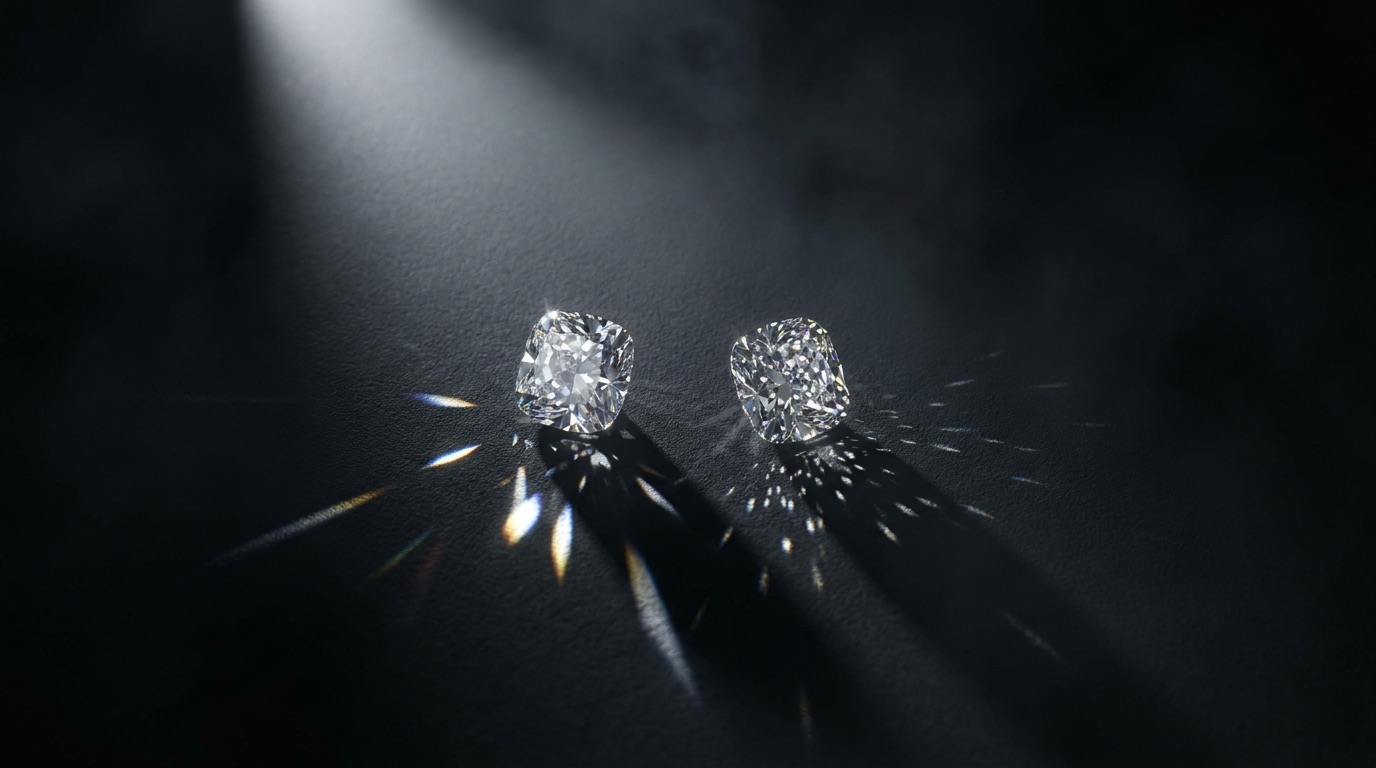
Where True Antique Cushion Cuts Fit — And Why They're a Different Category
One conflation worth clearing up before it costs a client a reorder: neither cushion brilliant nor cushion modified brilliant is an antique cut, even though the crushed-ice look on a modified stone can visually echo the soft, scattered light pattern people associate with old-style diamonds. Both fall in the regular fancy, mid-market tier alongside emerald, asscher, oval, pear, marquise, radiant, princess, and heart — modern cuts with modern brilliant-cut logic underneath, whatever the outline looks like.
True antique cushion-outline stones — Old Mine Cut and Old European Cut — are a separate category with a different facet map entirely: fewer, larger, less symmetrical facets, a higher crown, a smaller table, and open culets on some historical examples, all optimized for candlelight rather than modern point-source lighting. They're priced, sourced, and positioned differently, and Guru Diam carries them as part of a distinct antique-cut program. If a client specifically wants an Old Mine or Old European stone rather than a modern cushion brilliant or modified brilliant, that's a different order entirely — worth confirming up front, because "antique-looking" and "antique-cut" get used interchangeably by end clients in ways that don't hold up at the case.
How Guru Diam Sources and Cuts Both Cushion Styles
Both cushion brilliant and cushion modified brilliant in Guru Diam's inventory are CVD lab-grown and cut in-house, which is what makes stocking both facet patterns at meaningful depth possible in the first place — a supplier reliant on outside-cut parcels is at the mercy of whatever facet mix happens to arrive that week. Cutting in-house means facet pattern is a production decision made against actual open orders and reorder history, not a guess.
In practice that means a buyer requesting a specific facet pattern against a specific outline and carat weight — an elongated 2.50ct cushion modified brilliant for a bowtie-sensitive client, say — is asking for a spec that gets cut to that spec, rather than filtered out of whatever's already sitting in a parcel. The 382-piece cushion count spans both facet patterns and a range of outlines and carat weights, and it's actively replenished rather than treated as a static list.
Grading and Quality: How Facet Pattern Changes What You're Grading For
Color, clarity, and cut grading criteria don't change between the two facet patterns — a D-color stone is D-color regardless of how many facets it carries — but facet pattern does change how a given clarity grade actually reads face-up, which matters more to a buyer than the grade on paper.
Standard cushion brilliant's larger facets mean inclusions have more contiguous clean surface to hide behind, but also more open real estate where a visible inclusion sits exposed under a single flash rather than broken up by adjacent facet lines. Cushion modified brilliant's smaller, more numerous facets tend to conceal small inclusions more effectively — the busier light pattern and higher facet-line density give the eye less continuous clean space to focus on, which is part of why modified faceting is a common recommendation for clients working a tighter clarity budget who still want an eye-clean face-up result. This isn't a reason to sell a lower clarity grade as equivalent — it's a reason to walk a client through why an SI1 modified cushion and an SI1 standard cushion can look different side by side under the same loupe, so nobody's surprised at the counter.
Cut grade itself is more nuanced on fancy shapes than round brilliants generally — cushion cuts (both patterns) don't carry the same standardized cut-grade scale that round brilliants do on major lab reports, so proportion, symmetry, and polish notes on the certificate matter more here than a single letter grade would.
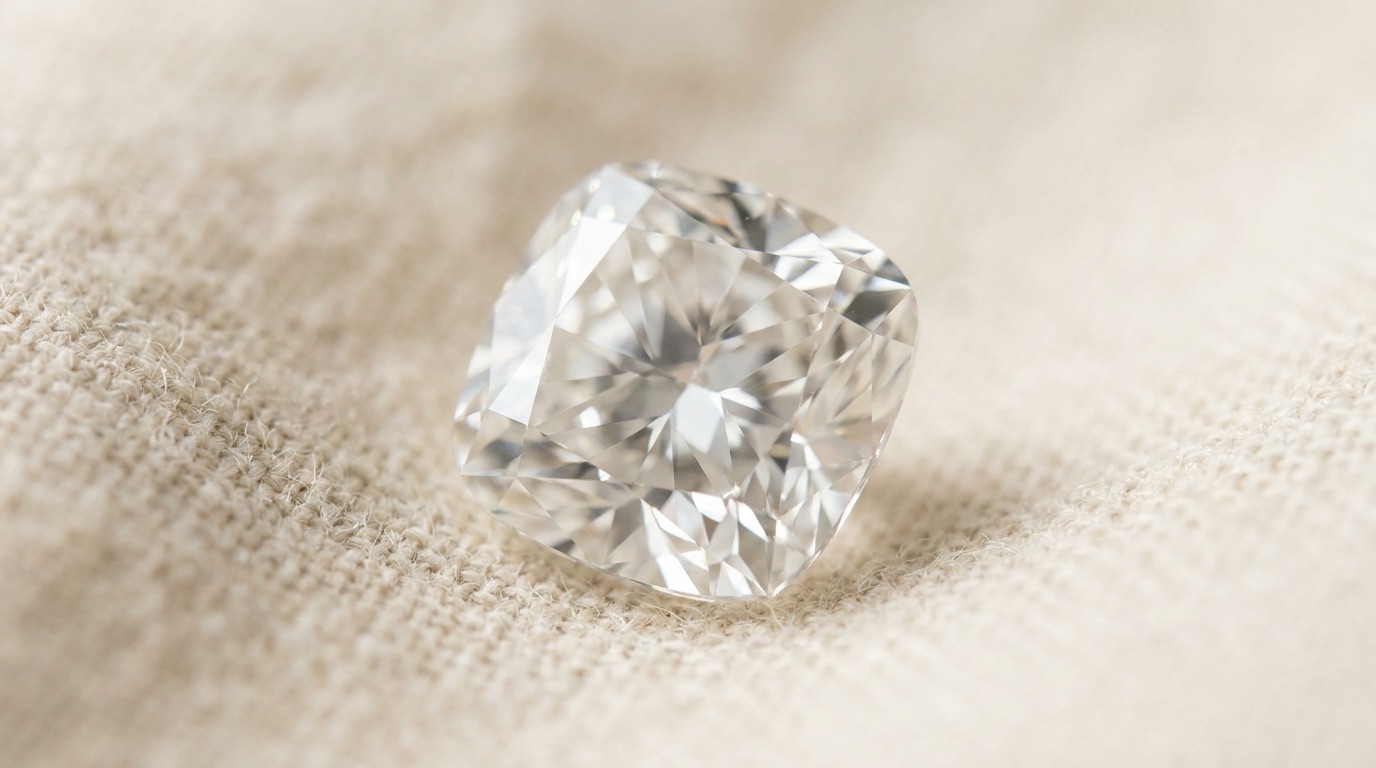
Pricing Factors: What Moves Cost Between the Two Patterns
Facet pattern alone is a modest price factor compared to carat weight, color, and clarity — but it isn't nothing, and buyers pricing out a memo should know where it shows up.
- Cutting time and labor: more facets means more cutting and polishing passes, which is a real production-cost input on modified stones versus standard.
- Yield from rough: outline and proportion (not facet pattern) are the bigger yield drivers, but achieving clean facet junctions on a heavily modified pattern can narrow the tolerance a cutter is working within.
- Market demand skew: demand between the two patterns shifts with bridal trend cycles — when elongated, crushed-ice cushions are trending in engagement ring styling, modified stones in that outline range see tighter supply relative to demand, which shows up as pricing pressure independent of the cutting-cost difference.
- Carat weight and shape still dominate: the price delta between a well-matched standard and modified cushion at the same carat, color, and clarity is generally a smaller swing than moving a half color grade or a clarity tier — don't let a client anchor on facet pattern as the main cost lever when it isn't.
Styling and Use-Case Guidance
When to Stock and Recommend Cushion Brilliant
Standard cushion brilliant is the safer default recommendation for clients who describe wanting something "classic" or "romantic" without a specific reference image, for square or near-square outlines where bowtie risk is minimal to begin with, and for solitaire settings where the goal is a clean, uncluttered light pattern that reads well from across a room rather than up close under a macro lens. It also pairs naturally with halo and vintage-inspired settings, where the broader flash pattern doesn't compete visually with the metalwork.
When to Stock and Recommend Cushion Modified Brilliant
Cushion modified brilliant is the stronger recommendation for elongated outlines where bowtie control matters, for clients specifically referencing "crushed ice" or showing a reference image with dense, sparkly light pattern, and for east-west and three-stone settings where the stone is viewed up close and the denser sparkle reads as more dimension. It's also the more forgiving choice on clarity-constrained budgets, per the concealment behavior covered above — a genuinely useful talking point when a client's carat and clarity targets are in tension.
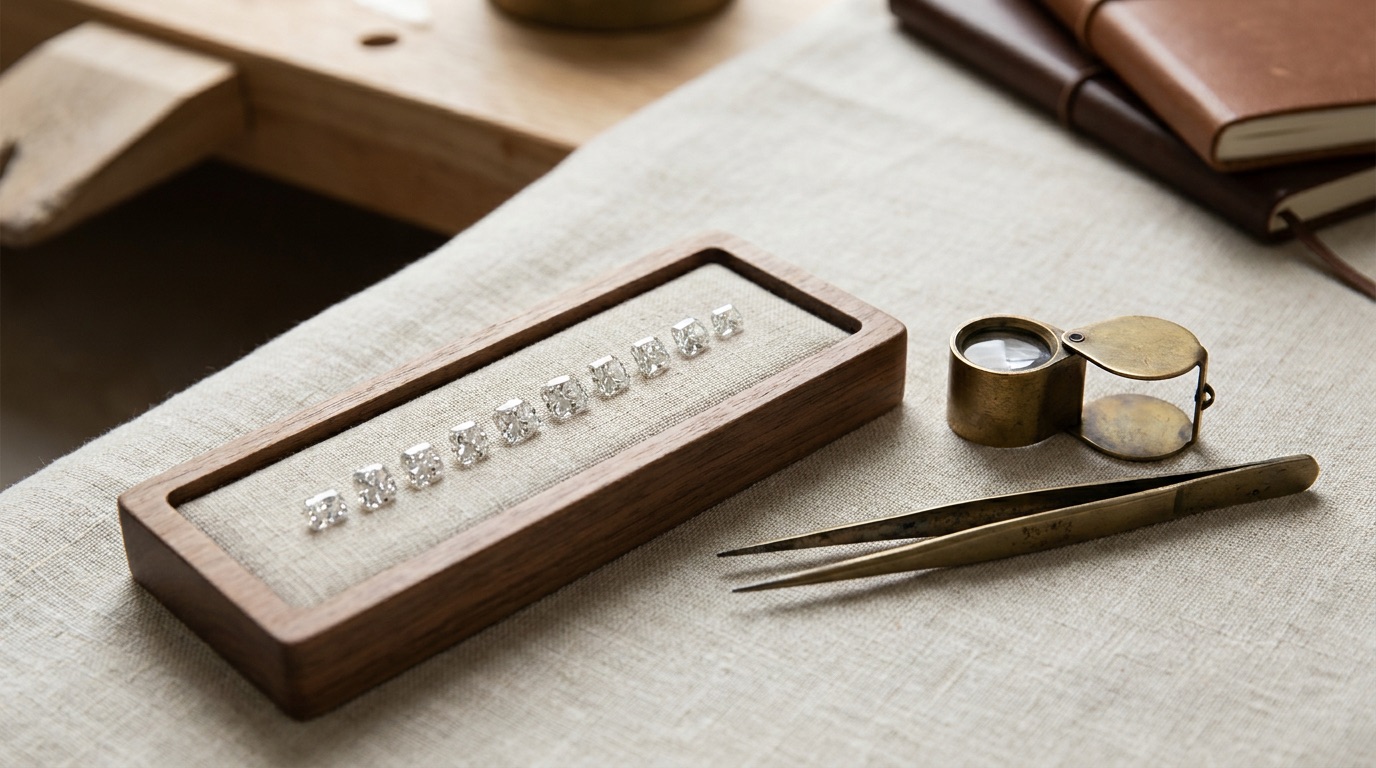
Buyer Decision Guide: Matching Facet Pattern to the Client Brief
When a client brief doesn't specify facet pattern outright, four questions get to the right answer fast:
- What's the outline length-to-width ratio? Above roughly 1.30, lean modified for bowtie control unless the client has explicitly asked for the broad-flash look regardless.
- Did the client reference an image or a word? "Sparkly," "crushed ice," or an Instagram reference showing dense light almost always points to modified. "Classic," "vintage-feel," or "soft sparkle" points to standard.
- What's the setting? Solitaire and halo settings favor standard's cleaner flash; east-west, three-stone, and settings designed to be viewed close-up favor modified's denser pattern.
- Where's the clarity budget? If the client is stretching carat weight against a tighter clarity grade, modified's concealment behavior is worth raising as part of the conversation, not just the facet aesthetics.
The comparison below summarizes the split at a glance for a quick counter reference:
| Attribute | Cushion Brilliant | Cushion Modified Brilliant |
|---|---|---|
| Outline | Square to rectangular, rounded corners | Square to rectangular, rounded corners (identical range) |
| Facet count | ~58 facets | ~61–70+ facets |
| Flash size | Larger, slower flashes | Smaller, more numerous flashes |
| Overall light pattern | "Broad flash," softer / antique-adjacent look | "Crushed ice," dense-sparkle look |
| Bowtie resistance (elongated outlines) | Standard resistance, proportion-dependent | Generally stronger, proportion-dependent |
| Small-inclusion concealment | Moderate — larger facets, more open surface | Stronger — busier facet pattern hides more |
| Common client language | "Classic," "vintage-feel," "romantic" | "Crushed ice," "sparkly," "modern" |
| Best-fit settings | Solitaire, halo | East-west, three-stone, close-viewed |
Certification and Documentation for Both Cuts
Both cushion brilliant and cushion modified brilliant are available IGI-certified from Guru Diam's on-hand inventory, with GIA and GCAL certification also available for buyers who need a specific lab for a specific client or market. The certificate will typically list the shape as "cushion brilliant" or "cushion modified brilliant" explicitly — that shape field is the fastest way to confirm facet pattern on paper before a stone ships, rather than relying on a photo or a verbal description from a prior conversation. For fancy-shape stones like these, pay closer attention to the proportions, symmetry, and polish notes on the report than to a single overall cut grade, since cushion outlines don't carry the same standardized cut-grade framework round brilliants do on major lab reports.
How to Order Cushion Diamonds Wholesale from Guru Diam
Cushion brilliant and cushion modified brilliant stones are on-hand inventory, not made-to-order lead-time items — trade accounts can pull from the 382-piece cushion count immediately rather than waiting on a cutting queue. To place an order:
- Open or confirm a trade account. Wholesale pricing and inventory access are trade-only.
- Specify facet pattern explicitly on the request — "cushion brilliant" or "cushion modified brilliant" — along with outline (square vs. elongated, and target length-to-width if elongated), carat weight, color, and clarity targets.
- Request certificate lab preference — IGI, GIA, or GCAL — if the client or market has a preference.
- Confirm ready-to-ship status against on-hand inventory before quoting a client, since loose-stone availability is inventory-driven, not a fixed turnaround window.
Reach the trade desk via WhatsApp Business for fast stone-matching against a live client brief, or contact the New York Diamond District office at 36 West 47th Street, Suite 601A, or the Los Angeles office at 607 South Hill Street, to work an order directly.
Frequently Asked Questions
Is cushion modified brilliant a lower-quality cut than cushion brilliant?
No. Facet pattern is a design choice, not a quality tier — both are cut to the same color, clarity, and craftsmanship standards. Quality is set by the 4Cs and cut precision, independent of which facet arrangement a buyer chooses.
Which one sparkles more, cushion brilliant or cushion modified brilliant?
Neither "sparkles more" in a strict sense — they sparkle differently. Cushion brilliant produces fewer, larger flashes of light; cushion modified brilliant produces more, smaller flashes for a denser "crushed ice" look. Which reads as more eye-catching is a matter of client preference, not a performance difference.
Does cushion modified brilliant really fix the bowtie effect?
It manages bowtie more effectively than standard faceting on elongated outlines in most cases, because the extra facet rows break up the pavilion into smaller reflective zones. It's not a guarantee at every proportion — a poorly cut modified stone can still bowtie — so proportions still need to be checked stone by stone.
Can I get an antique-style cushion cut instead of these two?
Yes, but it's a different product category. Cushion brilliant and cushion modified brilliant are both modern, regular-fancy-tier cuts. True antique cushion-outline stones — Old Mine Cut and Old European Cut — use a different facet map entirely and are sourced separately.
Are both cushion facet patterns available in the same carat and clarity ranges?
Generally yes, within on-hand inventory — facet pattern doesn't restrict which carat weights or clarity grades a stone can be cut in. Availability at any given moment depends on current stock, so confirming against live inventory before quoting a client is still the right move.
Which certification labs are available on cushion brilliant and cushion modified brilliant stones?
IGI, GIA, and GCAL are all available. Most on-hand inventory ships IGI-certified by default, with GIA and GCAL available on request for buyers who need a specific lab for a specific client or market.