
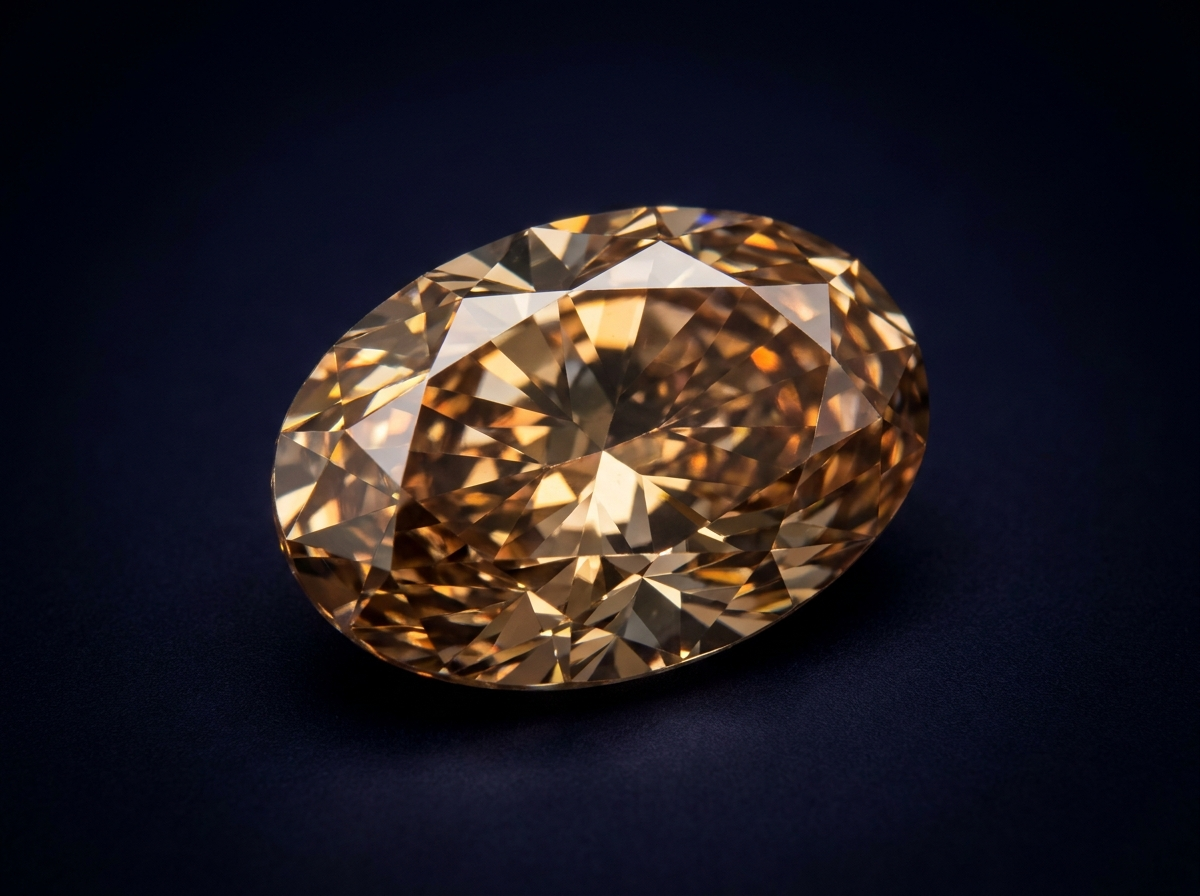
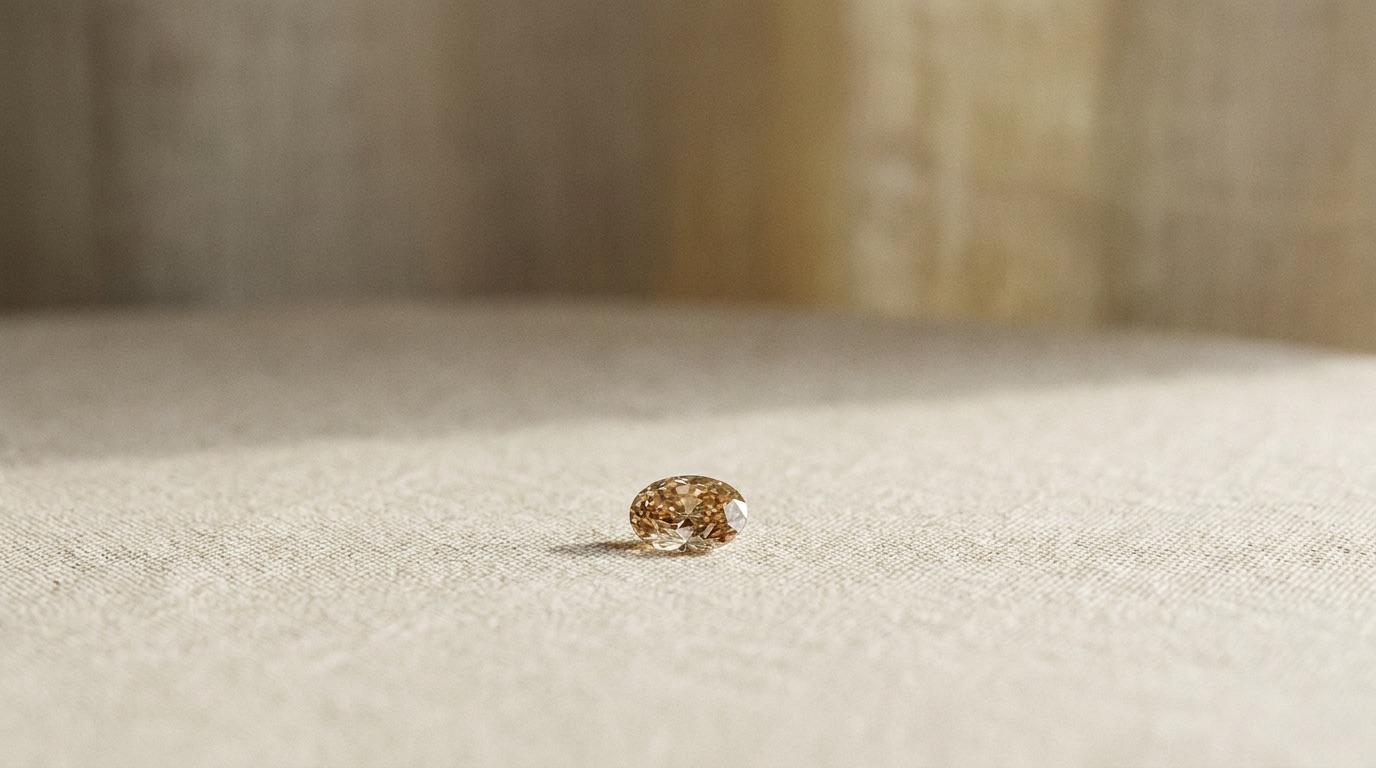
A champagne oval diamond pairs a warm brown-to-golden body color with an elongated brilliant-cut outline — essentially a round brilliant stretched along one axis, with no points or corners. Champagne sits outside Guru Diam's standing certified fancy-color line, which runs Yellow, Pink, Blue, and Green. We source champagne ovals through our CVD production network on a custom, made-to-order basis — built to the carat, depth of color, and cut precision a specific client order calls for, rather than pulled from a shelf count.
Oval is the shape to reach for when a client wants champagne's warm color with a brighter, more brilliant look than a step cut gives, in an outline that works equally well as a ring center stone or a pendant. This guide covers where the color actually comes from, how the trade grades it, why the oval cut suits it, what to check before committing to a stone, how pricing shakes out against yellow and cognac, and how to place a custom order through Guru Diam.
What is a champagne diamond? Color origin explained
"Champagne" is a trade nickname, not a formal grading term. Both GIA and IGI file these stones under the brown hue family, and the warm, honeyed color that gives champagne its name comes from a completely different mechanism than the color in a fancy yellow or fancy blue diamond.
In a natural stone, yellow comes from nitrogen impurities trapped in the crystal lattice during growth, and blue comes from trace boron. Brown — and by extension champagne — comes from something structural rather than chemical: plastic deformation. As the diamond crystal formed under enormous geological pressure and heat over millions of years, internal graining and lattice distortion scattered light in a way that reads to the eye as an even brown-to-golden tone. No colored trace element is required; the color is a byproduct of how the crystal was physically stressed.
Lab-grown CVD material gets to a comparable look through a different route. CVD growth can leave a warm, brownish residual tint in the as-grown rough from strain in the growing lattice — the same characteristic that most white CVD production is processed to remove before it reaches a jeweler's case. A champagne CVD diamond is typically rough that's left as-grown or only lightly processed, so that warm tone stays intact rather than being fully decolorized. The practical result for a buyer is the same warm hue family either way — natural or lab-grown — even though the physical story behind the color is different.
How champagne diamonds are graded
GIA's formal approach
GIA doesn't issue a report that says "Champagne." Its lab reports grade brown-hue stones on the standard fancy-color axes — hue, tone, and saturation — using terms like Light Brown, Fancy Brown, Fancy Dark Brown, and Fancy Deep Brown. "Champagne" and "Cognac" are trade overlays on top of that hue family: lighter, more golden-brown stones read as champagne; darker, more saturated stones shade into cognac. IGI and GCAL follow the same general hue/tone/saturation logic on their own report formats, so a stone graded "Fancy Light Brown" by one lab and called "champagne" by a dealer is describing the same diamond two different ways.
The trade C1–C7 shorthand
Outside the formal lab reports, the wholesale trade commonly shorthand-grades champagne stones on a C1 through C7 scale — C1 being the lightest, faintest straw-champagne tone, running through progressively deeper golden-brown territory, to C7 at the darkest end, which is where champagne visually hands off to cognac and chocolate-brown territory. This scale isn't issued by any certification lab; it's a market convention buyers and sellers use as shorthand on the phone or in a spec sheet, and it's worth confirming which scale a supplier is using before comparing quotes, since "champagne" alone covers a wide color range.
For sourcing purposes, know roughly where on that range your client wants to land before requesting stones — a C1–C2 reads almost like a warm white diamond with a whisper of color, while a C5–C7 reads as a deliberate, unmistakably brown-gold statement stone. Both are champagne; they photograph and wear very differently.
| Trade grade | Approximate color depth | Face-up look |
|---|---|---|
| C1–C2 | Light champagne | Warm, faint golden cast — reads close to white in some lighting |
| C3–C4 | Medium champagne | Clearly warm honey-gold, the most common bridal request |
| C5–C6 | Dark champagne | Deep, saturated brown-gold — a statement color |
| C7 | Champagne-to-cognac border | Rich cognac-brown, at the edge of the champagne trade nickname |
The oval cut: facet structure and why it suits champagne color
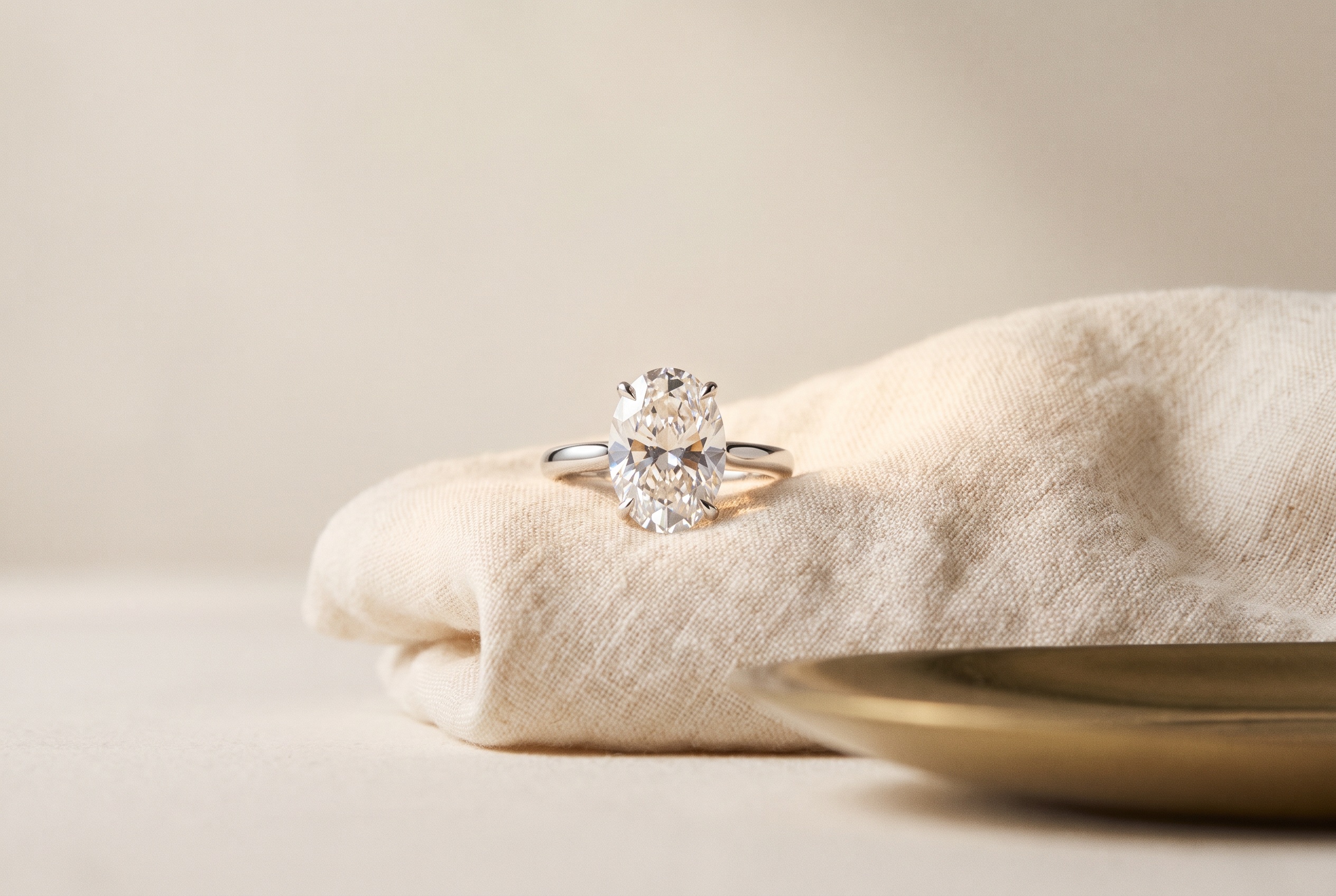
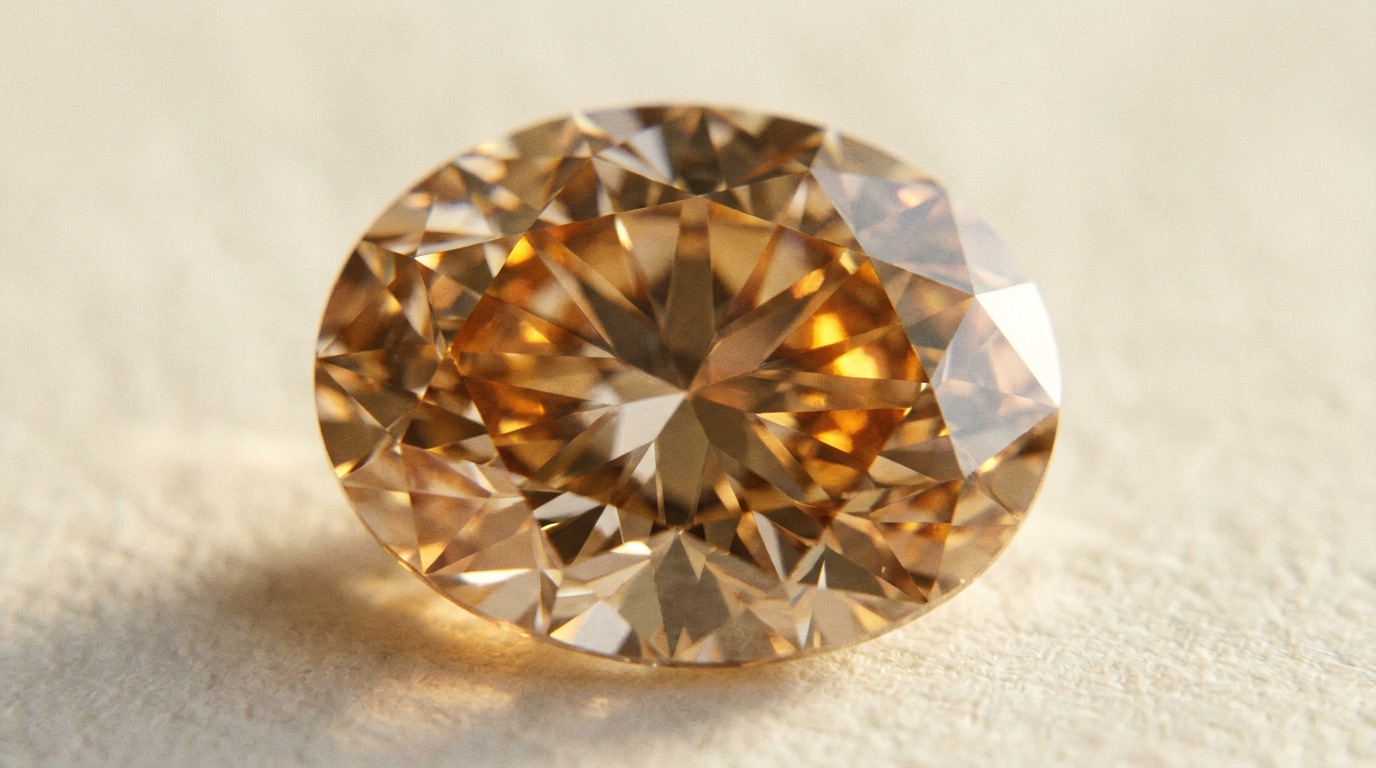
An oval is a full brilliant facet pattern applied to an elongated, rounded outline — no points, no hard corners anywhere on the stone. Where an emerald cut shows champagne's color as one broad, flat wash, an oval's brilliant faceting breaks light into scintillation and sparkle across the same warm hue, giving champagne a livelier look. The elongated shape also does real work for color display: stretching the outline increases the visible face-up surface area without changing the carat weight, so more of the stone's warm color shows per carat than a round cut from the same rough would show.
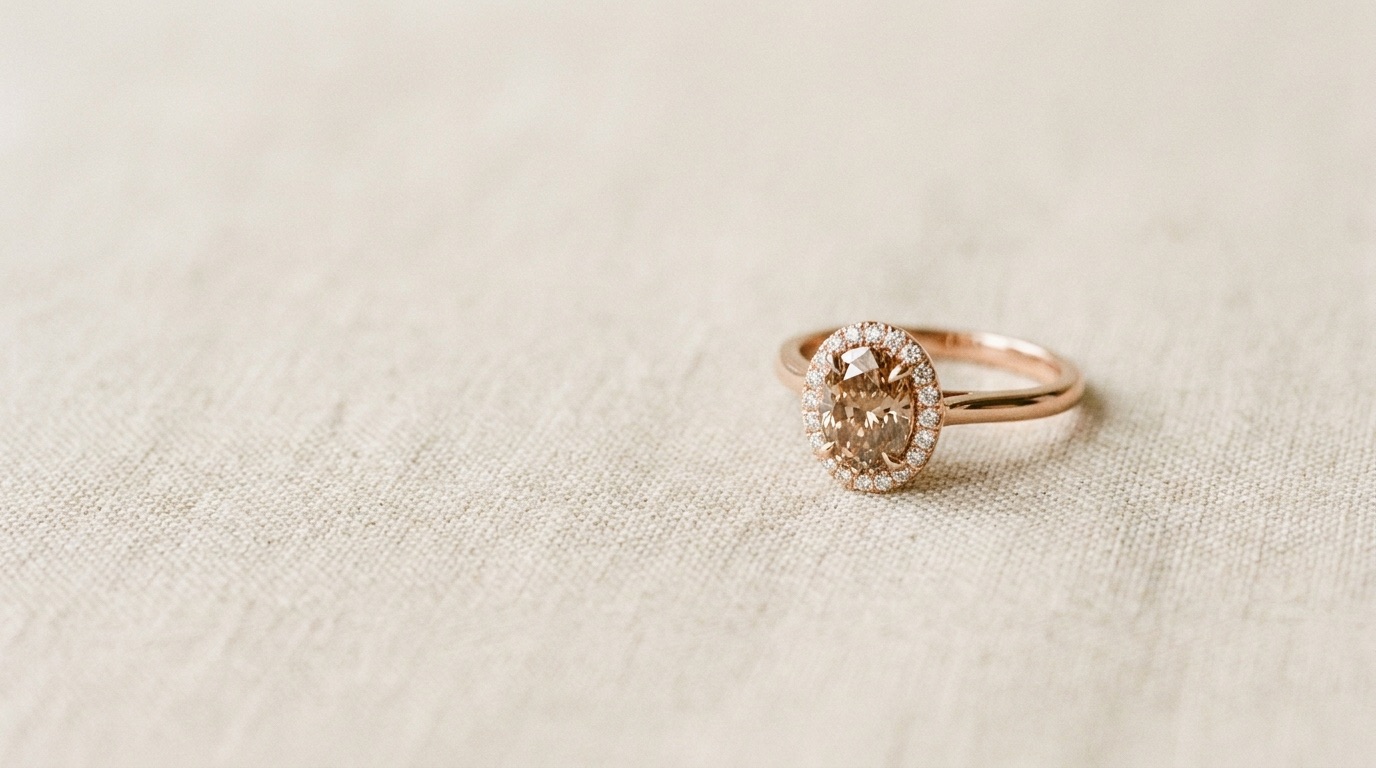
The versatility runs both directions on setting style. In yellow or rose gold with vintage-inspired details, a champagne oval reads warm and antique in feel, even though the oval itself is a modern cut, not a true antique-style shape; in a clean modern setting, the same stone reads as a soft, understated alternative to a traditional white center stone. That range is a genuine advantage when pitching the stone to a retail client rather than just a description on a spec sheet.
Facet count and proportion also interact with color in ways worth flagging to buyers. A slightly deeper-cut oval concentrates more color per facet, useful for a client who wants a lighter C1–C2 rough to still read as a confident champagne; a shallower cut spreads the same color thinner, which can be the right call on a darker C6–C7 stone that would otherwise look almost black in certain light.
Cut quality and the bow-tie effect in champagne ovals
Because an oval has no points to anchor the eye, a poorly proportioned stone can show a "bow-tie" — a dark shadow band across the center, running along the long axis — more visibly than a round would. This is a cutting and light-return issue, not a color-grade issue, and it matters just as much on a champagne stone as on a colorless one, sometimes more: on a lighter C1–C2 champagne, a heavy bow-tie can read as a dull patch that undercuts the whole point of buying a brighter, more brilliant alternative to a step cut.
A few practical checks before committing to a specific stone for a client:
- Length-to-width ratio in the 1.35–1.50 range is the classic proportion most buyers expect from an oval; stones outside that range can look either stubby or overly slim in a finished ring.
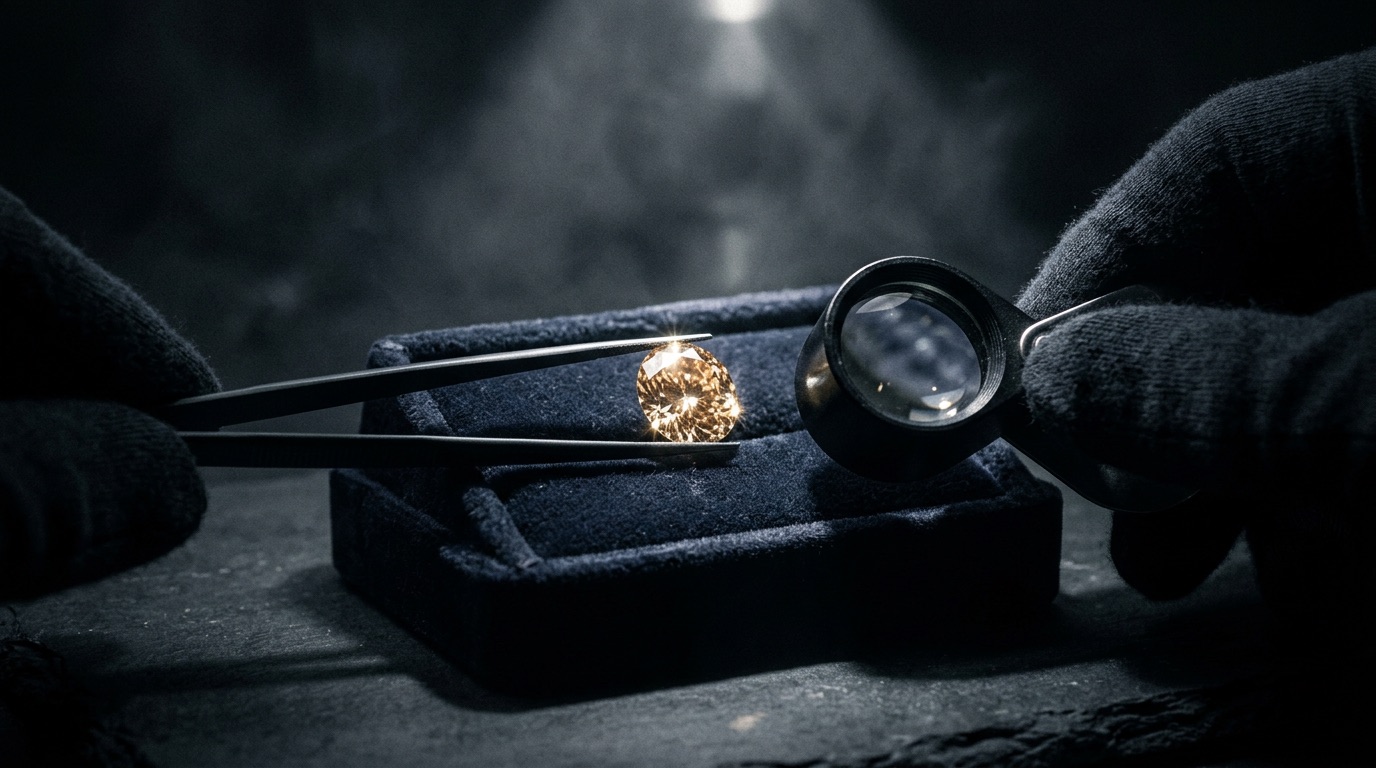
- Ask for a face-up photo or video, not just the cert numbers — bow-tie severity and overall brightness don't show up in a grading report the way they show up on the actual stone.
- On darker C5–C7 stones, a visible bow-tie is harder to spot against the deeper body color, so it's worth a closer look specifically on those, not just the lighter end of the range.
Light performance and color grade are two separate questions. A stone can carry an excellent color grade and still show a distracting bow-tie, or vice versa — always check both before quoting a client.
Champagne ovals in today's wholesale trade context
Champagne has settled into a specific lane in the bridal and fine jewelry trade: it's the warm-color option for a client who wants something other than a traditional white center stone but isn't ready to commit to the higher price point and more limited availability of a certified fancy yellow, pink, or blue. Search interest for "champagne diamond ring" and "champagne diamond engagement ring" consistently outpaces interest in the raw material term "champagne diamond wholesale," which tells you where the demand actually sits — this is overwhelmingly a finished-jewelry, client-facing color choice, not a loose-stone speculative buy.
That has practical implications for how a jeweler should stock and pitch it. Champagne rarely moves as a walk-in loose-stone sale the way a round brilliant white diamond does; it moves as a considered custom order, usually alongside a conversation about setting style, metal color, and how the finished piece will photograph. Vintage-inspired and antique-style settings have kept champagne in steady rotation because the warm tone reads naturally against yellow and rose gold, but modern minimalist settings have also picked it up as a quieter, less expected alternative to a plain white stone.
Cognac — the darker end of the same brown hue family — has carved out its own smaller but distinct niche as a bolder statement color, particularly in fashion jewelry rather than bridal. Understanding where a client's request actually sits on the champagne-to-cognac spectrum before sourcing saves a round trip on the wrong depth of color.
How Guru Diam sources champagne oval diamonds
Guru Diam's standing certified fancy-color loose-stone catalog covers Yellow, Pink, Blue, and Green — champagne and cognac aren't part of that standing line. For a champagne oval request, we source through the same CVD production network and trade relationships we use for the rest of our catalog, built to your specified carat weight, color depth (light through dark champagne, or into cognac territory if that's the request), and cut proportions, rather than pulled from an on-hand parcel.
What stays consistent regardless of color is the rest of how we operate: stones are CVD-grown, cut in-house to a full brilliant facet pattern, and certified to whichever lab your client's report needs to reference — IGI, GIA, and GCAL are all available. We work out of our New York Diamond District desk (36 West 47th Street, Suite 601A) and our Los Angeles office (607 South Hill Street, Suite 241), and we sell wholesale, trade-only — no retail markup, one relationship for the champagne request alongside whatever else you're already sourcing from us: antique cuts, fancy color melee, custom engagement rings, and finished jewelry.
Because a champagne order is sourced to spec rather than shipped from existing stock, get the color depth and any cut preferences confirmed with a gemologist before we start sourcing — that single conversation up front is what keeps the delivered stone matching what the client actually pictured.
Quality considerations when buying champagne ovals wholesale
Clarity matters less than color depth and cut
On a colorless diamond, clarity gets outsized attention because inclusions are the main thing standing between the stone and a flawless look. On a champagne stone, the body color does a lot of the visual work on its own, and light inclusions or graining are both more common in brown-hue material and less visually disruptive against a warm background. That doesn't mean clarity is irrelevant — an eye-clean standard still applies, and a heavily included stone will show it — but for champagne specifically, color depth consistency and cut precision (see the bow-tie discussion above) do more to determine how a finished piece actually looks than a marginal clarity upgrade would.
Certification: what IGI, GIA, and GCAL each confirm
Any of the three labs will confirm carat weight, measurements, cut proportions, and a color grade along the hue/tone/saturation axes described earlier — plus, for lab-grown stones, growth method disclosure on the report itself. What varies is report format and which lab a given retail market or client is most comfortable seeing on paperwork; some jewelers have a house preference, and it's worth asking before ordering rather than after the stone arrives with the "wrong" lab's report attached.
For a lab-grown champagne stone specifically, confirm the report explicitly discloses CVD growth — this is standard practice and expected by any client doing due diligence, not a red flag to avoid mentioning.
Pricing factors for champagne oval diamonds
Champagne sits at a meaningfully more accessible price point than certified fancy yellow, pink, blue, or green stones of comparable carat weight, which is a large part of its appeal as a "warm color, lower barrier to entry" option. Within champagne itself, four factors move price the most:
- Depth of color. A dramatic, saturated C6–C7 stone commands more than a subtle C1–C2 in most markets, since the strong color read is what buyers are paying for at that end.
- Carat weight. Standard diminishing-returns curve applies — price per carat climbs as total carat weight climbs, same as any diamond category.
- Cut precision. A well-proportioned oval with strong light return and no distracting bow-tie carries a premium over a stone cut only to preserve carat weight from the rough.
- Certification. A certified stone with a lab report costs more than an uncertified parcel piece, and buyers sourcing for a retail client should generally default to certified for a center stone.
Because champagne is sourced to spec at Guru Diam rather than held as parcel-priced standing inventory, get a quote against your specific carat, color-depth target, and quantity — cost per stone moves with those variables enough that a general per-carat range would be more misleading than useful here.
Styling and retail use-case guidance
Champagne ovals work across a wider range of settings than most fancy colors, which is one reason retail clients respond well to them once they see the stone in person rather than just a spec sheet. A few pairings that consistently perform:
- Yellow or rose gold, vintage-inspired detailing. The warm metal tone reinforces the stone's own warmth; this is the classic champagne pairing and the safest recommendation for a client who isn't sure yet.
- White gold or platinum, minimalist setting. Creates deliberate contrast — the champagne reads as a soft, considered alternative to a plain white center stone rather than a compromise choice.
- Halo settings with white melee. White diamond melee around a champagne center brightens the overall look and makes a lighter C1–C2 center stone read larger and more brilliant.
- Three-stone and side-stone pairings. Champagne pairs naturally with white diamonds or with a second, slightly deeper champagne stone for a tonal look — worth having matched pairs on hand for exactly this request.
- Pendants and stud earrings. Outside bridal, the same oval works as a standalone fashion piece; the elongated shape reads elegant in a vertical pendant drop.
For a custom setting built around a champagne oval, finished pieces run 4–6 days from our New York and Los Angeles desks once the stone and design are confirmed — that turnaround applies to the finished jewelry build, not to sourcing the loose stone itself, which depends on the color depth and quantity requested.
Champagne vs. yellow vs. cognac: how the fancy colors compare
Buyers new to fancy color often lump champagne in with yellow, or assume cognac is just "dark champagne" and nothing more. Worth separating out clearly when advising a client:
| Champagne | Fancy yellow | Cognac | |
|---|---|---|---|
| Hue family | Brown (light-to-medium) | Yellow | Brown (dark, saturated) |
| Color origin (natural) | Structural graining | Nitrogen impurity | Structural graining |
| Typical price position | Most accessible | Mid-range, higher than champagne | Comparable to champagne, sometimes a premium for depth |
| At Guru Diam | Custom-sourced on request | Standing certified line | Custom-sourced on request |
| Common use | Bridal, warm-tone alternative to white | Statement engagement and fashion pieces | Bold fashion jewelry, less common in bridal |
Fancy yellow gets its color from a different mechanism entirely (nitrogen impurity rather than structural strain), which is part of why it commands a different price tier and why Guru Diam carries it as a standing certified loose-stone line while champagne and cognac are sourced to order. If a client is choosing between the two, the honest framing is: yellow reads as a brighter, more saturated "sunshine" color and sits in a higher price bracket with readier availability; champagne reads warmer and more muted, costs less, and is sourced per order rather than picked from a parcel.
How to order champagne oval diamonds wholesale
Because champagne is sourced to spec rather than shipped from standing stock, ordering starts with a conversation rather than a cart checkout. Open a verified wholesale account, then book time with a gemologist to confirm carat weight, color-depth target (light through dark champagne, or cognac), oval proportions, and which certification lab — IGI, GIA, or GCAL — your client's paperwork needs. From there we source and cut to that spec through our production network, working alongside any other order you already have with us, whether that's fancy color melee, antique cuts, or a full custom ring build.
One supplier, one relationship covers the champagne request alongside the rest of a jeweler's sourcing — that consolidation is the practical reason most trade accounts route a one-off color request through an existing vendor rather than opening a new account just for one stone.
Ready to source a champagne oval for a client? Open a verified wholesale account at /signup and book time with a gemologist at /book-appointment to scope the order.
FAQ
What is a champagne oval diamond?
A champagne oval diamond is a warm brown-to-golden colored diamond cut in an elongated brilliant shape with no points or corners — essentially a round brilliant stretched along one axis. The elongation spreads the color across a larger face-up area than a round of the same carat weight, and the full brilliant facet pattern gives the warm color more sparkle than a step-cut shape would.
Does Guru Diam stock champagne oval diamonds?
Champagne isn't part of Guru Diam's standing certified fancy-color loose-stone line, which covers Yellow, Pink, Blue, and Green. We source champagne ovals through our CVD production network on a custom, made-to-order basis, built to your requested carat weight, color depth, and cut proportions — reach out with your spec and we'll source and cut against it.
How is champagne diamond color graded?
GIA and IGI grade champagne stones under the brown hue family using standard hue/tone/saturation terminology — Light Brown through Fancy Deep Brown. Outside the formal lab reports, the trade commonly shorthand-grades depth of color on a C1 (lightest) to C7 (darkest, bordering cognac) scale, which is a market convention rather than something a certification lab issues.
Is champagne oval brighter or more sparkly than champagne emerald cut?
Yes. Oval uses full brilliant faceting, which breaks light into scintillation and sparkle across the stone's warm color. Emerald cut uses step faceting, which shows the same color as one broad, even wash. Both are the same underlying champagne color — the difference is entirely in how the facet pattern displays it.
How does champagne diamond pricing compare to fancy yellow?
Champagne generally sits at a more accessible price point than certified fancy yellow of comparable carat weight. Within champagne, depth of color, carat weight, cut precision, and certification are the main price drivers. Because Guru Diam sources champagne to spec rather than holding it as parcel-priced stock, request a quote against your specific carat and color-depth target rather than assuming a flat per-carat rate.
How fast can I get a finished custom piece built around a champagne oval?
Once the stone is sourced and the design confirmed, finished custom jewelry runs 4–6 days from our New York and Los Angeles desks. That turnaround covers the jewelry build; sourcing the loose champagne stone itself depends on the color depth and quantity requested, so confirm both timelines with your gemologist when you book the order.