
Champagne diamonds are warm brown-to-golden colored diamonds — the trade and marketing name for what grading labs classify under the brown color range. They've moved from a bargain-bin fancy color to a shade retail buyers are asking for by name, which puts a real question in front of a wholesale buyer: is there depth behind the demand, or is champagne just a color that's easy to talk about and hard to actually spec, grade, and price with any consistency?
This guide covers what a champagne diamond actually is, how the trade grades depth of color on the C1–C7 scale, where champagne sits against cognac and the primary fancy colors, what drives price, and how to brief a custom order so the stone that shows up matches what you sold. Guru Diam's certified loose fancy color program is built around Yellow, Pink, Blue, and Green — champagne isn't part of that standing line, and we source it to spec as a custom CVD order rather than pulling from open certified stock. More on how that works below.
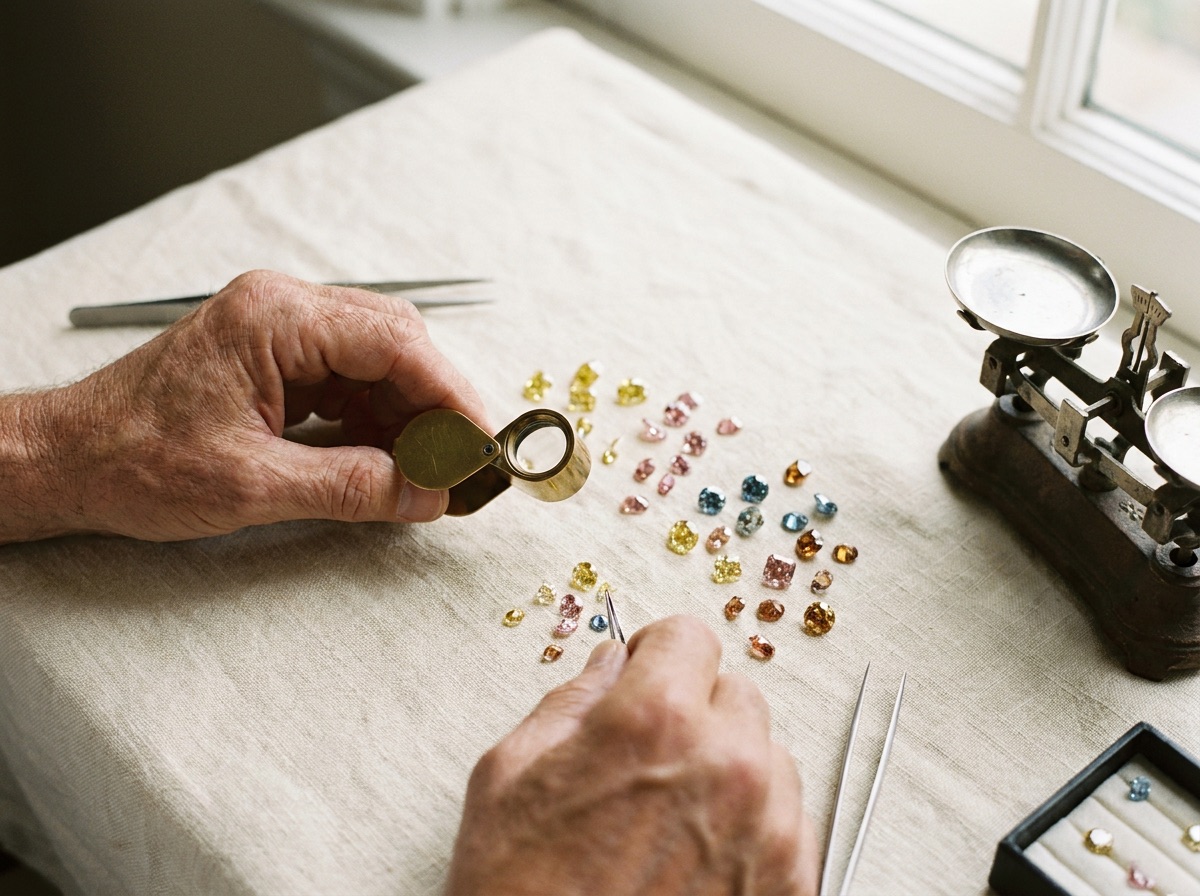
What Is a Champagne Diamond?
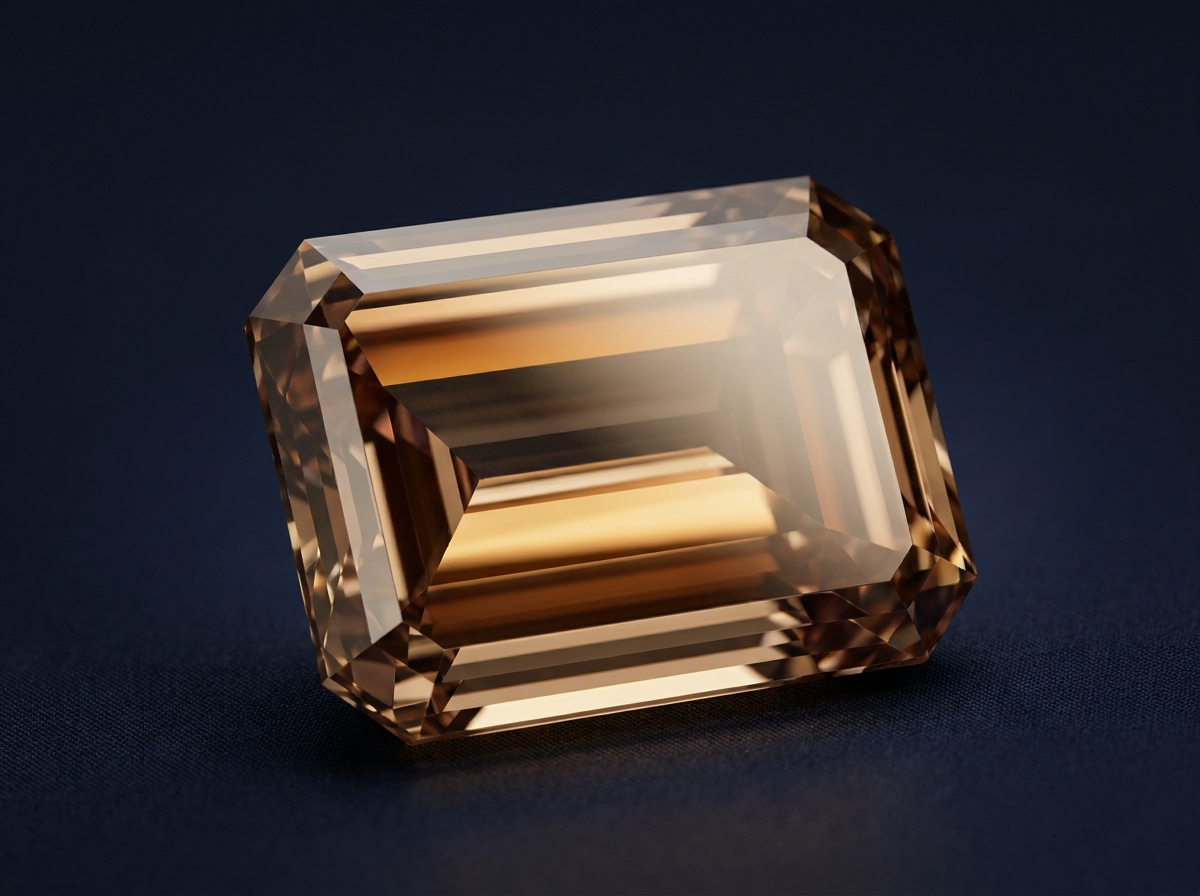
"Champagne" is a trade and marketing name, not a separate mineralogical category. It refers to diamonds with a warm brown-to-golden body color — the same family that GIA and IGI grade under their brown color ranges (in GIA's fancy-color nomenclature, that's terms like Fancy Light Brown, Fancy Brown, Fancy Dark Brown, and Fancy Deep Brown, sometimes with a modifier like "yellowish" or "orangy"). "Brown diamond" reads as a defect to a retail buyer; "champagne diamond" reads as a deliberate, fashionable color choice. Same stone, better name — and the trade has largely standardized on "champagne" for exactly that reason.
The color itself comes from structural distortions in the crystal lattice as the diamond forms — bent or irregular planes that scatter light and produce a brown-to-golden cast, distinct from the nitrogen-based mechanism that produces yellow color in a diamond. That's a meaningful distinction for a buyer comparing champagne to yellow: they can look superficially similar at the pale end, but they're graded on different color mechanisms and, in natural stones, often have different rarity profiles. In CVD lab-grown material, growers can target either color family directly, so the practical difference for a wholesale buyer comes down to hue and depth, not origin story.
Within the champagne range, tone runs from a pale, almost-neutral warm beige through medium honey and amber tones to a deep, saturated cognac-brown. Saturation and clarity both vary stone to stone the way they do in any fancy color category — two champagne diamonds of the same carat weight can look meaningfully different face-up depending on where they fall on the tone scale and how evenly the color reads across the table.
The C1–C7 Trade Grading Scale, Explained
Official grading labs describe champagne color with fancy-color terminology (Light Brown, Brown, Dark Brown, Deep Brown, plus modifiers). That's precise for lab purposes but clunky for day-to-day trade conversation, so dealers use a supplemental scale — commonly written C1 through C7 (sometimes extended to C8 or labeled AC/"Fancy Cognac" at the deep end) — to communicate depth of color quickly. It's not an official GIA or IGI scale and won't appear on a certification report; it's shorthand that sits alongside the lab grade, the way "eye-clean" sits alongside a formal clarity grade.
- C1–C2 — Light Champagne. The palest tier: a faint warm cast, closer to a very light golden-beige than a true brown. Reads almost neutral in smaller sizes and under warm light.
- C3–C4 — Medium Champagne. The workhorse tier for most bridal and fashion use — visible, unmistakable warm color without tipping into a heavy brown. This is the depth most engagement ring buyers picture when they search "champagne diamond."
- C5–C6 — Dark Champagne. Noticeably deeper, richer honey-to-amber tone. Reads as a statement color rather than a subtle warm accent — popular in larger center stones and fashion pieces where the color itself is the point.
- C7 and deeper — Cognac. The deepest, most saturated end of the range, shading into a reddish-brown. Some dealers treat "Cognac" as its own named tier rather than just the bottom of the champagne scale — worth clarifying on any order, since it affects both look and price.
Exactly where one dealer draws the line between C4 and C5, or between C7 and "Fancy Cognac," varies — this is a trade convention, not a regulated standard, so two suppliers can label the same stone a half-step apart. The fix is simple: when you're briefing a custom order, don't rely on the C-number alone. Ask for a photo or video of the actual stone under consistent lighting, or work off a reference sample, the same way you would for any fancy color purchase.
Champagne vs. Cognac: Same Family, Different Depth
Cognac diamonds are champagne diamonds — specifically, the deepest, most saturated tier of the champagne range (roughly C7 and beyond on the trade scale). The two names aren't marketing two different stones; they're marketing two different depths of the same color family, and the split exists because a pale honey tone and a deep reddish-brown tone read as different products to a retail customer even though a grading lab places them on the same color continuum.
For a wholesale buyer, the practical difference is styling and price positioning, not sourcing. Light-to-medium champagne (C1–C4) functions as a soft, approachable alternative to a white center stone — it reads as "warm" more than "colored." Cognac and dark champagne (C6 and up) function as a genuine fancy-color statement piece, closer in visual impact to a fancy yellow or fancy brown than to a near-colorless diamond. Retail clients buying at the light end are often trading up from white; clients buying at the cognac end are shopping fancy color specifically. Worth asking a retail-facing client which conversation they're actually having before quoting a tier.
Why Champagne Is Having a Moment
Two forces are doing the work here. First, fashion and bridal editorial coverage has picked this up directly — warm, tawny-toned stones are being framed as a "cool-girl" or antique-inspired alternative to the icy-white look that's dominated engagement ring marketing for years. Designers quoted in that coverage tie the shift to a broader move toward individual, personal color choices over a conventional default. Second, and more relevant to a wholesale buyer, champagne solves a price problem: pink and blue carry a steep premium even in lab-grown form, which puts them out of reach for a lot of everyday custom and bridal work. Champagne delivers real, visible fancy color at a price point close to white diamond, which makes it a far easier stone to build a client conversation around than to stock as a novelty.
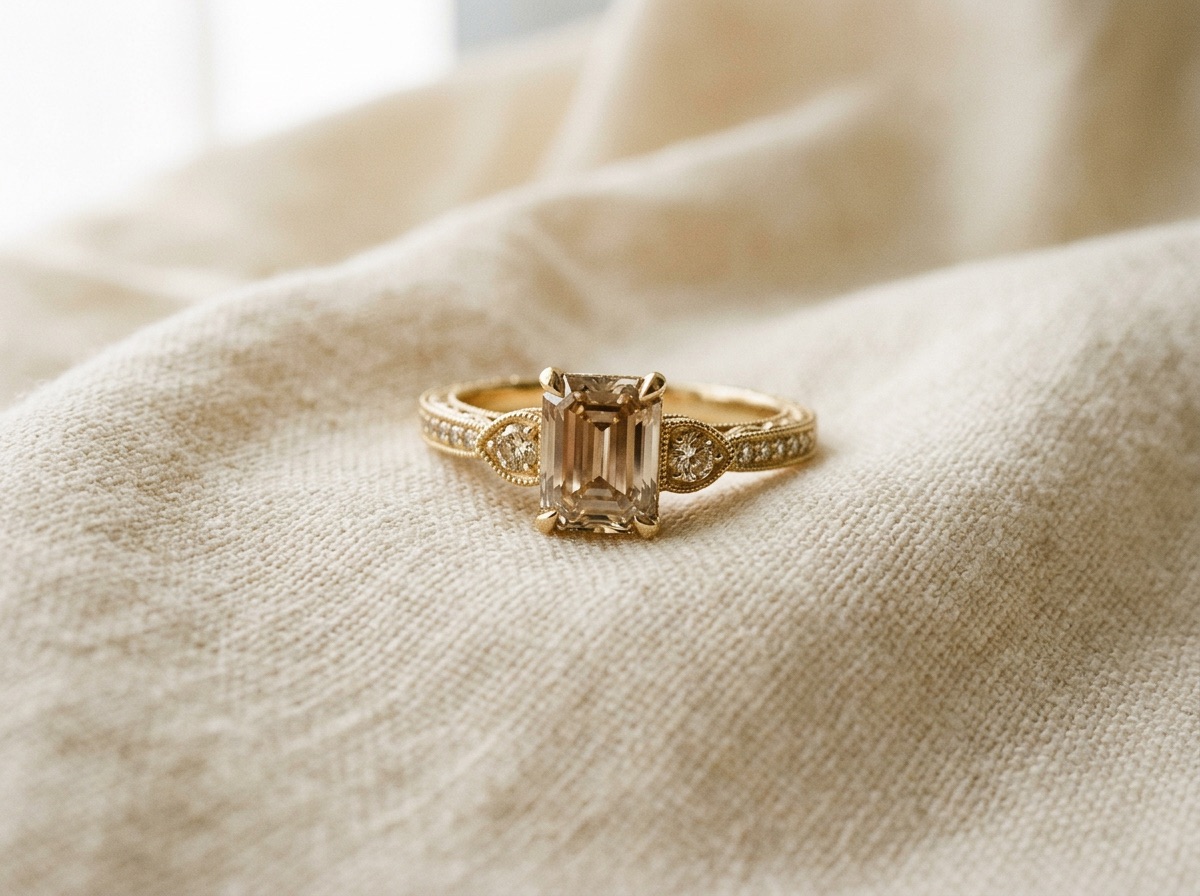
The color is also just versatile to work with visually. A warm brown-gold tone sits naturally in a vintage-inspired setting — yellow gold, milgrain detail, antique-style prongs — and works equally well in a clean modern setting, where it reads as a soft, understated alternative to a traditional white center stone. That range is a real selling point when pitching the stone to a retail client, not just a description.
Champagne vs. the Primary Fancy Colors
Champagne isn't competing with pink or blue for the same buyer — it's the entry point into fancy color for a client who wants real character without the pink-or-blue premium. Here's how it lines up against the shades that make up Guru Diam's certified fancy color loose-diamond program:
| Spec | Champagne | Pink | Blue | Yellow | Green |
|---|---|---|---|---|---|
| Trade / color-grade name | Champagne (Brown color range) | Fancy Pink | Fancy Blue | Fancy Yellow | Fancy Green |
| Relative price tier | Lowest of the fancy colors | Premium | Premium | Mid | Premium |
| Guru Diam certified loose program | Not part of the core line — custom-sourced on request | Yes | Yes | Yes | Yes |
| Visual character | Warm, earthy, pale to deep cognac | Romantic, saturated | Cool, high-impact | Bright, sunny | Cool, botanical |
| Best-suited settings | Both vintage and modern | Modern, romantic | Modern, statement | Both | Modern, distinctive |
That price gap is precisely why champagne is worth understanding even though it sits outside Guru Diam's core certified fancy color line: it's the color a retail client reaches for when they want fancy color character on a budget that doesn't stretch to pink or blue, and it's a real, growing conversation in bridal and fashion. We handle it as a custom-sourced request rather than open stock — see the sourcing section below for how that works in practice.
Quality and Grading Considerations for Wholesale Buyers
Clarity in Champagne Stones
Clarity works the same way it does in any diamond — inclusions, their size, position, and visibility matter — but a warm body color changes what's actually visible to the eye. Small inclusions that would stand out starkly in a colorless stone can disappear into the warm tone of a champagne diamond, which means a slightly lower clarity grade often still reads eye-clean and doesn't carry the same price penalty it would on a white stone. That's a real cost advantage worth knowing when you're pricing out a program: you don't need to chase VS clarity on champagne the way you might on a white center stone to get a clean face-up result.
Cut and Faceting Choices
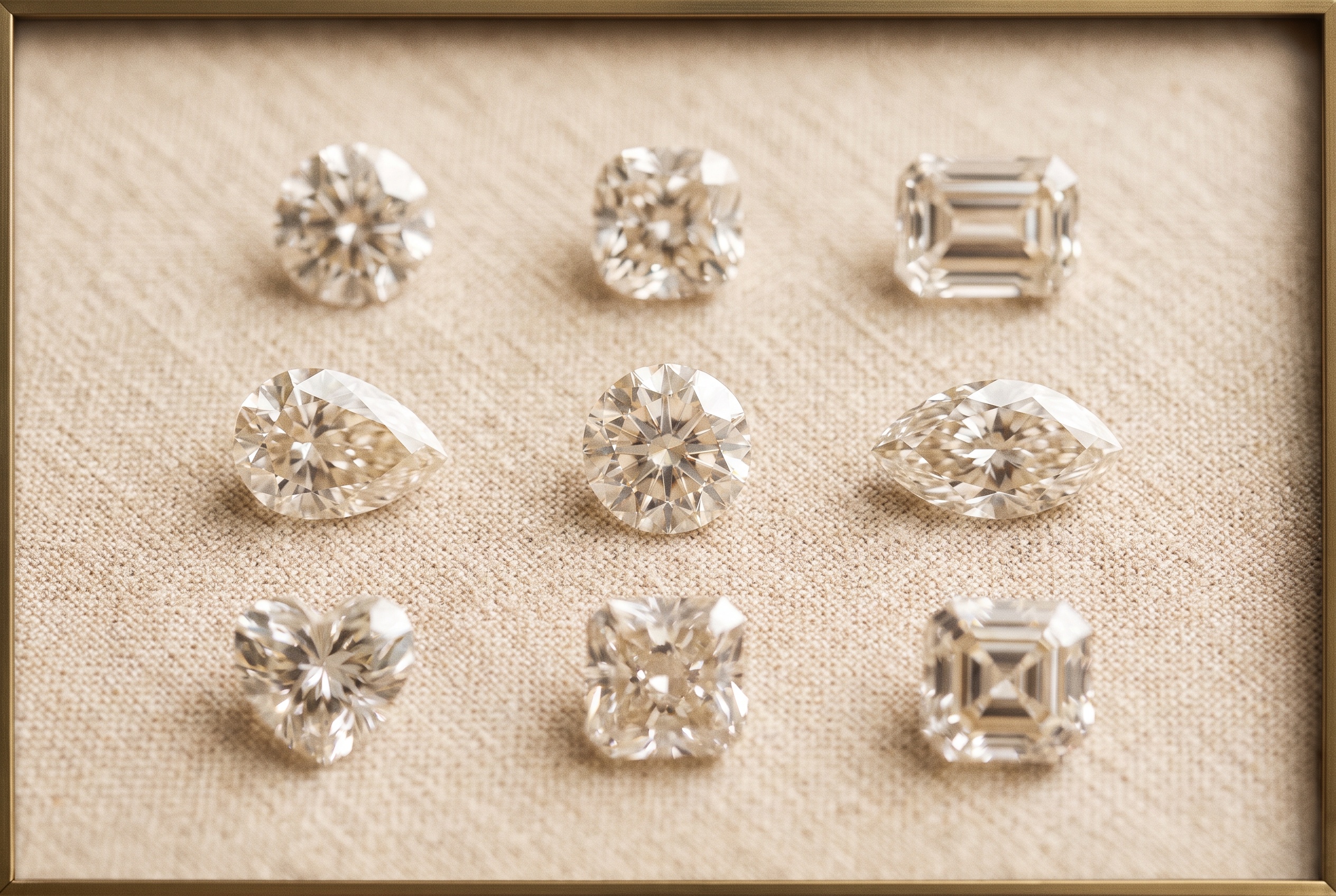
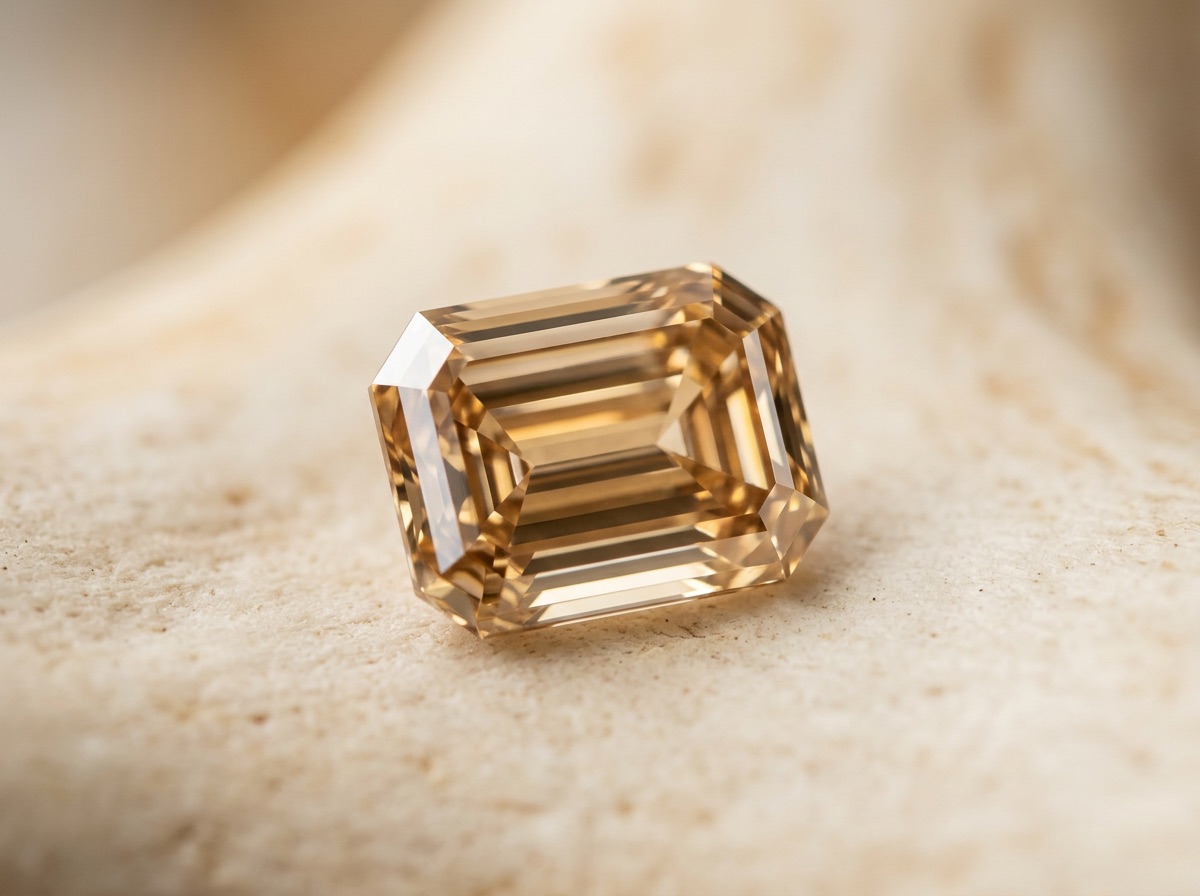
Faceting style changes how color reads more dramatically in a fancy color stone than in a colorless one. Step cuts — emerald, Asscher — show color as one broad, even wash across large open facets, which suits a medium-to-dark champagne where the goal is showing depth of tone. Brilliant faceting (round, oval, cushion, radiant) breaks color into scattered flashes rather than a single wash, which tends to suit lighter champagne tones where you want the color to feel lively rather than concentrated. Elongated shapes like oval and pear also maximize face-up color spread for a given carat weight, which matters when a client is choosing champagne partly for visual impact per dollar.
Saturation Zoning and Consistency
Color zoning — uneven distribution of tone within a single stone — is a real quality variable in champagne diamonds, natural or lab-grown, and it's not something a C-number or a lab color grade fully captures on its own. Two stones can carry the same official grade and trade tier and still look different face-up if one has even color distribution and the other has a darker zone concentrated near the girdle or culet. When you're buying for a program rather than a one-off, ask for face-up photos or video under consistent lighting, not just the certificate and the trade grade.
What Drives Champagne Diamond Pricing
Four variables move price on a champagne diamond, roughly in order of impact: carat weight, depth of color (where it sits on the C1–C7 range), clarity, and shape/cut quality. Depth of color matters more here than it does in most colorless-diamond pricing conversations — a jump from light to dark champagne can move price meaningfully even at the same carat and clarity, because the deeper, more saturated tiers are marketed and perceived as true fancy color rather than a warm-tinted near-white stone.
Shape also affects price indirectly through yield and demand. Emerald cut and oval are the two shapes seeing the most retail demand for champagne right now, per current search and editorial interest, which puts modest upward pressure on those shapes relative to less-requested cuts. Because champagne rough is comparatively easy to grow to spec in CVD material, made-to-order sizing and shape requests are a normal ask rather than a specialty cutting job — that keeps champagne pricing more stable and predictable than it is for scarcer fancy colors like pink or blue, where limited rough supply drives real price volatility.
Lab-Grown (CVD) Champagne vs. Natural Champagne
The color mechanism is the same regardless of origin — structural lattice distortion, not a chemical impurity — but supply behaves very differently. Natural champagne and cognac diamonds have historically come from a small number of mine sources and are graded and priced against increasingly constrained natural rough supply. CVD lab-grown champagne, by contrast, is one of the more straightforward colors to target in the growth process, which is a large part of why it's positioned as an accessible fancy color rather than a rare one in the lab-grown segment.
For a wholesale buyer, that translates directly into program design: natural champagne inventory is inherently limited and lot-dependent, while CVD champagne can be sourced closer to spec — carat, shape, and tone tier — on a per-order basis. Guru Diam's champagne diamonds are CVD-grown and cut in-house; certification is available through IGI, GIA, or GCAL depending on what a client's retail program requires.
Styling and Use-Case Guidance
Vintage and Antique-Inspired Settings
Champagne pairs naturally with the antique-cut and vintage-revival settings that make up a meaningful share of current bridal demand — yellow gold, milgrain edges, filigree-adjacent (not heavy filigree) detailing, and antique-style prong work. The warm body color of the stone and the warm tone of yellow gold reinforce each other, which is part of why champagne reads as an obvious pairing with Old Mine and Old European cut center stones or as a side-stone accent around one.
Modern Minimalist Settings
The same stone works in the opposite direction: a clean, low-profile modern setting in white or rose gold uses champagne as a soft, warm alternative to a traditional colorless center stone rather than as an overt "fancy color" statement. This is the version of the pitch that works best with a retail client who's champagne-curious but not ready to commit to a loud fancy-color look — it's a lower-friction way to introduce color into an otherwise conventional engagement ring conversation.
Matching and Layering with Other Stones
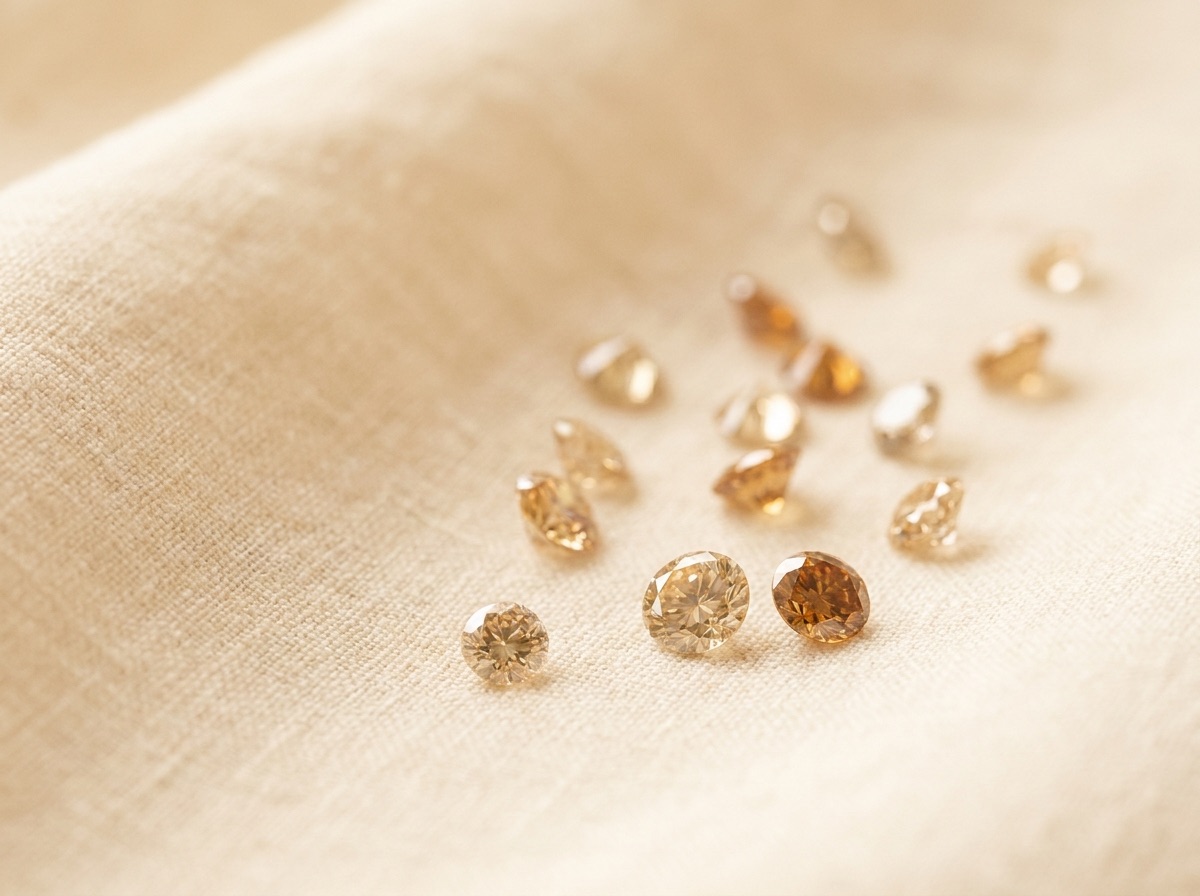
Because champagne spans such a wide tone range, it also works well as an accent stone paired with a white or fancy-colored center — light champagne melee or small side stones read as a warm, neutral frame rather than competing with the center stone's color. Dark champagne and cognac accents, by contrast, read as a deliberate contrast color choice, often paired with white diamonds for a warm-cool visual tension that's become a recognizable look in current fashion jewelry.
Certification and What to Ask For on a Custom Order
Because champagne isn't part of Guru Diam's standing certified fancy color loose-diamond line, every champagne order runs through the same process as any other custom CVD request: confirm shape, carat range, and where on the C1–C7 tone scale the client wants to land, then confirm certification preference. IGI, GIA, and GCAL are all available depending on lead time and what a client's retail program specifies — cert lab choice doesn't change how the stone is cut or graded internally, just which report ships with it.
A few things worth locking down in the brief before a stone is cut: whether "champagne" and "cognac" are being used interchangeably or the client specifically wants the deep end of the range; whether clarity needs to be eye-clean only or held to a formal minimum grade; and whether the request is for a single stone, a matched pair, or a small parcel for melee/accent use. Getting tone tier and clarity threshold agreed upfront avoids the most common mismatch on fancy color custom orders — a stone that's technically correct on paper but reads differently than what the client pictured.
Sourcing Champagne Diamonds Through Guru Diam
Guru Diam's certified fancy color loose-diamond program is built around Yellow, Pink, Blue, and Green — that's the line we carry as standing certified inventory. Champagne sits outside that core program: we handle it as a custom-sourced request rather than open stock, because the depth of tone that makes champagne interesting (light through cognac) is exactly the kind of spec that benefits from being grown and cut to order rather than pulled from a fixed shelf.
To brief a champagne order, tell us shape, carat range, target tone tier (light through cognac), and cert lab preference — IGI, GIA, or GCAL. Stones are CVD-grown and cut in-house. If the order is for a finished piece rather than a loose stone, CAD-to-finished-piece turnaround runs 4–6 days once the center stone is in hand. For the full certified fancy color category — Yellow, Pink, Blue, and Green — visit our fancy color lab-grown diamonds catalog. Open a verified wholesale account at /signup or book time with a gemologist at /book-appointment to start a champagne sourcing conversation.
FAQ
What is a champagne diamond, and is it the same as a brown diamond?
Yes. Champagne is the trade and marketing name for a diamond with warm brown-to-golden body color — graded by labs under the brown color range (Fancy Light Brown through Fancy Deep Brown, with modifiers). "Champagne" is the term buyers and consumers search for and recognize, so the trade uses it at the point of sale even though the underlying lab grade is brown.
What does the C1–C7 champagne grading scale mean?
It's a trade shorthand for depth of color, not an official GIA or IGI scale. C1–C2 is light champagne (a faint warm cast), C3–C4 is medium champagne (the most common bridal tier), C5–C6 is dark champagne, and C7 and beyond shades into cognac — the deepest, most saturated tier. Boundaries vary slightly by dealer, so ask for photo or video reference on any custom order rather than relying on the C-number alone.
Is a cognac diamond different from a champagne diamond?
No — cognac is the deepest tier of the champagne color range, not a separate stone. Some dealers market it as its own name because a pale honey tone and a deep reddish-brown tone read as different products to a retail buyer, but on a grading continuum they're the same color family at different depths.
Are champagne diamonds cheaper than pink or blue diamonds?
Generally yes. Champagne is the most accessible fancy color on price — real, visible color without the steep premium pink and blue carry even in lab-grown form. That price gap is a large part of why it's a useful stone to know even though it's not part of Guru Diam's core certified loose fancy color line.
Does Guru Diam carry champagne diamonds in stock?
Champagne isn't part of our standing certified fancy color loose-diamond program, which covers Yellow, Pink, Blue, and Green. We source champagne as a custom CVD order — tell us shape, carat range, tone tier, and cert lab preference (IGI, GIA, or GCAL) and we cut and certify to spec.
What shapes work best for champagne diamonds?
Step cuts like emerald show champagne color as one broad, even wash — well suited to medium-to-dark tones. Brilliant shapes like oval, cushion, and round scatter color into flashes rather than a single wash, which tends to suit lighter tones. Oval and pear also maximize face-up color spread per carat, which is part of why they're seeing strong retail demand right now alongside emerald cut.