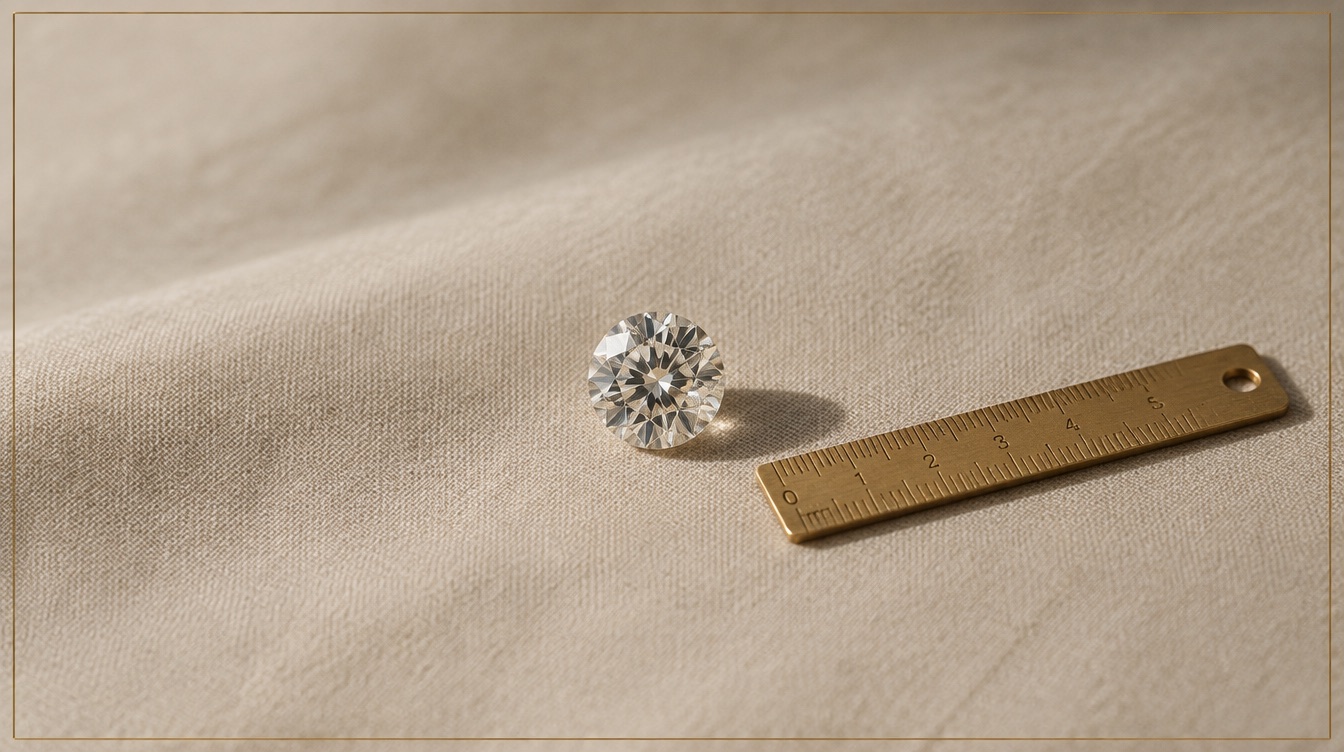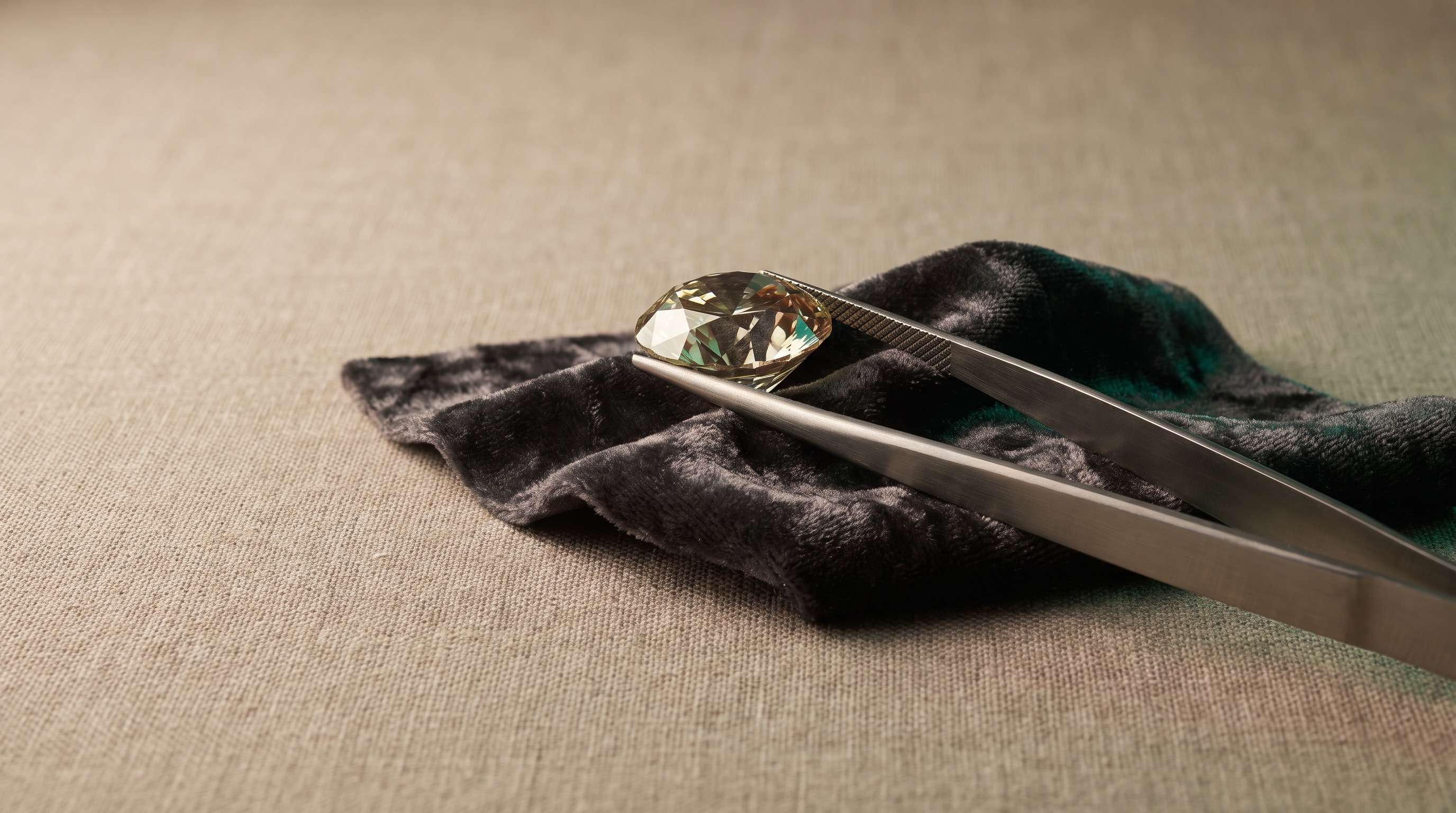
A chameleon diamond is an extremely rare natural fancy color diamond that temporarily and reversibly shifts color — typically between an olive or grayish-green tone and a yellow tone — when heated gently or kept in the dark for an extended period, then reverts back once returned to normal light and room temperature. The effect is a genuine, GIA-documented optical phenomenon caused by trace hydrogen and structural defects in the crystal lattice, not a treatment, coating, or marketing gimmick, and it makes chameleon diamonds one of the most scientifically distinctive categories in all of natural fancy color diamonds. Because the underlying mechanism depends on a specific combination of trace elements that natural formation only rarely produces, chameleon remains one of the few diamond color categories still overwhelmingly defined by natural rather than lab-grown supply.
What Causes the Color-Change Effect
Chameleon diamonds owe their unusual behavior to a specific combination of trace hydrogen impurities and nitrogen-related structural defects within the crystal lattice, which interact with temperature and light exposure in a way not seen in any other diamond color category. When a chameleon diamond is heated to a moderate temperature (well below anything that would damage the stone) or kept away from light for roughly 24 hours or more, its color visibly shifts — usually from its resting olive-green or grayish-yellow-green tone to a more saturated yellow. Returning the stone to room temperature and normal lighting reverses the shift back to its original color within a period of minutes to hours, a fully reversible cycle that can be repeated indefinitely without damaging or altering the stone.
Two Recognized Types of Chameleon Diamonds
Standard Chameleon
The more common of the two recognized types, standard chameleon diamonds shift from an olive or grayish-green resting color to a more yellow tone when heated or kept in darkness, then slowly revert once exposed to light again at room temperature.
Reverse Chameleon
Reverse chameleon diamonds behave in the opposite direction and are considerably rarer still — these stones shift toward a more olive or green tone under heat or darkness rather than toward yellow, and their reversion timeline after re-exposure to light also tends to differ from standard chameleons. Because reverse chameleons are so seldom encountered, most trade and consumer discussion of the category defaults to describing the more common standard behavior.
Why Chameleon Diamonds Are So Rare
Chameleon diamonds represent an exceptionally small fraction of all natural fancy color diamonds mined, since the specific combination of hydrogen content and structural defects that produces the color-change effect is uncommon even among diamonds that already carry unusual trace elements. Most fancy color diamonds get their color from a single, better-understood cause — boron for blue, nitrogen clustering for yellow, structural distortion for pink — while chameleon's color-change mechanism depends on a more specific and less frequently occurring combination of factors, which is a large part of why gemological labs and collectors treat the category as a genuine rarity rather than simply "another fancy color."
How Chameleon Diamonds Are Graded
GIA and other major labs grade and document chameleon diamonds' color-change behavior explicitly on the certification report, noting both the stone's resting color and its color under the heat/dark-exposure test, since the color-change property itself is central to how the stone is identified, described, and valued. This is different from how most fancy color diamonds are graded, where a single stable color reading is the primary data point — a chameleon diamond's certificate effectively documents two color states rather than one, which is part of what makes chameleon grading a specialized skill even within the broader fancy color diamond grading discipline.
Chameleon Diamonds vs. Standard Green and Yellow Diamonds
It's worth being precise about a common point of confusion: a chameleon diamond is not simply a green diamond or a yellow diamond under a different name — it's a distinct category defined by the reversible color-change behavior itself, and a standard fancy green or fancy yellow diamond does not exhibit this shift at all. A buyer specifically seeking the color-change phenomenon needs a diamond documented as chameleon on its grading report; a stone simply described as green or yellow, however saturated its color, is not interchangeable with genuine chameleon material regardless of how visually similar its resting color might look in a photograph.
Are Lab-Grown Chameleon Diamonds Available?
Chameleon diamond's color-change mechanism arises from a specific, not-fully-controllable combination of trace hydrogen and structural defects that occurs naturally during formation deep in the earth over geological time — a combination that current CVD lab-grown production methods are not commercially set up to reliably reproduce at scale. This is different from standard fancy color lab-grown diamonds (yellow, pink, blue, green), where the color-producing mechanism is well enough understood and controllable that CVD growers can reliably target a specific color outcome. As of this writing, chameleon remains overwhelmingly a natural-diamond phenomenon in commercial trade supply, not a lab-grown category offered at meaningful scale.
The Discovery History of Chameleon Diamonds
Chameleon diamonds have been documented in the gemological literature since at least the mid-20th century, but the phenomenon remained poorly understood and inconsistently named for decades before major labs standardized both the terminology and the testing protocol used to identify and document the effect. Early reports of "color-changing" diamonds were sometimes met with skepticism or attributed incorrectly to treatment or handling artifacts, since a diamond visibly changing color under simple heat or light exposure was, understandably, an unusual enough claim that it required rigorous, repeatable lab verification before the trade broadly accepted it as a genuine, naturally occurring property rather than an anomaly or a misidentified treated stone.
How the Testing Protocol Works
Gemological labs verify and document chameleon behavior using a controlled, repeatable protocol rather than a casual visual check. A candidate stone is examined and its resting color recorded under standard lighting, then subjected to either mild, controlled heating or an extended period in complete darkness (typically 24 hours or more), with its color re-examined and recorded immediately afterward. The stone is then returned to normal light and room temperature and observed again after a period of time to confirm the color reverts, completing the cycle the lab needs to document before certifying a stone as a genuine chameleon. This full before-heat/dark, during, and after-reversion documentation is what distinguishes a lab-certified chameleon diamond from an uncertified stone merely described informally as a "chameleon" based on a single anecdotal observation.
Chameleon Diamonds and Fluorescence
Many chameleon diamonds also exhibit notable fluorescence under ultraviolet light, a related but separate property from the heat/dark color-change effect itself. Fluorescence intensity and color under long-wave and short-wave ultraviolet light are recorded on most standard diamond grading reports regardless of color category, so this data is typically already available for a stone under evaluation without any additional testing step. Some gemologists consider certain fluorescence patterns a secondary indicator worth checking when a stone is suspected of chameleon behavior, though fluorescence alone doesn't confirm the color-change property — the full heat/dark testing protocol described above remains the only reliable way to certify a stone as genuinely chameleon. This distinction matters for buyers who might otherwise assume any diamond with strong fluorescence and a slightly unusual resting color is automatically a chameleon candidate, which isn't a safe assumption without formal lab testing.
Carat Sizes and Market Availability
Chameleon diamonds that reach the market span a wide range of carat weights, but larger, well-documented examples command particularly strong collector and auction interest given how rarely sizeable chameleon rough is found and successfully cut without compromising the stone's color-change clarity. Smaller chameleon stones do appear in specialty dealer inventories more regularly than large ones, though even at smaller carat weights, genuine certified chameleon material remains a fraction of a percent of overall fancy color diamond supply reaching the market in any given year — a scarcity that shows no sign of easing, since chameleon's occurrence rate in newly mined rough hasn't meaningfully changed regardless of overall mining volume or advances in mining technology.
Buying Considerations for Collectors and Retailers
Anyone considering a chameleon diamond purchase — whether a retailer sourcing a single specialty piece or a private collector — should insist on a full grading report from a major lab (GIA is the most commonly referenced authority for this category) that explicitly documents the heat/dark testing protocol and both recorded color states, rather than relying on a seller's verbal description or informal photos showing the color shift. Given the category's rarity and correspondingly higher price point, the documentation burden of proof should be treated as non-negotiable, in the same way a buyer would insist on full certification for any other high-value, hard-to-verify fancy color claim.
Sourcing and Availability in the Trade
Because of their rarity, chameleon diamonds are a specialty category typically sourced through dealers and suppliers focused specifically on natural fancy color diamonds, rather than a standard line item in general wholesale catalogs. Buyers seeking chameleon material should expect a more limited selection, longer sourcing timelines, and a higher price relative to comparable carat weight and clarity in a standard-color natural diamond, reflecting both the category's rarity and the specialized documentation and handling it requires.
Chameleon Diamond Comparison Table
| Category | Color-Change Behavior | Cause | Typical Availability | Lab-Grown Available at Scale? |
|---|---|---|---|---|
| Chameleon (standard) | Olive-green to yellow under heat/dark | Trace hydrogen + structural defects | Very limited, specialty natural dealers | No |
| Reverse chameleon | Shifts toward green/olive under heat/dark | Related but rarer variant mechanism | Extremely limited | No |
| Fancy yellow (standard) | None — stable color | Nitrogen clustering | Widely available, natural and lab-grown | Yes |
| Fancy green (standard) | None — stable color | Natural or lab-induced radiation exposure | Available, natural and lab-grown | Yes |
Caring for a Chameleon Diamond
Chameleon diamonds don't require any special physical care beyond standard diamond maintenance — cleaning, storage, and setting considerations are the same as for any diamond of comparable hardness. What does require special handling and ongoing attention is documentation and disclosure: because the color-change behavior is central to the stone's identity and value, any resale, appraisal, or insurance conversation should reference the stone's original chameleon certification explicitly, including which resting and heat/dark-exposure colors were documented, rather than describing it only by its currently visible color at the time of a given appraisal visit.
Common Misconceptions About Chameleon Diamonds
- "It's a treatment, like heat-treated color enhancement in other gemstones." The color-change is a naturally occurring, reversible physical property of the stone's own crystal structure — it isn't the result of any applied treatment, coating, or artificial color enhancement, and it doesn't require ongoing treatment to maintain.
- "Any diamond that looks slightly different in different lighting is a chameleon." Many diamonds appear subtly different under different light sources due to normal optical effects, but that's not the same as genuine chameleon behavior, which specifically requires a documented, repeatable shift triggered by heat or extended darkness and verified through formal lab testing.
- "Chameleon diamonds are a modern marketing invention." The phenomenon has been documented in gemological literature for decades and is formally recognized and tested for by major labs including GIA — it's a genuine, scientifically established diamond category, not a recent branding exercise.
- "A green or yellow diamond can be relabeled as chameleon if it looks similar." Chameleon status requires actual documented color-change behavior confirmed through lab testing — a stone's resting color alone, however close it looks to a chameleon's typical olive-green or yellow tones, doesn't qualify it for the designation.
Chameleon Diamonds in Auction and Investment Contexts
Because of their rarity and the genuine scientific novelty of the color-change property, chameleon diamonds occasionally appear at major gemstone and jewelry auctions, where well-documented, larger examples can draw significant collector interest and pricing well above what carat weight and clarity alone would predict for a standard-color natural diamond. Buyers approaching chameleon diamonds as a potential long-term holding, rather than purely for personal wear, should treat them similarly to other rare fancy color categories from an investment-consideration standpoint: value is driven heavily by documentation quality, provenance, and the specific characteristics of the individual stone, not by carat weight alone, and liquidity in this specialty category is considerably lower than for more commonly traded diamond categories.
Educating Customers Without Overselling the Category
Given how rare genuine chameleon material actually is, retailers who don't stock it should be comfortable simply explaining that to an interested customer rather than trying to source a piece on demand or, worse, offering a standard green or yellow stone with vague suggestive language implying a connection to the chameleon category it doesn't actually have. Accurate, transparent education — explaining what makes chameleon diamonds genuinely rare and different, and being upfront that it's outside a given retailer's standard inventory — builds more long-term customer trust than overselling a much more common stone using chameleon's rarity and mystique as a marketing hook it hasn't earned.
Why the Category Attracts Collectors
Beyond rarity alone, chameleon diamonds attract a specific kind of collector interest because the color-change effect is a genuinely unusual, scientifically documented physical property rather than a purely aesthetic rarity like an unusually saturated color or an unusually large carat weight. For collectors drawn to diamonds as much for their underlying material science as for their beauty, chameleon's reversible, repeatable color shift offers something no other diamond color category can demonstrate, which helps explain why chameleon material commands strong collector interest even at carat weights that wouldn't be considered especially large in other fancy color categories.
How Chameleon Fits Into a Broader Fancy Color Education Strategy
For jewelers building out fancy color diamond expertise as a point of differentiation, chameleon is a useful case study in explaining rarity and pricing logic to customers even without stocking the category directly — the same underlying principles (a specific, uncommon trace-element combination driving both the color property and the price) apply to more commercially available fancy colors like blue and pink, just to a less extreme degree. Framing chameleon as the far end of a rarity spectrum that also includes GD's actual in-stock yellow, pink, blue, and green lines gives customers a clearer mental model for why fancy color pricing varies as much as it does across the broader category, rather than treating fancy color diamonds as a single undifferentiated price tier above colorless stones.
What This Means for Retail Conversations
Because chameleon diamonds are such a specialized and rare category, most retail jewelers will encounter customer questions about them far more often than they'll actually handle physical chameleon inventory. Being able to explain accurately what the category is, why it's rare, and how it differs from standard green or yellow diamonds is valuable even without stocking chameleon material directly — and for customers drawn to the concept of a fancy colored diamond generally, redirecting to GD's actual available fancy color lines (yellow, pink, blue, and green, in both natural and CVD lab-grown) offers a genuine, in-stock alternative that still delivers meaningful color and rarity within a far more accessible sourcing timeline and price range.
Guru Diam's Fancy Color Diamond Availability
Guru Diam does not currently stock chameleon diamonds — the category's extreme rarity and specialized natural-only sourcing put it outside GD's standard wholesale catalog. Guru Diam does carry a genuine, in-stock range of fancy color diamonds across yellow, pink, blue, and green, in both natural stones and CVD lab-grown material with IGI, GIA, or GCAL certification, along with fancy color melee in the same four colors for accent and pavé work. For a jeweler or collector drawn to chameleon's rarity story but working within a standard sourcing timeline, GD's natural and lab-grown yellow and green lines are the closest genuinely available comparison in terms of resting color family, without the color-change property itself.
Browse GD's fancy color inventory through fancy color loose diamonds, or certified stones generally through certified diamonds. Trade accounts can be set up through trade partner, with full catalog terms at the wholesale hub. For deeper category guides on GD's actual available fancy colors, see the yellow diamond buying guide and green diamond buying guide. Retailers building a custom piece around any fancy color center stone can also start a build through custom jewelry.
Frequently Asked Questions
What is a chameleon diamond?
A chameleon diamond is an extremely rare natural fancy color diamond that temporarily changes color — typically shifting between olive-green and yellow — when heated or kept in darkness, then reverts to its original color once returned to normal light and temperature. The effect is caused by trace hydrogen and structural defects in the crystal lattice.
Is the chameleon diamond color change permanent?
No, it's fully reversible. The stone shifts color under heat or extended darkness and reverts back to its resting color within minutes to hours once returned to normal light and room temperature — this cycle can repeat indefinitely without damaging the stone.
Can chameleon diamonds be lab-grown?
Not at meaningful commercial scale currently. The specific combination of trace hydrogen and structural defects that produces the color-change effect isn't reliably reproducible with current CVD lab-grown production methods, so chameleon remains overwhelmingly a natural-diamond category in trade supply.
How are chameleon diamonds different from regular green or yellow diamonds?
A chameleon diamond is defined by its reversible color-change behavior, documented on its grading report as two distinct color states. A standard fancy green or fancy yellow diamond has one stable color and does not exhibit any color-change effect, regardless of how visually similar its resting color might appear.
Why are chameleon diamonds so expensive and hard to find?
They represent an exceptionally small fraction of all natural fancy color diamonds mined, since the exact combination of trace elements and structural defects needed for the color-change effect is uncommon even among diamonds that already carry unusual trace elements — making chameleon a specialty category sourced through dealers focused specifically on natural fancy color diamonds.
Does a chameleon diamond need special care?
No special physical care beyond standard diamond maintenance is needed. What matters is documentation — any resale, appraisal, or insurance record should reference the stone's original chameleon grading report, including both its resting and heat/dark-exposure colors, rather than describing it only by whichever color happens to be visible at a given moment.