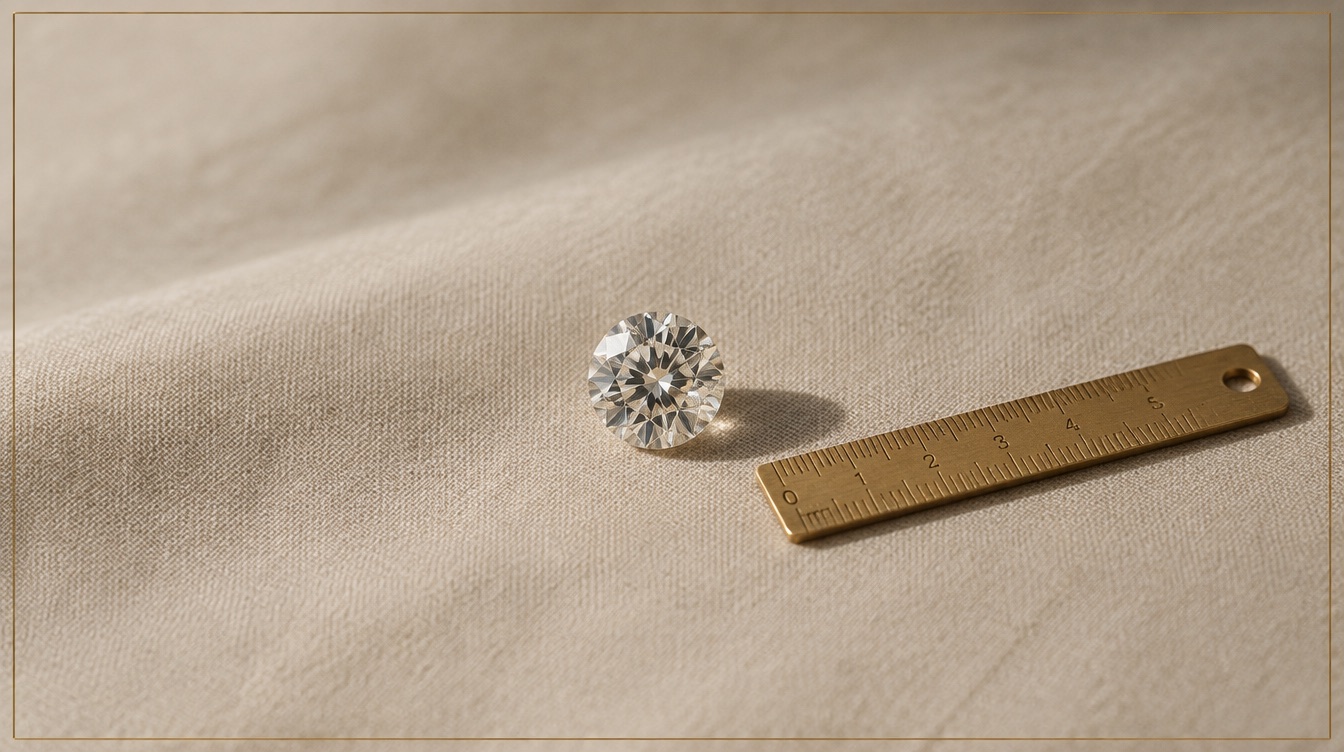
Buying diamonds "in bulk" means purchasing a larger quantity of stones — typically parcels of melee, batches of matched calibrated goods, or larger orders of loose certified stones — at once, rather than sourcing single pieces individually. It's a distinct purchasing model from one-off retail buying, with its own pricing structure, minimum order expectations, and quality-control practices that jewelers, manufacturers, and online sellers need to understand before placing a first volume order.
What "Bulk Diamonds" Actually Means in the Trade
"Bulk" isn't a single fixed quantity threshold — what counts as a bulk order varies by product category and buyer type. For melee (the small accent diamonds used in pavé, halo, and channel settings), bulk typically means ordering by the parcel — dozens to hundreds of carats of calibrated stones sorted to a consistent size and quality baseline — rather than picking individual stones. For loose certified stones at 0.30ct and above, bulk more often means ordering multiple stones across a defined size and grade range at once, for a manufacturing run or an inventory build-out, rather than a single center stone for a single piece. Understanding which category a given "bulk" inquiry falls into matters, since melee and larger certified stones are sourced, priced, and quality-controlled in fundamentally different ways.
Who Buys Diamonds in Bulk
Several distinct buyer types drive bulk diamond demand, each with different priorities:
- Jewelry manufacturers running production for a specific design across multiple pieces, needing consistent melee or matched stones in volume rather than one-off sourcing per piece.
- Independent jewelers and retailers building or replenishing case inventory across multiple SKUs at once, rather than restocking a single item.
- Online retailers and private-label sellers who need a steady, larger supply to list and fulfill orders without running out of common sizes and grades.
- Custom jewelry designers sourcing melee or accent stones in bulk for use across an entire collection or a run of similar pieces, where consistency across the batch matters more than any single stone.
Each of these buyer types has a different tolerance for lead time, a different sensitivity to per-carat pricing versus per-piece pricing, and different expectations around how tightly matched a bulk parcel needs to be — all of which shape how a supplier should structure a bulk order for them.
Bulk Loose Stones vs. Bulk Melee: Two Different Products
It's worth separating these two categories clearly, since "bulk diamonds" as a search term covers both and they work differently:
Bulk Melee
Melee — diamonds generally in the 0.8mm-9.0mm range — is not individually or parcel-certified. It ships as uncertified parcel goods against a defined quality control baseline (commonly DEF+/VS+ for white melee), sorted by size, shape, and color/clarity tier. Bulk melee buying is fundamentally a batch-consistency exercise: the buyer is trusting the supplier's QC process to deliver a parcel that performs uniformly, since individually verifying hundreds or thousands of tiny stones isn't practical.
Bulk Loose Certified Stones
Loose stones at 0.30ct and above are a different tier entirely — individually certified (GIA, IGI, or GCAL, depending on the stone), with each stone's specific 4Cs documented on its own report. A bulk order here means multiple individually certified stones purchased together, often across a defined size and grade range for a specific manufacturing run, rather than an uncertified batch sorted only to an overall baseline.
How Bulk Diamond Pricing Structures Work
Bulk pricing typically differs from single-stone or single-parcel retail pricing in a few structural ways:
- Per-carat price breaks. Larger total-carat orders often qualify for a better per-carat rate than a small single-parcel purchase, reflecting the supplier's own efficiency gains from fulfilling one larger order versus many small ones.
- Tiered volume pricing. Some suppliers structure pricing in defined volume tiers (for example, a different per-carat rate at 50 carats than at 5), rather than a single flat negotiated rate — worth asking about explicitly, since tier boundaries aren't always advertised upfront.
- Melee parcel pricing vs. per-stone certified pricing. Melee is priced per carat for the parcel as a whole; certified loose stones are priced per stone based on that stone's individual 4Cs, so a "bulk" certified order is really a sum of individually priced stones rather than a single blended parcel rate.
Buyers comparing quotes across suppliers should confirm whether a quoted bulk price is per carat, per stone, or per parcel, and whether it reflects the full order size being discussed — a common source of confusion when comparing melee parcel quotes to certified per-stone quotes side by side.
Certified vs. Uncertified Bulk Purchasing
Whether a bulk order should be certified or uncertified depends entirely on the intended use. Melee destined for pavé or channel settings, where individual stone identity doesn't matter to the finished piece, is appropriately sourced uncertified against a QC baseline — certifying each stone individually would add cost with no practical benefit to either the manufacturer or the end customer. Center stones or larger accent stones, where a specific stone's identity and grade matter to the piece's value and the customer's expectations, should always be sourced certified, in bulk or otherwise. Buyers should be cautious of any supplier offering "bulk certified melee" — melee, by its nature, isn't individually or parcel-certified in the way a 0.30ct+ loose stone is, and a claim to the contrary is worth checking closely.
Minimum Order Quantities for Bulk Diamond Purchases
Minimum order requirements vary widely by supplier and product type. Melee suppliers often set a minimum total-carat threshold per parcel order, since breaking a small parcel down into an even smaller custom sort isn't efficient for either side. Certified loose stone suppliers may set a minimum stone count or minimum total order value for bulk-tier pricing to apply, since the administrative and logistics overhead of a bulk certified order scales differently than melee. New wholesale accounts should ask directly about minimum order thresholds for both product categories before assuming a single supplier's melee minimum applies equally to certified stone orders, since the two are usually structured independently.
Quality Control at Volume
Quality control gets more, not less, important as order size grows, since a single inconsistent stone in a large batch is proportionally harder to catch than the same issue in a small order — and more damaging if it reaches a finished piece. For bulk melee specifically, buyers should ask suppliers directly about their sampling and sorting methodology: how consistently a parcel is graded to its stated baseline, and what recourse exists if a received parcel doesn't match. For bulk certified stone orders, each stone's individual certificate should be checked against the physical stone (via laser inscription verification, where present) rather than assuming a large order was quality-checked as thoroughly as a single-stone purchase would be.
Bulk Diamond Categories: A Comparison
| Category | Certification | Pricing Unit | Typical Buyer |
|---|---|---|---|
| Bulk melee (round or fancy calibrated) | Uncertified, QC-baseline sorted | Per carat, parcel-wide | Manufacturers, pavé/halo production |
| Bulk loose certified stones (0.30ct+) | Individually certified (GIA/IGI/GCAL) | Per stone, based on individual 4Cs | Manufacturers, retailers stocking multiple SKUs |
| Bulk fancy color melee | Uncertified, QC-baseline sorted | Per carat, parcel-wide | Manufacturers producing fancy-color accent pieces |
| Bulk natural loose stones | Individually certified (GIA/IGI/GCAL) | Per stone, based on individual 4Cs | Retailers and manufacturers sourcing natural inventory |
Sourcing Fancy Color Melee and Larger Stones in Bulk
Fancy color melee — yellow, pink, blue, and green, in both round and fancy shapes — follows the same uncertified, QC-baseline sorting model as white melee, but with an added rarity and matching challenge: achieving consistent color saturation across a bulk parcel is harder than matching white DEF+ goods, since color intensity naturally varies more across production. Buyers sourcing bulk fancy color melee should ask specifically about color-consistency sorting within the parcel, not just overall QC baseline, particularly for a piece where visible color uniformity across many small stones matters to the finished look.
Lab-Grown vs. Natural Bulk Sourcing
Bulk sourcing dynamics differ somewhat between lab-grown (CVD) and natural stock. Lab-grown production offers more predictable, scalable supply for both melee and certified loose stones, since output isn't constrained by mining yield the way natural stock is — a meaningful advantage for a buyer needing a large, consistent bulk order on a defined timeline. Natural bulk sourcing, particularly for larger certified stones or closely matched parcels, is more exposed to natural supply variability, and buyers should expect somewhat longer lead times or more flexibility in exact specifications when sourcing natural stock in volume compared to lab-grown.
Logistics and Shipping for Bulk Diamond Orders
Larger orders introduce logistics considerations beyond what a single-stone purchase requires — insured shipping value scales with order size, and buyers should confirm a supplier's shipping insurance coverage explicitly for bulk orders rather than assuming standard coverage limits apply automatically. In-stock inventory can generally still ship same-day (subject to the supplier's standard cutoff times), but a bulk order requiring custom sorting or matching to specific parameters may take longer to prepare than an in-stock parcel pulled and shipped as-is — worth clarifying at the time of quote, not after placing the order.
Building a Recurring Bulk Sourcing Relationship
Many bulk buyers move from one-off large orders to a recurring purchasing relationship once they've validated a supplier's consistency and pricing. A recurring relationship generally gives a buyer more predictable access to volume pricing tiers, priority handling on custom sorts, and a supplier who understands the buyer's specific quality and matching preferences over time — advantages that are harder to negotiate fresh on every individual bulk order placed with a new or occasional supplier.
Questions to Ask Before Placing a Bulk Diamond Order
Before committing to a bulk order, buyers should confirm: the exact QC baseline or certification standard being applied, whether pricing is per carat, per stone, or per parcel, what the minimum order threshold is for the pricing tier being quoted, expected lead time versus standard in-stock shipping, and what recourse exists if a received order doesn't match the agreed specification. Getting clear answers to these questions upfront avoids the most common sources of dispute in larger wholesale transactions.
Common Mistakes When Buying Diamonds in Bulk
A few recurring mistakes cause most disputes and disappointments in bulk diamond purchasing. The first is not confirming the exact QC baseline or certification standard in writing before the order ships — a verbal understanding of "good quality" means very different things to different buyers and suppliers, while a specific baseline (DEF+/VS+, for example) gives both sides a concrete standard to check against. The second is comparing quotes across suppliers without confirming they're priced on the same basis — a per-carat parcel quote and a per-stone certified quote aren't directly comparable, and neither is a quote for melee against a quote for larger certified stones. The third is underestimating lead time on a custom sort or matched-parameter order and assuming it will ship as quickly as in-stock inventory, which can create a scheduling problem for a buyer working against their own production or launch timeline. The fourth is not requesting a sample before committing to a full bulk order from a new supplier, discussed further below.
Requesting a Sample Before Committing to a Full Bulk Order
For a new supplier relationship, requesting a smaller sample parcel or a handful of sample stones before placing a full bulk order is standard practice and a reasonable request in the trade. A sample lets a buyer verify that quality, color consistency, and cut characteristics match what was represented before committing to a larger financial outlay, and it gives both sides a chance to confirm expectations align before scaling up. A supplier unwilling to provide any sample or reference stones ahead of a first bulk order is worth treating cautiously — reputable wholesale suppliers generally accommodate reasonable sample requests from serious buyers, since it reduces the risk of a costly mismatch on either side once the full order ships.
Bulk Diamond Order Terms and Payment Structure
Bulk orders often involve different payment terms than smaller retail-style purchases — a deposit on order placement with balance due on shipment is common for a first-time bulk relationship, while established accounts may move toward net payment terms over time as trust builds between buyer and supplier. Buyers should clarify payment terms, return or exchange policy for a bulk order that doesn't match specification, and any restocking or exchange conditions before finalizing an order, since bulk transactions typically don't offer the same flexibility as a single retail-style purchase once the material has shipped and been received.
Bulk Sourcing for E-Commerce and Online Retail Models
Online retailers and marketplace sellers have somewhat different bulk sourcing needs than a brick-and-mortar jeweler restocking a physical case. An online seller often needs a broader spread of sizes and price points in stock simultaneously to serve a wide range of customer searches, plus enough depth in fast-moving sizes and grades to avoid stockouts on listings that are actively driving traffic. This makes consistent replenishment timing as important as the initial bulk order itself — an online seller who runs out of a popular size or grade combination loses the ranking and traffic built up around that specific listing, which is a different kind of cost than a physical retailer simply having a gap in a display case. Suppliers working with online sellers should understand this dynamic and be able to support a recurring replenishment cadence, not just a single large initial order.
Seasonal Demand Planning for Bulk Diamond Orders
Jewelry demand is seasonal — engagement and bridal-adjacent demand typically builds toward the fourth quarter holiday season and again around Valentine's Day, while custom and made-to-order work often sees its own separate lead-time pressure ahead of wedding season. Buyers planning bulk orders around known seasonal demand should place orders with enough lead time to account for both the supplier's own fulfillment timeline and any custom sorting or matching the order requires, rather than ordering at the point demand is already peaking. This is particularly relevant for melee and accent stones supporting a manufacturing run timed to a seasonal launch, where a late bulk order can create a bottleneck for an entire production schedule rather than just delaying a single piece.
Diversifying Bulk Sourcing Across Categories
Buyers who source only one category in bulk — melee alone, or certified stones alone — sometimes miss efficiency gained by consolidating a broader wholesale relationship across categories with a single supplier. A supplier who carries melee, certified loose stones, natural inventory, and finished jewelry under one relationship can simplify a buyer's own sourcing logistics considerably compared to managing separate bulk relationships with different specialists for each category, provided that supplier maintains genuine depth and quality across all of them rather than treating some categories as an afterthought.
Storage and Inventory Management for Bulk Diamond Stock
Holding bulk diamond inventory — particularly melee across multiple sizes and grades — introduces its own operational overhead that buyers should plan for before an order arrives. Organized, clearly labeled storage by size, shape, and grade tier prevents costly mix-ups during production, since a batch of visually similar melee at two different grade tiers is difficult to distinguish without careful sorting and labeling maintained from receipt onward. Buyers scaling up bulk purchasing for the first time should factor this inventory management overhead into their planning alongside the purchase itself, since disorganized bulk stock can quickly erode the cost efficiency a bulk order was meant to provide in the first place.
When Buying in Bulk Doesn't Make Sense
Bulk purchasing isn't automatically the right choice for every buyer or every situation. A jeweler with genuinely unpredictable, low-volume demand for a specific stone category may tie up more capital in slow-moving bulk inventory than the per-carat savings justify, particularly for higher-value certified stones where holding cost matters more than it does for lower-value melee. A new business without established demand patterns is often better served starting with smaller, more frequent orders to understand actual sell-through before committing to bulk-tier minimums, then scaling into bulk purchasing once demand is proven. Matching order size to genuine, demonstrated demand — rather than buying in bulk purely to capture a better per-carat rate — avoids tying up working capital in inventory that moves more slowly than expected.
Sourcing Bulk Diamonds Through Guru Diam
Guru Diam supplies diamonds at wholesale, trade-only, across melee, certified loose stones, and finished jewelry — CVD lab-grown and natural — with IGI, GIA, and GCAL certification available depending on the category. Guru Diam carries all standard, antique, and exotic diamond shapes rather than positioning narrowly around a single product line, which gives bulk buyers a single relationship for melee, loose certified stones, and finished jewelry sourcing rather than needing separate suppliers for each. In-stock inventory ships same-day from Guru Diam's New York (before 6pm EST) and Los Angeles (before 4pm PST) locations.
Set up a trade account through trade partner to discuss bulk pricing and current inventory, or browse certified stones through certified diamonds. Fancy color loose diamonds can be browsed under fancy color loose diamonds, and matched pairs under matching pairs. For a general overview of wholesale sourcing, start at the wholesale hub.
Frequently Asked Questions
What does "bulk diamonds" mean in the wholesale trade?
It refers to purchasing a larger quantity of diamonds at once — a melee parcel, or multiple certified loose stones — rather than sourcing a single stone individually. What counts as "bulk" varies by product category and supplier.
Are bulk diamonds certified?
It depends on the category. Melee is not individually or parcel-certified — it ships as uncertified goods against a defined quality-control baseline. Loose stones at 0.30ct and above are individually certified regardless of whether they're purchased individually or in bulk.
Is buying diamonds in bulk cheaper per carat?
Generally, yes. Larger orders often qualify for better per-carat pricing than a small single purchase, reflecting the supplier's own efficiency gains from fulfilling one larger order. Exact pricing tiers vary by supplier.
What's the difference between bulk melee and bulk loose diamonds?
Bulk melee is an uncertified parcel of small accent stones sorted to a consistent size and quality baseline. Bulk loose diamonds refers to multiple individually certified stones, typically 0.30ct and above, each with its own grading report.
Is there a minimum order for bulk diamond purchases?
Most suppliers set a minimum order threshold, which varies by product type — melee minimums are typically set by total carat weight, while certified loose stone minimums may be based on stone count or total order value. Ask a supplier directly for their specific thresholds.
How is quality controlled on a large bulk diamond order?
For melee, quality control relies on the supplier's sampling and sorting methodology against a stated baseline. For certified loose stones, each stone's certificate should be checked against the physical stone individually, even within a larger order.