
Building a House Collection With an Outsourced Manufacturing Partner
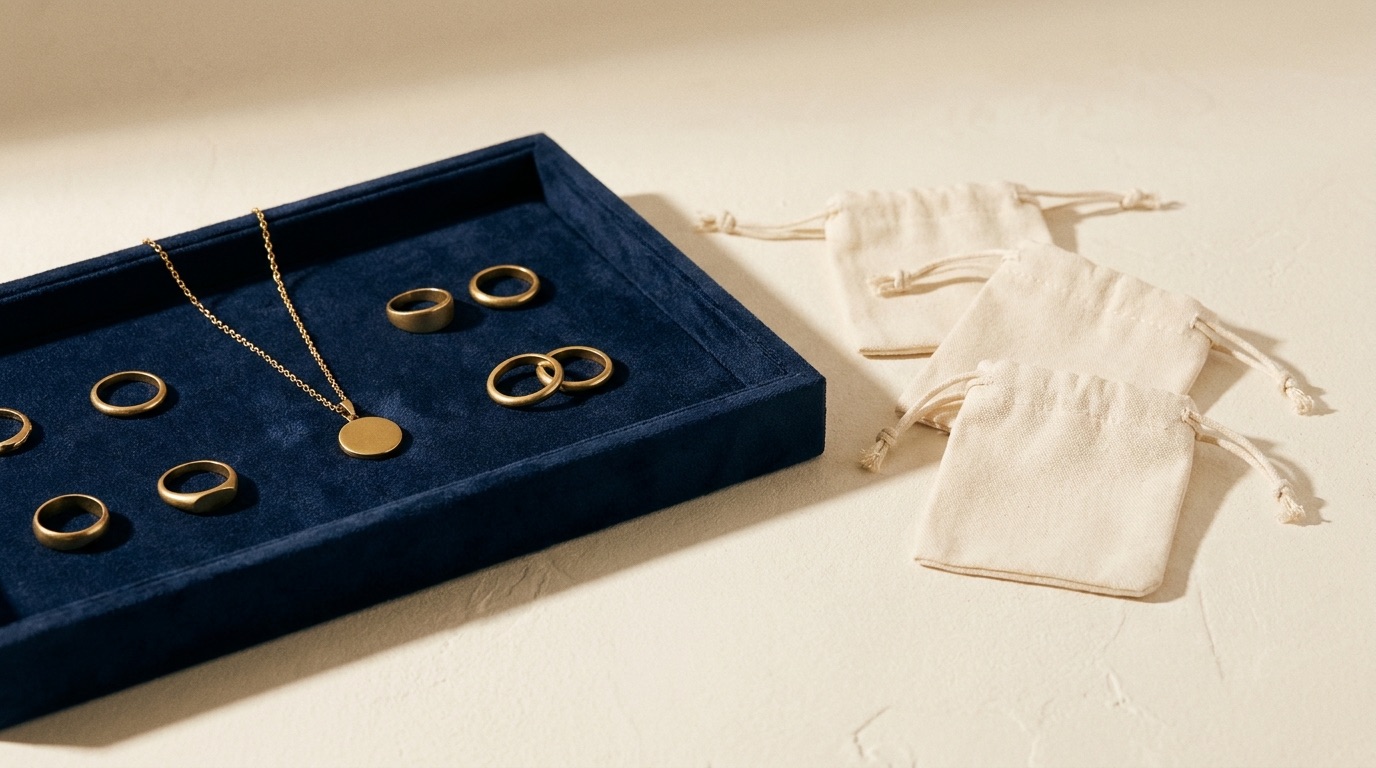
A house collection is a set of 5-10 signature styles that carry your name, get reordered on a recurring basis, and come out identical every time - not a one-off custom piece, and not open stock you buy and warehouse. The practical answer: you build it by locking a CAD master and a written spec sheet for each style during the first production run, then every reorder references that master file instead of starting design work over. The manufacturing partner produces to the locked spec on demand, run after run, so you get a consistent signature line without carrying inventory risk on styles that haven't sold yet.
This is a different operational relationship than a single custom order, and most retailers who try to build a house line without understanding that difference end up with a collection that drifts - a slightly different prong height on run three, a different total carat weight on run five, a stone quality that's technically "similar" but visibly not the same piece the customer saw in-store last year.
Getting this right takes more than production discipline. It also raises a question most how-to guides skip: who actually owns the file a house collection is built on, and what happens to that ownership if the manufacturing relationship ever changes - covered below, along with pricing and keeping a style consistent across years of reorders.
What a House Collection Actually Is (and Isn't)
A house collection is not:
- A batch of custom orders that happen to share a similar aesthetic
- A private-label version of someone else's catalog SKU
- A one-time production run you're hoping to repeat later from memory
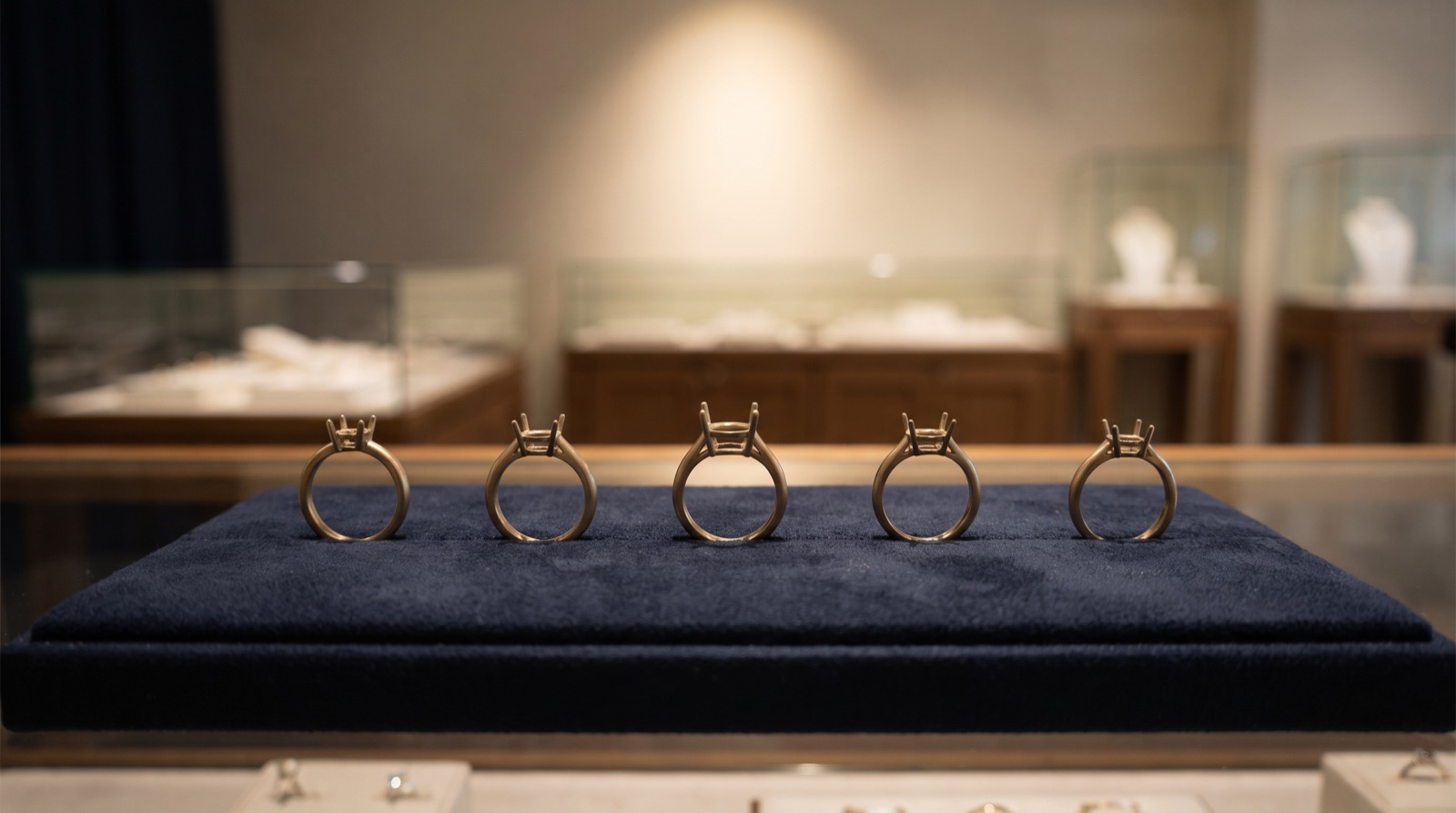
A house collection is a fixed, named set of styles - typically 5 to 10 - each backed by an approved CAD file and a locked spec sheet, produced to order whenever you need units. The design work happens once per style. Every unit after that is a repeat, not a redesign.
This matters because the retailers who get the most value from a house line treat it like a product line, not a project. Once a style is locked, nobody touches the CAD again unless you're deliberately issuing a new version.
In practice, most retailers arrive at a house collection one of two ways: they notice the same custom request coming back from different customers often enough that it's clearly not a one-off, or they deliberately set out to build a signature line - the way a boutique might commission a small run from an apparel manufacturer - so the pieces read as "the collection" on a case card, not a vendor's stock SKU with the branding swapped.
Why On-Demand Production Beats Pre-Stocking a House Line
The reason to build a house collection through an outsourced manufacturing partner rather than casting a big batch upfront and sitting on inventory is straightforward: you don't know your actual sell-through per style until real customers have seen the real piece. Pre-stocking means guessing quantities per style, per ring size, per metal color, and eating the carrying cost of anything that doesn't move.
On-demand production against a locked master flips that. You commit to the design once, and after that you order only what you've actually sold or need in showcase. The bench doesn't need a new brief for reorder six - it's producing to a spec that's already approved, so lead time is the standard custom-jewelry production window rather than a fresh design cycle.
The math makes the case on its own. A ten-style collection cast upfront in three metal colors and three ring sizes each is close to ninety discrete SKUs sitting in a case waiting for a buyer. On-demand production collapses that to zero pre-committed units - you cast size 6.5 in white gold the day someone wants it, and the CAD master guarantees it matches the sample that sold them on the collection.
The CAD Master: Turning a Design Into a Repeatable Spec
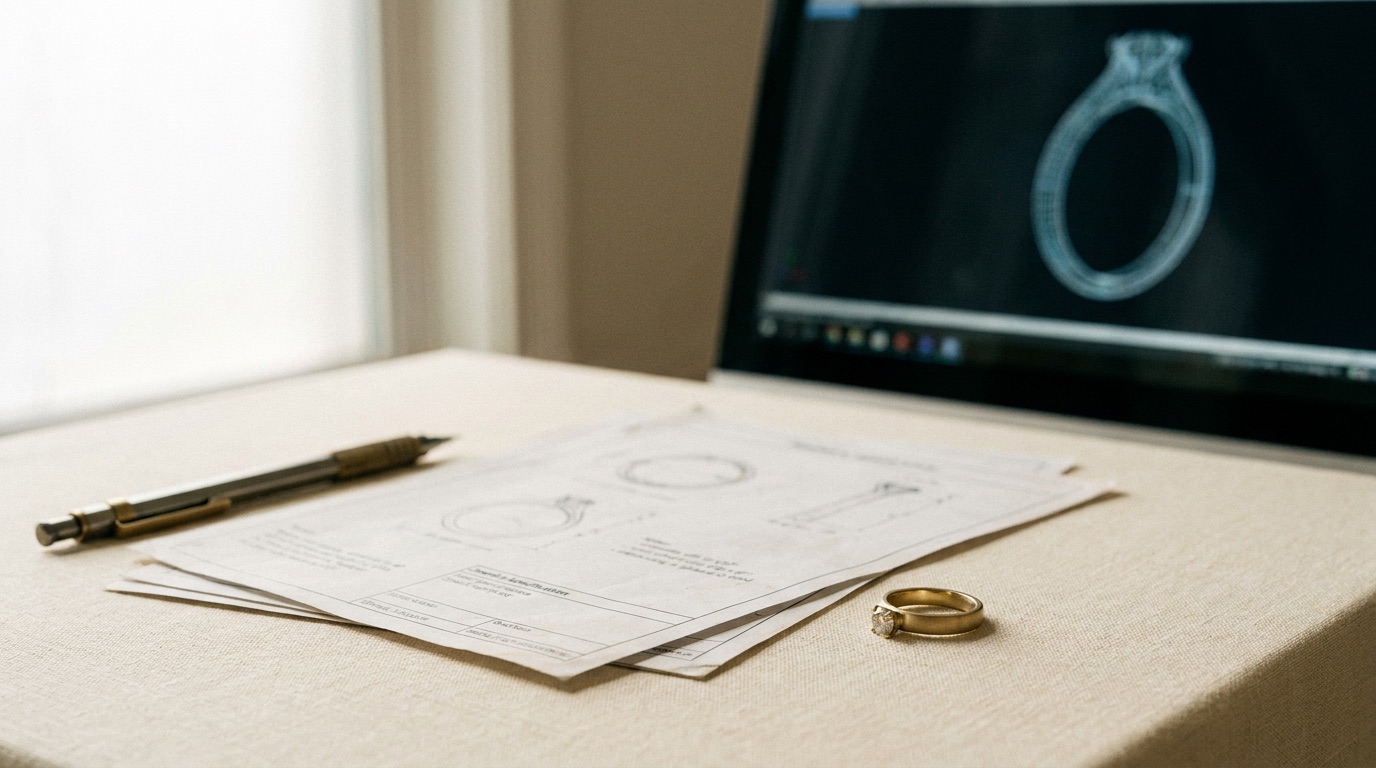
The single most important document in a house collection program is the CAD master for each style. This is different from an approved CAD on a one-off custom order in one critical way: a custom order's CAD is disposable once the piece ships. A house collection's CAD is a permanent reference file you'll pull against for years of reorders.
What Gets Locked at CAD Approval
Before a style graduates from "design" to "house collection master," the spec sheet attached to the CAD needs to nail down, in writing:
- Metal type and karat (and which karat is default if a customer doesn't specify - see your own house rule on this)
- Center stone parameters if applicable: shape, cut tier, carat range, color/clarity range, and whether it ships certified
- Melee parameters: total carat weight target, color/clarity QC baseline, stone count per size position
- Setting method (prong count and style, pave density, bezel width, etc.)
- Band or shank profile and total metal weight range
- Finish (polish level, rhodium plating instructions if white gold)
- Any engraving or hallmark placement
Without this written down, "reorder the same ring" becomes a verbal instruction that a different production run can interpret differently. The spec sheet is what makes the second, fifth, and twentieth unit match the first. Retailers who skip any of these fields usually find out why they matter on the fourth or fifth reorder, when a customer who bought unit one comes back for a matching piece and the bench has to guess at a detail nobody wrote down the first time.
First-Article Approval Before It's a Master
A CAD render is not proof the physical piece matches your intent. Before a style is locked as a house master, you should require a first-article sample - the actual cast, set, and finished piece - checked against the CAD and the spec sheet before it's approved for repeat production. This is the point where you catch things a render can't show: how a particular pave pattern actually catches light, whether a prong height reads as too high in hand, whether the total carat weight target produces the visual density you want.
Once the first article is approved, that's the version that gets locked. Any future change to the style is a new revision, not a silent adjustment during a reorder. Weigh the metal against the target range, verify the melee total carat weight against spec, and check any center stone against the shape, cut tier, and color/clarity range written into the file - a sample that passes on sight but drifts on the scale is still a fail.
Who Owns the Design? IP and CAD Ownership in a Manufacturing Partnership
A locked CAD master is the single most valuable file in a house collection program, which is why ownership should be settled in writing before the first unit ships - not assumed. Ring and pendant designs are hard to protect through copyright or design patent on their own: a prong count or halo pattern is rarely novel enough to count as exclusive intellectual property, and most house-collection styles borrow from silhouettes the whole trade already works from. The real protection isn't a filing - it's the agreement with the manufacturing partner, who alone holds the exact file and production history needed to reproduce the piece precisely.
That makes three questions worth settling when a style is locked, not after a disagreement:
- Who holds the CAD file? Some manufacturing partners keep the master on their own systems and produce against it on request; others hand over a copy once the design is paid for and locked. Neither is wrong on its own, but a retailer should know which one it's actually getting.
- What happens if the retailer wants to move production? If the file lives only with the manufacturing partner, switching later means rebuilding the design from a photo or physical sample. Retailers who want that option open should negotiate file portability in writing when a style is locked, not assume it later.
- Is the collection name protected separately from the design? Owning a collection name on your case cards and marketing is a trademark question, entirely separate from who holds the CAD file for the piece itself. A retailer can own the name outright while the manufacturing relationship governs the file.
None of this is legal advice, and a collection generating real revenue is worth having these terms reviewed the way any other supply agreement would be. The operational fix is simple: put file ownership, portability, and any exclusivity terms in writing at first-article approval - not after a second manufacturer starts fielding your reorders.
How Reordering a House Style Differs From One-Off Custom Work
This is the operational distinction retailers most often get wrong when they first try to build a house line: they keep treating every reorder like a new custom order, which means re-explaining the design, re-approving a CAD, and re-negotiating a price each time. The table below is the fastest way to see why the two production paths feel so different on the retailer's side, even though both end at the same bench.
| One-Off Custom Order | House Collection Reorder | |
|---|---|---|
| Design input needed | Full design brief every time | None - references the locked master |
| CAD approval | Required per order | Done once at master lock; skipped on reorder |
| Spec consistency | Whatever was agreed for that order | Fixed by the written spec sheet |
| Pricing | Quoted per piece from scratch | Standing price per style/metal/stone combo |
| Lead time driver | Full CAD-to-finished cycle | Same production cycle, no design delay |
| Ideal quantity | Single piece or small batch | Ongoing, as-needed units |
| Branding on delivery | As requested | Unbranded by default, sold under your name |
The how it works process for a first-time custom piece and a house collection reorder both end at the same finished-jewelry production step - the difference is entirely in what happens before that step. A reorder skips the design and approval phase completely because that work is already done and locked. A one-off order might take several revision rounds before a customer signs off on a CAD; a house collection reorder skips that back-and-forth because the design was approved once, at the first article, and every unit since has matched it.
Choosing Your First 5-10 Styles
A house collection works best as a curated range rather than a scattershot of unrelated designs. When retailers ask where to start, the styles that hold up best over repeat production tend to share a few traits:
- Price point spread - at least one entry-level piece, one mid-range, and one higher-ticket anchor style, so the collection covers a real range of customer budgets
- Category spread - a mix across rings, pendants, earrings, and a stackable or eternity-family piece rather than five variations on the same ring
- A clear stone story - decide up front whether a style is a melee-only piece (uncertified parcel goods to a QC baseline) or a certified-center-stone piece, and don't blur the two within one SKU
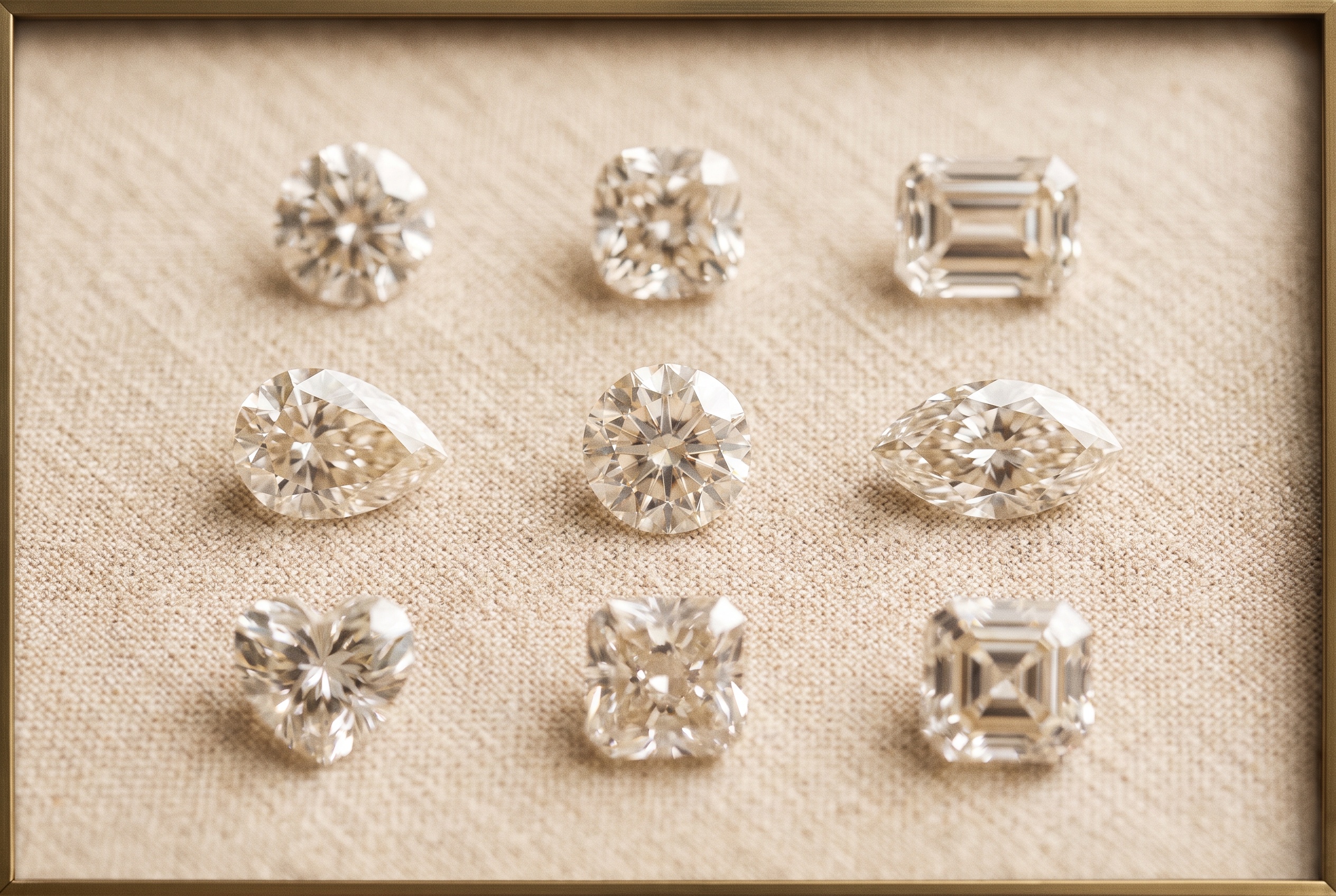
- Cut tier consistency within a style - if a style uses fancy shapes, keep the tier framing accurate: emerald, cushion, oval, pear, marquise, radiant, princess, and heart are modern fancy cuts, not antique, while designs built around old mine, old European, hexagonal, moval, lozenge, kite, trillion, criss-cut, or padparadscha shapes sit in the antique-cut tier - don't market a modern cut as antique or vice versa
- A style that can carry certification - at least one anchor piece in the collection with a center stone at 0.30ct or above, since that's the point where IGI, GIA, or GCAL certification becomes standard practice, which gives your sales floor a documented stone to point to
Pulling styles from across exotic and fancy shapes or certified diamonds rather than sticking entirely to round brilliant commodity stock is usually what makes a house collection read as distinct on a case, rather than a version of what every other counter is already carrying. It's also worth resisting the urge to lock all 5-10 styles before any of them have sold - lock two or three anchor styles first, put them on the case, and use real sell-through to decide which styles round out the rest of the line, rather than paying for first-article samples on styles that turn out to be the wrong fit.
Pricing a House Collection: From First Sample to Standing Cost
Pricing works differently for a house collection than for one-off custom work, and getting the structure right at the start avoids renegotiating every reorder. A one-off custom piece is typically quoted from scratch - metal weight, stone cost, and labor priced for that specific order. A house collection style, once locked, should carry a standing price per metal/stone combination, so a reorder is a purchase order against a known number, not a fresh quote.
The first-article sample is where that standing price gets built. Its true cost - metal weight as actually cast, real melee carat weight, labor for the setting method, finishing - becomes the basis for the standing price rather than an estimate pulled from a CAD render, which can underestimate weight on a heavier band profile or a dense pave pattern.
Two variables move the standing price on a reorder without a full requote: metal color (white gold needs rhodium plating a yellow-gold version doesn't) and whether the center stone is certified. A style built around a 0.30ct-plus center stone typically prices IGI, GIA, or GCAL certification into the standing cost for that SKU, while the same design with a melee-only center stone doesn't carry that line item - both are still "the same style" on the case card, the spec sheet should just make clear which combinations are priced.
Where retailers get burned is treating the first unit's price as fixed forever. Gold and diamond costs move; a standing price should state upfront when it gets revisited - a metal price threshold, a fixed review interval - rather than staying unspoken until a reorder comes back at a number nobody expected.
Keeping Reorders Consistent Run After Run
Consistency across production runs doesn't happen automatically just because you have a spec sheet - it happens because the spec sheet is actually the reference every reorder is checked against, not a document that gets filed and forgotten. A few habits make the difference:
- Reference the style by its locked file name or code on every reorder, not a verbal description
- Note any customer-facing complaint about a specific unit (weight felt light, stone looked smaller) against the spec sheet immediately, so you know whether it's a real drift or a perception issue
- Treat any request to change a parameter - a different carat range, a different setting height - as a new version of the style, given its own file name, not an edit to the existing master
- Keep melee QC baseline notes with the master file, since melee is parcel-graded against a color/clarity standard rather than individually certified, and that baseline is what keeps set pieces looking consistent from batch to batch
This is also where working through a single wholesale hub for reordering helps - one place to place the reorder against the locked style code, rather than re-explaining the spec over email each time. A shared photo of the approved first article next to the spec sheet and one point of contact who signs off on version changes protect a collection more than any contract does.
Branding and Delivery: How Guru Diam's White-Label Process Supports a House Collection
Custom pieces built for a house collection are typically delivered unbranded by default, which is what allows a retailer to sell the piece under its own name rather than a manufacturer's mark. That's worth confirming explicitly when you lock the first master for a style, since it's the default assumption on the production side unless you request otherwise.
Access to build a program like this runs through a trade partner relationship rather than open retail ordering - a house collection is a wholesale arrangement between a retailer and its manufacturing partner, not a consumer-facing purchase, and the production side should be set up to treat it that way from the first CAD approval onward. Guru Diam's trade partner accounts already run this arrangement for a base of 2,000+ active customer accounts, so a house collection reorder lands in a relationship that already exists.
White-label delivery is what makes a house collection function as one, rather than a resold vendor line: the retailer controls the case card, the collection name, and what the sales floor says, while the CAD master and production run stay with the manufacturing partner. Casting, setting, and polishing handled in-house matters more here than on a single custom order - the same hands and equipment producing the fifth run the way they produced the first, without the work splitting across subcontractors between reorders. Once a first article is approved, reorders move through that same sequence in the standard 4-6 day window for finished custom jewelry.
Common Mistakes Retailers Make Building a House Line
Most of the house collections that stall out or drift off-spec fail for one of a handful of predictable reasons:
- Locking a style straight from a CAD render, without a first-article sample. A render can't show how a pave pattern actually catches light or whether a prong height reads as too high in hand - issues that only surface on the physical piece.
- Treating a "small tweak" on reorder five as a free edit to the master. Any parameter change, however minor, should get its own version and file name so the field record stays accurate.
- Launching with too many styles before any of them have sell-through data. Ten unlocked masters with zero sales history is more spec-sheet and QC overhead than most retailers need before the collection has proven itself.
- Never writing down who owns the CAD file. This one usually surfaces at the worst possible time - when a retailer wants to switch manufacturing partners and finds out the file was never theirs to take.
- Mixing certified and melee-only pieces in the spec sheet without labeling which is which. A melee-set style is uncertified parcel goods against a QC baseline; a certified-center-stone style carries an IGI, GIA, or GCAL report. Blurring the two on paper creates a claim the sales floor can't back up.
- Assuming a standing price never needs revisiting. Metal and stone costs move; a price locked at launch and never checked against current cost is a margin problem waiting to surface on a large reorder.
None of these are hard to avoid - they just require treating the first-article approval and spec sheet as the collection's actual foundation, not paperwork on the way to a launch date.
Frequently Asked Questions
How many styles should a first house collection include?
Five to ten styles is the practical range. Fewer than five doesn't give you enough of a price and category spread to read as a real collection on a case. More than ten before you have sell-through data on the first batch usually means you're locking masters for styles you haven't validated yet, which multiplies the spec-sheet and QC work without a clear payoff.
Does a house collection cost more upfront than a one-off custom order?
The CAD and first-article approval step for each style is comparable to what you'd pay for any custom piece's design and sample phase. The savings show up on reorders, where there's no repeat design fee and no re-approval cycle - you're paying for production against an already-locked spec, not for design work a second time.
What happens if I want to change something after a style is locked?
Any change to a locked spec - a different metal weight, a different stone size range - should be treated as a new version of that style with its own file name, not a silent edit to the existing master. That keeps a clear record of which units in the field match which version, so a repair or a customer question about a specific piece can be checked against the right spec sheet.
Can a house collection include both certified stones and melee-set pieces?
Yes, and most collections benefit from having both. Just keep the two clearly separated in the spec sheet: a certified-center-stone piece carries an IGI, GIA, or GCAL report for that stone, while a melee-set piece is uncertified parcel goods held to a written color/clarity QC baseline. Don't describe a melee piece as certified - it isn't, and the spec sheet should reflect that distinction plainly.
How fast can a reorder turn around once a style is locked?
Because the design and approval phase is already done, a reorder moves straight into production - the same CAD-approved-to-finished timeline as any finished custom jewelry order, without the delay of a fresh design cycle. Actual scheduling still depends on quantity and current production load, so confirm timing per order with your manufacturing partner.
Do I need a minimum order quantity to build a house collection?
No - the point of producing against a locked master on demand is that you can order single units or larger batches as they sell, rather than committing to a large upfront cast run. That's the main operational advantage over pre-stocking a house line: you're not carrying inventory risk on styles the market hasn't proven out yet.