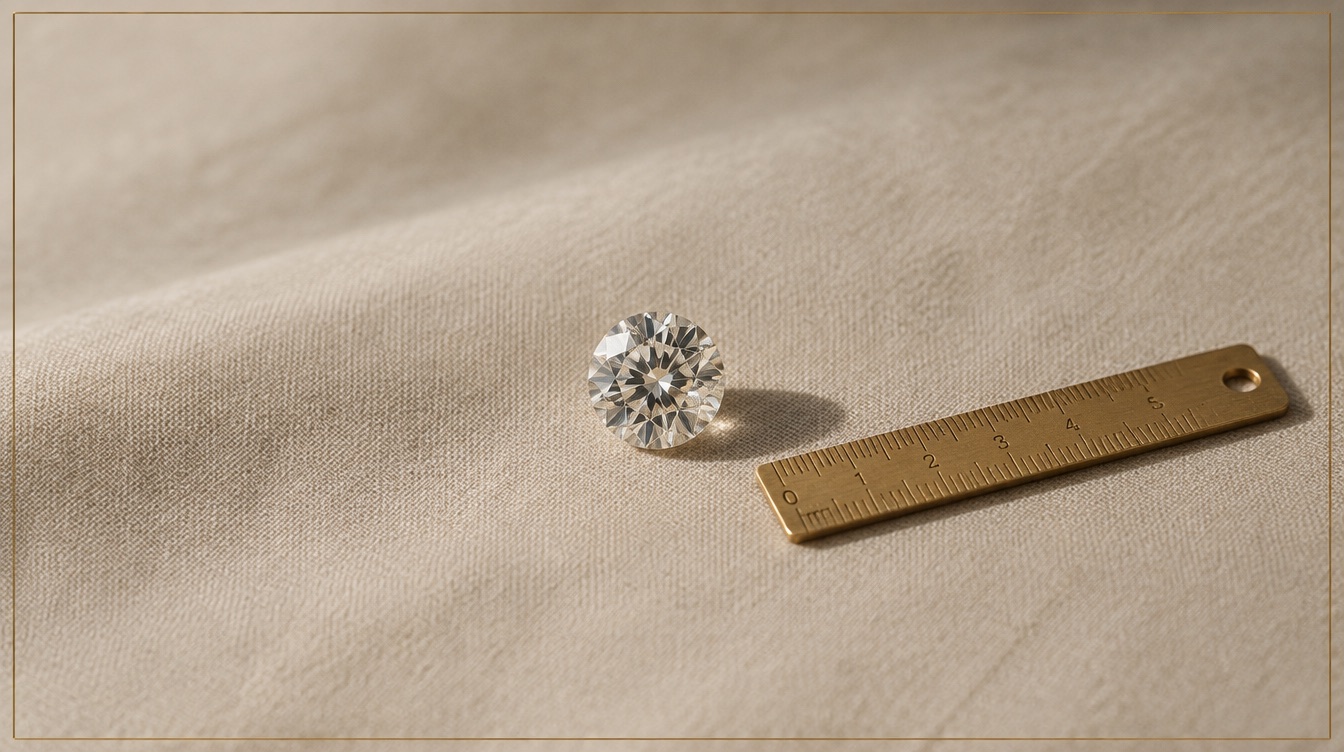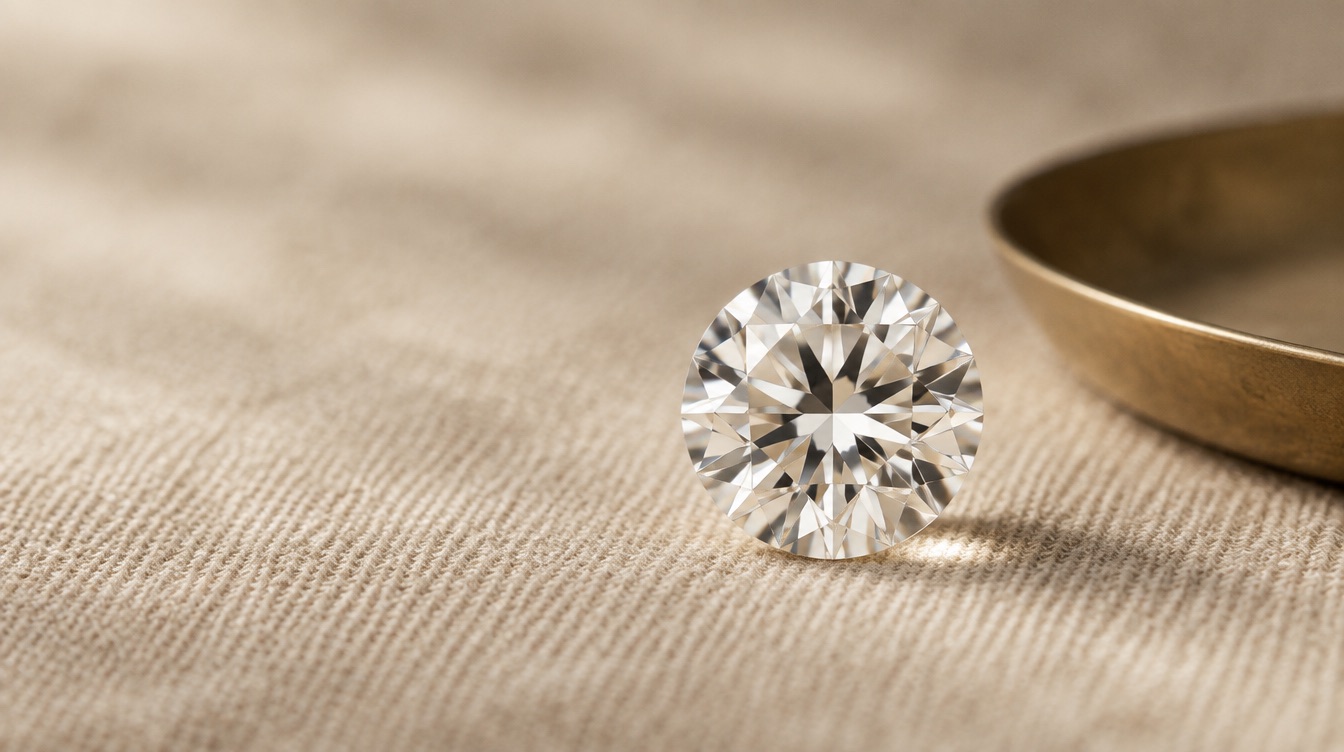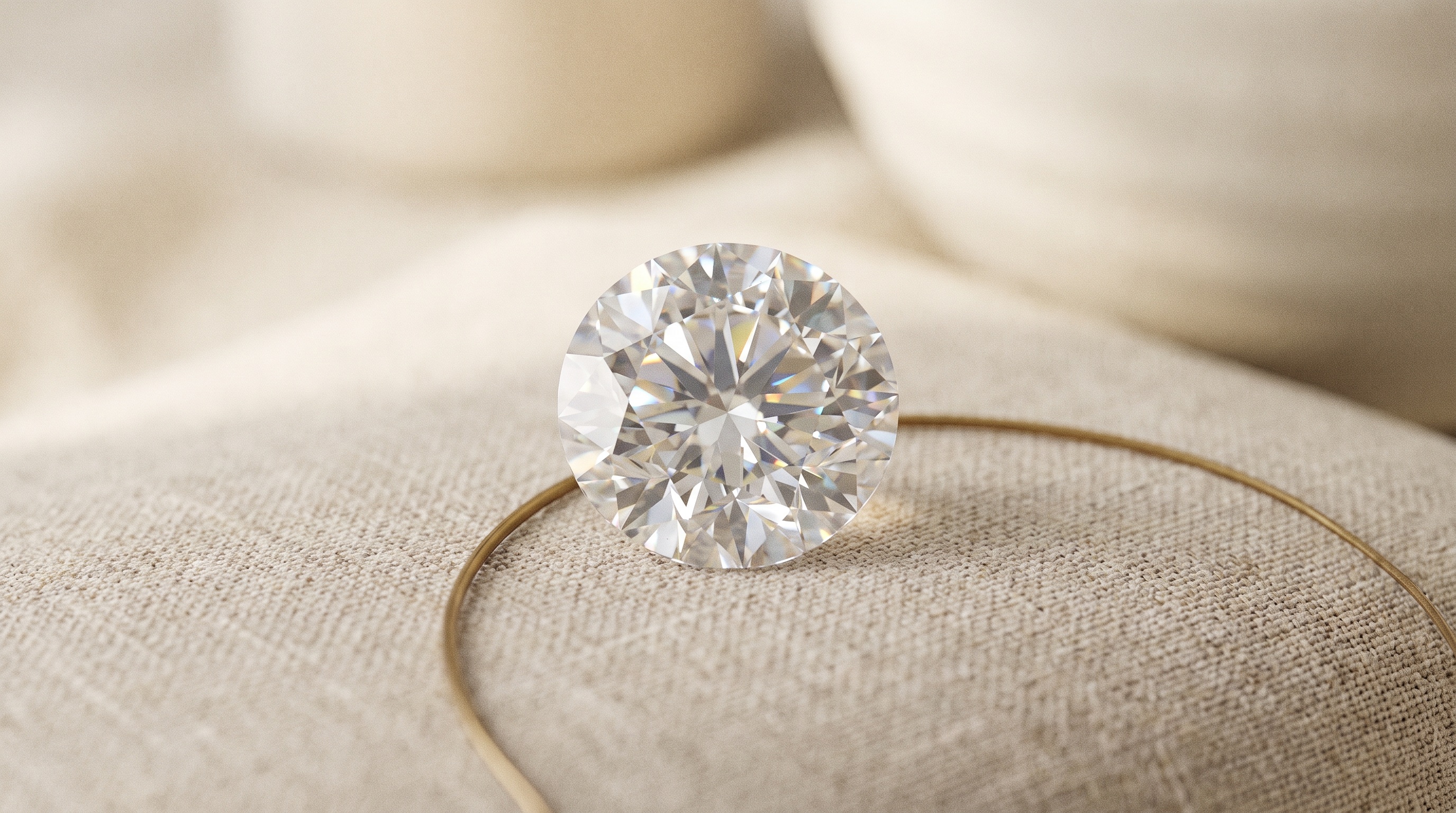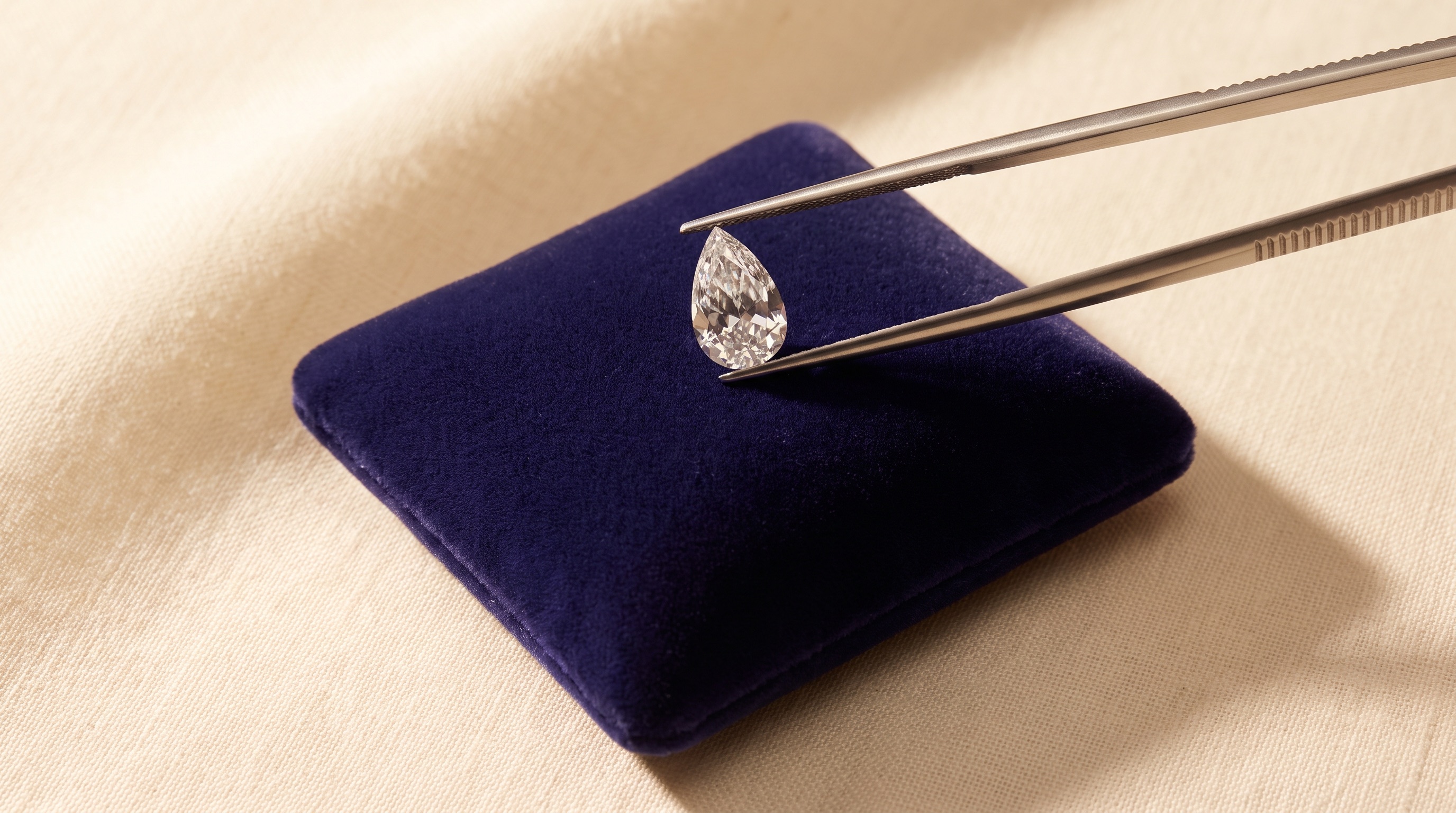
A briolette diamond is a fully three-dimensional, teardrop-shaped stone faceted on every surface with small triangular facets and no flat base, table, or pavilion — it's designed to be drilled through the top and suspended so it catches light and rotates freely, rather than set face-up like a standard cut. Briolettes are among the oldest diamond cutting styles still in commercial use today, prized for a soft, all-around glimmer that reads differently from the directional brilliance of a modern round or fancy shape.
Because a briolette has no standardized proportion system the way a round brilliant or a step cut does, sourcing and pricing one requires a different set of questions than a typical loose-stone purchase. This guide covers what a briolette actually is, how it's cut and drilled, how it compares to closely related cuts like rose cuts and simple pear-shaped drops, what quality factors matter most, and how jewelers evaluate and source briolettes for finished jewelry.
What Makes a Cut a "Briolette"
The defining feature of a briolette is total facet coverage with no flat resting surface. A standard diamond — round, cushion, emerald, whatever the shape — has a table (the flat top facet), a crown, a girdle, and a pavilion that comes to a point or a small culet at the bottom. A briolette has none of that structure. Instead, small triangular or kite-shaped facets wrap continuously around the entire stone from top to bottom, typically in a teardrop or elongated oval outline, and a hole is drilled through the narrow top end so the stone can be strung, wired, or set as a drop rather than seated in a bezel or prong setting the way a table-up stone would be.
This full-coverage faceting is what gives a briolette its characteristic look: light enters and exits from every angle rather than being concentrated through a table and returned through the crown, producing a softer, more diffuse sparkle that shifts constantly as the stone moves, rather than the fixed, directional flash of a table-up brilliant cut.
A Cutting Style With Real History
Briolette-style faceting is not a modern novelty — teardrop-shaped, fully faceted drilled stones appear in Indian Mughal-era jewelry and in European court jewelry going back centuries, well before modern proportion-based cutting existed. The style saw a significant revival in Victorian and Edwardian fine jewelry, where briolette diamonds were strung as drops on necklaces, chandelier earrings, and pendant fringe work, and it has seen renewed demand in recent years alongside the broader antique-cut resurgence — buyers drawn to old mine and old European cuts for their period character often gravitate toward briolettes for drop and pendant pieces for the same reason.
Briolette vs. Rose Cut vs. Simple Pear Drop: What's Actually Different
These three are frequently confused because they share a similar small-facet, antique-adjacent aesthetic, but they're structurally distinct cuts.
| Cut | Base | Facet coverage | Typical use |
|---|---|---|---|
| Briolette | None — fully three-dimensional | Small triangular facets over the entire surface | Drilled and suspended as a drop or fringe element |
| Rose cut | Flat | Small triangular facets over a domed top only | Set face-up like a standard stone, no drilling |
| Simple pear-shaped brilliant | Flat with standard pavilion | Standard brilliant-cut facet pattern (table, crown, pavilion) | Set as a center stone or side stone, table-up |
A rose cut has a flat base and sits face-up in a setting the same way a round brilliant does — it's a different overall form from a briolette, not simply a briolette without drilling. A standard pear-shaped brilliant has a conventional table-crown-pavilion structure and is set the ordinary way, with the point typically protected by a prong; it shares only its outline, not its faceting or its function, with a briolette. Confusing these three is one of the more common mistakes in casual conversations about antique and drop-style diamonds, so it's worth being precise before sourcing.
Quality Factors: How the 4Cs Apply to a Briolette
The standard 4Cs framework still applies to a briolette, but two of the four carry different weight than they do for a table-up stone.
- Carat weight: graded the same way as any other diamond, though briolettes are typically sold and matched by pairs or small graduated sets rather than as single center stones, so total carat weight across a set matters as much as any individual stone's weight.
- Color: standard D-to-Z grading applies, though because a briolette's light return is diffuse rather than concentrated through a table, faint color tints are somewhat less visually obvious than they would be in an equivalent round brilliant — this doesn't change the grade, only how noticeable it is face-up.
- Clarity: matters more than usual in one specific respect — because every facet is visible from every angle as the stone rotates on its drill hole, there's no "hidden" pavilion the way there is in a table-up stone, so inclusions have fewer places to disappear from view.
- Cut quality (the part that's genuinely different): since there's no standardized proportion grade for a briolette the way there is for a round brilliant, cut quality comes down to facet symmetry, consistency of the drilled hole's placement and finish, and how evenly the stone's silhouette and faceting match its pair or set — a skilled cutter's work is judged by eye and by how well a set of briolettes matches, not by an angle report.
The Drill Hole: A Detail Unique to This Cut
Because the drill hole is structural — it's how the stone is actually suspended — its placement, diameter, and finish matter in a way that has no equivalent in a standard prong- or bezel-set stone. A well-drilled briolette has a clean, centered hole with no chipping or feathering at the entry or exit point, sized appropriately for the wire, jump ring, or setting mechanism it will hang from. A poorly drilled hole — off-center, chipped, or oversized relative to the stone — can visibly throw off how the stone hangs and rotates, and in more severe cases can be a durability concern at the drill point itself. This is one of the first things worth inspecting on any briolette before committing to a purchase, whether buying loose or as part of a finished piece.
CVD Lab-Grown Briolette Diamonds
Briolette faceting works identically whether the rough material is natural or CVD lab-grown — the cutting and drilling process doesn't change based on origin, since it's a mechanical faceting operation applied to a diamond crystal either way. Lab-grown briolettes are chemically and optically identical to natural briolettes cut to the same specifications, graded on the same 4Cs scale by GIA, IGI, or GCAL, and priced at the same significant discount to natural material that applies across the CVD lab-grown category generally. For jewelers building briolette drop pieces at volume — chandelier earrings, fringe necklaces, multi-drop pendants — the lower per-stone cost of lab-grown material makes matched sets of six, eight, or more briolettes considerably more accessible than sourcing the equivalent in natural stones.
How Briolettes Are Used in Finished Jewelry
Briolettes are almost always a supporting or accent element rather than a traditional center stone, since they're not set the way a table-up stone is. The most common applications are drop and dangle earrings, where one or several briolettes hang below the earring's main setting; pendant and lariat necklaces, where a single briolette or a small graduated cluster forms the drop; and multi-stone fringe or tassel pieces, where a row of briolettes of matching or graduated size creates a moving, light-catching curtain effect. Chandelier-style earrings in particular lean heavily on briolette or briolette-adjacent drops for their tiered, cascading look — see our diamond chandelier earrings wholesale guide for more on how multi-tier drop pieces are typically built and sourced.
Matching and Calibration: The Real Sourcing Challenge
The hardest part of sourcing briolettes for a finished piece isn't finding one good stone — it's finding a matched set. Because briolettes lack a standardized cut grade, "matching" is a visual and dimensional exercise: comparable size, comparable outline and facet pattern, comparable color, and comparable light behavior across every stone in the set. A pair of drop earrings needs two briolettes that read as a true pair when worn side by side; a graduated fringe necklace needs a full run of stones stepping down consistently in size with no visual jump between neighbors. This is functionally the same discipline as sourcing matched pairs for any other side-stone or accent application, and jewelers already comfortable evaluating matched melee or matched pairs for other settings will recognize the same core skill applied to a less standardized cut. Buyers can review Guru Diam's matched-pair inventory in the matching pairs category.
Pricing Considerations for Briolettes
Briolette pricing is driven less by a single stone's specs in isolation and more by the difficulty of assembling a matched set at the size and quantity a design calls for. A single briolette of a given carat weight, color, and clarity prices roughly in line with other fancy or antique cuts of comparable specs, but a design requiring eight well-matched graduated briolettes for a fringe necklace carries a real matching premium on top of the per-stone cost, since sourcing eight stones that read as a consistent set is meaningfully harder than sourcing eight stones that individually meet a spec sheet. Buyers pricing out a briolette-heavy design should budget for that matching effort as a real line item, not assume per-carat pricing scales linearly with piece count.
Common Mistakes When Sourcing Briolettes
- Treating "briolette" and "rose cut" as interchangeable. As covered above, a rose cut has a flat base and sits face-up; a briolette is fully faceted with no base and is drilled for suspension. They're related in aesthetic but genuinely different forms.
- Skipping inspection of the drill hole. Since the hole is structural, an off-center or chipped drill point is a real defect, not a cosmetic footnote — always inspect it directly or ask for detailed photos before committing to a purchase sight unseen.
- Underestimating matching difficulty for multi-stone designs. Sourcing enough well-matched briolettes for a fringe or tiered piece takes materially longer and costs more than sourcing the same total carat weight in a single center stone or a standard calibrated melee parcel.
- Assuming a standardized cut grade exists. Unlike a round brilliant's Excellent-to-Poor cut grade, briolette quality is judged by eye — symmetry, drill-hole finish, and set-matching — not by a proportion report.
Typical Sizes and Carat Ranges
Briolettes are cut across a wide size range, from small accent drops well under half a carat used in multi-stone fringe work, up to larger single-stone pendant drops in the several-carat range for statement pieces. Smaller briolettes, generally under a carat each, are the more common commercial size for earrings and multi-drop necklaces, since a design typically calls for several stones rather than one, and keeping individual stone size modest keeps total carat weight and cost manageable across a full set. Larger single briolettes, used as a standalone pendant drop or a dramatic lariat terminus, are sourced more like a center stone — evaluated individually on the full 4Cs rather than primarily for how well they match a set — and command pricing closer to a comparable fancy-cut center stone of the same weight.
Durability and Care Considerations
Diamond's hardness (10 on the Mohs scale) means a briolette resists scratching as well as any other diamond cut, but the drilled hole introduces a durability consideration that a standard prong- or bezel-set stone doesn't have: it's a deliberate structural opening in the stone, and like any engineered weak point, it benefits from a clean, well-finished drill with no chips or feathering at the entry or exit. A well-drilled briolette in a properly sized setting — wire, jump ring, or drop bail sized appropriately to the hole — holds up to normal daily wear without issue, the same way any other diamond drop element does. As with any drilled gemstone, briolette jewelry that sees heavy daily impact (as opposed to occasional wear) benefits from periodic inspection of the drill point and the connecting hardware, the same routine maintenance check a jeweler would recommend for any dangle earring or pendant with moving parts.
Briolettes in Contemporary Design, Not Just Period Pieces
While briolettes are strongly associated with Victorian and Edwardian antique jewelry, they're not exclusively a period-revival cut. Contemporary designers use briolettes in decidedly modern settings — minimalist single-drop pendants on a fine chain, asymmetric ear climbers with a single briolette accent, or clean architectural settings that let the stone's movement and faceting do the visual work without surrounding ornamentation. The cut's core appeal — a soft, all-directional sparkle that shifts constantly rather than flashing from one fixed angle — translates just as well into a spare modern design as it does into a densely detailed antique-revival fringe piece, which is part of why demand for briolettes has held up even as broader jewelry design trends have moved toward cleaner, less ornamental aesthetics.
Sourcing Briolette Diamonds at Wholesale
Briolette sits within Guru Diam's antique and exotic cut catalog, alongside old mine, old European, rose cut, hexagonal, moval, lozenge, kite, and trillion — the premium tier of the shape taxonomy where a supplier's genuine depth beyond commodity round-brilliant inventory actually matters. Briolettes are available in both CVD lab-grown and natural material, with IGI, GIA, and GCAL certification available on loose stones, and Guru Diam can source and match sets to a specific design's size and quantity requirements rather than offering only single stones. Given how much of a briolette's value depends on facet symmetry, drill-hole quality, and set-matching rather than a standardized proportion grade, working with a supplier who can provide real photos or video of the actual stones being matched — not just a spec sheet — matters more here than it does for a standard round or step-cut purchase; this hands-on matching work is one of the areas where Guru Diam's own diamonds, cut and polished in India before final grading and shipment from the New York and Los Angeles locations, benefit from direct oversight of the faceting and drilling process rather than relying on a third party's finished-goods parcel.
Buyers can browse loose antique and fancy cut inventory in the certified diamonds category, review matched-set options in the matching pairs category, or apply for a trade account at trade partner. Jewelers designing a full drop or fringe piece around briolettes can work through custom jewelry, and buyers exploring other antique cuts in the same design family should see our rose cut diamond guide and old mine cut diamond guide.
A Practical Checklist Before Committing to a Purchase
- Confirm the cut, not just the outline. A teardrop silhouette alone doesn't confirm a briolette — verify the facet pattern wraps the full stone with no flat base before assuming it isn't actually a rose cut or a standard pear-shaped brilliant photographed at an angle.
- Inspect the drill hole directly. Ask for close-up photos or video of the drilled end specifically, not just an overall shot of the stone, since chipping or off-center drilling is easiest to miss in a standard product photo.
- Request the full set together for multi-stone designs. For earrings, fringe, or graduated necklaces, ask to see every stone in the intended set side by side rather than approving individual stones one at a time, since matching is a comparative judgment that can't be made stone-by-stone in isolation.
- Verify certification scope. A GIA, IGI, or GCAL report documents the 4Cs the same way it would for any other cut; confirm the report actually corresponds to the specific stone in hand, particularly for loose briolettes changing hands multiple times before reaching a retail account.
- Ask about origin only if it matters to the design. Both natural and CVD lab-grown briolettes are widely available; the choice comes down to budget and whether the finished piece is being marketed on natural provenance or on value at a given carat weight.
Frequently Asked Questions
What is a briolette diamond?
A briolette is a teardrop-shaped diamond faceted with small triangular facets over its entire surface, with no flat base, table, or pavilion. It's drilled through the top so it can be strung or set as a suspended drop rather than seated in a bezel or prong setting.
What is the difference between a briolette and a rose cut?
A rose cut has a flat base and sits face-up in a setting like any standard stone. A briolette has no flat base at all — it's faceted on every surface and drilled for suspension, designed to hang and rotate rather than sit fixed in place.
Are briolette diamonds expensive?
A single briolette prices similarly to other antique or fancy cuts of comparable carat, color, and clarity. The real cost driver for briolette-heavy designs is matching — assembling a set of several briolettes that read as consistent in size, outline, and color carries a real premium over sourcing the same total weight as a single stone.
Can briolette diamonds be lab-grown?
Yes. Briolette faceting and drilling apply the same way to CVD lab-grown rough as to natural rough, producing a stone that's chemically and optically identical to a natural briolette at the same specifications, at a significant cost discount typical of lab-grown material generally.
What jewelry are briolette diamonds used in?
Briolettes are most commonly used as drop elements in dangle earrings, pendant and lariat necklaces, and multi-stone fringe or tassel pieces, where their all-around faceting produces a moving, light-catching effect as the stone rotates.
What should I check before buying a briolette diamond?
Inspect the drill hole for centering, chipping, and appropriate sizing, since it's structural to how the stone hangs. For multi-stone designs, confirm the stones are genuinely matched in size, outline, and color rather than simply meeting the same spec sheet independently.
Do briolette diamonds come with a certification report?
Yes — briolettes can be graded and certified by GIA, IGI, or GCAL on the same 4Cs scale used for any other diamond cut. Certification documents carat, color, and clarity the same way it would for a round or fancy-shape stone; it doesn't grade drill-hole quality or set-matching, which are evaluated separately by eye.