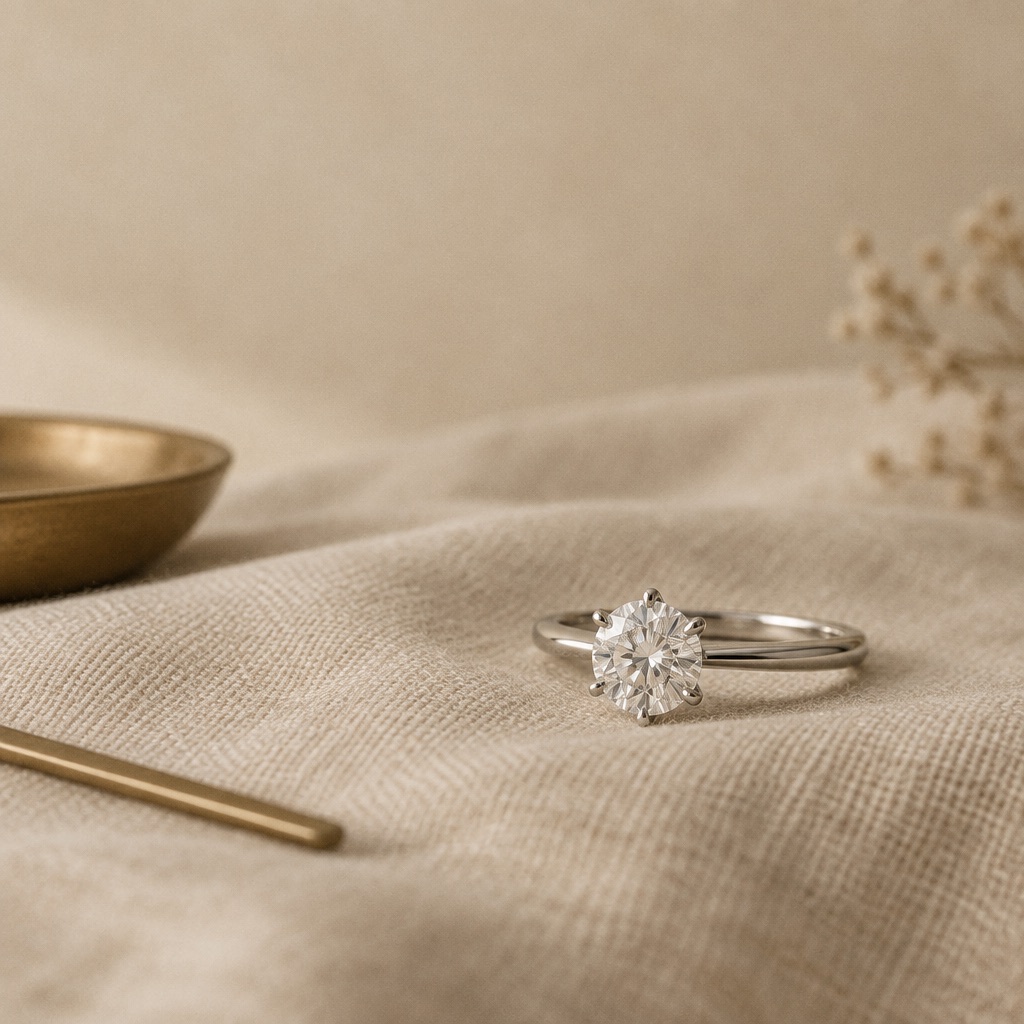
There's no single "best place" to buy an engagement ring that fits every buyer — the right source depends on whether a stone will be custom-set or bought pre-made, how much documentation and price transparency matters, and whether the buyer wants an independent jeweler's guidance or a self-directed online purchase. The more useful question isn't which specific retailer to pick, but which criteria — certification, return policy, pricing transparency, and customization ability — actually predict a good buying experience regardless of the channel chosen.
The Four Channels Buyers Actually Choose Between
Nearly every engagement ring purchase falls into one of four broad channels, each with real tradeoffs:
- Independent local jewelers — in-person guidance, hands-on comparison of stones, and often custom design capability, at typically higher overhead-driven prices.
- Direct-to-consumer online retailers — wide selection, transparent pricing, and detailed photography or video, without in-person handling before purchase.
- Chain/mall jewelers — convenient locations and in-person try-on, but frequently narrower certified-stone selection and less price transparency than online-first retailers.
- Custom design through a designer or manufacturer — full control over stone sourcing and setting design, typically requiring more buyer involvement and lead time than a pre-made purchase.
None of these is universally superior — a buyer prioritizing hands-on comparison before committing has different needs than one who has already decided on exact specifications and just wants the best price for them.
Certification: The Single Most Important Filter
Regardless of channel, a seller's willingness to provide a legitimate grading report from a recognized lab — GIA, IGI, or GCAL — for any diamond above a modest size is the clearest signal of a trustworthy source. A certificate states measured color, clarity, cut, and carat weight independently of the seller's own description, and discloses whether a stone is natural or lab-grown. A seller reluctant to provide certification, or one relying on an unfamiliar or unverifiable lab, is a red flag worth taking seriously regardless of how appealing the price or the in-store experience otherwise is.
Comparing Pricing Transparency Across Channels
| Channel | Typical Pricing Transparency | Typical Markup Structure |
|---|---|---|
| Independent local jeweler | Varies widely; often negotiable but not itemized | Higher, reflects overhead, in-person service, and relationship value |
| Online DTC retailer | Usually high — itemized stone and setting pricing shown separately | Lower overhead typically passed through as lower prices |
| Chain/mall jeweler | Often lower — bundled pricing, frequent "sale" framing | Higher, reflects retail rent and brand marketing costs |
| Direct wholesale/trade sourcing (for jewelers building custom pieces) | Highest — cost-based pricing on stones and manufacturing | Lowest, since it removes retail markup layers entirely |
This is one reason retail jewelers increasingly source loose stones and custom manufacturing directly from wholesale suppliers rather than pre-made inventory — it lets them offer clients meaningfully better pricing transparency while retaining full margin control on the finished piece.
Return and Upgrade Policy: Read Before, Not After
A clear, workable return or exchange policy matters more for an engagement ring purchase than almost any other jewelry category, given how much rides on getting the choice right. Buyers should confirm, in writing, the exact return window, whether a full refund or store credit is offered, whether a restocking fee applies, and whether an "upgrade" policy exists that credits the original purchase price toward a larger or different stone later — a common and valuable option for buyers who might want a larger center stone as a future anniversary upgrade. Policies vary widely enough between sellers that assuming a standard return window without checking is a common and avoidable mistake.
In-Person vs. Online: What Each Actually Solves
In-person purchase solves the problem of judging a stone's real-world appearance — color, brilliance, and how it looks under different lighting — directly rather than through photography. It also allows immediate physical comparison between several stones with different specifications, which is genuinely hard to replicate online. Online purchase solves a different problem: access to a far larger inventory than any single physical location can stock, usually paired with more transparent, itemized pricing and the ability to compare specifications methodically before committing. Many buyers now use a hybrid approach — researching and narrowing specifications online, then either buying online with a strong return policy as a safety net, or bringing that research into an in-person visit to make a final, informed comparison.
Custom Design: When It's Worth the Extra Step
Buying a pre-made ring is faster and simpler, but a custom design lets a buyer choose the exact center stone independently of the setting, rather than accepting whatever pairing a retailer has already assembled. This matters most for buyers with a specific vision (an antique-cut center stone, an unusual metal combination, a design referencing a family heirloom) that pre-made inventory is unlikely to match. Custom work through a manufacturer typically takes longer than buying off the shelf, though well-run custom shops have shortened this considerably — some finished custom rings now come back in as little as 4-6 days once the design and stone are finalized, a meaningful change from the multi-week custom timelines that used to be standard.
Evaluating a Jeweler's Trade Credentials
Beyond certification on the stone itself, it's worth asking who the jeweler sources from and whether that supply chain is itself transparent. Independent jewelers and designers who source loose stones and custom manufacturing from established wholesale suppliers — rather than assembling inventory from unclear or undisclosed sources — are generally better positioned to answer detailed sourcing questions and stand behind a piece's documentation. This is a reasonable, non-intrusive question to ask any jeweler before committing to a custom order: where does the center stone come from, and can that sourcing be verified independently of the jeweler's own description?
Red Flags Across Any Channel
A handful of warning signs apply regardless of where a buyer is shopping: pressure to complete a purchase quickly without time to review documentation; pricing presented only as a percentage discount off an unverifiable "original" price rather than a clear absolute number; reluctance to provide a certificate for a diamond above roughly a third of a carat; and vague or inconsistent answers about whether a stone is natural or lab-grown. None of these guarantee a problem in isolation, but any combined with hesitation about verifying a stone's documentation is reasonable grounds to walk away or request independent verification before finalizing.
Setting a Realistic Budget Before Shopping Anywhere
Regardless of channel, deciding on a budget range before beginning to shop — rather than discovering it reactively as prices are presented — makes comparison across channels considerably easier and reduces the chance of overspending on emotion in the moment. A useful approach is separating the budget into center stone and setting as two distinct line items, since this makes it much easier to compare, for instance, a smaller stone in an elaborate halo setting against a larger stone in a simple solitaire at a similar total price, a tradeoff that gets obscured when a ring is priced only as a single bundled total.
Natural vs. Lab-Grown: A Decision That Affects Where to Shop
Some channels specialize more heavily in one origin than the other, which is worth knowing before comparing prices across sellers. Lab-grown CVD diamonds are chemically and optically identical to natural diamonds but typically cost significantly less at equivalent quality, letting a fixed budget reach a larger stone or higher color/clarity grade. Sellers and wholesalers that carry both natural and lab-grown catalogs, properly disclosed and never blended together on the same listing, give buyers the most direct like-for-like price comparison; sellers that only carry one origin make that comparison harder to do without shopping multiple places.
Questions Worth Asking Before Committing to Any Seller
A short, consistent set of questions applied across every seller under consideration levels the comparison: Is a certificate from GIA, IGI, or GCAL included, and can its authenticity be verified independently through the issuing lab? Is pricing itemized between stone and setting, or bundled? What's the exact return and upgrade policy, in writing? Can the center stone be sourced or swapped independently of a pre-made setting? And where does the stone actually come from — can that sourcing claim be substantiated rather than taken on faith? A seller that answers all of these clearly and without hesitation is a stronger bet than one offering only a compelling price with vague answers to the rest.
Buying for a Surprise Proposal vs. Shopping Together
Whether the ring is a surprise or a joint decision changes which channel makes the most sense. A surprise purchase benefits from channels with flexible sizing and strong return/exchange policies, since the buyer is guessing at ring size and stone preferences without direct input — an online retailer with a generous resizing and return window, or a local jeweler willing to hold a piece for adjustment after the proposal, both work well here. Shopping together removes the guesswork entirely and opens up in-person comparison as a realistic option even for buyers who'd otherwise lean online, since trying rings on together clarifies preferences (metal color, band width, stone shape) that are hard to communicate secondhand. Some couples split the difference: shopping together to establish specifications and getting sized, then having one partner finalize the actual purchase as a small remaining surprise around exact stone selection or a design detail.
Warranty, Resizing, and Lifetime Service Terms
Beyond the initial return window, it's worth understanding what ongoing service a seller offers after purchase — this varies more between sellers than buyers often expect. Useful questions include whether free or discounted resizing is offered within the first year, whether prong tightening and general inspection are included or complimentary, and whether a manufacturer's warranty covers setting defects (a loose prong from a manufacturing flaw) versus normal wear (a prong that loosens after years of daily use, which isn't a defect). Independent jewelers and custom manufacturers often provide more personalized after-sale service since they retain a direct relationship with the piece; large online retailers increasingly offer comparable service through partnerships with local jewelers or mail-in service programs, but the specifics are worth confirming rather than assuming they match the in-person experience.
How Geography Affects Selection and Price
Physical location still matters for buyers who want to see multiple stones in person, even in an increasingly online-first market. Established diamond districts — New York's 47th Street, Los Angeles's jewelry district, and similar concentrated trade hubs in other major cities — offer a density of independent jewelers, wholesalers, and manufacturers that smaller markets simply can't match, often with more competitive pricing due to the concentration of trade competition in one area. Buyers outside these hubs increasingly bridge the gap by working with jewelers or wholesale suppliers that ship nationally, combining a local jeweler's design and setting service with stones sourced from a wholesale supplier based in one of these hubs, which effectively brings big-city selection and pricing to a buyer anywhere.
Financing and Payment Considerations
Engagement ring purchases are large enough that financing terms genuinely affect the total cost, and terms vary meaningfully across channels. In-house financing through a jeweler or retailer sometimes carries promotional zero-interest periods but can revert to high deferred interest if not paid in full within that window — buyers should read these terms carefully rather than assuming a "no interest" offer applies unconditionally. Third-party financing or a standard credit card offers more predictable terms but rarely the promotional rates a retailer's in-house program might advertise. Paying in full avoids financing costs entirely but isn't realistic for every buyer's timeline, which is a legitimate reason financing exists as an option rather than a sign of a bad purchase decision.
Common Misconceptions About Finding the "Best" Retailer
A few assumptions steer buyers wrong often enough to call out directly. The first is treating brand recognition as a proxy for quality or value — a well-known retail name says nothing about a specific stone's actual grading or the fairness of its price, and often reflects marketing spend more than sourcing quality. The second is assuming online prices are automatically lower across the board; while online DTC retailers often do offer better transparency and lower overhead-driven markup, a poorly negotiated in-person deal with an independent jeweler willing to work on margin can sometimes beat an online listing, particularly on larger stones where relationship-based pricing has more room to move. The third is assuming a single retailer will be the best option across every part of the purchase — it's entirely reasonable, and often optimal, to source a certified loose stone from one channel and have the setting custom-made by a separate jeweler or manufacturer, rather than expecting one seller to be the best choice for both.
A Practical Comparison Checklist
Applying the criteria above consistently across every seller under consideration turns an overwhelming decision into a structured comparison:
| Criterion | What to Confirm |
|---|---|
| Certification | GIA, IGI, or GCAL report provided; report number verifiable through the issuing lab's own database |
| Pricing structure | Stone and setting priced separately, not bundled into a single opaque total |
| Return/upgrade policy | Exact window, refund vs. credit, restocking fees, and upgrade-credit terms in writing |
| Sourcing transparency | Seller can specifically explain where the stone comes from and, ideally, name the wholesale or mining source |
| Customization | Ability to source or swap the center stone independently of a pre-made setting |
| After-sale service | Resizing, prong tightening, and warranty terms for the first 1-2 years of ownership |
A seller scoring well across most of these criteria is a safer bet than one that only wins on price or brand recognition while falling short on the rest.
How Long the Buying Process Typically Takes
Timelines vary considerably by channel and whether a pre-made or custom piece is chosen. An in-stock pre-made ring from a retailer with available inventory can ship same-day or arrive within days. A custom design built around a specifically sourced loose stone takes longer by nature, since it involves selecting or sourcing the stone, finalizing a design, and manufacturing the piece — historically several weeks at many jewelers, though faster manufacturing partnerships have compressed some custom timelines to as little as 4-6 days once the design and stone are locked in. Buyers working toward a specific date (an anniversary, a planned trip, a holiday) should confirm realistic turnaround time upfront and build in a buffer, since custom work is more sensitive to unexpected delays than an in-stock purchase. It's also worth asking specifically whether a quoted turnaround time starts from order placement or from final design approval, since these can differ by several days and materially affect whether a piece arrives in time for a planned date.
Shipping cutoffs matter for in-stock purchases in particular — a supplier or retailer with same-day shipping on in-hand inventory (before a defined afternoon cutoff, rather than a vague "ships within a few business days" promise) gives a much clearer, more reliable delivery estimate for buyers working against a deadline. Independent jewelers who source from wholesale suppliers with same-day shipping cutoffs can often quote a more confident delivery date to their own retail clients than one relying on a slower-moving supply chain, which is a meaningful downstream benefit for a consumer even though the shipping relationship itself happens one level up in the supply chain.
How Guru Diam Fits Into This Sourcing Landscape
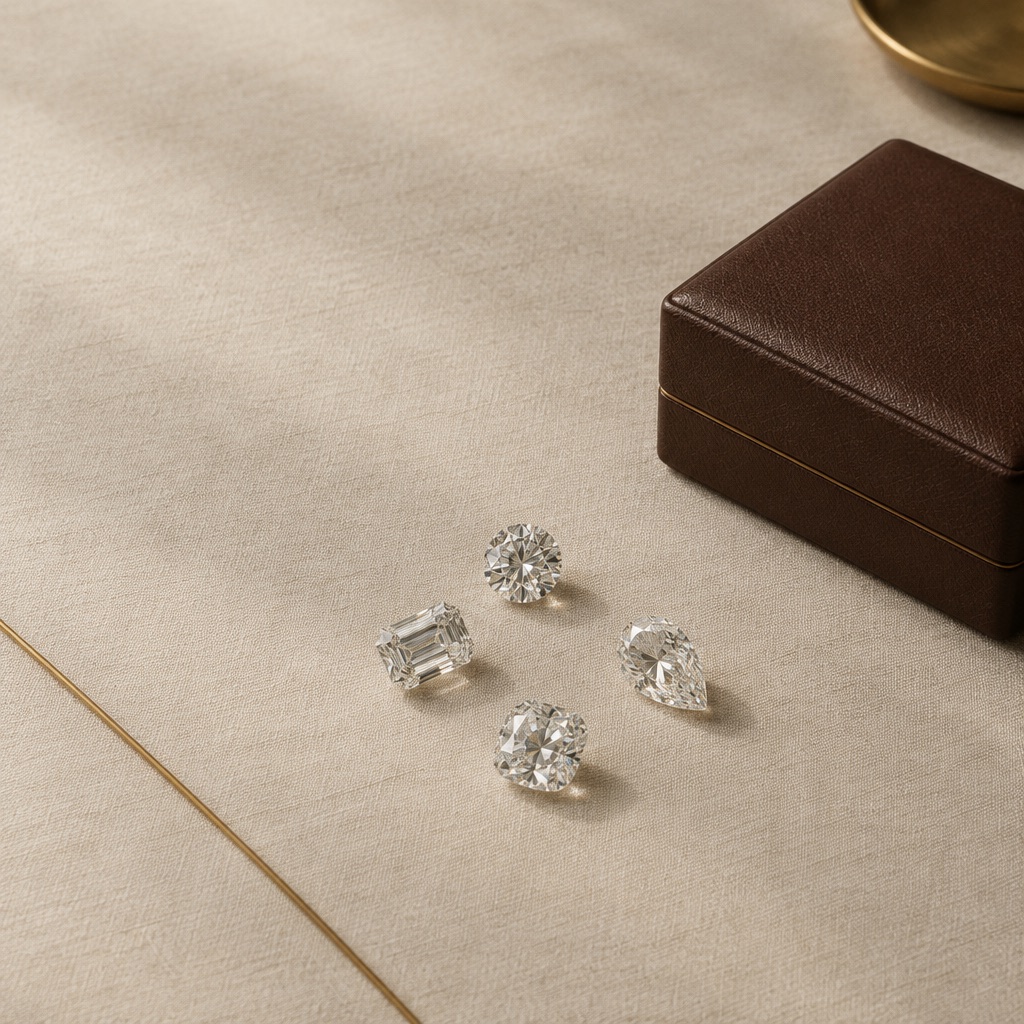
Guru Diam is a B2B wholesale supplier — the company sells to independent jewelers, designers, and manufacturers building engagement rings for their own retail clients, not directly to end consumers shopping for a personal purchase. For a consumer evaluating "best place to buy," this is relevant context: many independent jewelers offering strong pricing transparency and genuine customization are themselves sourcing loose stones and custom manufacturing from wholesale suppliers like Guru Diam, which carries CVD lab-grown, natural, and certified loose diamonds across standard, antique, and exotic shapes, with IGI, GIA, and GCAL certification available. A consumer working with an independent jeweler can reasonably ask whether that jeweler sources this way, since it directly affects both pricing and the breadth of stone options available for a custom design.
Jewelers and designers evaluating wholesale sourcing partners can review certified inventory through certified diamonds, explore custom manufacturing capability at custom jewelry, or set up a trade account through trade partner. For general wholesale sourcing information, start at the wholesale hub.
Frequently Asked Questions
Is it better to buy an engagement ring online or in a store?
Both work well depending on priorities — online typically offers better price transparency and wider selection, while in-person allows direct comparison of stones before committing. Many buyers now research online and finalize either online with a strong return policy or in person after narrowing specifications.
What should I look for in a place to buy an engagement ring?
Certification from a recognized lab (GIA, IGI, or GCAL), transparent itemized pricing, a clear written return and upgrade policy, and the ability to answer sourcing questions about the stone confidently and specifically.
Is it cheaper to buy loose diamonds and a setting separately?
Often yes, since it allows independent price comparison on each component and avoids paying for a pre-assembled combination that may not represent the best value for either the stone or the setting individually. It also gives more control over matching a specific stone to a specific design.
Should I buy a lab-grown or natural diamond for an engagement ring?
Both are genuine diamonds, chemically and optically identical, differing only in origin. Lab-grown typically costs significantly less at equivalent quality, which is why an increasing share of buyers choose it, but the decision ultimately comes down to personal preference and budget priorities.
How do I know if a jeweler is trustworthy?
A trustworthy jeweler provides certification for diamonds above a modest size without hesitation, gives clear written return and upgrade terms, and can answer specific questions about where stones are sourced from. Reluctance on any of these points is a reasonable basis for caution.
Should I buy an engagement ring before or after a proposal?
It depends on whether the proposal is a surprise. A surprise purchase should prioritize a flexible resizing and return policy since sizing is often a guess; shopping together removes that uncertainty and opens up a wider range of channels, since exact preferences are confirmed in person before buying.