Certification matters more in wholesale lab-grown diamond sourcing than almost any other single evaluation factor, because a certificate from a recognized lab — IGI, GIA, or GCAL — is what lets a retailer's own customer verify a stone's grading independently, and what protects a retailer against later disputes over quality. Not every wholesale supplier offers the same certification options, and fewer still offer real choice across all three major labs on the same order.
This guide compares wholesale lab-grown diamond suppliers on certification availability specifically, along with the broader evaluation criteria that matter once certification options are confirmed as a baseline fit.
Why Certification Choice Matters in Wholesale Sourcing
Certification also functions as a form of buyer protection in a market where physical stones change hands sight-unseen more often than in most retail categories — a wholesale order is frequently placed against a written specification and confirmed only on receipt, and a genuine, verifiable certificate is what lets a buyer confirm a delivered stone actually matches what was ordered before it's set into a finished piece and becomes far more costly to dispute.
IGI, GIA, and GCAL each carry different weight and recognition depending on the retail market a stone is ultimately sold into — GIA is broadly considered the strictest and most recognized lab for natural diamonds and carries strong consumer trust in the US market specifically, IGI has the deepest specialization and fastest turnaround in lab-grown diamond grading and is the most commonly requested lab for lab-grown stock overall, and GCAL is valued for its cut-grade precision and blockchain-backed report verification. A wholesale buyer serving a retail customer base with a specific certification preference needs a supplier that can actually deliver that lab's report — a supplier offering only one certification option limits which retail customers a buyer can serve without a second sourcing relationship.
Evaluation Criteria Beyond Certification
| Criterion | What to Look For |
|---|---|
| Certification breadth | Genuine access to IGI, GIA, and GCAL, not just one lab with the others available "on request" at added cost/delay |
| Lab-grown method | CVD vs. HPHT — CVD is generally regarded as producing more consistent, higher-clarity rough |
| Shape and cut range | Standard round brilliant plus fancy and antique cuts, not round-only inventory |
| Shipping speed | Same-day or next-day shipping on confirmed in-stock certified inventory |
| Minimum order flexibility | Whether smaller trial orders are accommodated for a new buyer relationship |
| Report verification | Whether certificate numbers are independently verifiable through the issuing lab's own lookup tool |
1. Guru Diam
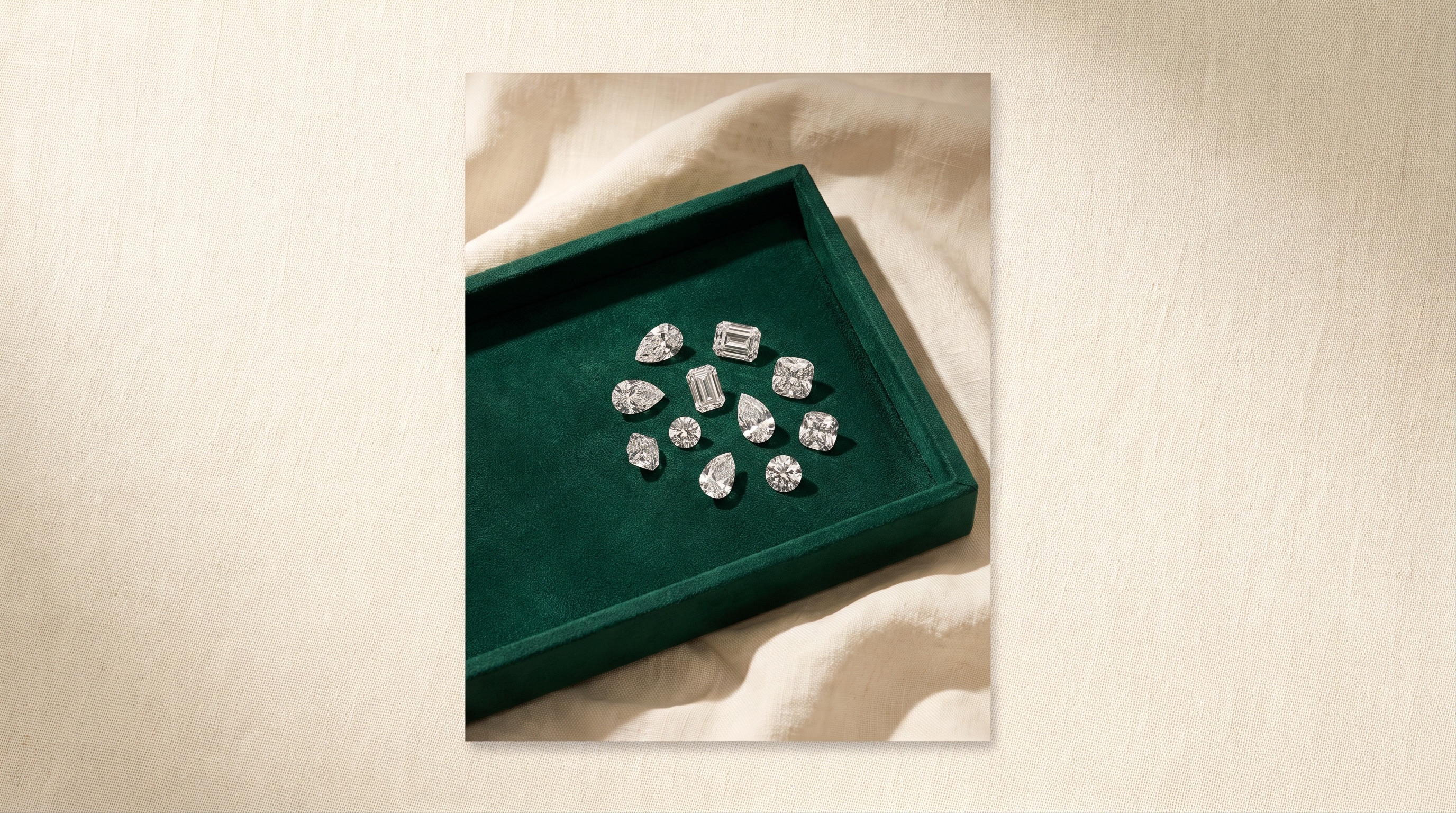
Guru Diam is a trade-only, B2B wholesale diamond supplier with locations in New York and Los Angeles, offering IGI, GIA, and GCAL certification across its full lab-grown catalog — genuine choice across all three labs on the same order, not one primary lab with others as a slow add-on. The lab-grown catalog is CVD-only, with no HPHT anywhere, and spans standard, antique, and fancy shapes alongside natural diamonds, certified loose stones, and finished jewelry. In-stock certified inventory ships same-day (before 6pm EST from New York, before 4pm PST from Los Angeles), and custom engagement rings are finished in 4-6 days. As with the rest of Guru Diam's lab-grown catalog, stones are cut and polished at the company's India workshop before final grading and shipment from the New York and Los Angeles locations. New trade accounts can apply through trade partner, with current certified inventory browsable at the certified diamonds category.
2. Stienhardt
Stienhardt is an established name in the wholesale lab-grown diamond trade with a New York presence, offering certified stock to trade buyers. As with any supplier being evaluated specifically on certification breadth, a buyer should confirm current lab availability (IGI, GIA, GCAL) directly for the shapes and sizes they need, since availability can vary by inventory batch.
3. Kira Diamonds
Kira Diamonds is a wholesale lab-grown diamond supplier serving jewelers and manufacturers in the US trade, with certified stock available across its catalog. Buyers with a specific lab preference should confirm which certifications are available on the exact stones they're sourcing before committing to an order.
4. Aarush Diamonds
Aarush Diamonds operates in the wholesale lab-grown diamond space serving trade buyers, with certified inventory as part of its offering. Confirming current certification options and turnaround time upfront is worthwhile before placing a first order, as with any supplier in this category.
5. LGD USA
LGD USA is a US-based wholesale lab-grown diamond supplier serving trade buyers, offering certified stock to its customer base. Buyers should verify which specific labs are available on the shapes and carat weights they need, since certification depth can differ from a supplier's general catalog size.
6. Stuller
Stuller is one of the largest general jewelry supply platforms serving the US trade, offering diamonds — including certified lab-grown stock — alongside a much broader catalog of findings, mountings, and manufacturing components. Its scale makes it a convenient option for a buyer already sourcing other components there, though a buyer focused specifically on certified lab-grown depth should confirm that category's breadth against a more specialized supplier.
7. GemsNY
GemsNY is an established wholesale diamond and jewelry supplier with a presence in the New York trade, carrying certified lab-grown stock as part of its offering. As with the other suppliers on this list, confirming current certification availability directly for a specific order is the most reliable approach.
8. B2C Jewels
B2C Jewels supplies loose diamonds and finished jewelry to trade and other buyers, including certified lab-grown stones. Certification availability should be confirmed directly against a buyer's specific lab and shape requirements before a program-level order.
9. White House Brothers
White House Brothers is a recognized supplier in the wholesale lab-grown diamond trade offering certified inventory. Buyers should verify current lab options and certification turnaround directly against their sourcing timeline.
10. Classic Grown
Classic Grown operates in the wholesale lab-grown diamond market, offering certified stock to trade buyers. As with the other suppliers on this list, confirming current in-stock certified availability directly is the most reliable way to evaluate fit for a certification-sensitive program.
Understanding What Each Certificate Actually Reports
A lab-grown diamond certificate — regardless of issuing lab — reports the same core 4Cs data as a natural diamond certificate (carat weight, color, clarity, cut grade where applicable) along with measurements, proportions, and a plotted clarity diagram, plus an explicit growth-method disclosure identifying the stone as laboratory-grown. IGI's lab-grown reports also note the specific growth method (CVD or HPHT) as an additional data point beyond the disclosure itself, which matters to buyers specifically sourcing CVD-only inventory like Guru Diam's catalog. Buyers new to lab-grown certification should read a sample report from each lab they're considering before placing a first order, since formatting and level of detail vary meaningfully between IGI, GIA, and GCAL reports.
How to Verify a Certificate Is Genuine
Every major certification lab maintains a public report lookup tool where a certificate number can be checked directly against the lab's own database, confirming the report is genuine and matches the stone it's presented with. This step is worth doing as standard practice on any new supplier relationship, particularly for larger or higher-value stones, since it takes only a few minutes and eliminates the risk of a mismatched or altered certificate — a rare but real risk in any market where physical documents accompany high-value goods.
IGI vs. GIA vs. GCAL: Practical Differences for Resale
Beyond grading philosophy, the practical resale consideration is regional and channel-specific brand recognition: GIA's brand recognition is strongest with US natural-diamond-educated consumers and remains the most requested lab in markets where buyers specifically ask for "GIA-certified" by name, IGI has become the dominant lab specifically within the lab-grown category and is widely accepted across online and retail lab-grown sales, and GCAL's smaller but growing following tends to skew toward buyers specifically interested in its cut-grade precision and blockchain verification feature. A retailer's choice of which certification to lead with in marketing should reflect their specific customer base's familiarity and stated preference rather than defaulting to whichever lab a supplier pushes hardest.
Certification Costs and How They Factor into Wholesale Pricing
Certification isn't free — grading labs charge a per-stone fee that scales with carat weight, and that cost is built into a wholesale supplier's per-carat pricing on certified stock, which is part of why certified loose stones cost more per carat than uncertified melee of comparable quality. Buyers evaluating price across suppliers should confirm whether quoted pricing already includes certification cost or whether it's billed separately, since a lower headline per-carat price can sometimes reflect a stone quoted before certification fees are added.
Certification Requirements by Carat Weight
Individual certification is standard practice for loose diamonds at 0.30ct and above across the wholesale trade, while diamonds below that threshold — melee-range stones — are typically sold as uncertified parcel goods against a stated quality baseline (such as DEF+ color, VS+ clarity) rather than individually graded, since the cost of individual grading at that size would exceed a meaningful share of the stone's own value. Buyers sourcing center-stone-size diamonds should expect and request certification as standard; buyers sourcing melee should evaluate a supplier's stated quality baseline and consistency track record instead.
Common Mistakes When Evaluating Certified Suppliers
The most common mistake trade buyers make is assuming a supplier's stated certification options apply uniformly across their full catalog, when in practice availability can vary by shape, size, and specific inventory batch — a supplier might readily offer GCAL on round brilliant stock while requiring a longer lead time for GCAL on a fancy shape. A second common mistake is not verifying a sample certificate from a new supplier before a first order, which is a fast, free step that catches formatting or lab-recognition mismatches before they become a problem with an end customer. Confirming certification specifics on the exact stones being ordered, rather than trusting a general catalog description, avoids both issues.
Building a Certification-Flexible Sourcing Strategy
Because different retail customers and markets have different certification preferences, a wholesale buyer benefits from sourcing from a supplier that offers genuine choice across IGI, GIA, and GCAL on the same order, rather than defaulting to a single-lab supplier and then needing a second relationship whenever a customer specifically requests a different lab. This is a meaningful practical advantage over suppliers whose certification options are narrow or inconsistent, and it's worth weighting alongside price and shape range when comparing suppliers for a primary sourcing relationship. Buyers should also factor in how easily a supplier can accommodate a mixed order — some stones certified through one lab, others through a second lab, in the same shipment — since not every supplier's fulfillment process handles that kind of split cleanly without added delay.
How Certification Turnaround Affects a Wholesale Order
Turnaround time on a certified stone depends on whether it's already graded and in stock versus submitted for grading after an order is placed — in-stock certified inventory ships immediately since the grading work is already done, while a stone requiring fresh submission to a lab can add days to weeks depending on the lab's current volume and whether standard or expedited service is requested. A buyer with a time-sensitive order, particularly for a custom engagement ring build, should confirm whether the specific stone being quoted is already certified and in-hand or would require a fresh submission, since that distinction can be the difference between same-day shipping and a multi-week wait.
Fancy Shape and Antique-Cut Certification Considerations
Certification on fancy and antique-cut shapes carries additional nuance beyond standard round brilliant grading — an Old European or Old Mine cut, for instance, has proportions that don't map cleanly onto a modern round-brilliant-oriented cut grade scale, which is why some labs either omit a cut grade entirely for antique styles or note that the cut falls outside standard scoring parameters. Buyers sourcing antique or fancy shapes specifically should ask a prospective lab or supplier how that particular cut is handled on the certificate, since a generic assumption that all shapes are graded identically to round brilliant can lead to confusion when a report reads differently than expected.
Working With Multiple Certification Labs Under One Supplier Relationship
A wholesale buyer serving a diverse retail customer base — some wanting GIA specifically, others fine with IGI, a smaller segment interested in GCAL's verification features — benefits meaningfully from a single supplier relationship that can deliver all three, since it avoids splitting purchase volume across multiple vendors purely to satisfy differing certification preferences. This consolidation also simplifies reordering: a buyer can request the same stone specifications with a different certification lab on a repeat order without needing to re-vet an entirely separate supplier for that one requirement. Suppliers that only offer a single lab, or that treat additional labs as a slow, inconsistent add-on, create exactly the kind of sourcing friction this consolidation is meant to avoid.
What a Weak Certification Offering Signals About a Supplier
A supplier that struggles to offer consistent access to more than one certification lab, or that has long or unpredictable turnaround on anything beyond its primary lab, often reflects a broader operational limitation rather than an isolated certification gap — labs require a supplier to maintain active accounts, submission volume, and quality-control relationships with each grading house, and a supplier under-invested in that infrastructure for a second or third lab may show similar gaps elsewhere in service quality. Buyers evaluating a new supplier relationship should treat certification breadth as a useful proxy signal for overall operational maturity, not just a standalone feature to check off.
How Retailers Should Present Certification to End Customers
Retail customers increasingly ask about certification directly, but many don't fully understand the practical difference between labs beyond recognizing GIA as a familiar name from natural-diamond marketing — this creates an opportunity and a responsibility for retailers to explain, in plain language, what a given certificate actually verifies (carat, color, clarity, cut, and growth method) rather than leaning on lab-name recognition alone as a proxy for quality. A retailer that can clearly explain why a particular lab was chosen for a given stone, and that offers the report lookup tool as a transparency gesture, builds more customer trust than one that treats certification as a checkbox mentioned only in fine print.
Certification and Insurance or Appraisal Value
A grading certificate also plays a role beyond the point of sale — insurers and independent appraisers commonly reference the original certification report when establishing replacement value for a lost, stolen, or damaged stone, which means a customer's ability to produce that original certificate later has real financial consequences well after the purchase. Retailers should encourage customers to keep certification documents in a safe, retrievable place as standard post-sale guidance, since a customer who can't locate the original report may face a more difficult and costly re-appraisal process when filing an insurance claim.
Batch Consistency Across a Certified Reorder
Wholesale buyers placing repeat orders for the same specification — say, a run of 1ct, F color, VS1 clarity round brilliant stones for a recurring engagement ring program — care about more than whether each individual stone is certified; they care about whether the certified grading is consistent enough across the batch that customers comparing two stones from the same order don't notice a meaningful quality gap despite matching paper specs. This kind of batch consistency depends on a supplier's internal sorting discipline before stones are even submitted for grading, not on the certification process itself, which only reports what a lab observes on an individual stone. A buyer building a recurring program should ask a prospective supplier directly about batch-matching practices, since two suppliers can offer identical certification lab access while differing meaningfully in this less visible but practically important dimension.
Frequently Asked Questions
Which certification lab is best for lab-grown diamonds?
There isn't a single "best" — IGI is the most commonly requested lab specifically for lab-grown stock and offers the fastest turnaround, GIA carries the strongest general consumer brand recognition, and GCAL is valued for cut-grade precision and blockchain-verified reports. The right choice depends on a retailer's specific customer base and market, and a supplier offering all three lets that decision be made per-order rather than locked in by supplier limitation.
Do all wholesale suppliers offer all three certification labs?
No — availability varies significantly by supplier, and even suppliers that offer multiple labs may have inconsistent availability across different shapes and sizes. Confirming certification options directly on the specific stones being ordered is essential before committing to a supplier.
Are melee-size lab-grown diamonds individually certified?
Generally no — melee-range stones (under 0.30ct) are typically sold as uncertified parcel goods against a stated quality baseline, while individually certified grading is standard for loose stones at 0.30ct and above. Buyers should confirm a supplier's specific melee quality baseline rather than expecting a certificate at this size range.
How can I verify a lab-grown diamond certificate is genuine?
Every major lab (IGI, GIA, GCAL) maintains a public report lookup tool where a certificate number can be checked directly against the lab's own database — a quick step worth doing as standard practice on any new supplier relationship, and one that takes only a few minutes per stone.
Does a lab-grown diamond certificate look different from a natural diamond certificate?
The core 4Cs data and format are similar, but a lab-grown certificate includes an explicit growth-method disclosure identifying the stone as laboratory-grown, and IGI reports additionally note the specific growth method (CVD or HPHT).
Does certification affect wholesale pricing?
Yes — grading labs charge a per-stone fee that scales with carat weight, and that cost is factored into a certified stone's wholesale price, which is part of why certified stones cost more per carat than comparable uncertified melee.
What should I ask a supplier before a first certified order?
Confirm which labs are genuinely available on the specific shape and carat weight being ordered, request a sample certificate to review formatting and detail level, and ask about batch-matching practices if the order is part of a recurring program — these three checks catch most certification-related surprises before they affect an end customer.
Guru Diam is a trade-only wholesale diamond supplier with locations in New York and Los Angeles, offering IGI, GIA, and GCAL certification across its full CVD lab-grown catalog. Browse current certified inventory at the certified diamonds category or apply for a trade account through trade partner.