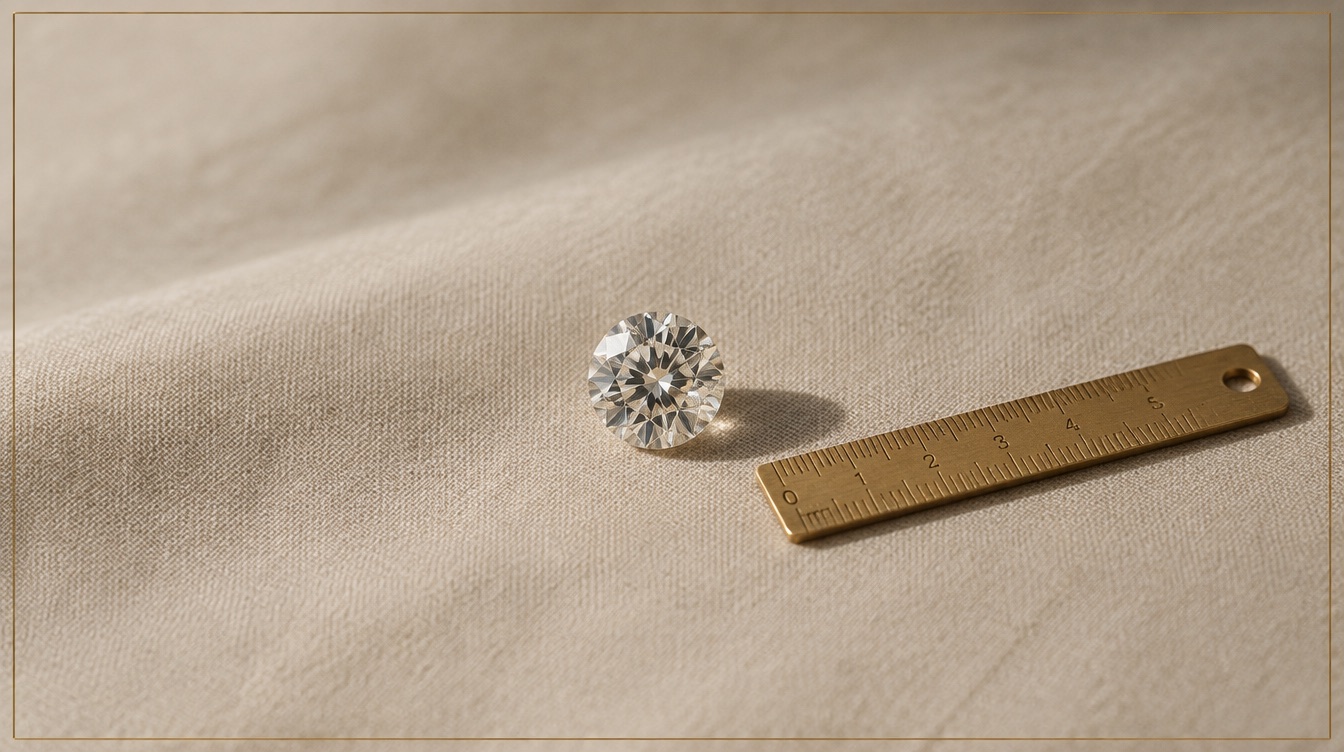
A 4 carat natural diamond sits in genuine rarity territory — large enough that clean, well-formed rough capable of yielding a finished stone this size represents a small fraction of total natural diamond production. Pricing, sourcing timelines, and certification expectations all shift meaningfully at this weight compared to the 1-3 carat range most buyers are used to, and the gap between a 4 carat natural stone and its lab-grown equivalent widens further still.
This guide covers what changes at 4 carats specifically — how pricing scales, which shapes make the most sense at this size, what certification standard applies, and how natural compares to lab-grown once a stone crosses into this higher tier. It's written for individual buyers considering a stone this size for the first time and for jewelers and designers sourcing 4 carat natural inventory on behalf of clients.
Why 4 Carats Is a Meaningfully Rarer Tier Than 3 Carats
As covered in our 3 carat natural diamond guide, natural diamond pricing scales exponentially rather than linearly with carat weight, because the clean rough required to yield a larger polished stone becomes disproportionately scarcer as size increases. That effect doesn't level off between 3 and 4 carats — if anything, it steepens, since rough large and clean enough to survive cutting down to a full 4.00ct finished stone (after typically losing 40-60% of its original rough weight in the cutting process) sits in a noticeably thinner supply band than 3-carat-yielding rough. Buyers moving up from 3 carats often find that the price step to 4 carats is proportionally larger than the step from 2 to 3 carats was, a pattern that continues and intensifies again moving toward 5 carats.
How the 4Cs Apply at 4 Carats
Cut, color, and clarity all carry more visible weight at 4 carats than at smaller sizes, for the same reason they do at 3 carats — a larger stone gives flaws and body color more physical material to be seen through or across. At 4 carats specifically, buyers and jewelers evaluating stones in person (or via detailed video, for remote sourcing) tend to apply a stricter practical standard than the certificate grade alone might suggest is necessary, simply because the stakes of a visually underwhelming result are higher in absolute dollar terms at this size.
Cut and Proportions at 4 Carats
A poorly cut 4 carat stone hides a meaningful amount of paid-for weight in a pavilion that's too deep to be visible face-up, meaning a buyer can pay for a full 4.00ct while the stone visually reads closer to a well-cut 3.60-3.70ct. Checking millimeter diameter against the shape's standard size chart — rather than trusting carat weight alone to predict visual size — matters even more at 4 carats than at 3, given the larger absolute dollar value riding on the visual result matching expectations.
Shape Choices for 4 Carat Natural Diamonds
Shape selection carries real weight-retention logic at 4 carats, since cutters working with large, valuable rough have strong incentive to preserve weight wherever the rough's natural crystal shape allows it. Elongated shapes continue to show a larger face-up spread per carat than round brilliant at this size, an effect that remains visually significant even as the base carat weight climbs.
| Shape | Relative Price per Carat at 4ct | Visual Size Effect | Best Fit |
|---|---|---|---|
| Round Brilliant | Highest | Standard — millimeter diameter predicts carat weight most reliably | Classic solitaire look, maximum light performance |
| Oval | Lower than round | Looks larger face-up; elongated silhouette | Buyers maximizing visible size per dollar at this budget tier |
| Emerald | Lower than round | Large open table shows clarity clearly — clarity grade matters more | Buyers wanting a step-cut look at a large scale |
| Cushion | Mid | Softer outline, moderate size boost over round | Buyers wanting brilliance without a fully geometric shape |
| Antique (Old Mine/Old European) | Specialized, rarity-driven pricing | Warmer, softer light performance; extremely limited rough supply at 4ct+ | Buyers specifically seeking an antique aesthetic at scale |
Clarity Considerations at This Size
Because a 4 carat diamond's facets are physically larger than a 3 carat stone's, inclusions have even more visual room to register — particularly in step-cut shapes like emerald and Asscher, where the open table offers a direct, largely unobstructed view into the stone. Buyers sourcing 4 carat emerald or Asscher cuts commonly prioritize VS2 or better for this reason, while brilliant-cut shapes remain more forgiving down to SI1 in most cases, since their facet pattern does more work to obscure minor inclusions than a step cut's open table.
Certification Is Non-Negotiable at 4 Carats
At 4 carats, independently certified grading from IGI, GIA, or GCAL isn't optional — it's the baseline expectation for any legitimate transaction. The individual stone value at this size makes uncertified natural stock a real risk: no independent 4Cs verification, no reliable treatment disclosure (see our clarity-enhanced diamond guide for how treatments like laser drilling and fracture filling are disclosed), and no protection against a stone being misrepresented in origin or grade. Certification cost is a negligible fraction of a 4 carat stone's total value, and any dealer offering an uncertified stone at this size should be treated with real caution.
Natural vs. Lab-Grown at 4 Carats: The Gap Widens Further
The price gap between natural and lab-grown continues to widen from 3 carats to 4, since natural rarity compounds with size while CVD lab-grown production costs scale in a far more predictable, less rarity-driven way. A 4 carat CVD lab-grown diamond is typically available at a substantially larger discount to a comparable natural 4 carat stone than the discount seen at 3 carats, making this size range one where the choice between natural and lab-grown carries the largest absolute dollar consequence in the entire carat-weight spectrum most buyers consider. See our companion piece on 4 carat lab-grown diamonds for how sourcing and pricing dynamics compare on that side.
Color Grade Priorities at 4 Carats
Body color continues to become more visually apparent as carat weight climbs, since light travels through more material before reaching the eye. Many buyers sourcing 4 carat natural diamonds target the D-G color range specifically, treating the H-I range — which might read as acceptable at 1-2 carats — as more likely to show a detectable warmth at this larger size, particularly in round or step-cut shapes where color is more visible than in shapes like cushion that scatter light more actively.
Fluorescence at Larger Sizes
Fluorescence's visual effect scales with size in the same way body color does. Strong or Very Strong blue fluorescence, which can produce a subtle haze in some stones under strong UV-rich lighting, has more surface area to register across at 4 carats than at smaller sizes. Buyers targeting higher color grades (D-F) at this size tend to be more cautious about strong fluorescence specifically, and should always request in-person or detailed video viewing under a range of lighting conditions before finalizing a purchase at this value tier.
Insurance and Appraisal for a 4 Carat Natural Diamond
A stone at this value tier requires a dedicated jewelry insurance policy well beyond what standard homeowner's or renter's coverage typically provides, which usually caps jewelry claims far below a 4 carat natural diamond's replacement value. A current independent appraisal — distinct from the grading certificate, since an appraisal assigns a specific replacement value while a grading report documents only the 4Cs — is the standard basis insurers use to set coverage. See our diamond appraisal guide for how the appraisal process works and why it needs to be refreshed periodically as market values shift.
Sourcing Timelines for 4 Carat Natural Diamonds
Clean, well-cut 4 carat natural rough is genuinely scarce, and sourcing a specific grade combination at this size can take meaningfully longer than sourcing the equivalent at 2-3 carats, where supply is deeper across most grade combinations. Buyers working toward a specific deadline should start the sourcing conversation with more lead time than they'd budget for a smaller stone and stay open to a slightly wider grade range — a step down in color or clarity, or a different but comparable shape — if timeline matters more than hitting one exact specification.
Where 4 Carat Natural Rough Comes From
Rough large and clean enough to yield a finished 4 carat polished stone comes from a small subset of the world's diamond-producing regions, historically concentrated in Southern Africa, Russia, Canada, and Australia, with the specific mix shifting as individual mines mature and deplete. Most mining operations are weighted heavily toward smaller, melee-sized rough — larger clean crystals in the 4-carat-and-above finished-weight range represent a small percentage of total output at nearly every producing mine, which is the underlying geological reason this size tier commands the pricing premium it does.
Setting Considerations for a 4 Carat Center Stone
A stone this size places substantial physical demands on its setting. Prong count and gauge, metal choice, and overall band design all need to account for the added weight and the larger surface area exposed to daily wear and impact. Solitaire and cathedral-style settings, which lift the stone and expose the pavilion for maximum light return, remain a common choice at this size specifically because they let a 4 carat stone's light performance carry the design without competing visual elements — see our cathedral setting guide for more on that approach.
4 Carats Across Different Jewelry Types
A 4 carat stone reads differently depending on what it's set into. As a ring center stone, it's an unambiguous statement piece regardless of shape. In earrings, a matched pair of 4 carat stones represents a substantial total carat weight and typically demands even more careful color and clarity matching between the two stones than a smaller matched pair would, since any mismatch is far more visible at this size. In a pendant, a 4 carat stone functions as a clear focal point and is generally set simply, with a lower-profile bail and setting so as not to compete visually with the stone itself. Buyers should factor which jewelry type they're sourcing for into shape and cut priorities early, since the practical considerations (matching for a pair versus optimizing a single stone) diverge meaningfully.
Comparing a 4 Carat Purchase Against Buying Two Smaller Stones
Some buyers weigh a single 4 carat stone against two smaller stones (for example, a pair of 2 carat stones for stud earrings) at a similar combined budget. Because natural pricing scales exponentially with individual stone size, two 2 carat stones are typically meaningfully less expensive in total than one 4 carat stone of comparable color and clarity — a useful data point for buyers whose priority is total visible carat weight across a design rather than the specific prestige or rarity of a single large center stone. The tradeoff runs the other way for anyone specifically wanting the visual and resale characteristics of one large, singular stone, which two smaller stones can't replicate regardless of their combined weight.
Working With a Supplier on a Purchase This Size
Given the rarity and value involved, buyers sourcing a 4 carat natural diamond benefit from working with a supplier that can walk through available options in detail — video review, in-person viewing where feasible, and a clear conversation about which grade tradeoffs are realistic within a given budget and timeline — rather than sourcing sight-unseen from a listing alone. A supplier experienced at this tier should also be able to advise honestly on when a slightly different shape or a small step down in color or clarity would meaningfully shorten a sourcing timeline without a significant visual tradeoff, which is valuable guidance a buyer typically can't get from a database listing alone.
Documentation to Request Alongside a Quote
- The full grading certificate from IGI, GIA, or GCAL, including any comments on treatment or notable characteristics.
- Confirmation in writing of the certifying lab, report number, and whether the physical stone has been independently verified against that report by the seller.
- An itemized quote separating the stone's cost from any setting or custom work, so the diamond's own price is transparent.
- A written estimate of sourcing lead time if the specific requested grade combination isn't already in hand.
Practical Buying Checklist for 4 Carat Natural Diamonds
- Insist on independent certification. IGI, GIA, or GCAL, with any treatment explicitly disclosed — non-negotiable at this size.
- Check millimeter diameter against the shape's standard size chart. Confirm visual size matches carat weight rather than assuming.
- Prioritize cut, and for step cuts, clarity. Both matter more visibly at 4 carats than at smaller sizes.
- Compare directly against lab-grown at the same budget. The natural-versus-lab-grown price gap is wider at 4 carats than at 3.
- Budget significant extra sourcing time. Clean 4 carat natural rough is genuinely scarce.
- Plan the setting around the stone's scale. Prong gauge, metal weight, and band design all need to account for a stone this size.
- Arrange dedicated insurance backed by a current appraisal. Standard homeowner's or renter's coverage rarely accounts for a stone at this value.
- Watch fluorescence closely in higher color grades. Strong blue fluorescence is more likely to be visually noticeable at 4 carats, particularly in D-F color stones.
Budgeting Across the Natural-to-Lab-Grown Spectrum at This Size
Because the price gap between natural and lab-grown is at its widest in the 4-5 carat range, buyers with a flexible budget target rather than a fixed natural-only requirement benefit from pricing out both options side by side before committing to a shape and grade combination. A buyer who starts the conversation open to either category, rather than fixed on natural from the outset, often finds meaningfully more flexibility in cut, color, and clarity within the same total budget by shifting some or all of that budget toward lab-grown — a tradeoff worth discussing explicitly with a supplier rather than assuming natural is the only starting point for a stone at this size.
Sourcing 4 Carat Natural Diamonds at Guru Diam
Guru Diam is a trade-only wholesale diamond supplier with locations in New York and Los Angeles, carrying certified natural loose diamonds — including larger center-stone sizes like 4 carats and above — alongside its CVD lab-grown catalog, calibrated melee, and finished jewelry, across every standard, antique, and exotic shape. Natural loose stones at this size ship with full grading documentation from IGI, GIA, or GCAL, and custom pieces built around a 4 carat natural center stone are finished in 4-6 days. Same-day shipping applies to in-stock inventory from both locations; for a stone this size, our team typically works directly with trade accounts to source the specific grade combination requested, including advising on realistic timelines when a particular color, clarity, and shape combination needs to be located rather than pulled from existing stock. Browse certified natural inventory in the certified diamonds category or apply for trade access through trade partner.
Working With a Jeweler or Designer on a 4 Carat Purchase
Because a stone at this size and value is typically the centerpiece of a custom design rather than dropped into an off-the-shelf mounting, buyers benefit from involving a jeweler or designer early in the sourcing process rather than after a stone has already been purchased. A designer who sees the actual stone (or detailed video of it) before finalizing a setting can plan prong placement, metal weight, and band proportions around that specific stone's exact measurements and any minor asymmetries, producing a more secure and better-proportioned final piece than a generic setting sized only to the certificate's stated carat weight.
Frequently Asked Questions
How much does a 4 carat natural diamond cost?
Price varies enormously with cut, color, and clarity, and scales exponentially rather than linearly with carat weight due to the rarity of clean, well-formed rough at this size. There's no single reliable price figure without a specific grade combination attached.
Why is a 4 carat natural diamond so much more expensive than a 3 carat?
Clean rough large enough to yield a 4 carat finished stone is meaningfully rarer than 3-carat-yielding rough, and that scarcity compounds with grade — a 4 carat stone at strong color and clarity draws from an even smaller pool of qualifying rough. The price step from 3 to 4 carats is typically proportionally larger than the step from 2 to 3 carats.
What shape looks largest at 4 carats?
Elongated shapes like oval, pear, and marquise generally look largest face-up per carat, since their outline spreads the same weight across more visible surface area than round brilliant.
Is certification more important at 4 carats than at 3?
It's important at every size, but the absolute dollar stakes rise with each carat step up. Independent certification from IGI, GIA, or GCAL, with treatment disclosure, should be treated as an absolute baseline at 4 carats.
Is lab-grown a bigger relative savings at 4 carats than at 3?
Yes — the natural-versus-lab-grown price gap widens as carat weight increases, since natural rarity compounds with size while lab-grown production costs scale more predictably, making the percentage savings from choosing lab-grown typically larger at 4 carats than at 3.
How long does it take to source a specific 4 carat natural diamond?
It can take meaningfully longer than sourcing a comparable 3 carat stone, since clean 4 carat natural rough is genuinely scarce. Buyers working toward a deadline should start sourcing with extra lead time and stay open to a slightly wider grade range if timing matters more than hitting one exact specification.
Does color grade matter more at 4 carats?
Yes. Body color becomes more visually apparent as a diamond grows larger, since light travels through more material before reaching the eye. Many buyers sourcing at 4 carats target D-G color rather than extending further down the scale.
Do I need a separate insurance policy for a 4 carat natural diamond?
Generally yes. Standard homeowner's or renter's insurance typically caps jewelry claims well below a 4 carat natural diamond's value. A dedicated jewelry insurance policy, based on a current independent appraisal, is the standard way to properly cover a stone at this value tier.