

Rose Cut Lab Grown Diamonds Wholesale
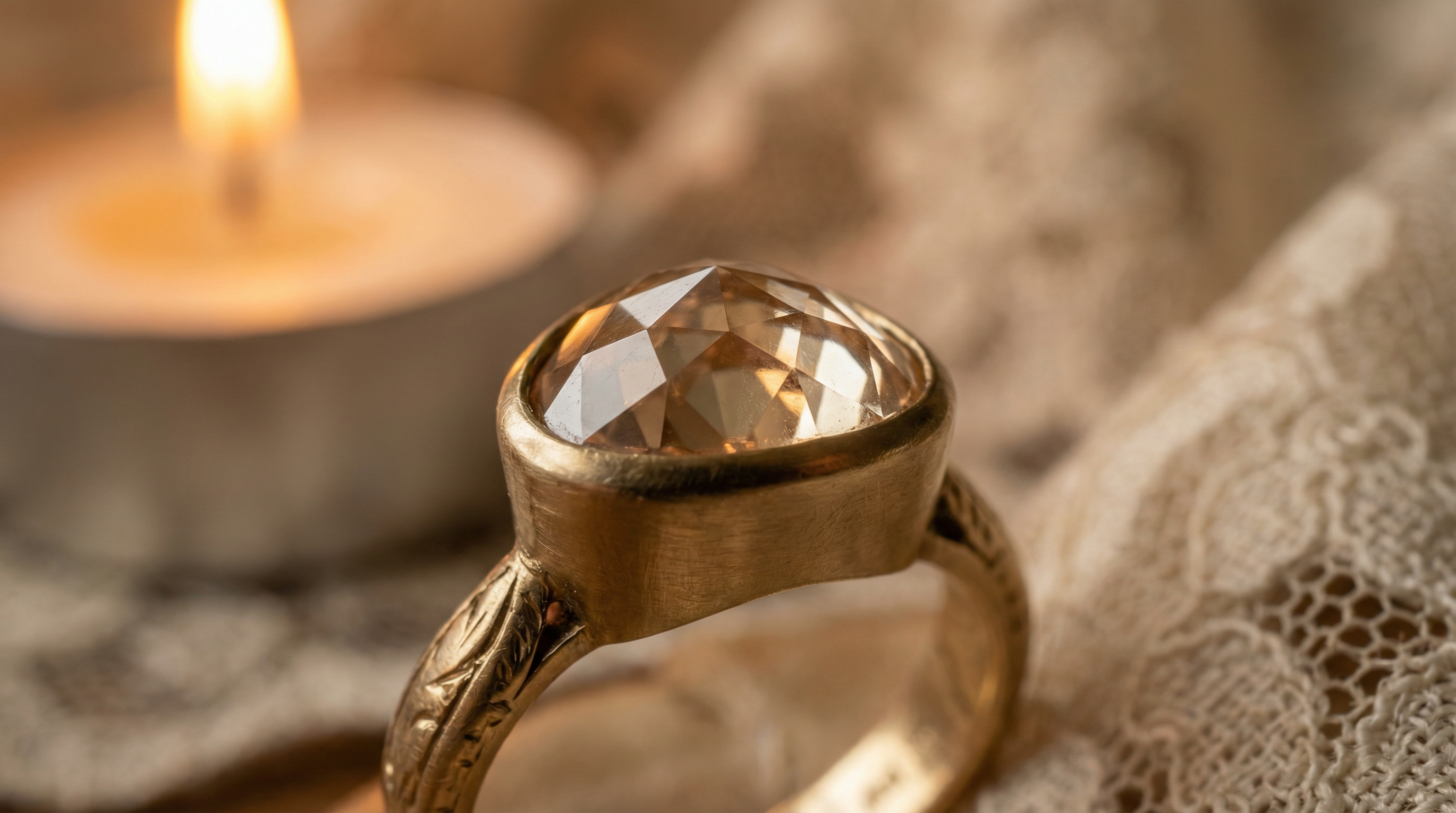
A 500-year-old cutting tradition reborn in lab-grown form — the flat-bottomed, dome-topped diamond coveted by artisan jewelers worldwide. Trade pricing from Guru Diam.
What Is the Rose Cut?
The rose cut is the diamond world's most distinctive and arguably most beautiful anomaly. While every other popular cut relies on a pavilion — the pointed bottom half of a diamond — to return light, the rose cut has none. It is flat on the bottom, gently domed on top, and covered in triangular facets that resemble the petals of an opening rosebud. The effect is a soft, romantic glow that is fundamentally different from the sparkle of any modern diamond.
This is not a mainstream shape, and that is exactly the point. The rose cut has become the signature stone of the indie fine jewelry movement — the cut that artisan designers, small-batch jewelers, and discerning collectors reach for when they want something with genuine character. Guru Diam is one of the only wholesale sources in the United States offering rose cut lab grown diamonds at trade pricing, with in-house cutting and ready inventory at our New York City and Los Angeles facilities.
History & Origins
The rose cut originated in 16th-century Holland, where Dutch diamond cutters developed the form as one of the earliest attempts to impose geometric order on rough diamond crystals. The name comes from the stone's resemblance to a rosebud when viewed from above — concentric rings of triangular facets rising to a gentle point.
For over two centuries, the rose cut was the dominant diamond shape in European jewelry. It appeared in the crown jewels of multiple nations, the elaborate brooches of the Dutch Golden Age, and the Mughal-era jewelry of India where the cut was further refined and celebrated. Georgian and early Victorian jewelers prized the rose cut for its ability to cover large surface areas with relatively shallow stones — a practical advantage when diamond rough was scarce and expensive.
The cut fell from mainstream favor in the late 1800s as brilliant cutting techniques emerged, but it never disappeared entirely. Antique rose cuts have been treasured by collectors for generations. The 21st-century resurgence began around 2010, driven by independent jewelry designers who rediscovered the rose cut's unique optical properties and flat profile as a canvas for creative settings. Today, it is one of the fastest-growing specialty shapes in the artisan jewelry market.
Defining Characteristics
The rose cut's structure is radically different from modern diamonds. Understanding these features is critical for trade buyers and their retail clients:
- Profile: Flat base with a domed top — no pavilion whatsoever. This is the single most important distinction from all other diamond cuts
- Facets: 3 to 24 triangular facets arranged in concentric rows, rising to a peak. The most common configuration is 24 facets (full rose cut), but 3-facet (single rose), 6-facet, and 12-facet variations exist
- Silhouette: Typically round, but also available in pear, oval, and freeform shapes
- Light behavior: Soft, translucent glow rather than sparkle. The absence of a pavilion means light passes through or is gently reflected — creating a luminous, almost ethereal quality
- Face-up size: Because there is no depth below the girdle, a rose cut diamond appears significantly larger face-up than a brilliant of the same carat weight — often 20–30% larger in spread
- Transparency: In lighter-colored stones, the flat back allows you to see through the diamond, creating a "window" effect that many designers use creatively in open-back settings
The face-up size advantage is a powerful selling point. A 1.00ct rose cut can look as large as a 1.30–1.40ct brilliant cut, giving your customers visual impact at a lower carat weight and price.
Why Rose Cut in Lab Grown?
The rose cut and lab-grown technology are a natural partnership, solving several long-standing challenges for trade buyers:
Reliable access: Genuine antique rose cuts are scattered across estate markets worldwide, appearing in inconsistent sizes and conditions. Lab-grown rose cuts provide a steady, repeatable supply — crucial if you are building a collection or need stones for production runs.
The artisan market story: Rose cut buyers are overwhelmingly in the ethical, conscious, and artisan jewelry segments. These customers expect sustainable sourcing. Lab-grown rose cuts align perfectly with their values and purchasing criteria — it is not just a feature, it is a requirement for this market.
Creative freedom with color: Lab-grown production allows access to rose cuts in a range of colors — from icy near-colorless to warm champagne tones. Many designers specifically seek slight color in their rose cuts, as warmer tones enhance the stone's soft, antique character.
Size and shape control: Need a calibrated suite of 4mm rose cuts for a band? A large 12mm pear-shaped rose cut for a statement pendant? Lab-grown cutting lets you specify exactly what you need, in quantities that make production feasible.
Quick Spec Table
| Specification | Detail |
|---|---|
| Shape Outline | Round (also pear, oval, freeform) |
| Facet Count | 3 – 24 (full rose = 24) |
| Pavilion | None (flat base) |
| Profile | Low dome |
| L/W Ratio | 1.00 (round); varies for fancy shapes |
| Available Sizes | 0.10 ct – 3.00+ ct |
| Origin | Lab Grown (CVD / HPHT) |
| Light Performance | Soft glow, translucent luminosity |
| Face-Up Spread | 20–30% larger than equivalent brilliant |
Who Buys This Cut?
The rose cut lab grown diamond has found its strongest audience in several distinct and growing market segments:
- Indie and artisan jewelers: This is the rose cut's core market. Independent designers who build brands around handcrafted, character-driven jewelry use rose cuts as their signature stone. The cut has become an identifier of the artisan fine jewelry movement.
- Ethical and sustainable jewelry brands: Brands built on conscious sourcing find the rose cut + lab-grown combination irresistible. It checks every box: unique aesthetic, ethical production, and a compelling story.
- Alternative bridal: Couples who want an engagement ring that defies convention — lower profile, softer glow, more artistic — are driving strong demand for rose cut bridal jewelry.
- Oxidized and mixed-metal designers: The rose cut pairs exceptionally well with oxidized silver, blackened gold, and mixed-metal designs. The soft glow complements dark metals in a way that high-sparkle modern cuts cannot.
- Fashion and editorial jewelry: Designers creating statement pieces for fashion-forward retail and editorial shoots value the rose cut's photogenic qualities and distinctive look.
Why Source From Guru Diam
Rose cuts require specialized cutting expertise that most wholesalers simply do not possess. Guru Diam is different:
- In-house rose cut specialists: Our cutting team has dedicated expertise in flat-back faceting. We produce rose cuts with precise facet symmetry and consistent dome heights — details that distinguish a high-quality rose cut from a mediocre one.
- Multiple facet configurations: We stock full rose cuts (24 facets), Dutch rose cuts, and single-cut variations. If you need a specific facet count for a particular design, we can accommodate custom orders.
- Shape variety: Beyond standard rounds, we produce rose cuts in pear, oval, hexagonal, and freeform outlines. Speak with our team about custom shapes for your collection.
- NYC and LA inventory: Ready stock at both locations. Same-day shipping means your production schedule stays on track.
- True wholesale, trade only: Guru Diam serves jewelers, designers, and manufacturers exclusively. Our wholesale pricing gives you the margin structure your business needs.
Jewelry Applications
The rose cut's flat profile and soft glow open design possibilities that other diamond cuts cannot match:
- Bezel-set rings: The low profile of a rose cut sits flush in a bezel setting, creating a sleek, modern-meets-antique silhouette that is comfortable for daily wear. This is the most popular setting style for rose cuts.
- Collet settings: Period-accurate collet settings (tubular metal enclosures) showcase the rose cut in historically faithful designs — ideal for Georgian and Victorian reproductions.
- Cluster and mosaic designs: Multiple small rose cuts arranged in cluster patterns create large-scale visual impact. This technique was popularized in Georgian jewelry and has been revived by contemporary artisan designers.
- Stacking bands: Tiny rose cuts set flush into thin bands are perfect for the stacking ring trend. The flat base means each stone sits low, preventing snagging and allowing comfortable stacking.
- Statement pendants and brooches: Large rose cuts (2ct+) make dramatic statement pieces. The flat back allows for creative open-back settings where light passes through the stone from behind.
Frequently Asked Questions
Will a rose cut diamond sparkle like a regular diamond?
No, and that is intentional. The rose cut produces a soft, luminous glow rather than the bright sparkle of a modern brilliant. Without a pavilion to bounce light back, the rose cut relies on surface reflections from its triangular facets. The result is subtler and more romantic — often described as "candlelight captured in stone." This quality is exactly what draws designers and buyers to the cut.
Are inclusions more visible in rose cut diamonds?
They can be, particularly in very transparent stones where the flat back acts as a window. However, many designers intentionally choose included rose cuts — salt-and-pepper inclusions, for example, are extremely popular in rose cut form because the flat profile showcases the unique inclusion patterns. For cleaner-looking stones, we recommend VS2 clarity and above, or selecting stones with inclusions positioned near the dome's apex where facets help mask them.
How much larger does a rose cut look compared to a brilliant?
A rose cut typically appears 20–30% larger face-up than a brilliant cut of the same carat weight. For example, a 1.00ct round rose cut measures approximately 7.5–8.0mm in diameter, compared to 6.5mm for a 1.00ct round brilliant. This is because nearly all the stone's weight is spread across the face rather than concentrated in a deep pavilion.
What settings work best for rose cut diamonds?
Bezel settings are the most popular choice because they complement the rose cut's low profile and protect the edges. Collet settings (tube-style) are ideal for period reproductions. For more creative designs, open-back settings allow light to enter through the flat base, creating a beautiful translucent effect. Prong settings work but require careful prong placement to avoid overwhelming the stone's gentle dome.
Can you produce rose cuts in specific millimeter sizes?
Absolutely. Calibrated rose cuts are one of our specialties at Guru Diam. We can produce rose cuts to specific millimeter dimensions — essential for designers working with precise setting sizes. We also offer matched suites for multi-stone designs. Contact our cutting team with your size specifications and quantity requirements for a quote.
Stock Rose Cut Lab Grown Diamonds for Your Designs
Browse our current rose cut inventory or commission custom cutting to your exact size and facet specifications. Trade pricing, same-day shipping.
Browse Rose Cut Diamonds →