

Old Mine Cut Lab Grown Diamonds Wholesale
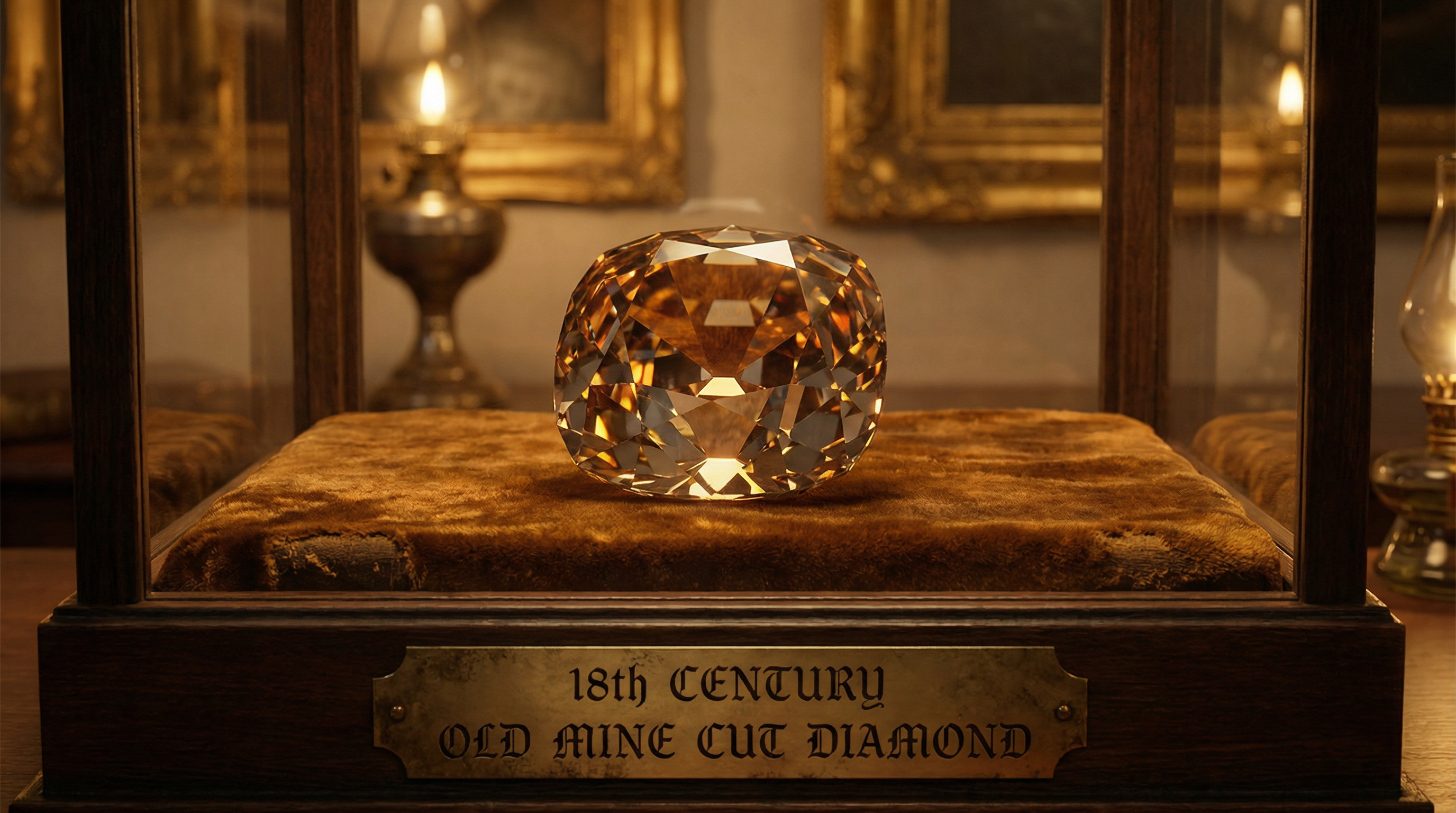
The most romantic antique diamond cut — now available in ethically grown stones, exclusively at trade pricing from Guru Diam.
What Is the Old Mine Cut?
The old mine cut is arguably the most sought-after antique diamond shape in the modern jewelry market — and it is one of the hardest to source at wholesale volume. Originally hand-cut by candlelight in the diamond workshops of 18th-century Brazil and India, the old mine cut predates modern machinery, modern grading, and modern expectations of symmetry. Every facet carries the mark of a human hand. That unmistakable chunky warmth is exactly what today's estate jewelers, vintage-focused brands, and discerning collectors are demanding.
Guru Diam is one of the only B2B wholesalers in the United States offering old mine cut lab grown diamonds. Our in-house cutting facility reproduces this historic faceting pattern with precision, giving your clients the romantic aesthetic of a Georgian-era stone with the ethical transparency and competitive pricing of a lab-grown diamond. We stock these continuously in our New York City and Los Angeles facilities — ready for same-day shipping to qualified trade accounts.
History & Origins
The old mine cut emerged in the late 1600s and dominated the diamond trade through the 1800s. The name "old mine" refers to the original alluvial diamond mines of India and Brazil — the world's only significant diamond sources before the South African discoveries of the 1860s. These stones were cut by hand using rudimentary tools: a scaife (polishing wheel), a dop (holding device), and the cutter's eye.
Because candlelight and oil lamps were the primary light sources, cutters optimized for fire rather than brilliance. The result was a diamond designed to glow in warm, low light — a quality that modern brilliant cuts, optimized for electric light, simply cannot replicate. Old mine cuts appeared in Georgian jewelry, early Victorian engagement rings, and some of the most famous royal collections in Europe. Their resurgence in the 21st century has been driven by collectors and designers who prize character over clinical perfection.
Historically, every old mine cut was unique. There were no standardized proportions, no ideal angles, no symmetry grades. That individuality is precisely what makes the cut so appealing to contemporary jewelers working in the artisan and bespoke segments.
Defining Characteristics
The old mine cut is immediately identifiable by its distinctive silhouette and facet structure. Understanding these traits is essential for retailers and designers who market antique aesthetics.
- Shape: Cushion-shaped outline — a softened square with rounded corners, sometimes slightly rectangular
- Facets: 58 facets, arranged in a pattern similar to the modern brilliant but with broader, more irregularly placed facets
- Crown: Exceptionally high crown angle — dramatically taller than modern cuts, contributing to the chunky side profile
- Table: Small table facet, approximately 38% of the total width — significantly smaller than the 53–58% typical of modern round brilliants
- Culet: Large, open culet clearly visible through the table — the signature "hole" at the bottom that defines the old mine aesthetic
- Light behavior: Broad, soft flashes of fire rather than pinpoint scintillation. Optimized for warm light environments — candles, fireplaces, intimate settings
The open culet is the hallmark your customers look for. In genuine old mine proportions, you should see a distinct circle or octagonal shape when viewing face-down through the table. Our cutting team replicates this faithfully.
Why Old Mine Cut in Lab Grown?
The pairing of antique cutting styles with lab-grown diamond technology is one of the most compelling propositions in the modern trade. Here is why the combination works so well for your business:
Supply consistency: Genuine antique old mine cuts are finite. They appear sporadically at estate sales and auctions, often in unpredictable qualities and sizes. Lab-grown old mine cuts give you a reliable, repeatable supply in the sizes and qualities your clients need — month after month.
Ethical storytelling: Your customers — particularly millennial and Gen-Z buyers — want the romance of an antique aesthetic without the provenance concerns that sometimes accompany century-old stones. Lab-grown old mine cuts deliver that narrative perfectly: vintage soul, modern ethics.
Price advantage: Genuine antique old mine cuts command steep premiums due to scarcity and collector demand. Lab-grown versions offer the same visual character at wholesale pricing that allows healthy retail margins, making the cut accessible to a broader customer base.
Custom sizing: Need a matched pair of 1.50ct old mine cuts for earrings? A specific color-matched suite for a three-stone setting? With lab-grown production, custom orders are practical — not aspirational.
Quick Spec Table
| Specification | Detail |
|---|---|
| Shape Outline | Cushion (softened square) |
| Facet Count | 58 |
| Table % | ~38% |
| Crown | High (steep angle) |
| Culet | Open / Large (visible) |
| L/W Ratio | 1.00 – 1.10 typical |
| Available Sizes | 0.30 ct – 5.00+ ct |
| Origin | Lab Grown (CVD / HPHT) |
| Light Performance | Broad fire, soft glow |
Who Buys This Cut?
The old mine cut lab grown diamond serves several high-value market segments that are growing rapidly:
- Estate and vintage jewelers: Dealers who specialize in period reproductions need consistent access to old mine cuts. They are the largest volume buyers of this shape.
- Independent designers: Artisan jewelry brands building collections around character stones and imperfect beauty. The old mine cut fits their aesthetic vision perfectly.
- Bridal retailers: Couples seeking engagement rings with a heritage feel — particularly those inspired by Georgian and early Victorian designs — drive steady demand for old mine cuts in the 0.80–2.00ct range.
- Collectors and connoisseurs: A growing segment of diamond enthusiasts who appreciate historical cutting styles and seek lab-grown alternatives for everyday wear pieces while preserving their antique collections.
Market data shows sustained growth in searches for "antique cut engagement rings" and "old mine cut diamonds" since 2020, with no sign of slowing. Stocking this cut positions your business at the intersection of heritage appeal and ethical sourcing — a powerful combination for today's consumer.
Why Source From Guru Diam
Guru Diam is not a middleman reselling generic inventory. We are a vertically integrated wholesale operation with in-house cutting capabilities — and that distinction matters enormously for rare cuts like the old mine.
- In-house cutting: Our master cutters specialize in antique faceting patterns. We control every angle, every proportion, every culet size. The result is an old mine cut that looks authentic — not like a modern cushion with a flat culet glued on as an afterthought.
- Rare inventory, always in stock: We maintain dedicated old mine cut inventory across a range of sizes and qualities. You are not waiting weeks for a special order — browse our current stock and ship today.
- NYC and LA locations: Same-day shipping from our New York and Los Angeles offices. Walk-in appointments available for trade accounts who want to hand-select stones.
- True wholesale pricing: No retail markup, no "wholesale to the public" gimmicks. Guru Diam sells exclusively to the trade — jewelers, designers, retailers, and manufacturers.
- Custom cutting: Need specific proportions, a particular culet size, or matched sets? Our cutting team executes custom orders with the same precision as our stock production.
Jewelry Applications
The old mine cut's versatility makes it suitable for a wide range of jewelry designs, each playing to the stone's unique strengths:
- Solitaire engagement rings: A single old mine cut in a low-profile collet or prong setting is the quintessential vintage engagement ring. The high crown and chunky profile create commanding finger presence.
- Three-stone rings: An old mine center flanked by old mine side stones — or paired with tapered baguettes — creates a period-authentic composition popular in Edwardian and early Art Deco reproductions.
- Halo settings: Surrounding an old mine center with a single row of small rounds adds brilliance while maintaining the antique character of the primary stone.
- Pendant necklaces: The old mine cut's visible culet adds an unexpected visual element when set in an open-back pendant, allowing light to pass through the stone in both directions.
- Men's jewelry: Signet rings and cufflinks with old mine cuts are gaining traction in the luxury men's market, where the cut's bold geometry reads as distinguished rather than delicate.
Frequently Asked Questions
How does an old mine cut differ from a modern cushion cut?
While both share a cushion-shaped outline, the old mine cut features a dramatically higher crown, a much smaller table (~38% vs. ~60%), and a large open culet that is visible through the top of the stone. Modern cushion cuts are optimized for brilliance under electric light, whereas old mine cuts produce broader flashes of fire that look best in warm, ambient lighting. The faceting pattern is also less symmetrical, giving each stone a handmade quality.
Are lab grown old mine cuts graded the same as mined diamonds?
Lab grown old mine cuts receive the same gemological evaluation as any diamond — carat weight, color, and clarity are assessed identically. However, cut grading for antique shapes is not standardized by GIA or IGI the way it is for modern round brilliants. At Guru Diam, we provide detailed measurements including crown height, table percentage, and culet size so you can evaluate each stone's proportions against your standards.
Why is the open culet important in an old mine cut?
The open culet is the signature feature that distinguishes a genuine old mine cut from a modern approximation. Historically, cutters left the culet open to prevent chipping at the point — but it also creates the characteristic "window" visible through the table. Collectors and vintage jewelry enthusiasts specifically seek out this feature. Our cutting team carefully sizes the culet to match historical proportions, ensuring authenticity.
What carat sizes do you stock in old mine cut lab grown diamonds?
We maintain regular inventory in old mine cuts from 0.30ct to 5.00ct and above. The most popular trade sizes are 0.80ct to 2.00ct for engagement ring use. For larger stones or specific matched sets, our in-house cutting team can produce custom orders. Contact us with your specifications for availability and pricing.
Can you cut matched pairs or suites in old mine cut?
Absolutely. This is one of the key advantages of sourcing lab grown old mine cuts from Guru Diam. Because we cut in-house, we can produce matched pairs for earrings, three-stone suites, and even larger matched sets for multi-stone designs. We match for dimensions, proportions, color, and visual appearance — not just carat weight.
Ready to Stock Old Mine Cut Lab Grown Diamonds?
Browse our current inventory or request a custom cut to your exact specifications. Trade accounts get same-day shipping from NYC and LA.
Browse Old Mine Cut Diamonds →