

Old European Cut Diamonds Wholesale
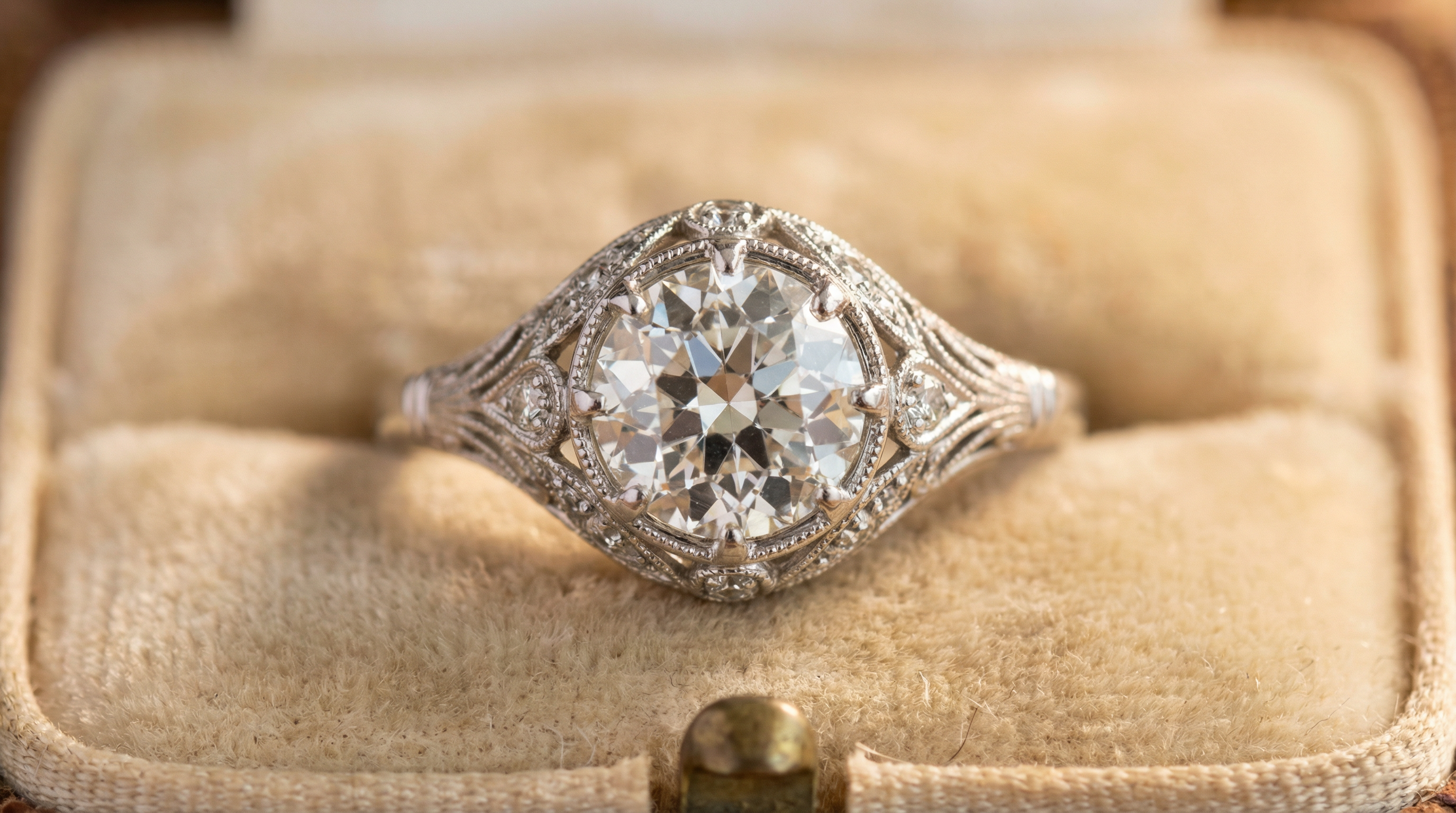
The elegant precursor to the modern round brilliant — handcrafted in lab-grown form and available at true wholesale pricing from Guru Diam.
What Is the Old European Cut?
The old European cut occupies a singular position in the diamond world: it is the last great hand-cut round diamond, the transitional shape that bridges centuries of artisanal craftsmanship with the mathematical precision of the modern brilliant. For trade buyers serving the vintage and antique jewelry markets, the old European cut — often shortened to "OEC" — is one of the most requested and hardest-to-source shapes in the industry.
Guru Diam changes that equation. As a B2B wholesale specialist with in-house cutting capabilities, we produce old European cut lab grown diamonds that faithfully replicate the proportions, light behavior, and character of original late-19th and early-20th century stones. Our facilities in New York City and Los Angeles maintain ready inventory for qualified trade accounts, with same-day shipping and custom cutting available on request.
History & Origins
The old European cut emerged in the late 1800s as diamond cutting technology advanced beyond the hand-powered techniques of the old mine era. The introduction of the steam-driven bruting machine in the 1870s allowed cutters to create truly round outlines for the first time — a revolutionary development that moved the diamond trade from cushion-shaped stones to circular ones.
This cut dominated the Edwardian period (1901–1915), thrived through the Art Nouveau movement, and remained the standard of excellence into the early Art Deco years of the 1920s. It graced the engagement rings of European aristocracy, the tiaras of Belle Époque society, and the statement jewelry of the early Hollywood era. Marcel Tolkowsky's 1919 publication of ideal brilliant-cut proportions eventually led to the modern round brilliant, but for nearly five decades, the old European cut was the pinnacle of diamond craftsmanship.
Today, the OEC has experienced a dramatic renaissance. Collectors prize its softer, more romantic light return — the "inner fire" that electric-light-optimized brilliants cannot reproduce. Estate reproduction jewelers, Edwardian-style designers, and discerning bridal clients actively seek this cut, creating a supply gap that lab-grown production is uniquely positioned to fill.
Defining Characteristics
The old European cut shares its 58-facet structure with the modern round brilliant, but the proportions and visual effect are distinctly different. Knowing these traits helps you communicate value to your retail clients:
- Shape: Circular outline — the first truly round diamond cut in history, achieved by mechanical bruting
- Facets: 58 facets in a brilliant arrangement, but with broader, chunkier facet planes than modern brilliants
- Crown: High crown angle (typically 40°+), giving the stone substantial depth and a pronounced profile from the side
- Table: Small table, approximately 35–40% of diameter — compared to the 53–58% standard in modern rounds
- Culet: Large open culet, clearly visible when viewing face-down — the definitive identifier of an OEC
- Light pattern: Concentric circles of light when viewed face-up, sometimes described as a "bullseye" effect. Soft, broad flashes rather than sharp pinpoint scintillation
The easiest way to distinguish an OEC from a modern round brilliant is the face-down test. An OEC shows a distinct circular culet at center surrounded by concentric rings. A modern brilliant shows a pointed or very small culet with a kaleidoscopic facet pattern.
Why Old European Cut in Lab Grown?
Combining antique cutting artistry with lab-grown diamond technology creates a product that serves the trade better than either option alone:
Consistency of supply: Original old European cuts from the 1880s–1930s appear sporadically and unpredictably on the secondary market. Lab-grown OECs give you a dependable pipeline — order the sizes, qualities, and quantities you need, when you need them.
Authentic proportions, every time: Many "OEC-style" diamonds on the market are simply modern rounds with slightly adjusted crowns. Our in-house cutters study period proportions meticulously, producing stones with correct crown heights, table percentages, and culet sizes that pass scrutiny from the most knowledgeable collectors.
Competitive margins: Genuine antique OECs carry collector premiums that compress your retail margins. Lab-grown versions at wholesale pricing restore healthy profit opportunities while giving end consumers the aesthetic they desire at accessible price points.
Perfect for period reproductions: If your business specializes in Edwardian, Art Nouveau, or early Art Deco reproductions, lab-grown OECs let you build complete collections without depending on the volatile estate market for center stones.
Quick Spec Table
| Specification | Detail |
|---|---|
| Shape Outline | Round (circular) |
| Facet Count | 58 |
| Table % | ~35–40% |
| Crown | High (40°+ angle) |
| Culet | Open / Large (visible) |
| L/W Ratio | 1.00 (circular) |
| Available Sizes | 0.30 ct – 5.00+ ct |
| Origin | Lab Grown (CVD / HPHT) |
| Light Performance | Concentric glow, broad fire |
Who Buys This Cut?
The old European cut lab grown diamond serves several lucrative and growing market segments:
- Edwardian reproduction jewelers: This is the definitive Edwardian diamond shape. Jewelers creating period-accurate pieces require a steady supply of OECs, often in specific size ranges for signature designs.
- Vintage bridal specialists: Couples who want the romance of an antique engagement ring without the uncertainty of a pre-owned stone represent a fast-growing market segment. The OEC is their most-requested shape.
- Art Deco designers: Early Art Deco jewelry frequently featured old European cuts before the transition to modern brilliants. Designers working in this aesthetic need OECs for authenticity.
- High-end custom jewelers: Bespoke jewelers serving collectors and connoisseurs need access to unusual cuts that differentiate their work. The OEC delivers distinction that a standard round brilliant cannot match.
- Online vintage-style retailers: E-commerce brands specializing in vintage-inspired jewelry are among the fastest-growing buyers of lab-grown OECs, drawn by the consistent supply and photography-friendly beauty of these stones.
Why Source From Guru Diam
Sourcing rare antique cuts from a general wholesaler is an exercise in frustration. Guru Diam is built specifically for this challenge:
- In-house cutting expertise: Our cutters are trained specifically in antique faceting patterns. The old European cut is one of our signature shapes — we understand the proportions, the angles, and the visual goals that make an OEC look right.
- Dedicated OEC inventory: We stock old European cut lab grown diamonds across a full range of sizes and qualities. You can browse, select, and ship today — no waiting weeks for a cutting order.
- NYC and LA fulfillment: Both coasts covered. Same-day shipping for orders placed by 2 PM local time. Walk-in selection available by appointment at either location.
- Wholesale-only pricing: Guru Diam is a trade-exclusive wholesaler. Our pricing reflects genuine wholesale economics — not retail with a trade discount.
- Custom orders welcome: Specific crown height? Particular culet diameter? Matched suites for a collection? Our cutting team handles custom OEC requests with precision and consistency.
Jewelry Applications
The old European cut's round shape and romantic light behavior make it extraordinarily versatile across jewelry categories:
- Solitaire engagement rings: The classic OEC solitaire in a platinum or white gold setting captures the Edwardian aesthetic perfectly. The high crown creates substantial finger presence even in modest carat weights.
- Cluster and halo designs: Surrounding an OEC center with smaller old European or single-cut diamonds creates an authentically period look popular in Georgian and Victorian revival designs.
- Five-stone and eternity bands: Matched OECs in graduated or uniform sizes make stunning anniversary and eternity bands with a character that modern rounds cannot achieve.
- Drop earrings and pendants: The OEC's concentric light pattern is particularly beautiful in motion — pendants and drop earrings showcase the stone's gentle, swirling fire.
- Conversion and restoration: Jewelers restoring or converting antique pieces can source lab-grown OECs to replace damaged or missing stones, maintaining period integrity while adding durability.
Frequently Asked Questions
What is the difference between old European cut and old mine cut?
The primary difference is shape. Old mine cuts have a cushion-shaped (squarish with rounded corners) outline because they predate mechanical bruting. Old European cuts are truly circular, as they were produced after the introduction of steam-powered bruting machines in the 1870s. Both feature high crowns, small tables, and open culets, but the OEC's round form gives it a more symmetrical appearance. The OEC is essentially the evolutionary link between the old mine cut and the modern round brilliant.
Will customers notice the difference between an OEC and a modern round brilliant?
Yes, absolutely — and that is the point. The OEC produces broader, softer flashes of light rather than the sharp sparkle of a modern brilliant. It has a warm, romantic quality that many buyers specifically seek. The visible culet, higher crown, and smaller table are all noticeable to the educated eye. Educating your customers about these intentional differences is part of the selling proposition.
How are lab grown OECs certified?
Lab grown old European cut diamonds can be submitted to major gemological laboratories including IGI and GCAL for grading. They receive standard assessments for carat, color, and clarity. Because cut grading standards for OECs are not formalized the way modern round brilliant grades are, we provide comprehensive measurement data — crown angle, table percentage, total depth, and culet dimensions — so you can evaluate each stone thoroughly.
Do you offer old European cuts in fancy colors?
Yes. In addition to our near-colorless (D–J) inventory, we can produce old European cuts in fancy yellow, champagne, and other tones through our lab-grown process. Fancy-color OECs are particularly popular for Art Nouveau and Victorian revival designs. Contact our sales team for current fancy-color availability and custom color requests.
What is the minimum order for wholesale OEC pricing?
Guru Diam has no minimum order requirement for existing trade account holders. Single-stone orders ship at wholesale pricing just like bulk orders. For new accounts, we verify trade credentials and then provide full access to our wholesale inventory and pricing. Contact us to set up your account — most approvals are completed within one business day.
Source Old European Cut Lab Grown Diamonds Today
Explore our ready inventory or commission a custom cutting run. Trade accounts enjoy same-day shipping from NYC and LA.
Browse Old European Cut Diamonds →