
 info@gurudiam.com
 Book Appointment




Two 1-carat lab-grown rounds can carry the same headline carat weight and still trade at wholesale prices $200 or more apart. The difference is almost never the "lab-grown" label itself — it's the combination of factors buried inside the grading report that most buyers skim past on their way to the bottom line.
Market-direction headlines answer one question: is wholesale pricing going up, down, or flat this quarter. That's useful for timing a purchase. It says almost nothing about why one 1-carat, G-color, VS1 lab-grown round is quoted at a different per-carat price than another stone with the same specs on paper. For a trade buyer sitting across from a price list, understanding what actually moves the number — carat, color, clarity, cut, certification lab, and a handful of structural factors specific to lab-grown production — matters more day to day than any forecast. It also matters at the negotiating table: a buyer who can point to which specific factor explains a price gap is negotiating from a position of information, while a buyer who can only compare bottom-line totals is negotiating blind.
This is the reference for that: a breakdown of what drives lab-grown diamond wholesale price per carat, how that pricing differs structurally from how natural diamonds are priced, and how to tell whether the number on a quote sheet is a fair one.
What Drives Lab-Grown Diamond Wholesale Price Per Carat
Every wholesale quote is built from the same core inputs. Understanding each one — and roughly how much weight it carries relative to the others — is what separates a buyer who can evaluate a price sheet from one who can only compare bottom-line numbers. None of these factors moves in isolation, either: a stone that's strong on color but weak on cut, or clean on clarity but slightly under color, will price somewhere in between the two extremes rather than at either one, which is why two quotes on paper-similar stones can still land in different places.
Carat weight. This is the single biggest lever on total price, and it doesn't move in a straight line. Per-carat wholesale rates climb as carat weight increases, because larger finished stones require larger rough, longer growth cycles, and carry more cutting risk — a bigger rough crystal that yields a lower-than-expected finished stone is a bigger loss for the cutter than the same shortfall on a small one. That risk gets priced into the per-carat rate at every weight class above the smallest sizes.
Color. D–F (colorless) commands the top of the range. G–J (near-colorless, the commercial workhorse grades) trades at a meaningful discount per carat even though the color difference is often invisible to the naked eye once a stone is mounted. K and below sees another step down. Color grading is one of the more subjective calls a lab makes, which is part of why the same rough can grade differently at different labs — more on that below.
Clarity. Lab-grown rough tends to grow cleaner than natural rough on average, so the clarity curve is flatter than color's: the jump from VVS to VS is smaller in wholesale terms than the jump from VS to SI, and eye-clean SI material is a legitimate commercial-grade buy rather than a compromise. Internally flawless and VVS grades still command a premium, but it's a narrower band than color.
Cut and cut grade. On round brilliants, cut grade (proportions, symmetry, polish) is graded against a fixed ideal and priced accordingly — excellent-cut rounds sit above good or fair cut at the same carat/color/clarity. On fancy shapes, "cut" is judged more loosely since there's no single ideal proportion set, so the price effect is smaller and more about face-up appearance (spread, brilliance, symmetry of the outline) than a graded cut score.
Growth-method cost factors. Underneath the 4Cs sits a manufacturing layer that's unique to lab-grown and doesn't exist in natural pricing at all. Growing rough — by either of the two commercial methods used across the industry — takes reactor time, and reactor time is the real cost driver. A larger finished stone requires either a longer single growth run or a larger starting seed, both of which tie up equipment longer and increase the odds of a flawed or off-color result. Post-growth processing adds more: rough has to be sorted, and fancy-color material typically goes through additional treatment and inspection steps before it's cut. None of that shows up on the certificate, but all of it shows up in the wholesale rate — it's why two stones that look identical on a grading report can still carry different production costs behind the scenes, and why per-carat pricing on larger and more complex stones doesn't scale in a simple straight line from the smaller sizes.
How Lab-Grown Pricing Differs Structurally from Natural Diamond Pricing
Natural diamond wholesale pricing is a scarcity-based system. Rough supply is fixed by what mines produce in a given year, that supply is finite and shrinking over time, and the wholesale price grid for natural stones has moved slowly and predictably for decades as a result. A natural diamond's price also climbs steeply with carat weight — a 2-carat natural stone isn't twice the price of a 1-carat stone of the same quality, it's several times the price, because large clean rough is disproportionately rare.
Lab-grown pricing behaves differently because the underlying constraint is different. It's a manufacturing commodity, priced closer to how a semiconductor or an agricultural input is priced than how a scarce natural resource is priced. Supply responds to production capacity, equipment throughput, and input costs like electricity and equipment amortization — not to what the earth happened to produce. That's part of why lab-grown wholesale pricing has been able to move much further and much faster than natural pricing ever has: production-cost-based pricing tracks capacity and demand in near real time, while scarcity-based pricing tracks a much slower-moving supply curve.
The practical result for a buyer: the carat curve is flatter. Because lab-grown cost scales roughly with growth time rather than with rarity, the jump in per-carat price from a 1-carat lab-grown stone to a 2-carat lab-grown stone is far smaller than the equivalent jump in natural. That flatter curve is also why lab-grown wholesale pricing can be more volatile quarter to quarter — a change in growers' production costs or capacity shows up in the number faster than it ever could in a scarcity-priced market. It's a structural fact of how the two categories are made, not a reflection of one being a better or worse store of value than the other.
One more structural wrinkle worth knowing: because lab-grown rough and cut goods increasingly cross international borders before reaching a US buyer, landed cost has become a bigger share of the final wholesale number than it used to be. A quote from an overseas source and a quote on US-held inventory can describe the identical stone and still not be directly comparable once duties and freight are factored in — a point worth keeping in mind for the fairness check later in this guide.
Price Factors Ranked by Typical Wholesale Impact
Not every factor on a grading report moves the price the same amount. This is a general guide to where each one typically sits, all else held equal — useful as a gut-check when comparing two quotes that look different but claim to describe similar stones.
| Factor | Typical Impact | Why |
|---|---|---|
| Carat weight | Highest | Drives both total price and per-carat rate; biggest swings occur at full-carat and half-carat thresholds |
| Color | High | D–F commands a clear premium over G–J; the gap is usually the second-largest line item after carat |
| Clarity | Moderate | Meaningful between VS and SI; narrower between VVS and VS since lab-grown clarity tends to run clean |
| Cut / cut grade | Moderate on rounds, lower on fancy shapes | Graded against a fixed ideal on rounds; more subjective and less price-determinative on fancy cuts |
| Certification lab | Low to moderate | Reflects grading standard and inventory availability more than an intrinsic difference in the stone |
Read the table as a ranking of leverage, not a formula — a stone that's exceptional on one factor and weak on another won't price by simply adding percentages. But when two quotes diverge and the spec sheet looks similar, this is the order in which to go looking for the actual difference.
How Certification Choice Affects Price Perception
IGI and GIA are both established independent grading labs, and both are common in the lab-grown trade — IGI and GIA are both available at Guru Diam for exactly that reason. But "both legitimate" doesn't mean "priced identically," and the gap between them is worth understanding before it shows up as a surprise on a quote.
IGI has historically been the higher-volume grading standard for lab-grown material, and most of the lab-grown inventory moving through the wholesale trade carries IGI paperwork. GIA graded lab-grown diamonds for years as well, then tightened its lab-grown grading standards, which reduced the flow of newly graded top-tier GIA lab-grown stock. That relative scarcity created a modest, holding premium on GIA-graded lab-grown material — particularly at the top color and clarity tiers — that has persisted since.
The important thing to keep in mind: that premium is about perception and available supply of graded stock, not a difference in diamond quality. A D-color, VVS1 stone graded IGI and a D-color, VVS1 stone graded GIA are describing the same quality tier by two labs' independent standards. A buyer paying a GIA premium is paying for the report and what it signals to their own retail customer, not for a better diamond. Whether that premium is worth paying depends entirely on whether the end buyer values the GIA name — for some retail customers it matters, for most trade transactions it doesn't change how the stone wears or performs.
How Carat-Weight Thresholds Affect Price Jumps
Wholesale — and retail — pricing grids are typically built around round-number carat breakpoints: 0.50ct, 0.70ct, 0.90ct, 1.00ct, 1.50ct, 2.00ct, and so on. A stone that falls just below one of those lines prices meaningfully lower per carat than a stone that clears it, even when the visual size difference between the two is imperceptible.
A 0.99-carat stone, for example, sits in the pricing bracket below 1.00ct. A 1.00-carat stone of otherwise identical color, clarity, and cut can carry a noticeably higher per-carat rate simply because it crossed the psychological line that both retail price lists and consumer expectations are built around. The physical difference between the two stones is invisible; the pricing difference is not.
This works in both directions for a buyer. Purchasing just under a threshold gets more visual size for the wholesale dollar — a useful move for a buyer optimizing for margin on stones the end customer will perceive as full-carat-plus at a glance. Cutters know this too, and rough is frequently cut with these thresholds in mind, aiming to land just under a breakpoint when the alternative is a marginal size gain that doesn't justify the jump in per-carat cost. Recognizing where the nearest threshold sits — above and below — is one of the simplest ways to read a price list more effectively than someone comparing raw carat weights alone.
Volume and Quantity Discount Structures in Wholesale
Wholesale lab-grown pricing isn't flat across order size, but the discount structure works differently depending on what's being bought. Calibrated and melee-range goods — sold by the parcel rather than as individually graded stones — are typically priced with volume breaks built in: sorting, matching, and paperwork overhead is largely fixed per parcel, so a larger parcel amortizes that overhead across more carats and can command a lower per-carat rate than a small one of the same quality.
Individually certified loose stones behave differently. A single 1-carat certified round doesn't usually carry a volume discount on its own — there's no per-unit overhead to amortize across a quantity of one. Discounts on certified stones tend to show up instead when multiple stones are purchased together as a matched set (for earrings or a symmetrical setting, where sourcing two visually matched stones is itself the value-add being priced) or across a standing trade account, where pricing is tied to the consistency and frequency of the relationship rather than the size of any single order.
That last point is the one worth internalizing: in this category, wholesalers generally reward reliable, recurring buyers more than one-time bulk purchasers. A buyer placing smaller, frequent orders through an established account is often better positioned on price than one making a single large purchase with no order history behind it. It's a different logic than commodity wholesale in other categories, where sheer order size is usually what unlocks a better rate — here, the relationship and the predictability of the order flow can matter just as much as the number of carats in any one purchase.
Practically, that means a new trade account shouldn't expect deep volume pricing on a first order regardless of size, and an established account shouldn't assume a single oversized order automatically beats the pricing already available through the standing relationship. Asking directly which model a given wholesaler uses — parcel-based volume breaks, account-based tiering, or some mix of both — is a reasonable question to put to any supplier before assuming either applies.
How to Evaluate Whether a Quoted Wholesale Price Is Fair
A quote is only as useful as the terms behind it, and the terms are where an unfair price usually hides — not in the headline number.
Start by making sure the comparison is apples to apples. Confirm whether the number quoted is per carat or total price for the stone, and whether it's landed (duties and freight already accounted for) or FOB pricing from an overseas source that still needs to clear customs before it's usable inventory. Those two numbers are not directly comparable, and treating them as if they are is the most common way a buyer underestimates true cost.
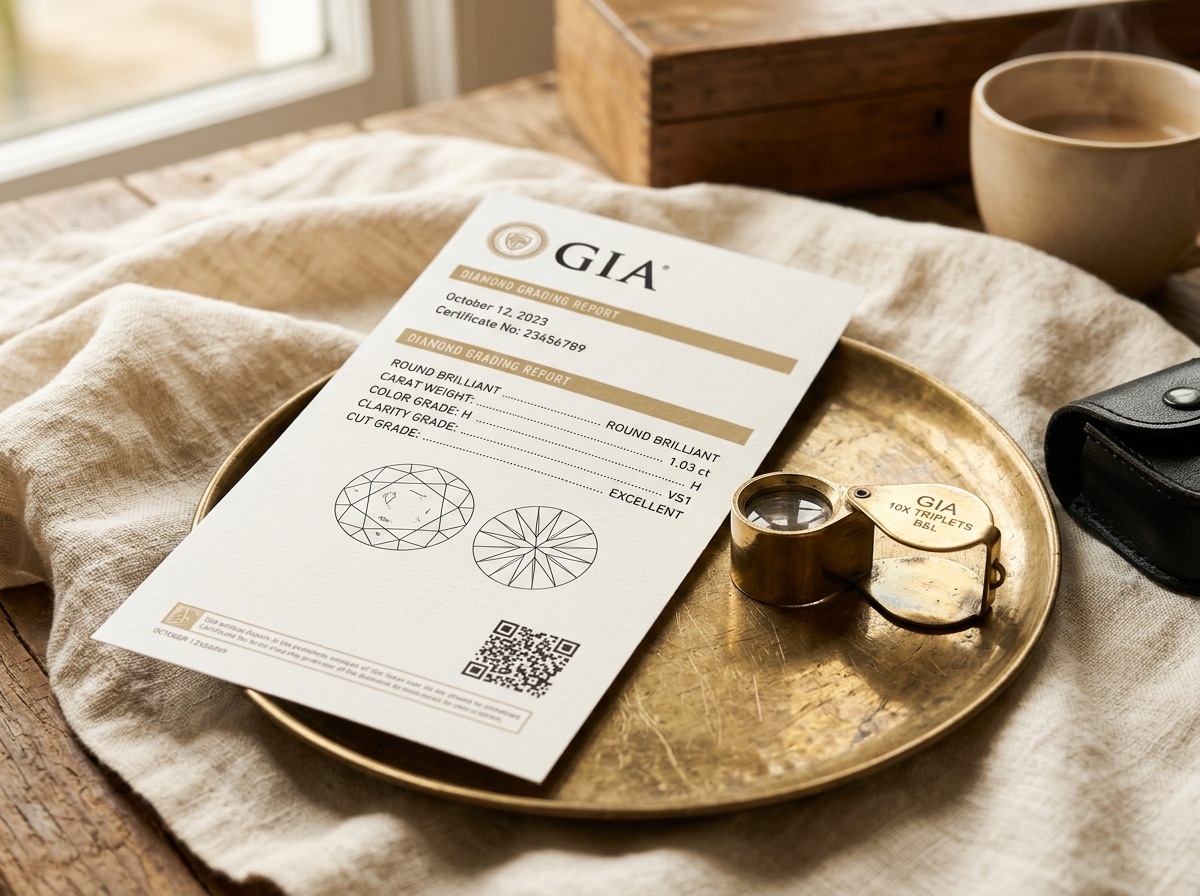
Next, check the certificate itself. A report issued recently reflects the stone as it currently sits; a report issued two or more years ago on a stone that's changed hands several times is worth a second look, since repeated handling and memo cycles can affect condition in ways a stale report won't capture. Ask, too, whether the quote reflects inventory that's actually on hand and ready to ship or inventory that still needs to be sourced — the latter carries timing risk the former doesn't.
Finally, benchmark. The factor breakdown and ranking earlier in this guide gives a reasonable framework for sanity-checking a quote against the stone's own specs — carat, color, clarity, cut, and certifying lab, in roughly that order of weight. If a quote looks meaningfully out of line with what those factors would suggest, that's the signal to ask why, not to assume the number is simply "the market."
How Guru Diam Prices
Guru Diam publishes a current wholesale list that reflects live market pricing. Every stone on that list is US-held in NYC or LA inventory, certified by IGI or GIA, and priced in landed, tariff-paid terms — the number quoted is the number that applies, without a separate customs or freight step layered on afterward. Stones are available for memo on standard trade terms, and inventory is drawn from stock that's ready to ship rather than sourced to order.
The goal of pricing it this way is straightforward: a quoted price should hold through a normal sales cycle without requiring the buyer to hedge against a landed-cost surprise later. Trade accounts receive the current list directly — open an account with the NY or LA office to see current pricing.
Buyer Checklist for Price Negotiation
Before agreeing to a wholesale quote, run it against this list:
- Per-carat and total price, both. Ask for the number both ways so there's no ambiguity in what's being compared.
- Landed or FOB? A price that still needs duties and freight added is not the same offer as one that's already landed.
- Certifying lab and report date. Confirm which lab, and how recently the stone was graded.
- Memo terms. Understand what happens, and what it costs, if the stone doesn't sell through on the first placement.
- Return or exchange window. A stone that doesn't match its photos or video should be returnable without penalty.
- Is the price held, and for how long? Know the hold period before quoting a client against it.
- Does account history affect the number? Ask whether a standing trade relationship unlocks better terms than a one-off order.
- Get a second quote. Compare against at least one other source on the same specs before committing — it's the fastest way to spot an outlier in either direction.

Frequently Asked Questions
What factor affects lab-grown diamond wholesale price the most?
Carat weight has the largest effect on both total price and per-carat rate, followed by color and then clarity. Cut and certifying lab typically have a smaller, though still real, effect on the final number.
Does IGI or GIA certification change the price of the same diamond?
It can. GIA's tighter lab-grown grading standards have created a modest premium for top-tier GIA-graded stones due to relative scarcity of newly graded supply, not a difference in the diamond itself. IGI remains the higher-volume standard across the lab-grown trade.
Why is a 0.99-carat diamond sometimes cheaper per carat than a 1.00-carat diamond?
Wholesale and retail pricing is typically built around round-number carat breakpoints. A stone just under a threshold like 1.00ct prices in the lower bracket even though the visual size difference from a stone just over the line is essentially invisible.
Are there volume discounts on wholesale lab-grown diamonds?
Parcel goods like melee and calibrated stones commonly see volume-based pricing, since sorting and paperwork overhead is amortized across the parcel. Individually certified stones are less likely to carry a volume discount on their own, but standing trade accounts often see better terms tied to order consistency over time rather than single-order size.
How can I tell if a wholesale quote is fair?
Confirm the quote is landed rather than FOB, check that the certificate is current, verify whether the stone is on-hand or still needs to be sourced, and benchmark the price against the stone's own carat, color, clarity, cut, and certifying lab. Getting a second quote on the same specs is the fastest sanity check.
How does Guru Diam price its wholesale list?
Guru Diam publishes a current wholesale list based on live market pricing. Every stone is US-held in NYC or LA inventory, certified by IGI or GIA, and quoted in landed, tariff-paid terms, with memo available on standard trade terms. Trade accounts can open with the NY or LA office to receive the current list.