Tariff exposure is no longer a footnote in how a US jeweler buys diamonds — it is the single largest variable, often bigger than the spread between two competing wholesale quotes and bigger than the difference in carat weight or color between two comparable stones.
For most of the last decade, polished lab-grown diamonds arrived in the United States more or less like any other small shipment of gemstones — a nominal duty, clean paperwork, a landed cost you could predict to the dollar before the stone ever left the polishing floor. That era ended in 2025. Over the course of a single year, the tariff environment for imported diamonds, natural and lab-grown alike, went from a rounding error on an invoice to the first line item every buyer checks.
In 2026 it is the question underneath every other question: what does this stone actually cost me, landed, in my showcase? Carat, color, clarity, and cut used to be the whole conversation — now there's a fifth variable on top of all of them, and it moves faster than any of the traditional four.
If you are an independent jeweler, a chain buyer, a designer sourcing for custom work, or a wholesale partner trying to hold a quote steady for a week, this is the guide that unpacks what changed, what's still changing, and — practically — how to source around the problem without paying an origin premium or gambling on a customs clearance date.

How we got here
Before 2025, US import duties on polished lab-grown diamonds were modest, and the system underneath them hadn't changed much in decades. Loose diamonds — natural and lab-grown — fall under the gemstone chapter of the Harmonized Tariff Schedule, the classification system US Customs and Border Protection uses to assign duty rates. For most of the modern trade era, that baseline rate was low enough that nobody outside a customs brokerage thought much about it. The structure assumed predictable flows: rough sourced from a handful of producing regions, cutting and polishing concentrated in a small number of manufacturing centers, finished stones shipped into the United States against small, stable duties.
Then came a sweeping shift in US trade policy. Reciprocal tariffs were announced in April 2025, targeting major trading partners on a country-by-country basis rather than a product-by-product one. For the diamond trade specifically, two countries mattered more than any others — together, they account for the overwhelming majority of the world's lab-grown polishing capacity, so a country-level tariff landed on this industry with unusual force. A 90-day pause, a series of executive orders, partial exemptions carved out for certain loose-stone categories, and ongoing bilateral negotiations have all layered on top of each other since. Each layer changes the math slightly. None of them has reset it back to where it started.
The net effect for a buyer in 2026: landed cost now depends heavily on where a stone was fully manufactured — not where it was certified, not where it was shipped from, not where the invoice happens to be cut. That single fact is the one most sourcing conversations still get wrong, and it's worth sitting with before anything else in this guide.
For jewelers, the practical result is a sourcing environment where the same-grade stone — same carat, same color, same clarity, same cut grade — can carry a 30–50% landed-cost difference depending on which country's polishing floor it left. That is not a rounding error. On a meaningful order, it is the difference between a healthy margin and a loss.
One note for anyone newer to import duty: rates, exemption lists, and country-specific treatment shift on a rolling basis through executive action, negotiation, and legal challenge. Nothing here should be read as a fixed number to quote a customer six months out — confirm current rates with a licensed customs broker before finalizing any landed-cost calculation that matters to your margin.
How lab-grown diamonds are treated — or not — differently than natural at customs
One question every buyer eventually asks: does a lab-grown stone get treated differently than a natural one crossing the same border? The honest answer in 2026 is: less differently than most people assume, and the ground is still shifting under the question.
For classification purposes, natural and laboratory-grown diamonds have historically sat in different places within the gemstone chapter of the tariff schedule, since one is a mined mineral and the other a manufactured material — a distinction that matters for how the goods are categorized on paper. That classification difference has mattered most for country-of-origin labeling and certification questions, not for whether a stone is exposed to the reciprocal tariffs introduced in 2025.
Where it counts — the reciprocal tariffs themselves — exposure runs on country of manufacture, full stop. A lab-grown diamond polished in a tariffed country faces the same country-level duty that a natural diamond polished in that same country would face. Being lab-grown does not exempt a stone from the tariff, and being natural does not add one. The origin of the rough material — grown in a reactor versus mined from the earth — is not the variable customs is pricing; the location of the cutting and polishing is.
This is genuinely still evolving. As lab-grown diamonds keep gaining share of the overall market, there is real industry discussion about whether lab-grown stones should eventually be classified, taxed, or exempted differently than natural ones — arguments run in more than one direction, and none of it is settled. Any buyer who hears a supplier assert a lab-grown-specific exemption with total confidence should ask for the documentation behind that claim, in writing, first. A five-minute call to a customs broker beats a confident paragraph on a supplier's website — including this one.
What is actually taxed in 2026
This is the part most buyers get wrong, so it's worth being precise about the categories.
Loose polished diamonds
Partially exempt under certain trade arrangements and specific executive orders, depending on the country of manufacture. Stones polished in tariff-exempt jurisdictions can enter with minimal duty. Stones polished in the handful of countries carrying the bulk of the world's lab-grown polishing capacity are subject to the full reciprocal tariff assigned to that country. The exemption list itself is not static — it has been amended more than once since the reciprocal tariffs were announced, which is exactly why any rate you hear quoted needs an "as of" date attached to it.
Finished diamond jewelry
Taxed on its full value — the ring, the mounting, the labor, the stone, all of it — because the substantial transformation happened overseas. You cannot deduct the value of the loose stone from a tariffed finished piece once it's mounted abroad and imported as a completed ring. This is the single costliest assumption a buyer can make: that a finished import carries the same exposure as the loose stone inside it. It carries more.
Documentation requirement
The burden of proof sits with the importer, not the exporter. You need to document the country of manufacture — not shipment, not certification — at the moment of customs clearance. Missing or ambiguous paperwork doesn't just risk a higher duty; it creates a bottleneck that slows clearance even on stones that would otherwise qualify for reduced duty. A shipment held a few extra days over an incomplete manufacturing declaration costs a jeweler just as much, on a rush order, as a higher tariff would have.
What counts as "manufactured"
Polishing. Cutting. Faceting. Certification and recutting do not reset the country of origin, and neither does where the stone is ultimately sold from. A rough stone grown in one country, polished in a second, certified by a lab in a third, and sold from a showroom in a fourth is — for tariff purposes — defined by wherever the polishing actually happened. Buyers who assume a US-issued certification report settles the origin question are the ones most likely to get an unpleasant surprise at clearance.
Why this hurts the small and mid-size jeweler the most

The big chains have trade lawyers, customs brokers on retainer, and enough cash flow to absorb a bad quarter while they rewire a supply chain. The independent jeweler, the small chain, and the designer running a made-to-order business do not have any of that built in — they're managing tariff exposure with the same back office that handles payroll and inventory counts.
Here is what the pain actually looks like, order by order:
- Quote instability. You price a custom ring for a customer on Monday. The stone ships from overseas on Wednesday. By the time it lands, the landed cost is 15% higher than what you quoted three days earlier. You eat the difference, renegotiate with the customer, or walk away from the sale.
- Customs delays. Even cleanly documented shipments are taking longer to clear than they used to. Custom orders built around a deadline — an engagement ring before a proposal date, a client gift before an anniversary — slip past the customer's expectation through no fault of the jeweler's workmanship.
- Cash-flow whiplash. Tariff payments are due on clearance, not on sale. A jeweler is effectively financing a tariff bill for weeks or months before the inventory it's attached to ever generates revenue.
- Margin compression. You can't always pass the tariff through to the retail customer, because that customer is comparing your price against an online competitor quoting from a tariff-exempt lane, or a showroom that happened to buy its inventory before the last rate increase.
- Pricing-page paralysis. Some jewelers now quote custom work only in ranges, or require a deposit before locking a number — defensible, but it adds friction to every sale.
None of this is theoretical. It's the reality every independent US jeweler is managing in 2026, and it compounds: a jeweler who eats one tariff surprise on a large custom order quotes the next one far more conservatively, which shows up as slower sales cycles and more cautious buying.
What actually goes into a landed cost
"Landed cost" gets used loosely, but it's a specific number: everything it costs to get a stone from the polishing floor into your safe, ready to sell. Duty is the headline in 2026, but it isn't the only line item — a buyer who only asks about the tariff rate is still leaving room for a quote to move. Itemize this on any quote that matters:
| Cost factor | What to ask your supplier |
|---|---|
| Duty / tariff | What country was this manufactured in, and what is the current duty rate applied to that country as of today's date? |
| Freight | Is freight built into the quoted price, or billed separately once the shipment moves? |
| Insurance | Is the shipment insured in transit, and at what value — replacement cost or invoice cost? |
| Customs brokerage fees | Who is the broker of record, and is their fee included in the landed number or added after clearance? |
| Certification / grading | Is the stone already certified, or does grading happen after import — and who bears that cost and timeline? |
| Currency exposure | Is the quote locked in USD, or does it float with an exchange rate between quote and payment? |
A quote missing any one of these isn't necessarily a bad quote — but it isn't a landed cost yet either. It's a starting point for a conversation your supplier should be willing to have in detail, in writing, before you commit inventory dollars or a customer deposit to it.
The US-held inventory advantage
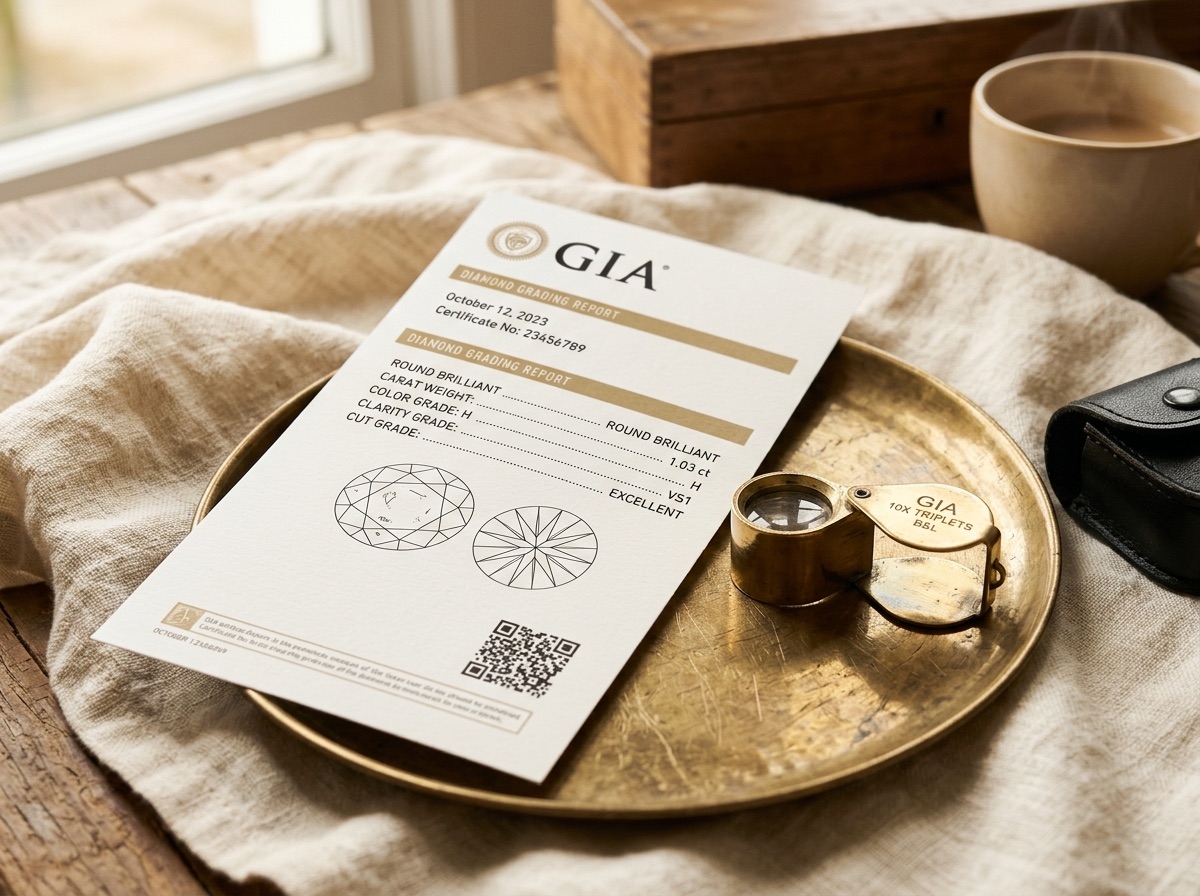
The cleanest way around the tariff problem isn't to fight the tariff. It's to buy stones that have already had it resolved.
Stones already cleared through customs, duty paid, sitting in a wholesaler's inventory domestically are, from the buyer's perspective, tariff-neutral. You see one price. That price is landed. There is no customs exposure, no documentation burden, no timing risk between the quote and the sale.
This is the structural advantage of working with a US-based wholesale partner in 2026. Guru Diam maintains its active inventory domestically, split between New York and Los Angeles. The price on the list is the price on the invoice — there's no tariff math for the buyer to do, because it's already been done before the stone ever appeared on the list.
The same logic extends to finished jewelry. A ring imported fully assembled from overseas is taxed on its full value, mounting and labor included — one of the costliest exposure points in this guide. A ring where the loose stone comes from already-landed US inventory, with setting, polishing, and finishing done in-house domestically, never enters that category, because no finished piece crosses a border. The tariff clock doesn't start on work that never left the country.
Compare the two sourcing paths directly:
| Factor | Direct Import (India/China) | US-held Wholesale |
|---|---|---|
| Time to delivery | 7–21 days + customs | 24–48 hours |
| Tariff exposure | 27–50%+ depending on country | Zero (already paid) |
| Documentation burden | Full — country of manufacture proof required | None for the buyer |
| Price stability | Shifts with trade policy | Fixed at quote |
| Custom order risk | High — tariff changes mid-order | Low |
For the jeweler running custom work, engagement orders, or quick-turn retail sales, the math is not close. Every day a stone sits in transit is a day the quote you gave a customer stays exposed to a policy change neither of you controls.
How to manage tariff risk in your sourcing
Tariff exposure isn't something a single order can hedge against, but a sourcing strategy can. A few approaches worth building in, regardless of size:
Diversify where you source from. A jeweler buying exclusively from one country of manufacture is fully exposed to that country's trade relationship with the US. Spreading purchasing across manufacturing countries — and across US-held versus direct-import inventory — means one policy change can't move your entire cost base at once.
Confirm landed cost before you commit, not after. Get the full landed number in writing before taking a customer deposit or committing shop time. A FOB quote that doesn't include duty, freight, and clearance isn't a price yet — it's a starting point that can still move against you.
Build a buffer into custom-order pricing. If a stone must be imported specifically for an order, price in a margin buffer that can absorb a modest tariff shift between quote and delivery, rather than pricing to the exact number you were quoted that morning.
Hold some working inventory rather than buying entirely to order. Stock in the shapes, sizes, and colors you sell most reduces how often a live import decision sits in the middle of a customer transaction.
Put memo and return terms in writing. If a stone sits in customs for two weeks, the memo clock, the return window, and who absorbs a tariff change in that window should be agreed on paper before it leaves the supplier — not negotiated after the fact.
Revisit your supplier mix on a schedule, not just in a crisis. Trade policy has moved fast enough that a sourcing relationship that made sense twelve months ago may not be the cheapest option today. A standing quarterly review of where your inventory comes from costs little and catches drift early.
Questions to ask any supplier about landed cost
Whether you decide to buy US-held, direct-import, or a hybrid of both, run every meaningful deal against the same short list of questions before you commit:
- What is the country of manufacture, in writing? Not shipment. Not certification lab location. Where the stone was actually cut and polished.
- Is this the landed cost, or the FOB price? A quote without duty, freight, and clearance already built in isn't comparable to one that has them.
- Will the price hold for the life of the order? If you take a deposit Monday, the wholesale price needs to hold through delivery — get that in writing.
- What does recent clearance actually look like? Some origin countries see inconsistent customs holds even on clean paperwork. Ask what the last several shipments actually experienced.
- Who absorbs a delay? If a stone sits in customs longer than expected, whose memo clock is running, and does the quoted price still apply on the other side?
- Can you show me the documentation, not just describe it? A supplier confident in their country-of-manufacture position will produce the paperwork on request, before you buy.
If your current supplier struggles to answer any of these clearly and in writing, that hesitation is itself the answer.
What we expect for the rest of 2026

The tariff picture is unlikely to settle fully in 2026. Nobody — including us — can responsibly hand a jeweler a fixed forecast for a policy environment that has moved several times in the last eighteen months. More useful is a short list of scenarios worth planning around, without treating any as certain:
- Partial trade agreements. Negotiations with major trading partners are ongoing and could reduce — not necessarily eliminate — tariff exposure on stones manufactured there. Worth watching for, not worth pricing in before it's signed.
- Legal review of tariff authority. Court review of the underlying tariff authority is in progress at the time of writing. An unfavorable ruling could unwind some duties, but refunds on duties already paid are not guaranteed — don't build a cash-flow plan around a refund that may never arrive.
- Continued volatility on the highest-tariff countries. The countries carrying the steepest duties today are likely to stay the highest-cost lanes regardless of what happens elsewhere, simply because they were targeted hardest in the original policy.
- Growth in US-held wholesale inventory. Expect more US-based wholesalers to build out domestic, duty-cleared inventory rather than fulfilling every order from an overseas shipment on demand.
- More scrutiny at the documentation layer. As country-of-manufacture becomes the deciding factor in duty rates, expect enforcement to focus there — weak documentation becomes a bigger liability over time, not a smaller one.
The one thing that is reasonably clear: the days of assuming any polished stone from anywhere will enter the US at nominal duty are gone, and planning a sourcing strategy around that assumption returning is not a safe bet for 2026 or, most likely, beyond it.
Bottom line for jewelers
Tariffs are not a temporary blip. In 2026 they are a structural feature of the US diamond market, lab-grown and natural alike, and the jewelers doing best are not the ones absorbing the cost quietly — they're the ones who moved, deliberately, to sourcing models that treat tariff exposure as something to route around rather than eat.
Sourcing from US-held wholesale inventory where it makes sense, negotiating memo terms that don't penalize customs delays, asking harder questions about country of manufacture before a deposit changes hands, and refusing to quote a price you can't hold through delivery — none of this is an aggressive move. In 2026, it's baseline professionalism, and the jewelers who treat it that way spend less time explaining a surprise invoice to a customer.
If you'd like to see what US-held, tariff-neutral wholesale inventory looks like, browse certified lab-grown diamonds, plus melee and fancy color inventory. You can also open a trade account and we'll send our current list the same day.
Frequently Asked Questions
Indian-polished lab-grown diamonds have faced reciprocal tariffs reaching 27% or higher in 2025–2026, with combined duties in some cases pushing landed costs 40–50% above pre-tariff levels. The exact rate depends on the current status of US–India trade negotiations, so treat any number as a snapshot, not a guarantee — confirm the current rate with a customs broker before finalizing a quote.
Only under specific conditions. A September 2025 executive order added certain loose polished diamonds to a tariff-exempt annex for select trading partners who have concluded deals with the US. This does not cover finished jewelry, which is taxed on its full value regardless of the origin of the stone inside it.
Generally yes. Chinese-polished lab-grown diamonds are among the highest-tariff categories, with combined duties that often exceed those on Indian-origin stones. Both remain subject to change as negotiations continue.
Ask the seller for documentation showing where the stone was cut and polished — not where it was certified, shipped from, or sold. IGI and GIA reports typically identify the lab location, not the manufacturing location, so a separate declaration from the seller is usually required.
If the wholesaler's inventory is physically held in the US with tariffs already paid, yes — the buyer has no additional tariff exposure at purchase. This is the simplest route for US jewelers who want a predictable landed cost without tracking trade policy themselves.
Unlikely as a whole. Individual tariffs may be reduced through trade agreements or court decisions, but the baseline tariff environment is expected to persist. Jewelers should plan sourcing on the assumption that tariffs are a lasting feature of US diamond imports, not a temporary disruption to wait out.