"I read online that these don't hold their value. Is that true?"
Every jeweler selling lab-grown diamonds in 2026 has heard some version of this question at the counter. The honest answer is that it's complicated, and the customer asking it is half-right. The worst response is to argue. The second-worst is to dodge and change the subject. Either way, the sale is usually lost in that moment. What works is a reframe — a specific, practiced talk track that acknowledges the concern honestly, restates what the customer is actually buying, and points to a concrete program that addresses the worry underneath.
This guide walks through why the objection surfaces, whether it's grounded in fact, how to reframe the conversation around value instead of investment, how certification and price trends shape the discussion, and the specific scripts a sales associate can use on the floor — for both engagement rings and fashion jewelry.
Is the Resale-Value Objection Factually Grounded?
Yes, mostly. This is worth saying plainly before any reframe, because a sales team that talks around a true fact loses credibility fast with an informed shopper. Industry analysts routinely publish secondary-market data showing lab-grown diamonds reselling for a smaller share of their original purchase price than natural diamonds — typically 10–30% for lab-grown against 30–60% for naturals. That gap is real, it shows up in the same searches a customer runs before walking in, and pretending otherwise is the fastest way to lose the room.
Three things have made the objection louder in 2026 specifically:
- Resale data went mainstream. What used to be a niche trade statistic is now on the first page of Google for anyone who types "do lab-grown diamonds hold their value."
- Retail prices for new lab-grown stones kept declining. A customer who bought in 2023 and checks current pricing on a similar stone today is watching their purchase's replacement cost drop in real time — and reading that as their own stone losing value.
- Natural-diamond marketing came back in force. Well-funded natural-diamond industry campaigns have leaned hard on the value-retention argument, and that messaging reaches consumers before they ever reach your sales floor.
None of that means the category is a bad choice. It means the objection is a structural feature of selling lab-grown in 2026, and it needs to be trained for like any other recurring objection — pricing, quality, sizing — rather than improvised on the spot.
Just as important: customers asking about resale are almost never planning to actually resell. Data across the jewelry trade is consistent here — the overwhelming majority of engagement rings, anniversary gifts, and fashion pieces are kept for decades or passed down, not sold. So the resale question is almost always really asking one of four underlying things:
- "Am I being overcharged right now?" — They want reassurance the price in front of them is fair.
- "Is this a real diamond, or a knockoff?" — Resale value is a proxy for authenticity in their head.
- "What if I want a bigger stone later?" — They're thinking ahead about upgrade flexibility, not a sale today.
- "Will my partner or family approve of this purchase?" — Resale is a socially acceptable way to voice a different concern entirely.
Diagnosing which of these four is actually underneath the question — not answering the literal words — is what reopens the sale.

Reframe the Conversation Around Value, Not Investment
The reframe that works is simple and, more importantly, true: almost nobody buys jewelry as an investment vehicle. Most people buy a diamond to wear it for twenty, thirty, fifty years, or to pass it down to someone else. The right question isn't what the stone would sell for next year — it's whether it's the right stone, at the right size and quality, for the life the customer is going to live in it.
That reframe holds up under scrutiny because it shifts the comparison from "resale price vs. purchase price" — a frame where lab-grown loses every time — to "size and quality per dollar today" — a frame where lab-grown wins decisively. A customer choosing between a 1-carat natural and a 2-carat lab-grown at the same budget is not making an investment decision at all. They're deciding how much stone they want to look at every day. Put that choice in front of them explicitly:
"Almost nobody buys jewelry as an investment. Most people buy it to wear for twenty, thirty, fifty years, or to pass it on. The real question isn't what it would sell for next year — it's whether it's the right stone for the life you're going to live in it. At this budget, lab-grown gets you meaningfully more size and clarity than natural. That's the actual trade-off in front of you."
This works because it's factually accurate, it releases the customer from a framing they didn't choose, and it moves the decision criterion from financial to personal — where the purchase decision was always going to be made anyway. Once a customer accepts they're buying to wear the piece, not to sell it, the resale gap stops being disqualifying.
It also opens a size-and-quality conversation that plays entirely in lab-grown's favor. Cost-per-carat on lab-grown material sits well below natural at comparable color and clarity, so the same budget buys a visibly larger stone, a cleaner clarity grade, or better color — often more than one of the three. For a customer weighing a smaller natural against a larger lab-grown at the same price, that's the real decision on the table, and most customers are glad to have it laid out plainly.
Objection vs. Practical Response: A Sales-Floor Reference
Sales associates rarely have time to reconstruct a full talk track mid-conversation. A quick reference table — printed at the register or pinned in the back office — turns the objection into a rehearsed reflex instead of an improvised scramble.
| What the Customer Says | Practical Response Point |
|---|---|
| "I heard these don't hold their value." | Confirm the data honestly, then reframe to size-and-quality-per-dollar and long-term wear rather than resale. |
| "So this is basically worthless the second I walk out?" | Clarify the difference between retail markup (true of nearly everything) and resale value specifically; offer the trade-up program as the real answer to "what if I want to change stones later." |
| "Is this even a real diamond?" | This is an authenticity question wearing a resale costume. Redirect to certification — show the grading report and the laser inscription under magnification. |
| "My partner or parent said these are a waste of money." | Acknowledge the concern is reasonable, then walk through cost-per-carat math side by side with a comparable natural at the same budget. |
| "What if I want to upgrade to a bigger stone in a few years?" | This is the trade-up program's exact use case — walk through eligibility and credit terms concretely. |
| "I read the resale numbers online — is that accurate?" | Confirm the range honestly (10–30% lab-grown, 30–60% natural). Research-armed shoppers respect honesty more than a sales pitch. |
How Certification Shapes Perceived and Actual Resale Value
Certification does two separate jobs in this conversation, and it's worth being precise about which one you're doing at any given moment.
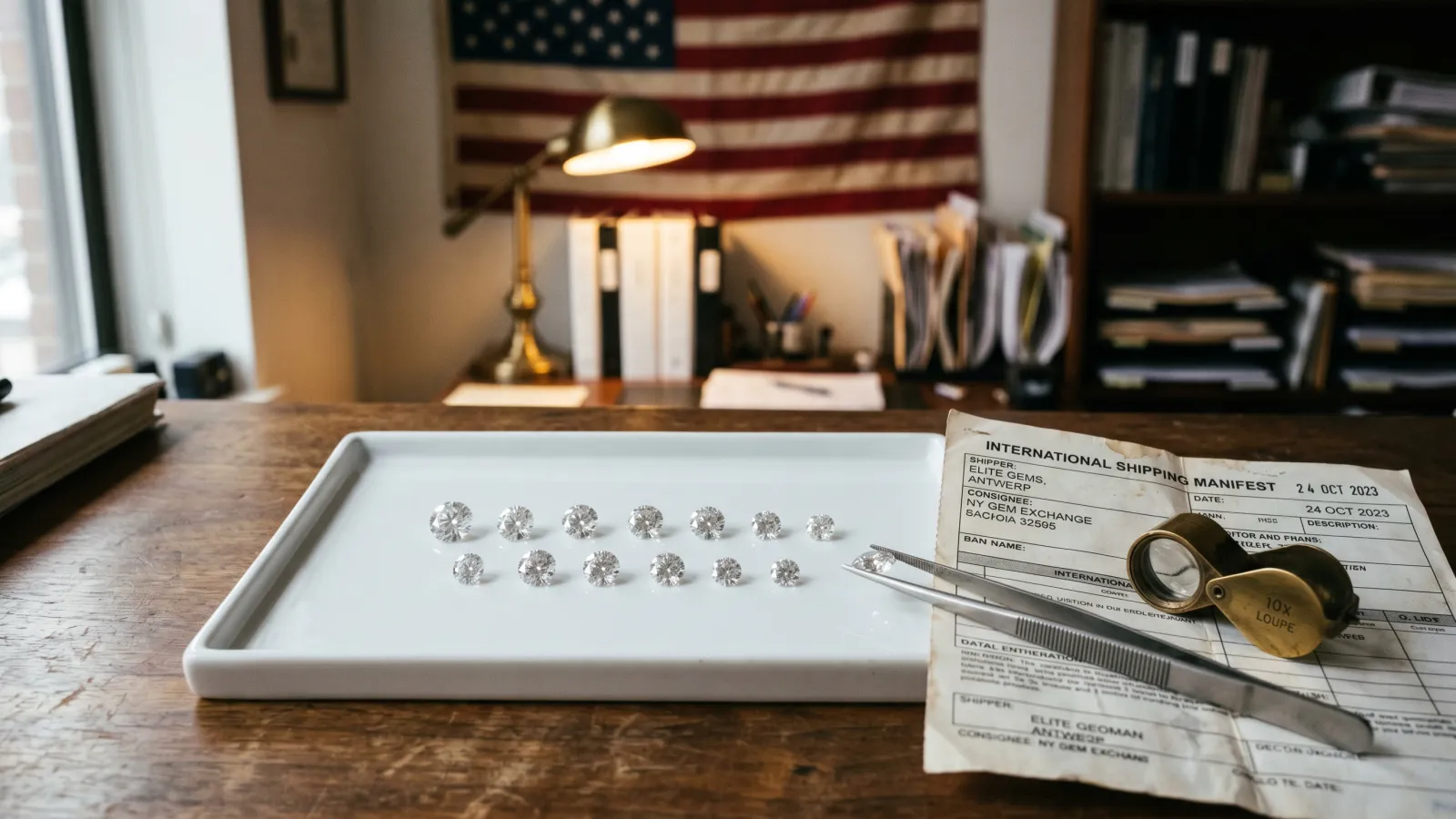
The first job is perceived value — trust, in plain terms. A customer worried a lab-grown stone is "not a real diamond" is, functionally, worried about resale even if they never say the word, because to them resale and authenticity are the same anxiety. IGI and GIA grading reports settle this immediately: both labs grade lab-grown and natural diamonds against the same 4Cs standard, and both stamp a report number that matches a laser inscription on the stone's girdle, verifiable on the lab's own website before the customer leaves your store. Put the loupe in their hand and let them read the inscription themselves — that single moment closes an authenticity-driven resale objection faster than any script.
The second job is actual, functional value on any future transaction — appraisal, insurance, or resale. A certified stone with a documented grading report is materially easier to appraise, insure, and resell than an uncertified one, because the next buyer, insurer, or appraiser is reading an independent lab report, not taking anyone's word for the 4Cs. This doesn't close the resale-percentage gap between lab-grown and natural, but within lab-grown specifically, a certified stone will always outperform an uncertified one on any future transaction — a genuine differentiator worth raising with a customer doing real due diligence.
Price Trends: Why This Objection Isn't Going Away
It's tempting to treat the resale objection as a temporary side effect of a young category that will resolve itself as lab-grown matures. That's not the trajectory. Lab-grown diamond production capacity has continued to grow, manufacturing efficiency keeps improving, and retail prices for new lab-grown stones have continued a multi-year decline as a result. That means a customer's replacement-cost comparison — "what would this exact stone cost brand new today" — will likely keep sliding for the foreseeable future, not stabilize.
The right response isn't to soften this or hope the customer doesn't notice — it's to fold it into the honest-acknowledgment step, then pivot to why it barely matters: a declining new-production price is irrelevant to a stone someone already owns and plans to wear for decades. It only matters if someone treats their ring as a resale asset, which almost nobody does. Continued price declines even strengthen the trade-up argument: cheaper new inventory means a customer's trade-up credit stretches further toward a larger or better stone later — a genuine upside, not a downside to manage around.
Long term, expect the objection to persist even as the category matures — falling replacement cost is a structural feature of a manufactured product getting more efficient to produce, the same dynamic seen across most manufactured luxury categories over time. The fix isn't waiting for the objection to fade. It's building a sales process and retailer program — trade-up, transparent pricing, certification — that make the objection irrelevant to the customer's decision.
Scripts and Talking Points for the Sales Floor
The structure that works, in order, is: Acknowledge. Reframe. Redirect. Skipping any one of the three steps is where most associates lose the sale — acknowledging without reframing sounds like a concession; reframing without redirecting leaves the customer's real concern unresolved.
1. Acknowledge
"That's a fair question, and you're right — lab-grown and natural diamonds do behave differently on the secondary market. Lab-grown stones typically resell for 10 to 30 percent of their original price. Naturals do somewhat better, usually 30 to 60 percent, but neither is a great investment — most jewelry isn't."
This works because the customer walked in expecting a defensive answer. Confirming the data openly earns you the right to reframe next, and it immediately separates you from jewelers who dodge the question.
2. Reframe
"Almost nobody buys jewelry as an investment. Most people buy it to wear for twenty, thirty, fifty years, or to pass it on. The real question isn't what it would sell for next year — it's whether it's the right stone for the life you're going to live in it."
3. Redirect
This is the step most jewelers skip, and it's the one that actually closes the sale. After reframing, hand the customer a concrete path for whatever concern is really underneath the question. For the upgrade-minded customer:
"One thing that might help — we run a trade-up program. If you decide in three, five, or ten years that you want something larger or different, we apply the original value toward a new stone. That's structured differently from resale. You're not selling into a secondary market. You're upgrading within our store."
For the authenticity-driven customer:
"Every stone we sell ships with certification from a major lab, and the cert number matches a laser inscription on the stone itself. You can verify it online, today, before you leave. The stones are real — the question is just which kind of real fits your budget and your style."
For the price-conscious customer:
"Our pricing is transparent. I can walk you through exactly how this stone is priced and where the margin sits. That's not something every jeweler will do, and we're comfortable doing it because we're confident in the price."
Reading the four customer types
The right redirect depends on which of four types is standing at the counter:
- The value-conscious shopper is price-comparing right now and wants reassurance they're not being overcharged. Redirect to transparent pricing and the trade-up program.
- The authenticity-skeptic worries lab-grown is "not a real diamond." Redirect to certification — put the loupe in their hand and verify the inscription together.
- The hedger is buying for an engagement or anniversary and privately worried about reversibility. Redirect to the trade-up program, gently, without making them say the underlying worry out loud.
- The research-armed shopper already knows the exact resale percentages and is testing whether you'll be honest. Redirect to a straight, undefended conversation — they respect candor more than a pitch.
A minority of customers — typically in the 5–10% range — will hear the full reframe and still decide they want a natural stone instead. That's a fine outcome, not a failure. Every well-run jeweler in 2026 carries both categories. The pivot sentence: "That's a completely reasonable choice. Let me show you some naturals in the same budget range and we can compare them side by side." A sales floor that runs both categories cleanly converts that customer into a natural-diamond sale instead of losing them out the door.

Engagement Rings vs. Fashion Jewelry: How the Objection Differs
The resale objection shows up differently depending on what's being purchased, and treating every conversation identically is a mistake.
Engagement rings carry the heaviest version of the objection because the purchase is emotionally loaded and often scrutinized by people who aren't in the room — a parent, a friend, a future spouse's family. This is where the "hedger" customer type shows up most: the resale question is frequently a stand-in for "what happens to this financially if the relationship doesn't work out," a concern rarely stated directly. It's also where the trade-up program does its most important work, since an engagement ring is the purchase most likely to be revisited later — an anniversary upgrade, a re-setting, a larger stone as finances improve. Frame the trade-up program early, not as a defensive answer to an objection but as a built-in feature of buying with your store.
Fashion jewelry — stud earrings, pendants, tennis bracelets, right-hand rings — carries a lighter version of the same objection, usually showing up as a value-for-money question rather than an investment question. Fashion buyers rarely think in resale terms at all; they're comparing this piece against another piece at another store, not a hypothetical future sale. The stronger lever here is cost-per-carat and design flexibility: a lab-grown stud or line bracelet buys a noticeably larger or cleaner look at the same budget, a proposition fashion buyers respond to immediately since they're already shopping on look-per-dollar. Certification still matters, but plays a smaller role than on a center-stone purchase — fashion buyers rarely request grading reports on melee-scale accent stones the way they do on a center diamond.
The practical takeaway: lead engagement-ring conversations with trade-up and certification, since those customers are managing emotional risk and third-party scrutiny. Lead fashion-jewelry conversations with cost-per-carat and design flexibility, since those customers are managing a straightforward value comparison. Swap the two and you either over-explain a concern the customer doesn't have, or under-serve one they won't say out loud.
Guru Diam Certification and the Trade-Up Conversation
The retailer conversation above only works if the wholesale side backs it up. Every stone Guru Diam ships is certified, trade-up eligible with participating retailers, and US-held, with IGI and GIA both available depending on what your customer base expects. That gives a sales associate the paperwork for the loupe-and-inscription moment without hedging, and gives a store owner the certification standard a trade-up program depends on.
If you don't already run a formal trade-up program, building one is the single highest-leverage move available to a lab-grown retailer in 2026 — it neutralizes the category's biggest recurring objection and gives customers a structural reason to return instead of shopping around when they're ready to upgrade. A workable program looks like this:
- Eligibility: Any lab-grown or natural center stone purchased from your store, with the original invoice and grading report on file.
- Credit: Typically 100% of the original purchase price of the center stone, applied toward a new stone priced at roughly 1.5x to 2x the original.
- Upgrade path: Larger, a different shape, a different color, or a move between lab-grown and natural — that last progression is common and popular.
- Timeframe: Lifetime, with no expiration date on the credit.
- Stone condition: The original stone comes back in sellable condition as a condition of the credit.
Your wholesale partner matters here, because a trade-up program only works if the retailer isn't left holding depreciated returned stock. Guru Diam supports trade-up programs at the wholesale level — when a customer trades in a stone, we credit it against your current inventory instead of leaving it as dead weight on your shelf. Open a trade account with our NY or LA office to talk through the mechanics for your store.

Training Checklist: Preparing Your Sales Team for This Objection
A talk track only works if every associate on the floor can deliver it naturally, under pressure, without sounding rehearsed. Run this as a recurring 30-minute training, at minimum once a quarter:
- Role-play the objection. Pair up associates — one plays customer, one plays salesperson — and run five rounds, rotating each time.
- Diagnose before responding. Each round, the salesperson must identify which of the four customer types — value-conscious, authenticity-skeptic, hedger, research-armed — they're facing before choosing a redirect.
- Critique delivery, not content. The words are fixed; what separates a close from a stall is tone, pacing, and eye contact — that's what the session should grade.
- Practice the close. The final sentence of each redirect needs to sound natural, not memorized. If it sounds canned in practice, it will sound canned at the counter.
- Confirm the trade-up terms cold. Every associate should be able to state eligibility, credit percentage, and timeframe without looking it up — hesitation here undercuts the redirect.
- Review wins and losses monthly. Track which associates' close rates improve after training and keep iterating on whatever isn't landing.
A few things to avoid building into the training, because each one tends to backfire at the counter:
- Don't defend the category with environmental or ethical claims. They're legitimate points, but they don't answer a resale question — using them as one signals you misheard the customer.
- Don't disparage naturals. Most stores sell both, or should — positioning naturals as a bad choice invites an informed customer to challenge you and damages credibility on both categories.
- Don't overpromise the trade-up program verbally. Stay inside the written terms. A loose "we'll give you whatever you want back" promise at the counter becomes a dispute three years later.
- Don't quote resale numbers with false precision. "10 to 30 percent" is a defensible range built on published data. "You'll get exactly 22.4 percent back" is a number nobody can actually stand behind.
Bottom Line
The lab-grown resale-value objection isn't a problem to dodge or a fact to spin — it's a diagnostic question. It tells a sales associate exactly what a customer actually needs to hear to feel good about the purchase in front of them. Jewelers who train for it directly, run a real trade-up program, and talk about the category honestly close more lab-grown sales than jewelers who hedge, dodge, or argue the numbers away.
Frequently Asked Questions
Do lab-grown diamonds hold their value?
Lab-grown diamonds typically resell for 10–30% of their original purchase price, lower than natural diamonds at 30–60%. Most diamond jewelry is kept long-term rather than resold, so for the majority of buyers this gap matters less than the size, quality, and experience of the initial purchase.
Are lab-grown diamonds a good investment?
Most jewelry, lab-grown or natural, is not a good financial investment. Both categories depreciate meaningfully from retail to secondary-market price. Diamonds are purchased primarily for emotional, symbolic, and aesthetic reasons rather than financial return, and framing the purchase decision that way is usually the honest one.
What is a diamond trade-up program?
A retailer program that credits 100% of a center stone's original purchase price toward a new stone of greater value, typically 1.5x to 2x the original. It lets a customer upgrade size, shape, color, or category over time without losing their original purchase's value.
Why is lab-grown resale value lower than natural?
Two main reasons. Retail prices for new lab-grown stones have continued to decline, so a stone purchased a few years ago is competing against cheaper new inventory today. And the secondary-market infrastructure for lab-grown — appraisers, resale platforms, buyer familiarity — is still less developed than the equivalent natural-diamond infrastructure.
How should jewelers answer the resale-value objection?
With three steps: acknowledge the data honestly, reframe the purchase around long-term wear rather than investment, and redirect to a concrete program — trade-up, certification, or transparent pricing — that addresses whatever concern is actually underneath the question.
Does a trade-up program hurt a store's margins?
Managed within written terms, no. Trade-up programs tend to increase lifetime customer value by driving return visits and larger second purchases. A wholesale partner that supports trade-up at the wholesale level protects the retailer from being stuck holding depreciated inventory on returned stones.
Related Articles
- Lozenge Diamonds Wholesale Guide — Wholesale Lozenge (rhombus) lab-grown diamonds — calibrated elongated side stones for Art Deco-style settings and geometric accent work. IGI-gradable, NYC stock.
- Fancy Color Heart Diamonds Wholesale
- Matched Pair Step Cut Diamonds Wholesale — Wholesale matched pair step cut lab-grown diamonds — two identical step-cut stones cut and matched together for stud earrings and symmetrical side-stone settings. IGI-gradable, NYC stock.