

 Book Appointment



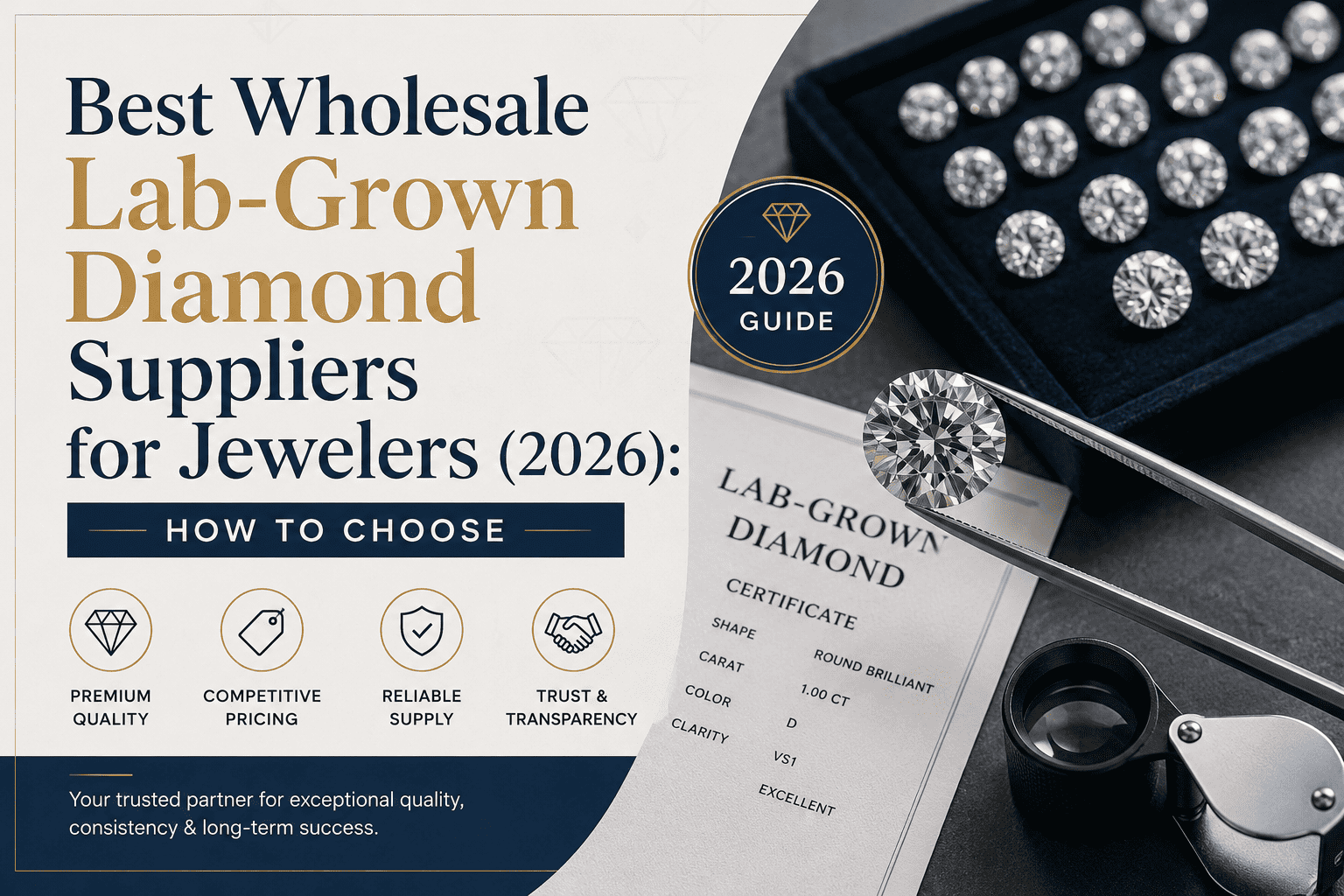
For more than a decade, jewelers had a clean answer when a customer asked which lab-grown diamond certification was "better." GIA or IGI, the 4Cs report, same language as a natural diamond. Done.
That answer stopped working in October 2025. The GIA now grades lab-grown diamonds with a different system. IGI does not. And your customer is comparing two reports that — even for the same physical stone — will look completely different on paper.
This is the field guide for 2026. What actually changed, why it changed, what it means for your showcase, and how to help a walk-in customer compare the stones in front of them without either report undermining the sale.
What changed in October 2025
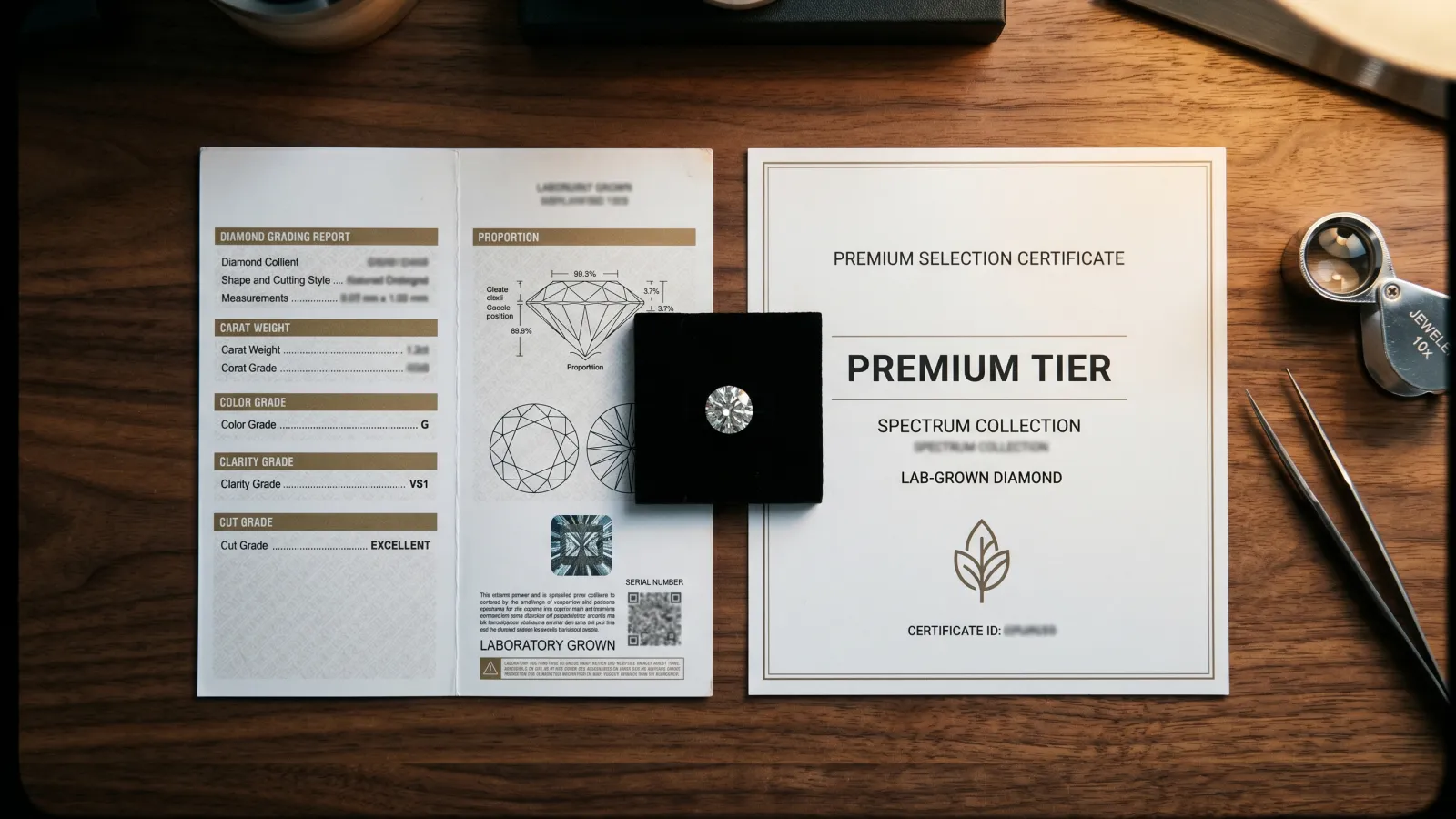
In October 2025 the Gemological Institute of America stopped issuing its traditional 4Cs grading on lab-grown diamond reports. Instead, lab-grown stones submitted to GIA now receive what the institute calls a Quality Assessment — a binary designation of Premium or Standard — along with some descriptive notes about identification, origin, and any treatments.
Specific color and clarity grades (D, E, F… and IF, VVS1, VVS2…) are no longer issued on the lab-grown report.
GIA's reasoning, stated publicly: the 4Cs scale was designed around the rarity continuum of natural diamonds, which lab-grown fundamentally does not share. GIA framed the change as a return to consistency — natural reports continue unchanged, while lab-grown reports get a new framework that reflects a different category of product.
IGI did not follow. IGI continues to issue lab-grown reports in the same 4Cs format it always has — color grade, clarity grade, cut grade, carat, plus identification details and any growth-method notes (CVD vs HPHT).
The result is that a 1-carat lab-grown diamond sent to GIA now comes back described as "Premium — Lab-Grown Diamond," while the same class of stone sent to IGI comes back as "1.02 ct, F, VS1, Excellent." Both are legitimate. They are measuring different things.
Why GIA made the move
The underlying pressure is market pressure. As lab-grown pricing collapsed over 2023–2025, industry observers pushed GIA on a specific concern: using the same grading language for natural and lab-grown created a perception of comparable rarity that the prices themselves contradicted. A "D IF" lab-grown stone might sell for 3% of the price of a "D IF" natural. To many in the trade, that disconnect was eroding the credibility of the 4Cs scale.
GIA's shift can be read as a recalibration — repositioning the 4Cs scale as a rarity instrument for naturals, while giving lab-grown its own descriptive framework that doesn't carry the same implied scarcity signal.
IGI's position was different. IGI generates a significant share of its revenue from lab-grown grading, has in-factory lab locations near major producers, and was built in an era that treated synthetics as a first-class grading category. For IGI, continuing 4Cs grading for lab-grown is consistent with its business model and with the expectations of the retailers who stock its certified stones.
Both labs are playing legitimate strategies. The issue is that the US retailer now has to bridge the gap between them at the point of sale.
What this means for jewelers
You will need both on the floor
Consumers in 2026 are showing up to the counter having read about both labs. Some will specifically ask for GIA. Some will specifically ask for IGI. A store that stocks only one cert is either losing sales or shipping in the other on demand. In the short term, carrying both is the simplest answer.
Pricing the GIA "Premium" tier
Since GIA dropped specific grades, the market is developing its own convention: a "Premium" GIA lab-grown roughly corresponds to the top quality tier (historically equivalent to the D–F color, IF–VVS2 clarity range with excellent make). Expect a modest GIA premium on these stones versus IGI-graded equivalents — generally in the 2–6% range at wholesale, sometimes more at retail. Buyers who care more about cert prestige than fine-grain specs are happy to pay it.
Pricing the GIA "Standard" tier
"Standard" broadly covers everything below Premium — essentially commercial-grade stones. The market has been less clean in pricing this tier because buyers are still adjusting to the binary framework.
IGI grades still drive most comparison shopping
Most online comparison tools, wholesale inventory platforms, and retailer software are still built around 4Cs filters — color, clarity, cut, carat. IGI reports map directly into those systems. GIA Premium/Standard does not. That means for the bulk of retailer inventory filtering and pricing decisions, IGI remains the practical workhorse.
What to tell a customer at the counter
The risk in 2026 is not that customers stop trusting certification. It's that they start thinking the two certs are interchangeable numbers and get confused when they aren't. Here is a talk track that works:
"The two biggest labs have made different choices on how to grade lab-grown stones. IGI gives you the same 4Cs you'd see on any diamond report — color, clarity, cut. GIA now uses a simpler Premium or Standard designation because they want to keep the 4Cs scale specifically for natural diamonds. Both are legitimate. Most jewelers in the US carry IGI because it gives you direct comparability between stones. GIA reports come with a brand-name premium some customers prefer. What matters most is that the certificate is issued by a major lab — and that the stone you're choosing looks beautiful in person."
It's not a perfect script. Adapt it to your voice. The principle is: acknowledge the difference, don't pretend it doesn't exist, and refocus the customer on the stone in front of them.
What this means for wholesalers
The wholesale response has been to stock deeper in IGI inventory — because that's what most retailers still want — while building up a parallel GIA "Premium" inventory in the top quality tiers to serve retailers whose customer base asks for GIA specifically. Wholesalers that force a retailer to choose one or the other are losing business to the ones that carry both.
At Guru Diam, both IGI and GIA-certified lab-grown inventory are stocked, and retailers can filter by lab on the inventory list. The GIA Premium inventory is generally in the D–F / IF–VVS2 quality equivalent. The IGI inventory runs the full quality spectrum.
The IGI vs GIA question customers ask — and the honest answer
"Which cert is better?"
The honest answer is that it depends on what the customer is buying for. For most lab-grown engagement ring buyers in 2026:
- If the customer cares about brand-name prestige → GIA Premium is what they want. They're paying for the recognition.
- If the customer wants to compare stones in fine-grain detail → IGI's 4Cs framework is more useful because it lets them see exactly what they're getting.
- If the customer is upgrading a previous lab-grown → matching the certification lab of the previous stone makes trade-up math cleaner.
- If the customer is shopping by budget → IGI inventory generally runs 2–6% cheaper at wholesale, so dollar-per-stone they often win.
Neither is wrong. The jeweler's job is to diagnose what the customer actually wants and stop them from getting paralyzed trying to compare two reports that were never designed to be compared.
The quick reference
| Factor | IGI | GIA (post-Oct 2025) |
|---|---|---|
| Grading scale | Full 4Cs (color, clarity, cut, carat) | Premium / Standard binary |
| Color grade stated | Yes (D–K+) | No |
| Clarity grade stated | Yes (IF–I3) | No |
| Cut grade stated | Yes (Excellent–Poor) | Generally no for lab-grown |
| Growth method (CVD/HPHT) | Typically disclosed | Disclosed |
| Typical pricing premium | Baseline | Slight premium in top tiers |
| Best for | Detailed comparison shopping | Brand-name prestige |
| Availability | Very high (most retailer inventory) | Lower, concentrated in top tiers |
Bottom line
The GIA–IGI split is not a temporary inconsistency. It is the new reality of lab-grown certification in the US. Jewelers who stock both, understand the difference, and can explain it cleanly at the counter are the ones who will keep converting at normal rates. Jewelers who assume the two reports are interchangeable are going to lose a handful of sales every month to customer confusion.
The simplest move: carry both. The smartest move: train your team on the talk track above and get ahead of the question before the customer asks it.
Want to see IGI and GIA lab-grown inventory side by side? Guru Diam's wholesale list lets you filter by certification lab. Browse certified inventory. Open a trade account for access.
Frequently Asked Questions
Yes, but differently. As of October 2025, GIA issues a Quality Assessment report with Premium or Standard designations for lab-grown diamonds, instead of specific 4Cs color and clarity grades.
Yes. IGI continues to issue traditional 4Cs reports for lab-grown diamonds, including specific color, clarity, cut, and carat weight grades.
Both are legitimate. IGI is more useful for detailed specification comparison because it retains the 4Cs format. GIA carries stronger brand-name recognition and is preferred by customers who prioritize certification prestige. Most US jewelers carry both.
Not inherently. At wholesale, comparable IGI and GIA stones typically trade within a few percent of each other, with GIA carrying a modest premium in the top quality tiers. The physical stones are graded the same way optically.
Yes, many retailers offer upgrades regardless of the original certification lab. Matching the original certification makes the trade-up math slightly cleaner, but it's not required.
GIA has publicly framed the change as a way to preserve the 4Cs scale as a rarity instrument specific to natural diamonds, since lab-grown diamonds do not share the same scarcity continuum.